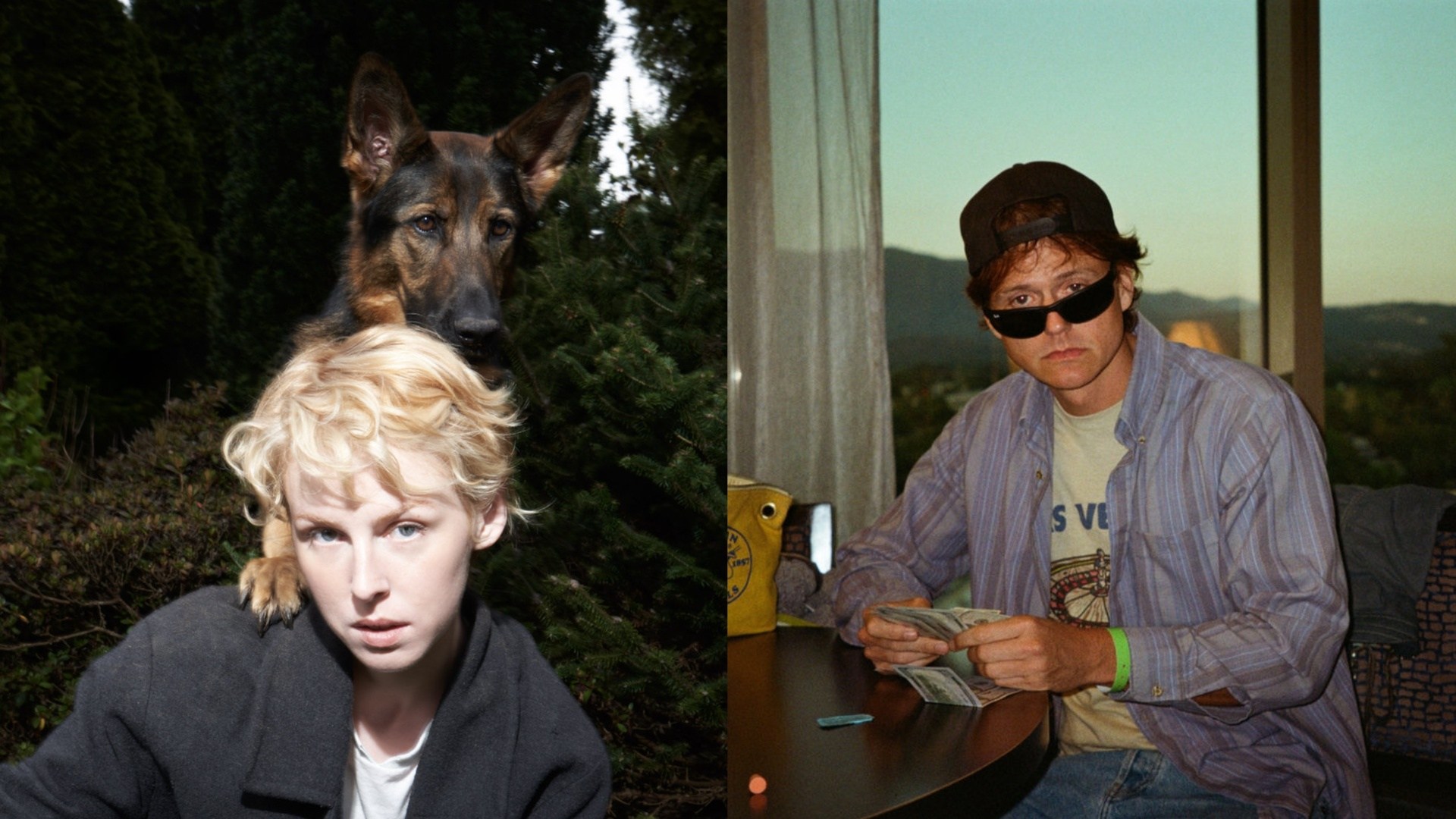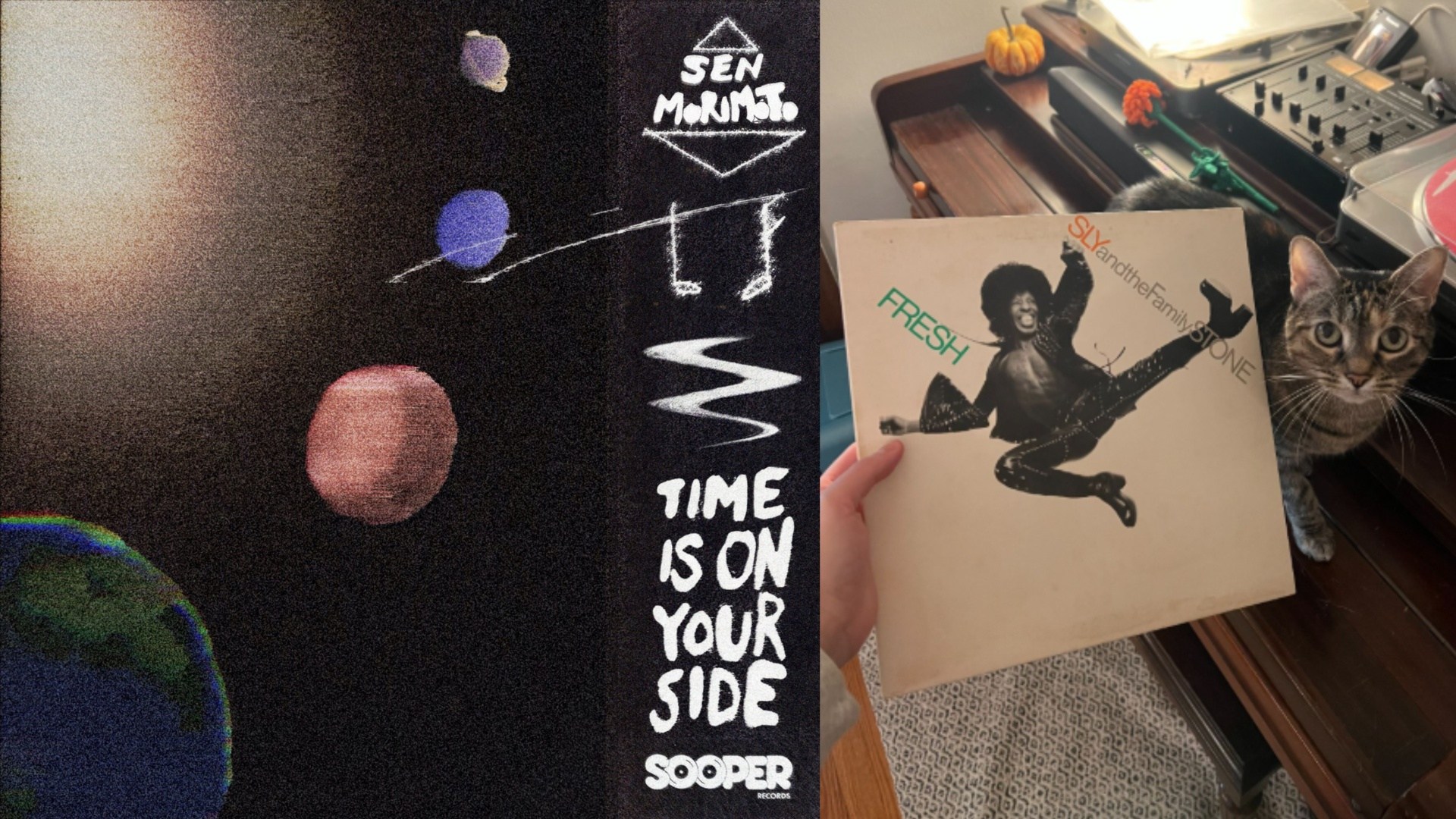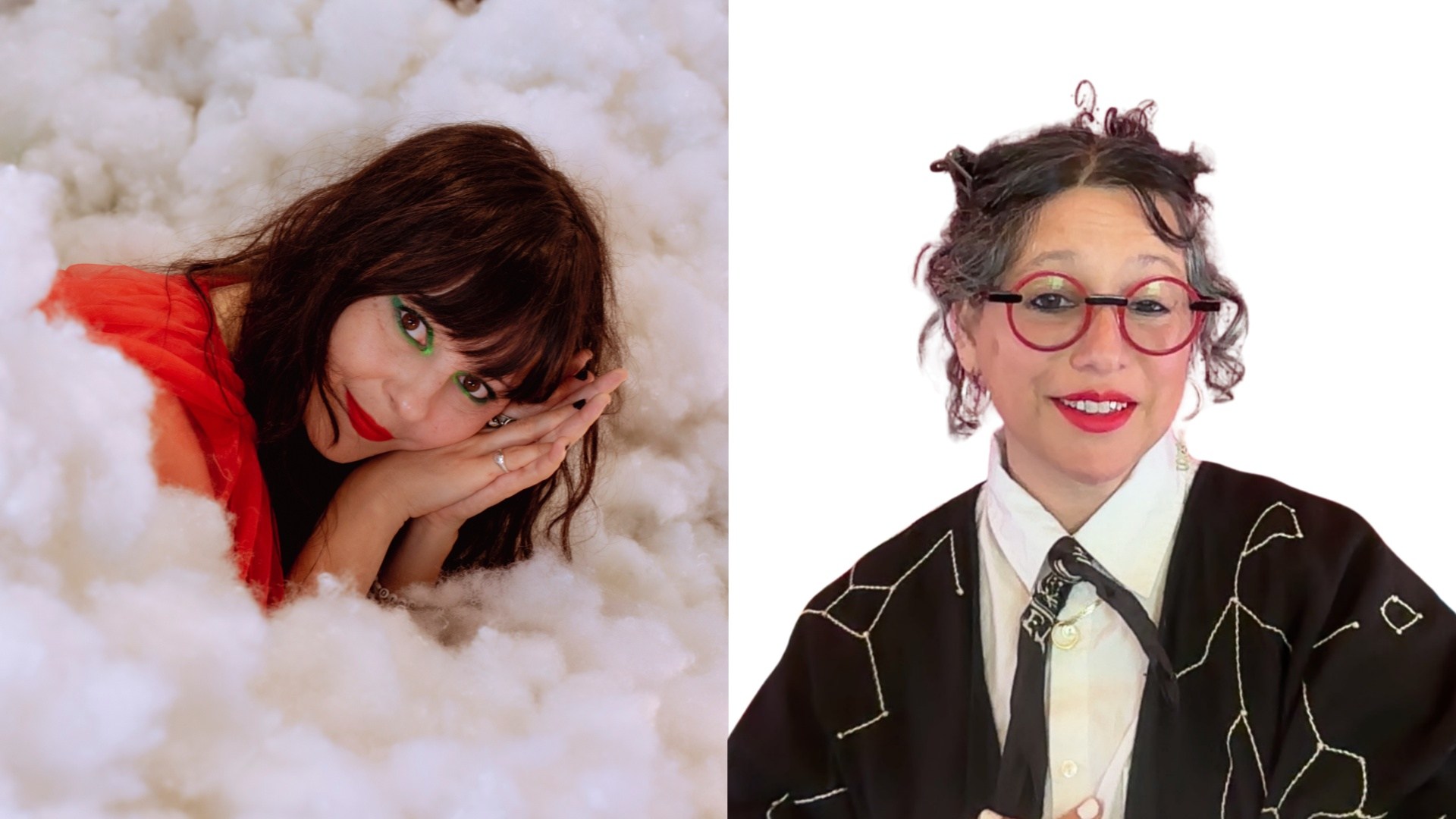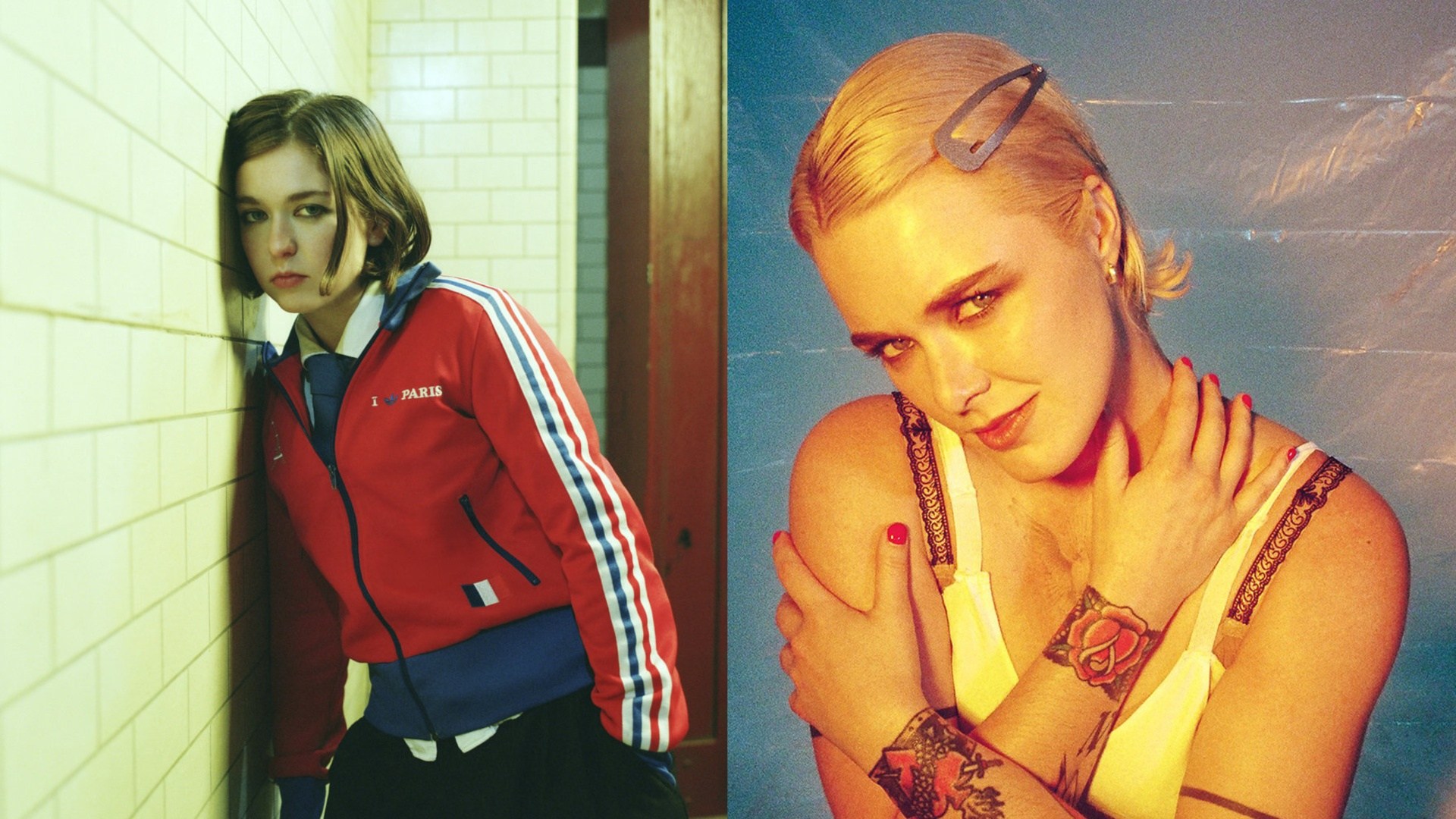
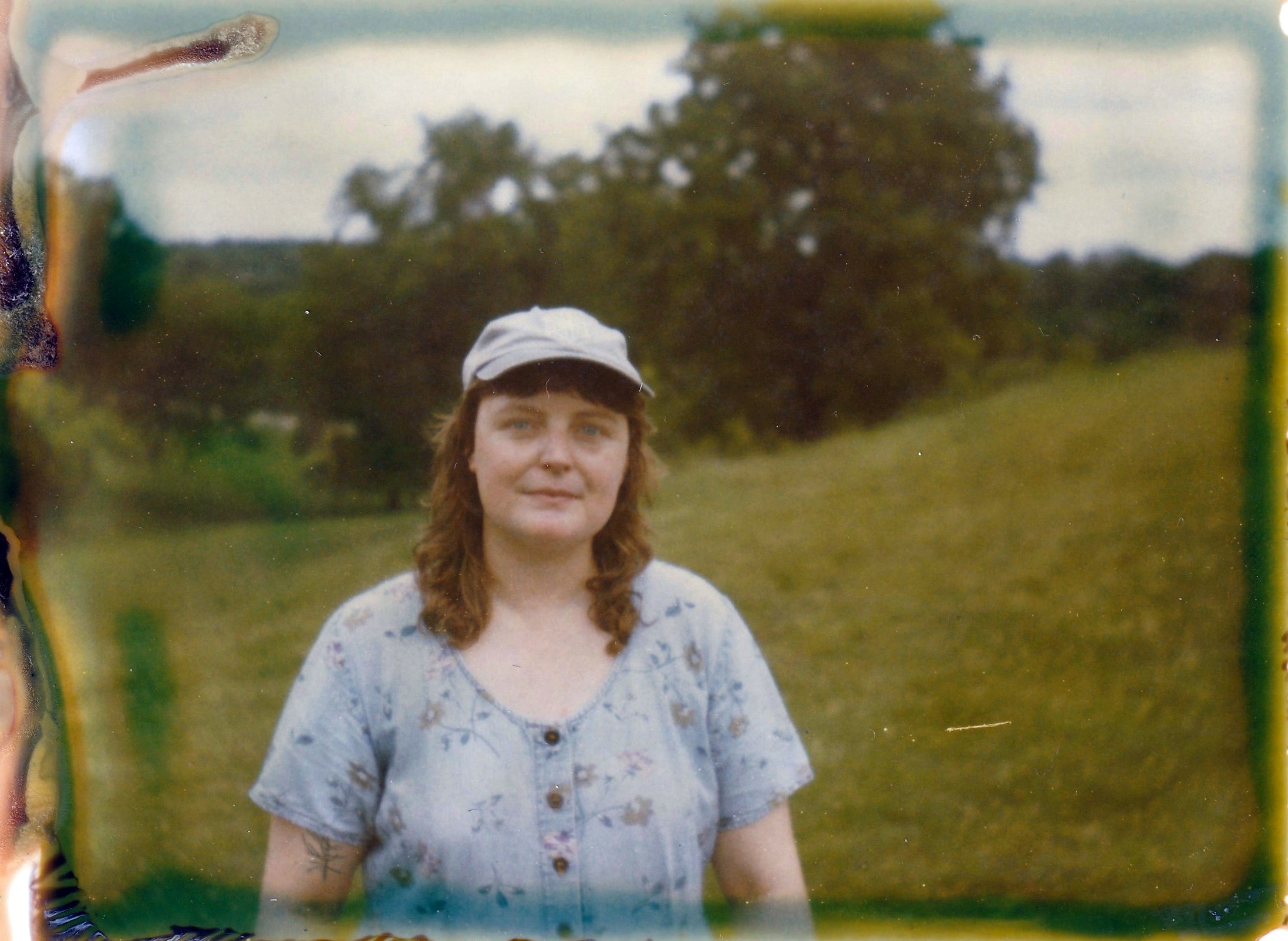
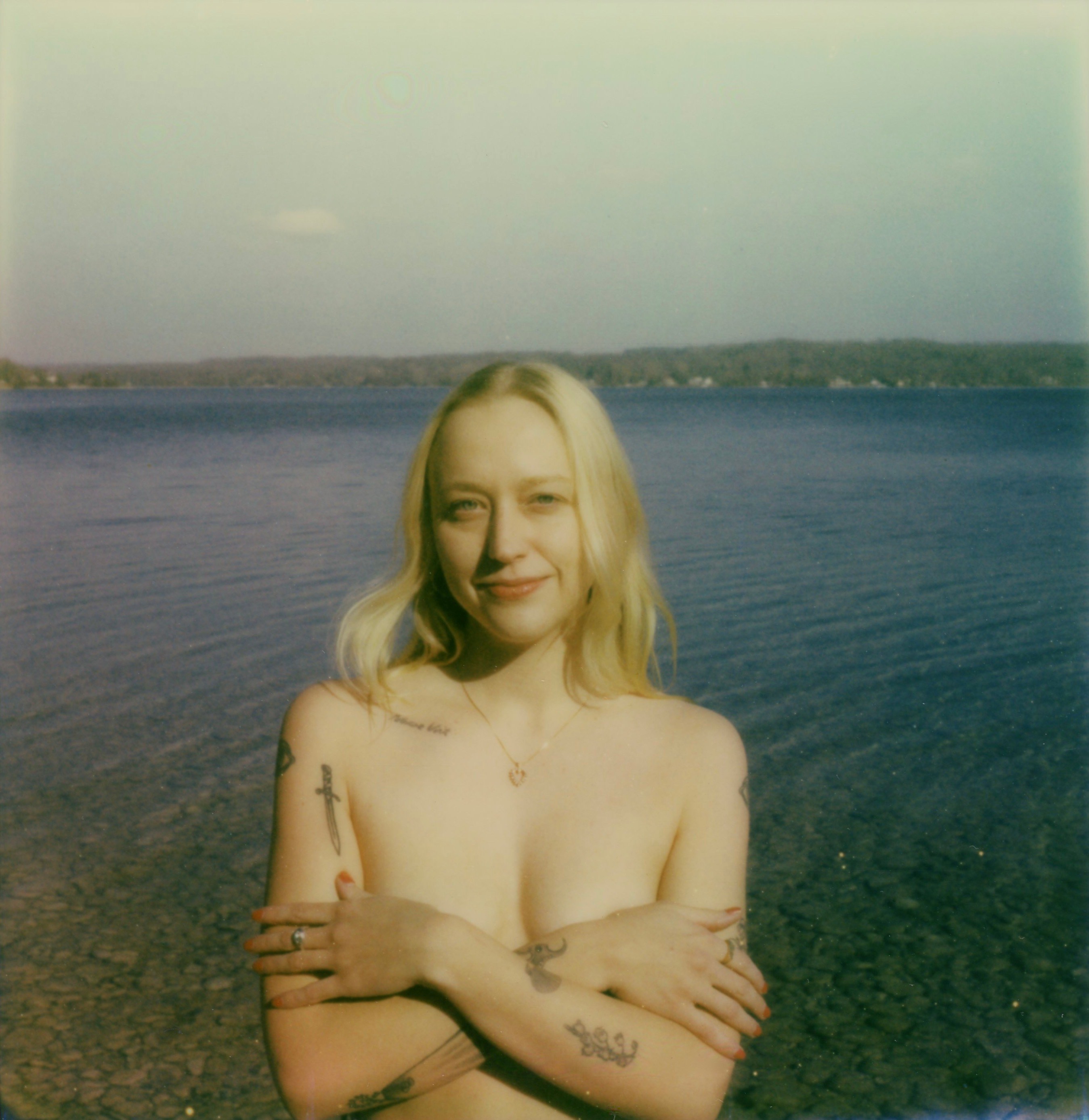

Anne Malin Ringwalt is a writer and musician based in Durham; Lou Turner is a writer and musician based in Nashville. Lou’s record Strangels will be out this Friday 11/6 (via SPINSTER) and Anne Malin’s poetry book Zinnia, Another World will be out 11/9 (via Spuyten Duyvil). To celebrate it all, the two caught up over email about Fanny Howe, wordplay, fear, their grandparent, and more. You can read their back-and-forth below.
—Annie Fell, Editor-in-chief, Talkhouse Music
Good morning, dear LT,
I thought we might begin with a common reference point — like your venn diagrams of yore! — since I know we have both been uniquely touched by Fanny Howe's essay, "Bewilderment," and this essay figures into both of our upcoming releases. In your new single "Ants Underfoot," I am delighted by your play with the enunciation of the word "bewilderment." It reminds me of how repeatedly looking at the same word, or saying the same word, makes it strange. And as the word "bewilder" shifts in your song, you also invoke wildness! Can you share a little bit about your relationship with play in your music — whether that's wordplay, improvisational-leanings, collaboration, or something else? What does play mean to you? Why is it important?
Yrs,
AM
—
—
Hi, AM! Thanks for this wonderful question. Fanny Howe's “Bewilderment”! You shared it with me years ago, and I am so grateful. I like what you said about repetition strange-ing things. That's something Fanny is on to: poetry as "circumambulation," "passing herself on her way around." I love that image. Yes, repeating the word bewilder opened it up — I began to hear be and wilder. So I sang them all: Bewilder me / Be wilder, me! It began to feel like a spell. I think playfulness is the only thing I'm super serious about. And while it's known for its wild side I think it can be practiced, even in mundane moments. Steadily showing up to something with an openness to how it might change, ready to bend. I find this on the road when I'm playing the same songs every night with a band and we find a new crack in something, a moment of improvisation we fall into together. I also find it alone, when I'm staring at a word for too long, or using a new tuning that disorients me and opens up new voicings I wouldn't have found otherwise (this was the root of a few songs on Strangels).
I just read the poem "Summer" from your beautiful book, and these lines felt immediately resonant to our conversation: "O feeling / bewildering, love / unknowing, love / to be not knowing..." Reading it, it felt like a direct address to a beloved, but also a likening of "unknowing" and "love." How does bewilderment interact with love in this book, in your life? I'm curious about Marjorie and the other beloveds you mention by name. How does unknowing allow for connection?
— LT
—
It's lovely to see you type out your lyrics here — "Be wilder, me!" feels like a spell, yes, and also a call from yourself back into yourself if that makes sense. I'm also reminded of the posture of your playfulness, which I appreciate as being something very consistent to who you are as a person and multi-hyphenate artist since we became friends in Nashville in the pre-pandemic days. It's a gift to be able to play with intention—I think a lot of our culture is saturated with irony, which is one kind of (sometimes limited, or shorthand?) opposite of play. In your sense of play, especially as I listen to your album, I sense a levelness that invites co-participation with the listener. There's not a social stratification. In fact, I think you're wary of such a thing, as you step on the ants and say sorry!
I'm touched that you selected some lines from "Summer" — the end of that poem, starting with "Marjorie, I don't know why you're here," is printed on the back of the book. Your comment on a likening of unknowing and love is apt. I guess because I'm anticipating readers, I want to contextualize now that Marjorie is my late grandmother and a very central figure in my life. She appears throughout my book, even in poems where I'm also speaking to a lover, or where it might seem profane.
In 2023, right before I moved from Nashville to Durham, I did a birth-chart-and-poetry reading with Ariana Reines, which I paid for by selling my beloved wedding dress. As you know, my move was catalyzed by a rather surprising divorce — and as my poems gesture to in fragments, if this time was a fabric, it was also lined with realizations of childhood abuse. Ariana offered this to me at some point in our conversation: in order to change things, you have to lighten their meaning. I definitely didn't feel this way as I wrote some of the poems in Zinnia, Another World, but I think that's exactly what invoking others makes possible for me in writing — a sense of alchemical lightness.
I was interrogating a lot at the time of my writing: love, the commitment of marriage, family, childhood, safety, justice, what it means to take responsibility for the hand you're dealt, and so on. Sifting through this interrogation process and unknowing with my late grandmother was its own kind of play, a way of not being alone, and also an acknowledgment of the different worlds each of us contain. Especially as this book cycles through relationships that end, Marjorie's constancy — particularly when I pictured her experience of dementia, which was for the most part a delightful return to childlike wonder — helped me find the light and the humor in life, even if some questions are still unanswerable. I'd add that, now, the fact that some things remain uncertain is light, material for play.
I'm interested generally in the time-and-space that catalyzed your writing of Strangels — what you were noticing and delighting in either before or during your composition process. Because I think of your writing of poetry and of music as something that also reflects the materiality of your life. For example, when I think of Songs for John Venn, I think of eggs, and your shakshuka! Where was your attention, and what held it?
—
Thanks so much for sharing about the grief you were moving through and that guidance from Ariana. It's truly special that writing toward people you love was a path toward lightness and change — alchemy indeed! I'm also struck by what you said about the time of writing being a fabric, stitched with other timelines.
Thinking about your question, that fragmentation of time is something I experienced with Strangels. There was the actual timeline of writing + recording over the last three years in short windows when I was home. But those windows occurred between the longest stretches of touring I've ever done, and those experiences inevitably shaped the recordings, too. It felt vital to get lost making something alone in my room when I could, amid the social intensity of touring so much, but my musical language has also been so influenced by the hours spent inside of music with my friends. And the word "strangel" was actually something I began to say about a certain kind of person we met on the road, a helpful weirdo who suddenly appeared with just the thing we needed: a tire jack, a meal, a story. A strangel could also be a funny bird or someone's dog we met which blew our minds after days of vans, hotels, and bars. So, all those experiences swirled with my solitary reflective times at home with my partner Trevor, and those swirls became a kaleidoscope for the songs themselves, which contain so many times and places all their own, sometimes memory-flavored and sometimes more character-based. Material things that held my attention: eating Nerds Clusters in the van with the boys; the smell of Trevor making soup outside the studio door in the kitchen, occasionally peering in the window to check on me; dirt paths while hiking with friends; the dusty memories of horseback riding lessons as a pre-teen; the feeling of drum sticks in my hands, the house to myself.
I'm so curious about how your move from Nashville to Durham impacted your creativity in general, but especially this book! The ocean appears a lot in your work, and I wonder if being closer to the East Coast impacted your writing, sense of imagery, etc?
—
Thanks for asking. Moving to Durham both sharpened and opened my creativity. The first five years of my life were in coastal North Carolina, so the Atlantic holds a constant magic. When I left Nashville, it was important to me to choose a place to live that wasn't attached to an immediate job or school, or occasioned by a romantic relationship. The jobs necessarily followed, and love in its own time too, but I was able to center my humanity — and my relationship with the landscape — in a new way. While the Atlantic is a massive part of my book, bodies of water more generally — including the Pacific and Indian Oceans, Lake Michigan, the Eno River, and probably others — orient me as a thinking subject to the poems I speak.
I don't plan on writing more books of poetry that follow such an autobiographical arc, but I started writing these poems when I knew I wasn't going to stay in Nashville, and a kind of comparative sense-and-space-making was of importance to me at the time. I sometimes wonder if my fragmented memories are in part occasioned by inhabiting so many different places over the course of my life, and the poems in my book reconcile with that curiosity.
I see change at play in your record, too! It seems to me, as a listener, that your music comes from a (perhaps new or otherwise remarkable) place of embodied fearlessness. We need some freedom to be able to play, right?
And how lovely to identify spontaneous relief as a strangel (my email app wants me to change the word to "strangle" — no!). There is the strangel, perhaps, who recasts your fear of snakes in "Hidden Lake," and the return to this theme in your refrain, "Be not afraid" in "Ark." This refrain feels especially important as your guitar and your voice share the same melody. I wonder if this moment in "Ark" was a surprising and meaningful echo of "Hidden Lake"? If it was intentional, what feels important to you about any particular themes at play across these eleven songs? How would you name them and how are they brought into play, sonically or otherwise?
—
I love that your move was a simultaneous sharpening-and-opening of creativity, that's so cool! Something I feel from the book is a strong sense of cycles and returns, so it makes sense that North Carolina is a place that you lived as a child and came back to in this moment of reflection and growth. It sounds like you found your zone! And it also really seems like you've found a lot of amazing collaborators and kindred spirits there, which rocks.
Thank you for your question about fearlessness. It's funny, I was just listening to an interview on the Music Person podcast with Lily Seabird last night, an artist I really admire. She and the host Dylan were talking about how fear is where a lot of people tend to stop, but it's where artists tend to begin. I think there's a lot of truth to that. Whether it's fear of what others will think of your art, or of you; or whether it's fear of things outside of the art or you (snakes!). Recognizing and facing fear is a current running through these songs, for sure. This record has some of the softest valleys and biggest peaks of anything I've made; and going deep into all of those places both in the writing and in the solitary recording took getting out of my own way.
I didn't consciously think of "Hidden Lake" while writing "Ark," but I love that you found a bridge, and I agree it's there! At first, the organizing concept for how these songs all fit was that they had animals populating them -— a very loose, light concept, but ripe — it felt open and sharp at once, the feeling you mentioned! As I kept writing, more themes naturally emerged other than the literal one of sharing the waning earth with all these blameless beautiful creatures; embracing bewilderment and wilderness in general, making meaning outside of the evangelical Christian framework that I grew up in that planted a lot of fear in my brain at a young age, but also planted a lot of wonder, depth, and understanding of how community functions. "Ark" was the last song I wrote for the record and it was a surprise addition, spilling out while meandering in that Joni tuning I mentioned earlier. The refrain of "be not afraid" is one that I heard growing up in church all the time, and returning to it in the context of these songs just felt like it opened everything up. Some kind of a return to a safe place in my childhood, maybe like you with North Carolina. And it felt like that refrain reached the end of what I brought to the songs and stepped beyond that to offer some kind of benediction, for whoever listens and brings their own stuff to it.
The last thing I'll say about "Ark" is that the guitar I played on it was my grandfather's, whose memorial service I attended just yesterday. He encouraged me early on to make music, so it felt really special to play his guitar on some tracks, and it feels special now to talk to you about — you who also have a grandparent's life in the life of your book! I think all these full circles are landing me at my last question: What is something you feel you've inherited or received from Marjorie that has made its way into your book?
—
Thank you, sweet friend! I am happy to inhabit this zone in a more perpetual way, and I also feel such gratitude for the collaboration and kinship I found in Nashville and all of the formative places of my life. Especially as different Nashville friends and artists have toured through the Triangle in recent years, I've appreciated how folks have committed to who they are — and how constellations of friends (like you and the Winos!) continue fine-tuning and delighting in their collective co-listening.
Fear as a starting point — that makes so much sense! I appreciate how you're describing the soft valleys and high peaks of your Strangels — it is a remarkably tender collection of songs that conveys peace and wonder in this collective moment that only seems more fragile. I've struggled to put into words how impacted I feel by your record, but I'll say now that I'm grateful you found the solitude you needed to make this beautiful thing, and I will turn to it to revel in the shape of my own solitude.
It's lovely, too, to learn that you were first shaping this record with animals in mind. That reminds me of how we've discussed my poetry and writing "with" others — which, of course, is kind of an illusion on the page, but I do believe in art's power to facilitate different communions, and your lyrics about animals and creatures and earthly interactions reveal your presence and kind attention.
I am thinking of you and your grandfather's memory. There can be something so gentle about a grandparent, about really feeling seen by an elder. Marjorie was a piano teacher and she and my grandfather always had classical music or opera playing in their house. She studied music therapy. I write about the piano in several poems, and I nod to surrealism with a line in "Marjorie" — "I wonder if the piano keys are like flowers to you / When you hold a memory, how long does it stay." A lot of the music of the poetry in Zinnia, Another World is shaped by a kind of sustained and minimalist attention; I wanted to inhabit my grandmother's perception, if I could, as an act of love. At the time of my writing, I was listening obsessively to Emahoy Tsege Mariam Gebru, and the spaciousness of her music almost felt like a ritualistic site for reuniting with my late grandmother. Marjorie also taught me so much about love and devotion, which are major themes and values in my book and in my life.