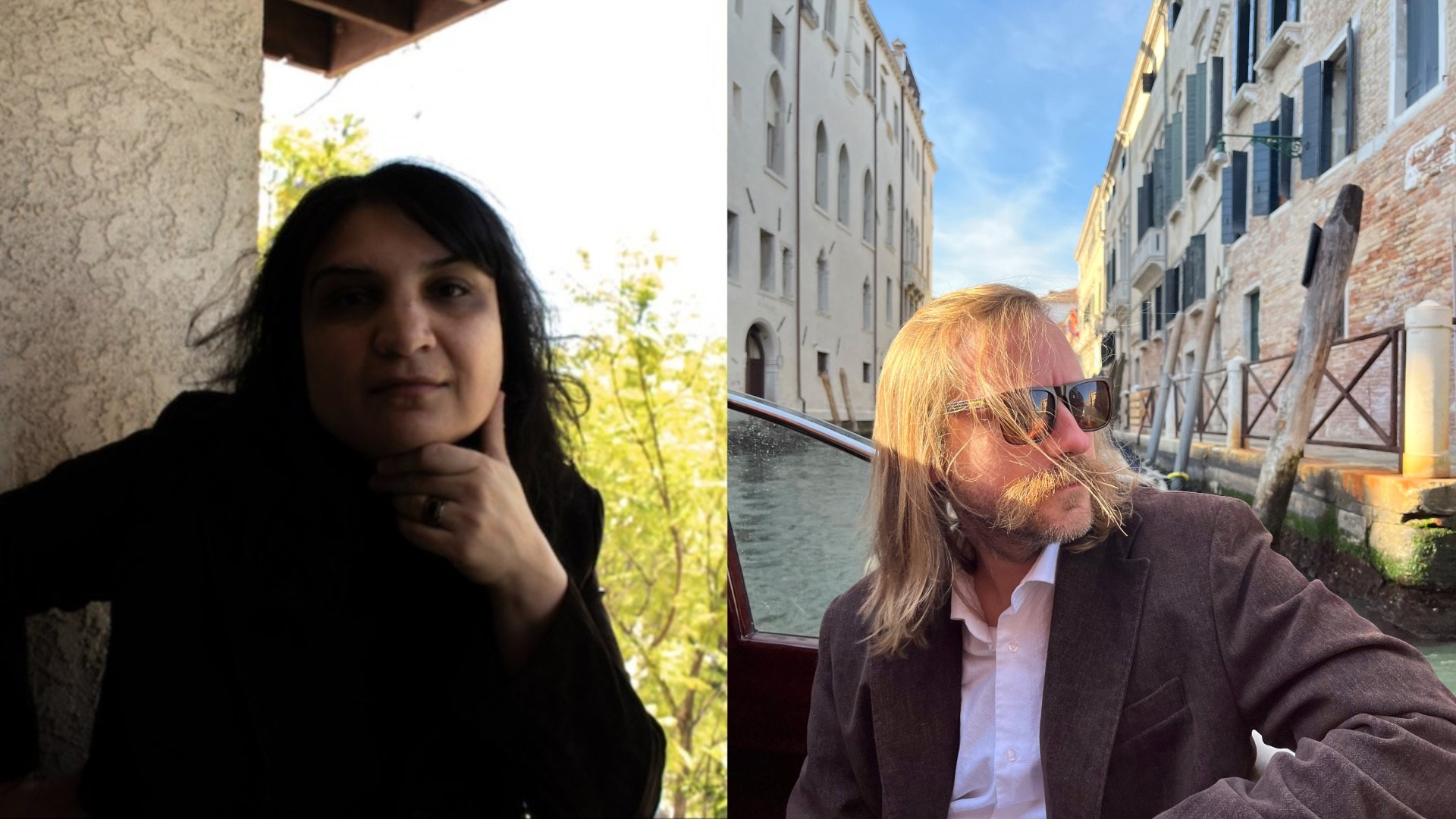
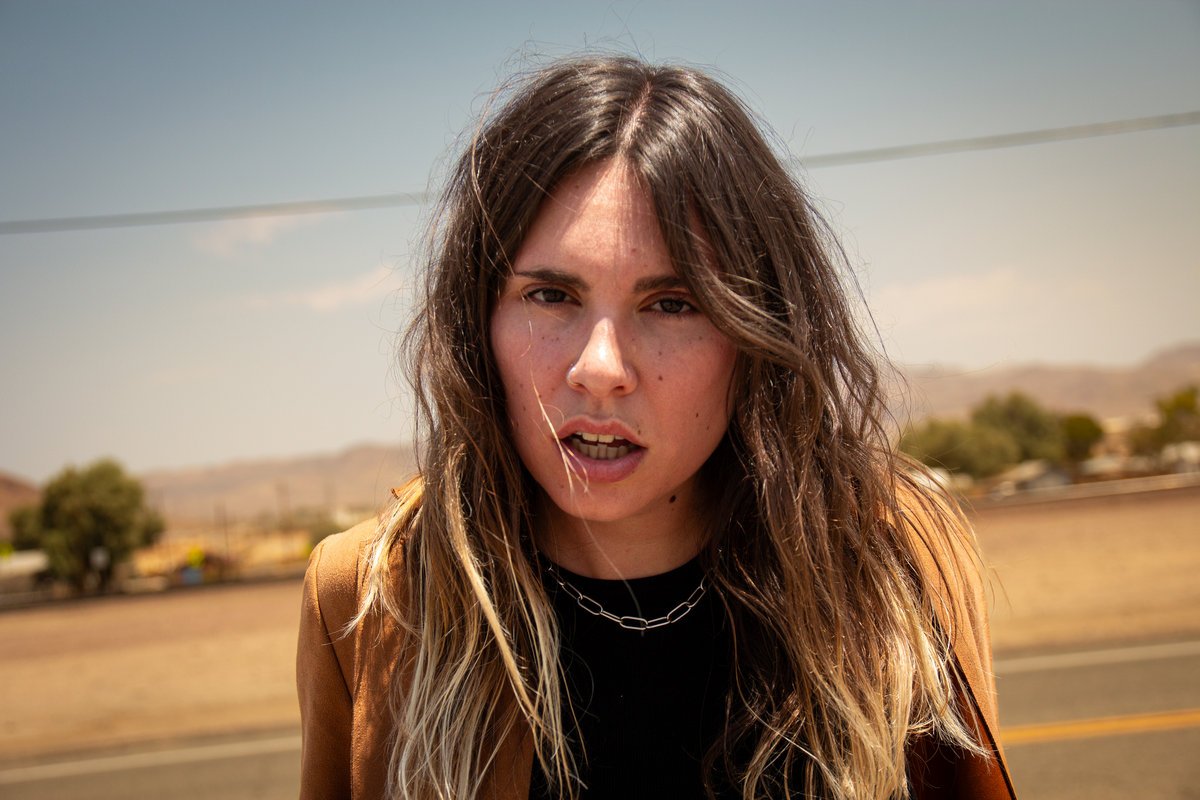
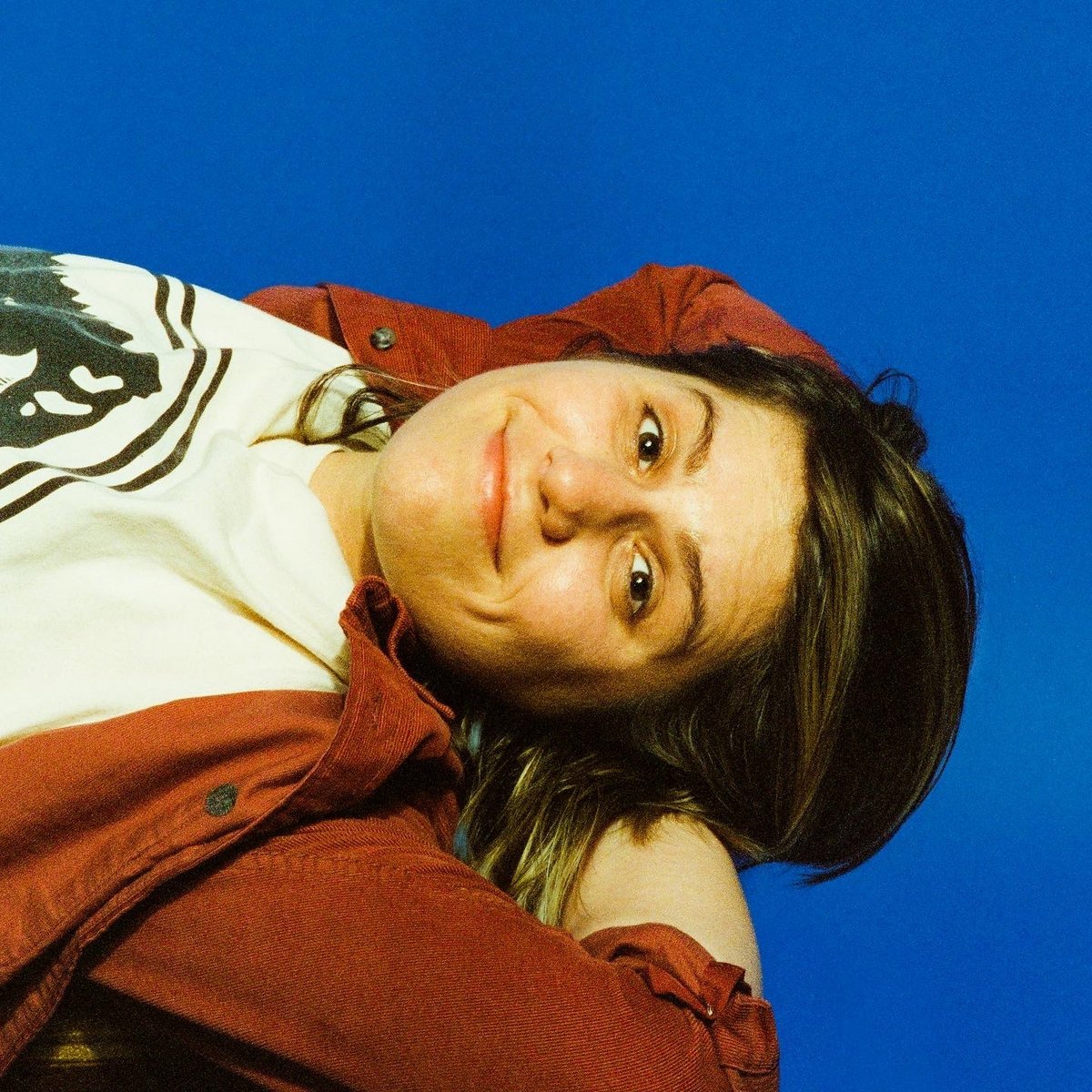
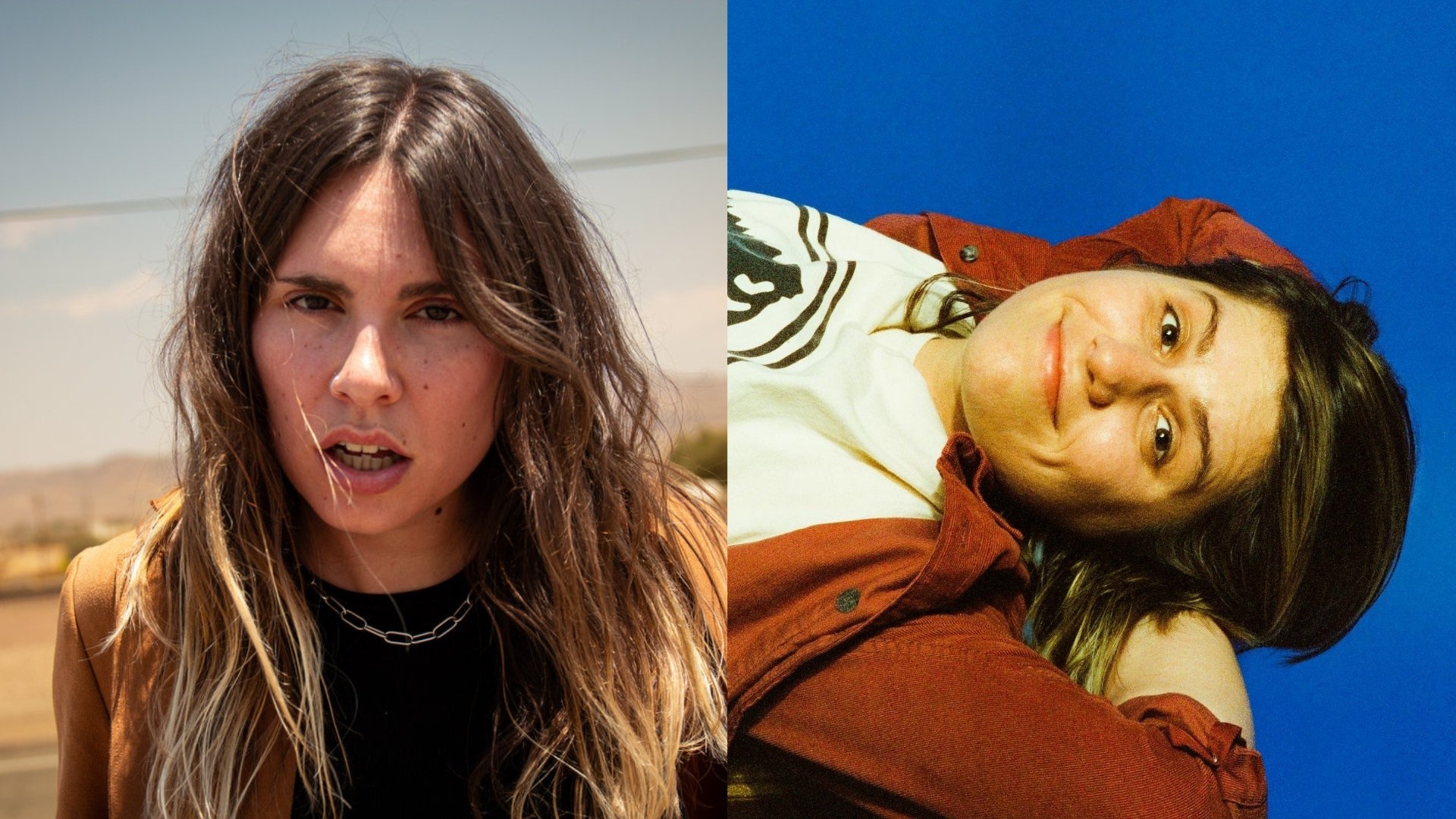
talker is the project of LA-based singer-songwriter Celeste Tauchar; Alex Lahey is a singer-songwriter based in Melbourne. The new talker record, Runaway Jane, just came out this summer, and to celebrate the release, the two friends caught up about creative rituals, surviving as a working artist, and more.
— Annie Fell, Editor-in-chief, Talkhouse Music
Celeste Tauchar: Hey, Alex.
Alex Lahey: Hey, Celeste.
Celeste: I'm happy that we are doing this. I feel like it's very classic us fashion — I leave for tour tomorrow and you leave for Australia on Saturday.
Alex: I know, right? So brutal.
Celeste: It's very brutal.
Alex: Are you your most creative when you go away? Or are you your most creative when you've been away and you return?
Celeste: I think that I am most inspired when I'm away, but I don't think that I do the act of creating as much until I'm back. I think that I'm gathering a lot. But I haven't really gone anywhere this year — well, I did go to Australia. [Laughs.]
Alex: It's almost like January doesn't count at this point. It feels so long ago.
Celeste: So long ago. Since then, I didn't do summer travels much, other than little short wedding visits and stuff like that. And it's interesting because I do think that I leaned really hard into creativity this year and into figuring out what that means for me, because I realized that I just want to be making stuff and living a creative, artful life. A lot of that does involve music; a lot of that involves making records and touring. But that can also mean a whole host of other things and not putting the pressure on always being in music work mode. So it's interesting because I have felt very creative here, and I'm trying to maintain the practice of not running away to try to find that inspiration.
Alex: It's like self-sufficiency.
Celeste: Self-sufficiency, a thousand percent. Which is a very difficult skill. I mean, hilariously, my album that just came out, Runaway Jane, is kind of about that exact thing.
Alex: Wow, I didn't even put that together. A beautiful segue. [Laughs.]
Celeste: [Laughs.] But it's this thing of, do you rely on outside stimuli and other experiences that fill out of your life in order to allow yourself to be creative? Or do you make that a practice that's just in your life no matter what you're doing?
Alex: Yeah. It's about enabling yourself in a way. I feel like it is a delicate balance of ritual and routine, and factoring in creativity into that. But then also kind of gaslighting yourself into being like, Oh, yeah, now's the time. It's always the time, but now's the time. You know?
Celeste: I started doing affirmations and gratitude lists earlier this summer — thank you, Julia Cameron — which I still pretty much do every morning. The list has gotten so long because I keep adding stuff. So it's like, “I am great at forming habits. I am a successful artist. I have a right to be an artist. My creativity is appreciated. People like me…” It's two full pages because if I add something on, I don't want to take something else away.
Alex: It's interesting to have a log of an affirmation or a desire. These things are all a mirror. Isn't that the whole thing with The Artist's Way? It's kind of like you're holding up a mirror to yourself as an artist, and there is a radical acceptance part of it?
Celeste: Oh, absolutely. I think there's a lot about it that's hokey. I've talked to people who are like, “I really couldn't get through some of the exercises,” which, fair enough. But it's holding up a mirror — it's getting what you put into it. And I love a cheesy spiritual, artistic exercise anyway.
I think that there are things — I mean, yes, I put an album out this year. I'm about to go on tour. There are these little touchstones that on paper you're like, “Yes, great, awesome.” But internally, I do feel like I didn't do that much creatively this year. There was a lot of releasing and promoting and putting stuff out, but in terms of the actual creative process, I didn't feel as connected to it. But what I really did get out of digging into a journaling practice: I think that I feel really happy with my life.
Alex: Wow.
Celeste: I know. I'm embarrassed to say it.
Alex: No, you shouldn't be. I mean, damn. That's so deeply existential.
Celeste: I know. Of course, I still want and desire and have goals and these things. But I was talking about this with my friend — we were talking about this concept of, “I love making art. I love making music. I want to continue sharing that and making records and touring and ideally have my music reach more people and be able to live more sustainably off of that.” That being said, I don't need anything in my life to change. I have found a way to make that life work for myself, and I don't really think that that would look very different at scale.
Alex: I do wonder if there's a shifting narrative in this modern era, where the archetype of the artist has shifted from needing to suffer, the unhappy, erratic sort of personality that you, quote, “need to be.”
Celeste: Well, it's very romantic.
Alex: Exactly. And it's shifted into being someone who is — I don't know if “grounded” is the word — but [who] is in the mental headspace to just survive. And that survival stems from basically wanting to do it, and how do you keep wanting to do it in the landscape that we're in right now, where it is harder than ever to maintain a creative practice, especially as a vocation? The moment that you lose the joy, you're just not going to do it anymore. So it’s sort of shifted from something that’s, “In order to keep doing it, you have to be suffering,” into something that's like, “In order to keep doing it, you have to feel like it's worth your while, and that you are deriving happiness from it.”
Celeste: Yeah. I also think that the old structure in place kind of enabled and allowed for more of that suffering artist archetype, because you either had funding and were living that life, so therefore you could lean into your worst impulses and be like, “I'm a romantic artist type, blah, blah, blah.” Or you just straight up were like, “Well, either I have that funding and that's my life, or I'm trying to make it as an artist and I have no outlet to reach people with that.” There is a little bit more of that middle ground.
I was talking about this with Fiona [Grey] — her parents are both artists, and they were kind of at the peaks of their careers in a time where there really was the possibility to be a working class or middle class artist. You had ticket sales, you had CD sales. It wasn't so all or nothing. It's interesting because I do think actually think that there is this space now for that again, but it doesn't look the same. It's not, “You can be a working middle class musician on tour.” You can, and I think that a lot of people in our community have done such a wonderful job of making that happen. However, I think artists on the grander scale — you can create a life and career for yourself making art, but you might have to do various mediums or be creative in different ways. You know, I have my music, but then I also have the creative agency [Cherryland] and the directing and all of that. It's all of these different touch points that sum up to become a creative life. I think it's very cool, and I think it's another thing that's giving me a little bit of optimism in all of the chaos and darkness.
Alex: I think you're right. I think we are looping back. I think that the notion of the middle class creative is something that has been a bit of an endangered species as of late, and the fact of the matter is that we as a society need that part of the sector, otherwise the whole thing will collapse.
Celeste: Otherwise, it's only the super wealthy having access to creating and consuming art — which I do think that we are still in that for the most part. But like you’re saying, the need for that is so potent that people. True artists are getting creative with how to make that happen.
Alex: I gotta shout out Caroline Rose with this — a true punk in the sense that they have taken a good look around at the, quote, “establishment,” or just the status quo of this job and this industry, and said, “No.”
Celeste: Because they had a little access to that for a moment.
Alex: Yeah. And they've looked around and said, “Actually, this doesn't work for me or for my friends, or for the people that want to be doing this for the rest of their lives.” And they've done the work to somehow subvert and bypass a lot of, dare I say, predators of the industry that make it harder and harder and harder to survive and be sustainable. And I think that in order to do that, you also have to really nurture your fans and your community, and think about how there is always that transaction — and I don't just mean that in a fiscal way. I'm talking about the artist to audience transaction, which is something that's very sacred — you need to nurture that because when that goes, there's nothing.
Celeste: Yeah, absolutely. I think that people don't want to feel disconnected from art and artists. Yes, that grand pop stardom level of fandom is one whole other thing. But folks want to know stories and relationships and what somebody has gone through to get to wherever they are, I think.
Alex: Yeah, that's the humanity of it. And ultimately, I feel like that's what we're all looking for. That's why we go to art.
Celeste: A hundred percent.
Alex: So I think we are looping back to something that's really exciting, and also giving a lot of agency to your blue collar creatives who are going to be doing this no matter what. I was talking to someone recently — my friend invited me to go to her aunt's place for 4th of July, and her aunt's friends are these LA lifer actor theater people, of a different sort of vintage to us, and it was so awesome hanging out with them. I was talking to one of them who's a playwright, and he said to me, “Isn't it funny that we just have this thing that we have to do?” And I thought that was one of the truest things I've ever heard.
Celeste: It's kind of ridiculous.
Alex: It's insane. And you have to be a little bit crazy to pursue it. But I guess, coming back to the romantic notion of the artist, we just all have this thing that we have to do and somehow figure out how to keep doing it. Because the sense of loss of not doing it, to me, feels immense.
Celeste: Yeah. I had a little bit of an existential dread moment a month ago — my record came out at the end of July, and I'm really proud of it. I love it.
Alex: It's a brilliant record.
Celeste: Thank you. Creatively and artistically, I'm like, Yes, love it, amazing. But I think that I really committed to just getting it out. I did less overly intentional outreach and promo — I posted it and I did as much promo as I could on my end — but I did less than I did for my last record, partially because I was like, What is this all for? And I did come out of it being like, Will I make another record? Because it's so expensive. It's so exhausting. The people who listen to my music do care about it and there is that emotional transaction. But I was like, What is even the point? What am I even doing? How lame of me to just keep making music in my elderly age of 31 years old?
Alex: You’re made of dust.
Celeste: I know. And it was a night where I was feeling that way — and, whatever, that happens.
Alex: And will keep happening. I hate to break it to you, but from what I hear, it will keep happening. [Laughs.]
Celeste: [Laughs.] But it's funny because I don't think that I consistently feel that way. I don't feel that way now. But it is this thing where, to your point, then you're like, Well, I just have to. And whatever that looks like, I'm gonna keep doing it. And then I'm gonna have a beautiful home full of my own vinyls, of all my many records.
Alex: Just like the boxes over there that we're looking at in my apartment. The decorative piece.
Celeste: [Laughs.] Part of the reason that I was feeling kind of down on myself with all of it — last year in making my record, I felt so creative. Those songs feel like that time. We all know a record feels like such a specific moment in your life. And now in releasing it this year and I'm like, This is the soundtrack to me not feeling like I'm able to make anything.
Alex: So if this record is representative of a certain vacuum of time in your life, how would you describe it?
Celeste: I think it was a time where I had very little ties and was allowing myself to really lean into open-mindedness and kind of following every thread, trying different versions of myself, spending time elsewhere. I spent a month in Berlin two years ago and then again last year, and thinking about if I want to do that… It was a time where there was a lot of novelty in my life. And there's so much that's beautiful about that. There are things that I miss where I'm like, How can I seek out novelty now that I feel like I'm in a different season of my life where I'm a little bit more settled? But there's also something about, you're seeking out so much novelty that then you're very ungrounded. I think there's such a push and pull. I am somebody who really loves times of novelty, times where there's limitless potential and “I could make this record” or “I could go here” or “I could get into this type of project” or whatever. So it was very new with Cherryland [the creative agency Celeste co-founded], and I was touring a bit more compared to this year. So there were all these things where I felt so much limitless potential, that this year has felt a little bit less that way, but not in a bad way. Just a settled and grounded way where I'm like, What's the next version of that? And maybe it's a more matured version of that in the next go around.
But, yeah, it was a time of a lot of beauty in that way. And I think that did come across in my writing. And in my intention with that writing process, I was like, “Let's try some new stuff and let's not be attached to anything. I don't care about the outcome of this. It's about the creation.” Which is ironic because then I was like, “What is even the point without an outcome?” But that was a great part of the process…
Alex: So what does your creative voice sound like now?
Celeste: I think that's revealing itself to me as we speak.
Alex: Dat bitch.
Celeste: Dat bitch! She's sneaking out… When it comes to what I was saying earlier, of feeling happy with where my life is — which sounds funny in context of also feeling uncreative in ways — I think that I have come to a practice where I am very diligent in my routine of journaling, reading, taking care of myself in a way where sometimes I'm like, I need a bender. [Laughs.]
Alex: You do have very good creative hygiene, dare I say. Clean as a whistle. [Laughs.]
Celeste: Wow, I really appreciate that. I gotta mess it up a little bit sometimes. But I'm trying to not pressure myself to figure out what that creative voice sounds like. I'm trying to, for maybe the first time in my life, have a dedicated creative hygiene practice, let's say, where I'm just doing the thing and I trust that that will reveal itself to me. But then in having that, again, it holds this mirror to, OK, I am maybe more reflective and self-aware than ever, maybe to a fault, where I'm really analyzing everything internally and I'm like, why do I feel this way? And what do I actually think of this? And let's dig in on this, and this relationship, this conversation, this internal insecurity… Which isn't a bad thing per se, but I think that there is also this balance of just pure, utter delusion and creation for the sake of it that needs to be done as well.
Alex: Yeah. Art for art's sake.
Celeste: Yeah. So I think that I am happy with the level of intentional reflection and creative practice that I have. But I think that I'm maybe getting to a point where I'm like, OK, what is that next round of novelty? What is that next round of frivolity, or not being so precious about that?
I really am grateful that we got to hang out.
Alex: Me too.
Celeste: This was a good excuse to just get together.
Alex: If this is what it takes for us to get together and hang out, I'll do it all the time.