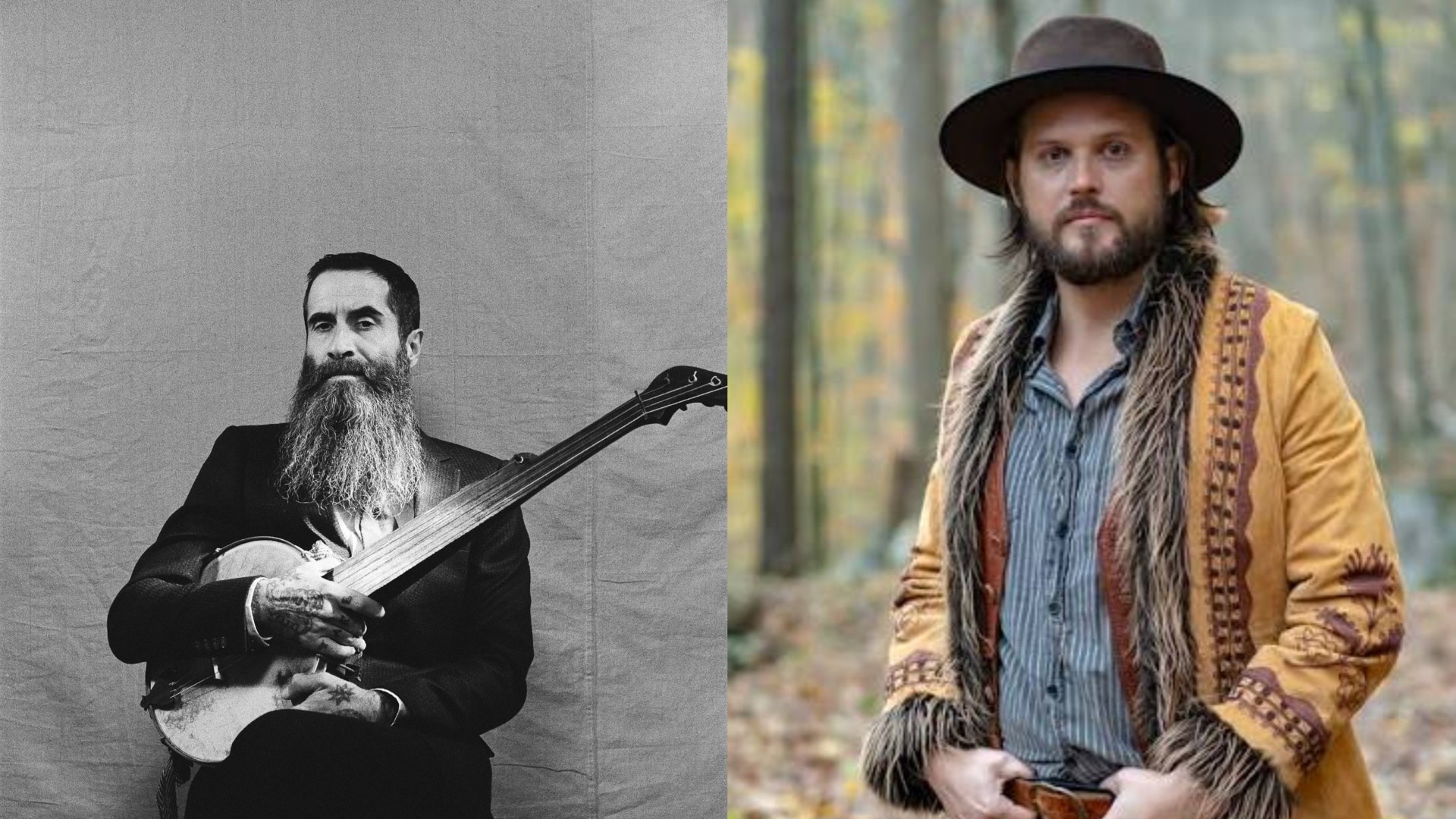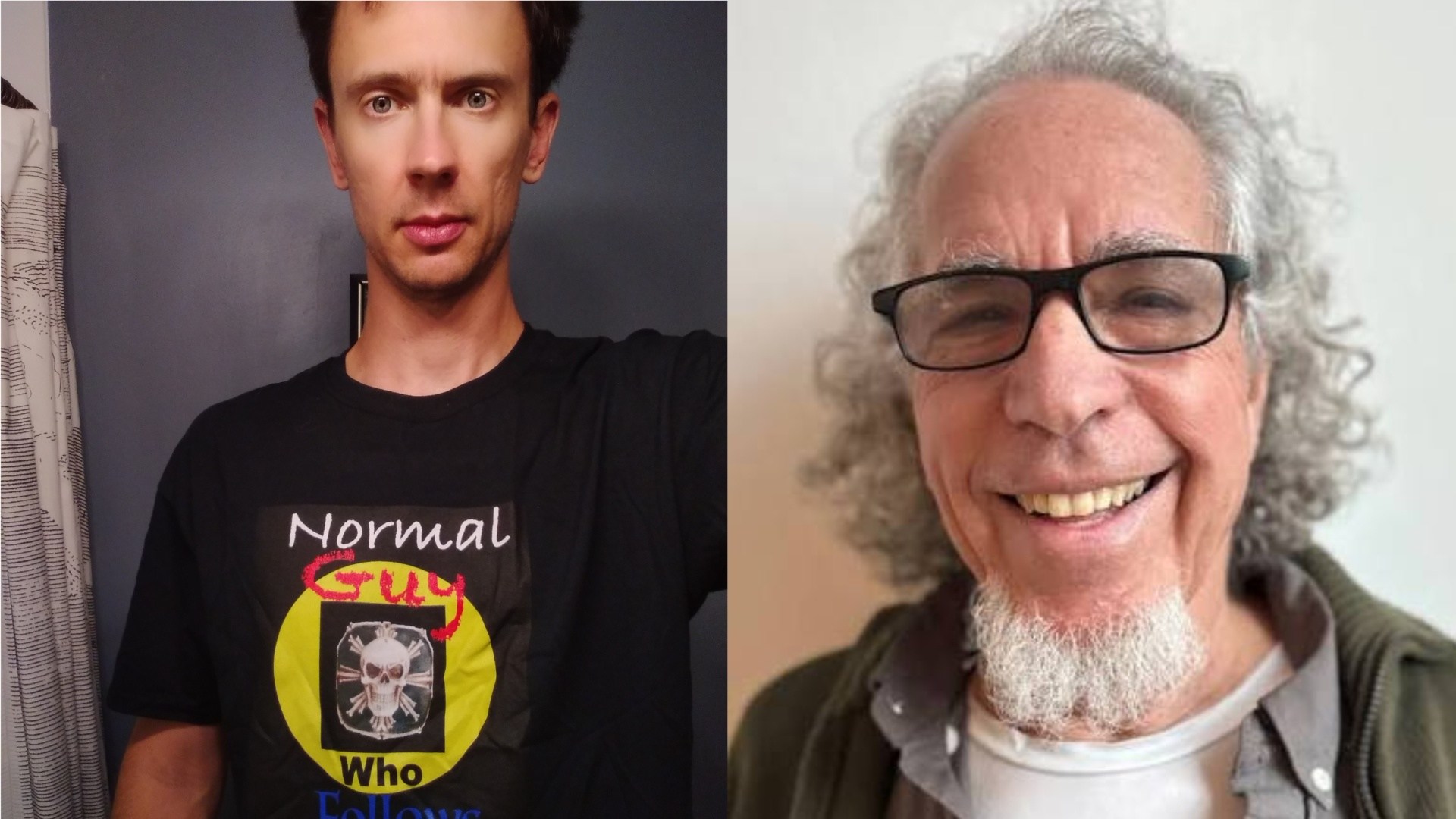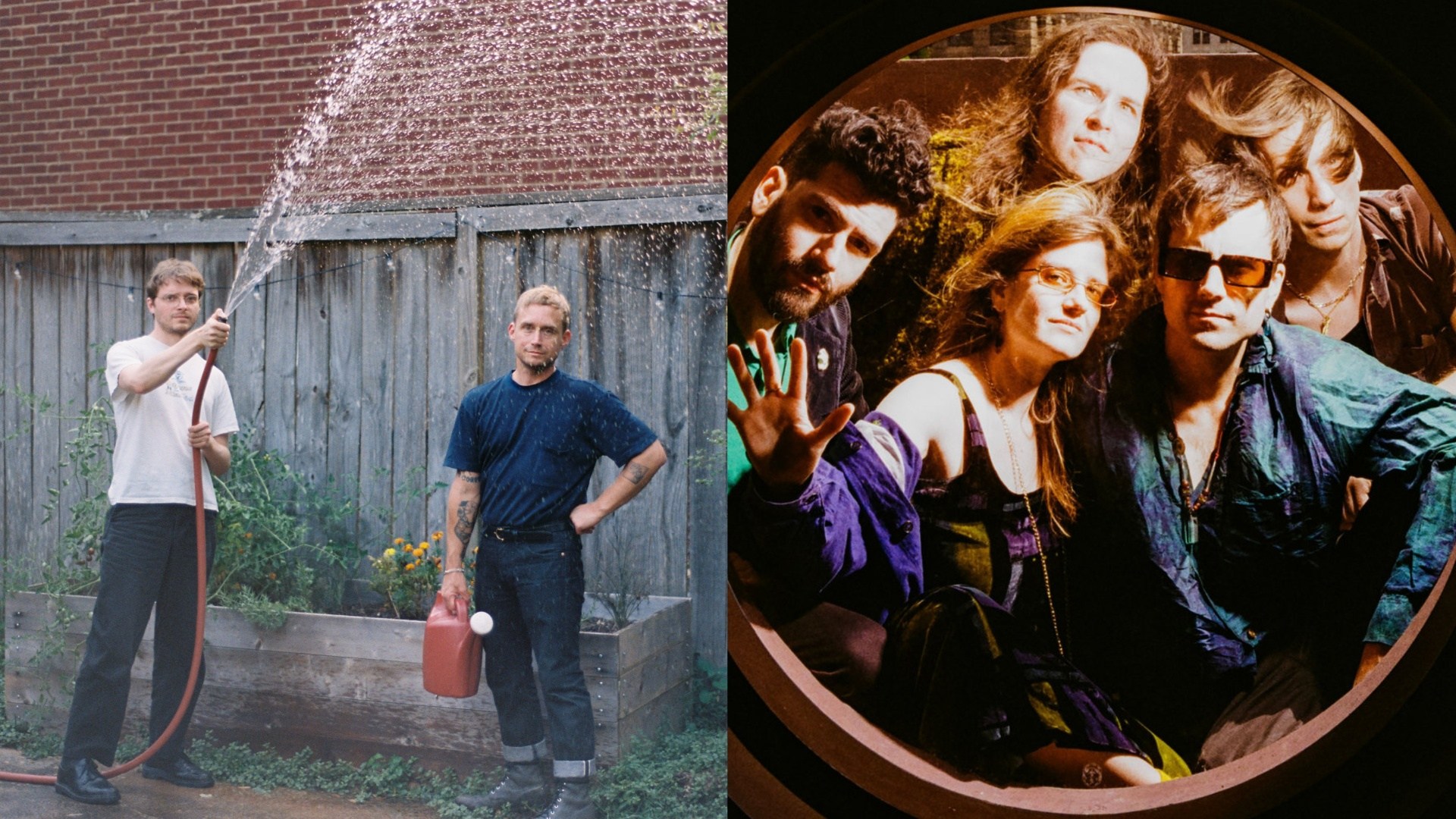
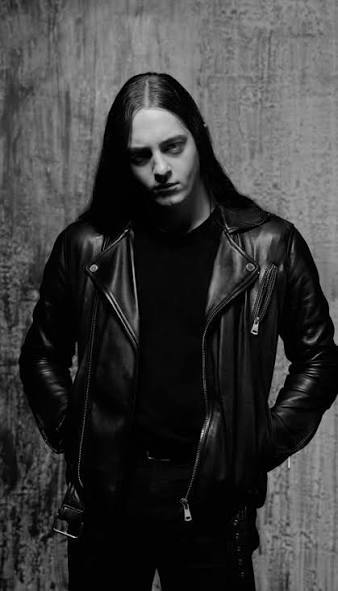
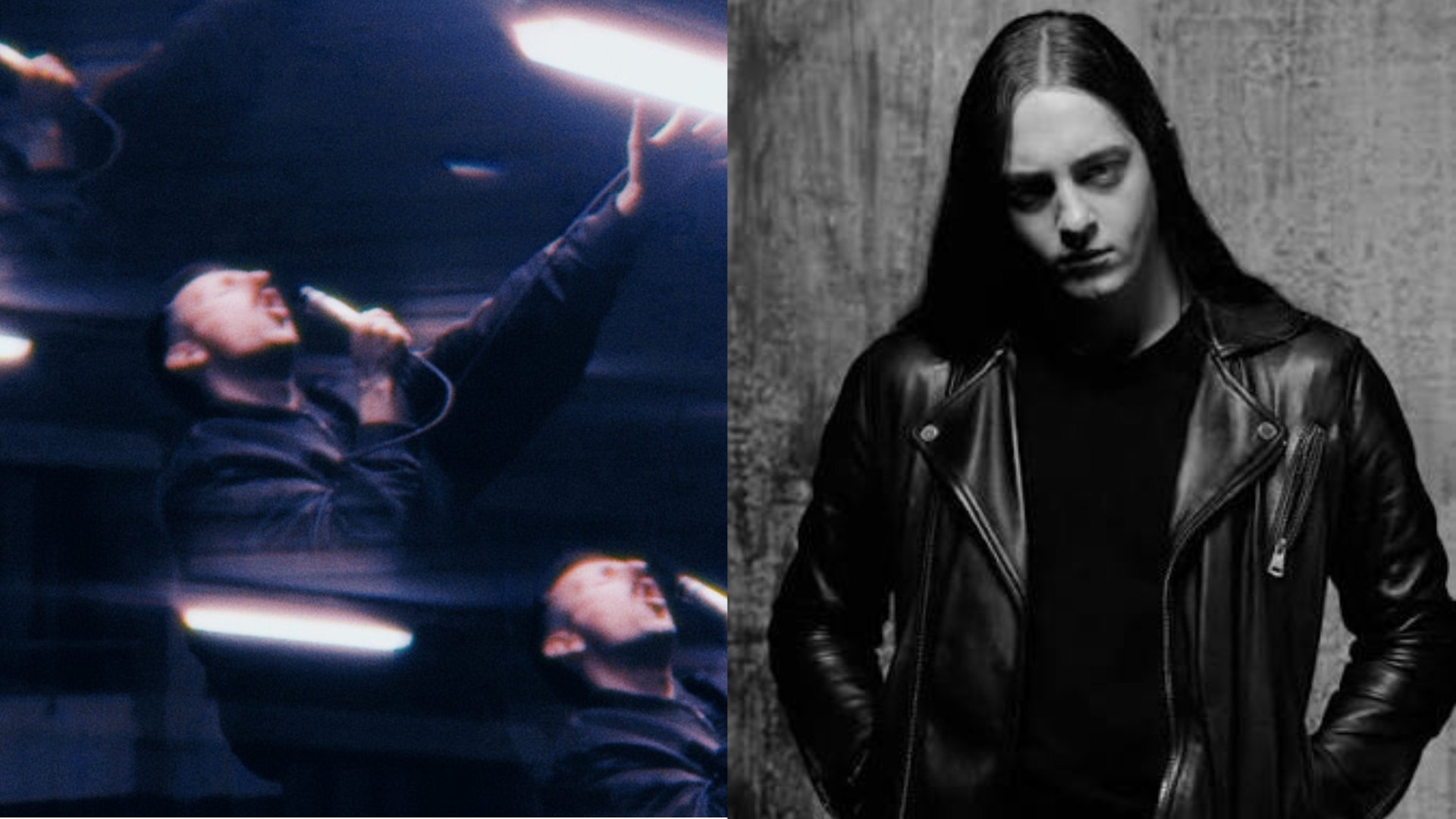
Perturbator, aka James Kent, is a French electronic musician based in Paris; KABBEL is the project of the Gothenburg, Sweden-based French electronic musician Gregory Hoepffner. The debut KABBEL album, When The Was Is Over, just came on Perturbator’s label Music of the Void out last month, so to celebrate, the two got on Zoom to catch up about the origin of the project, video game soundtracks, and more.
— Annie Fell, Editor-in-chief, Talkhouse Music
Perturbator: Congratulations on the album.
KABBEL: Thank you so much. It's all thanks to you, man.
Perturbator: Well, you wrote it…
KABBEL: And you saw the potential in it, so thank you. It's a two-way street.
Perturbator: I'm glad I got to release it because it's a great album.
KABBEL: I see that you're going on tour soon. I'm also going on tour at the end of the week, so I thought we could start with some touring related questions.
Perturbator: Is it going to be a long tour?
KABBEL: It's not very long. It's just six shows. But for me, that's already a pretty big deal. [Laughs.]
Perturbator: That's pretty cool. I remember my first tour — we have the same manager, Seb, just for the record — it was in his car, and it was a week around France. We would sleep in little hotels and stuff. It was good times. I wouldn’t say I miss it, but it was a very carefree moment. So enjoy it. You know, when you get bigger, you'll get a tour bus… [Laughs.]
KABBEL: It's funny because I've toured with obviously way bigger artists and bands than I am, and they always say the same thing: They miss the freedom of just being two or three people in a car or a train and not having all these complicated things to do with all the equipment, the tour bus, and whatever.
Perturbator: The logistics. Yeah, absolutely. I can't say I truly miss it. I kind of just miss the era. But I'm very happy with the tour bus.
KABBEL: You miss the possibility of what comes next, maybe.
Perturbator: Hey, who knows — maybe one day we'll have private jets.
KABBEL: [Laughs.]
Perturbator: How many side projects do you have? And how do you approach them differently from KABBEL?
KABBEL: Well, I have a bit too many of them, to be honest, for my own sanity and health. But I have a lot of talented friends that often invite me into these adventures, and I always say yes.
Perturbator: Are you singing in all of them? Or do you have different roles in them?
KABBEL: It's always a different role. I'm not always the center of the artistic vision. I'm mostly in service of a vision that sometimes comes from me, and sometimes it comes from other people. I try to approach that as if it was different characters for different movies, for example. So every one of these characters has a different view of the world and a different taste. And that's how I make decisions, based on these, quote-unquote, “characters.”
Perturbator: That's pretty cool. I have like something similar, where I have different musical projects. Some of them are solo projects, which is just me with machines and synthesizers, and also bands. But I see them like you — I don't see characters, but I use those to do stuff that I wouldn't do in Perturbator, to experiment.
KABBEL: It allows you to push ideas further than you would be allowed in your main project.
Perturbator: Yeah, absolutely. I have a side project where I wouldn't dare do stuff like that on a Perturbator record. I wouldn't try to go that far or that experimental. So I use that as a catharsis kind of thing.
KABBEL: Yeah, this is basically what the KABBEL project is to me. It's something I wouldn't dare to do, but I do it anyway, somehow. It's very strange.
Perturbator: How long has KABBEL existed?
KABBEL: Well, you saw it pretty early on, because it started late 2020. And then I found this sound pretty fast. It was a very strong reaction to things that I wasn't allowed to do at the time. So it was very fun to give a middle finger to that. You were at the first show — so just one year after it existed, basically.
Perturbator: I believe I was, which was pretty cool…
What are the artists that made you make music?
KABBEL: I think I would have to pick Radiohead, to be honest. I know it's a very standard basic answer, but just discovering OK Computer, and then Kid A, I was like, Wow, the world is actually way bigger than I thought and way more interesting. I can be a part of this kind of stuff, then my life is going to make some sense.
Perturbator: That's a good answer. Kid A is a good pick. Definitely one of my favorite Radiohead [albums].
KABBEL: What about you?
Perturbator. It kind of sounds stupid, but when I was a kid, I had a lot of DVDs of bands playing live, and one DVD I had was from the band Pantera. When I was a kid, I loved them, but I wouldn't watch the live shows — I would watch the backstage footage, like the band just doing whatever, smoking joints and getting drunk and shit. I remember telling Dylan [Hyard, Perturbator’s live drummer and childhood friend], I was like, “Dude, these guys are paid to do that. They are paid to be having fun. I want to become a musician too.”
KABBEL: You were attracted to the lifestyle more than the music itself.
Perturbator: Well, both. But I really loved the rock & roll lifestyle. I was attracted to that. But of course after that, I also got into the technicals of making music. So I really enjoyed playing the music of other people, making covers, and expanding my horizons with Depeche Mode and shit like that. When I was very young, I was a fan of Depeche Mode and Slayer and I thought, I want to make stuff like that. I want to become a musician to make something good like that.
KABBEL: So the guitar was your first instrument?
Perturbator: Yeah, when I was 11 years old. What about yours?
KABBEL: I started with drums. I think I'm still mostly a drummer above all. That's the only instrument where I could be confident no matter the situation — except maybe in a jazz fusion improvisation or whatever. I couldn't do that. Not quite my tempo. I wouldn't be able to do Whiplash. But otherwise, I'm pretty cool behind the drum kit.
Perturbator: Man, I've never seen you drumming. I would love to see that.
KABBEL: I wish I could do more, but it's such a complicated thing to do when you don't have your driver's license, to be the drummer in a band. [Laughs.] You become an impossible equation for the people around you. And so at some point, I bought electronic pads and it made everyone happier. And when I still play in bands where there's a real drummer, I always help him or her packing and unpacking the the drum kit because I know what it takes and how much of a chore it can be.
Perturbator: You’re a drum tech!
KABBEL: [Laughs.] I'm a drum tech that will enable the hard hitting snares that will make any sound engineer go mad in any venue.
Perturbator: Speaking of sound engineering, I have a question for you. You obviously make everything yourself in KABBEL. Do you do the mixing and mastering yourself? Or do you like to leave that to other people? And how do you approach lyrics? Because I suck at writing lyrics personally. So I would like to know a tip or two from you.
KABBEL: I think every lyricist will tell you that they suck at writing lyrics, because it's such a weird process. It doesn't make any sense. And especially — I will speak for me — as you can hear, I'm not English or American. But still, I sing and write in English because that's all my musical culture.
Perturbator: Well, also, I think French is a beautiful language, but it's hard to make it sound musical. It sounds a little cheesy when you try to make French sound like lyrics.
KABBEL: Yeah. I don't know about you, but when I was growing up, the French music that I was hearing had these very over-poetic and over-metaphoric lyrics that I would find very cheesy. And so that's why I never drove into that. But Sébastien Tellier, for example — he's quite good at making abstract and cool lyrics in French.
Perturbator: Yeah, I think so too. Also, he makes French lyrics and English lyrics too. I like the fact that he can do both. I think Sébastien Tellier is a great musician.
KABBEL: Pretty unafraid of everything. But your production question — I started doing everything myself basically because I was too shy and I was afraid to collaborate with other people.
Perturbator: In my case, it's not because of shyness, but because I wanted to be very independent in every aspect. My music is like my baby, so I was like, I don't want to work with anyone and I want to make everything myself.
KABBEL: You want control over every little detail.
Perturbator: Yeah. But for you, it's more because you're shy?
KABBEL: Well, that was the case at first. Now, thank god, at 40, I'm OK. But at first, I started recording myself alone in my bedroom. I started to write music by learning how to record myself. So the two were always linked together, even though I wasn't making electronic music — even when I was making more alternative rock music, the recording process was part of the writing process.
Perturbator: Yeah. As soon as computers are involved or when you have to use even a sound card or stuff like that, you feel like you're obligated to learn how it works. If you want to make a living out of it or if you want to do it well, you gotta learn the ropes. You know how to record, and how to adjust the gate and stuff. And then 10 years later, you know how to make a mastering, for example.
KABBEL: Yeah. You should go as far as you can by yourself. And then when you feel like you cannot reach the vision you have all alone, then you should try with other people. And that's how I approach it. Usually, I'm pretty happy with the results I have just doing everything by myself. But sometimes I have something very specific in mind that I cannot achieve, and that's when I reach out for other people who are more talented than me in this very specific technical thing that I need to do.
Perturbator: I always wanted to be able to sing. That's my one skill that I don't have. And so that's why all my collaborations are with singers that I find talented — including you.
KABBEL: Oh, thank you… I think the myth of the one-man-band or one-woman-band that does everything from start to finish is a bit fake. You're never truly alone when you do big albums. For instance, the most famous example right now would be the Tame Impala guy. He's not doing actually everything himself. He has someone helping him with the the mixing, the mastering, sometimes even writing, production. You just have to choose the battles you want to lead alone and then leave the others to surprise you, to go further than you can alone.
Perturbator: Absolutely. I learned that, too — like I said, I used to want control over everything, and that also included artworks and layouts for CDs. So I would go on Photoshop and do it all by myself. But then I was like, Damn, actually, you know what? This one guy in Paris can do it better than me, I should just ask him to do it. I started to relegate more, which is good.
KABBEL: Especially for stuff that's outside of actually making the music, like all the visuals that have to build around your music universe, you usually don't become a musician to become a visual artist. That's not what you're in for.
Perturbator: Yeah. How do you think about visuals?
KABBEL: I think about it when I'm writing a song, and especially when I'm writing lyrics, I'm thinking about the situation that I want to describe. Some stuff very basic like, Is it a real place? Is it an imaginary place? Is it night time? Day time? Are you alone? Is it a specific place in the world? Is it warm? Is it cold? And so this information can influence all the decisions you make musically or lyrically. Because I think the most powerful lyrics are the lyrics that you don't really understand at first. And then there's one that you catch and you're like, OK, maybe I can relate to this tiny part. And then you're interested in understanding the rest.
Perturbator: Oh, yeah. There's a lot of things that have lyrics that I really like, and oftentimes they're pretty vague. But then when you love the song and you listen to it a lot, you start to catch what they're saying, and you start to understand the lyrics too, or at least your own version of it. Then it elevates the track, I think, even more in your head.
KABBEL: Yeah. And you can sometimes interpret things that are not really intended as what you interpreted when you listened, and that's even better. That means the song is strong enough to have several meanings, several layers.
Perturbator: Absolutely… So, we both love video games. Are there any video games that inspire you?
KABBEL: Oh, yeah. For me, video games actually are the reason why I'm making music in the first place. I was obsessed with video games before I was obsessed with music, and I discovered the music that I liked thanks to video games soundtracks.
Perturbator: Which ones in particular?
KABBEL: Especially the Streets of Rage games.
Perturbator: Oh, fuck yeah. Beat ‘em up.
KABBEL: One of the greatest beat ‘em ups. The composer did a mix of early house and techno and trip hop, but in a very Japanese way, and it made me discover all this electronic music when I was maybe 6 or 7. So that left a mark that influenced basically all my life.
Perturbator: Likewise. I don't know if you know the game Silent Hill 2—
KABBEL: Oh, yeah. I haven't played the second one, but I really want to. I only played the first one.
Perturbator: Silent Hill 2 has a crazy ass cool soundtrack. It sounds like Portishead, but it has rock elements. The soundtrack is what made me also want to make atmospheric music basically. I love video games.
KABBEL: Maybe we should make a soundtrack for a fake video game together.
Perturbator: I'm down for that. I'm down to make more music with you all the time.