Birds of War is a love story built from 13 years of our own archive, filmed through revolution, war, siege and exile, between Lebanon, Syria, Turkey and the U.K. We never set out to make a film. We filmed because, in those moments, it was the only thing we could do.
But a story about two lives can become bigger than itself. Real life, kept and told by the people who lived it, can become a tool for wider change. That is what we want Birds of War to be, and all of what we've been doing asks one question: who gets to tell the story of our region, and on whose terms?
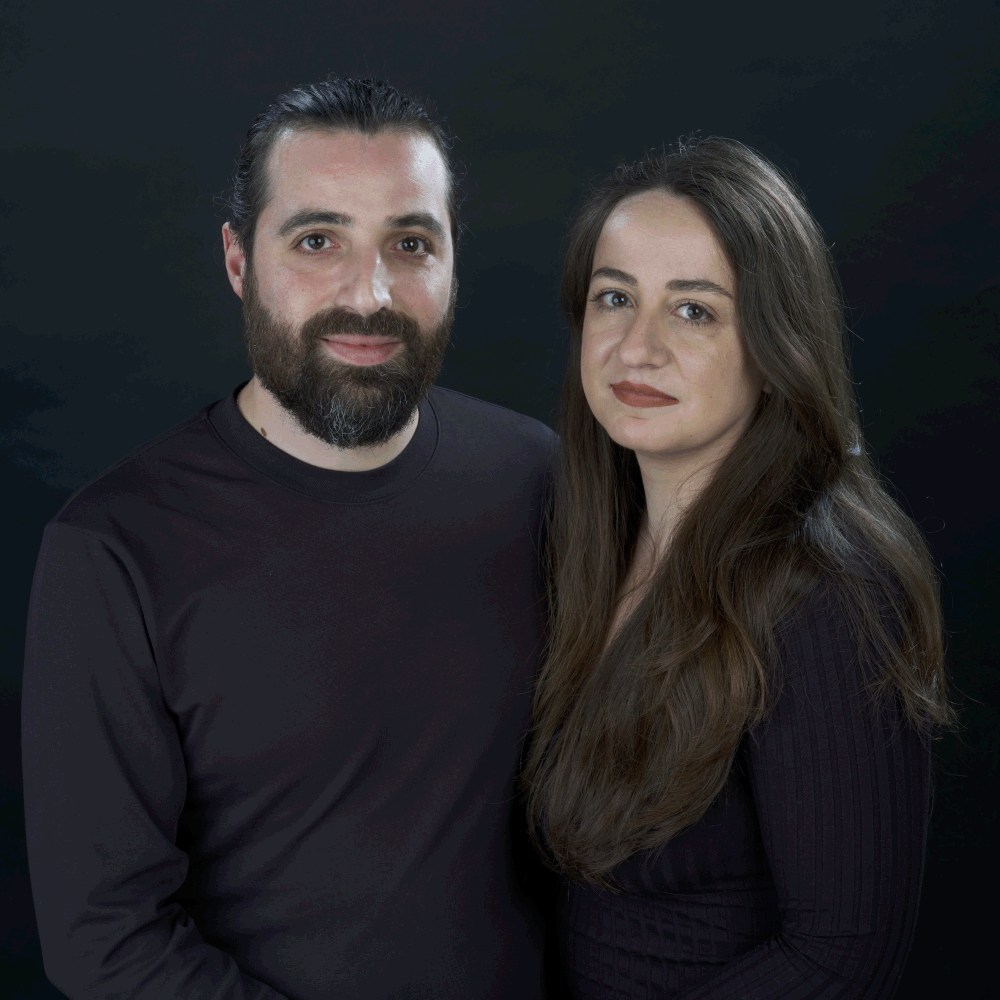
To understand why that question matters, you need to know where we come from. For years, Habak filmed Aleppo under bombardment. His footage reached international screens, often credited to “a local source,” or not credited at all. Janay spent 10 years inside the BBC, watching from the newsroom side what gets kept, what gets cut, and whose name goes at the top of the story. Between us, we have seen both ends of the same pipeline.
We made Birds of War outside that pipeline, on purpose. We did not pitch it to a broadcaster during three years of production. We kept the team small, kept the film secret, and chose funders who supported our story rather than reshaping it. When Birds of War wonthe Special Jury Award for Journalistic Impact at Sundance, it confirmed to us that a story told by the people who lived it carries more weight than a story told about them. But an award does not change how a newsroom works and how the extractive practices of the media world keep framing our lives through a Western lens: one that divides rather than connects, explains us rather than listens to us, and leaves audiences further from our reality instead of closer to it.
What We Heard in Beirut
In September, with our partners at Daraj Media, we sat with 15 Lebanese journalists in Beirut. Camera operators, reporters, members of the alternative journalism syndicate, fresh graduates. And citizen journalists who never planned to do this work, but picked up a camera because the war came to their street.
We had heard many of their stories before, almost word for word, from Syrian journalists, like Habak, who covered the war since 2011. International outlets take rarely any responsibility for the people filming for them. The logic, as one participant put it, is simple: if you film, we take it. There is no insurance. There is constant haggling over the price of footage. There is no safety training and no protective equipment. And there are foreign correspondents who arrive looking for “the good shot,” with little interest in the culture or the lives behind it.
Two countries, more than 10 years apart, the same account and practices continue. That is not bad luck or a few bad editors. It is a system. And it is a deadly one. The Committee to Protect Journalists recorded at least 130 journalists and media workers killed in 2025. Most were freelancers or worked for local outlets. People, in other words, like Habak. Like the 15 people in that room in Beirut.
"Impact" is a Political Word
“Impact” sounds neutral. In the documentary world, it is often measured in screenings, audience numbers and press mentions. Those things matter. But for us, impact means something more uncomfortable: moving power.
Who is credited as the author of a story, and who is listed as a “fixer”? Who is paid fairly, and on time, and who has to negotiate the price of their own risk? Who is insured when they go out to film, and who is left alone when something goes wrong? Who decides the frame, and who is only allowed to provide the footage?
These are not technical questions. They decide whose version of our region reaches the world. When a newsroom calls an outside analyst the “expert” and the person living under the bombs the “testimony,” that is an editorial choice. When coverage leans towards the foreign policy of the broadcaster's own government, that is a political choice, even if it is called neutrality.
We have watched this pattern repeat across the whole region, from Palestine to Syria to Lebanon. The person holding the camera at the centre of events is called on when a newsroom needs “a shot from the ground,” then is forgotten once it airs. Stories about us win international awards, built on our lives, our labour and our safety. And then attention moves on. Ukraine and Afghanistan once led every bulletin; today, we barely hear about them. Even Gaza, despite the scale of the genocide we are witnessing, is slowly sliding to the margins as “news fatigue” sets in. At a time of occupation, land theft and the destruction of whole communities, the question of who controls the narrative is not a media question. It is part of the struggle itself. The way our history is recorded decides what remains of us after the bombs stop.
So an impact campaign that only asks audiences to feel something would miss the point. We want to ask institutions to change how they work. And that is why it cannot be built the old way, by experts from outside delivering training to the region. Every workshop we run is designed with partners on the ground and shaped by what local journalists tell us they need.
What We Are Building
The campaign works on both ends of the pipeline at once.
On one end are the people who will commission, edit and broadcast coverage. In the first instance, we are taking the film into universities and journalism schools in the U.K. and the U.S. The aim is that future editors and journalists should learn to ask, “Whose story is this?” before they ever sit in a commissioning meeting, not after.
On the other end are the storytellers in the region. With Daraj Media, our partner in Lebanon and Syria, we are building workshops in both countries on authorship, rights, safety and archiving. In the U.S., the Committee to Protect Journalists is partnering with us to carry these conversations to American newsrooms and audiences. How to negotiate before you hand over a single file. How to protect yourself and your footage. How to preserve what you film so it can serve as memory and as evidence. Our Beirut session lasted four hours. Everyone in the room agreed it needed four days.
We are not starting from zero, and we are not doing this alone. The ACOS Alliance, together with the Frontline Freelance Register and the Samir Kassir Foundation, has created a model contract for freelancers, available in Arabic, that sets out what any agreement should include before a single file is handed over: credit as a producer rather than a fixer, ownership versus licensing, payment terms, resale, editorial consultation, right of reply, and responsibility for safety. The problem is that they do not reach most of the people who need them. Part of our work is simply to put them in their hands.
Then there is the fellowship. Five storytellers from Lebanon and Syria will receive a year of support to develop a short documentary. They will learn how international co-production actually works, and then pitch directly to editors and commissioners, putting them in the room as authors of their own stories.
What We Are Asking For
None of this works if the institutions stay the same. So here is what we are asking:
To editors and broadcasters: Credit the people on the ground as producers and reporters, not as fixers, and make sure that credit stays with the footage when it is resold. Take responsibility for these people’s safety by providing insurance, training and equipment. Show contributors how their material will be used before it airs, and give them a right to be involved editorially. And set aside commissioning budgets that go directly to storytellers from the region, not only to projects led by a foreign name.
To journalism schools: Make the ethics of working with local journalists part of the core curriculum. Use real examples, including films like ours, to show what is lost when local voices are erased from the final story. The next generation of editors should not inherit the same blind spot.
To local journalists, reporters and filmworkers: You are more than the story, and more than the access. You are its authors. Know your rights, and ask for them in writing before you start. And tell your own stories, under your own name. The world needs to hear them from you.
Holding the Edit
Somewhere in Lebanon or Syria tonight, someone is filming, because there is nothing else they can do. Their footage may reach a screen in London or New York by morning. The question is whether their name will reach it too, and whether they will have any say in what it means.
We were lucky. We held on to our archive, and we held on to the edit. Most people are never given that chance. We are not just a story to be told. We are the people telling it.
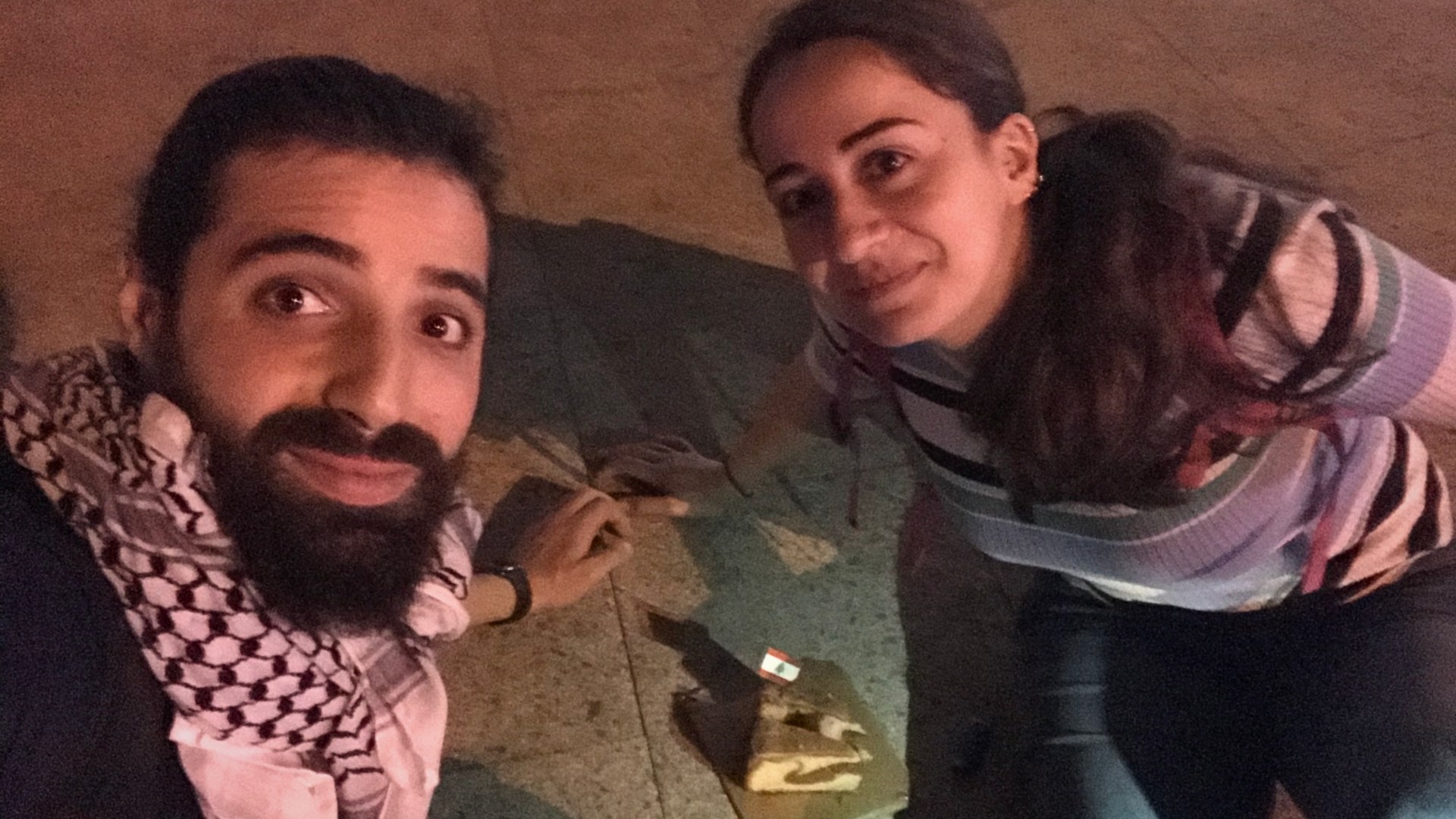
Featured image, showing Janay Boulos and Abd Alkader Habak taking a selfie during the revolution in Lebanon in 2019, is courtesy Habak Films.