
When I was a child, I’d lie in the yard at night, stare at the sky and dream about leaving Earth. My head was full of the rings of Saturn and the red dust of Mars, thinking about worlds where nobody had ever walked. The Apollo missions, the Soviet cosmonauts, the disasters and the triumphs: back then, it felt like proof that no matter how ugly geopolitics got down here, curiosity could still pull us forward together.
Maybe that was a child's delusion, but our collective relationship with space has since changed into something almost unrecognizable. Over the past 20 years, space has become privatized. If you watch a commercial rocket launch today, the aesthetic is slick: carbon-fiber hulls, tablet consoles and bespoke spacesuits tailored to look good on social media feeds. Private capital sells off-planet travel like a venture-backed manifest destiny, an escape hatch for a ruined planet bought with tech fortunes. Billionaires pay for three minutes of zero gravity, holding up flowers in orbit for multi-camera livestreams cut like fashion commercials. Hollywood mostly plays along. Modern sci-fi gives us clean, digital environments where the actual misery of the void gets buried under good lighting and industrial chic. Characters fly pristine ships, solving crises through sheer heroic grit. It looks great on screen, but it ignores how human labor actually works on a frontier.
Every time people pushed into extreme environments to dig up resources, whether it was on Pacific whaling ships, North Sea oil platforms or in boomtown mines, the story was never about freedom. It was about exploitation: impossible quotas, broken bodies and deadening isolation. Right now, in the new digital frontier, data centers are chewing through power grids and overheating the planet to run algorithmic models. If a company ever sets up a permanent base out in orbit, they won't be sending the upper class. Space is toxic, freezing and dangerous. The only people out there will be contract workers trapped inside heavy machinery, millions of miles from Earth.
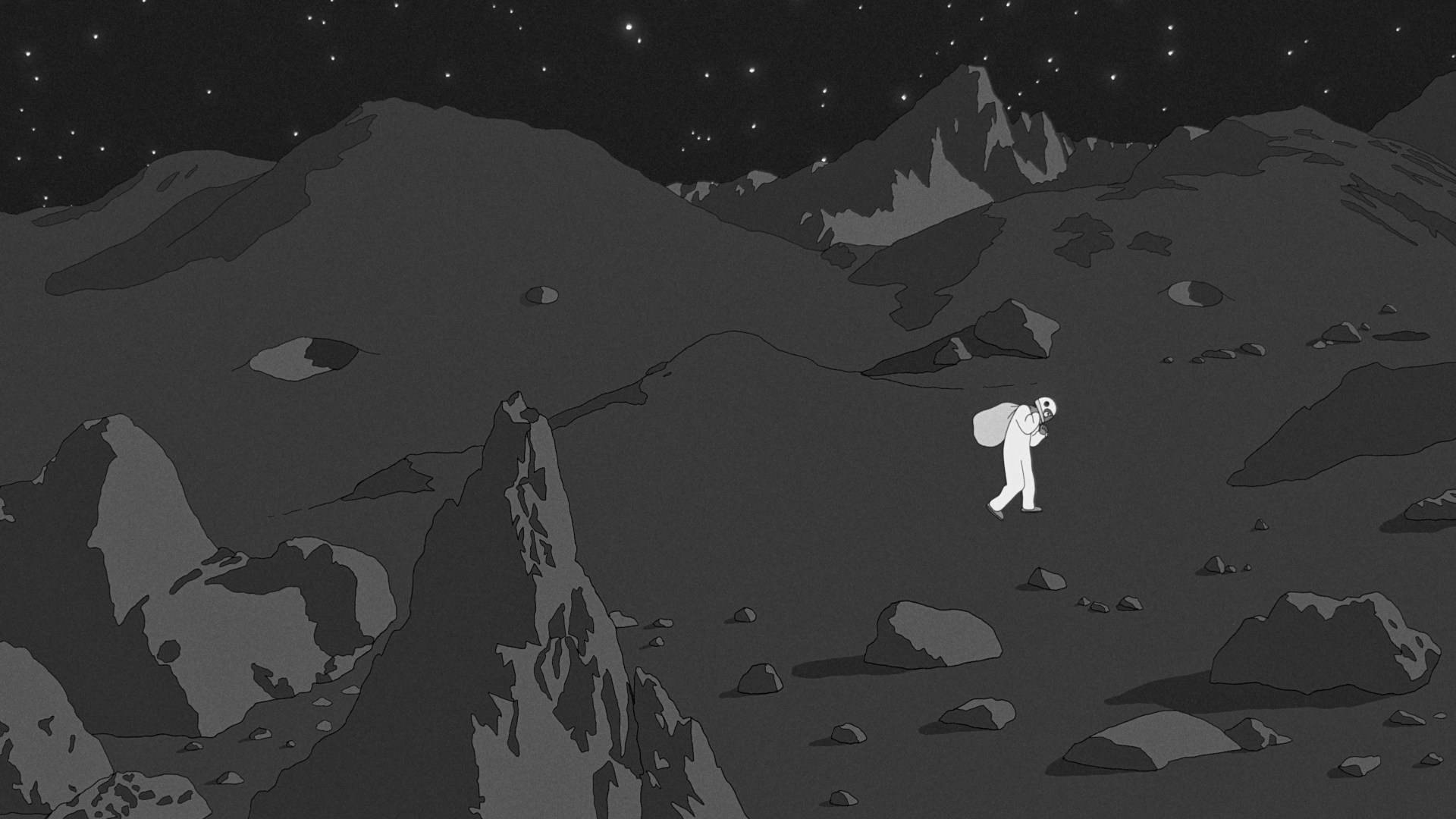
When I started writing my animated feature Moonfish, I wanted to push back against the tech myth. Silicon Valley spent decades promising that a connected world would build an open, utopian paradise. Instead, we got algorithmic surveillance. Moonfish grew out of that frustration: an unglamorous, blue-collar survival story where the only thing keeping a person alive is the memory of home.
During the Cold War, filmmakers understood the importance of imbuing their vision with symbolism critical of their oppressors. In Tarkovsky’s Solaris, Stanislaw Lem’s station isn't a monument to human genius; it's a leaky, rusting psychological dump where instruments sit under layers of dust while the crew falls apart from grief. Filmmakers behind the Iron Curtain knew how to smuggle harsh truths through genre. They knew that technology doesn't fix human nature; it just gives a faceless bureaucracy better ways to control you. Decades later, we live in the world they warned us about. Pretending a privatized orbital space station would run any differently is pure denial.
In Moonfish, the main character is just an off-planet contractor mining rock on an asteroid. He has a simple company rule hanging over his head: hit your extraction quota, or the transport ship leaves you behind. No quota, no pickup. His life is valued strictly by the weight of what he pulls out of the ground. The threat in the film isn't an alien hiding in the dark, it’s a spreadsheet in a data center back on Earth, checking a box that says his life isn't worth the fuel cost of bringing him back. Down here, we're already living that way. Office workers have their keystrokes logged every minute. Gig workers get told that zero stability is just “flexibility and freedom.” A miner forgotten on an asteroid isn't a sci-fi invention, he's the direct continuation of a delivery rider pedaling through sleet, or a driver sleeping in a car to hit a surge bonus.
Sci-fi shouldn't be a commercial for orbital tourism. At its best, it tells the truth about how fragile we are. Strip away the corporate branding and the PR spin, and you're left with what really matters: a tired human alone in the dark, trying to hold onto their dignity and find a way back home.