The ad said “Ranch Hand Wanted.” Operations involved haying, moving cattle, shop labor, and mechanical maintenance. Duties I hadn’t actually performed before. The location mentioned a place called Ashland. Even though I had grown up in Montana, I actually had never heard of this town. I looked it up and was immediately intrigued. It was situated along the Tongue River, adjacent to the Northern Cheyenne Indian Reservation. I had been in that general area before and was fascinated by the history of the region as the final theater for the American Indian Wars. Custer and his 7th Cavalry were wiped out just an hour away. Something told me there was a possibility here.
I had been struggling in Los Angeles for a year. Having just graduated from the directing program at the American Film Institute Conservatory, I found myself trying to kickstart a career that wasn’t going anywhere. I would wake up in the early morning, conceive ideas for scripts, watch films, study screenplays, all with the intent that someday soon I would write the next Sundance sensation. Which I would also direct, naturally. This didn’t happen, and I knew I needed to recalibrate. It wasn’t that I didn’t know how to write, it was that everything I set my mind to felt empty to me.
My mind started turning back to Montana, the place I had left three years before, the place that had been my home ever since my father moved his family there when I was a young child. I started to write a script about ranching, but this was an occupation I knew little about and so the idea started to stagnate. And then, on a whim, I watched The Tree of Wooden Clogs, Ermanno Olmi’s sweeping epic about the lives of sharecropper families in turn-of-the-century northern Italy. I was astounded by this film. I watched it twice in a row, and what moved me so was the depiction of people that felt at once intimate and expansive. How the camera held the characters in such a loving and dignified way. How it felt almost like a documentary and yet grand in its scale. I started wondering if I could reach towards something similar, but with Montana as its backdrop …
Not long after this, I saw the ad. I was tired of the unforgiving life in L.A. that didn’t seem to be leading me anywhere, so I took the job. And on day one in Ashland, I climbed up into a John Deere and started raking hay for the ranch manager, Ken Brammer. He was so quiet and soft spoken, oftentimes I had to ask him to repeat himself, but his wife Mary was a force to be reckoned with. A soft soul underneath her hard shell. She could sense bullshit a mile away, so you had to be true to yourself and, most importantly, sincere. And if you happened to love the ensemble of dogs and cats that occupied Ken and Mary’s home, you received a pass into their hearts.
I learned the business of haying very quickly and realized soon enough the intimate connection between the operations of the ranch and the sustenance of the animals it raised. The pumps connected to the Tongue River supplied the hay fields with the water necessary to grow alfalfa, which then, when raked and baled, fed the cattle, which earned the ranchers their income. It sounds obvious, in theory, but in practice, felt revelatory.
One afternoon, I was out in the shop helping Ken weld when, suddenly, the dogs alerted us to the arrival of a group of Amish men thundering towards us on their steeds, leading two wild stallions behind them. They came upon us like a whirlwind, the leather of their saddles groaning, their horses gasping, and the dust swirling in clouds. It was something out of a John Ford movie. And the reason for their appearance was to shelter these two wayward stallions from a neighboring rancher who disputed their brand and wanted to sell them for slaughter. With this episode, I began to wonder at what I was seeing out there and how it felt that there was a version of the mythic Wild West that still existed to some degree.
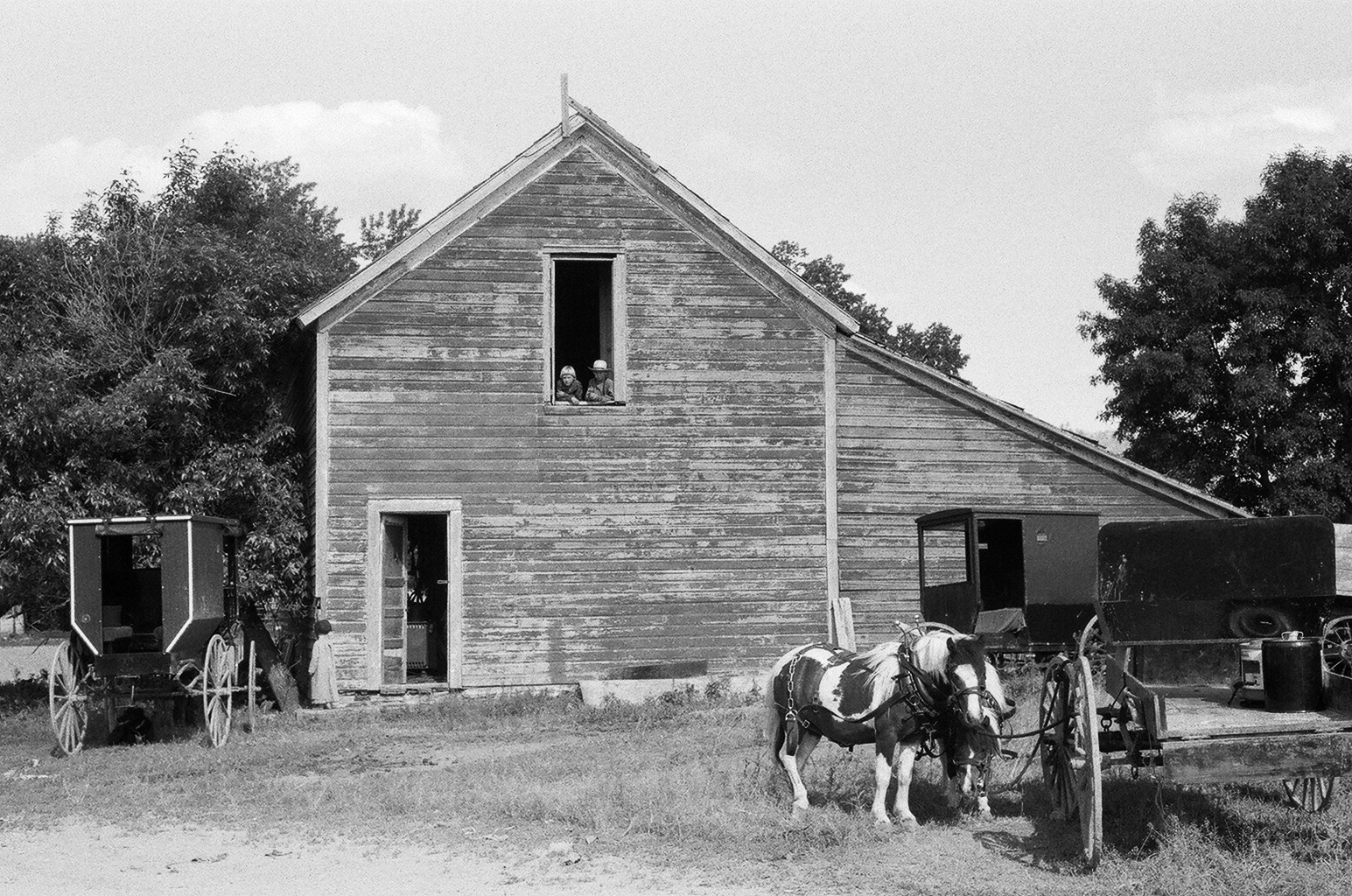
In the months before I left for Ashland, I had dusted off my old Nikon F3. It was a camera I’d bought while I was an undergraduate in Montana, some six or seven years before. Once I graduated from the AFI, I was hungry to keep my creative muscle active in any way I could. In the absence of film-related work, I’d taken out my Nikon and started shooting black-and-white street photos in L.A. Most of the photos lacked substance, but I was trying to find ways of capturing a “story within a frame.” I would go to places where people were looking, such as the Griffith Observatory, and find ways of shooting portraits of people without them knowing I was doing it. I started reading about Cartier-Bresson, Robert Frank and Gary Winogrand, and was fascinated by the concept of the Decisive Moment.
When I left for Ashland, I brought my Nikon with me, hoping I could document the experience in some way. I was too busy most of the time to shoot anything, but looked for opportunities at the community events that happened from time to time. In late September, as the job was winding up, I went to the annual Amish Fall Horse Sale, just north of Ashland. I was driving tractors all day and, in what felt to me like a profound gesture, a young Amish girl brought me a homemade donut as I swept around the north pivot. I hadn’t really photographed the Amish before, as I wanted to respect their privacy, but this horse sale event was a public affair, so after I wrapped my work on the tractor, I grabbed my Nikon and headed over to the corrals behind the hay fields. What I saw fundamentally transformed the way I related to this place. I can only describe it as a portal to another time period – the one I had always fantasized about as a kid. The Wild West and all the curious inhabitants, dust-speckled, rank horses tossing their heads, unbroken plains, and the buffalo. I felt these things present that afternoon at the horse sale. Amidst the call of the auctioneer, there were barefoot children astride mules and mini ponies, cowboys gazing intently on their next purchases, feral dogs, homemade donuts, and black braids from the Northern Cheyenne. The way that people carried themselves with a certain certainty, the legs of the cowboys slung over the rails. A toothpick massaged in the lips. A tip up of the hat to wipe the brow. And none of it was for show. This was real.
I shot two rolls of film that day. And when I looked at my scans, I realized I had actually found something. There was a weight to the images. I’d been waiting near the corral with my camera at the ready, just observing and studying. Suddenly, a young Amish girl had ridden up near me, about 20 feet away. She was so tiny, her feet stopped well short of her stirrups. She’d halted her horse and looked to the side. I saw it, raised my camera and snapped. She moved on as quickly as she’d arrived. It was the best photo I’d ever taken up until that point, and I was moved by the idea that this was a moment that would never happen again. This Amish girl and I had shared the same path for a split second, one that allowed an image to be made and preserved, before it vanished to time.
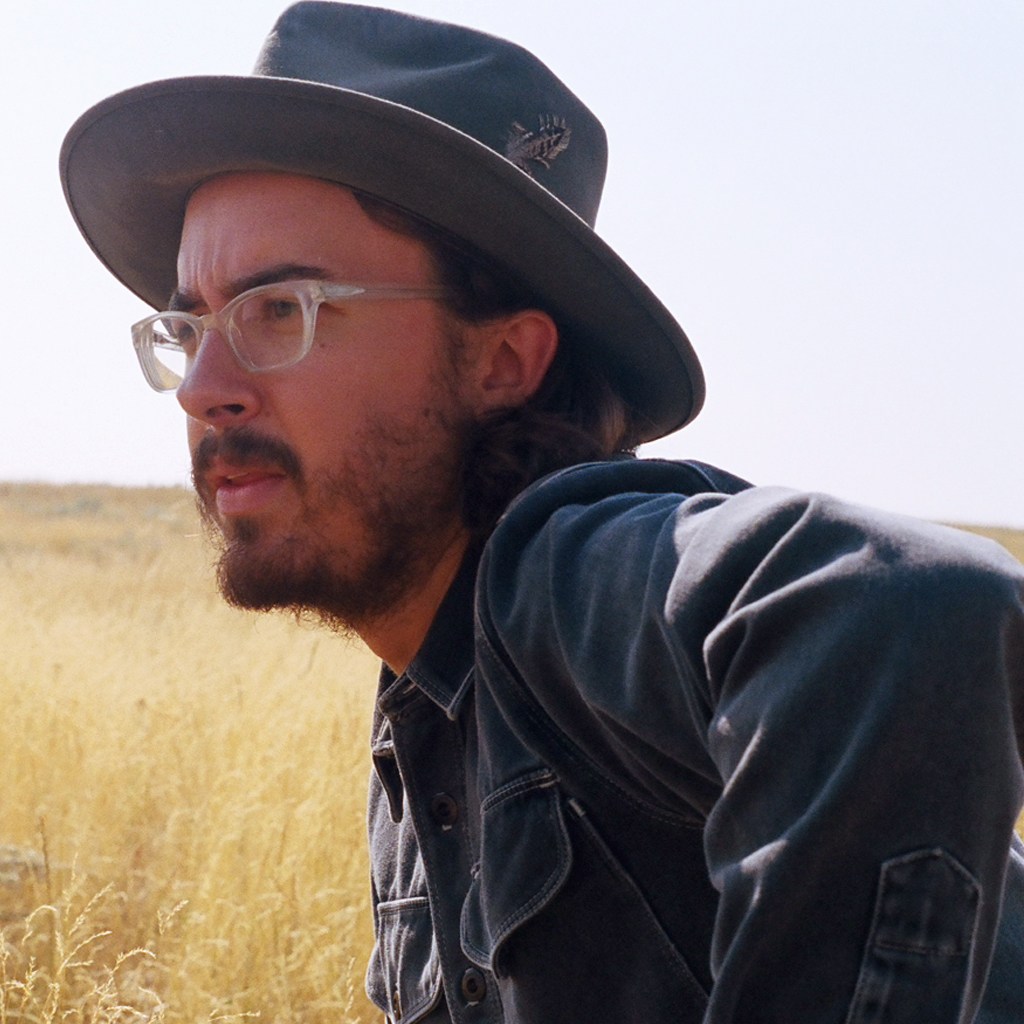
After this first experience in Ashland, I felt a new identity for myself as an artist slowly emerging.I shot more photographs, I went back to Ashland the following year to stay for another 10 days, and the idea for a documentary about the place began to form. Maybe I could shoot a film in the same way I was making photographs? Maybe the film wouldn’t really need to be about anything concrete or contain a traditional story? Maybe it could just be about the beauty of people in a forgotten land, that still hearkens back to the myths we’ve made about this country? In 2017, I pitched the idea to the Montana Film Office and was awarded a Big Sky Film Grant. In August of that year, filming commenced on Ashland … and I couldn’t have foreseen the journey this film would take me on.