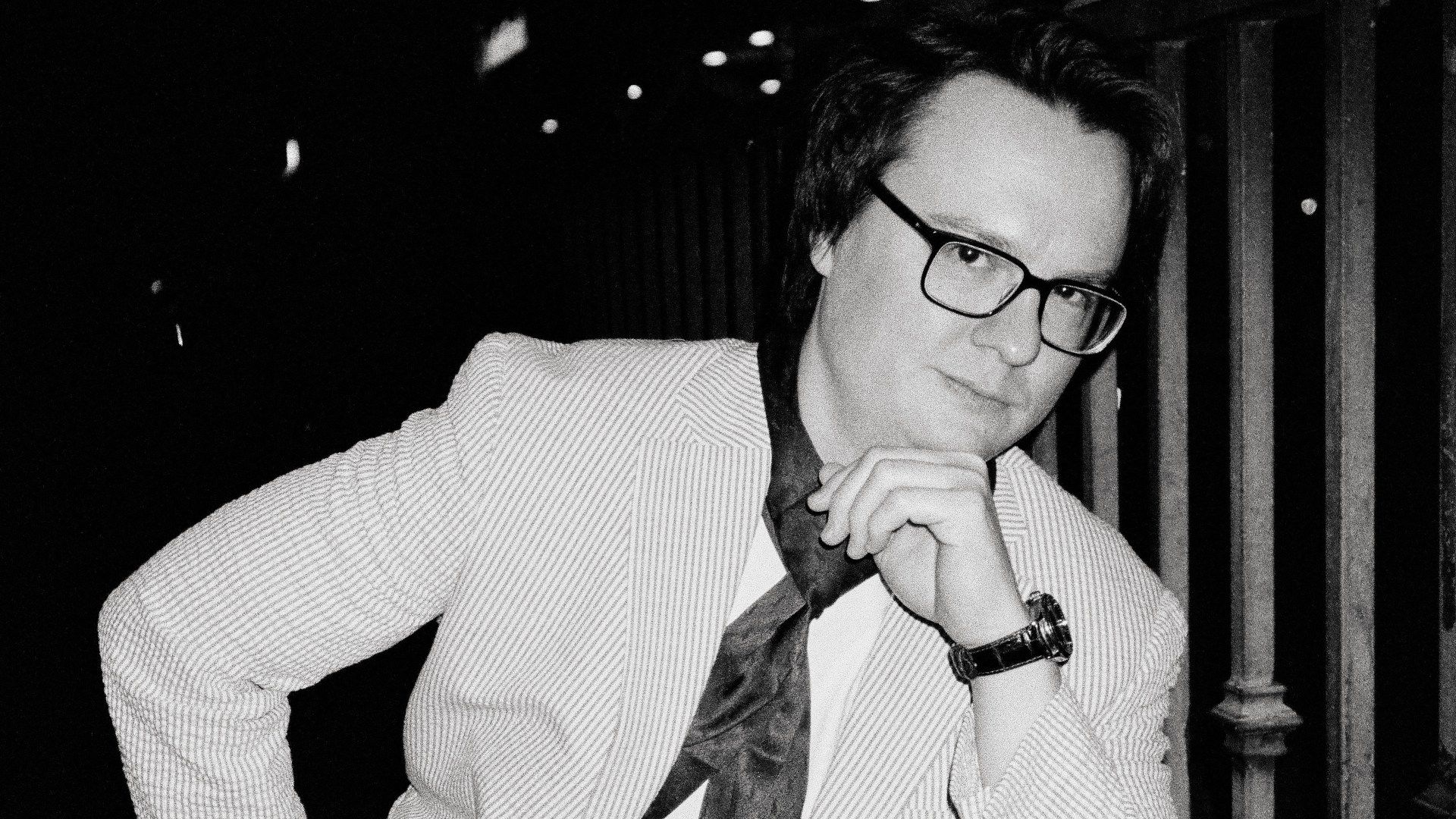
Three Great Things is Talkhouse’s series in which artists tell us about three things they absolutely love. To mark the current release in theaters of Mike Figgis’ new documentary Megadoc, which captures the behind-the-scenes drama of Francis Ford Coppola’s $120 million passion project Megalopolis, the Academy Award-nominated British writer, director and musician shared some of the things he loves most in life. — N.D.
“Potato Head Blues”
I have just come back from seven weeks in Italy, where I have a cottage on top of a hill, up a dirt track. When I go there, I drive from London; it takes me two days. Sometimes, I decide to have a silent journey, where I don't listen to anything and I just use the driving experience to have my mind wander wherever it wants to go. And I'm totally affected by the landscape as I go. This time, however, at a certain point, I decided I would listen to some music. My car is an old Volvo with a CD player in it and I have 30 or 40 CDs in the car. I found a four-CD set called The Smithsonian Collection of Classic Jazz – I'm a jazz trumpet player, so I thought it would be interesting to listen to the history of jazz, track after track, starting in the early ’20s with King Oliver and Bessie Smith.
As I was listening, I was intellectually really awake. My dad was a huge jazz fan, so I grew up listening to jazz, and I had an encyclopedic knowledge of it by the time I was 12. Suddenly, as I was driving, a track came on by Louis Armstrong called “Potato Head Blues.” The solo in “Potato Head Blues” is widely regarded as being the birth of individual solo playing in jazz. (I can play it on the trumpet, more or less.) As I listened, I found myself weeping. I was going through the south of France or maybe Switzerland, and the combination of listening to this music and the landscape created an almost out-of-body experience.
By the time I got to my destination, I’d listened to the entire four-CD set, and I was reminded of a conclusion I came to a long time ago, which is that probably 98 percent of all music ever written and recorded is not very good. But the standouts, when you hear them, are utterly exceptional. On this box set, those standout tracks were “Potato Head Blues,” an Ornette Coleman track and a Charlie Parker track. That’s the reason why we still talk about these musicians, because their music is so utterly above the herd, so unique and transcendent. They alone made the journey totally significant. I actually thought about doing a podcast just about these tracks, and how Armstrong and Parker had set this incredibly high benchmark which all the other jazz players of their eras could never touch. The phrasing and just the sheer energy and joy of what they were doing, you hear it in those amazing moments.
A Fan’s Notes
A book that I still think about and that has influenced me a lot is A Fan's Notes by the American writer Frederick Exley, who wrote it in the late ’60s. Exley is the main character in the novel, which is biographical as well as fictional. Exley was an alcoholic; he died in his sixties and only wrote three other books, none of which were as good as A Fan's Notes. In the book, he's an alcoholic, he has electric shock treatment, and he ends up staying with his mother, who has remarried. He’s sleeping on her sofa, and his stepfather doesn't approve of him being there, as all he does is watch soap operas and get drunk every day.
There's a wonderful sequence in the book that I think about a lot, because I watch a lot of Korean Netflix dramas, which are kind of like soap operas. In the book, there’s a drama that he watches that’s in the vein of General Hospital, where everybody is supposed to be nice and their life is good. In his alcoholic fantasy of this show, though, suddenly everybody just turns really bad. They're all having sex with each other, and there's a wonderful description of the complete breakdown of the soap opera world. I remember when I first read it, I was so energized by this idea, because most films or TV shows that I watch now feel like a dream I’ve seen so many times before that I can't get out of, so I long for something different to happen that will blow my mind. When I do see a really good film, it's usually because something like that has happened. Unfortunately, what's increasingly happening to cinema is a soft positioning toward the middle of the road. Nothing nasty is ever going to happen. Nothing is surprising. And that's a disaster for our culture.
Pushing Cinematic Boundaries
Right now, as a filmmaker, I'm trying to push my own boundaries. A few years ago, I realized that I don't want to make films with a lot of people. I don't want an audience when I'm shooting. If I was writing a novel or painting a canvas, I wouldn't want six people in the room with me, watching. So for a while I’ve been experimenting to see what would happen if I didn't have a crew, if I just found an actor and made something together with them. There's a great quote from Diane Arbus where she said that unless you're prepared to cross the line of perversity, you're not going to get anything really original. You have to have the courage to cross that line. And when you get rid of the crew, it's “perverse,” because you're being protected by the crew, by this ensemble of people who don't really love cinema so much but are doing great jobs, who you're hoping will help you make the film you want to make.
It's one thing to say, I want them to go away, but when they do go away, suddenly, it's embarrassing. It’s just you and the actor, and it feels a bit odd. But then you realize actually it’s not just you and the actor, it's you, the actor and a camera. The kind of filmmaking that I want to carry on experimenting with is radically different if there’s even just one more person in the room – they become an audience and you start bouncing off that third person. If it’s just the two of you, the actor has to make a completely different set of decisions about what they're doing. And that feels new and radical. It requires a lot of courage, but it's woken me up as a filmmaker as I ask, OK, how much time do I have left? What do I want to do with my time? I realized this is the area of cinema I would like to continue exploring.
Even if I'm just making a feature film, like the one I'm setting up now, maybe I can do it with a crew of just 10. Go back to my hippie cooperative roots, where we all carry the gear, don’t have lines of demarcation and just share things. I did make a couple of films like that, Hotel and Timecode, and that style seemed to work really well for the actors, who really enjoyed being invited into the process more. As a director, I can't relinquish my role, though; at the end of the day, actors want you to judge what they're doing and help them with that. So it's about finding what level of collaboration is useful for the actor and what is too much. You can't give them too much responsibility, because they need to focus on what they're doing.
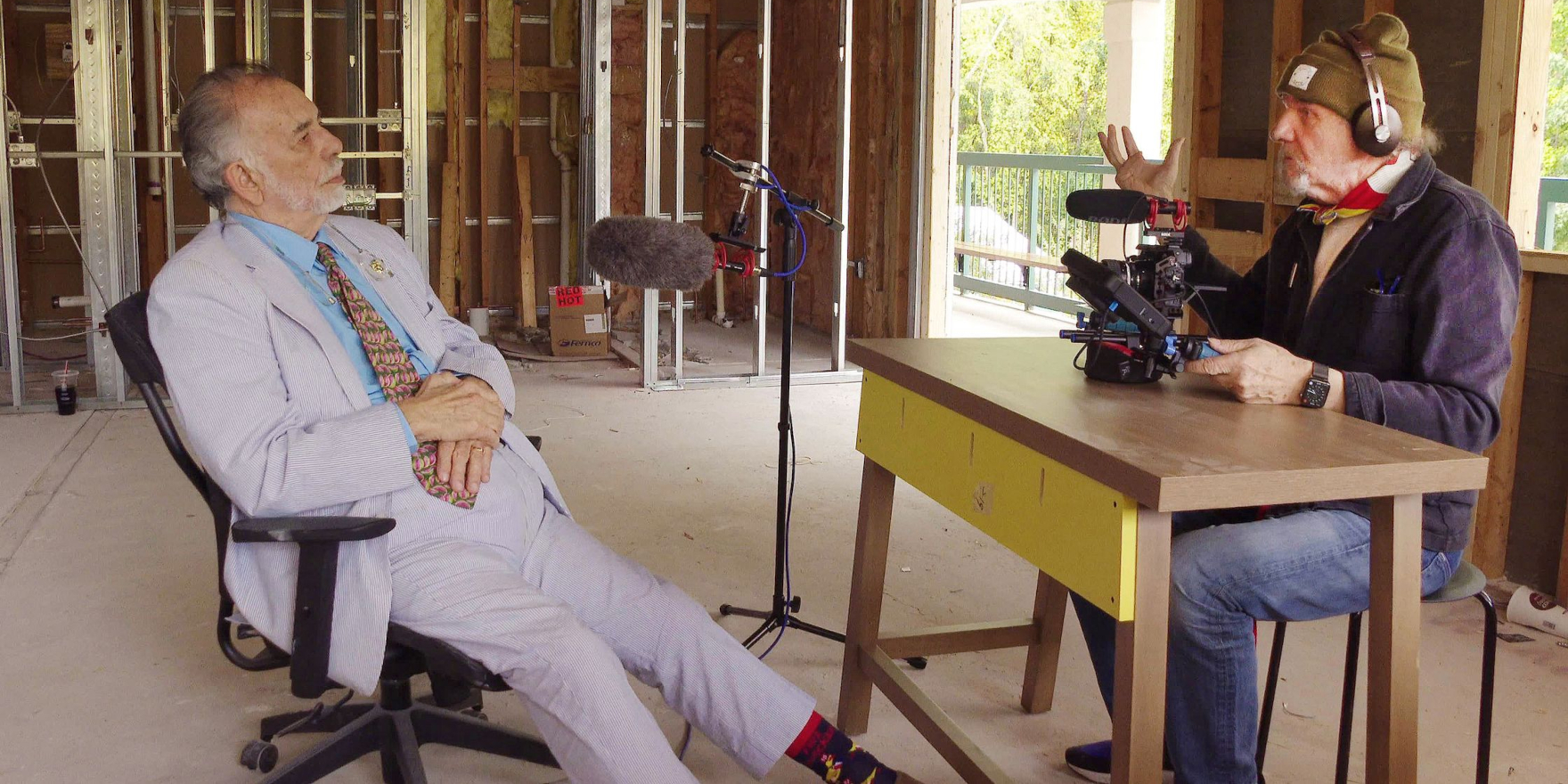
Featured image, showing Francis Ford Coppola with Mike Figgis in Megadoc, is courtesy Utopia.