Episode Info
- Season6
- Episode2
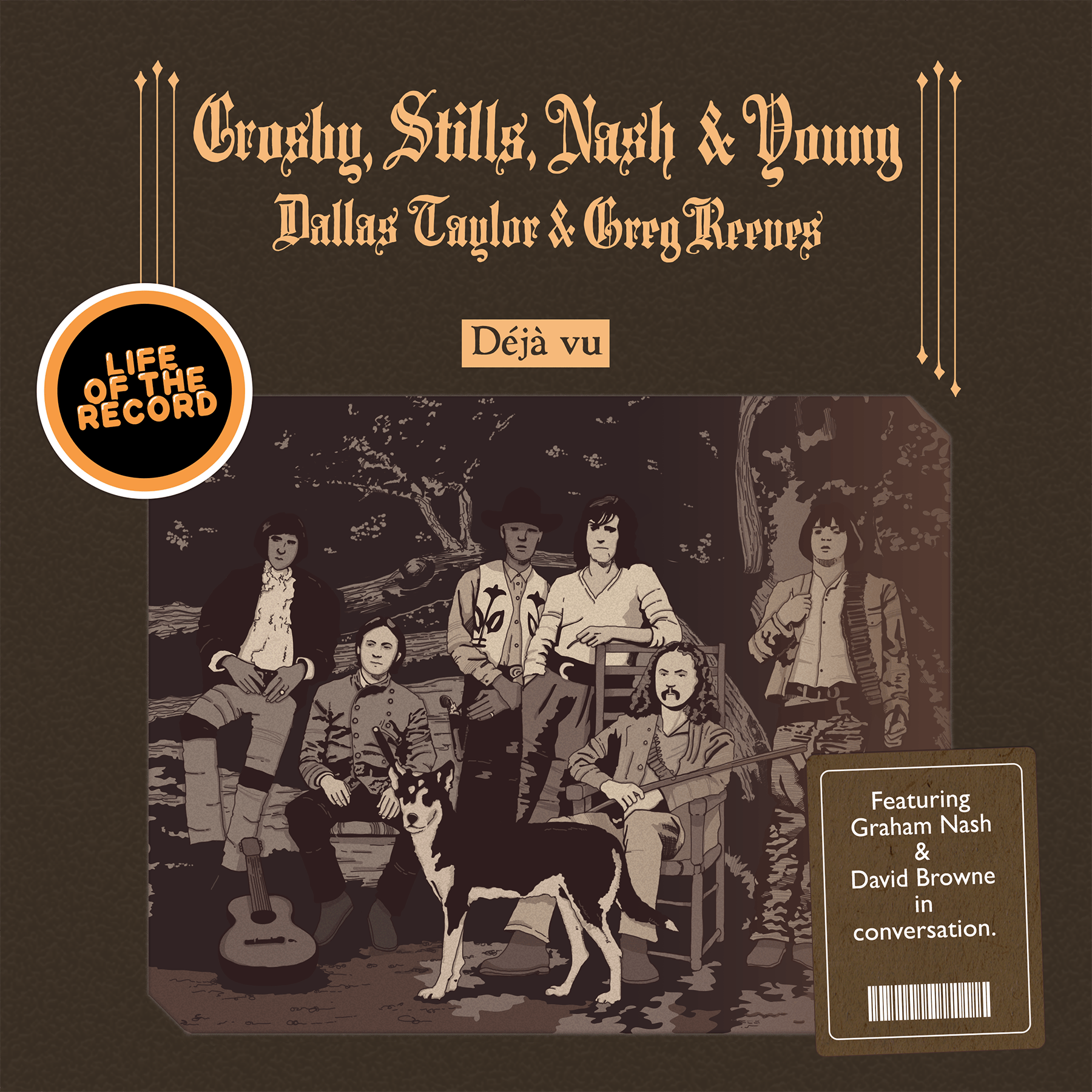
In celebration of the landmark Crosby, Stills, Nash & Young album Déjà Vu, we take a detailed look at how it was made. Crosby, Stills & Nash formed in 1968 in Los Angeles, California by Stephen Stills, David Crosby and Graham Nash. Each of them had been members of successful rock bands, including Crosby in the Byrds, Stills in Buffalo Springfield and Nash in the Hollies. After an impromptu sing-a-long at a social gathering, they realized they had a unique harmony blend and decided to form a new group. They signed a deal with Atlantic Records and released their self-titled debut album in 1969. The album became a huge hit so they began planning for their live shows and realized they would benefit from bringing in an additional band member. Ahmet Ertegun of Atlantic Records suggested Neil Young, since Young and Stills had been former bandmates in Buffalo Springfield. They started playing live as a four-piece before turning their attention to recording their second album. Déjà Vu was eventually released in 1970.
In this episode, Graham Nash describes the night at Joni Mitchell’s house when he encountered Stills and Crosby and stumbled on the harmony blend that became their trademark sound. As Nash was still a member of the Hollies at the time, he talks about his decision to leave the group and move to Los Angeles to see where this new band would take him. Nash recounts the details surrounding the album, including finding his own songwriting voice and the consequential decision to bring in Neil Young as a fourth member. He describes how his breakup with Joni Mitchell, Stills’ breakup with Judy Collins and Crosby mourning the recent death of his girlfriend Christine Hinton gave Déjà Vu a darker tone than their first record. David Browne, music journalist and author of Crosby, Stills, Nash and Young: The Wild, Definitive Saga of Rock's Greatest Supergroup, discusses how their personal lives and the political turmoil in the late 1960s contributed to Déjà Vu being such an impactful record for so many people. He describes how Neil Young was not yet a household name but was finding his artistic voice and entering a wildly prolific period. Browne also talks about how Stills was the primary musician and de facto leader of the group but the power balance shifted as Young shook up their dynamic. Even though each of them had found success with their previous groups in the 1960s, Déjà Vu went on to help define them as solo artists and as the preeminent supergroup of the 1970s. From asking Jerry Garcia to play pedal steel on “Teach Your Children,” to CSNY teaching the Grateful Dead how to improve their harmonies, to the powerful rhythm section of Dallas Taylor and Greg Reeves, to performing at Woodstock and Young refusing to be filmed, to the disparate songwriting styles of each member, to a band at the peak of their powers, we’ll hear the stories around how the album came together.