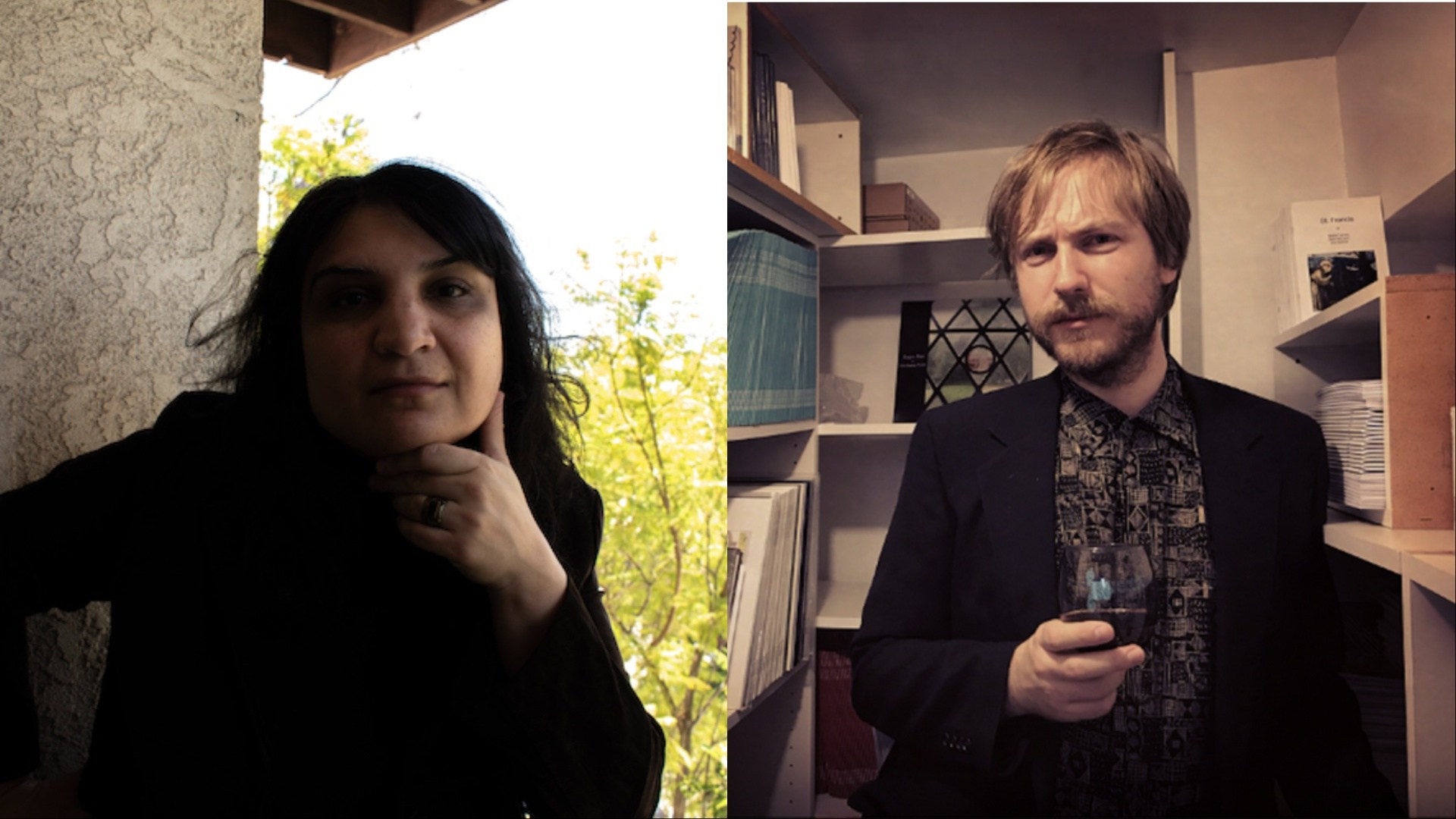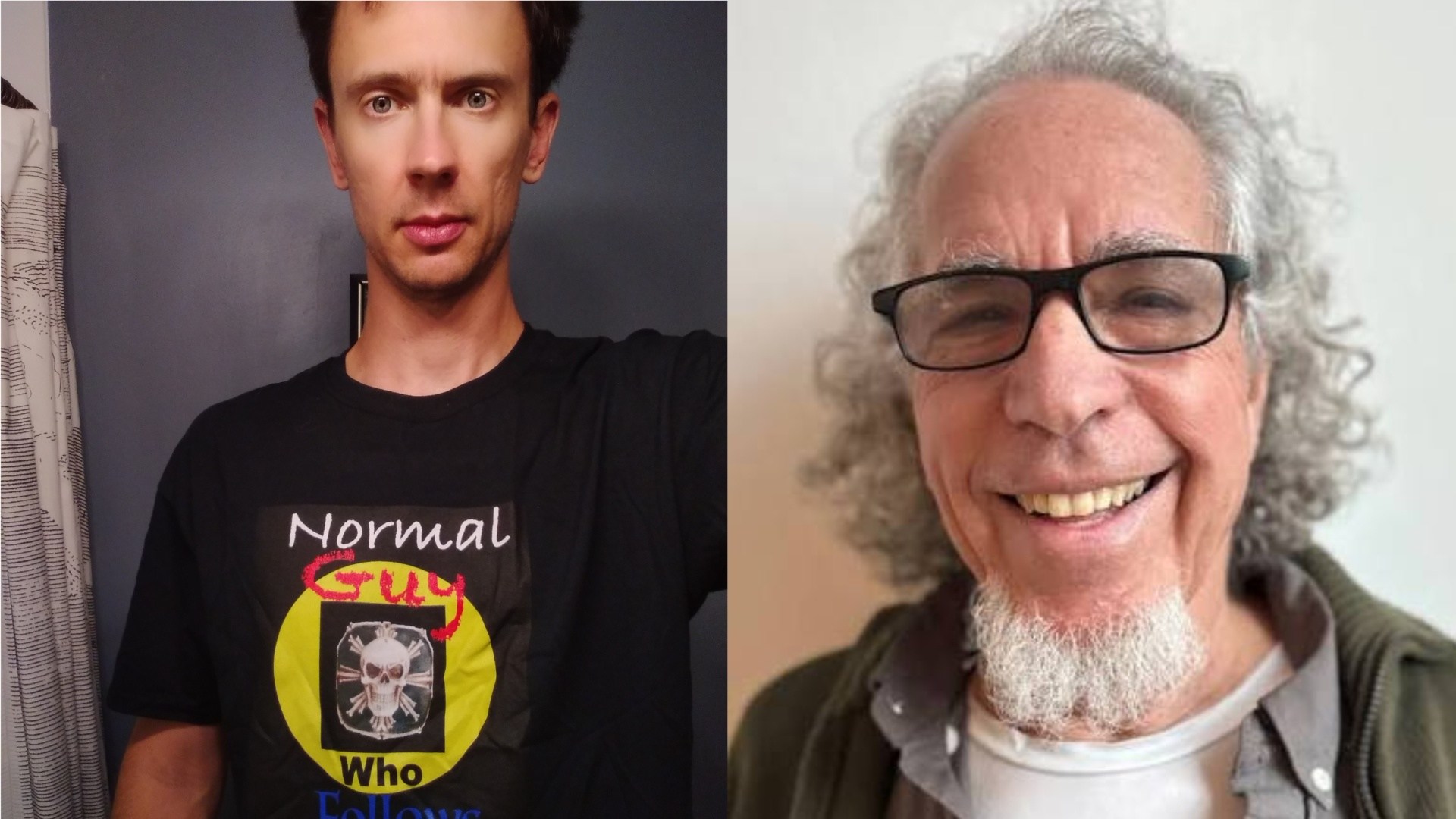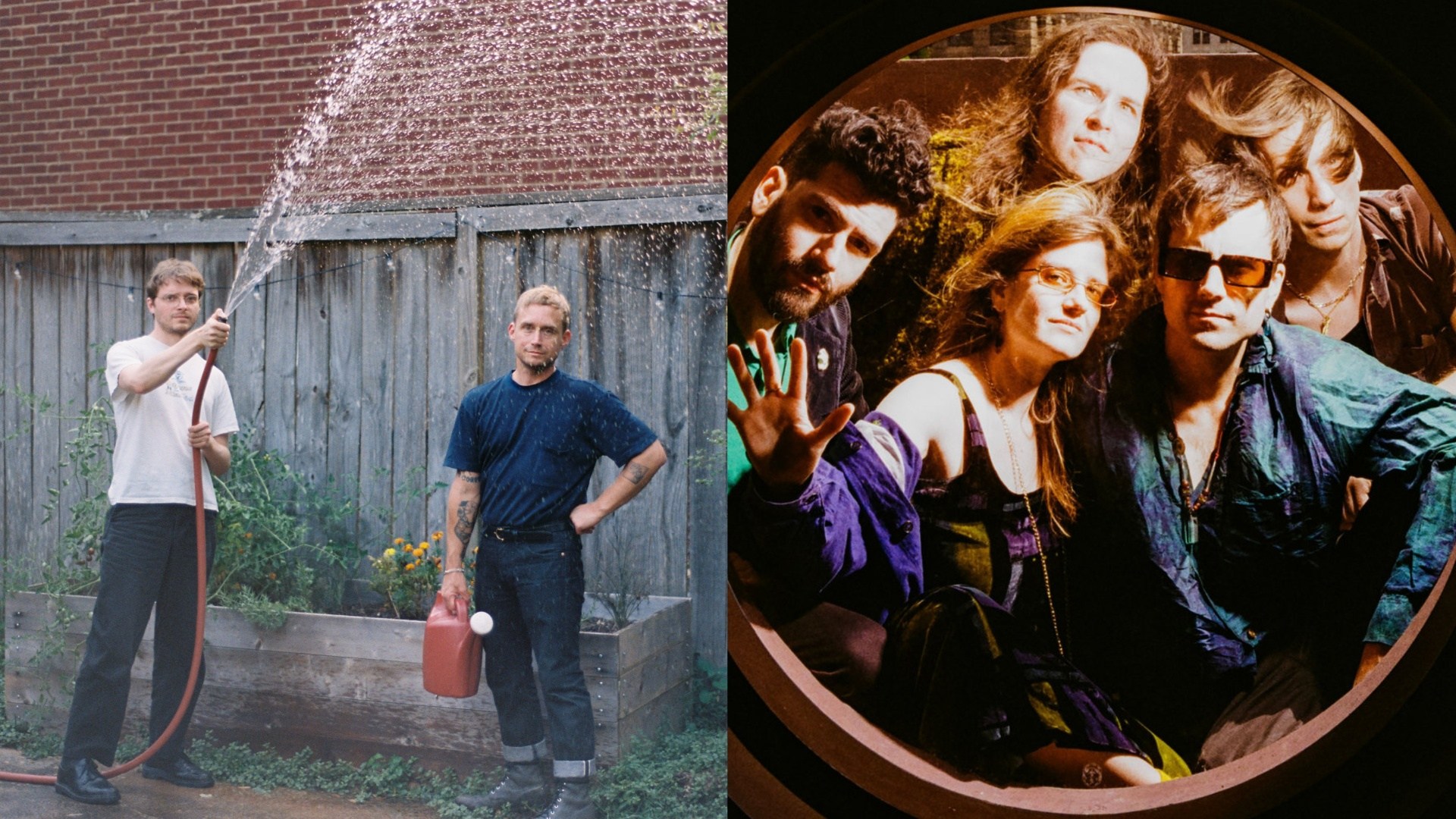
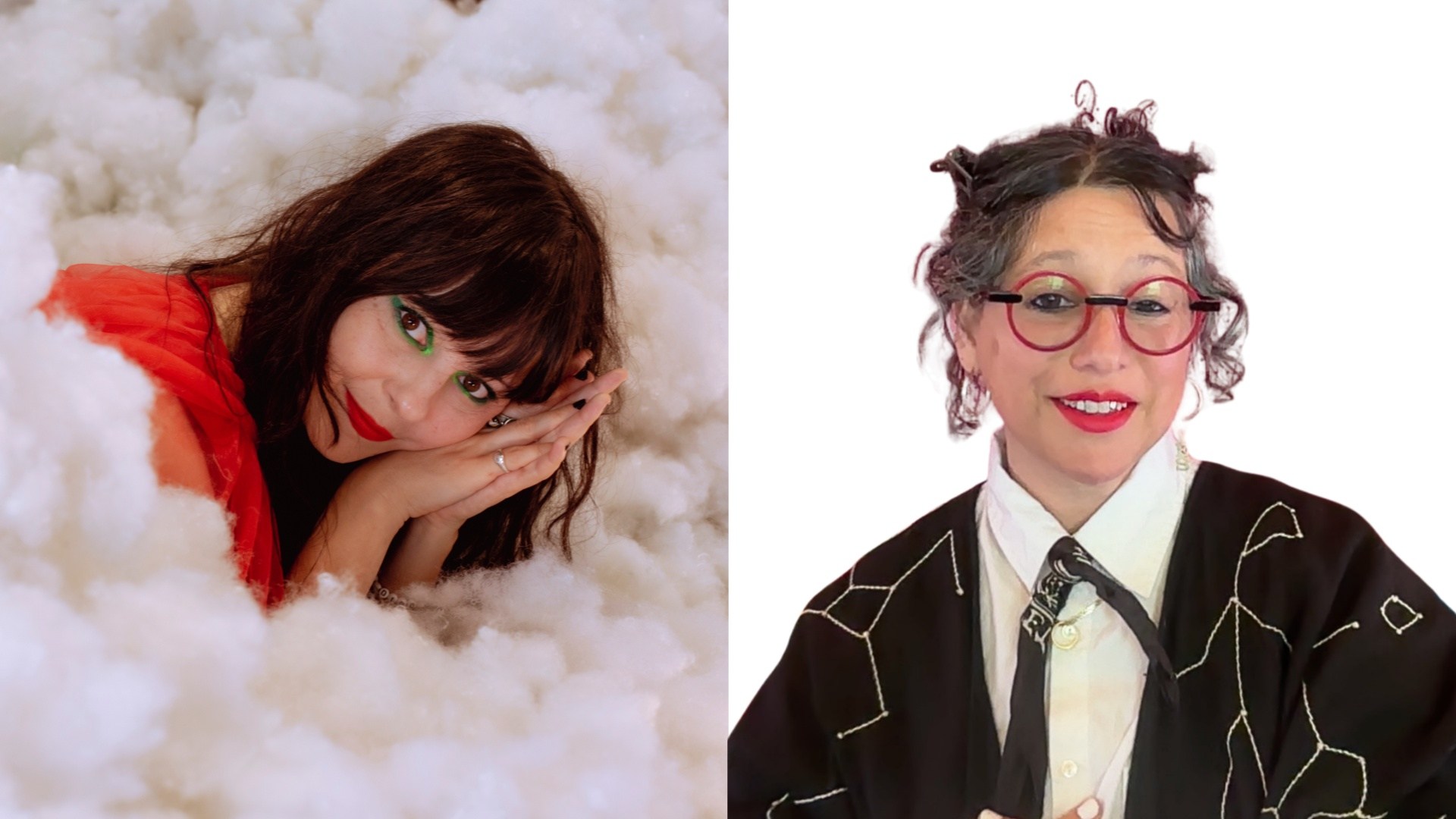
Bonnie Bloomgarden is the lead singer and songwriter for the LA band Death Valley Girls; Jessica Lanyadoo is a humanistic astrologer, psychic medium, tarot reader, and animal communicator, and the host of the podcast Ghost of a Podcast. The latest Death Valley Girls record, Welcome to Earth, was just released earlier this month on Suicide Squeeze. It comes in the wake of Bonnie losing her home in Altadena to the Eaton Fire, and soon after that, the passing of her beloved dog Tommy. To mark the record’s release, Bonnie got on Zoom with Jessica to talk loss, the importance of energy work, and more.
— Annie Fell, Editor-in-chief, Talkhouse Music
Jessica Lanyadoo: Hi, Bonnie!
Bonnie Bloomgarden: Hi! Oh, my goodness, thank you so much for being here and talking to me.
Jessica: Oh, I'm so excited. I've been listening to your record on repeat. It's so great. I don't know if this is cool, but this is my question: Where is your Neptune? I must know.
Bonnie: How do I figure that out?
Jessica: Damn, we should have organized this in advance… I'll tell you why I ask, because your record is so deeply Neptunian. It's between worlds, and [has] this psychedelic energy that is ecstatic and present and also somewhere else altogether, which is peak Neptune energy.
[Bonnie enters her birth info into the tool on Jessica’s website and shows her the chart.]
Jessica: OK, so, you've got your Neptune in the third house and it squares your Mercury. That makes sense — what you feel called to communicate and the way that you communicate is literally between worlds, and sometimes that makes it hard to find specific language. But the arts, whether it's singing, or there's so many layers of the arts — esoteric arts included — that's where the flow is really accessible to you. If you don't mind me saying…
Bonnie: No, this is a dream come true. To find you in the last year, switching my frame of reference from “I've lost everything” to “I have everything to gain” — you were just like this lighthouse. I think people don't really get a lot of stuff when it comes to astrologers or psychics or healers of any type. They don't understand that you're all individual. You have your way of doing it. The information you get and how you interpret what people are saying through astrology and being psychic — it's the most beautiful thing in the world, and every week, if nothing else, I look forward to just hearing you talk to people and understand them in a way that I think is very rare. So thank you.
Jessica: Thank you. That is so kind.
Bonnie: When you're doing these individual readings, you seem to get so much information from astrology. I can't imagine how much you've studied that, and also just your intuitive gifts. But when you're giving them practical advice, is that being channeled from somewhere? How do you do that so quickly?
Jessica: It's a combo platter of things. I started meeting with clients as an astrologer in 1995, so I've been doing it for a really long time. So part of how I'm as quick as I am is just 30 years of practice. Then part of it is in the birth chart, and part of it is psychic, and then I would also say part of it is active listening skills, which is something I learned through social work jobs and my work here. I think a lot of times, psychics and astrologers are not listening to people; they're reading signs, they're forecasting. And that's valuable, but it's not trauma-informed. I'm a humanistic astrologer — it's not human-centered. For me, listening to people, it's something to do with lots of different senses.
In your music — certainly in your most recent album — I feel like you know exactly what I'm saying. You're not just listening with multiple senses, but also through the lyrics and the music of that record, you're bringing us through layers. I don't know how to talk about music, but I can say, something I was really surprised by is the vocals are a little lower than the instrumentals, and it makes me kind of lean in more.
Bonnie: Ooh!
Jessica: Which I really love. And it speaks to your question as well — it's inviting listening in a different way. And I am just a fan of exploring different ways of listening… Anyways, all to say: never underestimate the power of listening and asking questions. I think that's a big part of how I'm able to give advice, is because I'm listening to people and where they're starting from and what they're saying about themselves.
Bonnie: One thing that I also got from you this year is constantly drilling in accountability and stepping back and being like, What did I bring to this? What have I done in this pattern? Is this a pattern? Do I keep doing this? I busted open my accountability mechanism this year and it changed everything. A question for you is: Having the sensitivity and the ability to feel all around, below, within, throughout — is that a learned experience?
Jessica: Yeah, I mean, it's part of my nature. But also, I think most people who are really drawn to trauma as a life path… People often say to me, “It must be so hard to be in people's pain.” And for me, I am at home. I know how to be in dramatic situations and painful situations and fear. I'm very intimate with it. And what I found was that the healthiest way for me to be as an individual was to meet people there instead of [needing] to find it in my personal life. In my professional life, I get to live in complexity and intensity — which I don't know if you've noticed, but it's not super chill in your social life. [Laughs.] So it's really a good thing for me.
I have this old zine from, I don't know, probably the early ‘80s or late 70s on my wall, and it says, “Every Astrologer Has Been There.” That's the title, and it's a lady looking out over a meadow. I often think, Not every astrologer has been there… But the one where you're like, “Yes, yes, that” — there's always some sort of resonance, and I think resonance is a form of accountability. It's being present with, Oh, I vibe with that. What am I going to do about it? What does it mean? Do I reflect? Do I act? That is, to me, a huge part of it.
Bonnie: Yeah, totally. It took me so much to finally actually know what holding space is and to be able to do it. And I come from the background of, we all share one nervous system. I think almost everyone in the situation, they are not aware that they're sharing nervous systems. I just realized that I can have my own, and it was safe enough finally for me to have my own. And then also just be able to, for the first time, even though I thought I had been doing it, hold space and not push stuff away when people are coming at me. Holding space — was that also something that you grew to learn?
Jessica: Yeah, it's been part of my life's work. And it does come somewhat naturally to me, because the way that my personal psychic skills work is I just feel what other people are feeling. The word “empath” — like so many other words that we use, they mean too many things. So I hesitate to use that word. But I will often feel other people's feelings alongside them, with them. And when I was able to realize that's what was happening, it took a very long time for me to figure out how to be present with it without attaching to it. Because I would be with somebody and they would have just gotten off the phone with their mom and had a really upsetting fight, and then we start hanging out and I'm like, Oh, my god, they hate me. They're so upset. And not being able to hold presence within myself enough so I could recognize, This is something I'm familiar with but it's not mine. That is a practice I'm constantly actively engaging and does not come naturally to me. It’s something I work very hard on. Which is part of why it's such a huge part of my work. It feels to me like the more accountable I am for myself, the more space there is for you to be accountable for yourself, or for us to fall out of resonance. That's really what it comes down to. Because there are going to be people who like you and love you, but can't be more healed versions of themselves in order to be close to you. And that's not somebody being against you or fucking with you, that's just a lack of resonance, even though there's not a lack of love or like. I think that's really hard for us. We have this Disney fantasy of getting along with people. But it takes work.
Bonnie: Yeah. It seems like that concept is also really related to these kind of past expectations — I call it “Boomer tech,” where it was important to find someone and it doesn't matter if you like them or not, you gotta stay with them, you gotta get a house, you gotta have kids, and that was the rules. It seems like now, the rules are shifting and changing and we're leaving that. You don't have to stay with someone, you can see if it feels good or bad, in friendships and all these things. I don't know if that's also astrological…
Jessica: You know, it's interesting, it is astrological. I was born in the mid-1970s — I was born one year after women were legally allowed in the United States to have checking accounts that their father or husband didn't co-sign. Boomers weren't the first generation to be that way; they were the last generation where women didn't have any rights, and queer people certainly didn't have rights. So we didn't have options in our personal lives, and we also didn't have options as creatives in the same way we do now. We have so many choices — which speaks to the rise of the white Christian nationalist movement, because they're like, “Fuck all these choices, fuck all these women being able to be like, ‘I'm not your friend anymore, I don't go to this church anymore, I don't hang out with this man anymore.’” And I think there's a lot of astrology we can point to with that. I think astrologically, we are in chaotic, dramatic, profound times, and we will have revolution. The question is, whose revolution?
That comes back to accountability. Not just personal relationship building, but community and coalition building is really hard when everybody's on their phones and overwhelmed and shut down.
Bonnie: You talk about this on your podcast, but now that I get to ask you personally — even before somebody was president the first time, how I read what was happening now, and what was going to happen, was that this is the collapse of the stuff that doesn't work. It looks to me like this is it breaking itself, and it doesn't look sustainable. Do you think that's a naive way to look at it?
Jessica: I don't. I think things are breaking, and I think bad actors are actively breaking things. You know what I mean? There are bad actors with really patient, well-executed plans for evil. And I am not confident about what will come next. I wish that I thought that the moral arc of the universe would bend in my lifetime towards my values, but I don't have that confidence. [Laughs.] The most diplomatic way to say it…
Bonnie: [Laughs.] No, totally. Also, I think either way, what you do share and the cautiousness with which you do share your optimism is important in and of itself.
I hope this is not annoying, because when people reference interviews I've done, I'm like, “What? I don't remember saying that.” But I do want to let you know something very, very sweet that you did in the episode you had with the person that had a terminal cancer diagnosis. That episode was so beautiful and wonderful and you handled that so amazingly. During it, I was like, This lady saying so many things that you would just say “sorry” to. I wonder why those words aren’t flopping out… And then at the end, you asked her if it was OK to say three things that she said “don't say,” and one of the things was, “Don't say ‘sorry.’” I learned so much in that moment. My friend has cancer, and she was she said “sorry” isn't a problem, but the “fuck cancer” thing — she's like, “I don't like that at all. That's being mad at me.” There is so much to learn there. Also, “I'm not brave, I have no choice” — it was like this little tiny moment at the end of your episode is a years worth of just information. I just want to thank you for asking her.
Jessica: I appreciate that so much. It's such a important lesson that there's not one right way of doing things. We live so chronically online and we're constantly being told what to do, what not to do, what to use, what not to use, where to go, where not to go. There's value in education, and also there's asking people what they fucking need. I am Canadian, I say “sorry.” I say it all the time. It was feats of strength for me to not say it to her. And it was so good that I did, and also it gives you a peek behind the curtain where I do talk to people before we start recording and do some checking in. Because of the topic I was going to read with her about, I did ask, “Is there anything you don't want me to say or do?” Relationships get a lot easier when you just ask people, “Hey, do you want me to listen? Or do you want feedback?” “I want to rally for you, I want to cheerlead for you right now. Does that feel supportive or do you want me to shut the fuck up?” There's value in just asking people, and it's shocking how how infrequently we are asked, “What do you need?” In a way that's actually constructive in the moment.
Bonnie: I think for me, that's a really good sign that my nervous system isn't regulated, if I'm just running around throwing help around. I noticed that's a really common thing with me and the band and all my friends; our bodies are reacting to each other, and when I feel like I'm doing my part to be at peace, I have the space to do that. What do you think the modern person can do to check in with themselves on a regular basis?
Jessica: I actually have an exercise that I like to teach. There's so many psychological ways that you can do it, there's behavioral ways that you can do it, and all of them require being present. And a lot of times when we're running around vibing off each other, helping each other manically, or getting ahead of problems just in case, we're not really present or future. So there's an energy work exercise that you can do and it's really simple. And you may at times try and be like, Am I just fucking making this up? Is this ridiculous? Worst case scenario, it's not anything but a visualization, imagination exercise. Best case scenario, it's an energy work exercise.
Anyways, it’s super simple: all you do is you get present and visualize a Glinda the Good Witch bubble around you. You can fuck with Glinda the Good Witch?
Bonnie: That's my guy.
Jessica: That's what I'm talking about. So you just visualize a really big Glinda the Good Witch bubble around you. The bubble is really strong and resilient and it's adaptable. You know how bubbles kind of got wiggle, they can move — so if something comes at it, the bubble can hug you more if you want to avoid it. What I like to do is set this energy bubble around you and fill it up with color. Not your visually favorite color, but the color that feels good. A lot of people like white light. I don't generally love white light, but I love gold. I'll go with browns because they're really grounding. And for you, depending on the people, it might be red, it might be brown, it might be white. Or even if you're around fans and you're like, “Yay, fans!” — it's still hard to have a lot of people's energy coming at you. So what you do is you put mirrors on the outside of your bubble, so when people look at you, they see whatever they need to see, but it doesn't permeate you because they're not noodling in.
This energy bubble can help you to maintain clarity about who you are and when you are, versus who they are and when they are — and as an astrologer, the “when you are” feels really important, because yesterday you may have been having an anxiety attack and today you're not. So “when” is really important because you're not the anxiety attack, you're you.
So, I would say fuck with the Glinda the Good Witch bubble and see how she blows.
Bonnie: That's amazing.
One more thing, if you could answer this, please: This record was channeled from my dog as she died. We had animal communicator and she shared this message with me that I didn't understand. She was like, “Don't worry about my body, we're together eternally.” I was like, “I don't care about our souls, I want your body to be OK…” Then when she passed, a few days later, this butterfly pea flower that I walk by every day shot the message to my head, just complete telepathic transmission. It was the best moment of my life, maybe. I'm wondering for you, with the animal communication or the mediumship, do you have a first or early memory of where it crystallized?
Jessica: I was doing it a lot, for many, many years, before I realized I was doing it. And I was doing it through pain exclusively. I don't want to brag… [Laughs.] But it was fucking awful. I was only doing it with trauma and pain. Emotional pain, mental pain, physical pain… But when I started to really recognize that it was happening, I was already a professional astrologer. It started happening in client sessions. I had this one experience — I remember I was doing a client reading and this client was sitting in my office directly in front of me, and I kept on [feeling like] my mouth was completely filled with blood. I was panicking, I was so stressed, like, I don't want this person to see my mouth is full with blood. And then, long story short, I realized that this person had a lost loved one who had shot himself in the face. So, his mouth was full of blood, and that was how he communicated to me. There was something in that experience where I was like, I am being not shown, but shown. I am being given this experience that is so material so that I can understand it from the inside. And obviously it was unpleasant at the time, but it was a really great experience because I was like, OK, this is what's happening and I have choices to make around it.
So for me — I mean, why don’t flowers speak to us all? That is fucking glorious and I love it. But for me, it was really important to be able to be like, OK, I have to either live my life where anything can come in in any way and give me this really internal download or I have to develop boundaries. And eventually I did develop boundaries. But they’re weak and I'm constantly working on them.