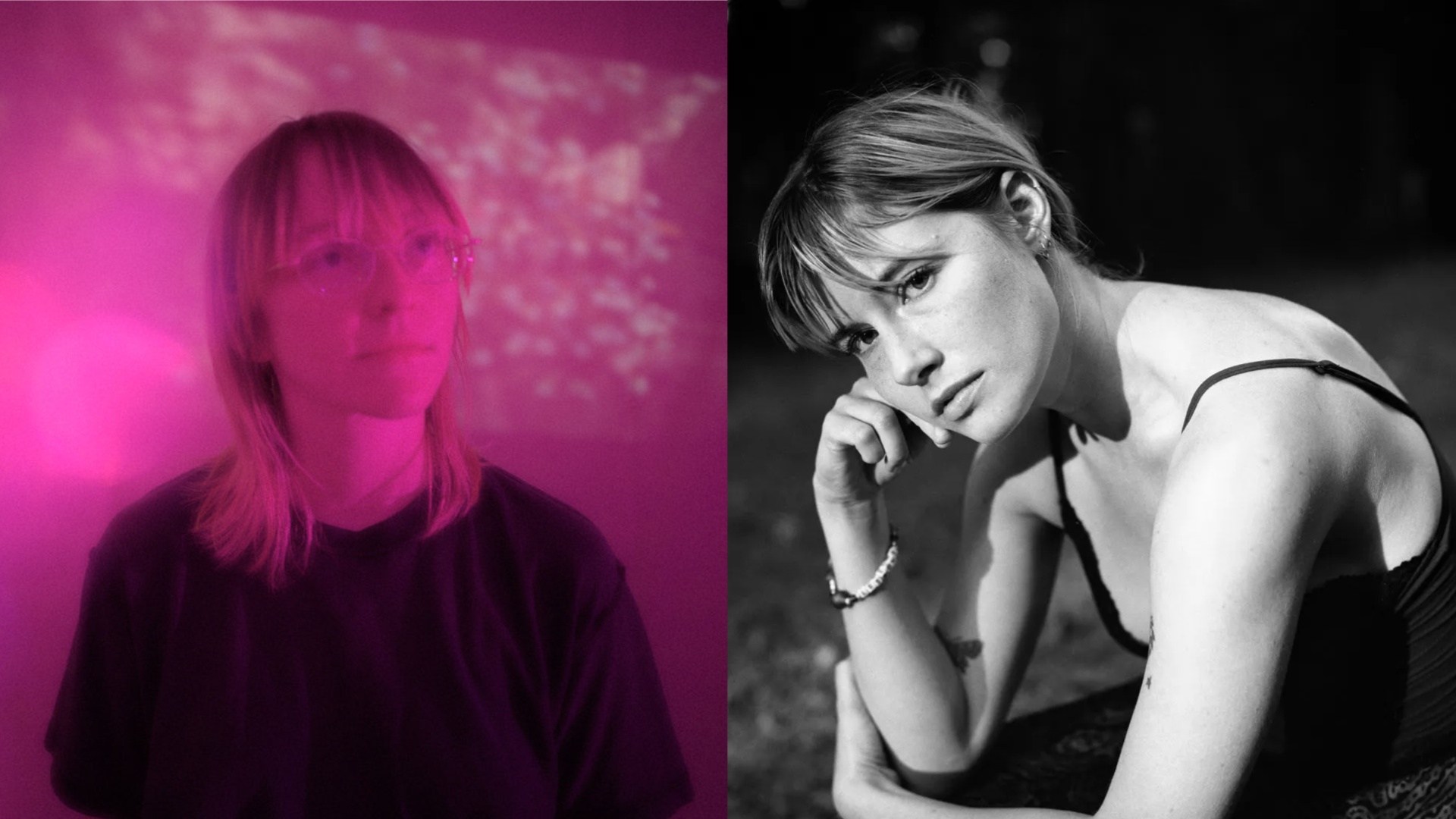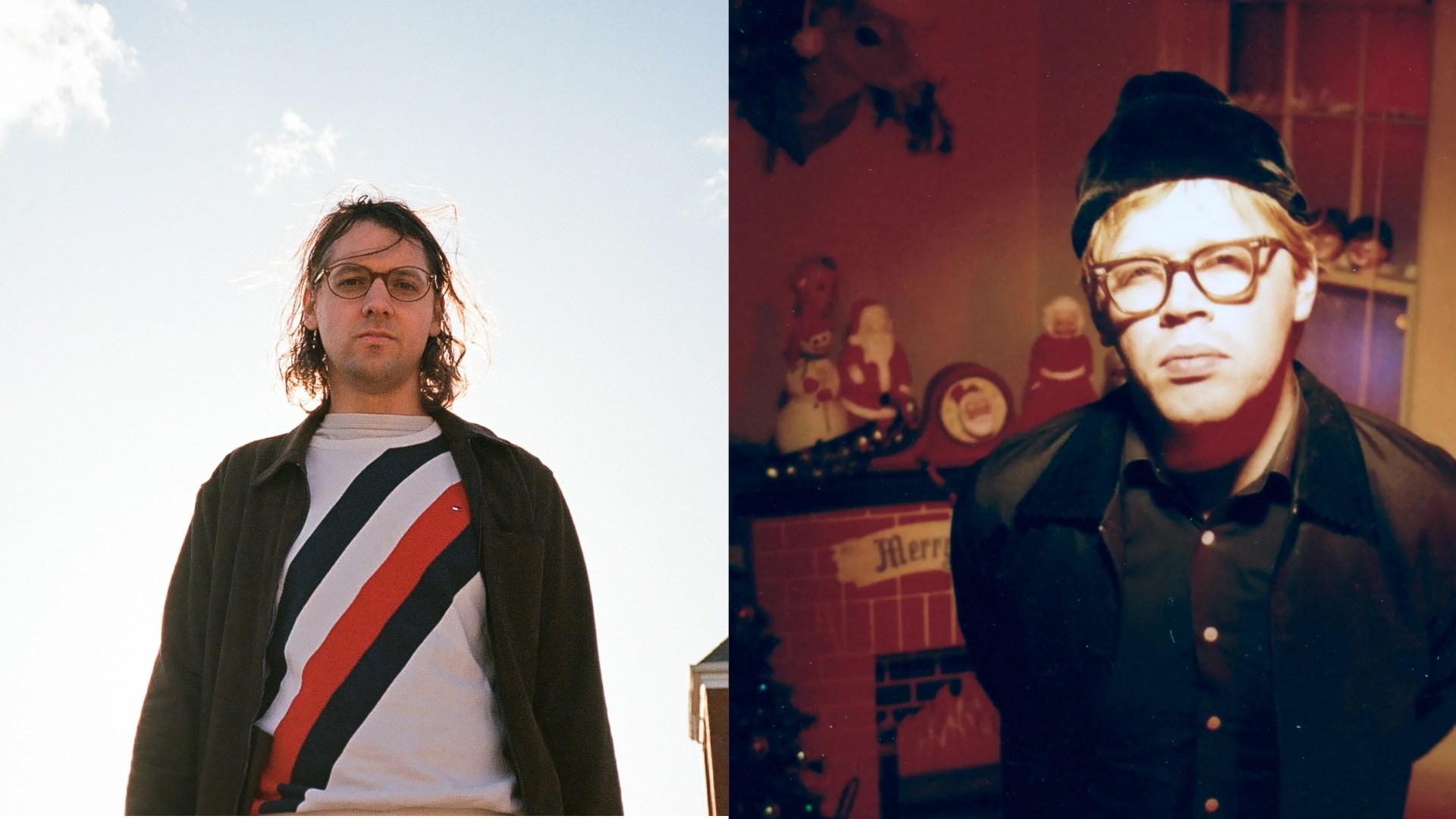
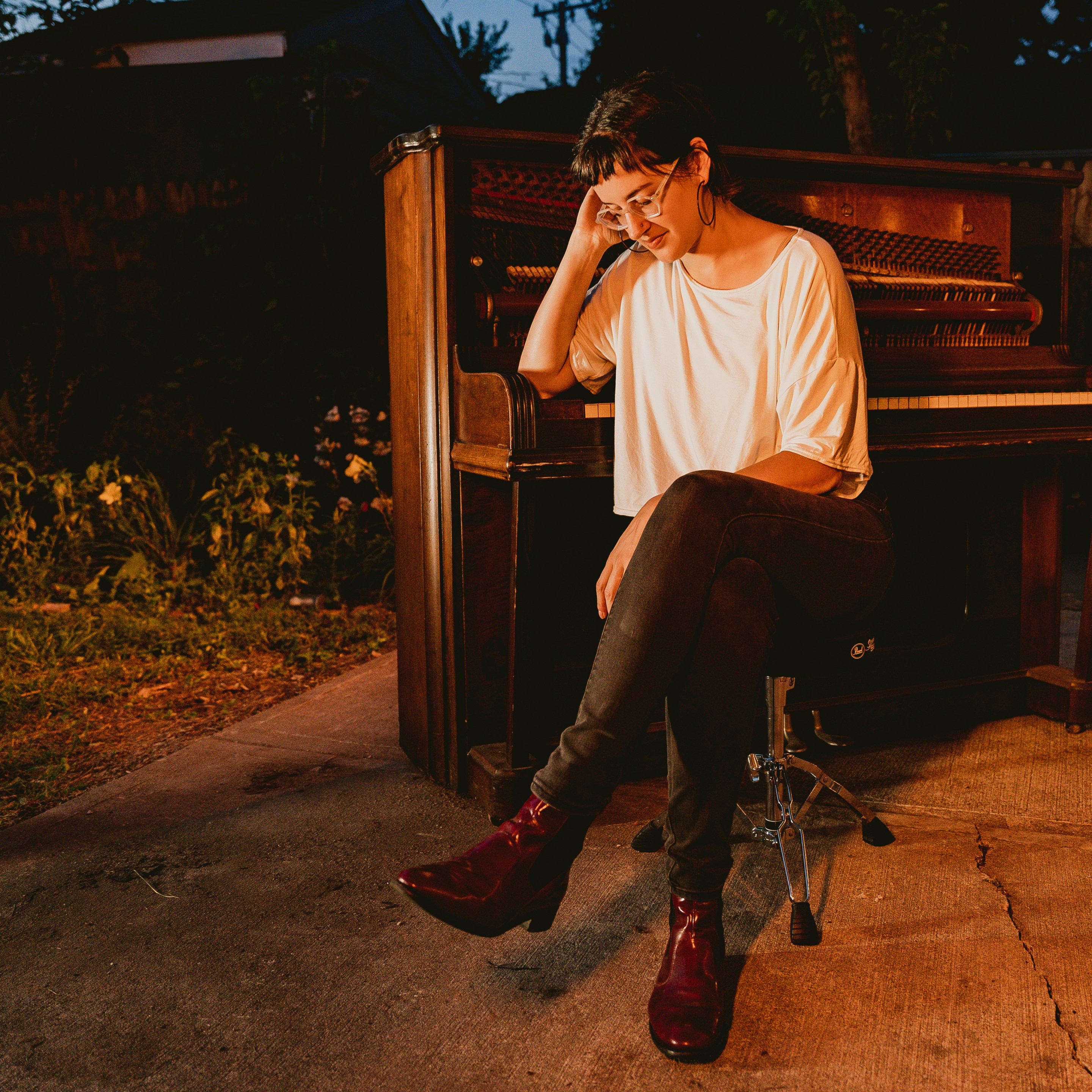
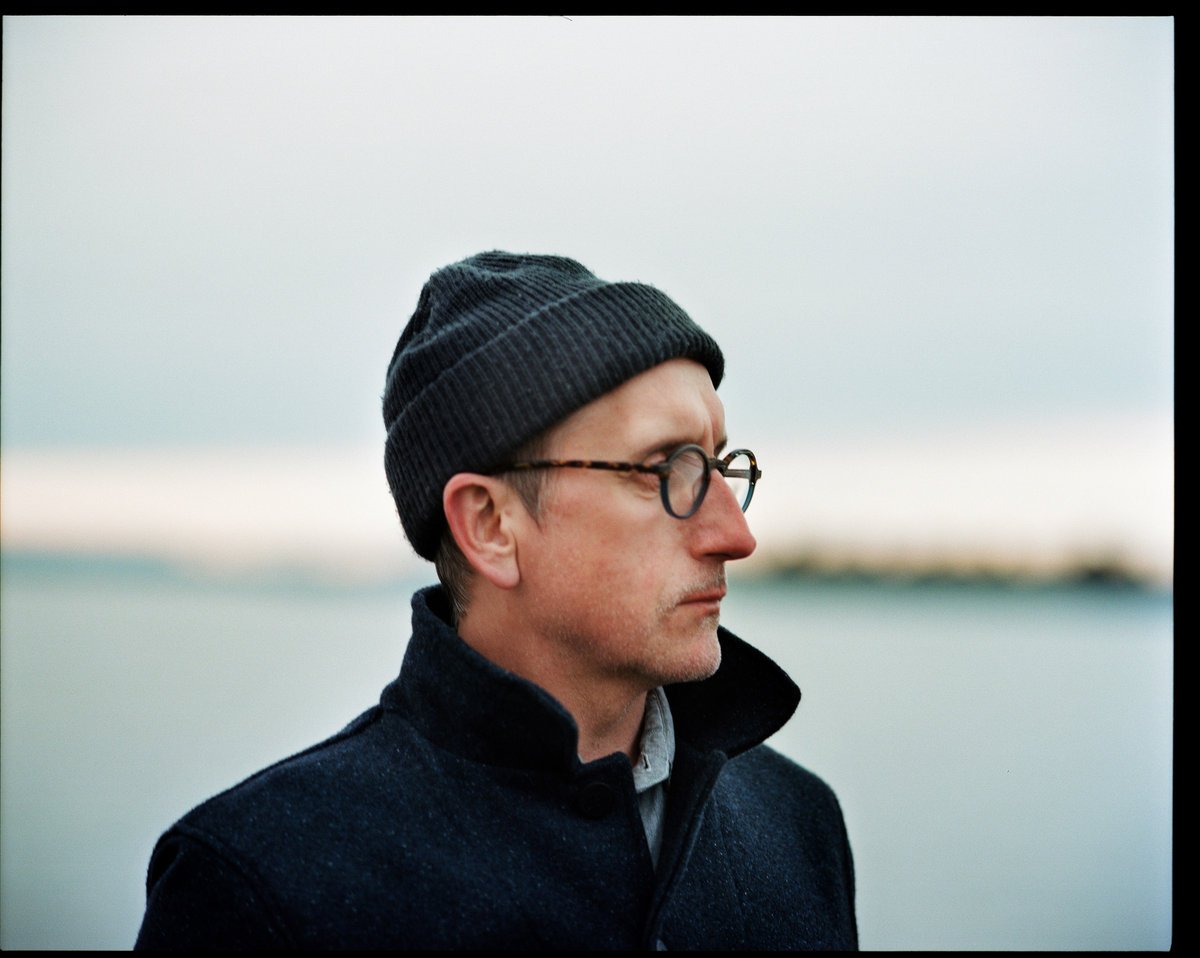
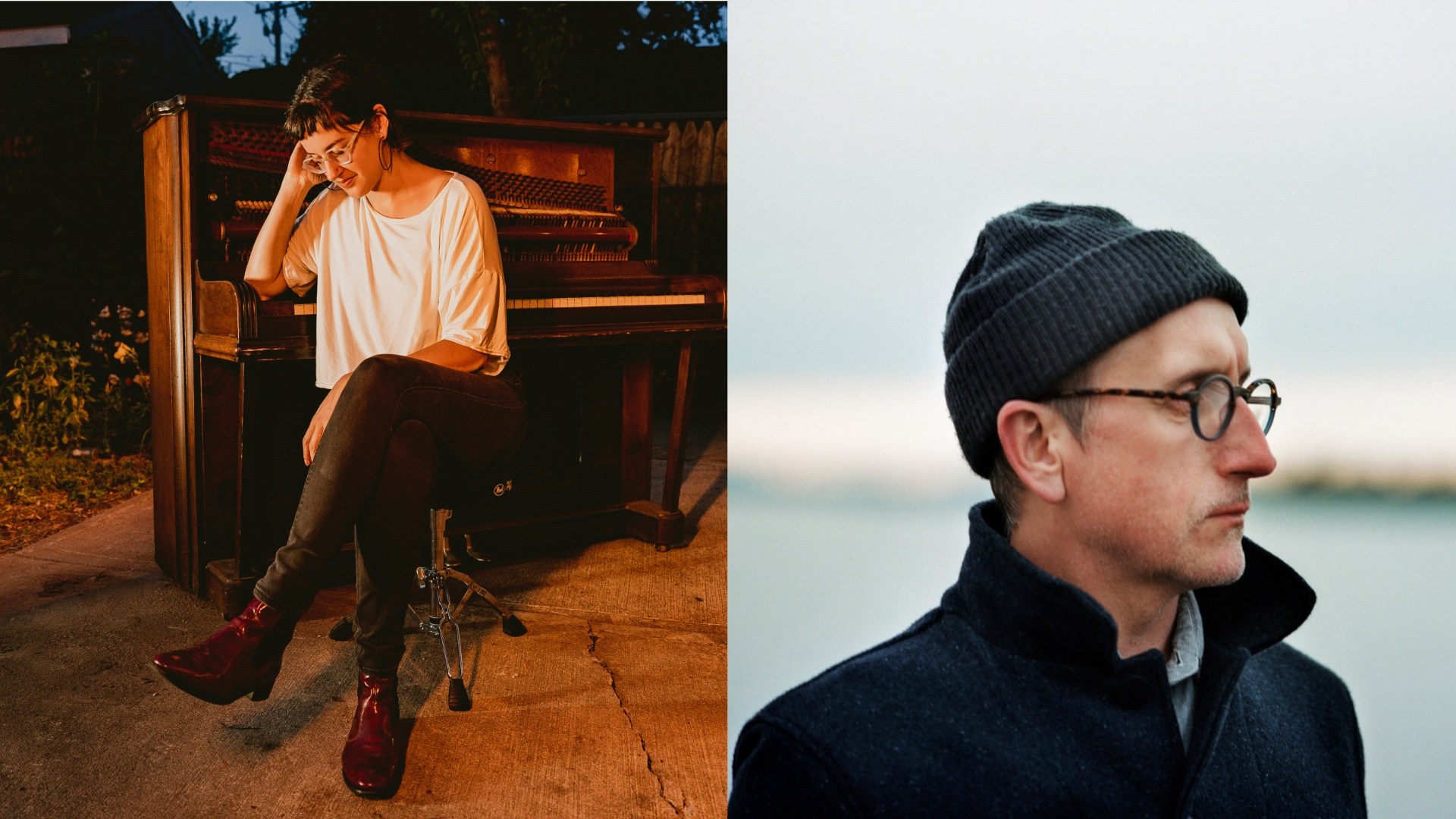
Sova is the Troy, NY-based pianist/composer Sophia Vastek; Chuck Johnson is a composer, musician, and producer based in Oakland, CA. Chuck features on Sova’s Alight!, which just came out last week via Hout Records. Ahead of the release, Sophia and Chuck got on Zoom to catch up about the creation of it, and more.
— Annie Fell, Editor-in-chief, Talkhouse Music
Sophia Vastek: Hey, Chuck.
Chuck Johnson: Hi! Congrats on the upcoming release.
Sophia: Thank you. I feel like I'm at the point where I'm ready for it to be out, done. I've been sitting on this for so long at this point. But it's close. It's almost here.
Chuck: Yeah, it's crazy, the life cycle of creating and then getting something out. I don't know why it just seems to get longer and harder, even though theoretically it can be very fast and immediate. Putting stuff on Bandcamp and SoundCloud and all that is great, but if you're trying to put something out there as a physical release and you really want people to know about it, it takes a long runway.
Sophia: It does… Speaking of the album, we really didn't talk about this that much while we were actually working on it, but I'm so curious what your initial impressions were, and then as you got to know it, how your approach got refined.
Chuck: The thing that struck me immediately was how spontaneous it felt, even though it was clearly this composed music. It just felt so alive. I think that had a lot to do with your performances, of course. And then on the pieces where there's an ensemble, you can just hear that great room. I just felt like I was in the room — and it's a room that I'd been in before, and I really love being in. So I just wanted to stay out of the way of that and not try to tighten it down too much.
Sophia: That's really good to hear because I feel like the fear is that the longer you spend on something, the less immediate it starts to become. So I'm glad that it felt like there was a kind of alive presence to it.
Chuck: A lot of energy in the performances. It's really, really fun to listen to.
Sophia: Recording in this space is a lot of fun. I'm very curious what your feelings are about performing in this space. There are pros and cons to everything, but it's really special to me to be able to make so much music in my own home and to be able to bring people into this space. It's very much my safe space. I feel like I can go to that vulnerable place that I need to be in — especially as someone who's very introverted and has a lot of social anxiety. So I definitely credit a lot of the energy of the music both to being here, but also to Sam [Torres, Sophia’s co-producer], feeling comfortable with him in the room and him knowing so much about me that he's able to know what I need in any given moment. So that's all very special. And then of course, on the flip side, it's also our home, so there's all kinds of distractions. [Laughs.] There's so many things pulling you in different directions, even if you have blocked off chunks of time in your calendar — which I do, and which we did for the album. Still, life has a way of bleeding into your work time. I'm sure you experience this, too.
Chuck: Oh, yeah. Absolutely. I work out of my home, too, and when you're working for yourself — it's funny, I know people who work remotely for someone else in their home, and I think the concern in those situations is that your employer has too much access to your life. And I think for us, maybe it's the other way around: our life has too much access to our work. But I wouldn't trade it for anything. I prefer this to having a separate studio space somewhere else in town. Because the space that I work in, that I mixed your record in and that I master records every day, is also the room that I compose in and record my own stuff in. Every day I'm walking into the studio, What is it that I'm doing today? It could be a number of things… But there are two little dogs right outside my door that want my attention, and there's something wrong with the kitchen sink, or there's a delivery. There's so many distractions.
Sophia: Do the dogs not come in the studio with you?
Chuck: They will, but they're just too fidgety. They'll pace around. They can't really settle down in here, they just want my attention.
Sophia: That's fair enough… I do sometimes envy the people who go to a studio for a week and that is their album-building time. It's like a residency. I've done residencies here and there before, and that's such a potent time of creation. But it's hard for me to imagine that at this stage. Also, I’m just so wedded to my instruments, and my instruments aren't traveling. So until there's a piano or a set of instruments of some kind that I feel like I just need to record on, I’m going to be recording here.
Chuck: I always run up against that when I consider residencies — I have everything I need in my studio. And I could see the benefit of being in a really focused place where those distractions from your life and home aren't there. But for your music, it's so personal and intimate, it seems like it had to be recorded in that wonderful room that's part of your house. For people who don't know, it used to be a church fellowship hall, right?
Sophia: Mhm.
Chuck: It's this beautiful big space and the acoustics in there are great. And it's such a large space that I would imagine recording is very flexible. You can have a lot of space between people if you need it and you can set up the instruments and the microphones wherever it sounds best in the room. It totally makes sense that this record came out of that room. If I were you, I would have done that too.
Sophia: Yeah. I'm so curious, in the mixing process, the use of tape — it sounded so good. How many people are doing this? It feels very special to me, and when you sent the a/b mixes at the beginning of the process, it was like, “Oh, it's obviously this.” It just sounded so good, it felt so right for the music… I don't know what my question is, but maybe you can talk about that a little bit.
Chuck: So, I have a really nice Studer tape machine in my studio. It's a mastering tape machine. I offer that as an option when I'm mixing an album for someone, and if the person is interested, then I'll do what I did for you and send, “This is what it sounds like going through the tape machine, and this is what it sounds like just printing directly back into the computer digitally.” And I mix through an analog console and analog outboard gear and everything, so it's all coming out of the computer and then going back in either way.
The Studer machine is very clean. It doesn't add a lot of coloration like, say, the classic Ampex ATR-102 that you see in a lot of studios. It has very clean circuitry. But it does something special — maybe it was more noticeable on your project because there are drums and the piano has quite a bit of transient information — it doesn't really compress so much as it takes a little bit of the edge off those transients. But the thing that it does to me is it ties the stereo image together in a way that just sounds right. Maybe there's a little bit of phase difference that happens that isn't mathematically correct or isn't as clean or accurate as it would be printing straight into the computer, but it just makes it sound like music. It makes it sound like a record somehow.
Sophia: I completely agree. I didn't really have the words when we were first listening to those a/b mixes, but it was just so clear that that was the correct thing. So I appreciate that you do that and you heard that sensibility. Thank you.
Chuck: I'm so happy that you wanted to use that option because not many people use it, and it was really right for your project.
Sophia: Really? That's so interesting to me. The people who don't use it, what are they hearing that doesn't feel right to them, do you think?
Chuck: I’ll only give them the a/b option if they express interest. Sometimes people just aren't interested. I don't try to sell it necessarily because it maybe isn't right for every project, or maybe it doesn't add enough of a difference or it doesn't enhance the sound in every project. I've never had someone say, “Yeah, I'd like to hear that option and a/b it,” and then say, “No, I don't want the tape.” What happens usually is that people are like, “No, we don't need to try that. I think it'll be fine without it.”
Sophia: That makes sense.
Chuck: I had someone master a record of mine a couple of records ago where I couldn't decide which one I preferred. I was going back and forth because each one was slightly different and there were pros and cons to both versions. And I sent it to a mastering engineer and he was like, “Oh, it’s the tape, no doubt. The tape is making it gel.”
Sophia: Well, there it is… That could be a nice segue into your own performing practice. I'm really inspired by all the things that you do. You're such a master at so many different things — production, performance, composition — and I'm curious what the overarching ethos or approach may be to all these different practices.
Chuck: Oh, god, that gets harder for me to understand the longer I do this. In terms of the music I make myself, I think that the thread that ties it all together maybe is just an interest in acoustics and sonic phenomenon. For a while, I was making acoustic guitar records where I was only playing acoustic fingerstyle guitar, and I had just come out of an intense grad school program of electronic music. It seemed like this really crazy left turn — I mean, I've been playing guitar for a long time already, but in grad school, I got really deep into alternate tuning systems and intonation and using the tuning of an instrument to excite the acoustics of a room. And the acoustic guitar is so great for that. It's a really immediate way for me to have access to that interest without needing to keep my Max MSP patch up to date or having a complicated technological setup every time I perform. Now I've kind of swung back the other way and I'm focused almost entirely on electronics again. But I would say that interest maybe ties all that together.
In terms of working with other people's music… I've been making music for a long time and I like be able to bring that experience and the experience of having other people produce my music and over time learning, Maybe I should just figure out how to do this myself — lending that understanding of how much is invested in making a record, and trying to be a steward for where it's been dropped off with me, whether it's mixing or mastering and just helping it get over the finish line, and respecting the artist's vision. I feel very privileged that I get to work on music all the time. That's my livelihood. I'm not getting rich doing this, but I'm very fortunate I've had opportunities to build some skills and to invest in what I need in my studio to be able to get the work done.
Sophia: I like your use of the word “steward.” I feel like Sam hasn't used that word, but he's used similar phrases when he talks about being the kind of connective thread between the musicians and a listener and how important that is. Because it has to arrive, and it has to be cared for in that arrival process.
Chuck: Yeah. Sam is a great musician and a very sensitive sound engineer. I think there are sound engineers and producers who aren't actually musicians — a lot of them are really good, but I feel like I trust someone more who I know has been through the whole process from the very beginning when I'm handing my work off. I will feel more comfortable knowing that they have been through that as an artist as well.
Sophia: Absolutely. That was a big part of why I trusted you so much with this music, because I know you have such a deep, rich history as a performing artist as well. I think that goes a long way. There's just an intuition that builds up because you've been there.
Chuck: I had a question for you: How are you going to bring [the album] out to the world in a live context?
Sophia: Yes, this is a question for sure. [Laughs.] To be honest, a lot of the music on this album, I've actually been performing for a little while now. And I'm happy about that because I feel like I've been slowly developing some ideas about how these songs and pieces are going to be performed in a solo capacity. I think if I was starting fresh now thinking about performing this stuff, I'd probably be very stressed. That said, I am trying out some new things for these shows coming up, which is a little bit scary. It always is. But it has definitely helped me to think about these live solo versions as kind of separate entities. Some of the songs I'm doing very similarly, especially the solo piano ones. The ones that are more arranged and have more stuff going on — some of them are quite different. “Quarry,” which is one of the more heavily produced tracks on the album, I've been developing for quite a while at this point, and the way that I perform it now is honestly very different. So for my first show that I'm doing here in Troy on the release day, I'm actually having a couple violin players join me and a drummer. I was writing out some parts for the string players and I was just like, Wow, I'm doing some weird things, that I hadn't really even fully internalized just because I had been kind of developing it slowly over a while. I was listening to the recorded version and comparing it to what I was doing and I was like, Oh, wow, the rhythms are different…
It's exciting that way. I feel like it's a cool experience, at least for me. If I'm listening to something, I don't necessarily want it to sound exactly like the studio album version. I think there's something alive about hearing someone play it live, and then hearing these different modes that a piece can exist in. It makes me sad sometimes when you hear about audiences being upset that something doesn't sound exactly the way they expect — which maybe happens more in a pop capacity. But in any case, that's where I've arrived. And like I said, on this first show, I've got a drummer and strings. If there are opportunities for bringing in some players on shows, great, I'll fit them in in ways that make sense. So I'm also trying to maintain that fluidity in my mind for these songs and how they can be adapted to different settings while still keeping the core of them with me and the piano basically the same. But it's a good exercise, for sure. [Laughs.]
Chuck: I think that’s a wise approach. I definitely support and relate to the idea of performance being its own practice. A creative musician and composer can adapt to those different settings, on the occasions where you can have other musicians sit in or when you have to carry it all solo — which is normally what I have to do.
Sophia: I mean, same — I'm normally playing solo as well. It's scary sometimes though, because you also get attached to how a song feels and you want it to live into that in a live setting. But, there it is.
Chuck: Yeah. I think maybe people have come to understand the economic realities of touring with a band, and there's an understanding that you're going to see something that's not meant to sound like the album. The album is going to be what brings people out, but if they like the album, it's because they like you and your music, so that's what they're there for. Not necessarily a recreation of this one day in a studio.
Sophia: I think that's exactly right. The economic reality part of it is so real. I've gotten asked this a couple times, am I going to try and tour with an ensemble at some point? And I would love to. In my dreams, even honestly more than the album, I hear a big ensemble on some of these tracks. Horn sections… even if it was just for one show, I would love to put something like that together. But the economic reality of it is just… I don't know when or how that's going to happen.
Chuck: I would love to hear that because some of those pieces are almost anthemic. It would sound so powerful with a big band. But I think the energy of your playing and the compositions will come through and will convey all that.
Sophia: Thank you so much. And thank you, Chuck, for doing this.
Chuck: Of course. Good luck with the shows!