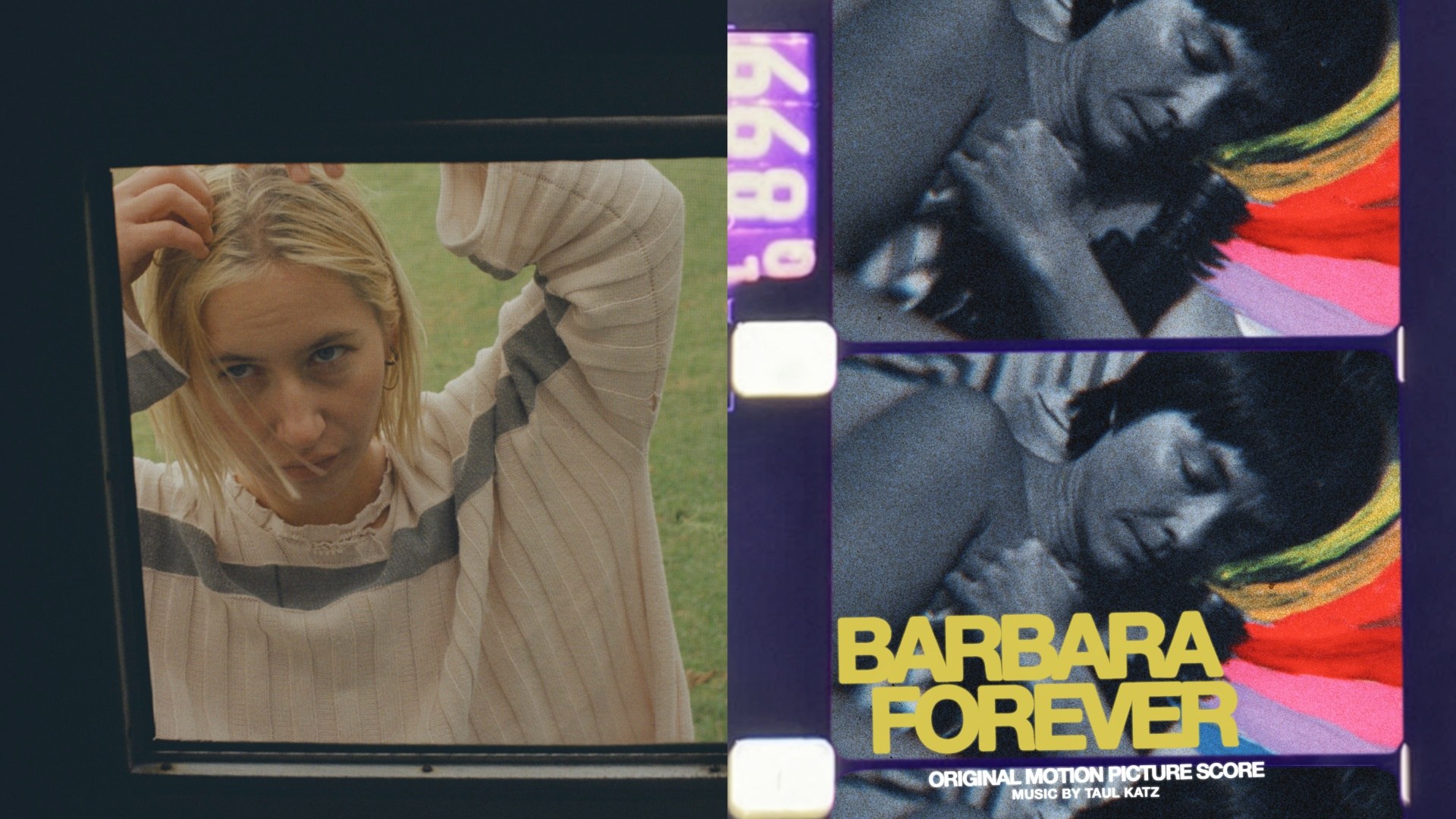
I spent a lot of last year thinking about Barbara Hammer.
I was scoring Barbara Forever, and for months I was surrounded by her.
Scoring a documentary about someone who is no longer alive is a strange way to get to know them. You spend so much time watching the same material that eventually you stop watching it in the normal way. You start noticing the sound between the cracks, little sonic counterpoints you can only really trace after watching the same footage too many times. It was in those gaps, and in that messiness, that I started to find the score.
Barbara left behind an enormous amount of work, and what struck me pretty quickly was how physical so much of it felt. Not only because of the bodies in her films, but because you can feel her handling the material. Film gets scratched, projected and painted on. Her work is beautiful and then suddenly light, funny, sexual or uncomfortable. She didn't seem very interested in keeping those things separate. That became important to me while I was writing the score.
I was interested in allowing scenes to hold multiple, even contradictory emotions. I didn't want every strange moment in the film to become legible because I had put the right chord under it. A scene could stay strange or emotional without the music needing to become beautiful and sometimes a sound could also sit there a little too long. The score got rougher because of that.
I like hearing the mechanics of things. Fingers, breath, friction, air moving through an instrument. I wanted there to be some evidence of the person making the music, in the same way Barbara's films carry such a clear imprint of the person making them.
We also had access to Barbara's archive, and I was given a lot of freedom to sample from it, which was an insane privilege. That became one of the most exciting parts of writing the score.
I could pull sounds directly out of the footage, and treat them as musical material. I liked that the score could literally contain traces of Barbara's own work rather than only responding to it from the outside. It made the boundary between archive and score feel a little less fixed, which felt appropriate to the way Barbara worked with images in the first place.
Spending that much time inside her work also changed the way I thought about being an artist more generally.
Barbara made constantly, but what struck me just as much was how fearless she seemed about actually letting the work out into the world. Some films feel incredibly worked through, others feel closer to experiments, but there is very little sense that she was waiting for everything to be perfect before showing it.
That is almost the opposite of how I tend to work. I can finish a piece of music and then sit on it for years before I let anyone hear it. Even when something is done, I often need time to build up the courage to put it out into the world.
Spending so much time with Barbara’s work made me realize how much can get lost in that waiting. She let the work exist, let it be seen, and then kept making. Since working on the film, I’ve tried to be less precious about that part of the process, to put things out and move on to the next thing instead of waiting until I feel completely ready.
That fearlessness was also there in the way she worked. She used what was around her: cameras, film, her own body, her friends, her lovers, the places she was traveling through. There was a willingness to discover what something was through making it, rather than needing to know exactly where it was going before she began.
I wasn’t interested in making imitations of Barbara's work or of 1970s experimental film music. It was much more useful to think about her approach to making things.
I trusted accidents more. I also started thinking about sound less as a way of producing a specific emotion and more as material. Barbara treated film as something physical. You can see the ways she touched it, cut it, marked it and manipulated it. I wanted to approach sound with some of that same freedom.
By the end of the film, I had gotten very used to Barbara being in my studio. I would turn on my computer and hear her voice, have one of her films open while I was working. Finishing the score felt strange because that daily contact suddenly stopped.
I don’t think I came away from the process with one grand lesson from Barbara. What I learned from her was more practical than that: make more things, let people see them, don’t explain everything, and don’t automatically clean up the weird parts.
That has stayed with me.