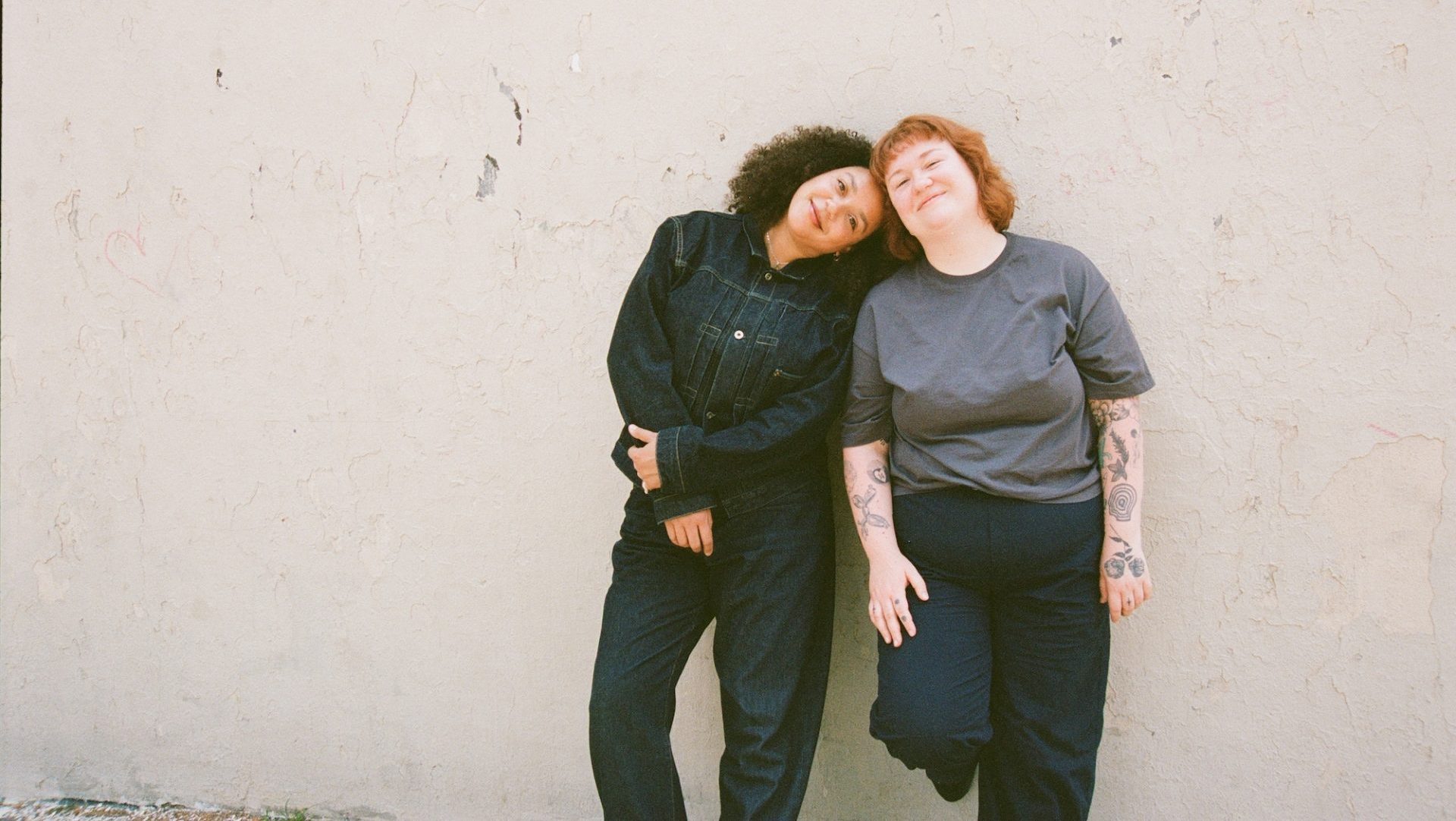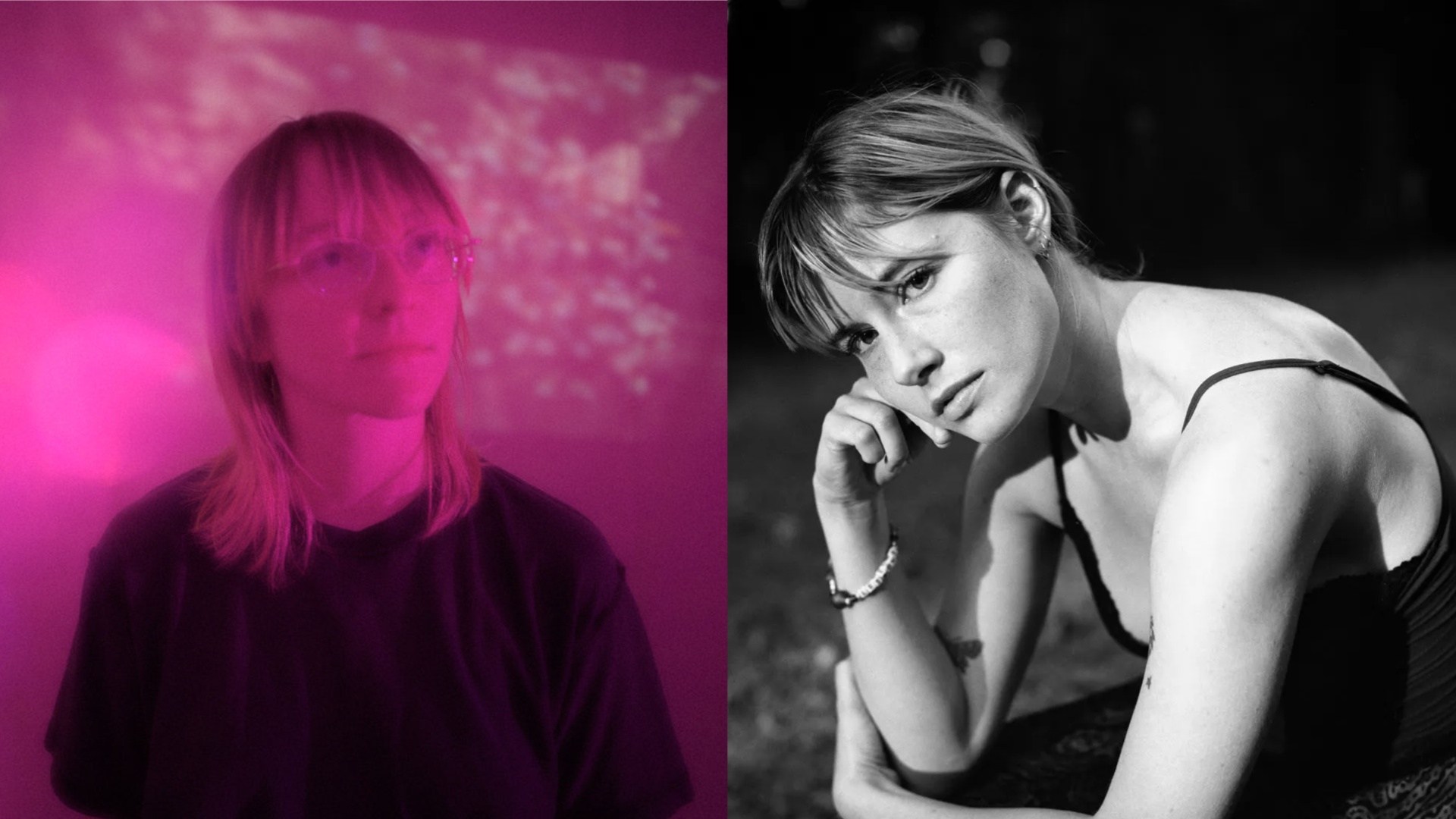
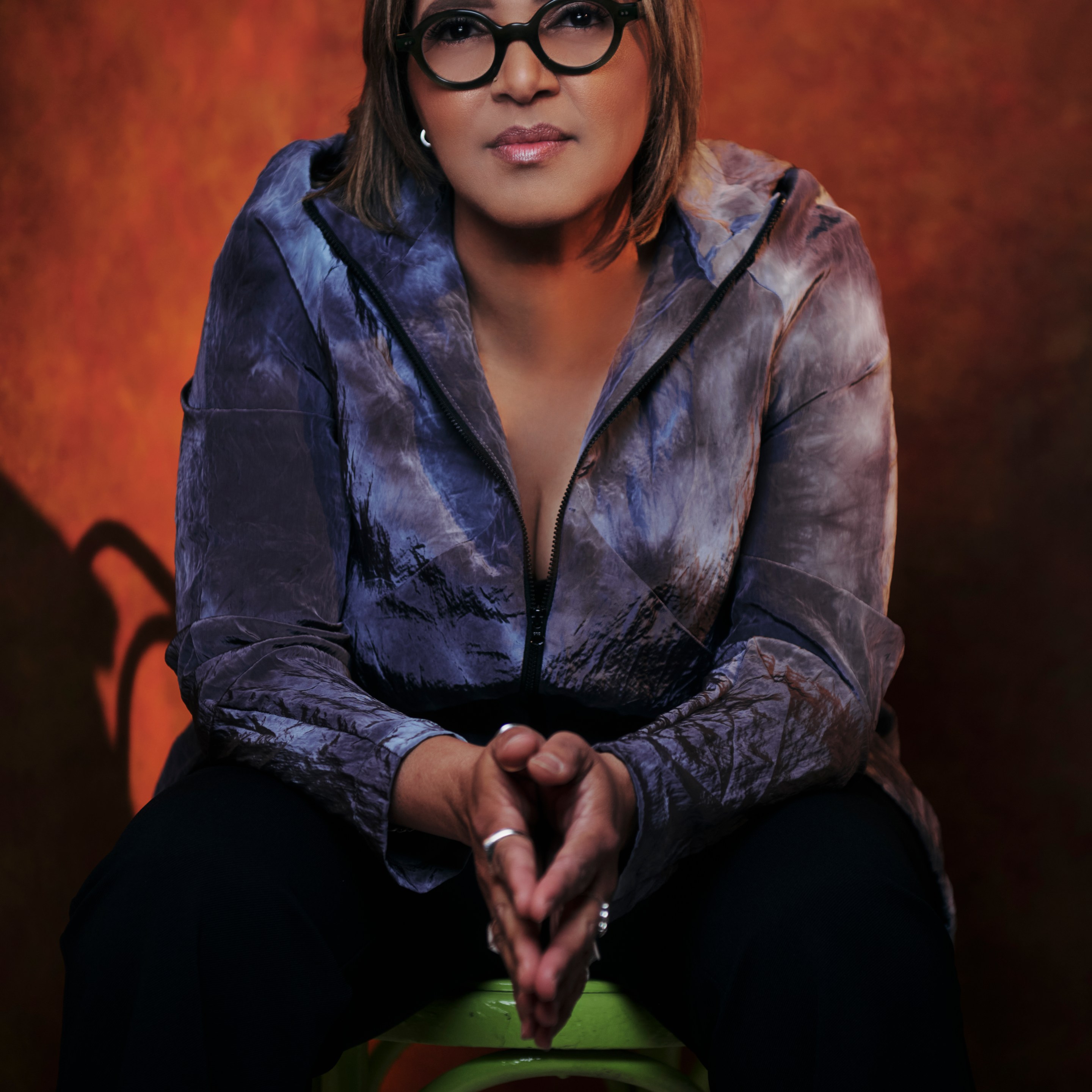
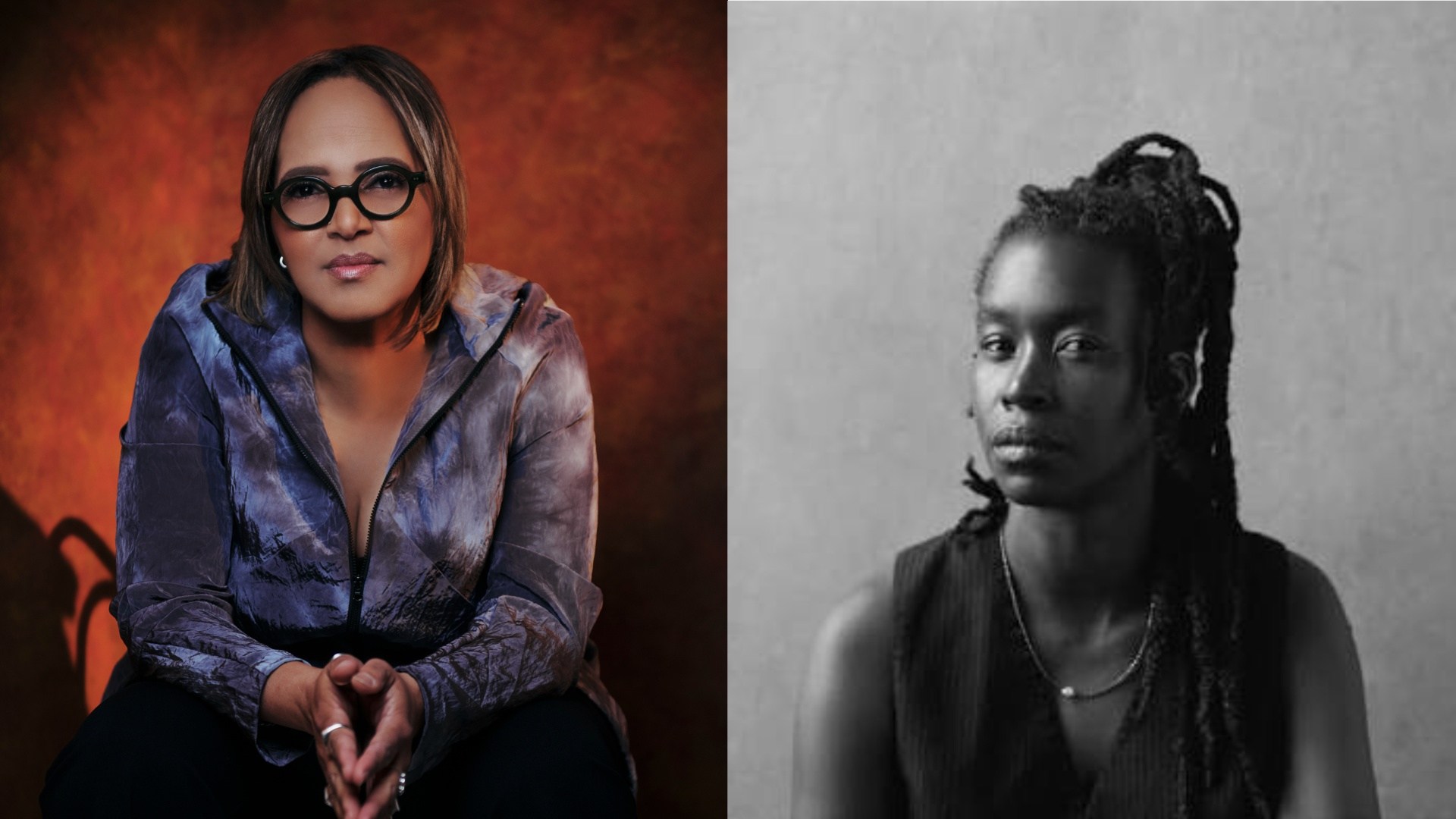
Moor Mother is Camae Ayewa, a musician, poet, and activist based in Philly; Terri Lyne Carrington is a Grammy award-winning drummer, composer, producer, and educator. Camae features on Terri’s latest record, Trip the Night Fantastic, which came out this summer via Candid Records. To celebrate the release, the two collaborators got on Zoom to catch up about the making of the record, and so much more.
— Annie Fell, Editor-in-chief, Talkhouse Music
Camae Ayewa: So, I was recording today, and this song that I’ve got is about sacrifice. It's about people trying to escape from one country to another, for any particular reason, but doing it by crossing an ocean. I'm speaking from the aspect of a parent or a mother, just thinking about the sacrifice that is made. And now as we talk about music, I wanted to think about sacrifices that come with this thing. It's something that we don't really talk about as artists — something that you feel that you sacrificed to make the music, to find your way towards freedom.
Terri Lyne Carrington: I think sacrifice is huge in general, because I think we have to think along those lines to not get sucked into capitalism and this society that we're living in. Because sacrifice is not normally something taught or valued. What we're taught, whether it's overtly or not, is to just keep accumulating. So I think of sacrifice in a way of what's important to us and how much are we willing to sacrifice to accomplish what's really important. Because, you know, most of the stuff that we accumulate, we can't take with us. The things that can be a part of a legacy and create a better world for others, it takes sacrifice. People have to be willing to give up something. I remember a long time ago talking to Angela Davis about communism and she said that some people have criticized her because she lives in a decent house. And she said, “Yes, I live in a capitalist society, but I would be willing to give it all up if I could be in a socialist or communist society.” So I thought about it like that. What are we really willing to give up?
As far as music, creative musicians are sacrificing just to be creative musicians because this jazz thing, you know, is a hard road. Choosing to play jazz is already a sacrifice.
Camae: That really rocks your world, like, “What kind of musician am I going to be? This is the reality of the situation. Am I going to follow my heart, or am I going to try to subvert this music in some way that I can please everybody?” Whatever that means.
Terri: Well, it seems like it doesn't work for a lot of people. When you know less and it appeals to the masses, it's authentic because you're all on the same vibration in some way. There's a sacrifice the more expansive you are creatively, but you're dealing on a different vibration with people that rock with you. I mean, I was listening to Coltrane's Ascension today and realized I couldn't handle it before. When that came out, I was a kid, and for the first 30 years or whatever, I couldn't even listen to it because I wasn't on that vibration. But today I was listening to it, digging it. So I think when you're committed to whatever it is you're committed to, you have to do it authentically. It's something that you have to do. And that's why there's good hip hop, because there are people that are really committed to it that are on a high vibration and they're expanding continuously — somebody like Q-Tip, for instance, who went to school and learned music theory. He took three years off. That's so impressive. I think it's about that level of commitment and expansion and not settling with the common denominator. And that's what it will take, I think, to move Black music even more forward. Because it's going to be good and bad with everything, there's going to be people that take it further and people that just deal with the common denominator. But I think to move it forward in any of the genres, there has got to be a high level of commitment, authenticity, and something beyond the notes and beyond a paycheck.
Camae: That's a word right there! For real. That leads into my next question, talking about making albums now versus then. I remember my first album being like, “Woah, I made this for so cheap.” Cheap in terms of how much I've spent 10 years later. Can you say anything about that? You’ve got this beautiful album. What has been the difference?
Terri: When I started making records, it was before this digital age, so you just had to go in the studio and play. Now I'm not sure I can really do that. Every time I do it, it's like, Oh, I gotta fix this, I gotta do that, I could go back in… So now I'm creating something that feels more like a piece that I can revisit, which is cool for me because I don't look at it from a purist point of view. And jazz — I mean, it's great if you can do it in a classic way. But a friend of mine in hip hop said, “Well, one of the problems with with jazz is it hasn't kept up with technology.” That always stuck with me. This person is an engineer and she was surprised when I started telling her about my process and how much technology I use. I feel like it's allowed me to make albums that are more me because I wasn't always feeling going in the studio and just recording a live record, basically. As a producer, the last thing I think about is myself, so I go in and replay everything. I don't have any problem with that. I do playlist after playlist and mess around with other people's performances to create something that feels like it's dealing with the vision that I have for the track. I mean, within reason — I would never do something that feels not authentic to the [player]. But figuring out how to use different sounds… I might want it to sound like an 808 bass drum instead of my acoustic bass drum. Messing with things like that and using effects and stripping everything down. Like, I recorded this one song on the record called “Identity Song,” and that was a whole ‘nother song but I just kept the bass and built a whole new track around it.
I was going to ask you a couple of questions too, as far as how you get inspired. We were talking about “Prayer Song” on the record — I love what you did on the track and what you were saying. I remember the first time I heard it, it just hit me in a certain way.
Camae: I think it was about vibration. Because I asked you about the track and you sent me some words and you said “the long journey.” I live in that long journey. That's all you have to say to me. Because the story of migration and of displacement and redlining, it's just so important to me. You are vibrating where I was vibrating, so it allowed me to even go deeper where I wasn't allowed to go before. This long journey as a spiritual aspect — picking up the pieces again and starting over, this resilience —I've been thinking about this a lot. Sometimes when tough things happen, they feel so hard, and I was thinking, But this is to test my resilience for the real thing. This is just an emotional little thing, but it's to test the resilience… So I was working with those types of themes. And what was the title before?
Terri: “Slow Runner.”
Camae: To me, that's part of that resilience, that we have so far to go. When you're like, Oh, I got so many miles to go, you can start to psych yourself out of it. But what most runners do is they get the high of that run, “Maybe it will hurt, but I get to see these beautiful trees, I get to hear these birds, I get to see what I'm made of right now.” Because we duck and hide and run so much where we don't even have to duck, hide, and run. The automatic system is just so used to it, these imaginary kind of walls. And they're real walls, even though we can't see them; we're thinking about race and politics. Sometimes people don't even believe that these walls are up. So that's what I was thinking. And plus that beat. I didn't know who was singing that part—
Terri: It was Arooj [Aftab].
Camae: I did not know! She sounds amazing. So I was going back and forth because some compositions are like parties where there's a DJ and you got the microphone, and you can do 10 different rhymes on one particular composition. That's where the trouble was — I could party to that instrumental in so many different ways. So when I sent it to you, I was like, “I hope this hits.”
Terri: Oh, yeah, it did. It was the perfect climax, that last verse. That shit is powerful. I'm hearing Martin Luther King, Malcolm, Angela — everybody. It's like ministering to me.
Camae: I mean, that's where I'm going, and where I hope to be allowed to be free to go. It's not always the circumstances. And that goes into the next question, the politics of the music. I saw some review saying, “Oh, politics again?”
Terri: [Laughs.] Did you see my rebuttal?
Camae: [Laughs.] Yes, I did. And you're not surprised how many times you hear this?
Terri: Yeah. My issue is not that he didn't like it — because he doesn't have to like it — but you can't be white, or a white man especially, saying, “Aren't we over this yet?” I'm like, “No, and shut up.” You don't have the right to say you're tired of protest. And the other dude — there was two of them — he said “Abolition Song” was about celebrating the overcoming of racial brutality. That's the only reason why I wrote a rebuttal, because I'm like, “What are you even talking about?” How insensitive to families that are dealing with racial brutality…
Camae: A hundred percent. I hear it a lot about my work. “Oh, I wish she would rap about something else.”
Terri: Really?
Camae: Yeah. And I do rap about many things. But now I'm starting to think, it's not that they don't want to hear politics, it’s that they don't want to hear it from us — and I'm going to say Black women — they want to hear it for someone that's bringing some sort of spectacle. Someone that's showing how you get points for standing up for something, versus it being a part of your everyday standing up for injustice. A lot of people are coming from Europe, these indie bands being able to softly speak about politics, and then be raised as some sort of savior of the genre.
Terri: Right.
Camae: And I'm just sick of it, the tokenizing of it. “You say something political, then you go over there,” with all the spectacle and the horror and the violence. This kind of thing is the sensationalism of what they did to hip hop. When I think about jazz and politics, at first I thought it was about stopping the creativity and wanting to just pay homage to what was before. Now you can see many people who do it traditionally straight get rewarded by the streaming apps. But when someone does something like what you did with the Max Roach piece, it's like, Woah. This is how you're supposed to take that work. This is how you're supposed to look at it.
Terri: I resonate with everything you just said. It's interesting what you said about streaming because that is true for some artists. The fact that Kind of Blue is still one of the top selling albums in jazz, and I would imagine that means one of the top streaming albums in jazz as well… I don't know exactly how this record is doing, what the metrics even are, because I don't know if we have the same kind of marketing strategy as some of my other records. This isn't really a jazz radio kind of record. A lot of the response has been good, but it feels like the arc is slower. But I say all this to say that somehow this one is streaming better. So it's interesting. Maybe the tide is shifting. Because I just don't see how we stay stuck in the past. I'm not saying there's anything wrong with the classics, but everything moves forward and expands. So my whole thing from this point forward is really about jazz liberation — and in all ways, not just the music. How it's presented, who's playing it, what kind of technology is being used, and who has access to it. Just thinking about things a little differently to get out of the hamster wheel, and to help others get out of the hamster wheel.
Camae: One thing I saw in your bio was that you wanted this to be a dance album. Is that true?
Terri: Yeah. And that's where the play on words [of the album’s title] comes from. Because the poem is “trip the light fantastic,” so we said “trip the night fantastic,” because there's a lot of darkness out there right now that we need to trip. So, yeah, the idea was just to dance, music that makes me want to move. I want to feel that the beat. Even if it's free, I still want to move to it. I want to feel rhythm, and it doesn't have to be always static rhythm. Rhythm is the key. Rhythm is everything.
Camae: What are you thankful for as we look at this album and towards the next one?
Terri: I have a lot of gratitude for this project because — well, one, it allowed me to work with people like yourself, people that I have a lot of admiration for. People really gave of themselves, and that's the beauty of art. The serious people are giving themselves. It's a piece of them, it's a part of them. And then you come together and you make something, and that's where the magic is. So I'm just grateful that so many different people were on board and created a magical moment for others to share in.
Camae: Well, thank you so much for picking me to do this interview with you. Let's continue to talk, and I hope to see you soon.
Terri: Likewise. I'm gonna make that happen. We gotta do something together again.
Camae: Yes, please.