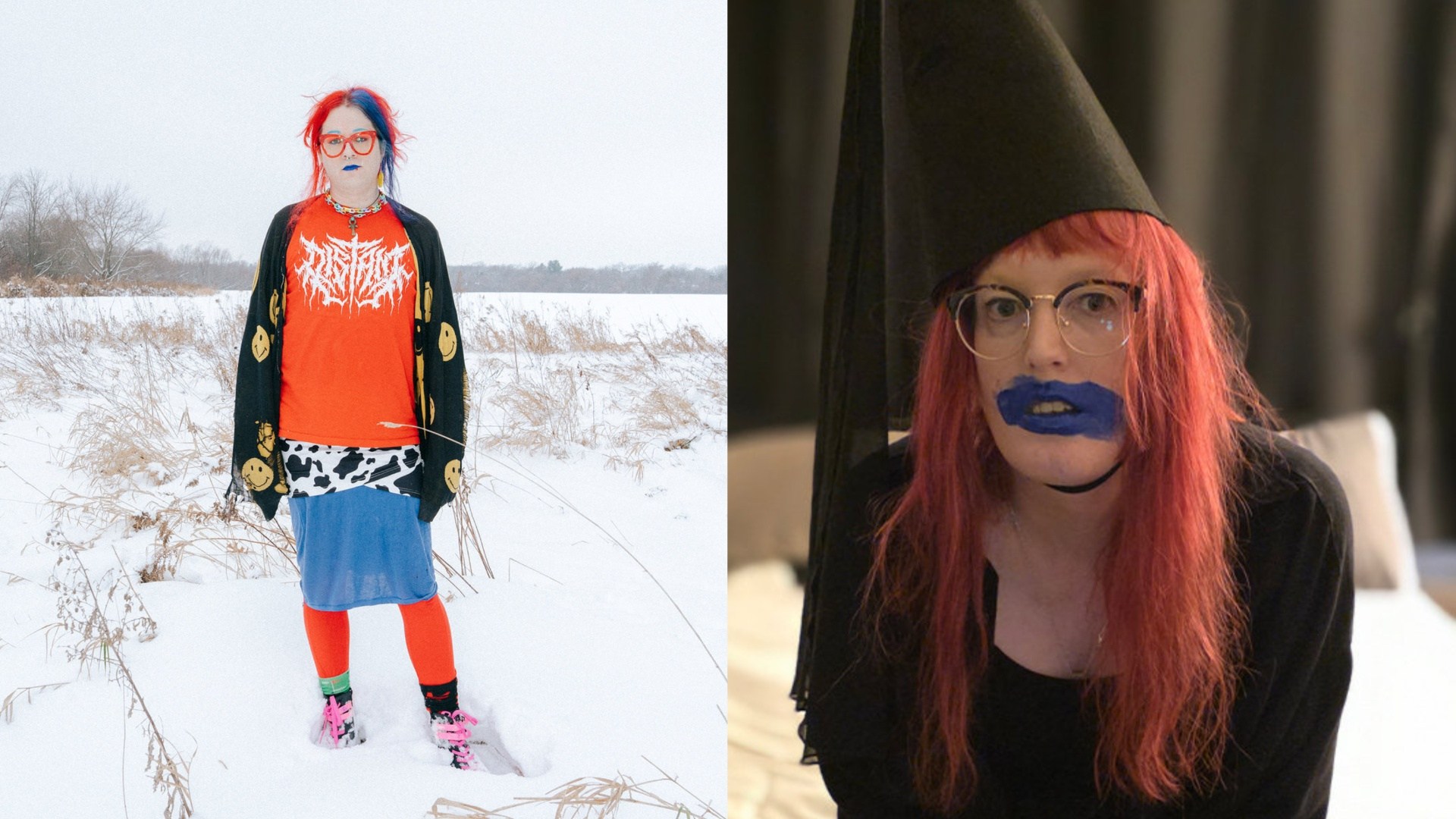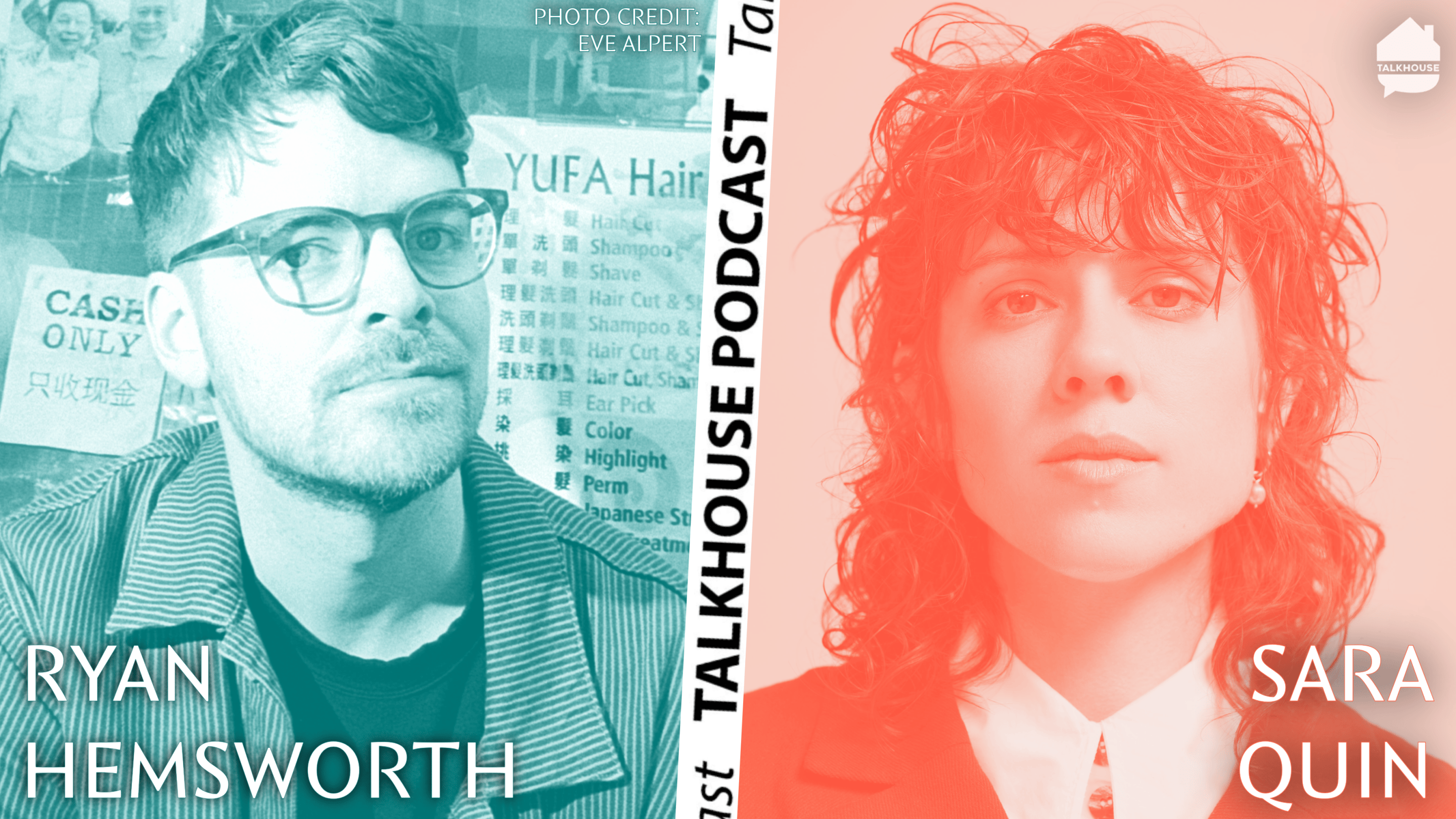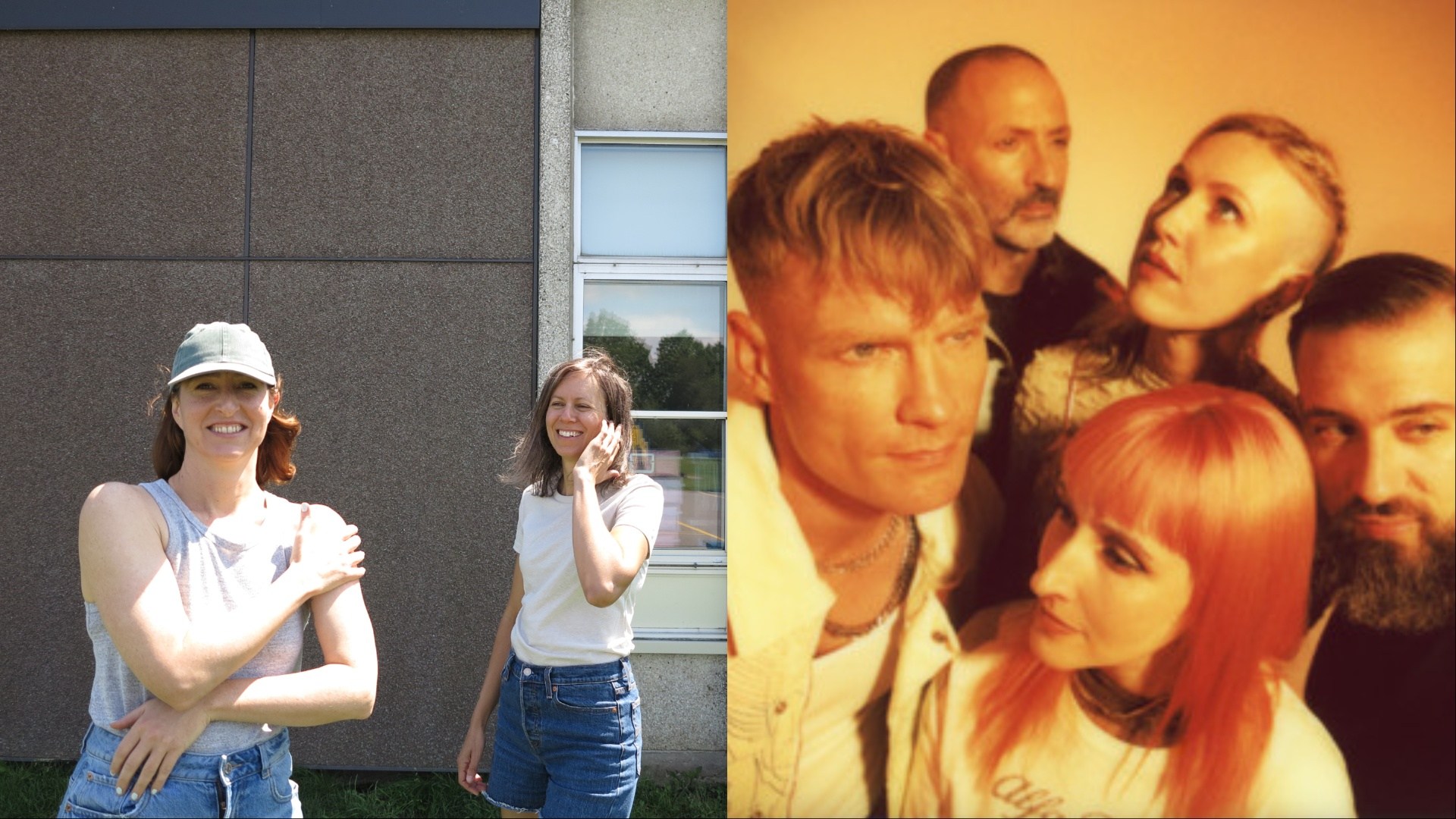
Gigi Reece, Penelope Lowenstein, and Nora Cheng are the Brooklyn-via-Chicago band Horsegirl; Jana Bahrich is the Luxembourgish musician behind the project Francis of Delirium. Both have new music — Francis of Delirium’s record Run, Run Pure Beauty came out in May, and Horsegirl’s demos EP Julie In Twos will be out September 23 — and to celebrate, the four got together around Horsegirl’s show in Luxembourg to catch up about it all.
— Annie Fell, Editor-in-chief, Talkhouse Music
Gigi Reece: I asked if you were writing songs, and you said no.
Jana Bahrich: I said no.
Gigi: When was the last time you wrote a song?
Jana: Maybe a few months ago. But I haven't been home, and that makes it hard to write songs. Can you guys write moving?
Gigi: I have to be at home.
Jana: My things are really important to me, too, to write. Just to have them around.
Gigi: Yeah, you have to have the space and the time and the resources, which I feel like home is where that is.
Jana: How many lyrics are you writing, Gigi?
Gigi: None! I'm writing none.
Jana: Do you give feedback on lyrics?
Gigi: I feel like mostly I will say that I like it, because I often do. Or if I think that something needs to change just for the purpose of the song, I will definitely say that. But I think it's related to the sounds that appear in the songs rather than the sentiment in the lyric writing.
Jana: Do you get to see the lyrics written down at any point in the process?
Gigi: Only at the end.
Jana: When you look at the album art.
Gigi: [Laughs.] I also feel like the lyrics don't completely solidify until we're in the studio.
Nora Cheng: That's how it has been.
Gigi: Perhaps it won't be that way next time we make an album, but that is how it has been. So often when we're in the studio and I'm hearing the dry takes of their vocals, I'm like, Oh, OK, word.
Nora: And currently on stage, I am singing lyrics that are not gonna be on the lyric sheet, if you know what I mean.
Jana: You're just coming up with them as you go.
Nora: Some of them, they kind of change every time.
Jana: Because you forgot them?
Nora: No, because they never were made to be remembered. But other ones, I say the same thing every time, but my plan is to change.
Jana: And you think about it beforehand what you're going to change about them, or you do it on stage when it's happening?
Nora: Sometimes I know what I'm going to say and sometimes I don't.
Penelope Lowenstein: Jana, I have a question for you.
Jana: Wait, can you hold onto your question? Because I'm very interested, also, in how much you are aware that Nora is changing the lyrics of the songs on stage. [Laughs.]
Penelope: [Laughs.] Well, our last rehearsal before leaving for this tour, we got to the studio and Nora was like, “Oh, by the way, I wrote some lyrics for the song last night. I'd like to run it a couple times.” And we start playing it and I'm like, OK, she also changed the vocal melody. So now in my bass part, I can't just go autopilot, as sometimes you do in a rehearsal. I was like, Where are we in the verse? And I still kind of feel that way on stage.
Nora: Well, I still sometimes have to end up changing it because I forget.
Penelope: I don't have any of Nora's vocal in my monitor, so I try not to pay too much attention.
Jana: I was going to ask, what are your markers? Because for me, I'm singing the songs all the time, so I don't have to think about where we are very often in a song. I'm in control, essentially, of where the song is. What are you listening to to know where you are in every song?
Gigi: I mean, Nora's new vocal melody definitely pranks me sometimes. [Laughs.] But I really love the changes that she did make. It's just, you have to find more confidence in your own part. I think in the end, what I listen to the most is the bass. I just listen to different small cues in the song. Especially in the bass, when the notes change to clearly a different section or the rhythm changes in it, it's hard to miss that as the drummer. It's very hard to miss rhythmic changes because it sounds so terrible when you do.
Jana: [Laughs.] What was your question, Penelope?
Penelope: Oh, it was just the same thing with you and lyric writing. Can you write lyrics without your guitar?
Jana: I will write lyrics without my guitar, but then I rarely use them in a song.
Gigi: That’s poetry.
Jana: Well, no, because they're just like little fragments… I have all these dreams of using things, but then when I write, it's mostly subconscious. So I don't know how much I'm actually accessing anything that I wrote down, but I feel like it's a good habit to write some things down and then think about them. But then I kind of need the music and the melody to inform what vowels are going to work the best. I'm not very good at forcing a lyric into a melody to make it work. It’s something I would like to do more of.
Penelope: But sometimes it's unnatural in that way.
Nora: Well, sometimes when you're writing with your guitar, the vocals just take on a what-needs-to-happen-here kind of component. And it's nice to think about the vocals like, what do I want to express? And that is a totally different thing, because when I'm writing with my guitar, I'm mostly focused on the songfulness coming from the melody.
Jana: I read online about your guys' process for this album, and it seemed like you went into this album with no songs written into the studio. That was how I felt it from reading interviews, you kind of came up with everything there in that cold room.
Nora: Kind of the opposite!
Gigi: This is the problem with journalism…
Nora: What maybe the essence of that was, was that this album, we were super open to changing things in the studio. Whereas with the first one, we just wanted to capture how they sounded live. With this one, we had the songs written for the most part, with the exception of I think one song. The rest of them were fully written but changed a lot, and that was something that we weren't open to before that recording experience.
Jana: How much of the sound of this album was in the songwriting before you went into the studio? Because there is such a specific clean guitar sound, how dead the drums are…
Gigi: Those were things we were exploring before we got into the studio, and then Cate [Le Bon] helped us push that even further, using the studio space, not just capturing what we have live but adding more to that with all the different textures we put on the album. But the clean guitar, the dead drums, and the minimalist kind of interplay between our parts, I think, were all things that were in the core of the songs. We sent demos to Cate that really had that, and she emphasized those things as a producer.
Jana: What's your demo process? How are you recording?
Penelope: It's changed a lot over the years, but at this point we are demoing on a four-track Tascam in our rehearsal space. Which is kind of great because we're a trio, so that's all you need.
Jana: One extra track!
Penelope: It is a really inspiring piece of technology in terms of, a good song for us really only needs a good bass part, a good guitar part, and a good drum part. And the limitations of the technology force you to think about your songs in that way and record them in that way. I think it's cool to go into a studio where you could do anything in the world with a recording of the song that's so bare bones, because I think it's important that the core of the song is interesting with just those components, and then the rest is all just addressing what it needs in the studio.
Gigi: I think all of our songs, we find it important to just have those three elements of us playing it together as a trio, and going forward from that. But our live setup is our live setup, and we find it important to keep it that way or have the songs have that core.
Nora: When you're writing music, how much are you thinking about the other parts that you wouldn't be playing live? Are you writing the bassline also?
Jana: I will put a poor man's bassline down. And then recently, we've had a jazz player play on a lot of our stuff, which is really fun, and he has a shit ton of ideas. You just have to find the simplest idea out of all of the things that he is playing and then kind of reduce it down. But it's so cool because there's so many harmonic things that he's doing that I just don't have that kind of ear to even take those out…
I'm always aware that I'm probably going to want to add a lot of stuff on top, but I don't know how much I'm thinking about it while the song is being written. I have a really hard time preconceiving ideas. This is also part of the whole subconscious writing thing. But I need to try something in order to get an idea of what it is. I can't sit here and conceptualize a song by talking to you about it. I guess most people are working in that way.
Gigi: That makes a lot of sense. You have to put pen to paper before you know what you're writing.
Jana: Yeah. And for me, the whole production aspect of it is one of the most fun parts of writing, going home and sitting in my room and figuring out what harmonies I could add or surprising myself with what note could be in the chord structure that I didn't know could be there. That's the most exciting part.
Nora: So is recording a big part of your writing process?
Jana: Yeah. Basically every time I'm writing, it's being recorded because I normally am writing via jamming. My main person I collaborate with, he's on drums — Chris [Hewett] — and I'm in a little vocal booth with a guitar and a mic, and then I just write songs that way. But it's being recorded into Logic so then I can take the song, go home, and start messing around with the production ideas on it. The turnaround is super fast in that way. And some of those things end up being on the final recording and some of them don't end up being on there. But then I also think, because it's so easy to start getting into the development of a song, then it takes a really long time to fully finish it and commit to it, rather than being in a studio In a moment of time recording it.
Gigi: That's always the hardest part, that last 15% of a project or a song or an album. That's where you catch yourself up and you have to have the confidence to commit to it.
Jana: How much are you guys doubting yourself at that last 15%? Because that for me, I feel like I just have to close my eyes and just finish it and then and try not to think about it as much as I can.
Penelope: I feel like we haven't always had that luxury because we just haven't been in the studio for months at a time. When the last 15% is happening, it's like, “OK, we've got four or five days left.” We have an idea of what we want to do, we try it a couple of ways, and then we're like, “This works.” I actually don't know how well we would do with infinite time because I think that when you've been writing a record for years, you know what you want to do. And when you're in the studio, you can make decisions on a reasonable timeline that suit the song. I think trying every idea is a cool thing to hypothetically do one day, but I don't think that we're expressing ourselves in a way that needs that kind of consideration. So I actually think the last 15% for me is the exciting moment when you're like, I can see it! This is 50% what I thought it was going to be and 50% kind of an awesome surprise that's only coming together now. And I feel like there is some doubt because it's unfinished, but it's also really cool to see something become finished.
Jana: Who out of you listens to your own music the most?
Penelope: I have no idea. I feel like it would probably be similar, is my guess.
Nora: I don't listen to it hardly ever.
Penelope: I feel like Nora has the hardest demo love. Of the three of us, you're the most likely to be like, “In the demo, we did it like this…”
Jana: Nora has the most demo-itis out of everybody.
Nora: Yeah, I don't really listen to released music, but I feel like I listen to demos a lot.
Gigi: I feel like between the recording of the album and the album coming out, all three of us listen to it a lot… I think almost the more challenging part, at least for me, is right before we go to the studio, when I feel like we're in that, “OK, these songs aren't quite done and I don't know the last step. They need to be finished.” But when you're in the studio, we're laying things down, looking at them in different ways. Kind of like you were talking about, how when you go back to your house and you listen to it and add all these possibilities that could be a part of the song — you start to feel what works and doesn't work. And with the limited studio time, you just go with it. Like you said, you have to do it to see what it is after that. And I think that's why that final moment is hard, because you've lost sight of the project a little bit because you're so deep in it. So you have to get through it, get to the light at the end of the tunnel and live with the decisions you made.
Jana: And what is your mixing note process? How do you give mix notes? And who is the most sensitive to hearing things in the mix?
Penelope: I've definitely had that feeling of, “What the fuck is that sound?”
Gigi: “What the fuck is this song?” [Laughs.]
Nora: Yeah, or like, “Why do my vocals sound that way? Why does the guitar tone sound that way?”
Jana: “Why did I write that word?”
Nora: But I think that happens to everybody.
Jana: I've gotten feedback that I have highly sensitive ears. [Laughs.]
Nora: On our first record, there was a song that started with a count off, and on the four of the count off, I heard a horrible sound. Nobody else heard it. [Laughs.] It was on “Option 8” and I don't know what it was…
Jana: It's gotten to the point where, before I listen to mixes, I'm like, I hope I don't hear anything. [Laughs.] Because I have to bring it up.
Gigi: Our first record mixing process, I felt pretty disempowered. It happened really fast, we were not there with him, and we were receiving information from the producer that was like, “I need to finish this in two hours. Let me know.” And so it was like, “I'm with my family right now, I'm 18… Sounds good?” It was my first time working, doing anything besides home recording, and I was just like, Mastering will make it sound how I want it to sound. I've learned, now that I'm not 18 anymore, it's going to sound kind of how it sounds in the studio and you have to be happy with the actual recordings to be happy with the mixes and to be happy with the master. So I feel like I'm more giving feedback with things as they sound in the studio, and then the mixing…
Penelope: It'll come together. We visited Cate in Los Angeles when she was mixing with her collaborator Samur [Khouja] and the guy that mixed our record. We went with them for two or three days after they had been mixing it for a week or so, and we just gave our feedback after they had already done what they thought was fitting for the song. I think that was great.
Nora: I liked that process.
Jana: Did you spend time listening on headphones, walking around, or did you listen mainly just off the speakers in the studio?
Penelope: Mainly just in the studio.
Nora: And then in the car. It was nice to, I guess, not be tortured by access to it 24/7, and to get outside ears involved.
Penelope: Yeah, sometimes I think you need to pause. And I appreciated having someone else come in and be like, “What makes sense to me?” And then we can come in and be like, “I understand what you were doing.”
Gigi: Yeah, but you have to get away from it a little bit because I also think so many people, especially when they are recording and mixing their own music, fall victim to vocals way too fucking quiet.
Jana: Or way too loud. I have a habit of vocals way too loud.
Penelope: I'd rather too loud than too quiet.
Gigi: Yeah, always. And for your music, that makes perfect sense.
Jana: Yeah. But even me, if I'm just mixing anything, Jeff [Hennico] is always like, “The vocals are really fucking loud.” [Laughs.]
Gigi: But so many people do it too quiet, and then I am sad about that.
Nora: Speak up.
Gigi: Literally speak up. I want to hear.
Jana: I had Jeff and Denis [Schumacher] come up with some questions to ask you… Jeff asked if there's anything you guys are proud of in the last 12 months.
Penelope: [Laughs.] Not a single damn thing.
Nora: Let's all do a different one.
Gigi: All personal.
Nora: No, that's not what I meant.
Penelope: I’ll say mine first: graduating college. That was challenging work. And now I'm on the road without the idea of returning to school immediately after I come back, and that is a really exciting prospect.
Jana: No more homework.
Penelope: What are you guys proud of?
Gigi: To be honest, I'm proud of the touring we have done this summer. Not to cop out on, “I'm proud of this moment,” but I feel like we have come really far with our nerves on stage and on tour. I feel proud personally of how I conduct myself traveling and how comfortable I feel hanging around people I respect and people I don't know and just picking up and going on tour and taking everything that comes with it. I feel like our past tours, I felt extremely overwhelmed and maybe like I didn't know how to take everything in. Now I just have more experience, and I feel as a band, we have more experience and it's only getting better.
Penelope: We're so much happier on tour now.
Gigi: Yeah, seriously.
Penelope: Except we had a great time [on tour] with you.
Gigi: Duh.
Jana: A treacherous time… I feel so young if I think about then, in an embarrassing way. I hold many memories that I try not to think about. [Laughs.] So I'm proud that I have less embarrassing memories now in the last 12 months. I'm proud that I've grown — that we've all grown, and that we all know each other still to this day.
Nora: I was kind of gonna say something similar to Gigi about touring — maybe about how our last tour was the most chill and sane yet.
Gigi: And fun.
Nora: Yeah. And it felt like it could be a life rather than… a death. [Laughs.] So I do feel proud of that, and I feel like we're continuing it despite the fact that we've taken, like, 10 flights in under two weeks.
Penelope: We handle it like champs.
Nora: I haven't even vomited once and I'm a nauseous person. I haven't had an asthma attack despite all of this forest fire air from Belgium here in Luxembourg. So, I’m proud of my body.
Gigi: I’m proud of your body too.
Jana: Denis’s question was what your favorite thing about Europe was, but we're running out of time so you have to say it fast.
Nora: Beans with breakfast. Or, that’s kind of UK… Brexit…
Gigi: The food… Should we eat some food?
Jana: Yeah.
Gigi: Thank you, Talkhouse!
You can catch Horsegirl and Francis of Delirium on tour now.