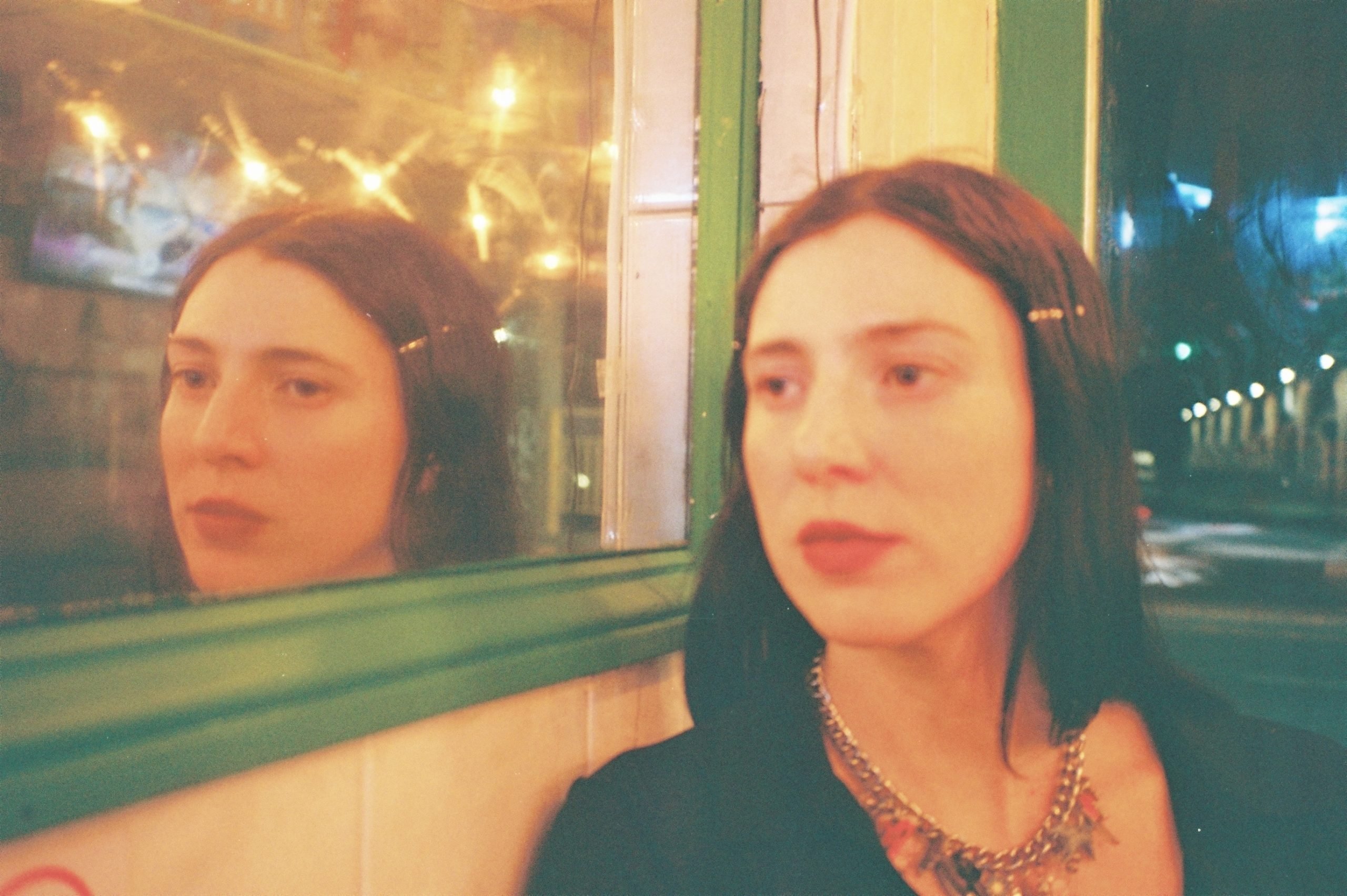
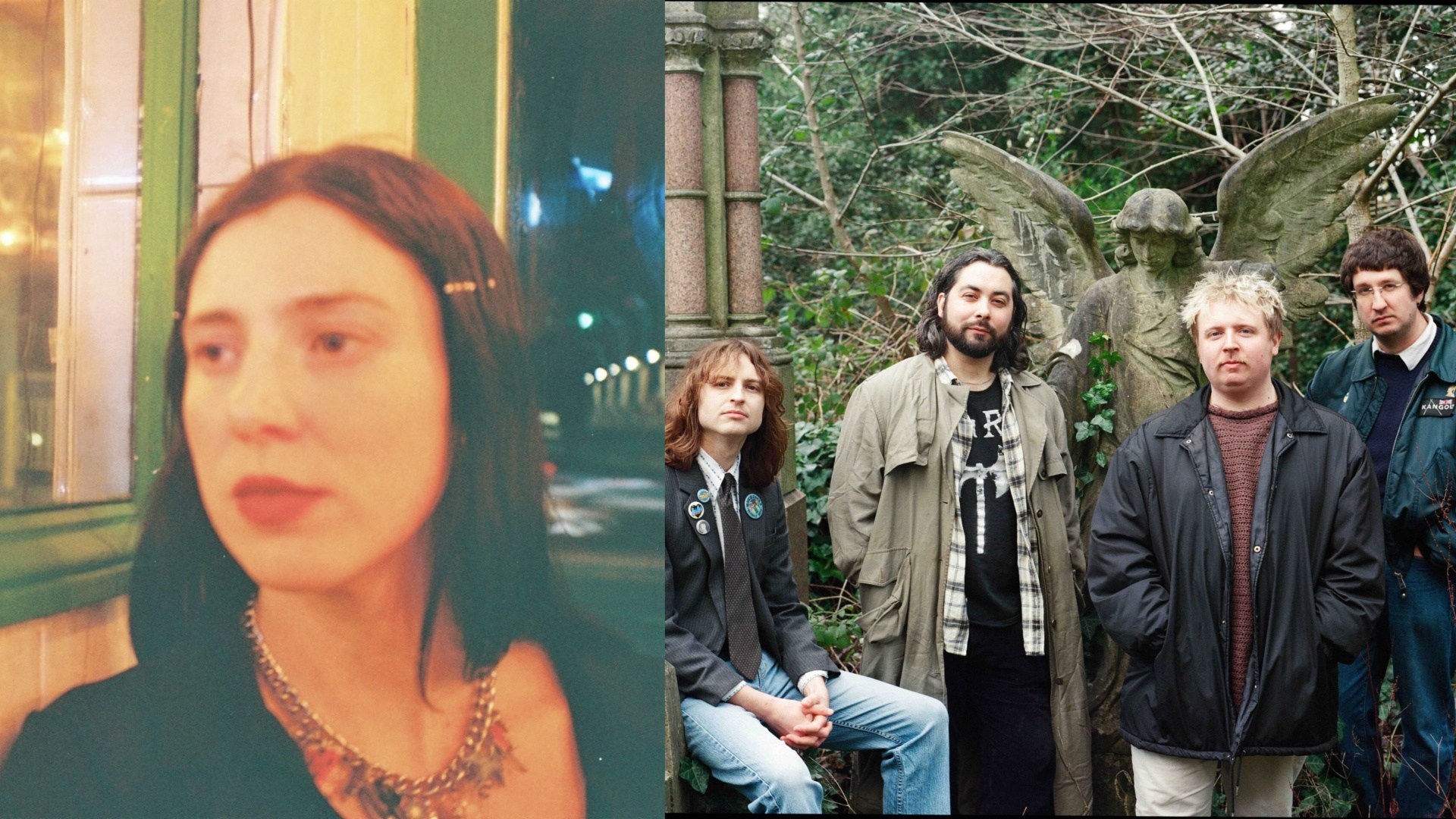
Hannah McLoughlin is a London-based singer-songwriter and composer who records as Spike; Owen Williams is also a London-based singer-songwriter, who fronts the Welsh indie rock band The Tubs. Spike’s self-titled debut record came out this summer on Gob Nation, and the new Tubs record Hard Life was released by Domino last month. To celebrate, Hannah and Owen sat down in their shared apartment to chat about it all, while Hannah gave Owen a haircut. (Imagine faint snipping sounds as you read the following conversation.)
— Annie Fell, Editor-in-chief, Talkhouse Music
Hannah McLoughlin: So, Owen, you're in The Tubs.
Owen Williams: [Laughs.] Yeah.
Hannah: Can you tell me more about that?
Owen: Well, that's what I'm doing all the time, when I'm not here for stretches.
Hannah: Ooh, so when you're not in London, that's what you're up to?
Owen: Yeah, exactly.
Hannah: And your album is out in four days. What will you be doing to celebrate?
Owen: Maybe an open-top bus…
Hannah: Oh, wonderful. Right in the heart of London, bit of champagne. Tottenham Court Road, Piccadilly Circus.
Owen: Yeah, do a bit of Oxford Street for the shoppers.
Hannah: Down old Soho… Are you going to go with anyone or just yourself?
Owen: Well, probably The Tubs. And you can come along if you want.
Hannah: Yeah, I'll come along. That would be lovely.
Owen: What did you do to celebrate your album coming out?
Hannah: I went for a delicious meal, ate a big curry. Maybe I should have done something more dramatic, like streaked. Jumped in the bloody fountain at Trafalgar Square, picked up some pennies… I didn't really do very much, it was quite low key.
Owen: Well, it's a great album.
Hannah: Thank you. Yours is a great album too. I've listened to it quite a lot.
Owen: You've probably heard me playing it. I've heard you play some of your songs. But when you're playing, unless you've shown me the song, it just sounds like someone hitting an object rhythmically.
Hannah: I think what Owen's referring to is the fact because we live together. So when you write, I've heard your songs when you're writing them out loud. And I remember once being at one of your [shows] and you did a kind of stripped back set and there was a song you hadn't recorded. I was like, “Oh, I know this one,” and our friend was like, “How do you know this one?” And I was like, “I know it from my living room.” So I often do get first listen, but it's in the background. I'm not just sat there listening to you.
Owen: Do you find it annoying sometimes?
Hannah: Hm… [Laughs.] Sometimes you tend to pick up your acoustic guitar, like, five minutes before I leave for work and play really loud while I'm running around, grabbing my keys, trying to find stuff to leave. It's like you time it perfectly for the moment where I'm most stressed.
Owen: [Laughs.]
Hannah: That's the only time that annoys me, but it's obviously a very short-lived moment. Is it annoying when I play keyboards?
Owen: No, because it doesn't really make any sound. It's like someone kind of just hitting something and then singing. Which is quite strange, but it's not bad.
Hannah: If you have two musicians living together, you kind of do just have to listen to that. I do worry about the neighbors — because I recorded my whole album here, but I use headphones so that stops the keyboard sound or any drum sounds. But when I'm singing, I'm singing, in the living room really loud or in the bedroom. I always do that when you're out. I try and do it when the neighbors are out as well, because it's a bit self-conscious, you know? But you do it classic. You record it in a studio, right?
Owen: Yeah, we're opposite in that I tend to record and generally treat music like it's still 50 years ago, like Pro Tools or Logic or whatever doesn't exist.
Hannah: I like the way that The Tubs sort of exist in this realm that's a little untouched by the contemporary ways.
Owen: I mean, it's not really purposeful. I think I just don't have much of a technological impulse. Whereas you like fiddling about with synths and stuff.
Hannah: Yeah, I like using Logic and I like sampling. I like the tech side of things.
Owen: And I suppose that partly accounts for us making quite different types of music. But I think in a way they're quite similar songwriting-wise. You know, the pop song structure. We're quite focused on hooks.
Hannah: Yeah, I think we both really appreciate the magic of a good pop song. My dream is to find some hooks that are a true hook. Which aren't always easy to come by.
Owen: I suppose with electronic music, or music produced electronically, there's more of a tendency to get focused on the production, the textures.
Hannah: Yeah, the production and the vibe can take precedence over the songwriting.
Owen: For me, when I write a song, I'm using really basic tools, which is just the chords and the guitar. So it kind of means that my only real focus is melody and lyrics. Which I think for most people would be very limiting, but it's just how it develops. But I think most of the music I listen to also is sort of hook-based rather than atmospheric.
Hannah: You don't like instrumental music?
Owen: I do like some jazz and some classical music. But that's maybe 10% of my listening. When I listen to music, most of it's hook-based, melodic pop in some form. But that could be music that is produced electronically, like R&B or synthpop or goth stuff, or it could be the other extreme, like old folk songs. But I'm probably a bit of an extremist on that front. Do you have a balance?
Hannah: I like a lot of ambient and a lot of instrumental music. There's this great YouTube channel that came up on my algorithm recently called ultravillage, and they reissue these ambient tapes that were made in the ‘80s and ‘90s. So, for example, there's this woman, Sally Daley, who's just been emerging on this reissue channel. She would make tapes for her church and she'd sell them to raise money for church. She'd be at her keyboard at home recording onto cassette.
Owen: You're more of a crate digger.
Hannah: I'm a bit of a crate digger. I'm very basic — crate digging these days is YouTube, really.
Owen: There's no actual digging.
Hannah: There's no digging. It's often delivered. But then from there, I'll follow the thread. But YouTube really is a treasure trove.
Owen: Yeah. Whereas I probably just, from over the years listening to music, have a fairly good overview of a lot of stuff, but I think most of the things I like are things that are quite popular in a way. Not popular as in, like, Teenage Fanclub — they're a big band. They're not a niche prospect. And there might be some slightly niche power pop stuff I like, and maybe a bit of Arthur Russell. But to be honest… I don't know why I'm outing myself like this.
Hannah: You’ve got basic tastes.
Owen: I'm a bit canonical, I guess, yeah. Whereas I think you draw on some more esoteric stuff.
Hannah: Yeah, maybe. But I think the great pop songs of the world — so many of the ones I love are the most famous songs in the world. They're classics for a reason.
Owen: There's probably a lot of those kind of things that we both are influenced by.
Hannah: Yeah. And we're both very big Magnetic Fields fans.
Owen: Exactly. And he essentially spans both types of music.
Hannah: Big time. He's a genius pop songwriter who is obviously inspired by a lot of mainstream music. Like, he describes going to bars and that's where he'll write his songs, so he's basically just listening to pop songs and coming up with his own in his head.
Owen: And he also spans the sort of synth twiddling, technocratic side of things.
Hannah: It's true. I emailed him once many years ago to ask him what drum machines he used and he gave me a really thorough breakdown of everything he uses for every project and which kind of drum machine I should get. I was just emailing as pure fan mail, really. But, bless him, he took the time to respond. I think Get Lost is a perfect synth pop album, but that's not really what he's considered to be as an artist.
Owen: For me, he's a big influence lyrically.
Hannah: I think yours and his lyrics both have that kind of dark wit.
Owen: Yeah. And I guess our first collaboration together will be doing this Magnetic Fields…
Hannah: Yeah, we're doing a Magnetic Fields tribute night on Valentine's Day 2027. We're going to be playing all of our favorite songs by them, which I can't wait for.
Owen: I think people always assume if you're both two musicians living together, you're going to be jamming all the time or something. But we don’t.
Hannah: We don't, really.
Owen: I think we could do something good, but… I think we'd be both get annoyed. I think the good thing of being in a band with your friends is that there's — well, maybe not so much with my experience in The Tubs — but there's boundaries in a way. But there are a lot of couples in bands, so I'm sure it can be really fun as well. Especially if you have tours together.
Hannah: Yeah, I think the touring aspect we'd enjoy probably. But the creative process… I think unfortunately the work I'm doing at the moment is really a solitary pursuit, so probably I've lost some of my ability to collaborate in a healthy way.
Owen: I mean, to be honest, most of the time when I've ever collaborated, it's been like, “You take half, you do half of that,” and then you sort of combine and play a bit on each other's stuff.
Hannah: So I guess the songwriting aspect, you don't necessarily share in that.
Owen: Yeah. That Lennon-McCartney thing where they're staring at each other in their eyes and coming up with the next bridge, I don’t know…
Hannah: Well, I guess according to some, they created some great music. [Laughs.]
Sometimes I like to take inspiration from films and books. Whatever book I'm reading at the time I'm writing a song, that would be the lyrics of the song. It's often quite direct like that. You're a literary guy — do you ever get inspiration [from what you’re reading]?
Owen: I'm not sure I get influenced by particular books or anything. But I think the fiction writing that I do has influenced the lyric writing because I think it made me better at playing around with persona, sort of exaggerating the more potentially uncomfortable aspects of my personality, or even just kind of creating new faults for myself.
Hannah: [Laughs.] Yeah, you've got a very strong persona.
Owen: I'm not quite sure how it came about, but I think it probably is a bit influenced by Stephin Merritt, Morrissey… These kind of heels. But I think I'm not really like that.
Hannah: I can say that you're not. I don't know if I like personal lyrics that much. Or at least I find that the artists that I admire, often they'll talk about, “What inspired this song?” And they're like, “I don't know, I was just writing words down. I was just writing a pop song…” It’s not as autobiographical as you think.
Owen: Yeah, I think the tradition of pop songs, lyric-wise, is there is a level of artifice in it and it's sort of supposed to be a bit cliché. You use these kind of tropes, “baby,” and stuff like that. It's very different to literary work. And I think a lot of musicians who try to be very literary, that doesn't make their music very hooky or melodic. Because I think melodies are quite strict and they don't really correspond to complicated sentence structures. I guess Bob Dylan kind of manages it a bit.
Hannah: He's a major exception because he has about 8,000 words in every song and it works. It's catchy, too. But I like in his songs how there's just so many lines that some of them are kind of filler lines. Occasionally there's a little dud in there. [Laughs.] But he's amazing. I'm a huge fan.
Owen: Yeah. But I suppose people tend to want a personal story around song lyrics.
Hannah: There seems to be an assumption that whoever wrote it is speaking from a place of truth and expression, and I think maybe people are disappointed to find out that often that isn't the case.
Owen: Because when you're actually writing songs, I think most people tend to be more immersed in the chords and the melody.
Hannah: The melody has gotta be first and foremost, I think.
Owen: Maybe some people write the lyrics first, but I don't know about those people.
Hannah: I don't know either.
Owen: Maybe there's some good songs like that. But to me, it's such a separate thing to write down prose. And, again, going back to Stephin Merritt, he had a good line where he was like, “If I wanted to express something, I'd just write it down and I'd express it. Whereas writing a pop song is a completely different thing. When I'm writing a pop song, I'm trying to express a pop song.”
Hannah: Yes.
Owen: But then I suppose I do kind of think of these lyrical ideas — it's often a sort of joke or a hard truth or something — and that becomes a hook in itself for me. So I think I've become more interested in what lyrics can do. But I try to keep it within the realm of pop song. It's quite a strict discipline.
Hannah: I think so too. And I think any kind of lyrical meaning for me — I'm also very uninterested in psychoanalyzing myself. I don't want to hide anything in terms of what the lyrics may be revealing, but I'm not the one who's gonna… I don't overthink what it means. And the imagery, I prefer to keep it abstract.
Owen: Often I think it's the style of the sonics, and the music kind of dictates that. Because I think you don’t really get very confessional synth pop. Or, maybe you do. But I think there's a level of coldness or abstraction that's quite fitting in that kind of music.
Hannah: Yeah. I definitely prefer the abstract approach. A little bit cryptic, mysterious… For me, actually, lyrics are the hardest thing to write. And it's a real slog when I've got everything laid out and I know exactly what the melody is going to be, and I just have to shovel these words in.
Owen: Sometimes it’s all just gibberish, kind of.
Hannah: Cocteau Twins had the right idea. Don't even worry about it.
Owen: Sometimes it feels like that's the way it should be sung, weird gibberish where the syllables fit.
Hannah: It's just consonants and vowel sounds.
Owen: Whereas sometimes the act of putting lyrics on it kind of feels…
Hannah: It crushes it. So, yeah, maybe I'll try and embrace the gibberish from now on…
Owen: Are you looking forward to touring together? We've never done it before.
Hannah: We've never toured together. I'm definitely looking forward to touring together. I think if we were going on tour together in a massive continent, like the USA for six weeks, I'd be a bit more apprehensive about it. But I think seven days in the UK is going to be very, very fun and nice.
Owen: A moving holiday.
Hannah: Yes. And most of the cities we've got friends there, we know people, so we're probably not even really going to hang out that much. But I'm looking forward to going on tour with The Tubs, because you're great guys. Lovely lads.
Owen: Have you got [a question] for me?
Hannah: Who's your favorite member of The Tubs?
Owen: Me.
Hannah: Oh… Who's your second favourite member of The Tubs?
Owen: I'm not gonna answer that.
Hannah: Fair enough.
Owen: Maybe we're done.
Hannah: Yeah, I think we're done. Bye! Thank you!
You can catch the Tubs on tour through the US starting October 15 at Tubby’s in Kingston, NY. And Spike will be playing Sŵn Festival in Cardiff, Wales, October 17, and Hart Bar in Brooklyn November 9.
(Photo Credit: left, Lan McArdle; right, Robin Christian)