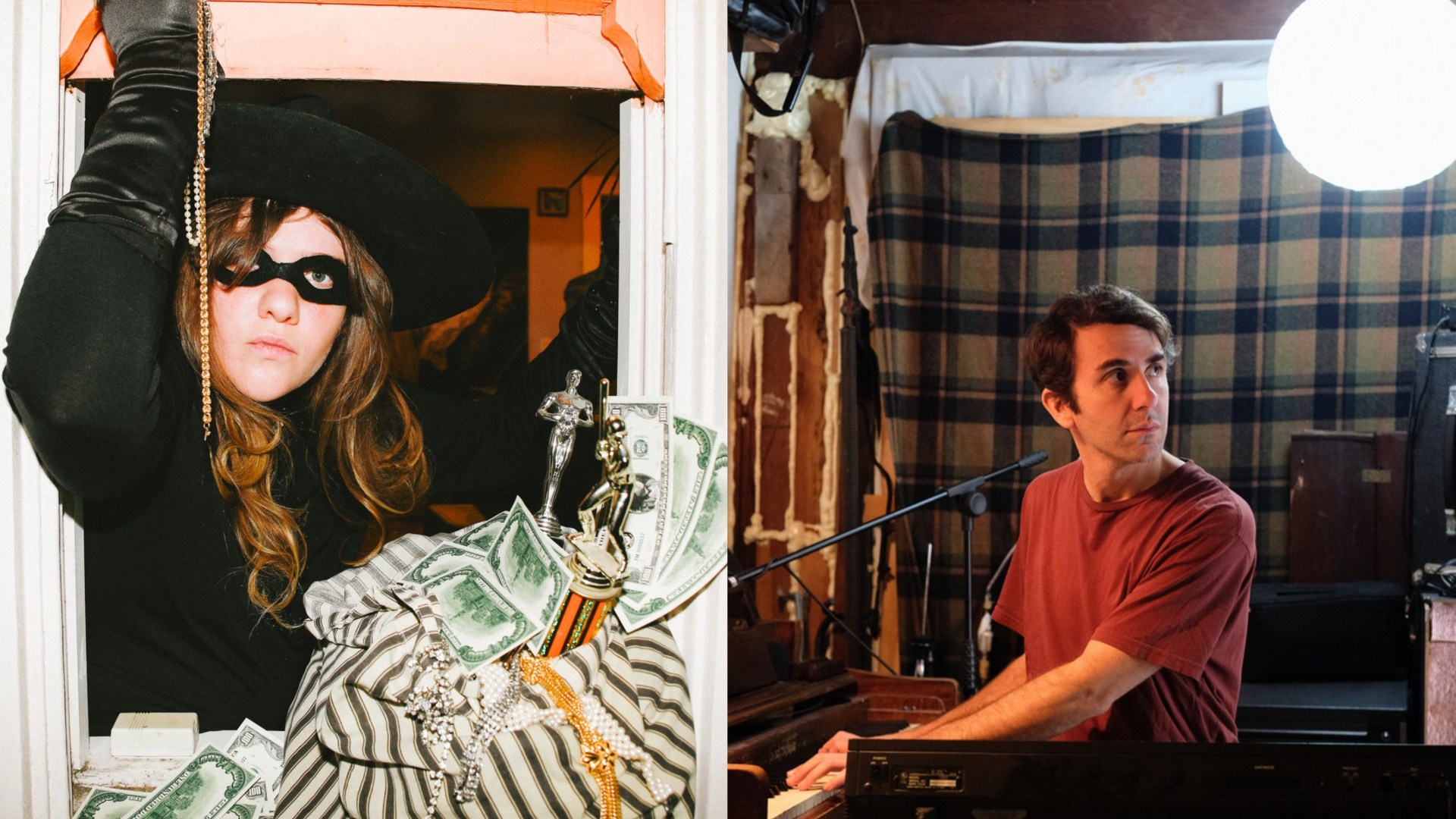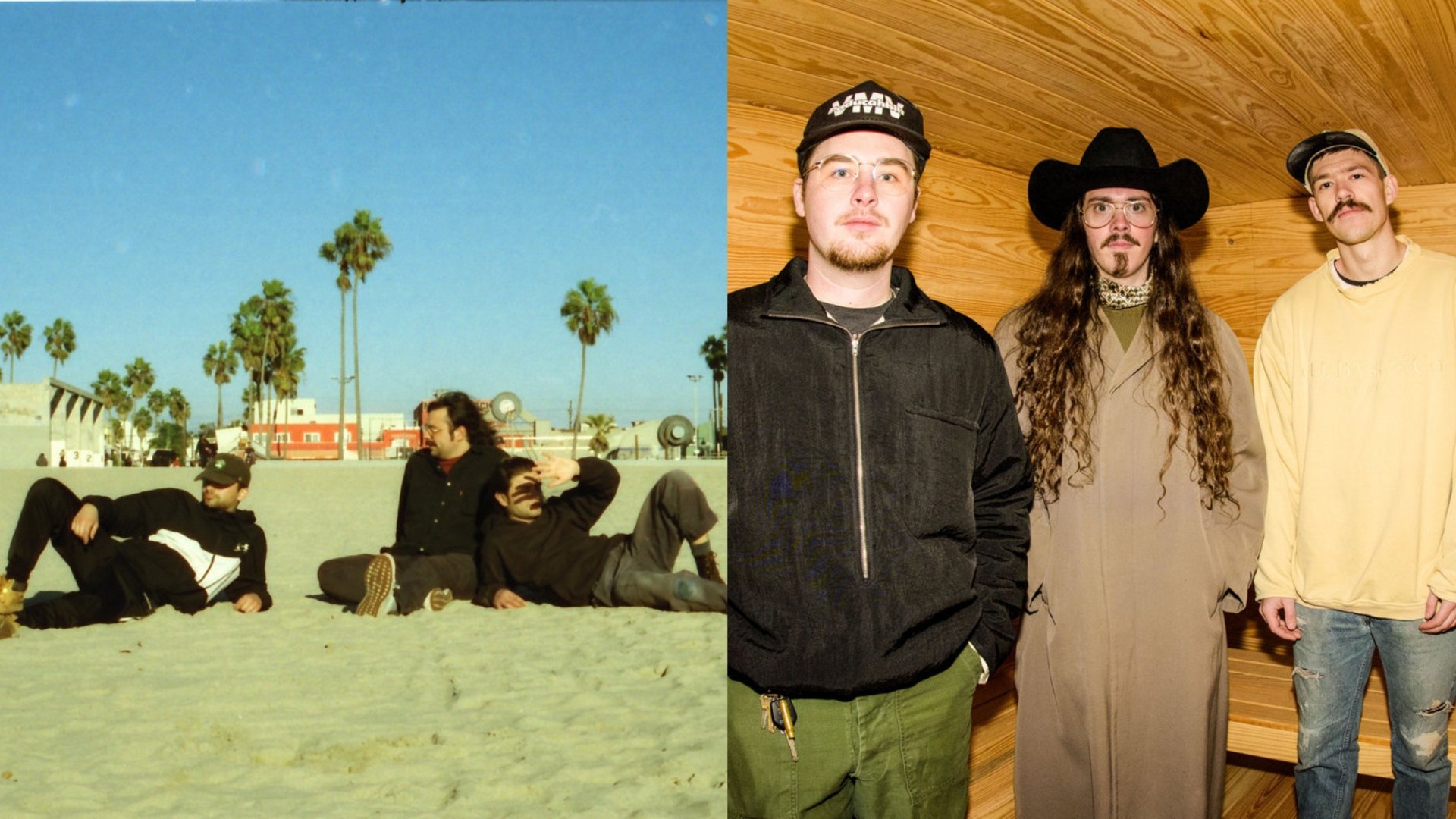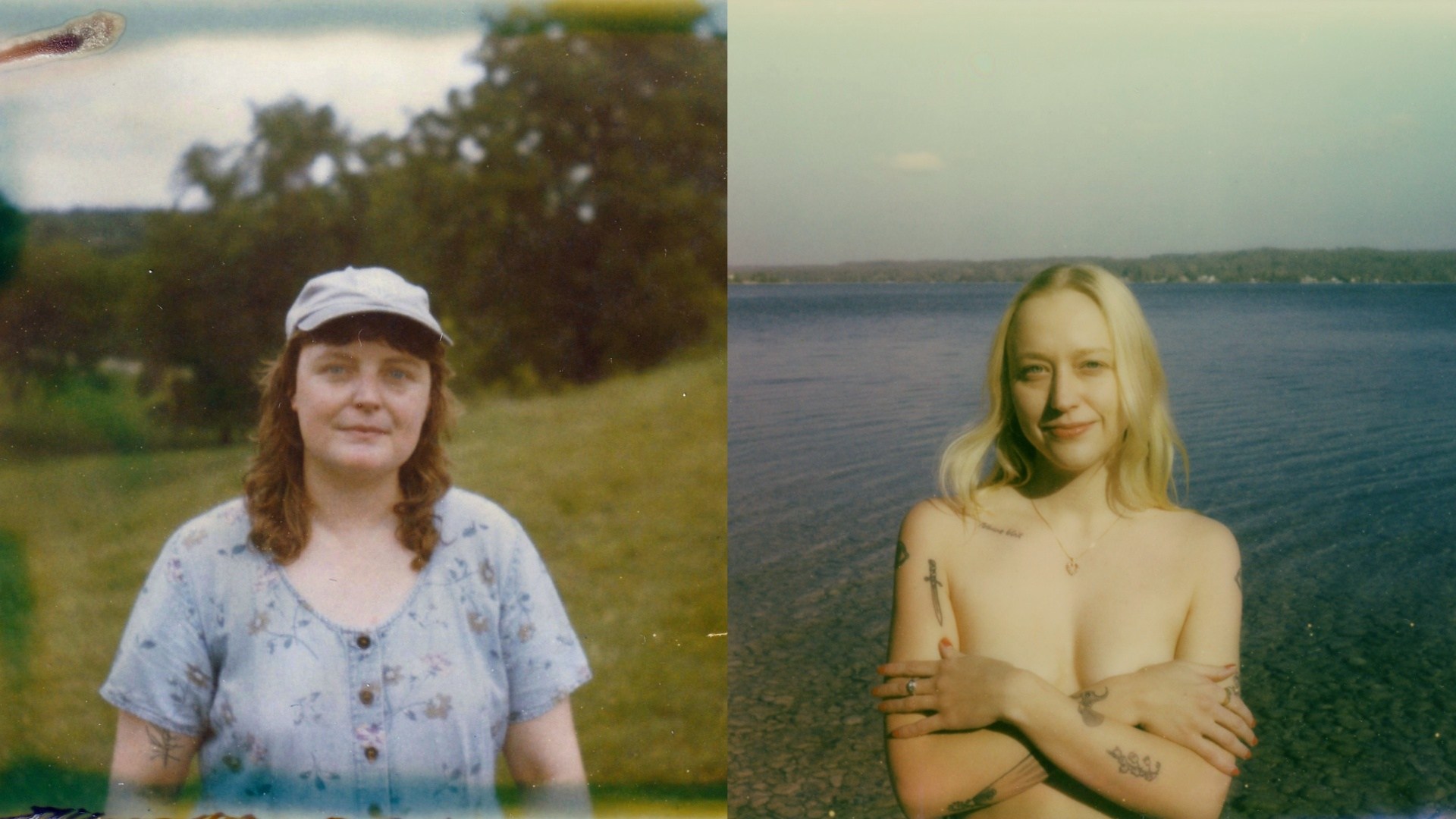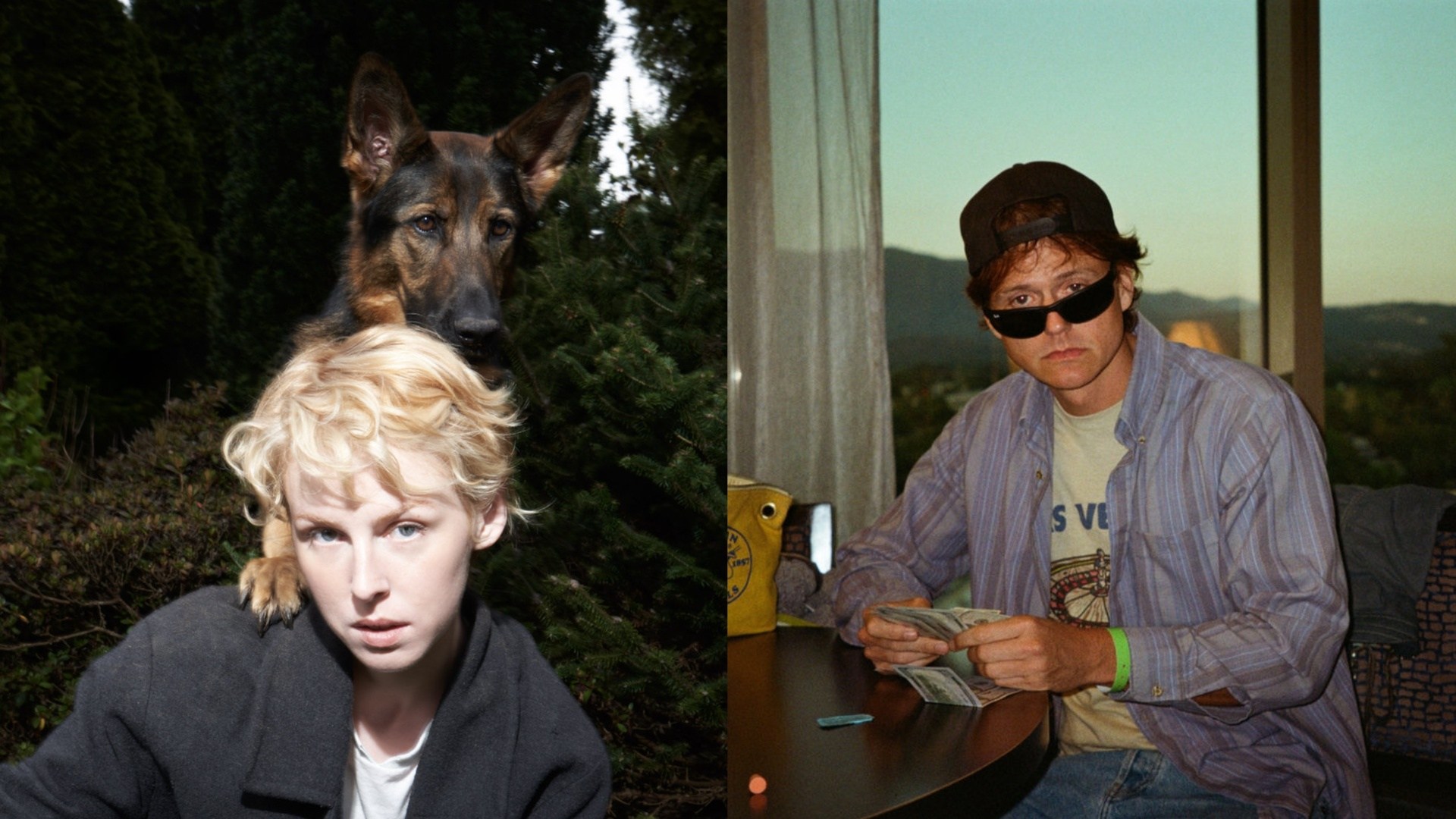
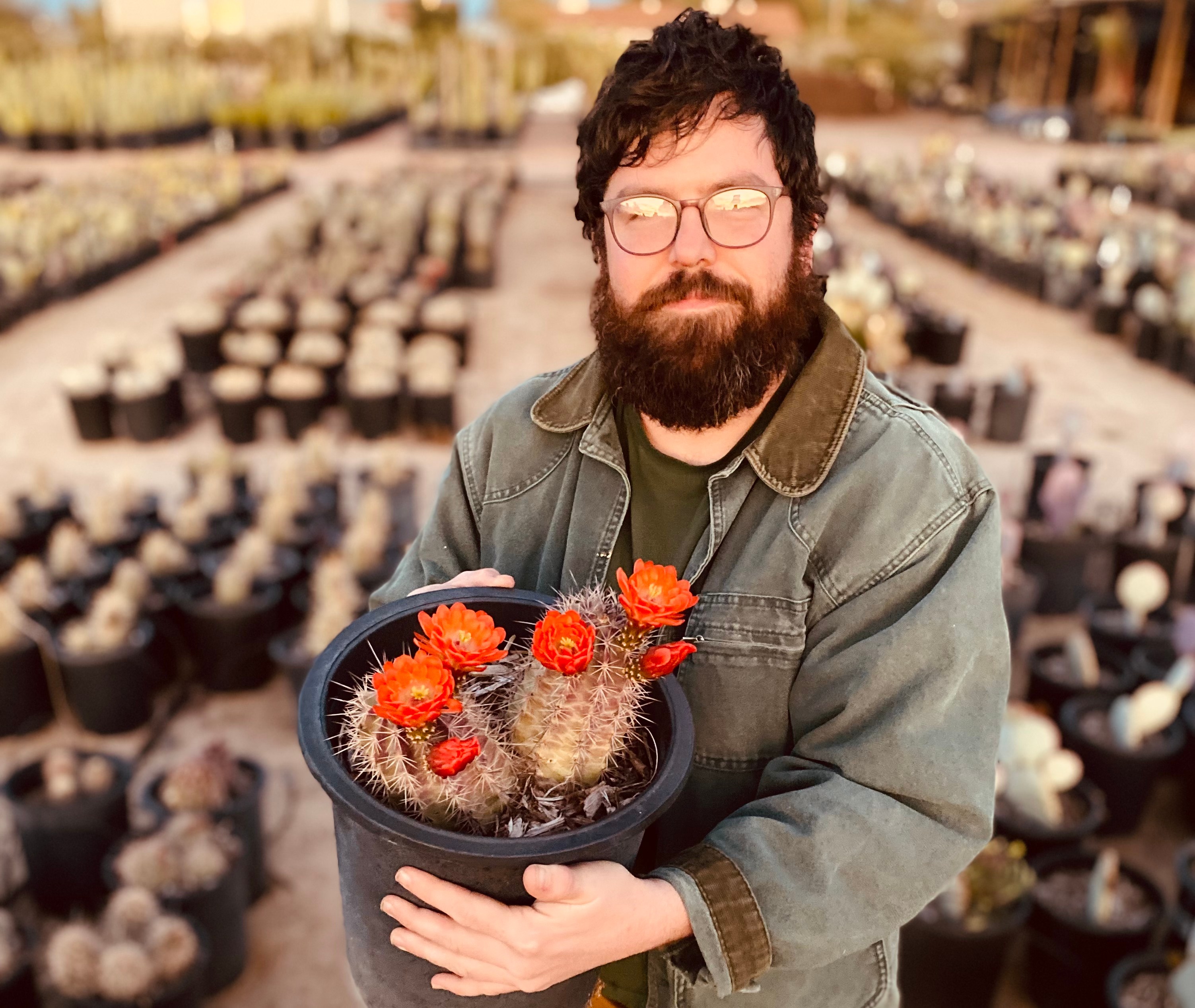
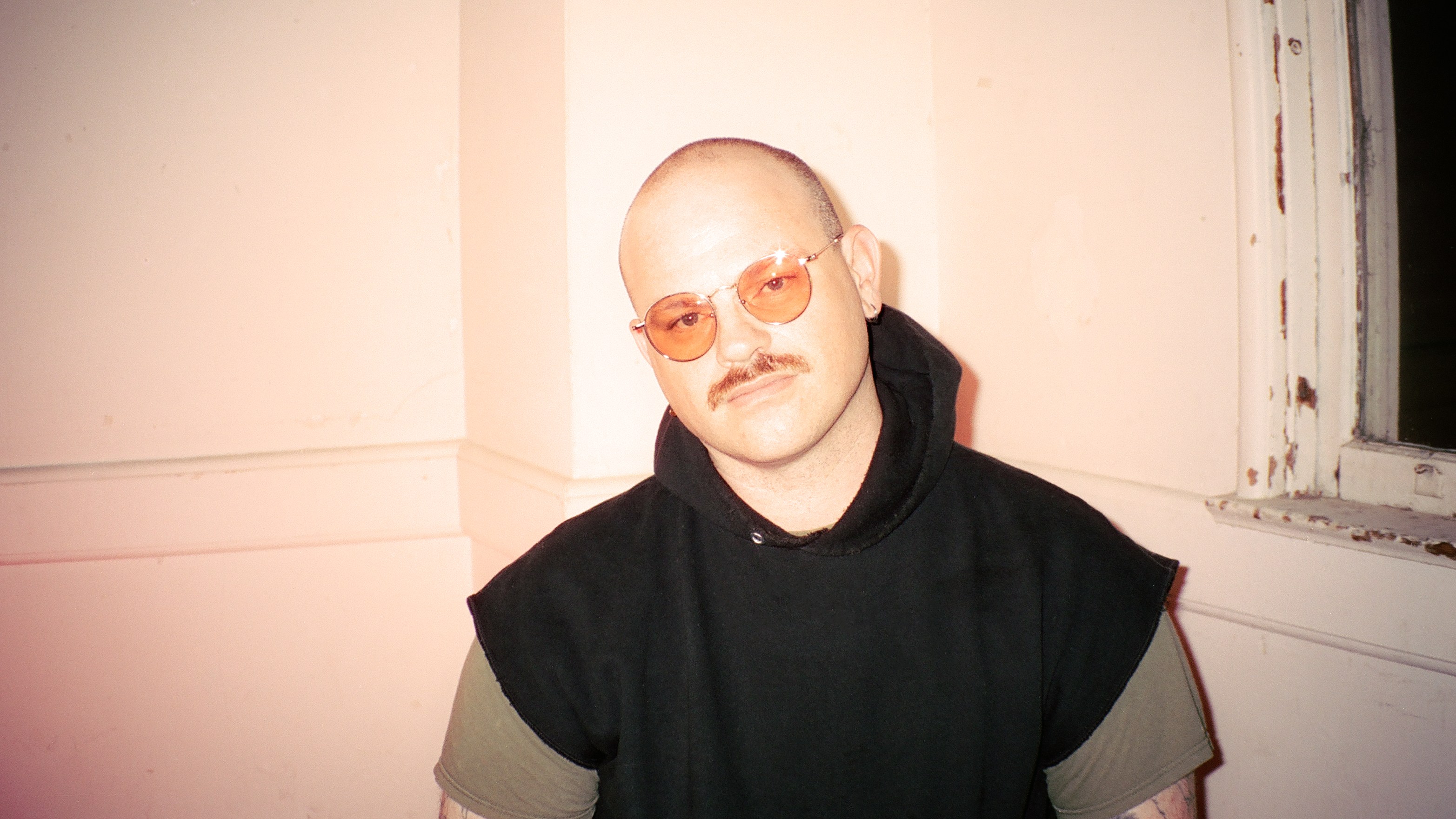
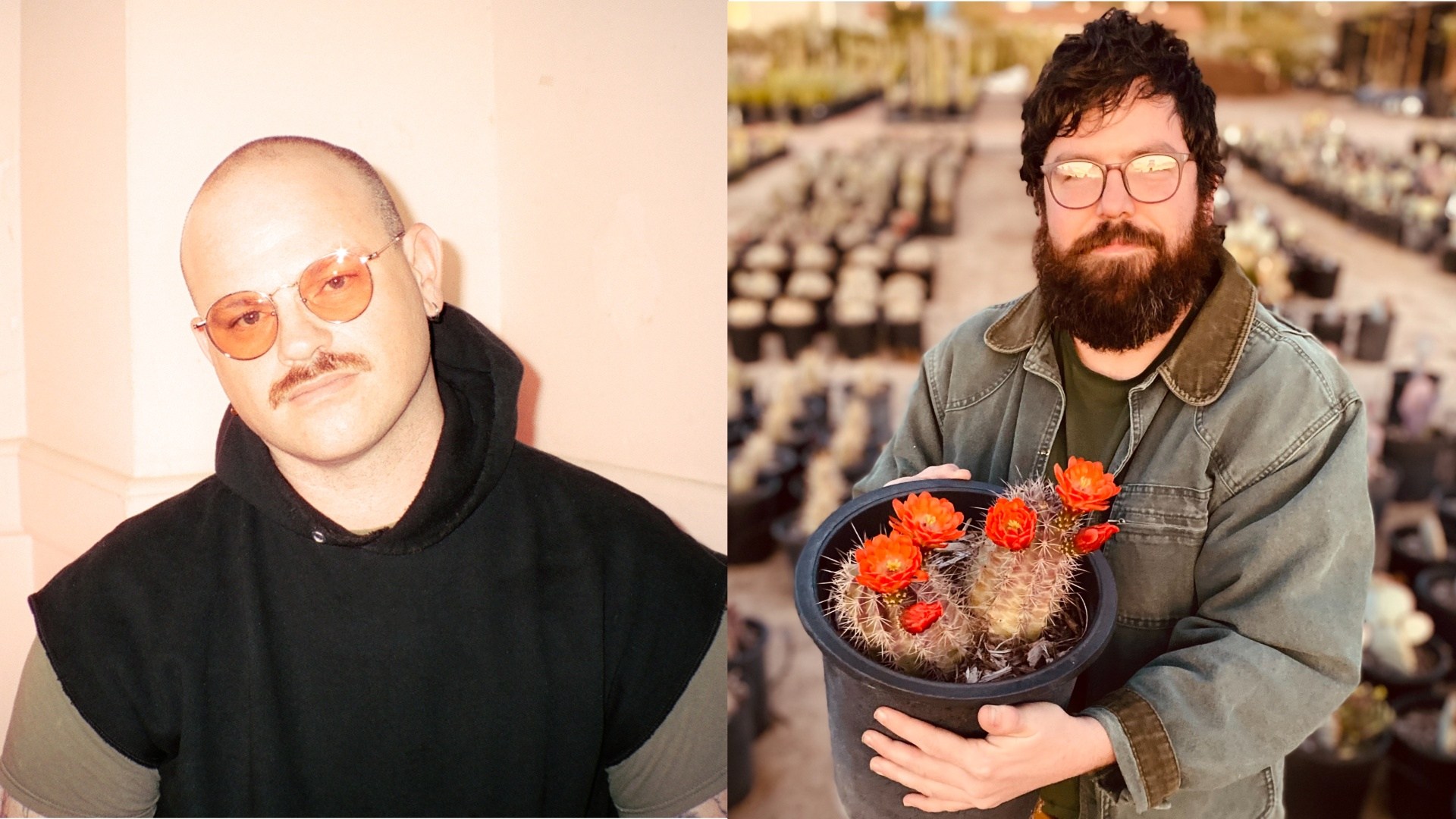
Stephen Steinbrink is a songwriter, producer, and visual artist now based in Oakland; Teague Cullen is a Portland-based musician who fronts the project Foot Ox. Both of them released records this Fall — Stephen’s In a Split Mirror and Foot Ox’s Topanga Canyon — so to celebrate, the two longtime friends got on the phone to catch up about growing up in Arizona, Tempe DIY, and much more.
— Annie Fell, Editor-in-chief, Talkhouse Music
Stephen Steinbrink: Hey, Teague.
Teague Cullen: Hello, old friend.
Stephen: I was thinking we could start off with you sharing your memory of how we met. I think back to that era of my life, and it's so clearly defined as pre- and post-Teague, but I actually have no memory of meeting you.
Teague: I have a couple clear memories, but those are fuzzy times. I think you were playing some songs with an acoustic guitar by yourself in the alley behind the bike co-op. You were playing a show — you weren't just playing in the alley. It was, like, a-hundred-and-whatever degrees, and then afterwards I was like, “That was really fucking cool.” And you were like, “Thanks,” and you gave me this big hug and we were both really sweaty. And I think that was it. I don't think we talked. [Laughs.] But then I think you got my number from somebody and you called me and were like, “Hey, do you know who I am?” I was like, “Yeah.” And you were on one about, “We should start a label,” or a band or go on tour or something. You had big ideas. I was really excited. Do you remember that?
Stephen: I have no memory of that. That's so funny. I remember the show on the train tracks in the alley behind the Elna Rae house — I think there's a recording of that.
Teague: When I talk to everybody about those times, there's basically some version of this where it's like, “Oh, what? I don't remember that at all.” There was some common thread holding it all together that was just so special, and I know is real, but it's so funny when you get into the specifics because everyone seems to have their own [memory], nothing seems to line up. But it felt like there was something in the water.
Stephen: The last couple of years — I don't know if it's like we're all approaching middle age now, but a lot of us in that Tempe DIY scene at the time, [it was] this really clearly defined cultural moment for everybody that experienced it. Remembering all of those moments as we're getting older is very interesting. Just the flimsiness of everybody's memory. But when they do intersect, it's pretty beautiful.
Teague: Yeah, I agree. Do you have a different version of [how we met]?
Stephen: Well, I remember seeing you play at some house on East 13th or something. This is something I feel kind of embarrassed about, but I remember asking you if I could tune your guitar. [Laughs.]
Teague: [Laughs.]
Stephen: I'm just like, Wow, such arrogance. But either you were struggling to tune it or, or it was just massively out of tune. And it didn't seem to bother you, but it bothered me. [Laughs.] I feel a little embarrassed to recall that memory, but that's my first memory of interacting with you.
Teague: I remember later being on tour together and then handing you the guitar and being like, “Can you do this?” Like, on stage. “I can't handle this.” I feel like I have a better handle on pitch now. Sometimes people either kind of can hear it or they can't, but I feel like I've gotten better.
Stephen: Yeah, I think it can be learned.
Teague: I was thinking about theTerence McKenna idea of memes — not like current popular memes, but the idea of a meme as the smallest version of a concept, of an idea. I'm not quite sure this is what he meant by that, but you know how when you make a mixtape and you're like, “Oh, this BeeGees song, that one little part actually reminds me of this other song…” And then those two things go together, and then you find another song that also fits into that world, and then the ball gets rolling and you have this whole mixtape, and it's hard to say what the central theme is but it's some kind of emotional resonance. I was thinking a lot about that in terms of making art. The last time we were talking, I was saying my dad had these these t-shirts that were really specific when I was growing up; they were almost like Hawaiian print, but kind of Southwestern colors. And then that made me think about when you're at soccer practice and they've cut up the oranges for you. And then that made me think of the guitar tone of the lead guitar in "I Can See It in Your Eyes" by Men at Work. So then I have this thing in my mind and it makes me feel kind of crazy, but it starts to make sense in the way that a mixtape would make sense. I'm not really sure what that's called, if that's a motif…
Stephen: I remember you describing it as “Arizona Feeling.” We both grew up in the same place. I feel like that environment, growing up in the ‘90s, still informs the art we make in a really strong way, even though it's very different for both of us. I think growing up, I noticed really young this sense that things were just not right there; things weren't correct in Phoenix. I wouldn't have been able to articulate it then, but I think emotionally, I picked up on this mass cognitive dissonance, living in a place where it's over 100 degrees most of the year and yet everyone has these green manicured lawns. It always seemed so insane to me, and it communicated to me in this subtle way that the majority of the population wasn't really concerned with reality. But I feel like with your music and knowing you for 20 years, I always got the impression that the desert affected you in more of this abstract, pure way, like through your songs and visual art. You're connecting to this almost non-human, anti-civilization, non-man-made spirit of where we're from. I wonder why that is, why I had sort of this confrontational attitude towards my place of origin, but it seemed like you… [You’re] not idealizing it, but it always struck me as slightly more harmonious and less contentious. I wonder if you spending so much time as a child in the cactus nursery formed your idea of that, or at least was an example of some sort of cohesion with your environment.
Teague: I totally know what you mean. That's actually where my mind went to, the cactus nursery. I don't know if this has to do with it or not, but I've had some hippie farmer elders in my life talk about being… I don’t know if I was immersed in nature, but I would be over at the nursery often. When kids are immersed in nature, there's all these metaphors for living — “This grows and then it dies.” I think I was picking up on stuff like that. Also, my cousins lived there and were homeschooled by hippies. I was going to public school and going over there a lot on the weekends, so I had one foot in the world that you're talking about. And it would be even more amplified because I was like, “There's another way! We could just be covered in dirt and making freaky pottery and growing stuff!” [Laughs.] And then I would go to public school and be like, “Oh, my god, back to prison…” It was so wrong there. Everyone felt disconnected from reality, like you're saying. I think there are a lot of people disconnected from reality.
I really feel that — even though it is abstract — in your work. And its humor, [whether] it's music or lyrics or a comic — even if it's complete abstraction, it's just a vibe of taking the crazy dissonance of things not making sense, and all the adults not caring that they don't make sense in that place, and kind of giggling. It's not despair. Or at least, if despair is in your music or in your art, it feels like it's approached with some kind of shield.
Stephen: I think that sort of explains the tension in my music, or trying to figure out why my music at times sounds so happy, but is not that. It’s just trying to communicate some sort of dissonant absurdity. But I remember feeling that when I was a child, and then it coming out in this kind of odd way in pop music when I'm an adult… It's funny that you made that comment about prison because both my junior high and high school, I found out after I graduated that the architectural layout was based on an actual design for a prison. The sort of cheap disposable, brutalism of the architecture in Phoenix, I actually do find it very beautiful. But the way I find it beautiful is very abstract because most of the buildings that were built in the last 40 years in Phoenix, beauty was not their primary utility.
Teague: There's something too about the desert and it being just this big, flat pancake. Once they mowed it down and were building Phoenix, it's just such a grid. And then the buildings are like grids and they don't need to worry about snow so there's not a big, steep roof. It's just like square.
Stephen: Sometimes when I have a hard time sleeping, I'll drive around Mesa and Tempe and Phoenix in my head. I have that grid so ingrained in my mind that I can just get in my car in my head and drive around until I fall asleep.
Teague: That's sweet. That kind of reminded me — today my partner called me and she was like, “I have sad news. Libby's is shutting down.” It's this old diner here. It's not good — it's actually quite bad — but I love it. It got me thinking about how, the age that the boomers are all at now, we're in the midst of an enormous dying off. And it doesn't have to be Portland or Phoenix — most places are changing so much. They're always changing anyway, but there's this really specific change going on. Like, Dolly Parton died… I don't know if it's just getting older or if it really is this moment in time, but it feels like we're in the midst of massive change. I felt this thing come over me, just this great sadness of, What do we bring with us for the future? And what's possible to bring? Having my kid now, it's amazing to see — those little things like a restaurant of your childhood, it's so big and it's so set in stone. And then as you're getting older, you're realizing, Oh, that place is gone…
Stephen: I don’t know if you remember — I guess you had moved to Portland by this point — around 2010, ‘11, there was that intersection kind of on the border of Mesa and Tempe where Fiesta Mall was. It was like four blocks meeting at an intersection where every single building there was abandoned. It was just these massive strip malls that I have these memories from my childhood going there with my family, and then during the recession these landmarks, these indelible containers for my childhood memories, were suddenly inaccessible. It was a year before I moved to Olympia and I used to drive down there and go around and take pictures of it. To me, it seems different than this sort of fetishization of urban decay; it felt like something much more personal to me. I think it goes back to growing up in an environment that is essentially fake. It's completely constructed, it's not organic, it's planned for the sole purpose of commerce. And yet still being a child and growing up in that environment, you develop these powerful emotional associations with, like, a Black Angus Steakhouse.
Teague: [Laughs.] Absolutely.
Stephen: It goes back to what I feel like is the core absurdity of Phoenix, that on its surface it’s a place that's very inhospitable to humanity on every level. But… I don't know exactly what I'm getting at. Maybe the resilience of the human spirit or something. [Laughs.]
Teague: I know exactly what you mean. I feel it — it is the resilience of the human spirit, I think… You give humans the most unspeakable, bleak environment, and they find a way to fall in love with it.
Stephen: Yeah. At the time in Phoenix, I really did feel the real human impact of how bleak it was. I mean, I witnessed it in my friends and my family, the effect that the recession had on people close to me at that time. I think there is a parallel to what was going on in the DIY scene in Phoenix, too. It's like there there was this kind of external or environmental bleakness, but I look back on some of those times as being the richest socially and where I was receiving the most amount of care from my community, ever.
Teague: Me too.
Stephen: It was so diverse — and diverse in many respects, but particularly a musical way. It was really chaotic. You could have a house show with a noise band, a hardcore band, and then one of us playing, and it just felt completely normal. And it felt like a very defined cultural experience that we were creating. But maybe it flew under the radar at the time, too, because there wasn't some sort of cohesive musical sound.
Teague: Yeah. And then even within those things, they were so weird. Like if it was folk, it was really weird. If it was noise, it was really weird noise.
Stephen: How do you explain that openness though? Even though it was a very vibrant creative community, I wouldn't describe many people in that scene as necessarily being open-minded. [Laughs.] Except when it came to genre, I guess… I think that the one cohesive thing is that we were all freaks and really like struggling with our personal lives at the time.
Teague: Yeah. I think about that part of it too. The harshness of the environment and our personal lives — that's definitely a recipe for a lot of people… But what I really liked about all of that was when it started all blending together. There's so many times I remember your performances where there'd be some really abstract element to it, or there'd be a long, noisy thing… just being completely open to experimentation. It was a moment in time.
And, I have thought about it later — I really feel the desert in [the music]. It would almost be like twanginess — not that everyone was bending notes or had slide guitars or anything. But there's something in there where I'm like, That feels like the desert to me. And I don't think that I was at all aware of that at the time. I don't know. Do you know what I mean?
Stephen: I think I do. It's interesting because there weren't many visual signifiers that we were in the Southwest based on the way that Phoenix looks or feels. That kind of quintessential Southwestern identity wasn't a visual motif that anybody was really reminded of ever, because the only things that you saw were strip malls and stores.
Teague: Yeah, it's weird how palpable the threads are, or the language that developed. Maybe I told you this before, but I was somewhere and Diners was playing, but I didn't know what it was, I hadn't heard the song before. I was in conversation with somebody and while I was talking, there's a drum beat happening with a closed hi-hat and a little side thing on the snare, and then it opened up to the snare — when that happened, I was like, “It's Chase [Kamp].” I was like, “That's my buddy!”
Stephen: You could recognize the sound of Chase's drums.
Teague: Yeah. And that blows my mind because it wasn't a complicated drum thing, but there was something in there… And there's something in there with your music that is so hard to talk about, but it's so real to me and is immediately recognizable. I guess that's part of what art can be for, expressing those things that you can't say with regular words. But it's crazy to me how real it is, how deep it is, or how meaningful it is to me.
Stephen: I feel the same way about your music. I was listening to your new record today and this one feels so different to me stylistically and the way it was recorded. It feels more grown up. There are still these very familiar elements that are specifically you, but they've changed somehow. With these new songs, it's like the, Casio SK-1 that's on all of your records almost acts like a pedal steel on some of these songs. It's beautiful to watch your music change over the years and still stay very much you.
Teague: I feel the same about your new record. I know you so well and I hear all of these things from all of these years coming together, and it's just such a trip. It makes me extremely emotional to listen to it. It's funny — I know all the influences we both have, but I feel like at this point, they were like food or something and they've dissolved. That's how I feel about my own record; it's not really referencing anything else. I feel that way about you, too, where it was like we were both exploring and finding things we loved in the world, but now it’s like gelatin or something. It's come together. I really love your new record. It solidified into something really beautiful.
Stephen: I guess that's the goal of life, just becoming more yourself as you get older.
Teague: Yeah, totally. I think when you listen to music, you can hear when someone is being sincere. And I think to be sincere, you really have to have confidence to not hold back when you have a bigger vision. But it takes so much safety to open your heart to the level of being sincere, and I know I couldn't have got there without you and our friends at that very specific time.
Stephen: Completely. I don't mean to sound hyperbolic, but I definitely feel like you and a few people in that community at the time completely saved my life, or redirected it to a safe place.
Teague: Yeah, me too. It feels like a miracle. I'm so proud of everybody who's gone on to keep doing cool things, music and art and just stuff with their lives.
Stephen: Well, we’re at 40 minutes. Maybe we could do some rapid fire questions. Do you think the universe loves you?
Teague: I think it does. I think it's kind of like a big play or something. But it's like an old movie that has a really wholesome message underneath the whole structure. Do you think it does?
Stephen: I think it does, but I think that it likes to tease me a little too hard.
Teague: Yeah. [Laughs.]
Stephen: I've had so many almost mystical experiences where something deeply unfortunate happens to me, and then almost immediately, the universe will undo it. It's almost like the universe wanted to just see what would happen.
Teague: It's like something horrible happens — “Just joking!”
Stephen: [Laughs.] Yeah.
Teague: Do you have a favorite food that you're enjoying cooking right now?
Stephen: The baked potato.
Teague: Wow.
Stephen: The baked potato is whatever you want it to be. You can put kimchi and bonchon on it and make it like a Korean baked potato, or you can go clasico style and bacon bits and sour cream and butter and cheese. Or you can get a Japanese yam and slow roast it for 60 minutes and it turns into this almost custardy delicious morsel. Of course, a yam and a potato are two different things. But I think conceptually they're the same. Just, like, a starchy root unit.
Teague: Absolutely. That reminds me: I think there's a lot of unexplored versatility in the format of pimento cheese. You could substitute the pickled red pepper for any kind of pickled pepper, the cheese for any cheese from around the world and the binder, the mayonnaise, for sour cream… It feels like we haven't explored the format of pimento cheese dip to its fullest extent.
Stephen: That's beautiful. I think that's the perfect place to end.
Teague: Thank you.
Stephen: Alright, love you!
Teague: Love you, too!