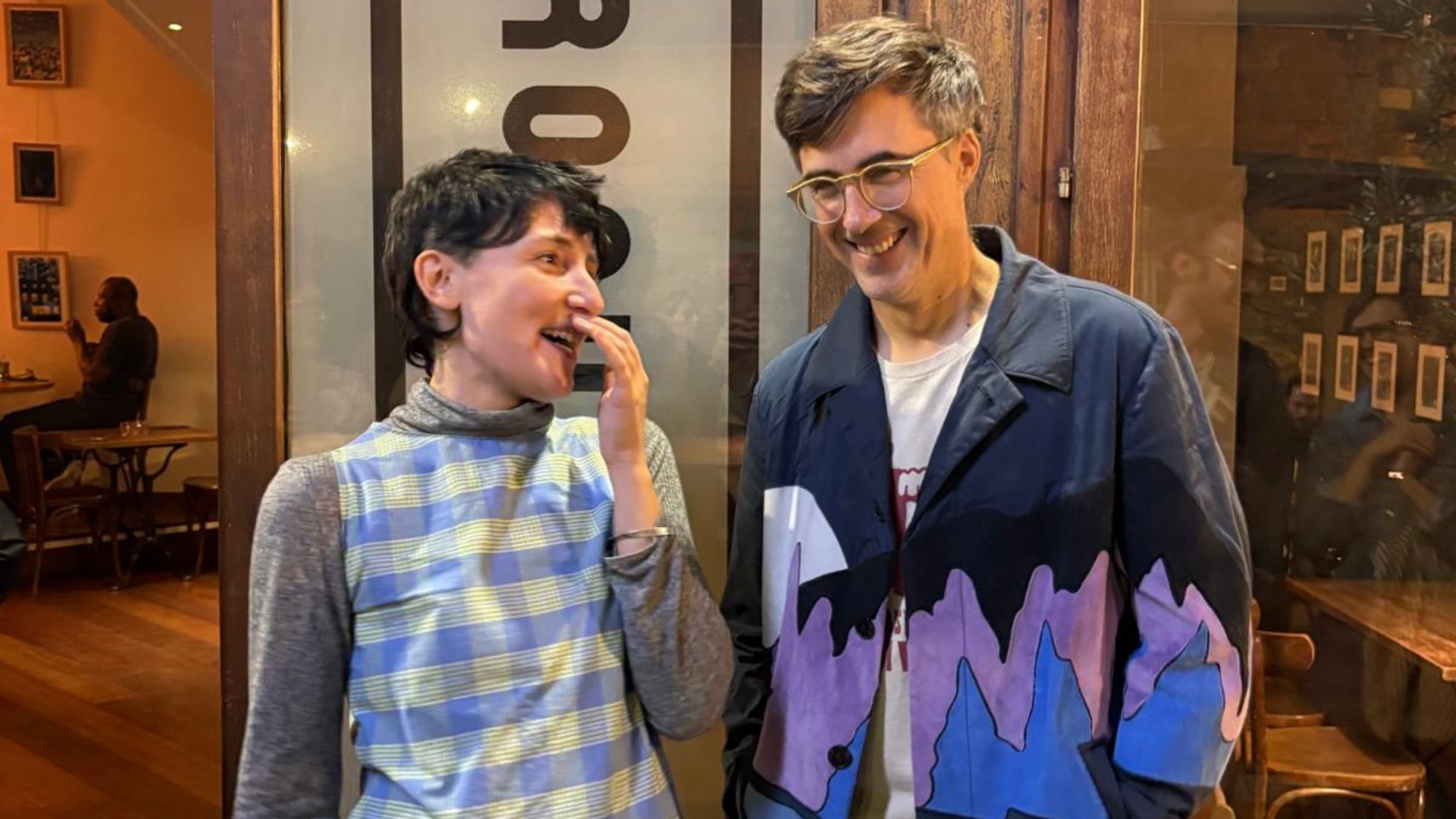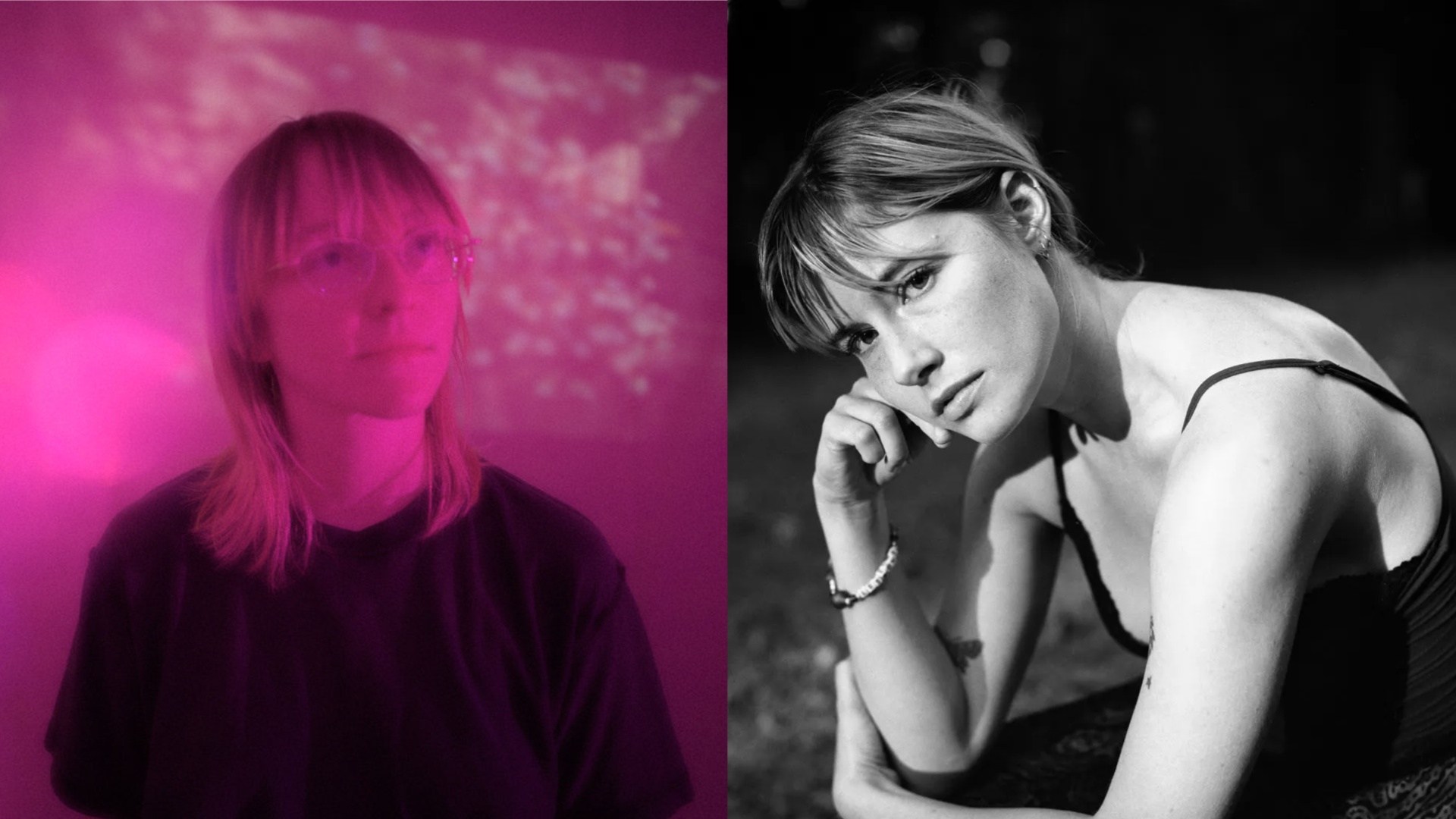
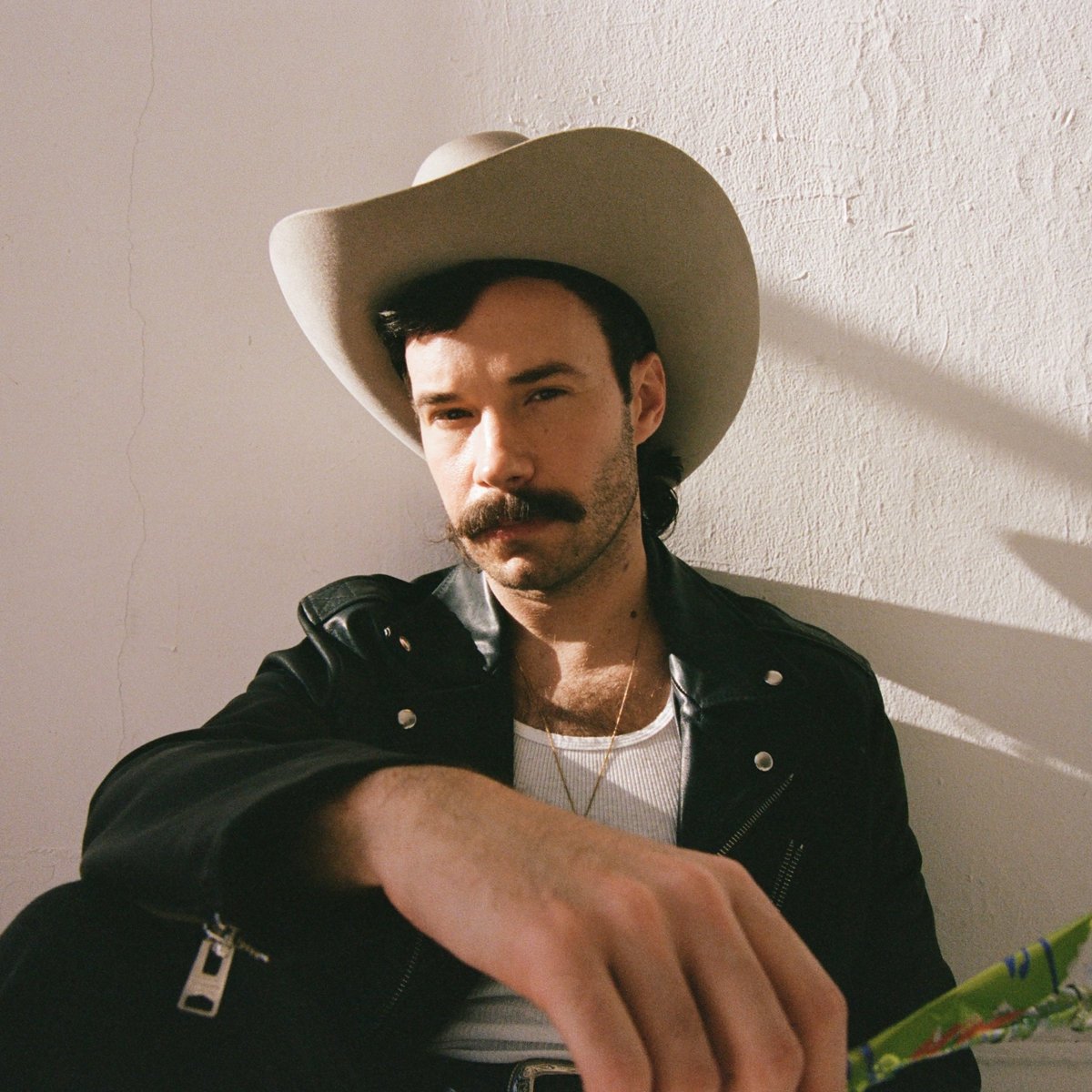
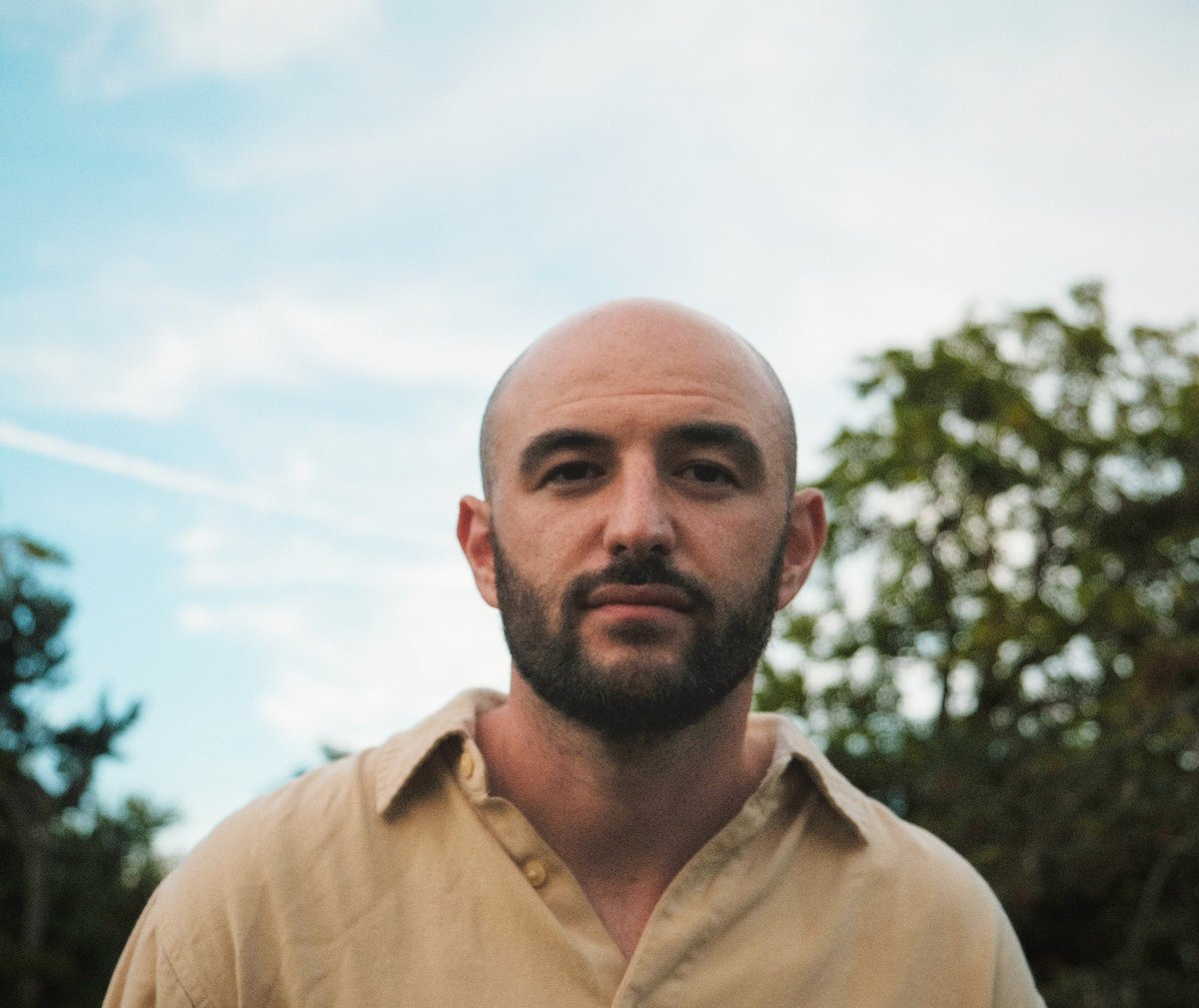
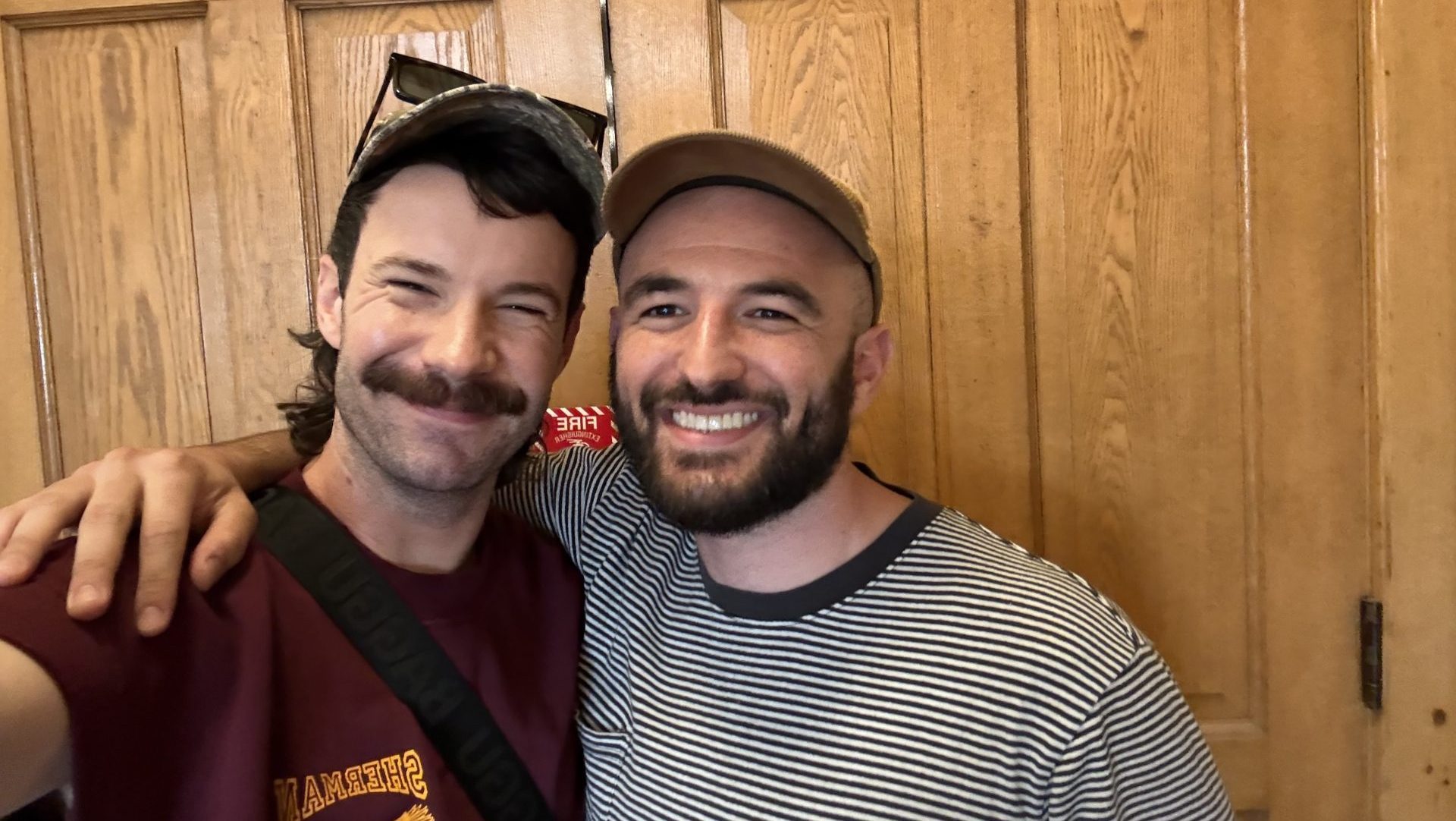
Max Subar is a Chicago-based singer-songwriter and a member of the band Case Oats; Andrew Sa is a singer-songwriter from California, now also based in Chicago. Both put out their debut records this summer: Andrew’s American Rough was released in June and Max’s Anything Could Be came out in July on Merge. To celebrate, the two artists got together to chat about it all.
— Annie Fell, Editor-in-chief, Talkhouse Music
Max Subar: We are in Old Town School of Folk Music in Chicago
Andrew Sa: On Armitage.
Max: We walked into this concert hall and Andrew had a coffee, and I felt like I needed to get myself a coffee as well. And then I walked back in and Andrew was playing some beautiful notes on the piano.
Andrew: If only we had cigarettes… But I asked you if you played piano, and you said it was your first instrument. When did you start playing?
Max: I started playing piano when I was young young, like third grade. Maybe even second grade. I was really lucky that my mom and dad encouraged music when I was growing up a lot, so it was around and we had a piano. Me and my siblings were taking lessons at the same time while we were in school, and it never really clicked for me. I always felt like I was so behind and couldn't keep up with the books.
Andrew: I mean, you were in third grade. There were bigger things to do.
Max: Of course. But music theory, piano theory — it never clicked. I just never got far in a way I could express myself. But I was happy to be around it. And that was your first instrument?
Andrew: Yeah, but I didn't start playing until I was out of high school. I went to an actor's training program — a two-year vocational kind of program — and I took the downtime that I had for lunch and dinner break to sit in one of the rehearsal rooms. I had an Alfred's All-in-One piano book and taught myself as much theory as I possibly could, and started writing some music and learning how to play it. I'm no good but…
Max: [Laughs.] Same.
Andrew: It helps to get the ideas out.
Max: Yeah, totally.
Andrew: I remember seeing an interview of Joni Mitchell where she was playing for some royal person and they were sitting at the piano together and the royal person said to her, “Do you read?” In terms of sheet music. And Joni says, “No.” And she says, “Oh, well, it's just fly shit anyway.” [Laughs.]
Max: [Laughs.] I mean, it's crazy how it is just a structure you can work from, and it serves a lot of people.
Andrew: Oh, yeah, to communicate ideas. Absolutely.
Max: I feel like I've been so lucky to be always collaborating with people who have a stronger sense of theory than I do, but also are able to live in the abstract when it comes to describing music outside of music theory. I'll be in a rehearsal and I'll say something to my brother [drummer Sam Subar] and he'll be like, “OK…” And he gets it and he ingests it. I'll use weird words or just, you know, vowels.
Andrew: We both share your brother. For a time, he was my drummer, too. I loved playing with him. I remember one time we were playing a song of mine, “Dark Phoenix,” and I was asking him — I feel like I described what I wanted as, “Like a sandstorm on Mars.” And he understood.
Max: I do the same thing.
Andrew: When did you pick up guitar?
Max: I picked up guitar in sixth grade. I remember it really well because I was [still] taking piano lessons. I had grown up with my mom and my uncle playing guitar all the time in the house and there was always an old nylon guitar sitting around. My uncle played a lot of the classics, Laurel Canyon-adjacent artists, and so did my mom. I just loved that sound. I grew up seeing Willie Nelson in concert, and James Taylor… I knew guitar felt right even though I didn't really play, so I begged my mom to just take one lesson with her guitar. And she complied eventually. I went to this guitar teacher's house and he showed me the basics. It was one lesson and I remember immediately, it all made so much sense to me, a lot more than piano. It felt really natural. After the lesson, I was just home teaching myself how to read tabs so I could make different chord shapes and learning whatever songs I was listening to. There was this adult contemporary songwriter called Pete Murray, who was Australian — that CD was on in my mom's car all the time, so I was learning those songs. It was so satisfying to just be like, Oh, these are the chords and then I sing it. That felt like the most natural thing for me, to play and sing at the same time.
Andrew: It's like breaking through the mystery… Can we talk about Joni?
Max: Yeah!
Andrew: What's your favorite Joni record? If you had to pick.
Max: I do have a lot, but maybe Hejira. It’s just hit me consistently. And, I mean, Blue, obviously.
Andrew: That was the first for me.
Max: Same. My friend Simon, who's an upright bass player in Chicago, I think he showed me Hejira. It’s just so deep. I think we listened to it in the winter in his apartment and it was so revelatory. Because it's such a heavy record — heavy emotionally — but it feels so OK in the heaviness. It's like the relief of grief or something. It's beautiful. I felt so OK to feel where I was at, which probably at the time was feeling kind of depressed.
Andrew: The winters in Chicago can do that to you.
Max: Oh, absolutely. How about you?
Andrew: Well, that one came to me in Chicago.
Max: It's one of those albums. It's the grey, the lake…
Andrew: It was the first one after Blue that I was like, Oh, woah. And it's such a different dimension of Joni. You can hear bits of her past self within it, but it does seem like such a departure. Especially if you're in love with Court and Spark.
Max: Oh, Court and Spark is also gorgeous.
Andrew: But you know what hit me a few years ago? Turbulent Indigo. Turbulent Indigo is a masterpiece. She has this song called “Borderline,” which I think about a lot nowadays. It's about these two characters on opposite sides of the line and why you stand your ground.
Max: The “Borderline” concept is so interesting because I've been listening to your record a lot this week and thinking about — well, I don't want to speak to it, but I feel like a lot of the writing is in relationship to other people, but it's also so intimate and such a personal take. The second to last song, that I'm forgetting the name of—
Andrew: “Where It Lands.”
Max: Yeah! That stood out to me a lot in my recent listens. It's hit me so hard.
Andrew: Thank you. I feel this from your record as well.
I like to keep the interpretation of the songs somewhat open. I know what I mean by it, but I believe that you have to find your way in as well as the listener. If I can't offer you that, I don't know if you'd really like the song, you know? Unless you could see yourself in it or make sense of it in the context of your life. But that song, “Where It Lands,” we were chasing a more modern sound than the rest of the record. We were trying to reach for sounds that were less “classic.”
Speaking of, I think your record has a lot of classic sounds. Do you feel that?
Max: I didn't think about it too much when I was making it, but it definitely does.
Andrew: There was one I was listening to earlier today and I was like, This sounds kind of baroque, even.
Max: Yeah. I mean, I feel like “classic” makes sense, because there's instruments like the pedal steel in there…
I feel like your record has a lot of classic sounds too, but it's so unique and so you. You can tell that the focus when making it was on keeping things honest and intimate and organic to the people in the room. Country music is interesting like that too, especially in the modern world. Also, genre is weird—
Andrew: Genre is so weird. Speaking of, what are they calling you?
Max: I feel like it's a lot of folk, a lot of singer-songwriter.
Andrew: I definitely feel the folk. Do you feel the folk?
Max: Of course. But it's kind of funny because there was this one review that came out where it was a very nice commentary on the record, but it started like, “When you look at this record, you might think this is just another singer-songwriter record…” And that's such an interesting label because, yeah, I guess at the heart of what I'm doing, I'm playing acoustic guitar and singing and writing in that vein. But I don't really consider it the classic singer-songwriter sound. Or maybe it kind of is. I have this funny, self-deprecating tag, which is, “I'm acoustic boy.” Because it's an easy box.
Andrew: It's a tender place to be. Which is the thing that I think that you and I really share — I think it's a tenderness. And tell me if I'm putting words in your mouth, but I think that we both believe in the good in the world, and we want to lean into that and inspire that.
Max: Yeah.
Andrew: Recently, a couple of reviews have called me “progressive country.” I don't know how I feel about that.
Max: Is that like in place of “queer country”?
Andrew: That's interesting. I guess. But it is something that I feel like people put upon us that's not something that we can necessarily change.
Max: It's so weird because of course we probably aren't thinking about these things when we're making the music. Something I've been reflecting on a lot is the making of and preparation to put out music and then the feeling of it coming out. I feel like I'm learning a lot about myself again in the release process. It's my first album — it's your first album.
Andrew: Yeah.
Max: And it's such a different landscape to witness it being out there and see what people are saying about it, what people aren't saying about it. So I'm trying to learn from the things that I wrote about on my album again right now to stay centered. My album comes from a place of welcoming in instinct and a sense of home within myself again, after years of feeling far away from it, and allowing feelings that I have coming up to be what they are. It's a lot about letting go of expectation and finding peace and curiosity and joy in the moment that we're in and all the things that come with it. It's an album that I made in a moment of present state of mind. But now I'm in this space where it's out and I'm like, How's it doing? Are people listening to it? I care a lot about that part, but I don't have control over it. So I feel like I'm actually learning from it again, which is really special. I think that's how music has always been in my life — which is probably also why we share that string of tenderness — music has always been an extension of my own psyche. I write songs and I learn about myself in almost a therapeutic way. I feel like I understand myself more after I write a song. I feel lighter.
Andrew: Oh, yeah. And you can offer that to someone else.
Max: Yeah, exactly. How has this process been for you?
Andrew: I definitely recognize something similar in that I'm figuring out again what the album is about. I knew what it felt like making it, and I knew what each individual song meant to me. But after the fact, to see it through the eyes and ears of other people to hear it… I often say that when I was in my teens, Rufus Wainwright's album Poses changed me because it gave me permission to dream this dream. Before that, I hadn't heard anyone that I could relate so closely with as a gay person, singer-songwriter, this yearning in the voice, this longing… And, well, what I can say: I was just in LA and a couple of younger gay men came up to me and just thanked me profusely for releasing this album, that it means so much to them in this similar way. And it seriously feels life affirming. Like, I could probably die tomorrow, and I'm OK. But that's a lot to take. And to be honest, I'm having… not a hard time, but my emotions have been sitting really close to the surface lately. I haven't been smoking weed. I haven't been drinking alcohol. I've been trying to stay present, as you were talking about.
I feel that on your record, by the way, how present it is. One thing I really love about your record is how much it makes me want to move my body. I think that's so cool. Because you're so thoughtful and thought-provoking in your lyrics, and at the same time, it's so rhythmically playful. It has a real vibrance to it in that way. I'm beginning to realize that's a really good way to get people to listen, to get them to move their bodies.
Max: I love that that's something that you've been left with. We just played a few shows out of Chicago for the first time and the takeaway I had was, Woah, these songs live really well live with a full band. Which is really exciting to me because I feel like they're a little more down tempo…
Andrew: Tell me about it. I'm a down tempo kind of guy.
Max: Yeah, I also get really comfy in the ballads… But that is really special to hear that, that it makes you want to move your body and your brain. [Laughs.]
Andrew: We only have a couple minutes left — I wanted to talk about the mystery of effortlessness. Or, maybe “mystery” isn't the right word.
Max: The “illusion”... It's hard to hold on to effortlessness, but it's always there. It's fleeting.
Andrew: Elusive.
Max: Yeah, exactly. Effortlessness is present in my favorite music, my favorite art. When I listen to something, I really don't want to think about the person thinking really hard about making it. I feel like that takes me out of the space when I see you.
Andrew: I feel that from your record.
Max: That's nice to hear. When I see you play and hear your record, those are all things that come to mind, especially seeing you on stage. It's like, Woah, that is effortless. But it's funny because I think when when I'm feeling most present, I'm not thinking about working really hard or the effort, but it is this crazy relationship where you're living in antithesis to it. There is so much effort that goes into making a record and so much effort that goes into the listening and making decisions and being intentional. All those things require effort. So it's just this funny thing where ideally the effort that goes into it, there's a machine that turns it into effortlessness.
Andrew: At least in my practice, it requires a lot of preparation and a lot of practice, and I think that sometimes that is maybe the illusion for some young new artists — that it should just happen naturally for you. But that requires so much work, to start, to prepare, to practice.
Max: I'm glad we got to talk.
Andrew: Me too. Good to see you, Max.
Max: Great to see you, Andrew.