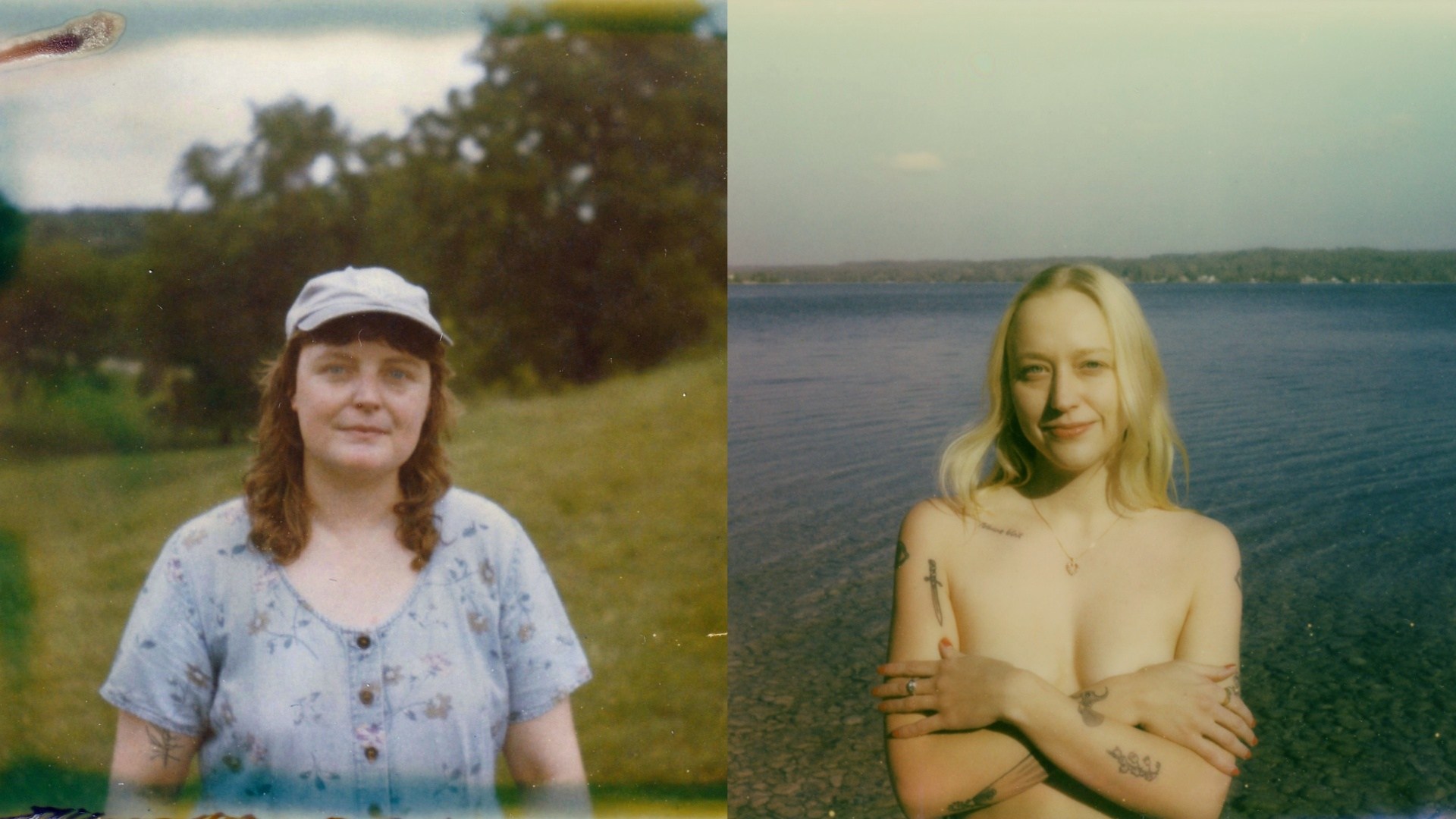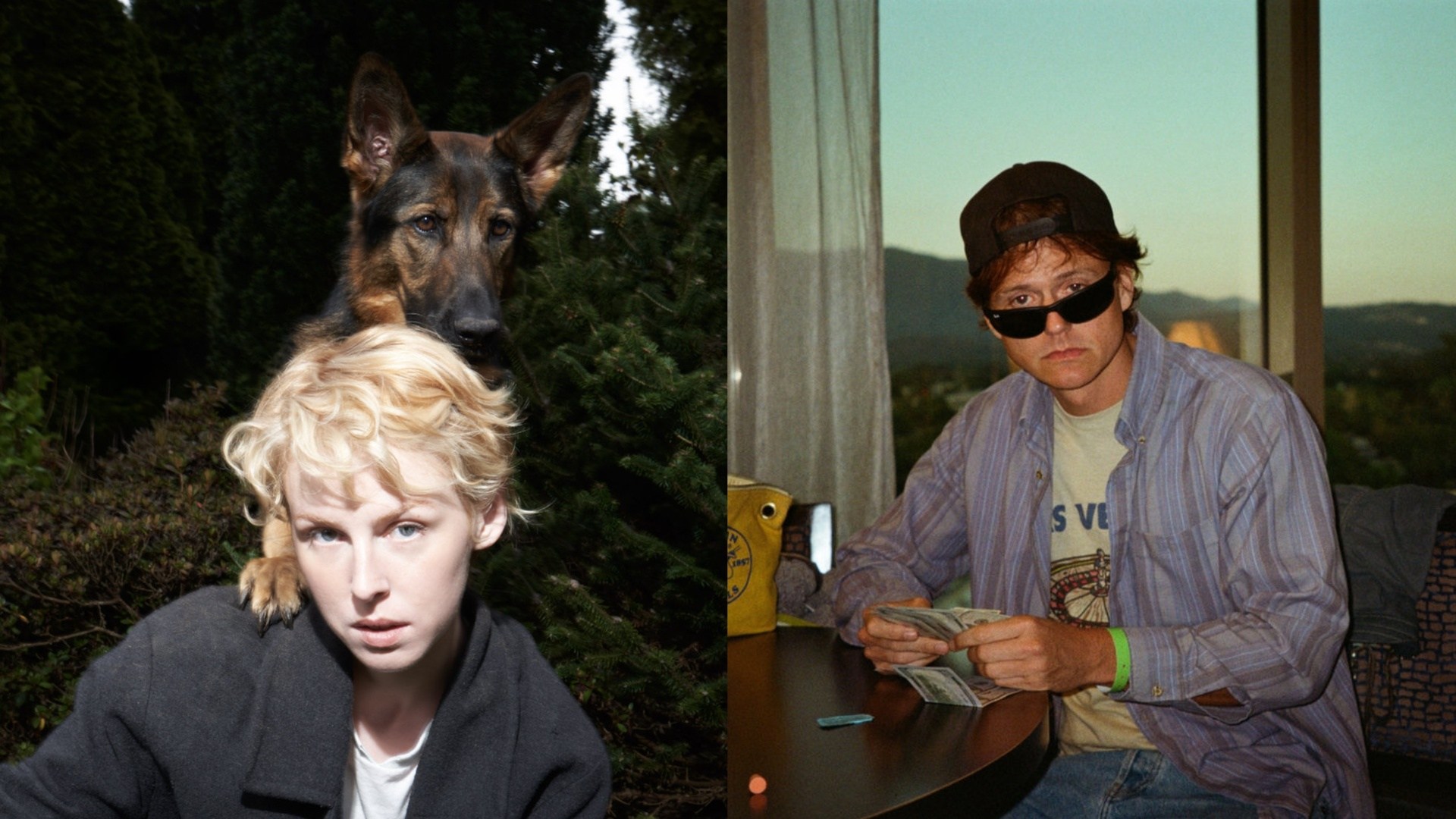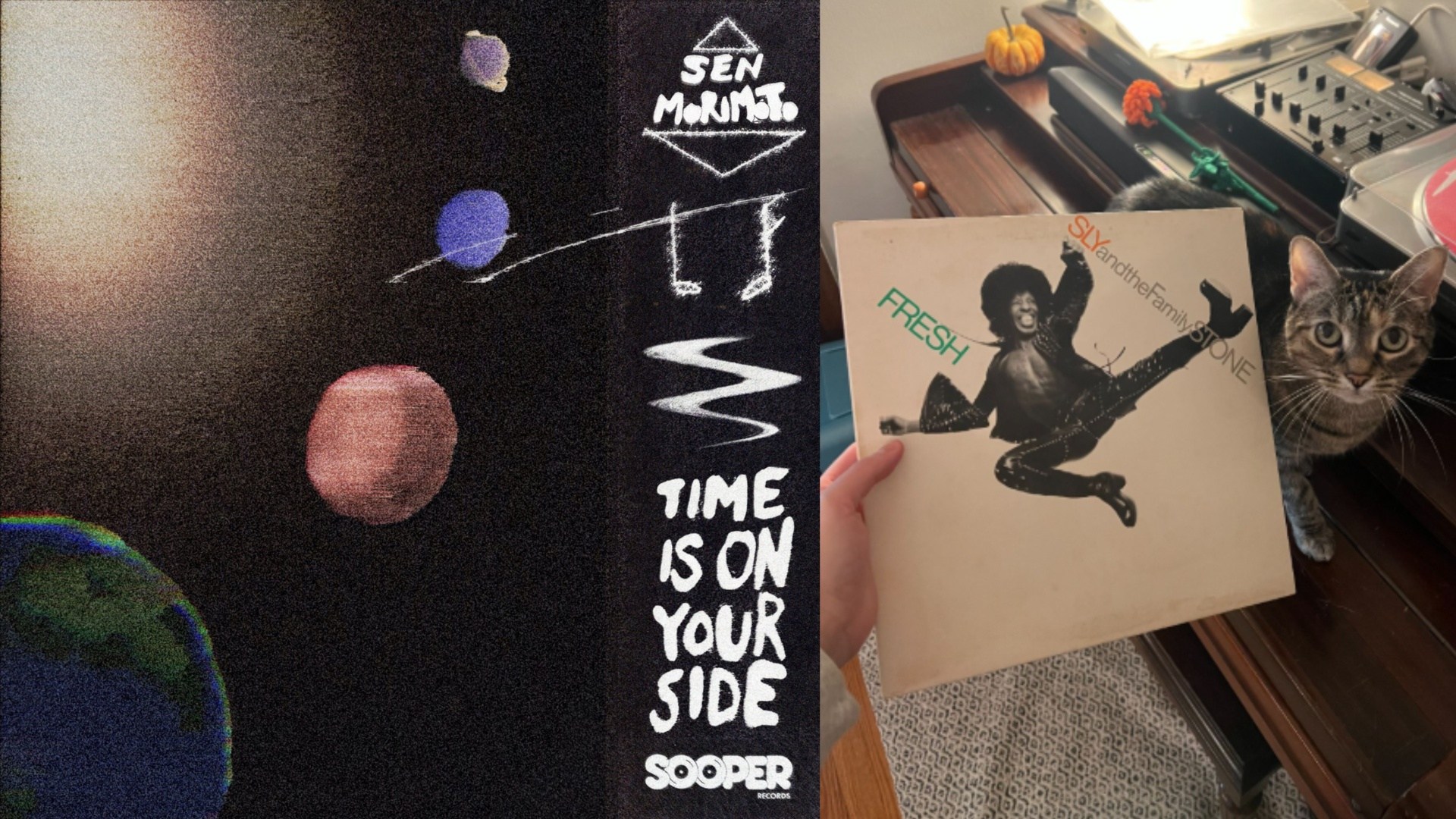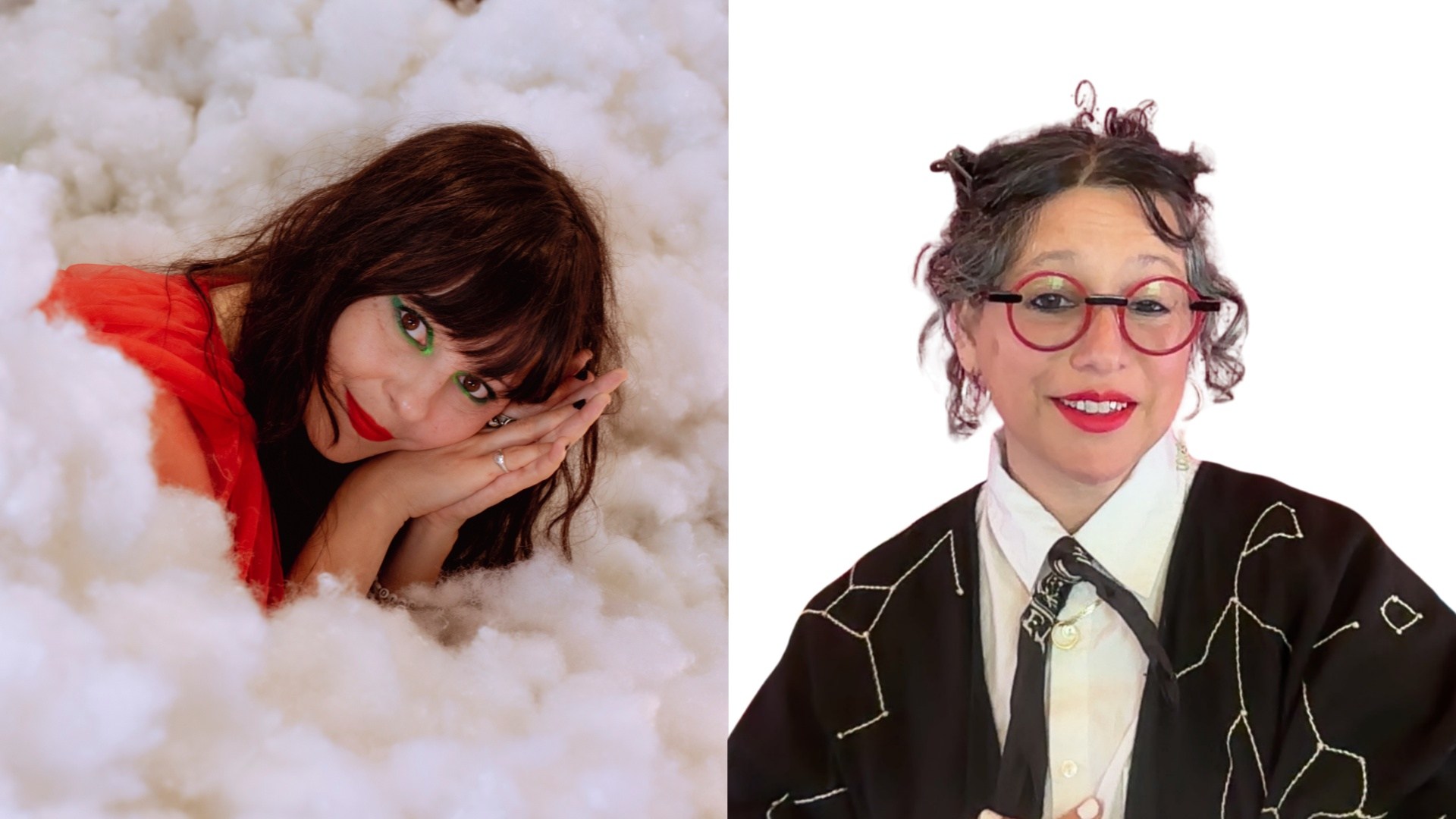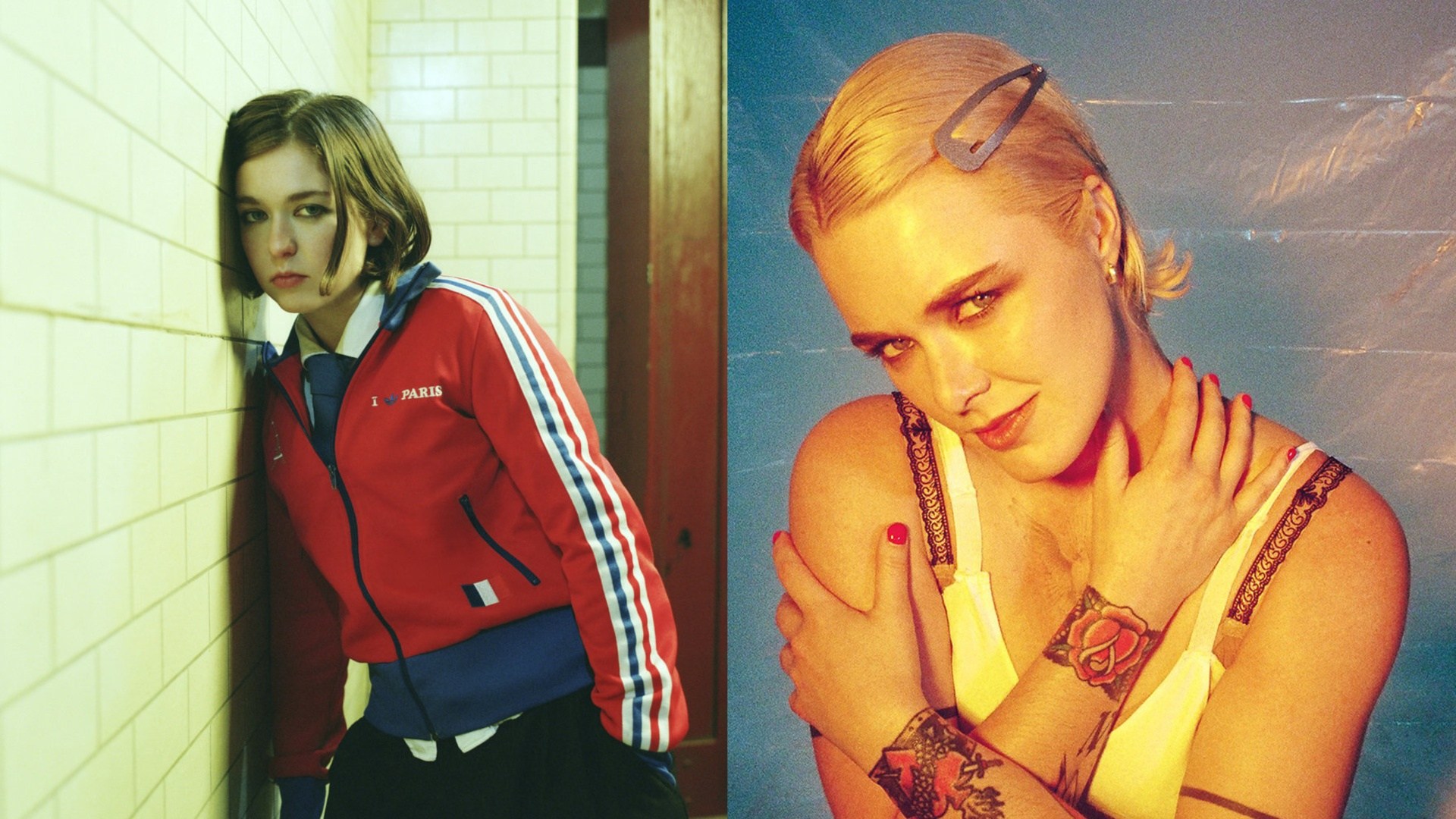
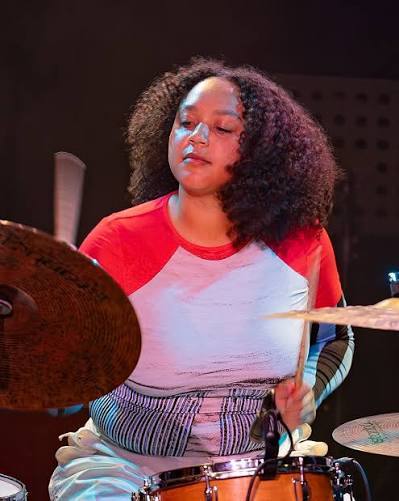
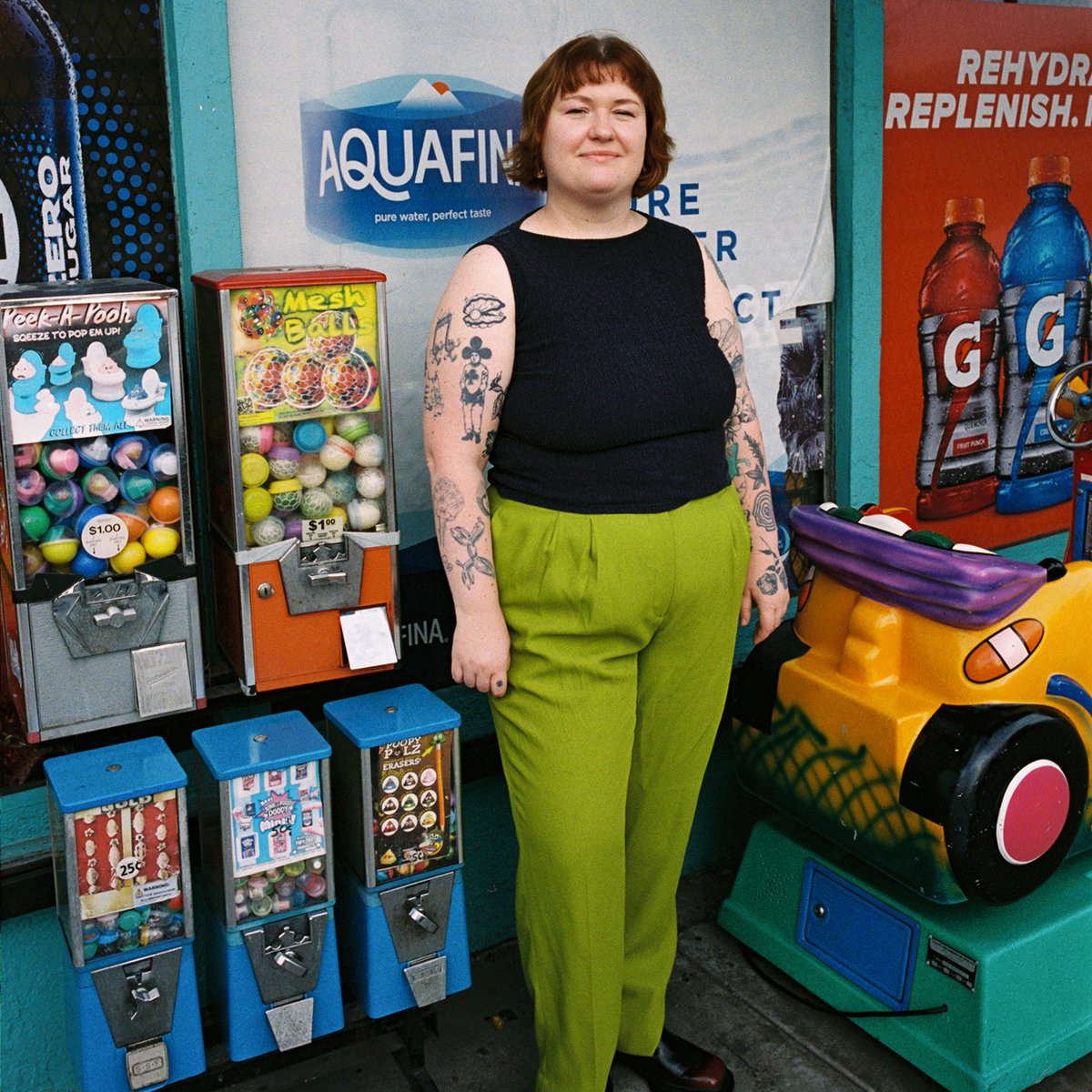
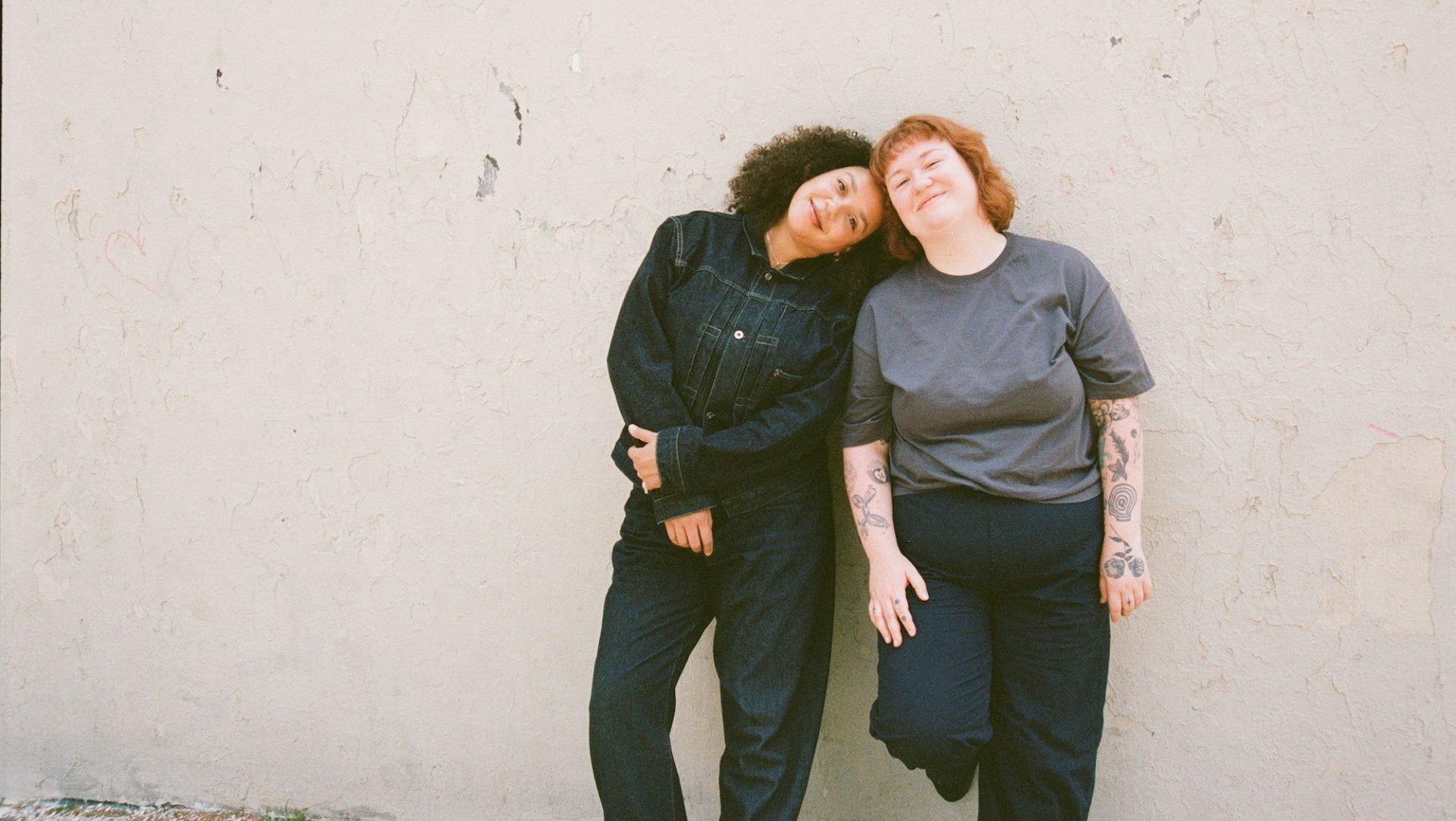
Nicole McCabe is a Los Angeles-based alto saxophonist, composer and educator; Savannah Harris is a New York City-based drummer, composer, and producer. Nicole and Savannah recently teamed up for All Together Now, a record that just came out last month on Spencer Zahn’s Sudden Quarterly. To celebrate the release, the collaborators caught up about the making of the record, and much more.
— Annie Fell, Editor-in-chief, Talkhouse Music
Nicole McCabe: Hey, Savannah. How you doing?
Savannah Harris: I'm great. Glad to be talking with you and getting into some fun things today.
Nicole: Absolutely. So this record came out a week ago, but it's been maybe a year-and-a-half of a work in progress. I started working on this with Spencer [Zahn], I think, summer of 2025. He had talked originally about starting this label and he wanted the first year to be a solo record. So we had kind of started this album with the idea of it being a solo saxophone record, and then maybe a third of the way through of making it, we changed gears to doing it as a duo, but it didn't change the creative process too much. I would just go to Spencer's house and we would have different prompts — he would say, “Let's make up a series of chord progressions and then see what we want to do with it,” or maybe start with a motif, and then I would add a bass part. Those were my favorite parts, actually, when I got to do the octave pedal and be a bass instrument for a little bit. [Laughs.] A different perspective for me. But we probably finished all the songs in six or seven sessions. And we had known about maybe halfway through that you were going to join us on this album and add your contributions. So I'm actually really curious to hear how it was for you, because I haven't really heard…
Savannah: We just got in the studio — we went to Bunker in Brooklyn and I think we did pretty much everything in the span of a day.
Nicole: Wow.
Savannah: Yeah. I had some of the roughs that you guys had done that I was listening to for a few days prior to that, just trying to think of ways to approach it. And then once we got in the studio, Spencer had some thoughts and ideas and some context about the prompts he had given you. So we worked through it that way. And there were some things that I was charting out in my mind in terms of form, because I was trying to figure out how to shape what was there from the drum perspective in a way that made sense or could carry it somewhere. So it was pretty straightforward in that regard. We just got in the studio and played some drums.
Nicole: But I feel like your drums added so much. Especially what you're saying about trying to find a shape — the record would be so different without you because you added so much contour to all the compositions. I feel like you really completed them and made them feel whole. Especially for “Monstera.” How did you think about those different sections?
Savannah: I think that was the one I ended up making a little scraggly chart for.
Nicole: Really?
Savannah: Yeah, I just grabbed a piece of paper. Because there were some impactful hits in certain places and I didn't want it to be sloppy. I wanted to nail it and kind of color around it in a way that made it feel like we were together in the room.
Nicole: It totally did.
Savannah: I was thinking about that too, because there are moments in the record where I wish I could have maybe gotten to that more even, because I wanted it to feel like we really were there together making it. But so much music is made remotely, so that’s always a challenge. But I'm really glad it worked out, and I'm glad we got to make something together.
Nicole: A lot of people probably don't know, we never really even met before starting this project. We're both from the Bay area, so we have connections. And I know your playing very well; I was a fan of your playing. So it was really cool to make something with you in mind, and seeing your approach to a different environment like this was cool.
Savannah: Thanks. I feel the same. I've been watching you… [Laughs.] Just checking out what you were doing and cooking up in LA. And we have so many people in common.
Nicole: So many.
Savannah: It’s really astounding. I know there are a lot of people who you have great relationships with you that also are also dear to me. So it feels really natural that we found our way to each other.
Nicole: I agree. It was really nice meeting you for the first time. We met after this happened—
Savannah: We met on the photo shoot.
Nicole: On the photo shoot! Exactly. But I feel like the chemistry was there.
Savannah: Immediately! I was sweaty and late… But we just immediately vibed. It was really fun.
I wanted to ask you a little bit about Color Theory. It's produced by Jason Moran, who is such a treasure. And the band is full of friends, full of brilliant people. So I wanted to ask you about that record and what you were imagining for this particular ensemble when you were writing it. What was your process with that like?
Nicole: Well, another funny connection: that was also recorded at the Bunker. I feel like a lot of people love the Bunker in New York, though. But Jason recommended that we record at the Bunker, so I was super happy to work there. A lot of these connections are from programs that I've done in the past. Like, I met Jason from doing Betty Carter Jazz Ahead. And we have the same birthday, actually! January 21. We're Aquarians.
Savannah: That's so cool!
Nicole: I texted him on his birthday a few years ago and he was like, “Thank you so much. Let me know if you ever want to work together, I would love to produce your next album.” So that's kind of how that happened. And then I met this rhythm section from when I did the next Jazz Legacy program. I was in there with Yvonne [Rogers] and Eliza [Salem] and Kanoa [Mendenhall] — but I actually went to high school with Kanoa. She went briefly to Marin School of the Arts, so we met way, way back. So we got to reconnect. And then I met Adam O'Farrill for the first time doing this album.
Savannah: You sound amazing together. Really, really nice sound.
Nicole: Thank you. We did one gig at Close Up the night before and everyone just nailed everything. I was like, “Oh, my god, perfect. See you guys tomorrow in the studio.”
Savannah: That's amazing. It's so nice to have an opportunity to do a warm up live, just to get the vibe and the connection.
Nicole: And you play there a lot, right?
Savannah: Yeah. Great friends, super for the community. Just a great place in New York to workshop music and try new stuff. Shout out to Close Up.
I also wanted to ask you about Dolphin Hyperspace. There's some cool projects you're doing right now…
Nicole: Thank you! That's definitely where a lot of electronic aspects of myself come in. Dolphin Hyperspace is the duo project of myself and Logan Kane. That's been a really, really fun project because it's a little bit different than a traditional acoustic setting. We produce a lot of the tracks and play the tracks, and we have a drummer join us, and it's very electronic music influenced but it has a lot of improvisation. So that's been a super fun project that I've been getting to tour a lot with, play a lot with, try new things. And it's definitely expanded my perspective on what can be done with this music and different ways to express yourself in different settings.
Savannah: The shows look fun.
Nicole: It's so fun. I hope that you get to come to one one day.
Tell me about what you're up to, because I just saw that you posted you have an upcoming tour with this group that you do with some European musicians.
Savannah: ØKSE. It's more of a collective kind of project that started in 2022, at Saalfelden Festival out in Austria. They reached out to Mette Rasmussen, whose this alto player based in Norway, and they were like, “Hey, we want to give you a commission to put together a freaky little project.” And she called me and we connected. And I was already doing some work with Petter Eldh, who's this great bassist and producer based in Berlin, so we reached out to him, and then we reached out to Val Jeanty, who's another incredible producer and sound artist in her own right. Her range is crazy — she's done stuff with Chris Davis, Terri Lyne Carrington, Wallace Roney, but then she also has all these electronic projects and done all this stuff with house music. And she's Haitian, so her lineage has really influenced the sound and her production. So we just kind of fused this thing together, and we've been touring for the last three or four years. We're about to drop a second record probably early 2027, on Backwoods, which is a rap label. We did some stuff with Billy Woods and Elucid from Armand Hammer. It's been a fun project where we can explore and improvise, and there's a lot of electronics.
Something I was thinking about with you with Dolphin Hyperspace is, I was watching these clips, and just how fun it is to play to a standing audience who's down to party and dance, especially coming from a background [like] jazz. I was curious what your experience is with that, and what's fun about that for you?
Nicole: It's very fun to get to present a lot of aspects of this music in a different way that can maybe reach people that wouldn't have necessarily thought that they were interested in jazz music before. And it feels nice to really connect with my generation — I'm a younger individual and I love to go out dancing and having fun. So it's nice to also get to provide that space for other people. It feels like a different sort of connection with the audience when they're standing, and I think that you can experience the music in maybe a different way than you would if you're sitting. Both are great, but I do like feeling the closeness and feeling the energy a little bit more.
Savannah: I feel similarly. I grew up loving to go to punk shows, loving to dance. I was always going to clubs. I think it's really nice when you can experience great music and also shake a little something, have a little fun, you know?
Nicole: Exactly.
Savannah: We need that. That's just as much of the catharsis, I think, as it is to connect with the music. So that's super sick.
Nicole: And you as well — you're also touring with a rapper?
Savannah: Oh, yeah, with MIKE. That's been super fun too. I'm the music director for MIKE’s Band of the Century. It started with this Tiny Desk — he hit me up and was like, “Hey, I want to do this Tiny Desk and I want to put a band together for it, but I don't want it to feel like a rap band.” And I was like, “Got you.” It was super dream for me because I've been a really big fan of his music on a kind of deeply personal level for a long time. And we had always run into each other in the city before we were working together. I used to play with this band called Standing on the Corner and he was affiliated with that group through a different collective back in the day, so that's how I met him. I met him actually at Pitchfork Fest in Chicago — it was Earl Sweatshirt, MIKE, and Standing on the Corner, so we were all hanging out. That was my intro to him, and a series of friendships from that. So it's been super fun. It's really fun making music with him.
Nicole: I feel like maybe that's a reason why we felt very connected to each other: I feel like we understand where the other person is coming from in the way that you work with Christian McBride and I just did this album with Jason Moran, and then we also do all these other things. We have so many influences, so many different resources that we're bringing into the music. I felt like we brought a lot of those different areas into this record as well.
Savannah: Definitely. And there's so much more to explore. It's really nice always when you're around musicians who are trying to have a limitless approach to the music. I think we're really blessed because I feel like part of being from the Bay area is you have maybe more of a predisposition towards that kind of thinking.
Nicole: Yeah, that's true.
Savannah: We grew up being influenced and inspired by a lot of the same guys. Justin [Brown], for example — the thing that I always love so much about him and his work is how varied and nuanced it is. I could see him at the Village Vanguard with Ambrose [Akinmusire], with the highest level of sensitivity possible, and then I could see him with Thundercat obliterating, but still with the same amount of intensity and sensitivity. That was always really impactful for me. He and others are kind of the blueprint for me for how to play the music that you like — all of it — and not separate things.
Nicole: A thousand percent. It's been a huge goal for me to connect all these different pieces of myself and put them into a project. I felt like I got a lot closer on this project, just putting so many different elements together. It was really nice to try to put them in the same area. And make something with you! It was just so much fun.
Savannah: Super fun.
Nicole: I'm excited for more to come. And I like that we got to make an LA-New York combo project.
Savannah: [Laughs.] It really sounds like that. There are moments in this record that are very LA morning vibe, and then there are moments of frantic New York rush hour subway kinetic energy going on… It's a nice mix.
(Photo Credit: Audrey Melton)