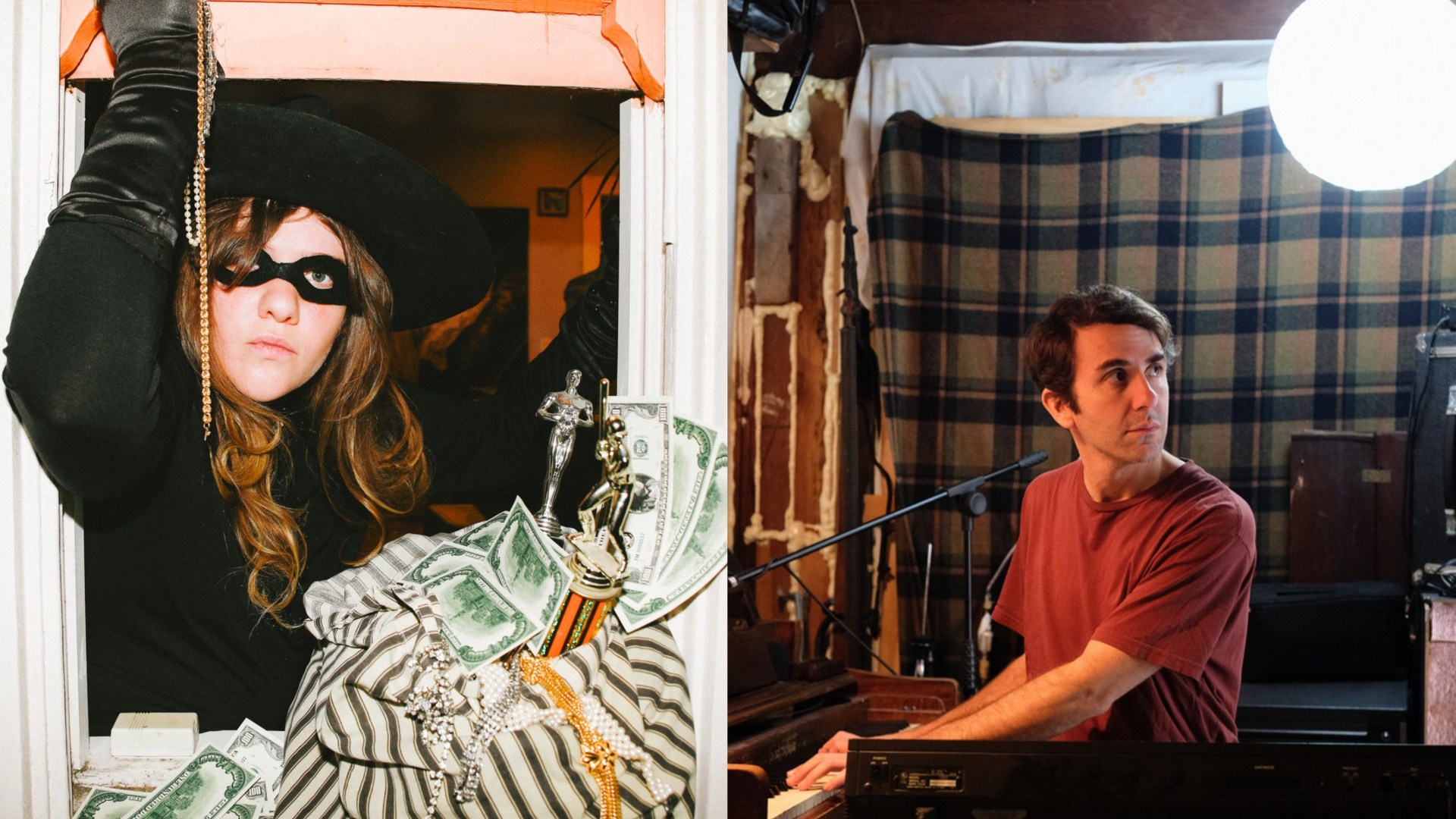
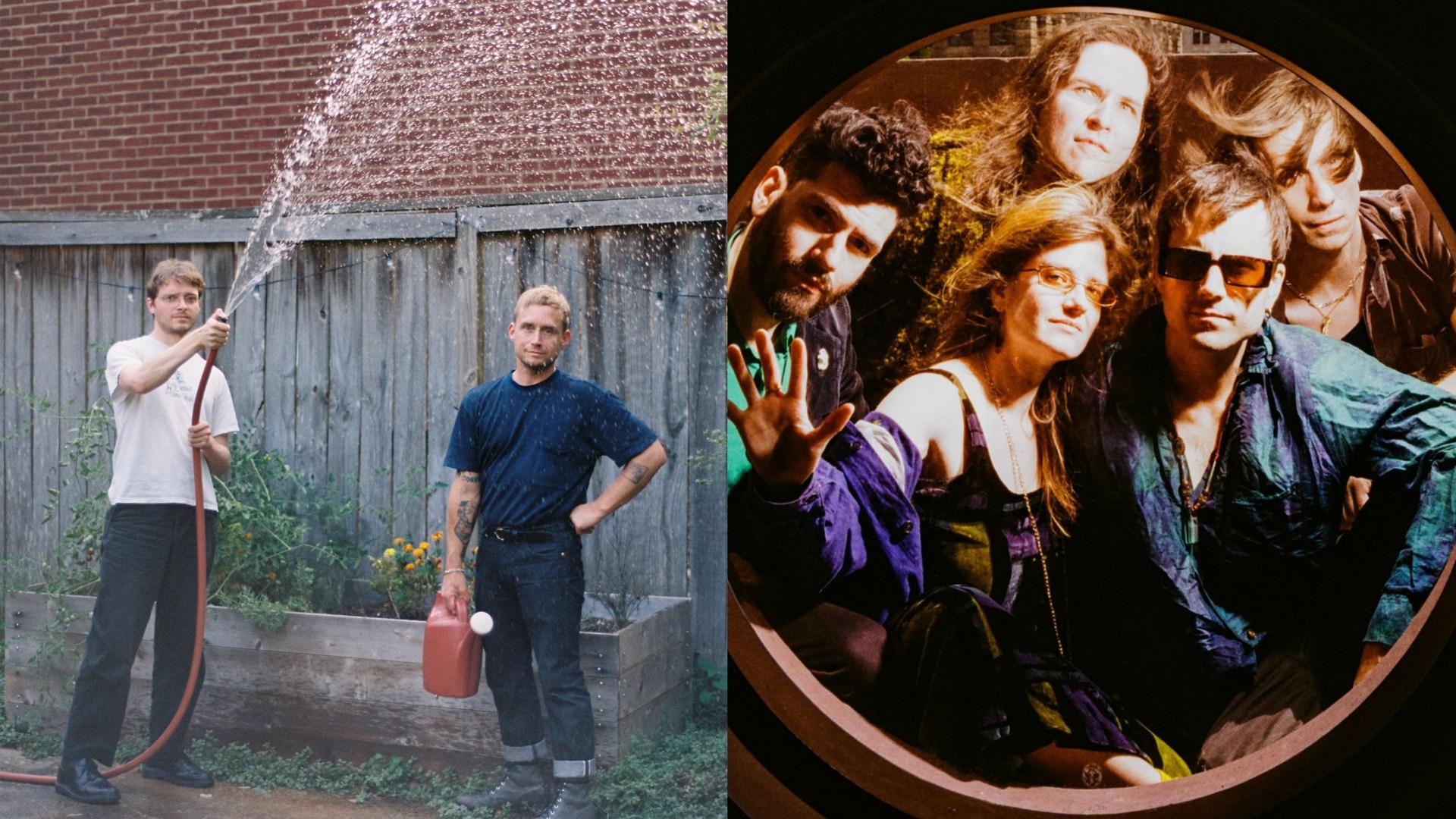
Philip Frobos and Frankie Broyles are two-thirds of the Atlanta band Omni; Ben Hozie and Nikki Belfiglio front the Brooklyn band Bodega. Last month, Coliseum Records/Danger Collective put out the deluxe reissue of Omni’s debut, Deluxe, in honor of its 10th anniversary. To celebrate the release, Philip and Frankie got on a call with Ben and Nikki to catch up about it.
— Annie Fell, Editor-in-chief, Talkhouse Music
Ben Hozie: So you guys have just reissued your first record deluxe, which hilariously is called Deluxe. I think what I learned from you guys is that it was meant to be making fun of the fact that bands always release deluxe reissues of their albums, but within the same year that they come out to sort of reintroduce them into streaming services. People were doing that already back in 2016. But funny enough, the record is now a true classic. So 10 years later, we got the deluxe Deluxe. One of my favorite things that I know about that record, from previous conversations with you guys, is that the concept of the album was that you were going to write all the songs in one night, because both of you were in other bands at the time and were frustrated with how slow the creative process could often be when putting together a record. So miraculously, the core of the tunes was all done in three four-hour sessions. Do you guys still write that way?
Frankie Broyles: We try to as much as we can, but over the years, we've done more and more editing.
Nikki Belfiglio: That seems to be the case with us too.
Ben: Yeah. I used to write songs in, like, 10 minute sessions in the very beginning. And now it's like a 10 month session. [Laughs.]
Nikki: What do you think that is? Do you think it's knowledge that expands the time writing process?
Ben: It might be that. I also just think you want to make a statement now anytime you put out a song. But spontaneity, to me, is the crucial element of pop and rock. Actually, I think there's been something lost in rock culture, because there doesn't seem to be much spontaneity anymore. If you look back in the early days of the ‘50s and ‘60s, it seemed as if rock & roll in particular was treated as a superficial teenage commercial product. So spontaneity was the method in which bands had to work anyways. It would be like, “OK, well, you guys are kind of big right now. It's certainly a fad. It's going to run out in two years tops, probably six months. So let's get a record out by August, and then we're going to need a single for October, and we're going to need another album out by Christmas time. So you have two months to write your next album. Go.” Then you're going to write the album in two weeks, you're going to record it the week after that, and then they're going to press it to vinyl the week after that, and it's going to be on radio within a month, or even faster sometimes. It seems to me there's a paradox, because by how fast those bands were able to work, you could have sort of this direct transmission from the mind and the heart onto the radio, so bands were able to capture the moment really fast. But nowadays, rock and pop is treated more like fine art or like movies, where you make a record and it takes two years, but then it takes another year of waiting around to get all the assets together — all the music videos, the artwork, and the press ducks in a row. So by the time the record is actually out, it's quite old for the band and it's no longer speaking to the current moment. Which is funny because the technology has only gotten faster. And I understand there are reasons for that, because there's so many bands now and you want to position your record in the right way or whatever.
Nikki: [Laughs.] What’s the question?
Ben: [Laughs.] Do you guys get frustrated by that same idea?
Philip Frobos: I think it's funny that it seems everyone feels the need to have an event album. I remember there's the big Beyonce one, but obviously there were different versions of that happening for a long, long time. But, yeah, I think it's frustrating. I remember when I was a late teenager, early 20s, I was really inspired by people like Ty Segall and Thee Oh Sees who were just cranking out albums. I was actually just thinking yesterday about the first four years of our band, how much we did in that time and how crazy it is. Now if you were to put a time comparison of from where Souvenir [Omni’s latest record, from 2024] comes out, we’re almost at the part where we would already be writing Networker [their third record, from 2019] from Deluxe right now. It’s crazy because it seems like Souvenir just came out yesterday. I feel like we're still like recovering from the touring of it. I know that isn't exactly what your question was, but I do love what you're talking about, the spontaneity. That's something that Frankie and I have been chatting about, and how maybe getting back to that is inspiring and exciting.
Nikki: Do you think because of the inability to have the spontaneity, it restricts a true counterculture happening?
Ben: Because everything's too planned.
Philip: Yeah, I think so. It steps on it all. What do you think, Frank?
Frankie: I mean, I think it's a really easy habit to slip into when you're writing songs in a band all the time, and then you're like, I want it to be better than the last thing I did, and then you find yourself just like, I don't know if any of this stuff is good anymore. And then it takes longer because of that reason too.
Ben: Well, that's why speed is good, because you bypass the ego and you don't second guess yourself. It's like first thought, best thought. The first thought is not always the best thought, but often when it comes to art making, the best thing to do is just to make and decide later whether it's good or not.
Frankie: Yeah, I think the element of surprise is so important, and being spontaneous is the best way to create that, in my experience.
Ben: One of the things I was hinting at is, the reason why our bands now take two years to put out a record is because in some ways we're trying to play the game. We're on record labels. You guys are on Sub Pop and we're on Chrysalis, and we want to make them money, right? And we want our records to reach the biggest audience. So we're going to try to do it the, quote-unquote, “right way” to position your record in a way where people can hear it. But are we thinking too 20th century? Would it be better to go the early Ty Segall route, or the [route of] myriad of Bandcamp projects, where you record a song the week after you write it and then put it out for direct transmission, and then just try to make money off touring? It seems to me like that might be the smarter way to run a band. In some ways, I wish Bodega was like that.
Frankie: Yeah. We were actually talking about maybe trying to skip the demoing process almost entirely, trying that out and just recording finished songs.
Nikki: Ben and I, when we think of ourselves contextually within the music industry, we always refer to ourselves as “sea level indie rock bands.” Would you put yourself on that same level?
Philip: Yeah. I always say that part of our sound is just sounding like amateurs.
Ben: [Laughs.] You're one of the most accomplished and celebrated underground rock guitarists, though. I don't think anyone would call you an amateur.
Philip: There's something like it’s barely staying together… More so on the first record than the last one, but, yeah.
Nikki: “Sea level” to me is also referring to being trapped between whatever the industry is and this DIY aesthetic we come from, and kind of not being either anymore, and the special hell of that business-wise particularly. I just feel this constant middling aspect of trying to make those two things meet.
Frankie: Yeah, we definitely have experienced that feeling.
Philip: We live in that purgatory for sure.
Ben: Yeah, where certain people think, “Wow, you've made it. Holy crap.” But then if they only knew that we made approximately $14 a year…
Frankie: What it feels like to be at the top.
Nikki: We can buy a coffee every day, and maybe avocado toast. [Laughs.]
Ben: To go back to the spontaneity thing, I interviewed Simon [Raymonde] from Cocteau Twins about a year ago for my podcast, and his whole thing was they hated demoing and they hated writing songs. They were like you guys in a way, where they would show up to the studio with a total tabula rasa, blank slate. And they're much more of a production style band than our bands, obviously, so they would often start with maybe a guitar effect or just a pad or something, and it would inspire them and they would build up a track, almost like how a hip hop producer or an electronic producer would work. And then when Elizabeth [Fraser] would start singing, that'd be the first time she's ever sung the song. And if it's a good take, that is the song. It seems to me like you guys are desiring to go that route. There is something really beautiful and pure about it. It's like you can't get demo-itis because what happens is what happened.
Philip: Yeah. And we've always spent so much time recreating the demos as accurately as possible. It makes no sense. That's really cool, I didn't realize that they worked that way.
Ben: I think it changed, exactly like what we're talking about — by the ‘90s, they're spending months on a song. I think it also has to do with finances. Early on, they were like, “We only have a day in the studio and we gotta do an EP,” so they would do it all in that day.
Switching gears a little bit: how does it feel to have a reissue of an album? Is that a weird experience, almost feeling like now you're an elder statesman of the scene?
Frankie: It is kind of weird. I didn't really know what to expect. I was like, “This doesn't feel like we released a new record,” because we didn't.
Philip: It's weird to manage your expectations about not releasing a new record. It's a different feeling and a different thing to reflect on and for everybody to take in. We also haven't really done most of the shows yet for it, so I feel like when we do it'll all be sinking in a little more.
Nikki: Yeah. We just put out a record in October, and all the touring is still ahead of us, and there is still something that's like it’s not really out until we get to play these songs live to an audience.
Ben: I think the way you guys are doing it is smart, because I used to not like, as a teenager, seeing a band two days after their new album came out, because I hadn't had enough time to really learn it.
Have you learned anything new about the record having revisited it? Are you experiencing it in a different way from a bit of distance?
Frankie: We did an in-store signing at Criminal Records in Atlanta, and they played the album and then all of the demos while we were sitting at the desk, so we listened to the whole thing and that was pretty interesting. I had never done that before. It made me think a lot about what you were saying, how they all sound very similar. [Laughs.]
Ben: The first time I heard it, I was like, “These are the demos? They sound more hi-fi than the actual album…” You guys are so curated. It's funny because in the very early days of Omni, you guys had experimented with some other sounds, and one way to do the box set would have been to show the paths not taken. But you guys didn't do that. You just showed basically the same record twice. [Laughs.]
Frankie: Yeah, it's more like a historical document than something somebody would listen to for fun. [Laughs.] But we listened to a bunch of the demos that came before the band and I think it just didn't make sense. It was so different.
Nikki: What are your cringiest inspirations?
Frankie: I heard this song at the airport the other day by this guy named Marc Antoine called “Señor Groove,” and it's exactly what you imagine — like acoustic guitar solos over a cool beat and some auto-wah backing guitar. It's like grocery store music, but modern.
Philip: My answer for right now is the album Unmasked by KISS. I've been in a KISS phase, and that's their most polished. It's like their ZZ Top style album.
Ben: KISS is kind of one of the secret influences behind almost all of punk and alt rock. When you look at all the ‘80s and ‘90s bands, they all grew up loving KISS. Thurston Moore's biography, if I'm remembering right, his first big concert was KISS. And that totally checks out.
Philip: For as annoying as Gene Simmons is, they're pretty awesome.
Ben: Yeah. And they kind of solidified that thing of, “This isn't just four guys, this is an entity unto itself,” that you still see today in bands like Slipknot or Ghost or whatever. It's a tried and true formula that's like, “These are cartoon characters.”
One thing that our bands have in common is we do a lot of extracurricular activities. We're not just rock guys, right? I'm a big fan of Philip’s books — there's only one out now, but I've read the rough draft of the new one, which I think is fantastic and possibly even better than the first one. And me and Nikki make films outside of our band. Does it make you think about Omni differently, knowing that all of your creative marbles are not in one basket, so to speak?
Philip: I think I have felt more excited about working on Omni now that I haven't completely been only focused on it in the last couple of years. The creative freedom itch has been scratched and I feel like it helped define what I'm supposed to be or what I am and what I should be when I'm doing Omni. It also just makes me want to do it more, having done a solo record, and then I've been playing with some of these other guys, and the writing. I think it's only strengthened the yearning and the idea of wanting to do Omni. And, frankly, these conversations we've had with you about creativity and highlighting the impulse and the improvisation of the first record — reflecting’s got me jazzed up to do it again.
Nikki: We’ve talked about Proust a lot recently, because Ben's reading all of [In Search of Lost Time]. You know, the concept of when he eats a madeleine and it reveals all of his childhood — my question, just to wrap it up, is what are some senses, taste, touch, smell, sight, that you got back rereleasing Deluxe? Give us some imagery…
Philip: I've got a couple that come to mind. There's this art space on the west side of Atlanta called the Goat Farm that used to be a lot more decrepit, and now it's kind of fancy. We recorded most of our record there, so it makes me think of sitting out on a wet and humid deck with wood and it’s just a little bit cold, but not really. You can smell the leather of the van and you see the chickens and the one guinea hen running around outside. Frankie and I have got some beers…
Frankie: It makes me think about Cookout, because a Cookout opened in Atlanta around that time. And it makes me think about eating ramen at this place that Philip used to work at, Octopus Bar. Makes me think about that place a lot.
Ben: So rustic. Not at all with the music sounds like. [Laughs.] Alright, well, thanks for the chat, guys. It's been awesome.
Philip: Thank you guys for doing this. Great to chat with you guys. Great new record.
Ben: Thank you. We'll have to play some shows together.
(Photo Credit: left, Emily Frobos and Hillary Sutton)