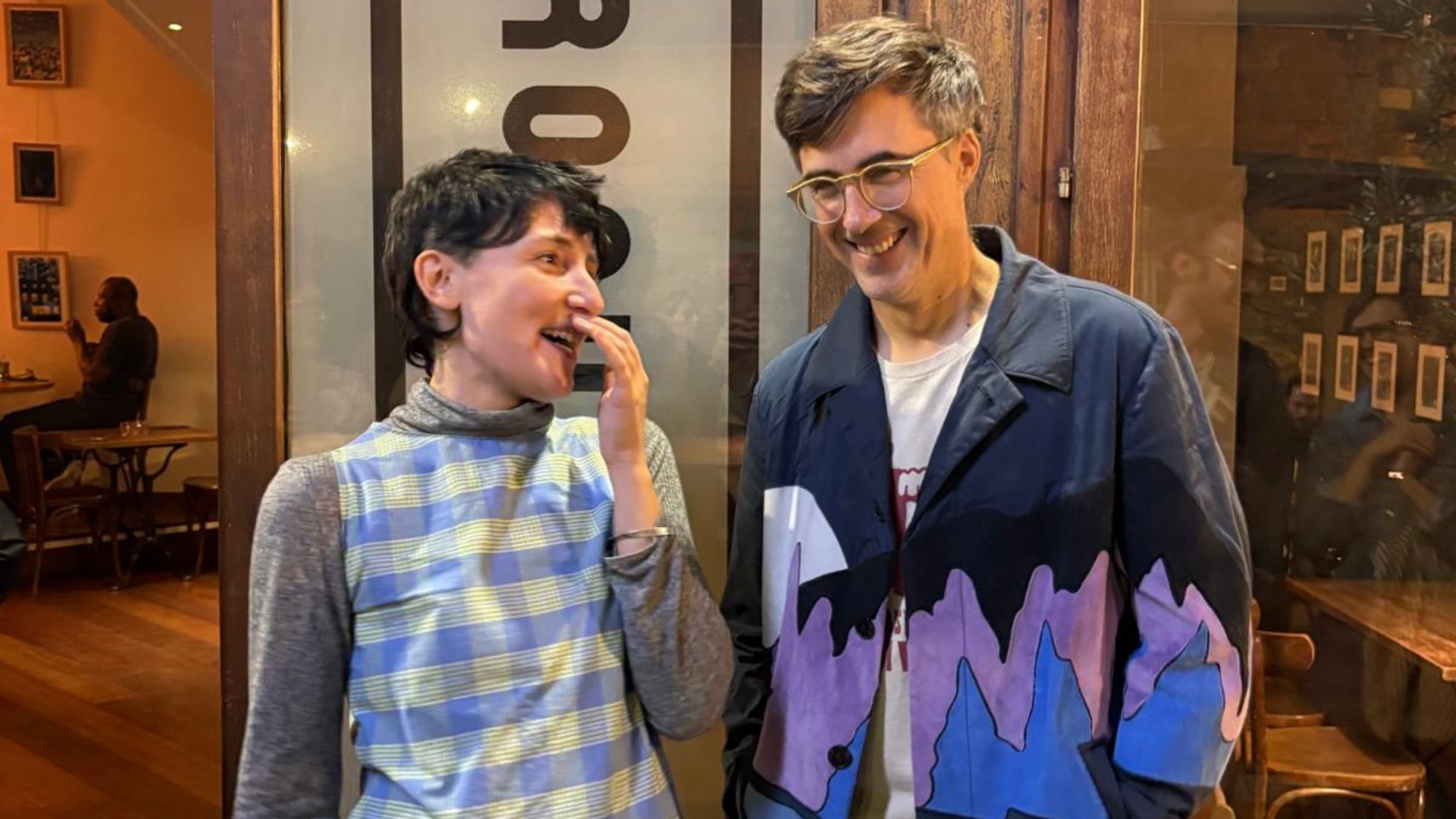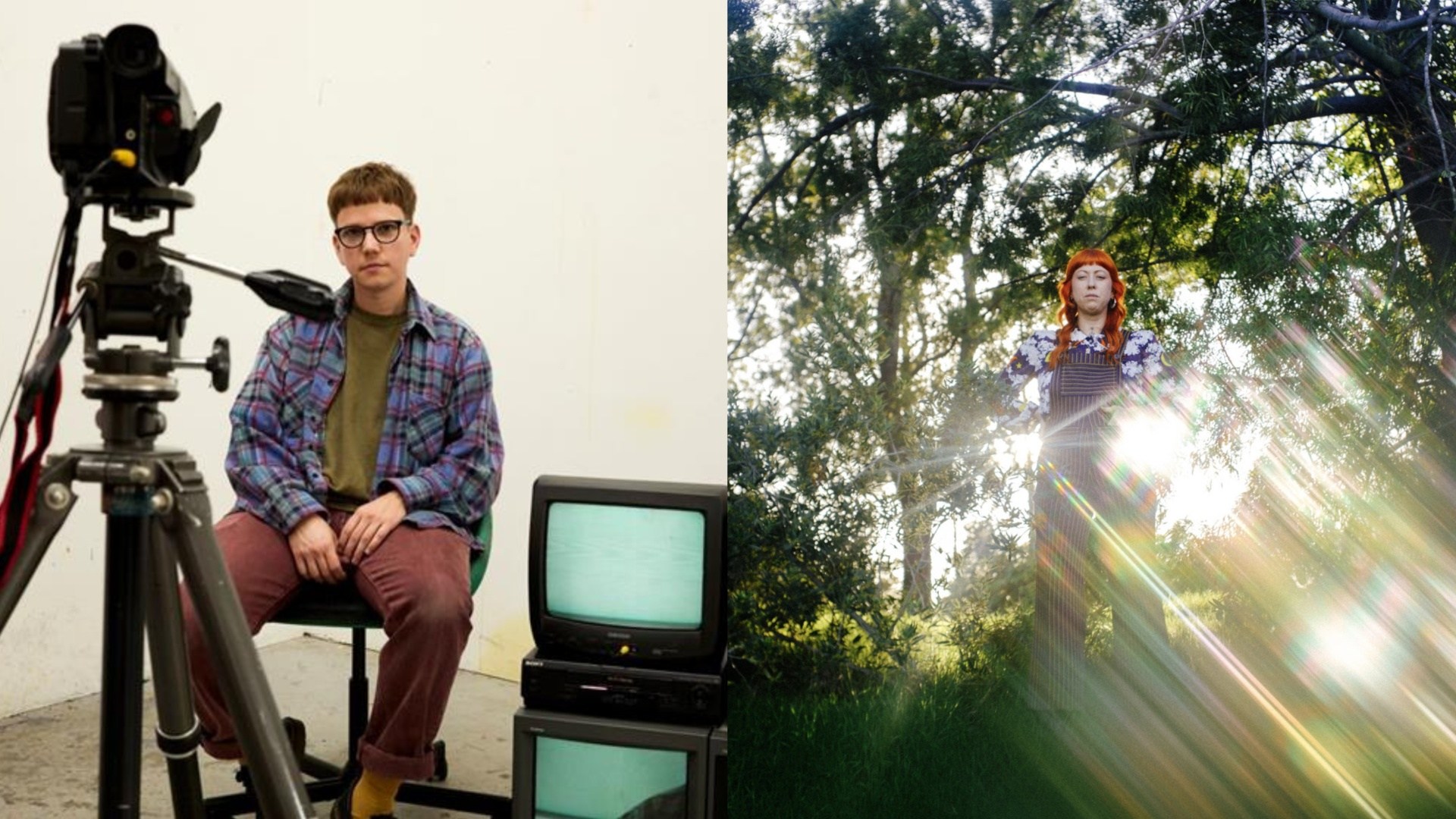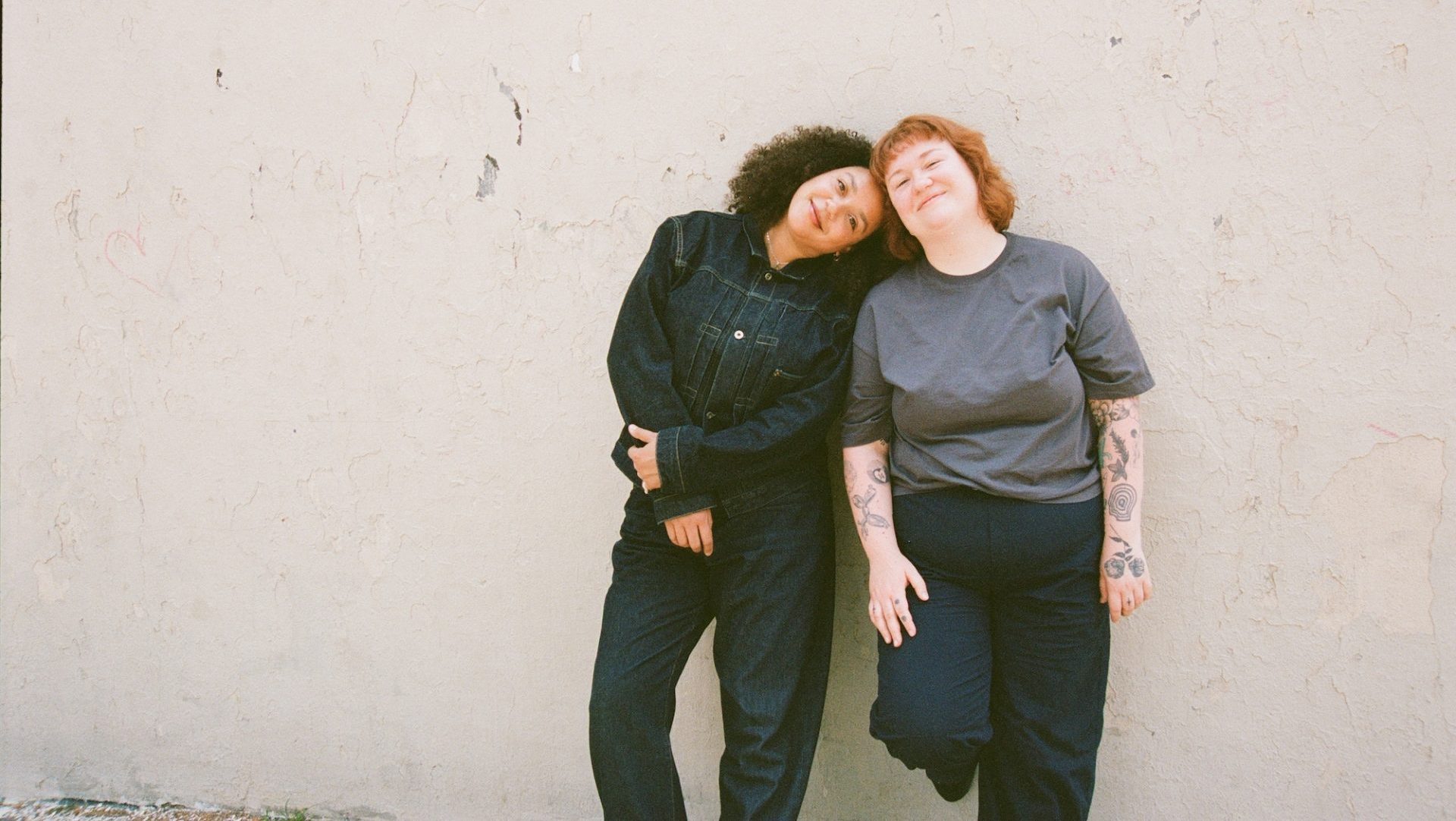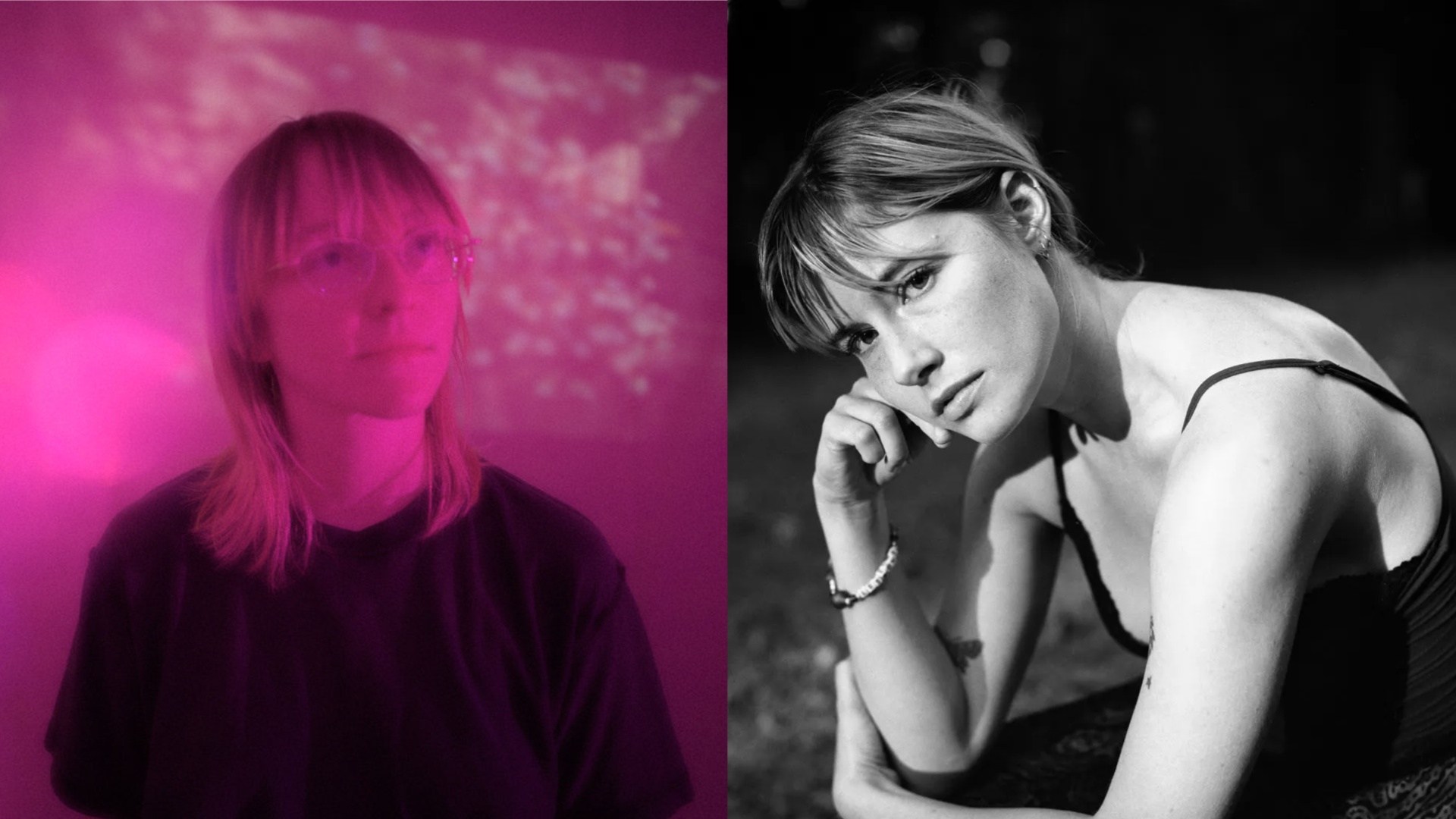
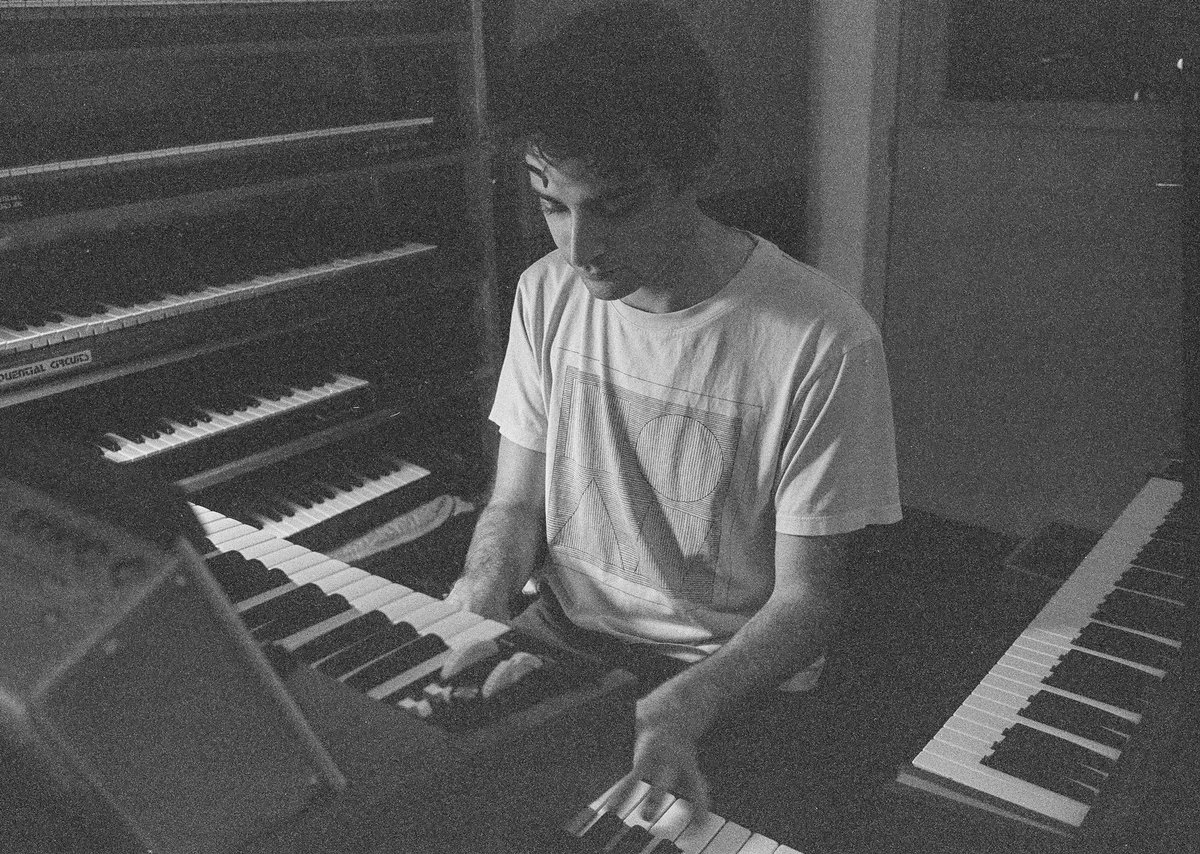

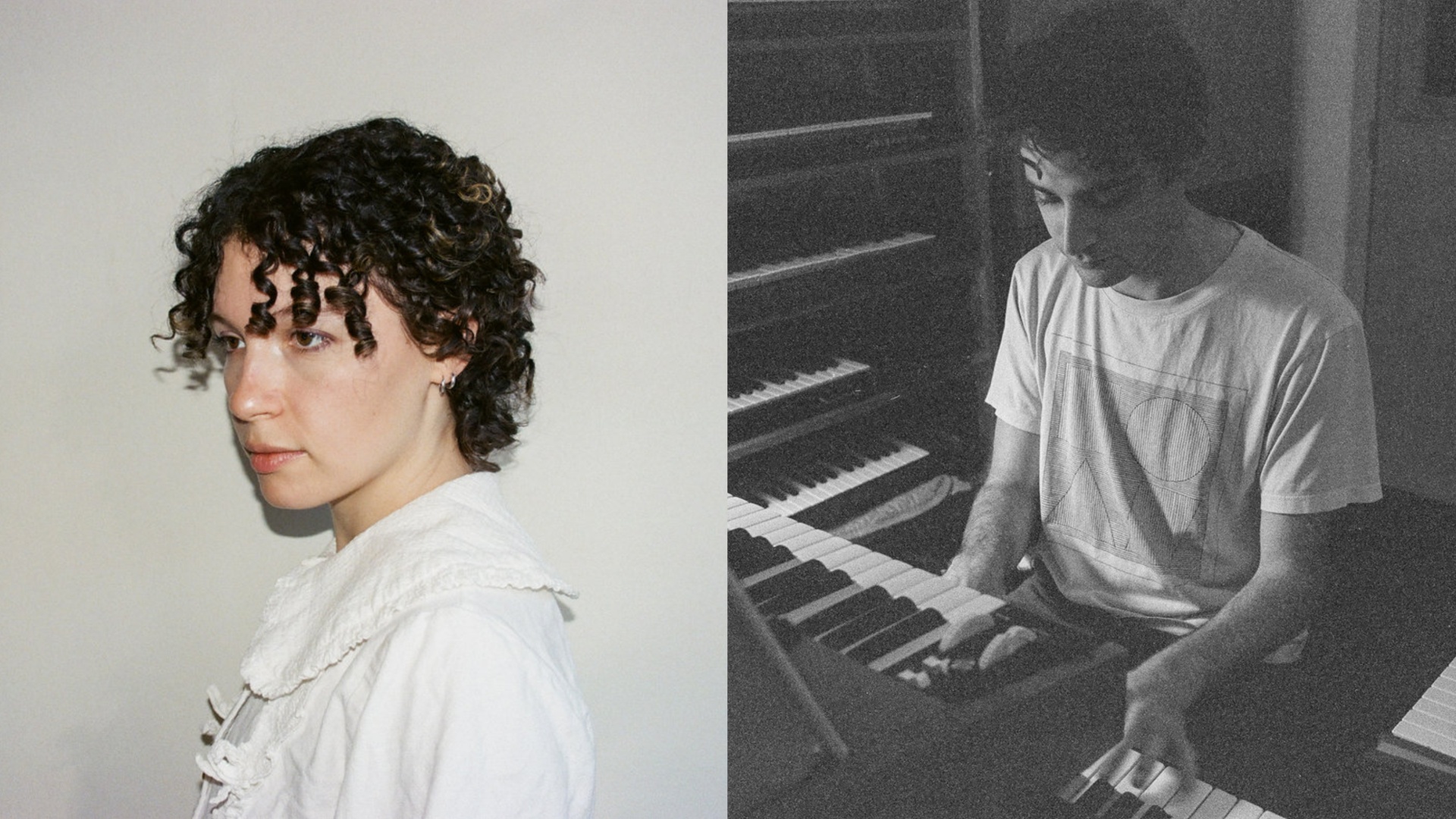
Nora Stanley is a multi-instrumentalist composer, improviser, and songwriter based in Brooklyn; Benny Bock is a pianist, producer, songwriter, arranger, and sound designer based in Los Angeles. Benny contributed to Nora’s new record Glass—out now on Worm Records—so to celebrate the release, the two longtime friends got on Zoom to chat about it, and much more.
— Annie Fell, Editor-in-chief, Talkhouse Music
Nora Stanley: I can't express to you how hot my apartment is right now. It's really, really hot, and so smoky outside. I’m having kind of a throwback moment.
Benny Bock: To California?
Nora: Yeah. It always just triggers a certain panic response in my body.
Benny: Why is it smoky out there?
Nora: I think Canadian wildfires have made their way down, smoke-wise… What's your go-to smoke music?
Benny: Tom Waits. Or Los Lobos.
Nora: Woah, OK.
Benny: It's been very smoky out here in LA, so those have been go-tos in the hot, smoky summer. You kind of want music that sounds like… bones.
Nora: Sounds like death, but also like something that could withstand the destruction of a fire.
Benny: Yes. It's kind of post-apocalyptic music.
Nora: Totally. I've been listening to that Burial record a lot, Untrue. That feels like smoky music to me. Also, just hot summer music, biking around — I was listening to some Allegra Krieger this morning.
Benny: So good.
Nora: Yeah, you first showed me her.
Benny: She's so damn good. And the record you sent on Monday is incredible, by that Lithuanian artist.
Nora: Yeah, Gintė Preisaitė. So interesting. When I saw that it was recorded last year, that blew my mind. I thought it was older.
What else is new? You been in studio zone?
Benny: Been in studio zone… I did a live show last week and my parents came down, so that was really nice.
Nora: Was that the one in studio, with a bunch of strings?
Benny: Yeah, it was. It was with Elle [Bramhall]. It was the second time we've done a show together. We brought in a couple string charts just for the musicians to sight read day of. Which, we brought in probably the most ambitious one. [Laughs.]
Nora: Nice.
Benny: So it was cool. They did great, and she was awesome. Gives me ideas on how to better rehearse and prepare in the future.
Nora: It was your string arrangements, right?
Benny: Yes.
Nora: That's awesome. Was it different hearing them live than hearing them when you guys were recording them?
Benny: Totally. I think also just very different quartets. The live quartet was incredible. They were great, and Daphne Chen stepped in last minute because one of the violinists couldn't do it. So Daphne saved the day.
Nora: She's great.
Benny: And the recording quartet we had was incredible. For recording purposes: Elle Bramhall [and I] recorded a record together, co-produced with Tony Berg and Will MacLellan. She's awesome. She's a 21 year old artist from LA and wrote a really incredible album of music, and I got to do some string arrangements for it, which was really fun.
Nora: Hell yeah. I still have not heard any of it except for a few of those little clips on Instagram from that show, but I'm really excited to hear everything because I've been hearing from you about the process.
Benny: Yeah, I’m excited to show you for sure. And how about you? You have a single out yesterday, right?
Nora: Yeah. Life has been so crazy recently — people have been asking me how I feel about the album coming out and the singles reaching people's ears, and of course it's amazing and exciting to have that kind of unleashing happening. But also, I feel like I've just been too overwhelmed in my life to actually process that the album's coming out. So I haven't been thinking about it that much, to be honest. But I think once it all actually releases at the end of the month, I'll have some time to sit with that feeling. So I'm excited about that.
But I'm kind of in new music mode now. I was actually just yesterday in the studio recording the first day of new material for a new record. So that was exciting.
Benny: Hell yeah. Songs? Vocals? The whole nine yards?
Nora: Just the first yard. [Laughs.] I've been demoing some songs at home that I think are going to be part of this project, but I'm approaching this in a very different way than the last album. I'm sort of starting with instrumental improvisations with Shahzad Ismaily and Zosha Warpeha. Zosha is amazing. She plays Hardanger d'amore and five-string fiddle, and she played some hurdy gurdy yesterday in the studio.
Benny: Love hurdy gurdy.
Nora: She was ripping some hurdy gurdy. But, yeah, this core trio is going to be kind of the basis of this new record. I'm keeping it very fluid and seeing how things evolve, but my thought is that it's going to collage together with the songs, and have there be much more of a through line of personnel and keep it smaller than the last record. I mean, it was such an amazing experience to have so many people involved in the last one, but I wanted to go back to making instrumental, more improvised music and have that be the core. Still, there are songs that I want to incorporate and the voice feels so integral to the process that I've developed the last few years with this album, so it'll be there. But not at the beginning necessarily. Those feel like separate processes that I'm working on, and then they're going to come together.
Benny: Yeah. Because this record that you're currently releasing is your first vocal project, and then everything before has been instrumental music. So this new body of work is trying to synthesize the two worlds?
Nora: Yeah, that's the thought. And again, I'm trying not to be freaked out about how open the process is, not knowing what the outcome is going to be. But I'm trusting that the people I have working with me are so adept at navigating those worlds. I mean, Shahzad is like the guru of that. So I feel surrounded by inspiration. It'll be cool. We played a trio show fully improvised the other night and I haven't felt that poured out from a show in a really long time. I tried to talk to people after the show and I couldn't. I had to leave. In a good way! It was all left out there.
Benny: That's the best. Quick aside: where do you stand on stage banter? I've been having this discussion with a lot of people recently and I don't know. I think I have an extreme view, but I'm curious what yours is.
Nora: You're gonna make me say mine first?
Benny: Yes.
Nora: I think I have an actually pretty extreme view as well. My take is that there are few people who do it really well and can naturally be charming and funny, but not overboard. I think they should do their banter, and everyone else should shut up and play music. Because it can so easily derail the vibe, derail the connectivity of the music and the audience… What's your take?
Benny: It's exactly the same. I had a feeling. I mean, when it's great, it's great, and it can really connect the audience to the performer. But I just feel like so often when I'm in an audience and I'm looking at a performer, especially explaining what a song is about, I'm just like, That's why you wrote the song! It's diminishing otherwise really good music… But I think it speaks to what you're saying, how even after the show, you're just like, I don't really have the capacity to interact right now. I feel like I've already given a lot on stage and don't really feel like communicating anything after that.
Nora: Yeah. And sometimes I'm like, Is that selfish? Should I be thinking more about the experience of the audience? But I think actually it is me thinking about the [audience]. I mean, it's also not mentally being able to hold up a conversation afterwards. But I think there's something to be said for leaving space for the audience to have their own interpretation of the songs. It's been something that I've thought about a lot more in the last couple of years as I've played more shows where I'm singing and have a mic. It's less been a thought around instrumental music; I feel like there's less expectation for banter. But then you're playing guitar and you have to tune and you have to talk… But actually, hot take: I like it when people are silent when they tune.
Benny: A hundred percent.
Nora: I kind of want to hear them tune. It’s a meditation.
Benny: Yeah. When you see videos of Jimi Hendrix, he gets on stage and the audience is going nuts, and they're just tuning for, like, two minutes. The drummer's tuning, the bassist is tuning. They're all tuning really loudly and not really saying anything. And the audience is kind of sitting there.
Nora: ‘Cus they're all on drugs.
Benny: [Laughs.] That does help.
Nora: It reminds me of Monty Python — I think it was one of the first mixes you ever made me, maybe in high school — you put the Monty Python violin tuning on there and it's epic. Every mix should have a tuning track and every concert should have tuning as a forefront of the show. [Laughs.]
It's also like, when you show up to an orchestra concert — there's so much formality around classical orchestral music, and yet there's this tradition of people being on stage, making sound before downbeat, which I feel like there's not in other other genres of music. Which is interesting. It’s subverting that formality in a way.
Benny: It's a way to get into the world that's really cool to me. I love that experience of going to a concert — you go into the hall and you sit down and you hear all the all the instruments tuning, and you go into a certain space. Then the lights go down and you're ready for a show.
Nora: Yeah, it's like a buffer.
Benny: As our old professor Arnie Cox would say, “It's entering the aesthetic world.”
Nora: Arnie Cox, the one and only.
Benny: This is another another question I was wondering about: do you practice saxophone every day? Because I know you're doing so many different types of gigs and shows and performances. What would you say your daily practice is?
Nora: It really ebbs and flows. I will go a couple months having a daily practice of playing saxophone or playing flute or clarinet. Clarinet — I've been integrating that a lot more into the practice. So sometimes I'll have a practice of that every day, and then I'll go a couple months where I don't touch it for a few days and then I'll have a practice. But I'm at least playing every day. I’ll have a gig or a session or something. But I really want to get back into a more regular practice with the woodwinds. I feel a lot better when I do. I can really feel my body and my mind go a little out of whack when I don't touch them for a few days. And I don't know if that's tied to the anxiety that I used to have around, Oh, I didn't practice today, something bad's going to happen… I think coming up through music school, that gets pretty ingrained. Do you experience that? You're a pretty disciplined practicer.
Benny: I like to practice, but I think for the same reason of just I feel better generally when I do it.
Nora: It's like exercise.
Benny: Yes, exactly. And when I don't do it in a while, same as exercise, I'm just like, Oh, I'm way out of shape here. This is bad.
Nora: When I was at your house when you weren't there a couple weeks ago, you have a stack of Bach manuscripts on top of the piano… It was so refreshing to have a nice piano to play, and I was slowly making my way through some Inventions.
Benny: That's the best. That's what I've been practicing every day, just Bach.
Nora: That's all you need, in my opinion.
Benny: It kind of is. In the other parts of my day, it's typically just recording sessions, so you're asked to play a lot of different styles of music. So in the morning, I just want to sit down with some coffee, be very zen, and slowly fumble my way through a partita or something. It's been really satisfying.
Nora: Yeah. And I feel like that music also, there's so much in there to mine for playing in studio sessions and thinking about arranging parts. It's such a masterclass for so many things that it feels like a good way to start the day. And it clears the head. It's all so organized, but also complex in its own way.
Benny: Totally. It's crazy how beautiful the music is, and it's so sparse and simple. Just a single line, two lines. And there are some crazy modulations and chromaticism, but oftentimes it's pretty diatonic. And then there's a big modulation to the 5 or whatever, and then you're back and you can kind of see harmonically what's going on. But just the beauty of his lines, his musicality — I mean, duh, obviously. But it's really endlessly refreshing for me.
Nora: It doesn't get old.
Benny: How are we doing on on time, by the way?
Nora: I mean, we could talk forever. You know that.
Benny: [Laughs.] That's true.
Nora: Should we call it?
Benny: Let me send this to you…
Nora: Well, we can end the recording and then just talk.
(Photo Credit: left, Rachel Andes)