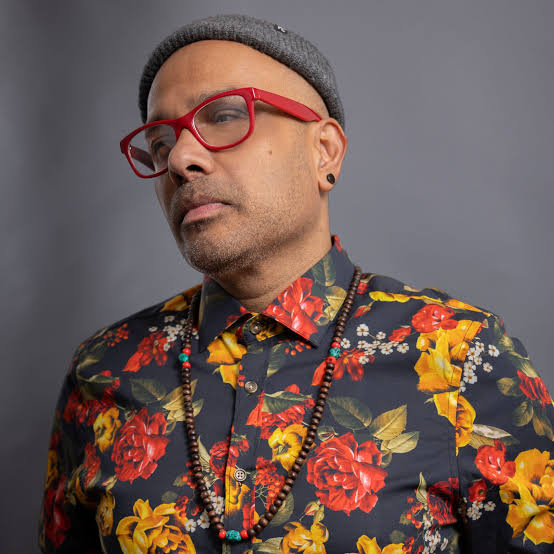
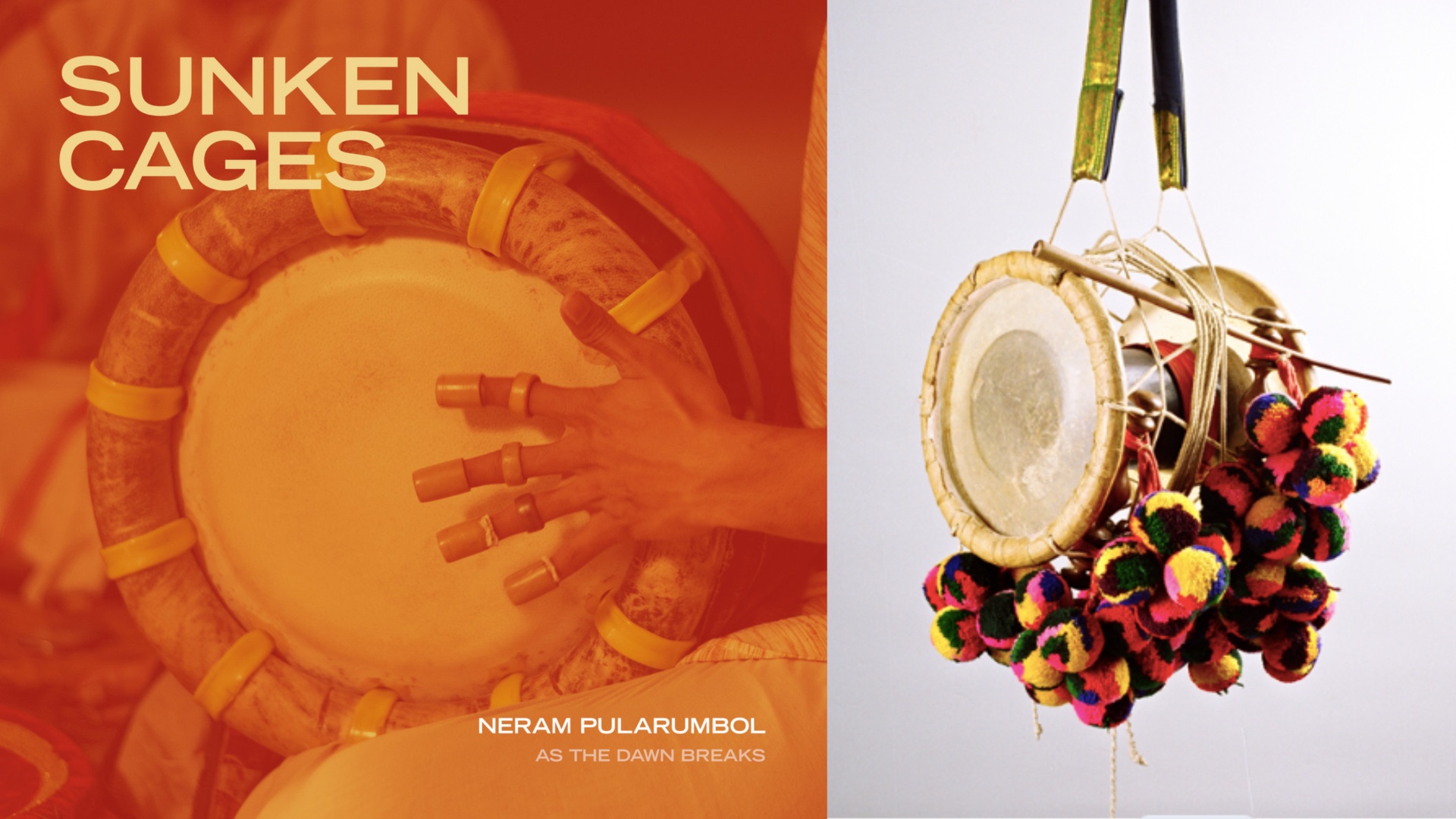
Mood Board is our column where artists share a few of the things that inspired their new record. This time, Sunken Cages — aka the Indian-born, Brooklyn/Philadelphia-based drummer and producer Ravish Momin — tells us how his new record Neeram Pularumbol (As the Dawn Breaks) is a tribute to the drums of Kerala. Neeram Pularumbol is out today via Mahorka Records.
— Annie Fell, Editor-in-chief, Talkhouse Music
This record is my homage to drums from the South Indian state of Kerala. Instruments like the Idakka, Chenda, and Elathalam are rarely heard outside their traditional (religious) contexts.
1. Chenda and Elathalam
In addition to having a highly charged rhythmic repertoire, these drums have distinctive sounds not found on other Indian percussion instruments.
Chenda is a cylindrical drum with a thin, flexible membrane stretched over both ends. It is played with sticks, and is known for its loud, rhythmic sound.
Elathalam (also spelled elethalam, ilathalam, or ilatalam) is a traditional metallic percussion instrument from Kerala, India, that resembles a miniature, thick pair of cymbals. Made entirely of bronze, the two pieces are played by striking them together to produce a distinct, ringing chime. All of these instruments are typically played in communal gatherings during a wide variety of celebrations.
2. Sampling
The first step was to acquire one-shots and loops to create drum-racks in Ableton — which are essentially MIDI drumkits that can be mapped onto different pads for live performance and recording.
The drums in the sample packs were primarily played by my friend Krishna Kishor, a highly accomplished session percussionist. I also added additional South Indian sample packs of other South Indian drums like Thavil and Parai that were purchased and fully licensed. I was careful to acknowledge the creators and not simply grab samples without permission.
As an Indian, would it still be cultural appropriation if I’d taken samples from other Indian regions without permission? Why, yes!
3. Performance and Recording
A big part of a Sunken Cages performance is the live looping of rhythms. I am not merely working with elaborate pre-recorded drum sequences. My signature sound blends traditional South Indian percussion with western electronic drums.
In order to prepare a live set, I’d devoted a few summers to studying and replicating the acoustic patterns on my e-kit.
This live-performance of “Kerala” is a good example of how I approach producing a track. I play and loop various rhythms on my DrumBeam and mesh pads, and simultaneously trigger melodic sequences as well. Once I’ve recorded the jam, I go back into Ableton’s arrangement view and fine tune the individual tracks, add additional effects, EQing, panning, and so forth.
4. Collaborations and Remixes
For this record, I’d wanted to highlight some of the incredible women artists I’ve found inspiring as of late, and reached out to Devi Mambouka (Masma Dream World, Gabon/US), El Kontessa (Egypt), Rani Jambak (Indonesia), and Lila Tirando a Violeta (Uruguay.) I’d also invited Kush Arora (San Francisco) and Kuza (South African vocalist based in Athens, Georgia.)
The label, Mahorka Records, which also had a track record of working with diverse artists, connected me with additional remixers like Weldriod (Hungary/Sweden), Moki McFly (Phillipines), Abu Ama (Germany), and Dolphins of Venice (Australia), making for a truly global record.
5. Idakka
The two tracks most requested for remixes were “Idakka” and “Drum & Flowers.” Both of those songs feature the Idakka Drum prominently. The Idakka is a small, barrel-shaped drum that is played with a pair of sticks. Idakka is often played as a solo instrument, or as part of an ensemble, in a variety of traditional music and dance forms such as Kathakali, Koodiyattam and Mohiniyattam.