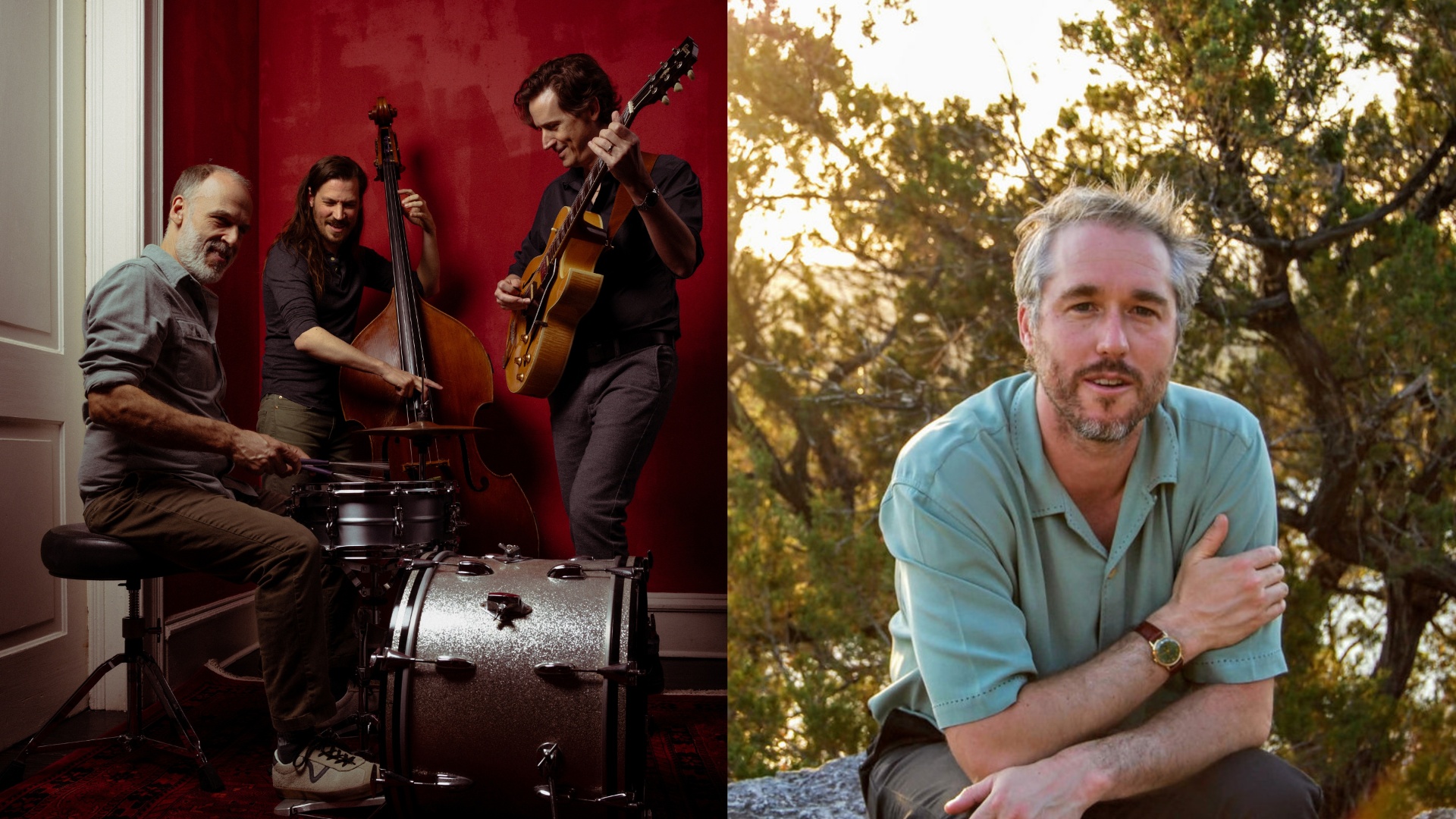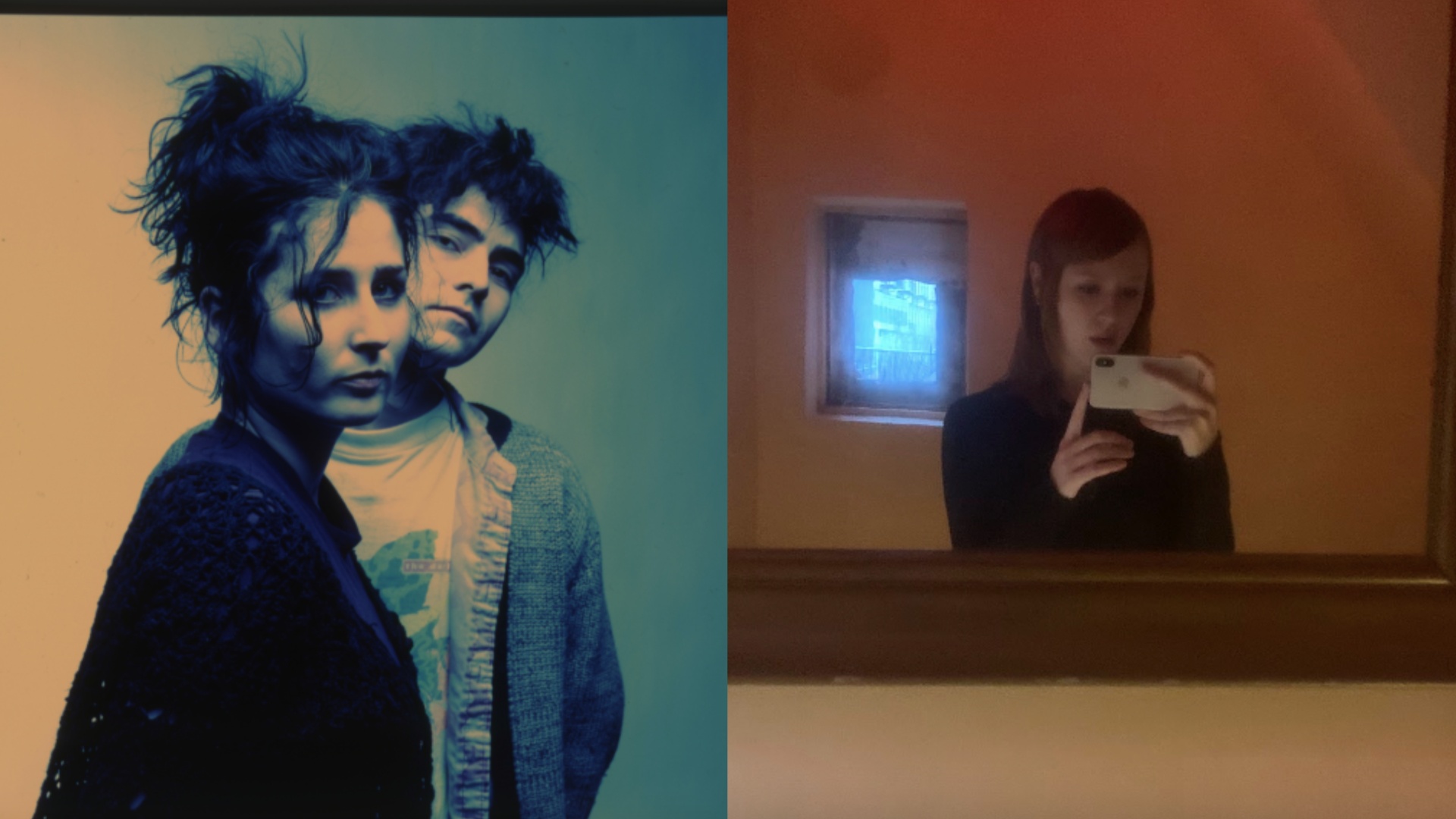
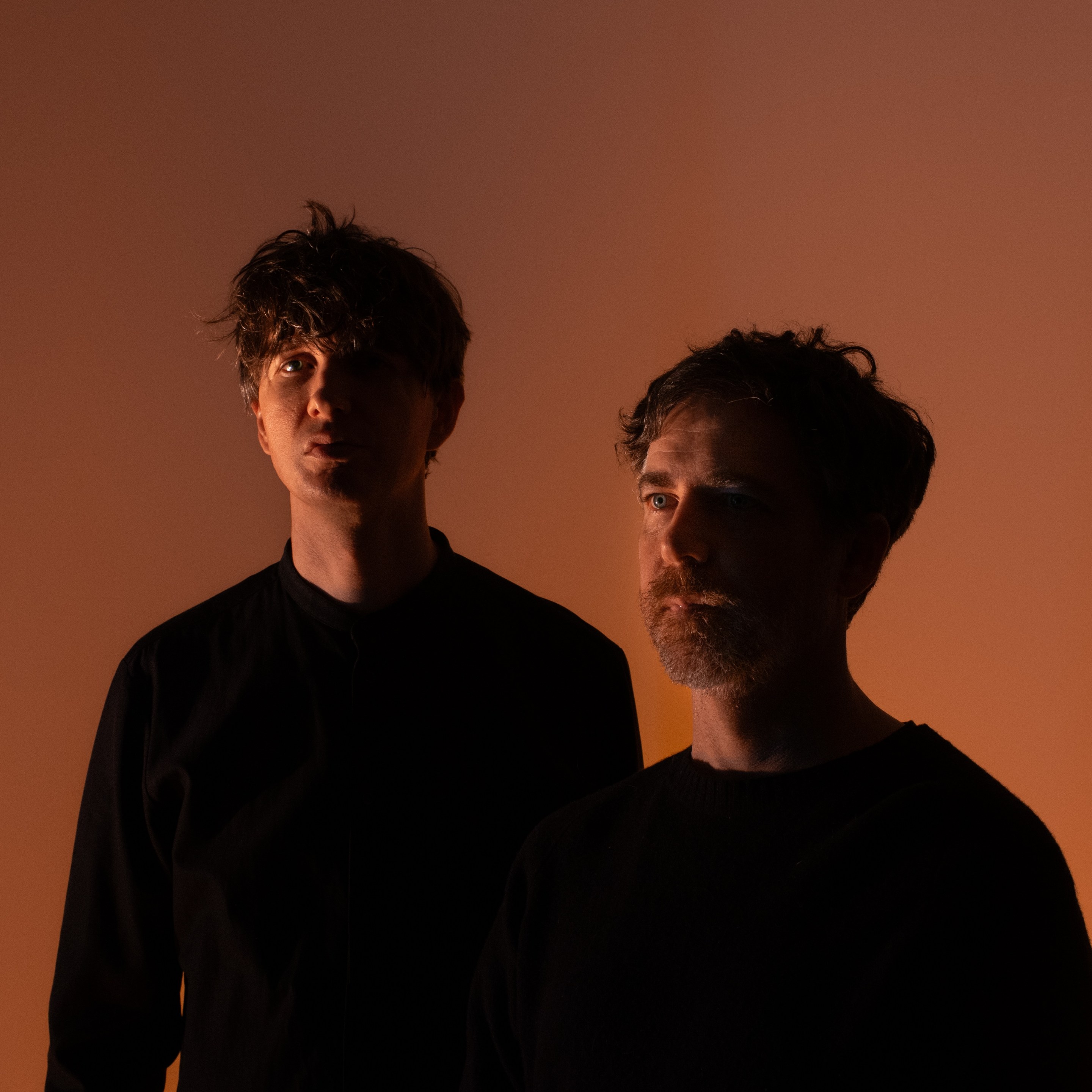
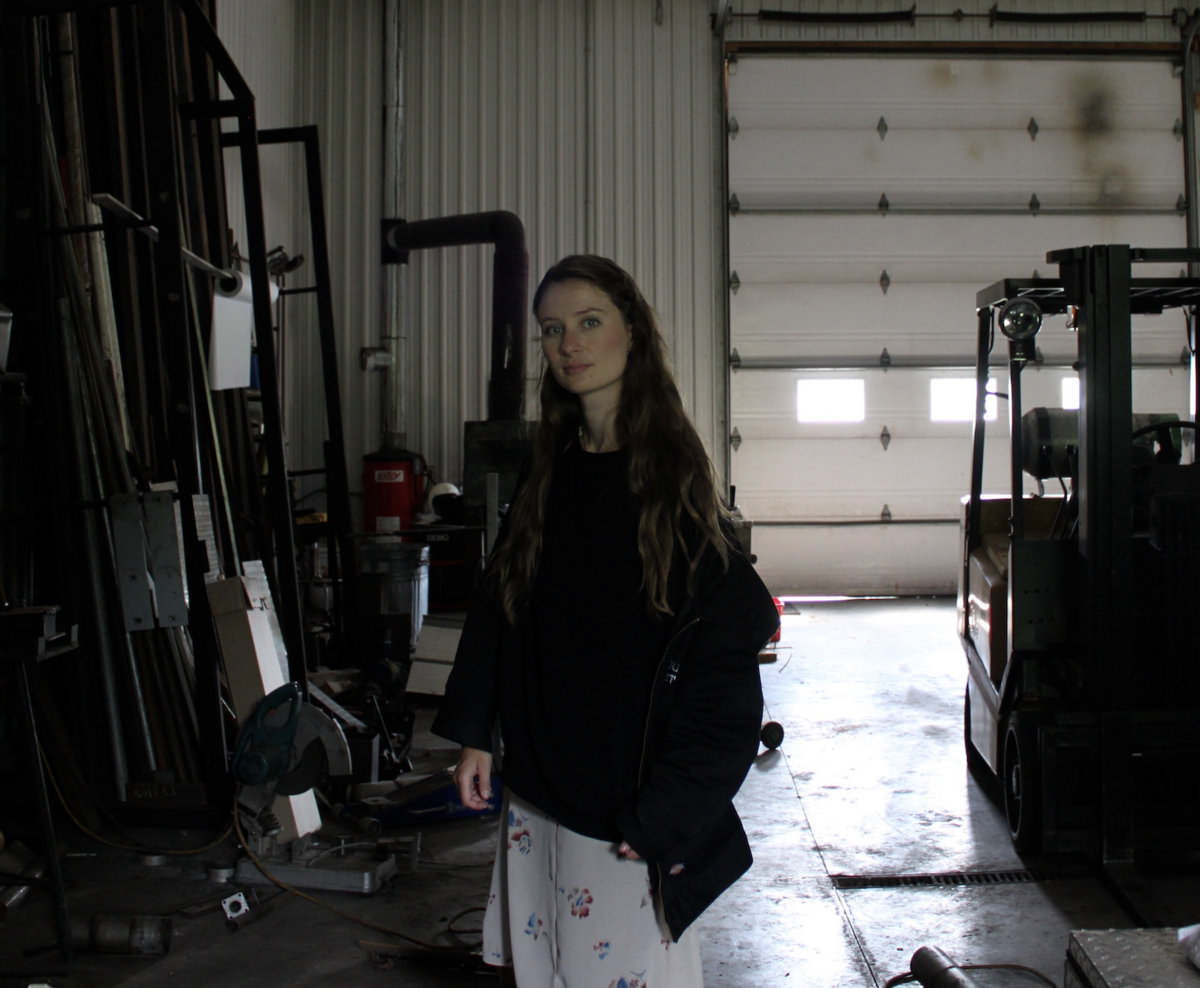
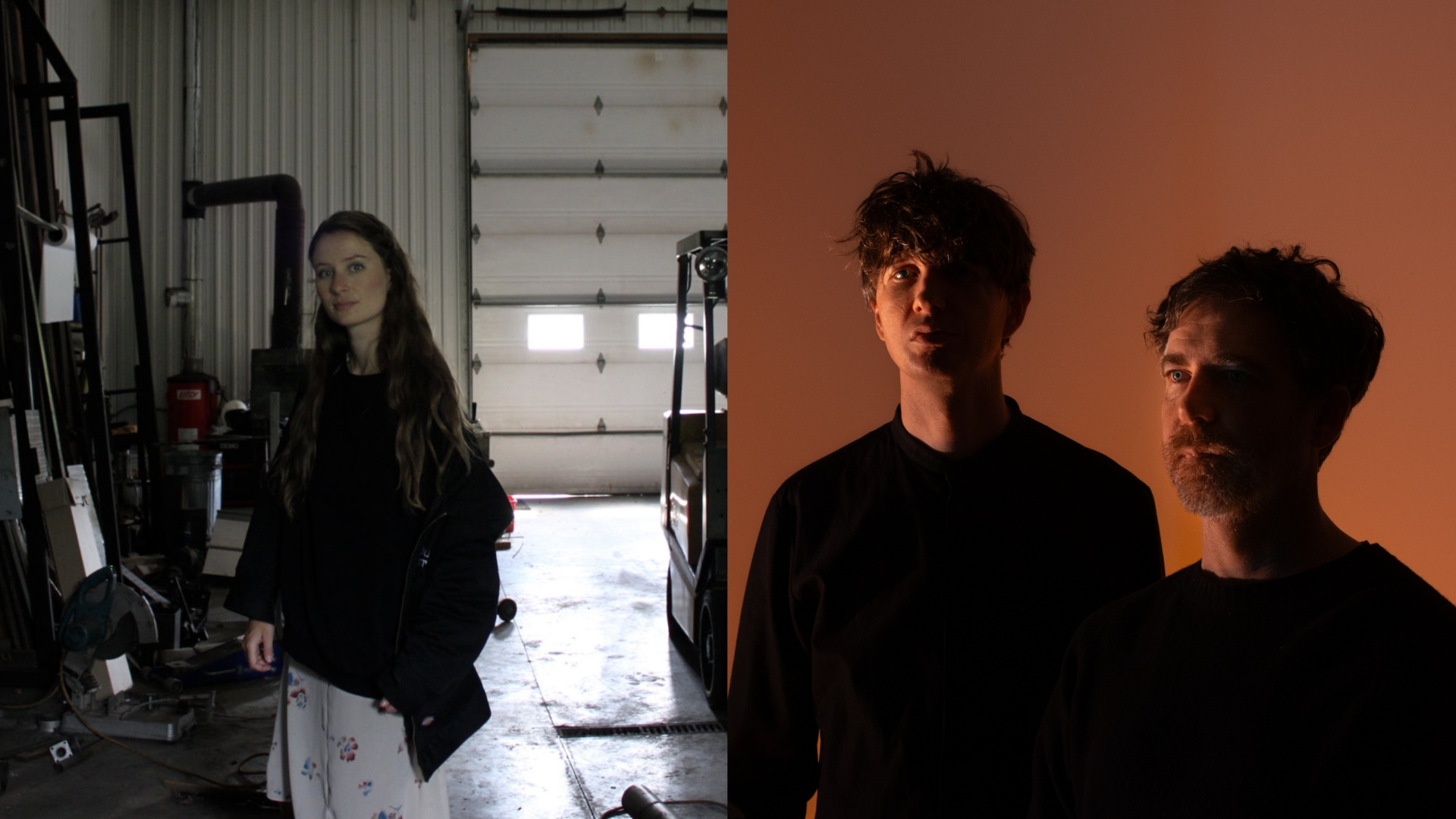
Kara-Lis Coverdale is a composer, musician, and producer based in Montreal; Spencer Doran is one-half of the Portland, OR-based electronic duo Visible Cloaks. The new Visible Cloaks record Paradessence came out last month via RVNG, and to celebrate, Spencer and Kara-Lis got on a Zoom call to chat about it, and much more.
—Annie Fell, Editor-in-chief Talkhouse Music
Kara-Lis Coverdale: I'm in Amsterdam! Welcome to Amsterdam.
Spencer Doran: You played at Orgelpark?
Kara-Lis: Yes. Have you been?
Spencer: No. I really want to go. They have the Busy Drone. Did you see that? Where you can play with MIDI and stuff?
Kara-Lis: Yes. It's sort of a MIDI haven. There is a digital console called the Hyper Console that Hans, the Orgelpark father figure of sorts, designed. It controls two different organs at once, so you can sort of blend in real time. And this was a collaboration with 4DSOUND as well, so we had that dimension. It was pretty wild.
Spencer: Did they bring their big speaker, the tower thing that they have?
Kara-Lis: These ones weren't towers, they were hoisted on scaffolds that held from the ceiling. There was 12 of them sort of in a grid-like pattern. But they hang above the head, so it gives the impression of the tower…
Spencer: And then you had to use their funny proprietary mapping software? Or, do they still use that? I went and saw that place in 2018 or something, and I haven't seen anything since.
Kara-Lis: In Berlin?
Spencer: Yeah.
Kara-Lis: Yeah, I saw that one too. That one's much more techno. You feel like you're really in the grid, in some sense. This one, it's much less of a metal experience. The Berlin one felt like a cage to me… The architecture of that one is quite brutal.
Spencer: I mean, it's very appropriate for Berlin.
Kara-Lis: Yes. I also have this recurring nightmare that I've had for years of being in a box and the box is closing on me.
Spencer: Like in Star Wars, the scene where they're in the trash compactor and it's closing in on them… They say that the recurring spaces that happen in your dreams are often parts of yourself. I always have these dreams that occur in this specific house or this specific campus or structure. And they say that that's internal parts of your cognitive map that are becoming this space that you're able to exist in. And then when you're revisiting these spaces, it's like revisiting different parts of yourself. I don't know about nightmares like that, where it's just this thing happening to you, but…
Kara-Lis: Do you dream often?
Spencer: Yeah. I've been trying to get better at writing stuff down. Do you know the software Obsidian?
Kara-Lis: No.
Spencer: I think you would be into it. It's like a note-taking software, but it's node based and you can connect things together. It's really cool for taking ideas and connecting them. But I've been trying to do more dream recording so that I can connect different things that reoccur in the dream world to get a better sense of what they might be representing or what they might be connected to, on a more psychoanalysis kind of level.
Kara-Lis: That sounds awesome.
Spencer: It's really cool for brainstorming ideas too.
Kara-Lis: That reminds me of that one app where it's a drawing — I think it's a vector program, so you can enter into infinities. Like, you enter a door and then it opens another world. So you can draw, draw, draw, draw, draw, and then keep going.
Spencer: What's it made to do?
Kara-Lis: I think there's no purpose. It's just drawing. [Laughs.]
Spencer: The best things that have no purpose are the best.
Kara-Lis: Yeah, totally. I was reading a bit about Reassemblage and then thinking about how that compares to Paradessence. Because Reassemblage seems to have this starting point of sort of a spiritual ethos — or there's a parameter of behavior around it of this observation-without-meaning kind of structure. How closely did you adhere to that over the past 10 years, and how do you feel about it now?
Spencer: I feel like it's a more optimistic album about the future and about technology. Not to say that the new record is pessimistic or something, but going into it — obviously when you have a project that's, quote-unquote, successful, you're burdened by it to a certain degree where you're not wanting to recreate the same thing you did before, but you're scared to be too different. So there's that funny balance. It's weird because it almost feels like this new record is our sophomore record, even though I've been making music under this project name for 20 years now. But it was really slow to work on this project because I had a lot of internal self-critique, which maybe I didn't have so much during Reassemblage because we hadn't really done anything too notable yet. So you feel less wary to take risks.
I feel like they are connected on this deeper level to a certain degree, but it's not like one is the inversion of the other. And part of the reason why I wanted to talk to you for this is because I feel like we have a similar philosophy in not caring so much about the album cycle. Your records that came out last year have basically the same time window of when we did something that was bigger scale. So I'm wondering: in that gap of time, what changed about your perspective on music making and going from Grafts to the series of three records last year [From Where You Came, A Series of Actions in a Sphere of Forever, and Changes in Air]? I feel like there's a obviously a throughline there, but what those records are trying to do is very different.
Kara-Lis: I think we do have a similar sense of, maybe we create once a decade or something. [Laughs.] But then there's all these other things happening in between… I think that my arc is coming full circle more tied to Aftertouches than Grafts. Grafts was something more personal and human, I would say. Whereas Aftertouches was a really ambitious, deeper philosophical critique of media and medium and digital systems and a very technical exploration of the possibilities of discrete music. I really think that I reached the limit of discrete possibility, and I felt that my sense of time had become so incredibly different from the real world sense of time. It was like thinking about everything on a picosecond or nanosecond understanding of things. Also, thinking about that non-continuous nature of digital, it kind of drove me crazy. Even Aftertouches — you mentioned this idea of promise or utopia that was so different in 2015, 2016, 2017, where it felt so like there was so much possibility in this way that was exciting and it wasn't dark at all. But also, I was always a little bit dark about digitalism, in that I've been aware of this narrative of disembodiment and removing my physical self from creation.
Spencer: Yeah. I feel like we talked about this before, about how you had this very sensate upbringing of being in nature and in the natural world, and then when it comes to creating art or composing in the digital field, you were feeling this incongruency between those two systems. And something that I always really connected with, with your work, was the fact that you can feel this naturalness in the digital environment. It's something that I'm trying to work with too, of trying to create these things within a DAW that are in conversation with the natural world in a way that is aware of its own artifice.
You grew up in more of a rural — actually, I don't even know too much about your upbringing.
Kara-Lis: I did, I grew up in a rural area. But I do think that we share that obsession with the outdoors; there's an environmental sensibility. And I think emulation is at the root of a lot of machine musics, and as we try to give voice to these sort of soulless machines — which, I don't really agree with, I think that machines do have souls as material matter — but emulation has been a core of that. And I think that even in digital space, it's a way of making sense of what is otherwise a void or nothingness. You just try to find what you already love in this completely white space. You have to create what you want it to be. Do you think digital space is a void?
Spencer: Well, thinking about composing using technology and going back to the history of automation and mechanical instruments — like the Busy Drone, the mechanical barrel organ, things like that — there's this very core metaphysics at the center of it, of the world as being something that you can divide into grids and systems, and the human body as just a machine… If you think of all these countries that have this deep lineage of mechanical music, like Germany, Amsterdam, France, [there was] this birth of this mechanistic view of reality that if you just have all the parameters, you can calculate anything. And [you can] create music in this same way where if you just have the grid, you can design things within it. I never liked using synchronization or grid time in the way that I work with composing systems, even though I'm working, say, in Ableton Live, which is designed to make techno basically. But having a BPM is something I don't even look at, and try to make these systems that are more living.
So when it comes to things like the void — obviously when you're starting out something, you're starting out from a place of nothingness. But there's this system of emergence that I do my best to let things arise out of. And that goes back to more like a core belief about how the world works, or about how anything exists coming not from necessarily a place of nothingness, but a place of things emerging and self-organizing.
Kara-Lis: Yes, that totally makes sense. This dualism in the sense of acoustic and digital, and having them negotiate each other — do you still feel it is strongly dualistic, or do you feel it's more integrated now?
Spencer: The thing that I'm interested in lately is playing with the illusion of both. Because both of those things are kind of illusionary to a certain degree. Saying one is real and one is not… It becomes very arbitrary the way you delineate those two things. This whole idea of the digital world being something that's in opposition to nature — which is a very core philosophical debate right now, especially with artificial intelligence — all these electronic systems arose out of the natural world. It's just matter that has organized itself to a degree of complexity that it's no longer legible to people in the same way. But I don't really think of one as outside of the other. You just have to zoom out further and you start to see that they’re the same thing. It's just at a different level of complexity.
Kara-Lis: I found that there was almost a laughing Buddha kind of moment at the end of Paradessence. I think there was a really similar trajectory in both From Where You Came and Paradessence with the track choice in the end… The first half of the album is quite abstract and has an interesting sense of conversation, but it's really restrained and there's a lot of space and you hit zero points all the time. There's a lot of silence actually, which I think is common to your work.
Spencer: Yeah. We've talked about him before, about Christopher Alexander, but I read that series Nature of Order, and he has this whole thing, “the 15 fundamental properties for creating life in a piece of art.” For him, [it was] architectural structures. But he has this one he calls “positive space,” which is thinking about when you're creating anything, in shaping the object, you're also shaping the space around it. And the reason when something is beautiful, it's because it shapes the space around it in this beautiful way too. I had worked with silence a lot before, but I started thinking about that idea in a sense of when you're working with the frequency spectrum and there's different frequencies that are decaying or rising, and going from max point to zero point, you're shaping that space in the silence sort of in reverse as you're shaping the sounds themselves. So especially in the first half of the record, there's a lot of pieces where I was very meticulous about just moving the spaces between the sounds so that they feel like their own little entities that are in conversation with each other. And they feel like these almost sculptural objects that exist in time instead of just being this sort of busy space that's interacting with itself.
Kara-Lis: I think that makes sense. And I think there's a really strong sense of unique events in the music where I feel like I can see that this thing happened and then it ended. It's almost like hearing a sketch come alive. But then the piano comes in and you're like, Woah, there's an instrument I know. Then that that made me think about this idea again of observation without meaning that Reassemblage had. Because I thought about this a lot — is it possible to remove an instrument from its inherent library of associations?
Spencer: Its historical context.
Kara-Lis: Yes. Which I tried to do with the piano record in 2025, in removing any sense of sentiment or colloquial harmonic line. Which I'm not sure I successfully did there, because some people hear quite a bit of sentimentality. [Laughs.] But it's funny, because I don't feel any sense of sentimentality.
Spencer: I don't feel like sentimentality is the word. Especially your recent three records, I think, are really invested in just the idea of beauty as being an organizational or aspirational part of making music. And it's a really hard thing to do, because if you lean too far into that, that's where it tips into the point of sentimentality. But I don't think that that's something that your work falls prey to. It's a tricky thing. I'm curious what you think about the idea of music being beautiful and that being something that you're conscious of in making it, or if it's just a byproduct of the systems of thought that you use to compose.
Kara-Lis: I mean, you said that you're thinking about design principle and Christopher Alexander, and I've thought about that quite a bit. But I think musically, I'm more interested in the feeling. It's less architectural than it is a harmonic state or a frequency, or a combination of frequencies that allow me to be at a certain place emotionally. And I really like holding a certain state. I have a lot of dynamic flexibility in my being. I can change my mood very quickly. I'm aware of that capacity. So I feel like I need to be careful with what I put in and be mindful of what I take out of the system. Also, I will say, after Aftertouches and Grafts and a lot of touring there, I did a lot of mindfulness therapy, so it's probably helped a lot with figuring this out. But I think maybe any sense of beauty in those records just comes from trying to protect my own space more and using music as a tool to do that or an extension of that work.
Spencer: In The Nature of Order, he talks about this idea of wholeness: When you create a work, it's like creating this thing that has this sense of wholeness in it. And he talks about how making wholeness heals the maker of the psychological state that you get in when you create something that you feel not even just proud of, but that you feel accomplishes what you're attempting to communicate with it. And then also just the aloneness that you can feel when you create something — he uses the word “ugly,” which I don't know if I agree with that — but something that fails at your attempts. And that in creating work, it sounds like a self-help kind of corny thing, but you can literally heal yourself.
Kara-Lis: Oh, absolutely.
Spencer: I totally agree with that.
Kara-Lis: Totally. I think that any meaningful music that I've made, I have gone to all the places emotionally when I'm making it. You really have to go there and be willing to do that work. There's no way to not go about it because you can't create it without going there. It's impossible. And you can hear when someone has or when they haven't.
I was wanting to ask you if you think machines have souls.
Spencer: I don't know… And maybe it's not that I'm agnostic about that question, but just I haven't answered it for myself yet. You have to really cut your definitions very cleanly of what a soul is, and I don't know if I know the answer to that question yet. It sounds like you do think so?
Kara-Lis: I do.
Spencer: I’m curious about your explanation for that.
Kara-Lis: I think traditionally the idea of a soul is wrapped up in material matter. Maybe that's why I've become so intrigued about what matter is and how we define matter. It's a super abstract concept. I think the unseen is really interesting. I think the visual component of things is totally confusing what reality actually is, and I think digital is really interesting for that reason, because it is also an unseen in many regards. It's like this flattening of things. Maybe that's why I was referring to it earlier as “the void,” because it feels like either white or black. I think that matter in digital space is cumulative in the sense that, as these digital libraries accumulate space — it does take up space in drives and storage facilities. I'm not sure what your data storage system is at this point—
Spencer: I use Grand Perspective to keep it all in check. You know Grand Perspective?
Kara-Lis: No!
Spencer: It's an app for data storage management where it creates a data viz of your hard drive, and there are all these little grids based on the size of the file. So you have big files or these big squares, and then it gets to really small so that you can quickly see the overview of your hard drive, what's taking up space. It’s beautiful. It like looks like some sort of Mondrian painting.
Kara-Lis: Woah. I would love to attend you giving a digital environment workshop…
Spencer: I think it's going to cut us off. This has been great.
Kara-Lis: So nice to talk to you!
(Photo Credit: right, Jonathan Sielaff)