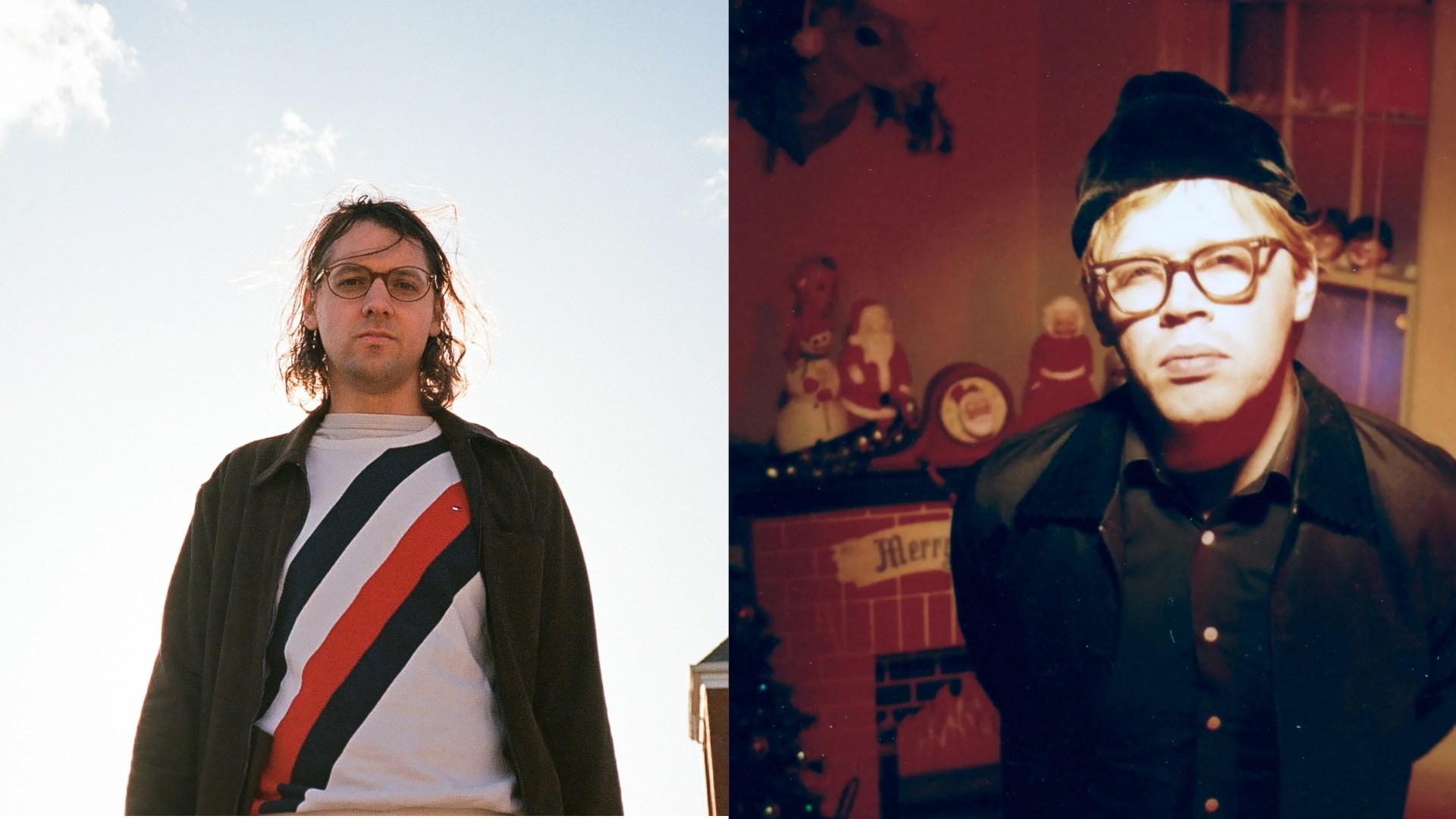
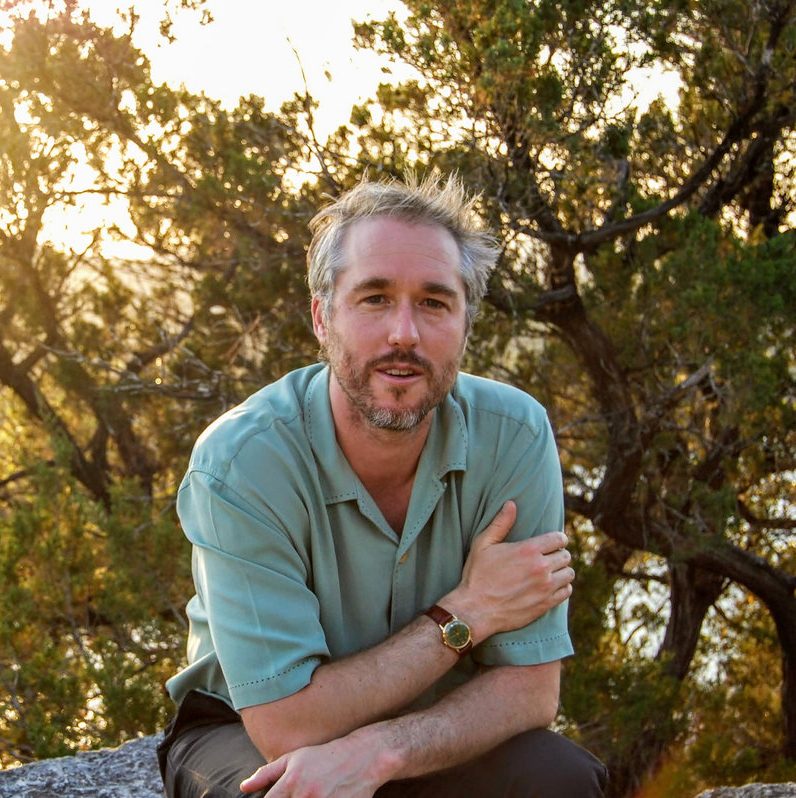
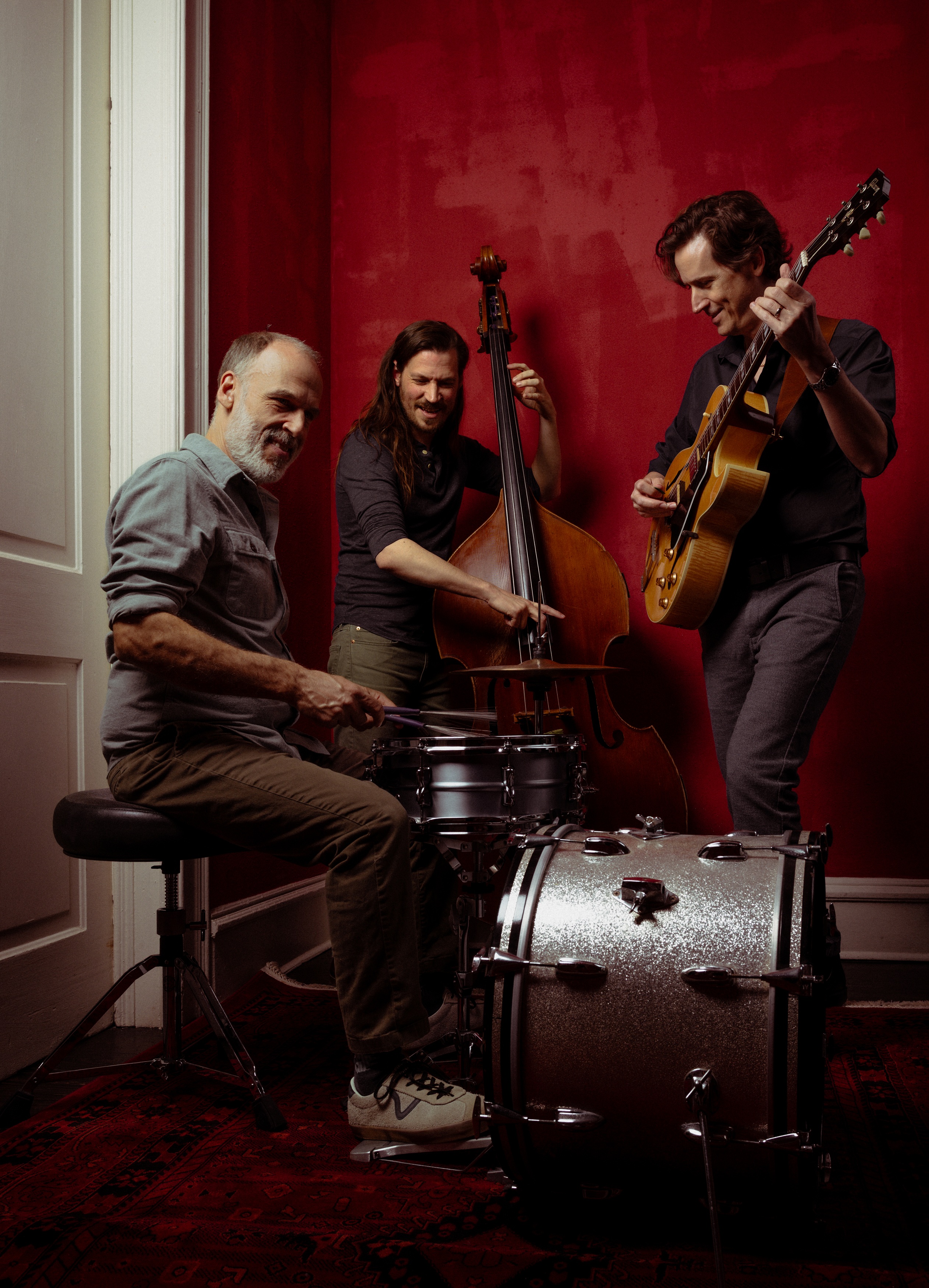
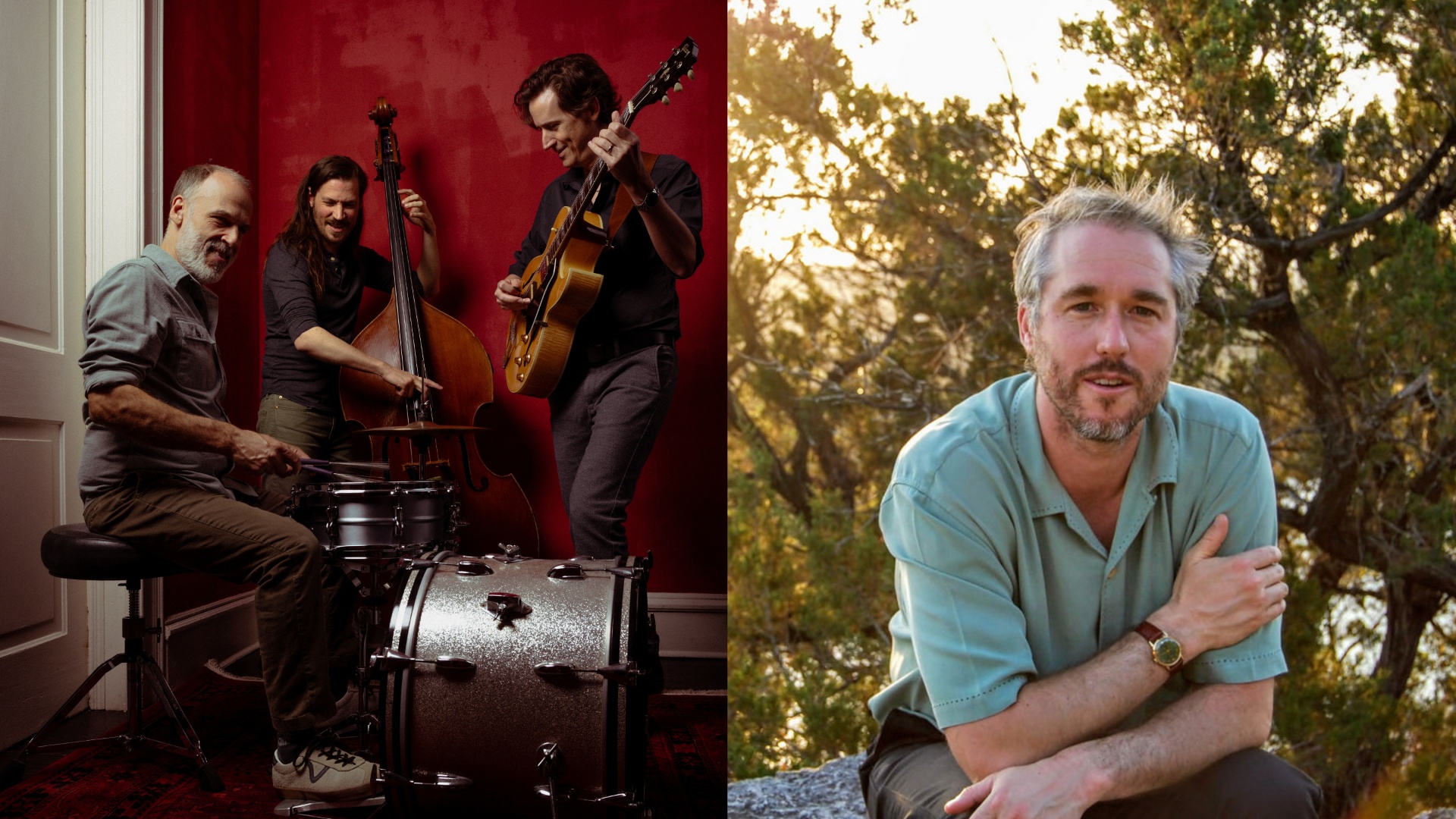
Don Cento is an Austin-based guitarist and composer who leads the instrumental jazz/Americana trio Cento Threeo. Matt Kivel is a songwriter and musician based in LA, whose latest record Escape from L.A. came out at the end of last year (and features contributions from Don). The debut Cento Threeo record Halfway to Mellowtown is out tomorrow, and to celebrate, the frequent collaborators got on a call to chat about it, and much more.
— Annie Fell, Editor-in-chief, Talkhouse Music
Matt Kivel: Let me start with a question or two to you, and then we can kind of flip it around.
Don Cento: OK, hit me.
Matt: Alright, so: Halfway to Mellowtown. Is this the first Cento Threeo record?
Don: Yeah, it's the official first record of this trio.
Matt: This record, for some reason when I was listening to it, I started thinking immediately of Charles Grodin. Because we were working on one of these records when he passed away, and I remember we talked for a while about him. There's a shared appreciation. We both love this guy. But I felt like this is the kind of music that maybe he would have enjoyed. Like, if I could think of some Charles Grodin-coded music, I could see him in his house, he's in a button down and he opens it. The tie comes off, he unbuttons the shirt a little bit, he's drinking a martini, and he's listening to Halfway to Mellowtown. What do you think about that?
Don: I mean, there's no higher compliment than to link this music with Charles Grodin. Because, yeah, that was a cool moment in our professional or personal relationship. Not many people know Charles Grodin or appreciate him. Did you read his autobiography?
Matt: Well, you recommended it, and then we looked it up and it was, like, 300 bucks.
Don: I wonder if I still have my copy… But I get that 100%. Because one of the things that appealed to me about Charles Grodin was he was so dry and so funny. And there was emotional content to him and to his performances and to his writing, [but] he wasn't like a showman. His heart wasn't necessarily on his sleeve. And I think probably that's the approach I'm taking to music, whether consciously or subconsciously. I'm not very histrionic. I'm a little reserved. Is it the content or is it the attitude of the music that you gives you the Grodin vibes?
Matt: I think it's the subtlety. I would use the word “sophisticated.” But there's also an accessibility. You know, it's not like Charles Grodin was in arthouse movies. He was in movies that were designed to be seen by millions of people. But he was doing something that was kind of unusual in those roles. It's hard to put your finger on what he's doing, but at the same time, you find yourself connecting with him. I think my generation knows him as the dad in… what's it called?
Don: Was it Clifford?
Matt: Well, that's what I loved him in, Clifford. But it's the one with the dog…
Don: Is it Beethoven?
Matt: Beethoven!
Don: I never saw those.
Matt: That was the first thing I saw him in. When I was eight or whatever, when it came out, you're like, He's everybody's dad! But then you rewatch it and he's just irate the entire time. You accept him, though, as a kid. You're like, Oh yeah, that could be my dad. But actually he's, like, on the edge of abusive or negligent.
Don: Yeah. I think what you said, other than abusive, resonates.
Matt: [Laughs.]
Don: Jazz is a sophisticated music. It has a big emotional content, but it's also got a big intellectual content. There's straight-ahead jazz, and there's jazz purists and the jazz police. And I think what we're doing hopefully is a little more accessible. I’ve learned a lot working with people like you about making songs, so [I was] trying to apply some of those lessons to this jazz thing. Hopefully the sophistication comes through in it, but also the more songwriter-y thing.
Matt: Yeah, like “It Takes What It Takes” — that song has a songwriter quality to it, but also, it feels like the end credit music of a ‘90s film to me. It's a more minimalist version; you don't have orchestration, all these different things. But it has memorable line after memorable line, and there's a warmth to it.
Don: Thank you. That actually started as a vocal tune.
Matt: Yeah. So you have that, and then you go right into that other song, “Dennis Muren.” I'm not sure who that's named for, but I wanted to ask: what kind of a song is that? I feel like that song is on the edge of being a jam.
Don: Yeah, it definitely owes a little bit to the Meters. And it owes a little bit to John Scofield, the jazz guitar player, and the stuff that he was doing in the late ‘80s, ‘90s, even the 2000s. So it's just kind of a weird funk jazz thing. I was writing that several years ago while Sylvia — my wife — and I were watching the Disney documentary series about Industrial Light & Magic, the George Lucas special effects company. I loved that stuff when I was a little kid. I would eat up all those behind the scenes things for Raiders of the Lost Ark and Star Wars. So I was super into this documentary, and one of Lucas's right hand men was Dennis Muren. He was instrumental in putting that company together, spearheading all the techniques and everything that they used in Star Wars. And that just coincided with while I was finishing that tune, I was watching that, so I slapped his name on there. That's the magic of instrumental music, you can just put a title on there.
Matt: The titles are good on this record. “No Flea, Please,” “Horse-Breaking Hector.” It's a little ominous.
Don: Well, that's from The Odyssey. I actually wrote that song in college while we were studying The Odyssey in whatever literature class I had.
Matt: The last few days, I've been fully immersed in Frank Zappa. Now that I'm living back in LA, I was like, I need to listen to LA music. Frank Zappa went to high school in Glendale, or around there, and I'm very close to Glendale and Highland Park. He's the architect of the sound that I associate weirdly with the east side of LA. And his titles are fantastic, and then you listen to them and it's a complicated piece of instrumental music. It takes on this other dimension once you hear the music and you link it to this title. You start seeing and hearing different things. So the titles are important. Even if they're random, they can add a lot, I think.
Don: They have to match the attitude of the song, I guess, or contrast the attitude. I always start with plays on words. I like stupid jokes. It's a fun thing to do. It's also a really challenging thing — like, I can't tell you how many times I've changed titles to instrumental tunes three or four times, just because it doesn't fit. With a lyrical tune, you can just take a line from the chorus or whatever, and that's that.
Matt: I mean, sometimes it's harder than that. I think it's the same idea, something either feels right or it feels wrong. I think that a title should be sort of a guide for the listener, and should add something. It can't just be innocuous. Although, there are great songs — I was thinking of this the other day, the song “Reptilia” by the Strokes — that title doesn't make any sense. It is completely divorced from the lyrical content. But at the same time, you could imagine Julian Casablancas writing the guitar parts and being like, “That kind of feels reptile-like…” But then the lyrics have nothing to do with that.
Don: But it does put you in a mood, and maybe the mood affects the way you consume the song. Because it's not a soft title. It's got a real attitude to it.
While we're talking about titles, the title of your record [is] Escape from L.A., which we finished [together]. How long before you brought it to my place had you recorded the bass and drums?
Matt: I had recorded demo guitar, demo vocals — or what I thought were demo guitar and vocals — when I was living in New York, probably in 2018. That was the basic material. Then I moved back to Austin — there was, you know, the whole pandemic thing, and it got a bit derailed. But my friends Adam [Brisbin] and Sean [Mullins], who were living in New York, were able to do those rhythm tracks on some of the demos and on a few scratch tracks I had made. So all of that basic material then was made in 2020, 2021. And then I brought it to you… I don't even remember when we started on it.
Don: I don't either, but that was after we did bend reality.
Matt: Yeah.
Don: One of the things that I took from those experiences — we've made at least two, maybe three records together — I really appreciated your ability to wrangle talent. You have a really great eye for finding players out there and bringing them in, putting them in front of your songs, and you're really good at directing them. When you see these people out there, at shows or whatever, are you looking for something in particular, or is it just whatever that person happens to be doing at the time that resonates with you?
Matt: I've seen a lot of people play the guitar, I've seen a lot of people play the drums, but when I see someone who's very specific and focused and operating in an unusual way at a very high level, I will usually wait around to talk to that person after. I see them and I’m like, I would like to make music with that person. It's as simple as that. What's great about making music is that other people are involved. I think there's this weird idea that comes along with being a solo artist where you're putting out records under your name, [but] some of these albums I've done have 15 to 20 people on them. It's kind of absurd to put it under my name. But I don't have a good project name for this, so I just keep rolling with Matt Kivel.
Don: It's all worked, man. I don't know if you have a vision or just a really good instinct for directing these players, but it's always ended up in a great place.
As far as the musicians that I've recorded, you have some of the best time. That's one of the best parts about recording you. It always feels great.
Matt: Thanks. I've spent a lot of time making these recordings, and very early on when I was a teenager and we got our first Mbox to start recording ourselves, we always had a metronome that was super loud, and the biggest issue was always trying to cut it out of the mix. Now I'm at a point, at 40, where I don't use a metronome at all anymore, because I realize we don't need it. The only reason you would want one is if you were trying to make something incredibly precise, but I'm not really interested in doing that. If you can keep it a little bit looser and you pull out the click track, not only do you not get bleed in your headphones, but you have a more organic feeling.
Don: Yeah. That's why we didn't use a click track on the trio record. Everybody was in the same room. I had not done anything like that in a long time.
Matt: Now that we're living in an era where technology for recording is so ubiquitous, I think returning to a way of making a record that is spontaneous and flawed is going to be so much more interesting. People are going to be listening for flaws — or at least I am. I'm like, Oh, was that off a little bit? That's a record I might want to keep listening to. If everything is completely pristine, then I don't know if I'm interested.
Don: I guess the buzzword is “authenticity” these days. The kids are looking for the authenticity. I wonder if that might be a good flag for music that isn’t AI music.
Matt: Yeah, I don't think anybody wants AI music. I think it's just being made by, like, goofballs who are trying to make money in a very short-sighted way. The area where it's a little bit pernicious is with ambient music; then the AI music can actually invade. And there are a lot of people who listen to it in different ways, where they're not that connected to the artist. That's a whole other problem. But when it comes to, “These are the bands that mean the most to me, the songwriters…” I think we're going to look back on this moment and be like, “I can't believe we were worried about that.” It's laughable. You can slip one past the goalie, but long term, there's nothing sustainable about that.
Don: Yeah, I hope you're right.
Matt: I gotta finish with a couple questions for you. Are you going on the road?
Don: I would like to, conceptually. I haven't booked my own shows on the road in decades, and I don't know where a quasi jazz trio would play. I've talked to some people in other cities that have mentioned some spots. If anything, we'll probably play up in Dallas where I know a lot of people, or Denton or Fort Worth, maybe San Antonio. Somebody mentioned a good place in Wichita. But you know how hard it is to travel to tour. It's expensive.
Matt: Do you remember for bend reality, Andrew Lessman, the guy who played drums on that?
Don: Yes.
Matt: He is running this jazz night at this place [in LA] called The High Low. I don't want to put Andrew on the spot here in this interview, but if he's checking this out, I think he should book you guys.
Don: Editor, please do not remove that. [Laughs.]
Matt: I saw the schedule for the next month is amazing. It's every Monday at 8:00. We'll talk about it.
Don: We'll talk offline. We'll get it squared away.
Matt: Alright, well, you should look for that Charles Grodin book. If you can find it, I'd like to read it.
Don: I'll go look on my bookshelf, and if I've got it, and I'll send it to you.