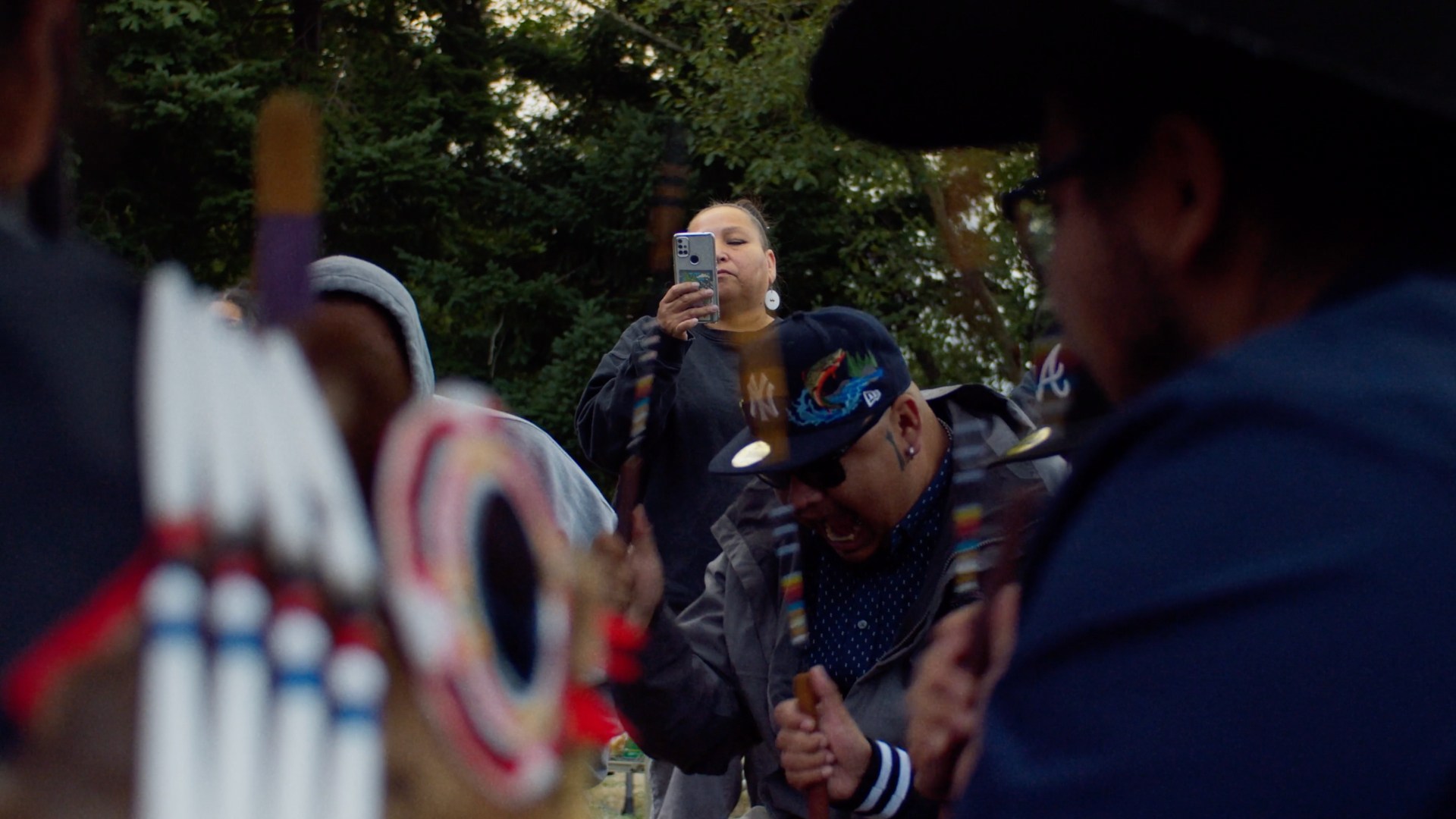


On October 13, 2026, I attended a protest in Ithaca, New York, near Cornell University, where I found myself participating in an exercise that left me feeling more uncomfortable than empowered.
A male speaker instructed the women in the crowd to chant, “I am Jane Doe,” while the men were told to respond, “I stand with Jane Doe.”
The demonstration was organized in solidarity with a former Cornell University student who has alleged that she was sexually assaulted by multiple fraternity members. Women of different generations stood together. There were speeches, performances, and a palpable sense of collective outrage.
I agreed with the cause. I admired the turnout. And yet, as I listened to that chant, I couldn't shake the feeling that something was fundamentally wrong.
Why was a man instructing women to identify themselves as victims while assigning men the role of protectors?
Sexual assault is not exclusively a women’s issue. People of every gender experience sexual violence. But the rally was explicitly framed around violence against women, and the exercise seemed to reinforce precisely the gender hierarchy that feminism is supposed to challenge.
Women were asked to perform vulnerability. Men were invited to perform virtue.
The speaker may have intended to create solidarity. What I experienced instead was a familiar arrangement dressed up as liberation: women as victims, men as their benevolent defenders. A man remained at the center, directing the performance and receiving the audience's attention.
I wondered whether anyone had considered that some women might not want to identify themselves as Jane Doe. That some survivors might reject the language of victimhood altogether. That others might have complicated relationships with the very idea of public disclosure.
Surely the point of advocating for survivors is to restore agency, not to prescribe how they should understand themselves.
And this raised a larger question I've been thinking about increasingly as a filmmaker and someone who has participated in political demonstrations:
When does protest become entertainment?
I don't mean that protest shouldn't involve performance. Quite the opposite. Protest has always been theatrical.
Marches, chants, costumes, banners, music and civil disobedience are all forms of public expression. Their power often lies in their ability to transform political arguments into images that people cannot easily ignore.
I've participated in and filmed protests, including directing a video of a Pussy Riot demonstration. I understand the value of spectacle. As a filmmaker, I believe images can communicate ideas that conventional political language cannot.
But there's a difference between using performance to advance a political objective and allowing the performance to become the objective.
Social media has complicated that distinction.
An effective protest today is often expected to produce more than political pressure. It must also generate photographs, video clips, compelling slogans, recognizable personalities, and moments that can circulate independently of the event itself.
The camera is no longer simply documenting the demonstration. In some cases, it begins to determine how the demonstration is organized.
At Cornell, I noticed how much of the speaking program seemed oriented toward personalities and public visibility. There were elected officials, advocates, survivors, and people doing meaningful legislative work. There were also social media figures, whose presence made me wonder:
How do we distinguish between someone amplifying a movement and someone using a movement to amplify themselves?
These categories are not mutually exclusive. Someone can have a large following and do important advocacy. Visibility can be a resource, and social media can mobilize people who would otherwise remain disconnected.
In fact, organizers of the Ithaca rally reportedly found one another through Instagram. That is a compelling example of the internet's ability to turn collective outrage into real-world action.
But a movement's reach is not the same as its effectiveness. A viral moment may introduce thousands of people to a cause without giving them any meaningful way to change the conditions that created the injustice.
The question isn't whether people are watching. It's what happens after they stop.
One speaker at the rally discussed efforts to close a disturbing gap in New York's sexual-offense laws concerning voluntary intoxication and the legal definition of incapacity to consent. This legislation has the potential to make a measurable difference in protecting people, particularly young people, from sexual violence.
And that's partly why I found the theatrical framing so frustrating. Here was an opportunity to confront the structures that allow sexual violence to persist, yet one of the most memorable audience exercises reproduced an extraordinarily conventional relationship between men and women.
A man could stand before a crowd of women, position himself as their ally, and still occupy the familiar role of directing their behavior.
I am not categorically opposed to men speaking at demonstrations concerning sexual violence. But I question why men were given such prominent roles at an event organized around women's experiences.
Too often, feminist spaces seem preoccupied with making male allies comfortable, celebrating them for showing up, and reassuring them that they are the exceptions to the very systems being criticized.
But men do not have to perpetrate violence themselves to benefit from a society in which male violence shapes women's behavior, limits their freedom and reinforces unequal power.
A man should not become the hero of a feminist demonstration simply because he announces his opposition to sexual assault.
And women should not have to make their feminism more palatable to men in order for it to be heard.
If men wish to challenge misogyny, there is substantial work to be done among other men, within male-dominated institutions, and in the private spaces where sexist attitudes are normalized. None of that requires positioning themselves at the center of women's political expression.
I was also struck by the absence of an ASL interpreter during the portion of the rally I attended. When I raised the issue with someone at the demonstration, they rolled their eyes.
A movement concerned with whose voices are heard should not treat a practical accessibility concern as an inconvenience. Requesting accommodation is not an attempt to demonstrate ideological superiority. It is a question of whether people can meaningfully participate.
It made me wonder whether, for some participants, the appearance of inclusivity had become more important than its practical application.
These criticisms are not arguments against the protest. They're arguments for taking its ambitions seriously.
As a filmmaker, I'm interested in the relationship between what an image communicates and what it conceals. A beautifully framed scene can move an audience while obscuring the reality outside the frame. Political spectacle can do something similar.
A photograph of a man standing in solidarity with women may communicate progress. It cannot tell us whether he has challenged misogyny among his peers, relinquished power when appropriate, or done the less visible work that meaningful change requires.
A protest that goes viral may appear successful even when the institutions it opposes remain unchanged.
The most meaningful political work is not always photogenic. It may involve drafting legislation, supporting survivors privately, challenging powerful institutions, or having uncomfortable conversations with people whose cooperation is necessary for change.
Those efforts rarely produce the most exciting clips.
I left Ithaca believing in the cause as strongly as I had when I arrived. But I also left with a clearer sense of what I want from political movements: not simply greater visibility, but a willingness to confront the power structures they claim to oppose, even when doing so is uncomfortable, unpopular or impossible to package into a compelling social media post.
A movement's success should not be measured by how convincingly it performs resistance, but by how much power actually changes hands