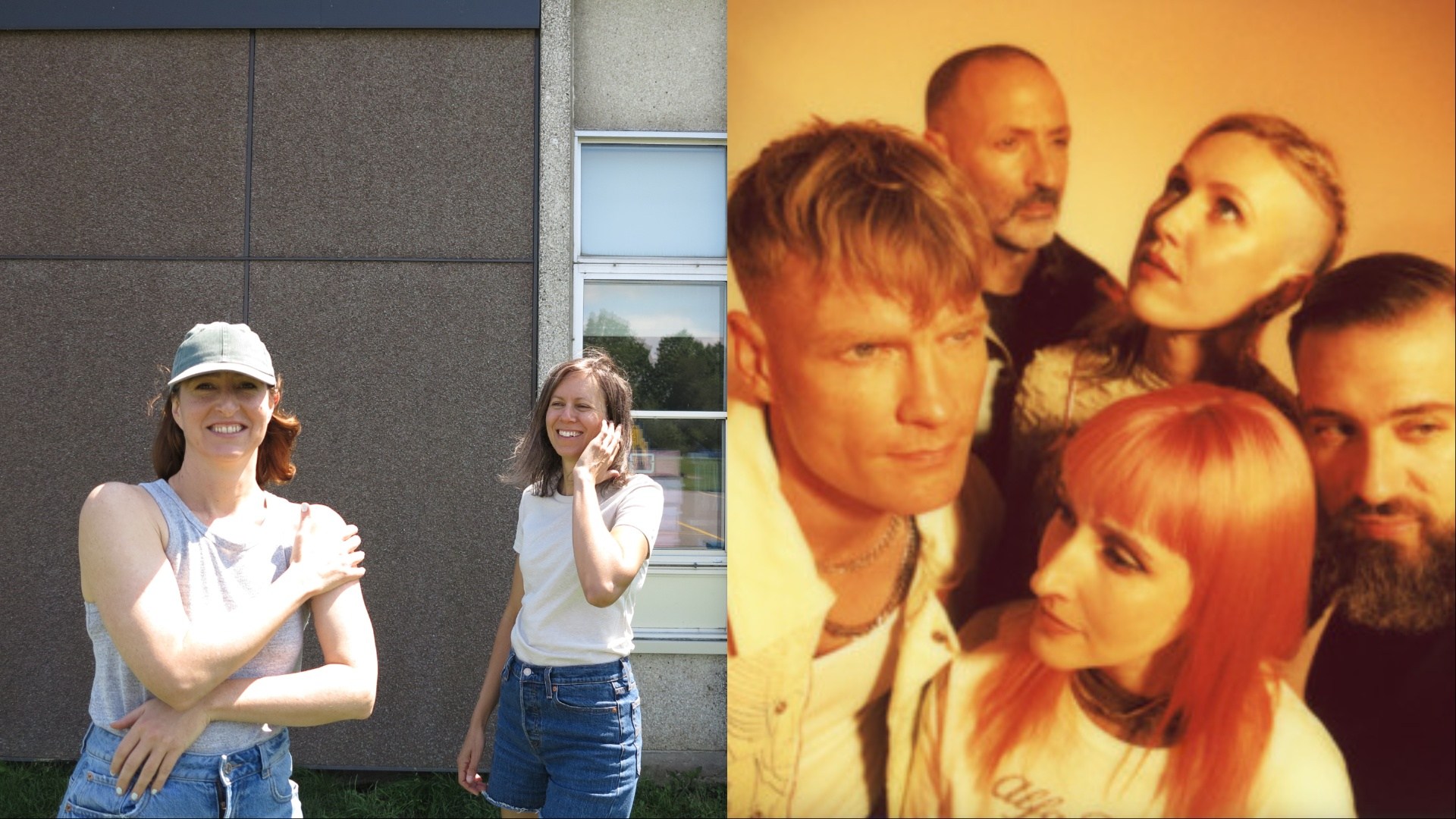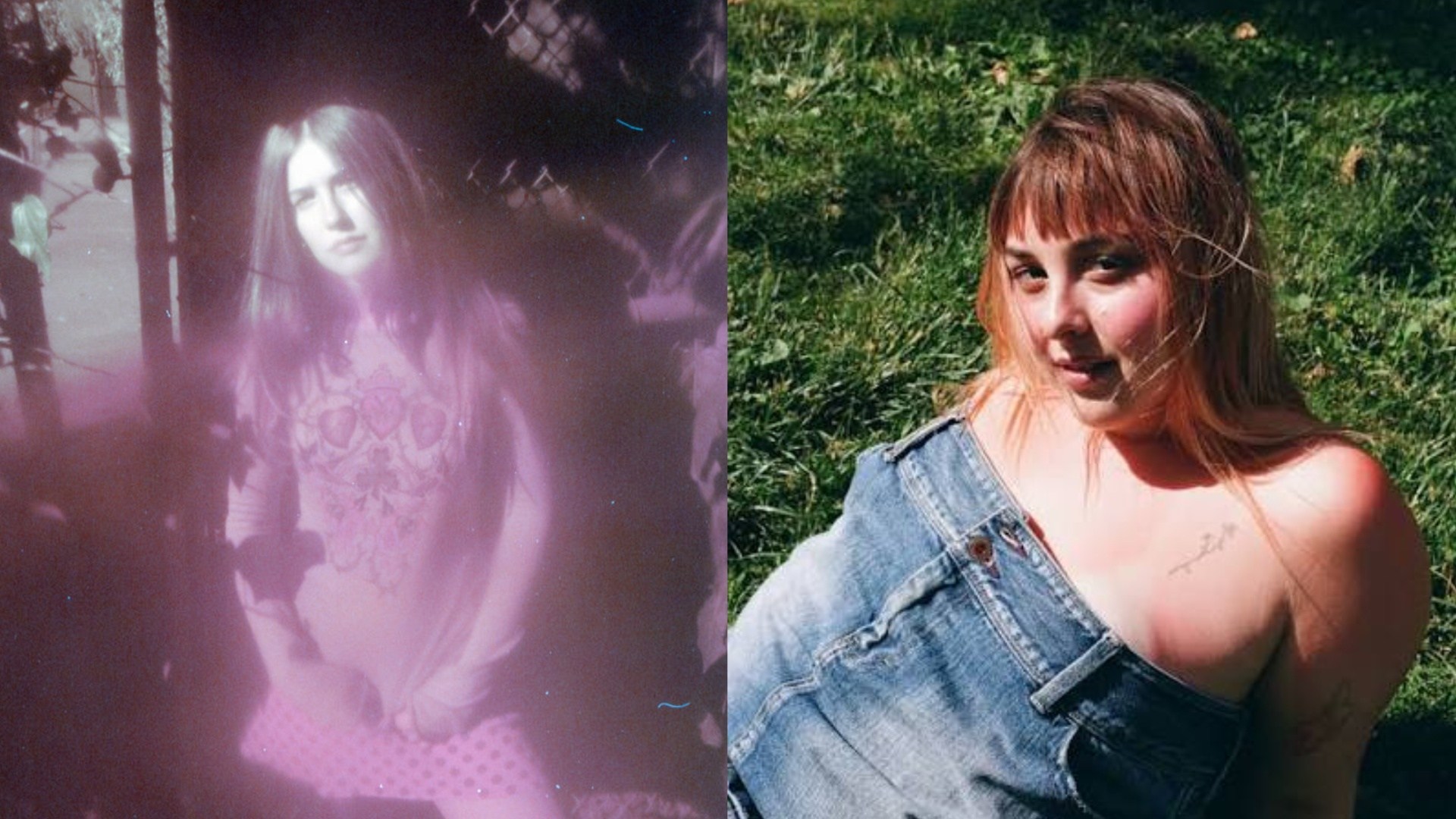
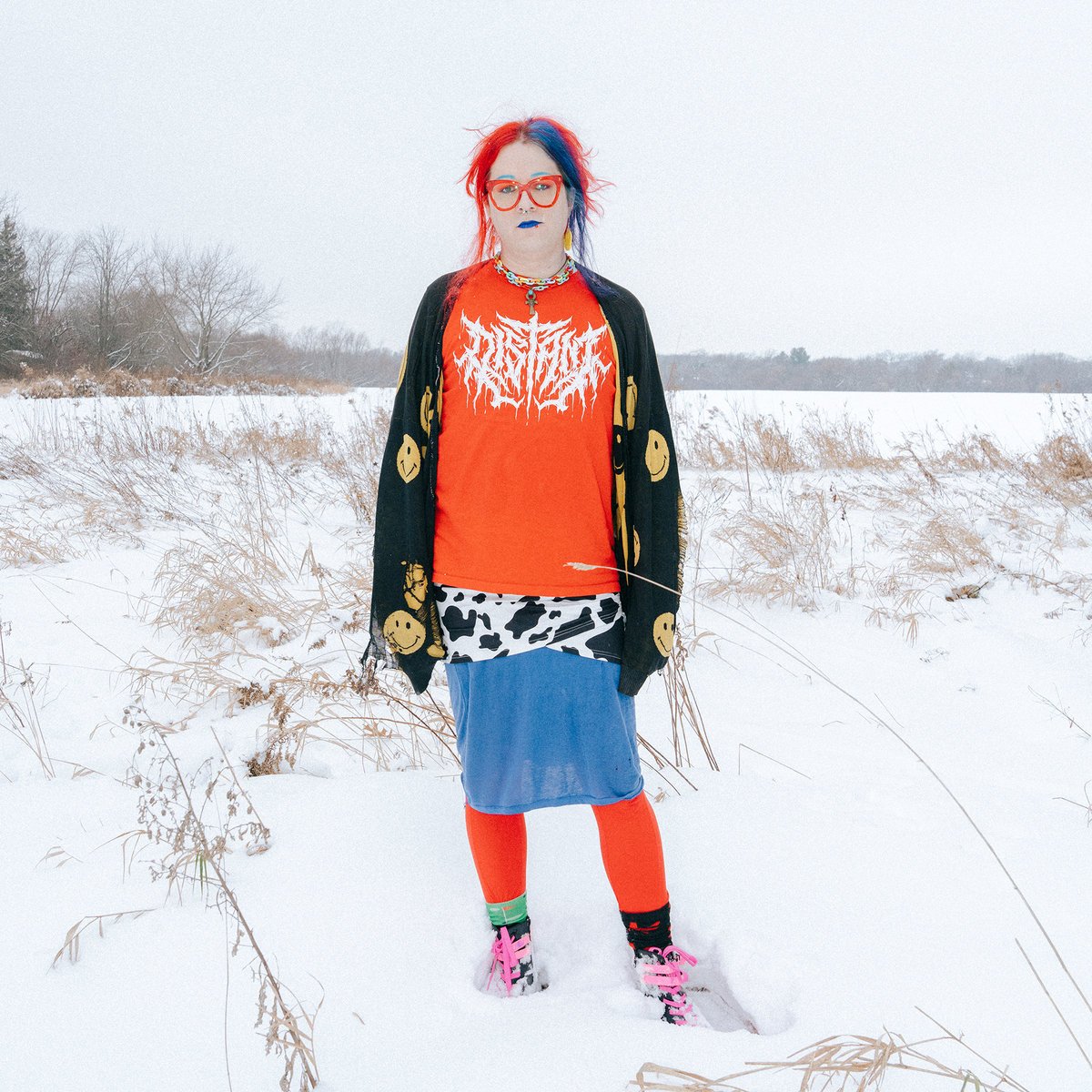
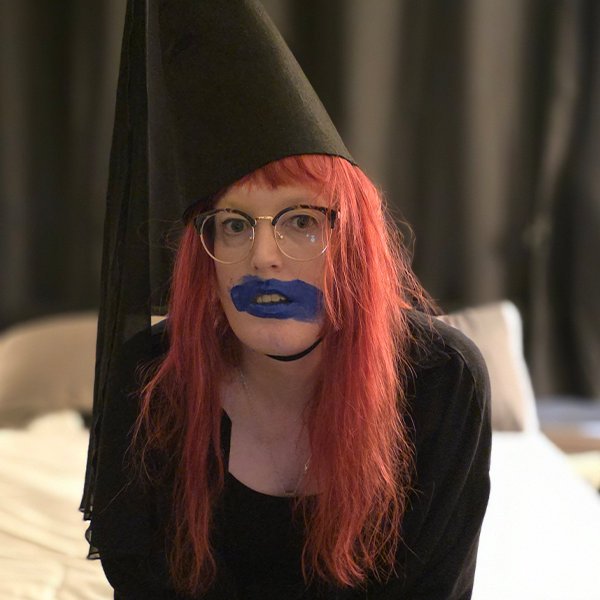
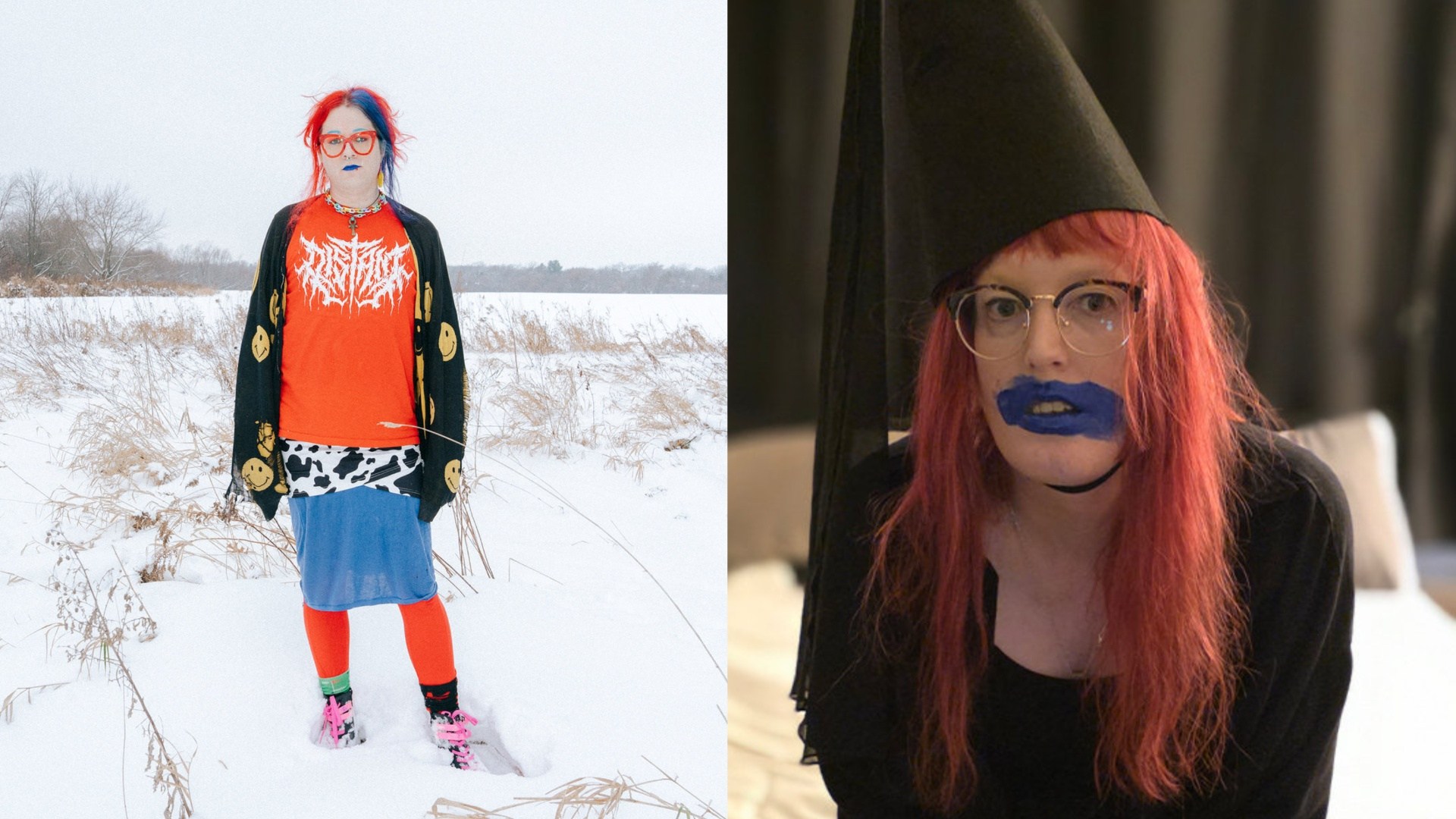
Lauren Bousfield is an electronic musician based in LA who records as Nero’s Day at Disneyland; Angel Marcloid is a composer and producer based in Chicago who records as Fire-Toolz. Earlier this month, Lauren put out the first new Nero’s release in nearly 17 years, the Grand Opening EP. To celebrate it, she and Angel got on Zoom to catch up.
— Annie Fell, Editor-in-chief, Talkhouse Music
Lauren Bousfield: I think the most appropriate thing to ask would be about music things. Do you like music? Do you still like it?
Angel Marcloid: I do still like it. My relationship has changed with it over the years. It kind of morphs and evolves. I think it's become such an emotional experience that I have to be more picky about when I listen, and even what I listen to. Because it's not anymore just tossing a song or an album on the way I used to. Now it's like, Do I feel like I want to have this experience right now? If I have things to do and it's going to throw me off too much, then I'll just choose to not listen to music.
Lauren: It sounds like you're a really active listener then.
Angel: I am an active listener. I appreciate music as background padding and accompaniment, but I do have very specific memories of trying to do whatever I was doing but the music was so powerful that I’d get distracted by it. Like stuff that makes me feel emotional — if there's a really powerful song on in the background, especially one I have a history [with], I might start to cry in the middle of a sentence.
Lauren: I'll do that with Arvo Pärt and certain Tori Amos songs… Do you think you do more active listening now than you used to?
Angel: I think that when I listen now, it's even more active than it used to be. But I listen intently less often than I used to. And one thing is just work, because I'm working with music all day, and I do like to continue to hear interesting things. But a lot of times when I'm not working, what I want to listen to is not some beautiful emotional journey. It's hard to just casually enjoy things that have a really big emotional impact anymore. I think it has to do with just changing over time; personality [and] sensitivities change, your lifestyle changes. It's almost like I love and appreciate and respect music a hundred times more than I used to, and I think that might be why I treat it as more sacred than I used to. And there's some music where I will actively decide, I can't do that right now. It's something I really want to hear, but it's like, I have shit to do today.
Lauren: Yeah, I did that with a few albums recently where I was like, I can't listen to it in the car. I need to lay on the couch and give it the time and respect I think it deserves… I work with music, too, doing production music, and I initially thought that would make me a bit cynical or jaded to music in general, or just oversaturated. But it's such a different experience than music that I like. Listening to metal isn't in any way related to the the music that I make — although I do think there are elements — or the music that I make for work. Which, production music is music, but it serves a different function…
I feel like we've had a conversation before about good and bad music, and how I really like listening to bad music, [music] that is unloved and kind of a failure.
Angel: It can be fascinating. I really like listening to stuff that is so bad to me that it kind of turns my stomach or gives me so much secondhand embarrassment that I have to turn it off for a second and breathe. It's so interesting to me why something like that would happen. Watching the catatonicyouths Instagram and stuff like that, it's like, Why do I feel pissed or like I wanna punch this musician in the face? All they're doing is dancing around and singing and wearing their hair the way they like it…
Lauren: Or just having a bad set — like some people are just having a really bad day.
Angel: Oh, gosh, those are so hard to watch. But, yeah, it's fascinating. And I love to see musicians mess up, because I just love them and it's OK. It's human. I love seeing a really admired musician just totally sing the second verse on the first verse and be so unapologetic and we're all giggling.
Lauren: I can't help but empathize with it because I've had some really shitty sets. It feels validating when I see someone at a pretty high level just beef it. Also, I think people can be pretty brutal in terms of, “I went to the show and the sound wasn't perfect and the vibe was off and they messed up on this song and the playback didn't go well.” It's like, you came to see live music. This is part of the experience. I remember when Death Grips was touring and people were like, “They just threw stuff around and had a fit!” And it's like, “Yeah, that's what you paid for. Enjoy it.”
Angel: Seeing Rush, who I've seen four times, the most stand out memory is when Neil threw his stick way up in the air to catch it like he was always doing, and that fucking stick went 90 degrees in the wrong direction, like straight out. I don't understand how it happened. But being a little kid and seeing my drummer idol in my favorite band with my starry eyes was a bit of a realization like, We're all just doing our best. This is cool.
Lauren: How do you make music? [Laughs.] Is that too big [of a question]?
Angel: No, no. I think it's interesting because it has changed a lot over the years as well. I started off playing drums and guitars in bands, and I was always trying to work in multi-instrumentation, so if I was playing guitar, I was trying to bring in keyboards, too. I played drums in a band where I also sang a lot, so I had the headset going and I had a JUNO-106 keyboard to my left next to my hi-hat, and would sometimes play drums with one hand so I could play melodies on the keys. Now I feel like I have much more freedom and ability to be that multi-instrumentalist because I'm recording everything at home and not just rehearsing with a bunch of other people to the point where the studio is the first time you ever experience your own song multitracked, rather than live in your rehearsal space or live at a show. It's wonderful now. I get to assemble songs — it's not like writing a song anymore, it's like sculpting a song. And you don't really know what you're going to do until you do it and it works. When I played in bands, writing was so different, and there was no recording when we were writing. A song starts in the basement with your friends and then later — sometimes years later — you can actually listen to it because you recorded it. So my music making process is kind of a solution to that in the sense that the production and the writing and the arrangements and even the mixing a lot of times is all at the same time.
And I write things certain ways in order to work with the production methods and mixing and everything like that. So it's the same passion, the same drive, but just a completely different process. And it doesn't feel like something I practice for anymore like it used to; now it feels more like learning. Which, they're very similar, but instead of trying to refine my articulation in the way that I play a guitar, what I kind of do is buy software. [Laughs.]
Lauren: [Laughs.] I mean, a lot of production, especially with electronic music, is studio upkeep. Just routing things correctly and getting different plug-ins and updating stuff and making sure that VST3 works with this particular thing… At this point, I don't have a very mystical, spiritual approach to music making, because I've done it for so long. I don't resent that it's work; I love that it's work. I kind of have a working class approach to it as opposed to some kind of romantic idea of, like, me unlocking the mysteries of the universe. It's kind of like I'm a plumber or something.
Angel: I appreciate that. I think that it's possible to be so focused on the spiritual aspect that you get distracted from the fact that your music maybe isn't good, because it feels like you're being a vessel of God or something. But the thing is for me is I do actually have that spiritual experience, and do kind of buy into the idea that I am a vessel. At least that's what it feels like. But I'm not doing that on purpose. I'm not trying to have a spiritual experience. I'm not expecting one. I don't think about it. But while I'm doing it, sometimes I'm just like, Wow, this is really beautiful, the way this is coming together. I don't know how I thought of that. That can be emotional and spiritual and cosmic in a way. But I don't think about that, and I wouldn't even care if it wasn't that way. I'm with you in the sense that there's work involved, and I'm not upset that I'm not having this amazing experience of gratification when I'm trying to get rid of cymbal bleed in a tom mic. Which, working with acoustic drums is my least favorite thing of all time, especially ones that aren't isolated as well as they could be. So I'm not expecting that to feel like I'm being baptized. But it helps me get to a place where I can feel like that, I guess, because you have to mix your drums.
Lauren: Right. This is a tangent, but how do you feel about drum triggering in general and the change of it over time? Because I find it fascinating.
Angel: There's nothing that annoys me more than people who talk about drum triggers as if they haven't been the norm for decades.
Lauren: For decades!
Angel: I just don't get it. And I think maybe some of the pushback is from people who either are not musicians or they just don't have any experience in a studio. I understand a lot of people are coming from a place of, “That's not real. When the drummer hit that drum, what you're hearing is not what they did.” But I don't think that they understand that what they're hearing would never sound the way it does if that drummer hadn't hit that thing. It's just like a guitar pedal. It's just like an amp setting. You're triggering a different sound. I can understand the autotune BS arguments more than I can understand an anti-trigger argument. And I use the shit out of triggers when I'm mixing drums. I have to, because half the time both the kick and the snare sound like shit. They just do.
Lauren: At the Gates’s “Blinded by Fear,” the kick and the snare, they recorded it in very small sections to have every hit be the strongest one. So then you're making a composite, essentially, stitching together the best parts. Which, there's a big investment in authenticity with metal, and I think a lot of extreme music as well…
Angel: I find that authentic because it is its own thing. It's a different way of making art.
Lauren: Right.
Angel: I don't think it has less or more value than anything where they try to get everything in one take or as few takes, as few overdubs as possible. I think that knowing that stuff about music and a record is interesting, and it can even be important, but I don't think it changes the value. Our mutual friend Max makes music as Mux, and he'll put in the liner notes, “one take, no overdubs.” And he's not doing that because he is above more takes and overdubs, he's just explaining the nature of the process and what went into that particular piece of art. So if you brought me two records and one was no overdubs, no punch-ins, and the other one was stitched together like a quilt, my opinion about each of them will not hinge on that process. Unless the process makes it particularly more exciting, like if it's really insanely complicated music and they can be like, “We did all this no overdubs.” Then that would be exciting. But if they didn't do that and they stitched everything together, then that also is a cool story because it's a whole other skill, sitting down at a computer and fucking around for hours and hours, day after day after day, to try and make it sound the way you want it.
Lauren: I take a giant amount of joy from taking very, very, very, very small snippets of audio and stitching them into 11 seconds of music, and then being like, “OK, I guess that's my day! That's what I did for eight hours.” That is something that I love about the work aspect of it. You feel magical when it comes together…
Do you ever have the well of indecision halfway through a project?
Angel: No. It's a well of decision.
Lauren: [Laughs.]
Angel: It's an endless well of either decisions or stuff that I just don't have the energy or time or memory to contain. So it's like a waterfall and you take your cup and get yourself a glass of water. But, you know, 98% of that water went everywhere and you don't have it. That's how it feels when it comes to ideas. If I was 10 people, I could have 10 Fire-Toolz records done in a couple months. But I'm only one person, so I can only make one, and it sucks because I feel like I have the ideas for more. And that goes back to that thing about feeling like a vessel or something's coming through you, because the ideas never stop.
Lauren: I do get that, when you lock in in a way where you're not thinking about it. That took a long time for me to get to where I was confident in my abilities, as opposed to me trying to be technically proficient at the thing, as opposed to me just doing it and thinking about nothing. I really like thinking about nothing when I make stuff.
Angel: I feel like that's universally an experience that people are very attracted to, the state of no thought, or even no identity, because they're so in the moment. There are no individual thoughts like clouds that come in and come out; it's more just pure presence with what you're doing.
Lauren: Which is interesting because I'm not necessarily entirely interested in dance music, in terms of going to a rave and dancing for seven hours or whatever. I get that feeling from different things. But people ordinarily associate what you were describing with a giant EDM rave or whatever.
Angel: Yeah. I bet you a lot of jazz improv players probably say that a lot too.
Lauren: I mean, musicians of every stripe can say it.
Angel: They all have their own way of experiencing that. Even if you're playing something that's totally rehearsed, if it's so second nature, then you don't really have to think about that either. When it comes to lyrics, though, I have to be reading them, because if I'm performing, they go away. The lyrics disappear from my brain.
Lauren: I have been thinking about the idea of humor in music in general, and specifically with Nero's because it's kind of one of the tenets of it. I'm trying to make it feel like a dark joke, a very tragic joke.
Angel: I think that comes across. I don't think everybody's going to get that; I don't think everybody necessarily knows that it can be that nuanced. But I think that comes across.
Lauren: Thank you. It’s dry and sardonic humor. But listening to your music, it’s wet and sillier.
Angel: My music is not dominantly humorous, but I weave humor in because it feels natural to me. I'm always being funny, and at the same time, I feel like an extremely serious person. Anytime I work humor into anything, it's almost always to support something serious, I guess. So most of the most humor that you might find in my music, whether it's visuals or lyrics or even just the way something sounds, it's not ironic by any means. It's just maybe a bit of a humorous way of expressing something. Kind of in the same way a lot of really good comedians make jokes about the most serious shit ever — we're all laughing about racism and sexual assault and genocide, but we're laughing in a way that doesn't make any of those issues one ounce less serious. So I feel like in my music, if I'm going to make any joke about anything, it's going to be like that, almost self-aware, self-depreciating humor about actual trauma that is very serious…
I guess once in a while, the humor is maybe just for fun, but in those cases, it tends to be brief and like a little decoration on top of something. My music as Fire-Toolz is so void of intentionally made rules that whatever rules end up forming are ones that feel very natural. And so what comes with that is just letting humor come and go.
Lauren: To a large degree, I think that type of humor is a coping mechanism that people from the US use in order to navigate tragic shit in general. Or, I don't know if it's specifically American… But I do feel like in a lot of subcultures, like strange electronic music, experimental music, there's a lot more sense of humor. Like cyber grind is serious but funny.
Angel: Yeah. Power violence can probably also be that too.
Lauren: Breakcore. Just ridiculous music.
Angel: Nu metal — maybe not back in the day, but at least now. Pretty much everyone into nu metal now is probably more open to embracing the humor or corniness in it than they were back in the late ‘90s.
Lauren: I mean, we're of a similar age in that we experienced it the first time, so it's interesting to see some, I will say, revisionism…
Angel: There's a lot of revisionism.
Lauren: I think it's not born out of anything other than just being young and not knowing what it was like back then, which was not cool and not fun. For me at least! Any type of difference was very punished…
Angel: I think that revisionism comes up because people are trying to do their best to classify things so they can understand them, but when they don't have the right frames of reference, they don't know what they're talking about. I don't mean for that to sound arrogant — I don't shame people for not knowing something. But people will hear Fire-Toolz and they'll be like, “I like all the vaporwave stuff in your music.” And it's like, I like vaporwave — I literally make it under another moniker. I see what you're saying, but I am inspired by the stuff that inspired vaporwave. The synths I use and the jazz chords I use and all that, that's coming from being a little kid and listening to the Weather Channel and background music and movies and TV shows. I'm with the vaporwave fans in that I'm nostalgic for the same shit, but, for me, it's about all the shit that vaporwave is sampling and emulating and copying and watering down.
Lauren: This leads me to a very important question: I would like to understand more about the Rippingtons.
Angel: I was literally just thinking about them as I was talking about vaporwave. They just stuck out to me as one of the best examples of a sound that I really love. There's a lot of music out there where there's artists who kind of kicked it off, but they aren't the ones that got big, and someone else came along and pioneered it. I'm not saying Rippingtons are pioneers, necessarily — they're not even that original in the grand scheme, because what smooth jazz is really all that original? But in the sea of that type of music of mid-‘80s to mid-‘90s smooth jazz fusion, they're way up there as one of the refs, kind of the way that Metallica is for metal. When it comes to ‘80s, ‘90s smooth jazz fusion that isn't all that progressive, Rippingtons are absolutely perfect. I take them very seriously. I have a Rippingtons tattoo right here—
Lauren: Oh, it's a cat!
Angel: It’s the cat on the snowboard. When I started to discover vaporwave in the late 2000s, it was reminding me of all that music that I used to hear when I was younger. Reconnecting with all of that stuff, you come across Rippingtons constantly. And I think I actually remembered specific songs of theirs that would pop up on Weather Channel forecasts and other things in which their music was licensed.
Lauren: Where should I start with the Rippingtons?
Angel: The era that I love is either ‘83, ‘84 or ‘85, where Russ Freeman put out a record under his name called Nocturnal Playground. Essentially it was the Rippingtons — he just ended up adopting that name later and having a rotating cast of members. So from that first Russ Freeman album up to… I would say, Brave New World, which I think is ‘95, is probably the first one that I didn't necessarily love. Which sucks because it very much has that vibe of the internet just becoming a thing. But the music wasn't as cool then, I think, because it just got further away from the ‘80s, and I just love the way the ‘80s sound. The one I have a tattoo for is Curves Ahead and that was ‘91. I feel like that's a really good place to start. Or Kilimanjaro was ‘88, and that one is equally as good.
Lauren: Very good cover for Kilimanjaro.
Angel: Yeah, it's kind of silly that he doesn't have a name. They just call him the Jazz Cat. I'm pretty sure he's been on the cover of every every Rippingtons album. I would love to get more Jazz Cat tattoos.