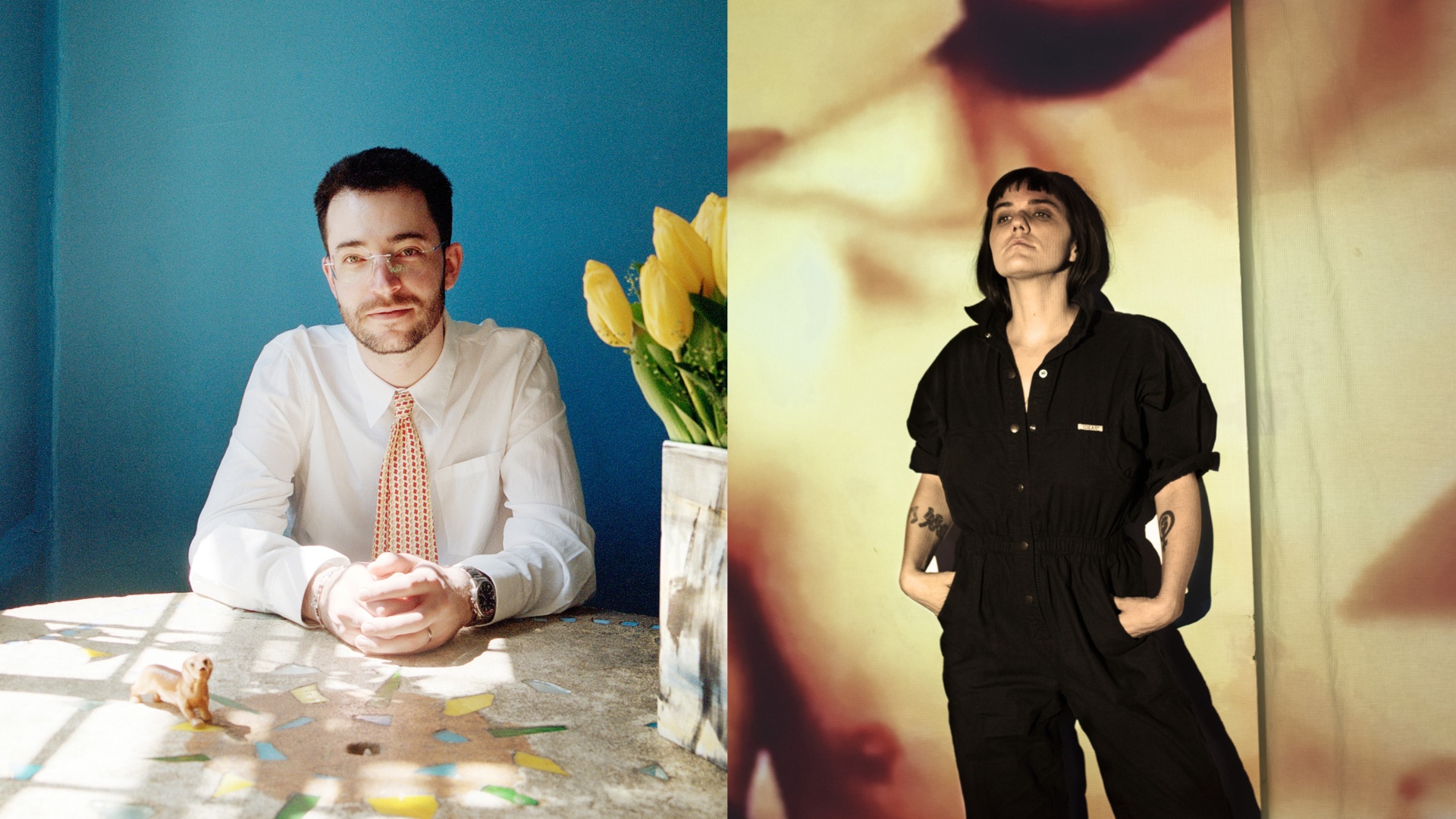
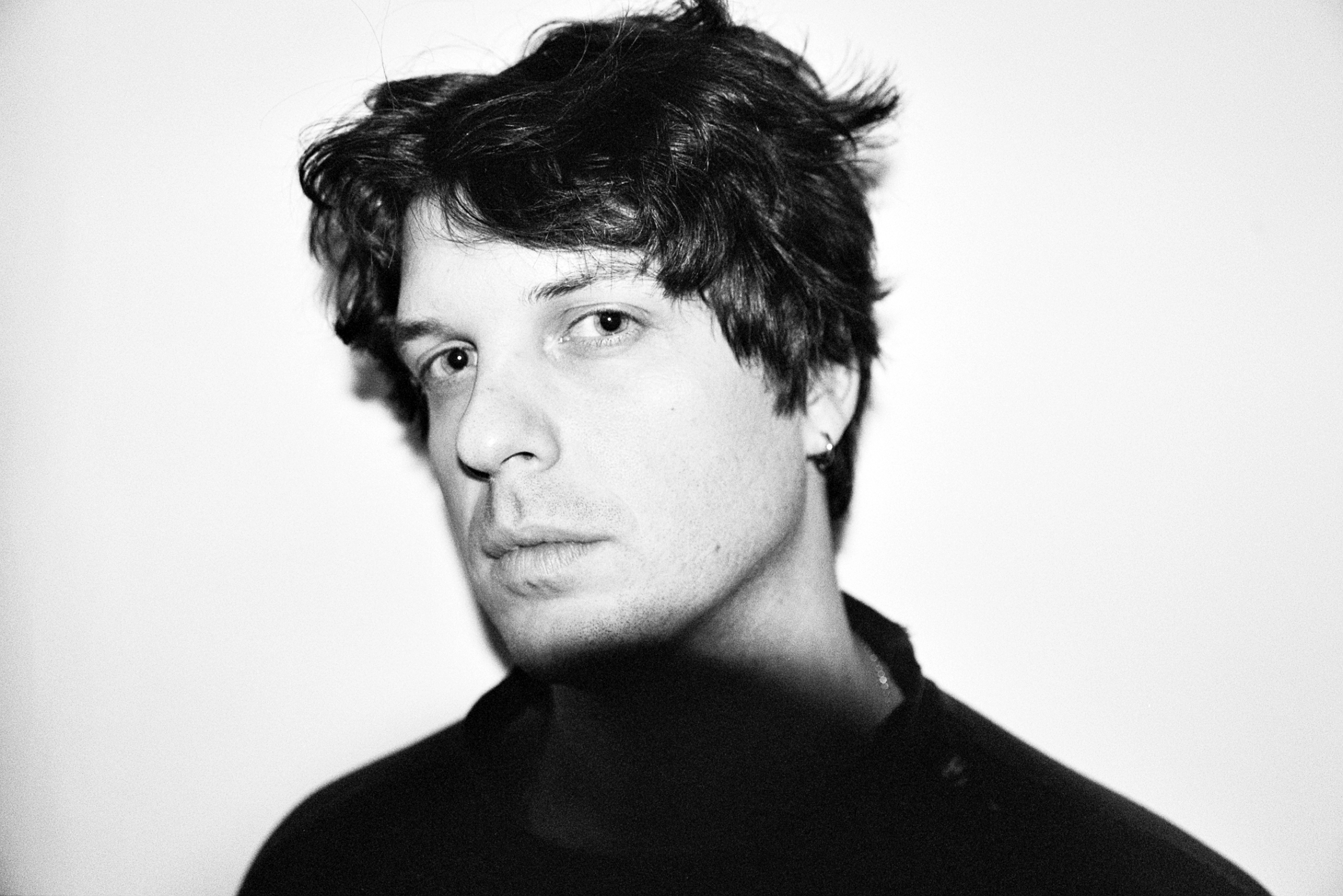
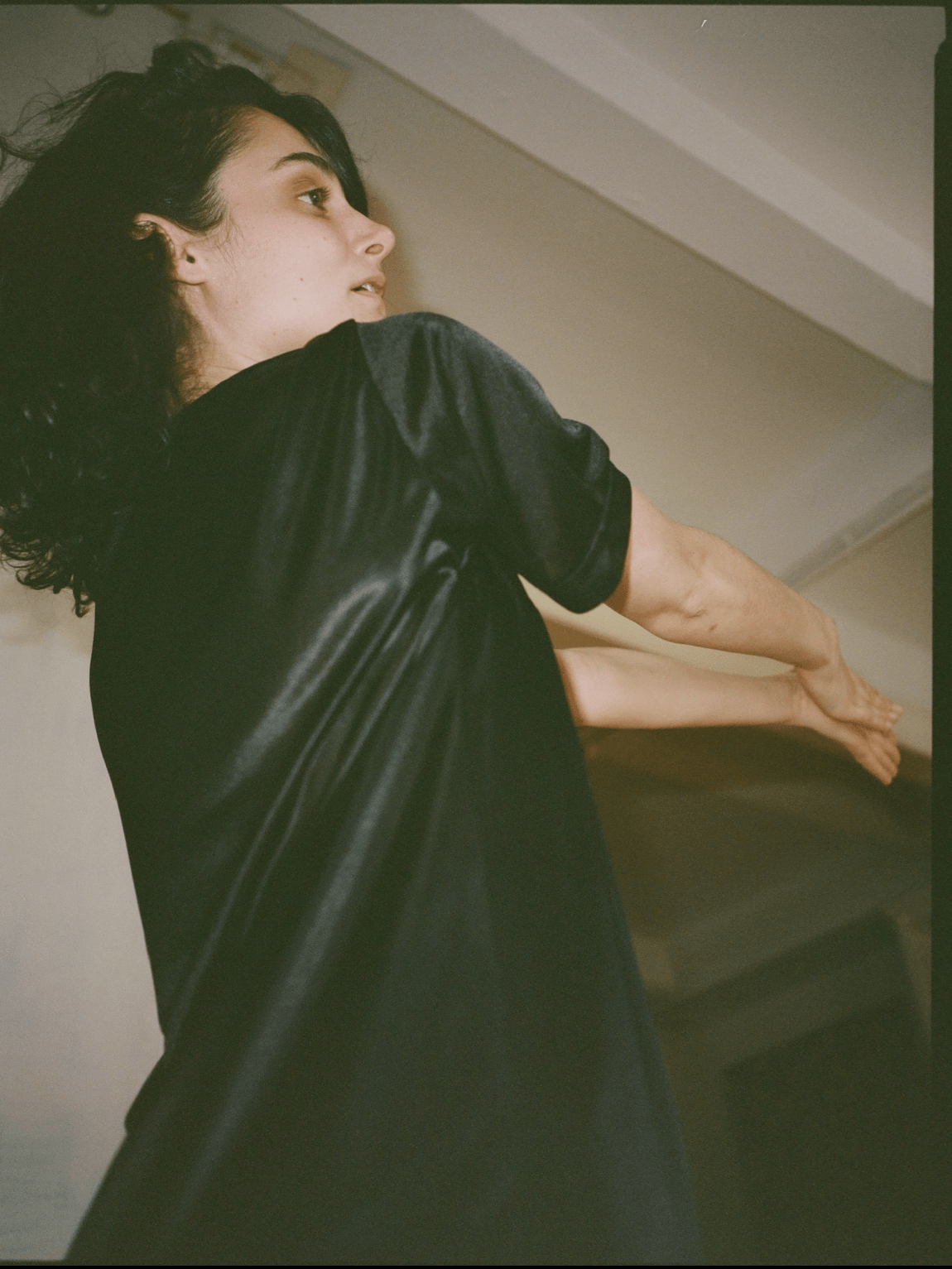
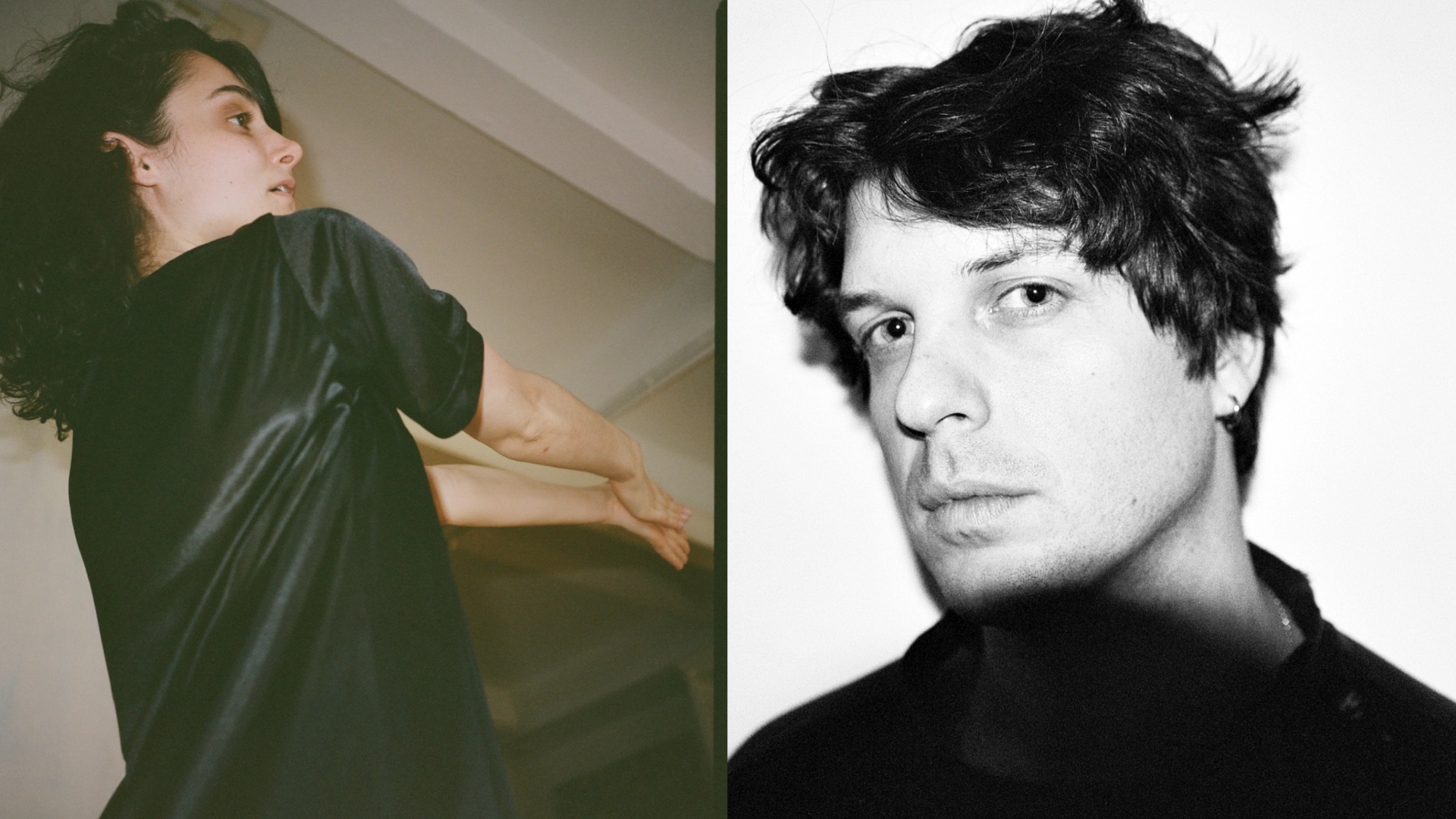
Anna Thérèse Witenberg is a dancer and choreographer based in New York; Jack Whitescarver is a singer-songwriter who fronts the also New York-based band Amiture Music. Amiture Music’s self-titled record was released earlier this spring via Dots Per Inch, and to celebrate it, the two friends (and frequent collaborators) got together to catch up about their creative upbringings, electronic music, and more.
— Annie Fell, Editor-in-chief, Talkhouse Music
Anna Thérèse Witenberg: As I was walking over here, I was thinking, what is something that I have never spoken to you about? And I realized that I don't know that much about your mom's relationship to your music or your musical development growing up.
Jack Whitescarver: She was very adamant about making sure I had some consistent practice, something that I was doing musically as a kid. She was really aggressive about making sure I had piano lessons starting really young. But then I was so antagonistic about all that stuff that we kept changing instruments. At some point, I was playing the harp.
Anna: Your parents were very permissive about you wanting to try new instruments.
Jack: Yeah, and they were really good at letting me just play in the house as much as I wanted. They would never tell me to be quiet. I think they knew that even though I didn't really like taking the lessons, I was always playing the instruments and singing. It's harder for me to characterize or understand what her relationship is to my music as an adult, because when I was really getting into that, I actually felt like I wanted to hide it from her. I didn't want either of my parents to be very present, because I felt like part of me figuring out how to be a musician was very much in concert with me figuring out how to be an adult. You have to meet people and you have to have relationships that come from being a musician who plays shows. And I feel like when you're entering that world, you want to be seen as a competent, cool, mature person. And if your parents are around all the time, that feels like it compromises that identity. I feel like it was only after she died that I really got serious about music.
Anna: Wow. Do you think she knew that might happen?
Jack: Yeah, definitely.
Anna: Did you talk about that when she was sick?
Jack: No, we never talked about it. Sometimes we talked about [if] I was maybe playing a show — I had gone on tour already with Grace [Ives] and had done a bunch of little things like that. But nothing by Amiture had come out. I feel like once she died, I felt very free, in a weird way, to not get so hung up on little insecurities that would hold me back.
I feel like when your mom comes to spend time with you when you're working on dance, there's this sense that she is seeing you as an adult that I can imagine would probably have been the case with [my own mom]. I feel like she's really aware that you're her daughter, and the fact that she's your mom is what's impacted and shaped you as a person, and those aspects are getting reflected back to her in an interesting way. And I feel like that's part of why she loves watching your dance so much.
Anna: I think she's very surprised by the life I've chosen, and it feels so far from her that it's fascinating and she wants to try to understand that choice. So when she's paying that close attention, it's because she's also trying to understand who I am. Also, she's very sensitive to the world in a way that I've always felt intuitively is very similar between us. She's not an artist. She has this really rich but extremely private emotional life, and I feel like she's really drawn to dance — and actually always has been very attentive to the details of dancing since I was younger, because I think she understands it's this vessel or architecture for her to experience feeling.
Jack: Do you feel like that has to do with having been a model? Or is it something that's deeper than that?
Anna: I think it's deeper than that. I think she understands what it means to be perceived and to perform. But I think she's not as permissive of letting herself experience things, so she's really drawn to the space that I create where the very thing we're dealing with is feeling. I think we share a reverence for beauty, obviously, and an understanding for creating that. I mean, she loves ballet, and when I was growing up she was very interested in the world of ballet that I was in.
Jack: What is your relationship to music?
Anna: Well, now it's about my relationship to you. [Laughs.] My relationship to music has now become about our relationship, because you are the musical dramaturgical figure of my work. But I will say… I think it would be cool in the next piece to more directly merge this experience of being out and dancing in the club with what I'm doing, because it's actually a continuous experience inside of me. So I'm really trying to understand, what is the effect that a really powerful techno set has? And I can't stop thinking about what you said, about how it's not synthetic — electronic music is about electricity and the shape and bending of airwaves. So it is, in fact, not superficial, but rather it’s dealing with the same material of life that maybe a violin is. But in my head, I've been always more drawn to live acoustic music because it seems closer to the pulse of raw dancing. But then that's not my experience at the club. So my current question and interest in music is, what is the power of electronic music?
Jack: That is a good question.
Anna: I mean, you literally use synths. You use electronic processing in your music.
Jack: And also, there's the form of electronic music that comes from synthesizers and manipulating sound waves with that kind of technology. But then there's also rock music being an electrification of acoustic music. An electric guitar takes that basic model [of an acoustic guitar] and then changes it to conform to the production of electronic signal, which is technically very close to what's going on with an analog synthesizer, where there's a machine that's making a tone or making a piece of electronic signal. But with the electric guitar, it's not a machine that's making the signal, it's the strings being played by a hand, and then there's these little things called pickups that respond to the strings. And then those pickups ultimately are what end up producing the signal. So it's like the moment of hybridity between acoustic instruments and synthesizers. That's why the music that I really like that uses electric guitars is usually music that sounds like a full blown diving into the guitar as an instrument that pulls you out of the natural world. Something like Glenn Branca Symphony — when you listen to that, I feel like it's impossible not to get transported to some kind of man made environment. There's something so overwhelming and so monumental and yet ambiguous.
Anna: It creates a shape or a space in your mind that's really unique. Like the mix that we were listening to last night, I could feel that moment when these, like, mechanized little evil sounds are somehow creating this new architecture in our mind. It's like an unknown space.
Jack: Yeah. I think that's part of this man made sound that… If you think about club music or techno as a synthetic sound, it's less that it doesn't have any kind of organic material connected to it, but more so that the sound can only be produced by a sort of human activation.
Anna: But that actually is the same with piano. But piano comes from natural earth materials.
Jack: Like wood and metals. But there are plenty of analog synthesizers that have metal, glass, and wood in them too… I think the effect is more unnatural seeming because you can't see it. It's all happening in this hidden metal box. But with a piano, you would see everything about how the sound is being manipulated, because when you play a piano key, you're also generating a tone, and that tone has a certain shape and sound wave.
Anna: And in a sense, what prepared piano does to the piano is sort of like what the synth does to air.
Jack: Yeah. There's a reason why all of that sort of John Cage extended technique developed at the same time as a lot of electronic music.
I feel like it makes sense that the club would be interesting to you about that. Because what's interesting to me about it is that there's this enormous landscape of music that's all being made to fit into the same kind of grid system — I mean, there's thousands of songs that just have a boom-boom-boom, right? But somehow they can all be really different and produce really different effects psychologically. But they all sort of conform to the basic architecture which is meant to be blended together. It's meant for a DJ to be able to move from one to the other, to curate an experience for a night. So I think it's really interesting how there's just an enormous quantity of music that's all built and produced to fit into that space and that way of moving through music. And the fluidity of that, and what it takes to—
Anna: To be able to also do this thing of constructing a shape in someone's body that has some sort of narrative or emotional arc. You feel when it's not there. And that's when you know it's not a good DJ.
Jack: I would say that's true for any kind of band too. I always feel like I'm not at a good show if I am really aware of how my body feels, how my legs feel like I've been standing up for so long. When you're at the club and you're dancing, you could be dancing for five hours to the same basic beat — if you go to a techno night, you're mostly just gonna be listening to a kick drum and a hi-hat for seven hours — but if you have a really good DJ, that's not gonna feel tedious. And if you go see a rock band that's capable of that as well, you're not going to feel like you're just seeing a bunch of random people playing instruments in front of you. Which is always kind of the challenge, to try to figure out how to get there, because it's not necessarily something that everyone knows.
Anna: Because you look at a rock band and you don't look at the techno being created.
Jack: That's true. But that's why I feel like there's an interesting connection between rock music and dancing that maybe isn't necessarily the same thing as DJing and techno and dancing, even though you're supposed to dance when you go see a DJ.
Anna: Do you ever get really into lyrics?
Jack: Sometimes.
Anna: I have the lyrics up on Spotify and I like studying them as I listen to a song.
Jack: I feel that.Usually the way I listen to music is that I have only a handful of songs I listen to over and over again until I get tired of them — and usually if that's happening, then I'm also responding to the lyrics a lot and thinking about them. There are definitely artists who I pay attention to their lyrics a lot, but they're usually artists who I feel like they're doing something really specific with language that warrants that kind of attention. Kim Gordon does that. Lisa Germano. A lot of hip hop. There's so much pleasure to be derived out of hearing how language is being played with. But when I'm making music, I never think about.
Anna: It's so interesting — when I listen to your music, I'm always trying to understand, “Who's the girl in the white dress?” I'm like, “I'm going to use this as a key to understanding some part of Jack’s psyche that I haven't tapped into.” Maybe I'm looking at the wrong thing.
Jack: [Laughs.] I think there is something that's being expressed unconsciously always in a situation like that. Everyone has their own vocabulary that has to do with who they are as a person. I think that's true for dance, too. There's probably a lot of movement that you take for granted as movement that you enjoy doing with your body that an audience member or spectator would be able to interpret as something that represents something.
Anna: Sure. Well, another big thing about me and movement as a choreographer is that I really struggle to count. When I start choreographing, I really lose rhythm.
Jack: Oh, really? I would never have thought that.
Anna: I mean, maybe the dancers I work with could put that differently. But once I start to get really into details, I get really lost in the minutia and I kind of lose an overall sense of… I did not grow up with any jazz, hip hop — I only studied ballet — and so I feel like there's two options for my musicality, which is staccato or legato, and I'm playing with the gradation between those two. But I don't know that I would call myself particularly musical.
Jack: I don't actually think it's that common for a lot of serious dance to be about conforming to or interacting with the grid of dance music, as a lot of contemporary club music based dance work is. Either you're stepping outside of the grid or you're moving perfectly in it or you're synchronized with it or you're syncopated to it. It's really about locking down rhythm in this way that can be really hypnotic and exploring that quality of dance. If you are dancing in this super hypnotic repeated pattern for a long time, that can maybe transcend some of the rigidity or the way in which that movement maybe isn't always as fluid as something like Martha Graham. You would never have Martha Graham doing, like, footwork to a techno beat.
Anna: And that's what I literally have no idea how to do. When I go to the club, I'm swaying. It just simply does not come to me in that way.
Jack: But I think that's different than what you definitely do have, which is a very deep sense of rhythm that you use.
Anna: I grew up dancing to piano every day, which is so special. That's actually so huge. The role of always being next to the accompaniment is sort of fascinating to me psychologically.
Jack: There's an evocation of the old world with a live accompaniment that I think is so important to your aesthetic as a dancer. There's still this tether to a very old tradition of movement and art making.
Anna: Which some of it I experienced, but also some of it is just pure Soviet. We all have our little worlds we wish we had experienced — mine is Soviet Russia. I don't know what that's about. I mean, my family wasn't in Eastern Europe that late, like into the ‘40s, ‘50s, ‘60s. But maybe it's ancestral in some way that I'm craving some part of Eastern Europe. Do you have that aesthetically? A fantasy yearning for an era, a country?
Jack: It's a good question. I feel like for me, it's so informed by these mentors I had in my life who were always these older women who had or still do have art careers that, maybe they ended up in France, maybe they ended up in New York, maybe they ended up in Pittsburgh, but they all shared this experience of making a very deliberate decision to step outside of conventional life and cultivate a very personal aesthetic relationship to the world. For me, there are certain moments in time where I really see that as being accepted or possible. I feel mostly just nostalgic for whatever dumb pre-smart phone life…
Anna: Maybe a little bit ‘80s, ‘90s, no wave…
Jack: I have such a deep appreciation for that stuff, of course. The New York no wave downtown world is what literally opened my eyes as a teenager and made me want to become an artist.
Anna: And then also the fact that one of your mentors, Barbara Ess, is linked to that.
Jack: Yes. But I will say, when I was just in France a few weeks ago, there was a Nan Goldin show that was so amazing. But one of the things that I really left feeling was: I do think that the way that she documented her life is scary. There's something really scary to me about how disordered the world can be, that she is really able to see it and be part of it and show it. And I feel like, if I have to be honest with myself, there's an innocence that I value about the world that I feel scared would be compromised if I was magically transported to no wave New York in the ‘80s.
Anna: You're just not a junkie, basically.
Jack: Right. And I don't really feel like I'm running away from something, in the way that I feel like was a very common drive for a lot of people who ended up in New York at that time. So there's a disconnection I feel from why that scene happened in the first place. But obviously, so many of those artists, I would not be doing anything I'm doing if that stuff didn't exist.
Is there anything you want to plug right now?
Anna: No, thank god. I need a fucking break. We have the Pageant show in January…. But I need to fucking have a summer. [Laughs.] I want the summer to be, like, having so much fun and drinking and doing drugs and going to the beach and taking Cunningham [technique]. That's what I want this summer.
Jack: [Laughs.] A dancer's dream.
(Photo Credit: left, Frank Lebon; right, Kayhl Cooper)