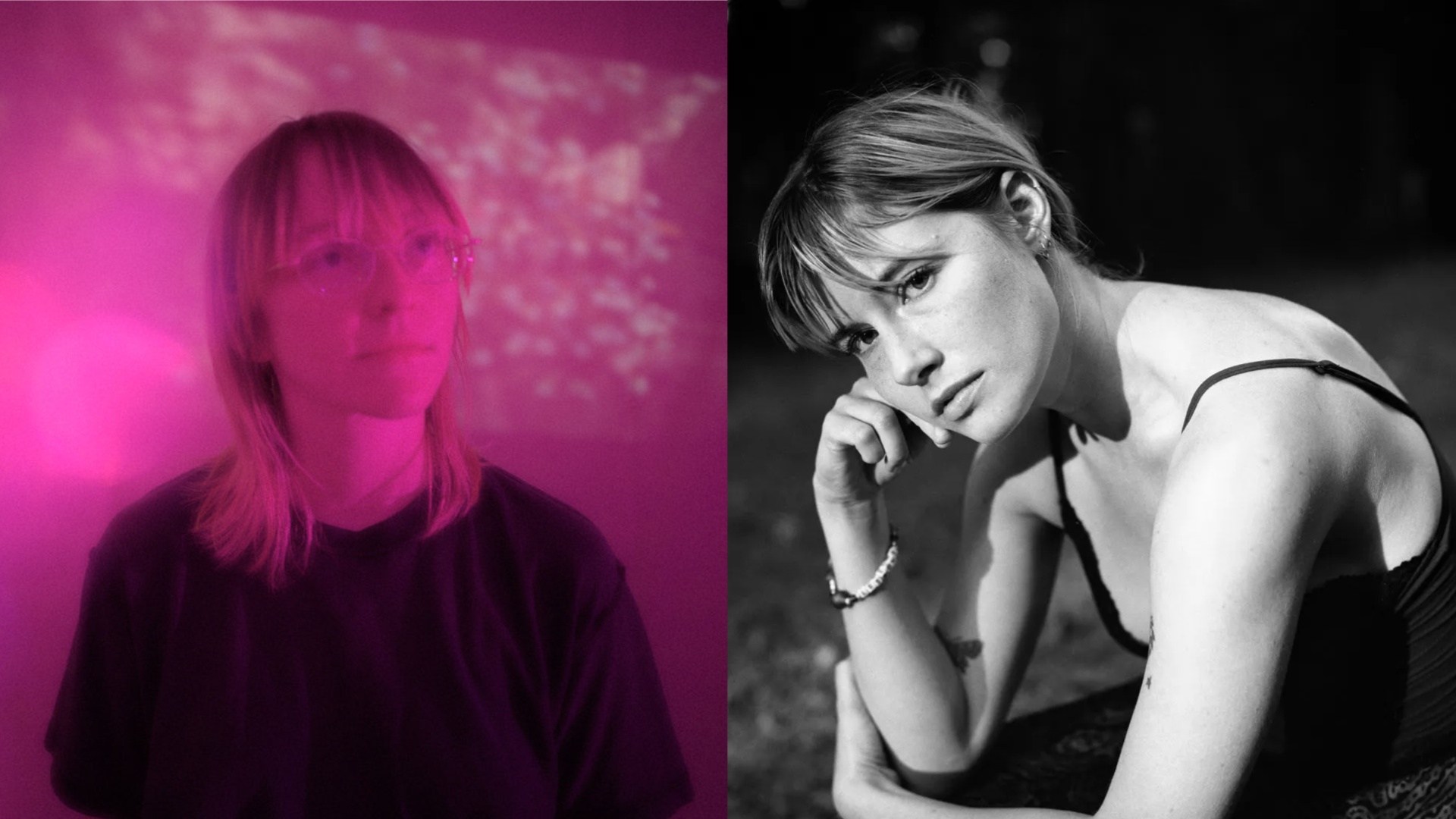
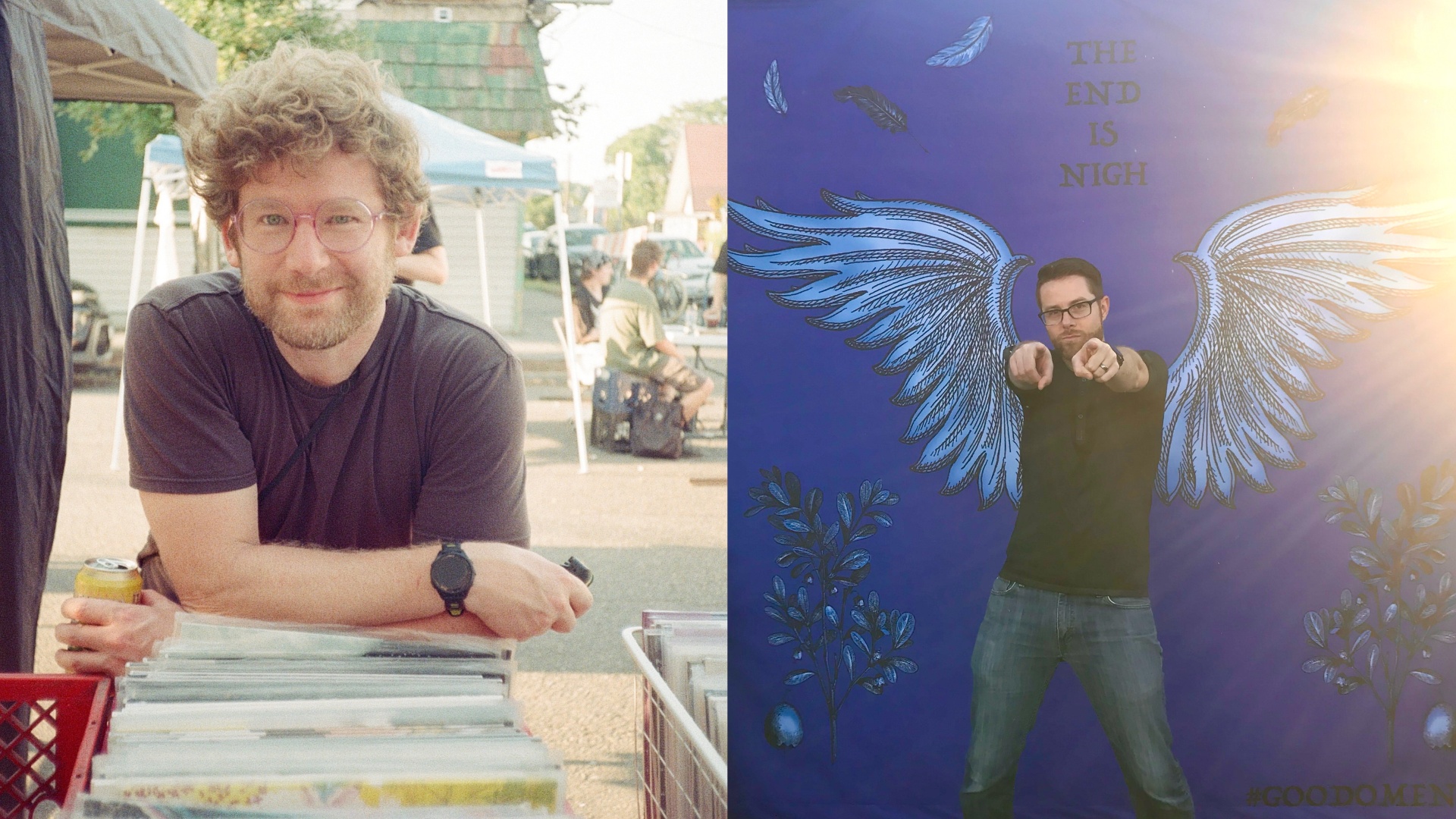
In 2006, Kevin Duquette and Seth Decoteau started Topshelf Records in Peabody, MA. Eventually, the label relocated to San Diego, CA, until 2022 when they re-relocated to Portland, OR. This year, the label is celebrating its 20th anniversary, and to mark the occasion, Kevin and Seth got on a Zoom call to reflect on the past two decades.
— Annie Fell, Editor-in-chief, Talkhouse Music
Seth Decoteau: So, Kevin, when was the last time we saw each other in person?
Kevin Duquette: I was thinking about that too, and I lament that I don't know the answer.
Seth: I feel like it's gotta be at least two years, which is just stupid. It's the longest we've ever gone… [I’ve gotta] get up there, see the building.
Kevin: For context here, we bought a building. The label's 20 years old now, we haven't seen each other in a few years, you have created human life with your loving partner… There's so many reasons to have y’all up here. It's weird having a mostly remote work staff, because [most of the team] doesn't really engage with the physical side of the label. There's not a cognitive difference to it, but it is kind of like, “No no, this is super real!”
Seth: Yeah. And those in-person distractions are totally different. It must be really crazy for you from when we were in San Diego having full staff in office, to fully remote and you were the only one in Portland, and then now getting some people back in office.
Kevin: Everyone kind of Kramers their way in here. Like, I'm sure on this call, someone will interrupt us, because people will just open the door and come in and kick it. Which is awesome, having a physical space that people want to be at. But it is also, air quote, “a place of business,” or whatever. There's a few people in the neighborhood [who come by], old heads who are more or less retired, and I'm like, “We're engaging with time in a completely different way.” It's just so carefree. I'm like, “You haven't had a real schedule that isn't just eat, sleep, whatever for who knows how many years…” So there's pros and cons to it.
Seth: I feel like I have to inform you of this thing they make called “locks.”
Kevin: [Laughs.] Mhm.
Seth: But you saying that makes me think about super early on when we had maybe two or three releases under our belt, and we were probably putting on more shows than our bands were playing between the two of us — just having more of a community than being a business partner in a way. And it feels like that's something that you've been building since moving into Portland, which is really cool. Because being a business that's moved coasts — and then from the south of one coast to the north of it — to still have that community I think speaks a lot to the 20 years and the global audience that our artists have been able to build and then connect back to us as their partner.
Kevin: Yeah, dude. It feels like a second wind, or just a whole other era. On a human scale, 20 years is a lot. It's enough of a sample size of time where you can reflect on things and notice there's different eras to a lifetime and to yourself and your modalities. Even in Portland, being in this space marks a completely new time. And when we moved to San Diego — kind of to your point, we uprooted everything and moved to that coast. Then pretty quickly after, it was my 30th birthday, and I remember wanting to have this big beach blowout but I was like, I don't know anyone here yet. It was kind of sad. Our office and the warehouse was also where I lived, in this one big room, and I remember you and Heather [Seth’s partner] must have clocked this because you invited me grocery shopping. Because I just wasn't getting started. I was depressed, like, I think I fucked up. I left everything behind. I left all my friends… I'm sure you opened the fridge every day to put in your lunch for the work day and were like, Oh, this is still completely empty. I have to help this fool. And you kind of reminded me, “Dude, life isn't going to happen at you right now. You have to engage with it.” And the simple act of going to get me groceries was a starting point.
Seth: I remember that trip. There were avocados for, like, $0.25, and you got 20 of them. Heather and I just looked at each other like, I don't know if he's going to buy anything else… But then you had guacamole for the next two weeks. That was really exciting and scary. I remember loading every single thing that we had in Boston onto trucks and being like, “Hope you make it…” Going from what felt like a really strong community to an entirely new space, I felt the same at different points. Like, The weather's nicer, but is this going to actually pan out? What are we doing? But after a few weeks, I feel like we started getting a lot more things connected. It was helpful having a few bands play their first shows in San Diego when we were there, to see more of that audience. And then people like Robbie immediately were just open arms, “Let's be friends and figure this out.”
Kevin: Shout out Robert Butler… There's a crooked number of times that we have moved the full inventory of the label, and I really sincerely with every part of my body hope we never have to again. If we do, I'm just gonna stop. I'm done.
Seth: That's 80% of why we bought a building…
Ahead of this. I was looking at some of the samplers that we did, and it got me really laughing because the transition of your art style over the years—
Kevin: Graphic design is, was, and always will be my passion. [Laughs.]
Seth: [Laughs.] And then I noticed that we used to call it the Northeast Sampler, and then we changed it to Summer Sampler, and then we had enough songs to not have to include bands that weren't on the label.
Kevin: All of that is just the result of circumstance. It's sort of a chicken or egg thing, where to start a label almost from scratch, you have to find something that's compelling to you that you want to get behind, and then that has to be mutual. And when you're just getting started, it's like, why would it be? Other than just vibes… So all the early releases are mostly just friends or friends-of-friends. I even remember it was hard to convince some of our best friends — they were like, “Why wouldn't I just self-release this?” And I'm like, “I don't have a great rebuttal to that. You're right. But we'll help…” And it's cool that people trust you in any phase of this, but certainly [that they did] 20 years ago.
Seth: I agree. And especially having friends that are really into the DIY culture, it was like, “Why would I give something that I could do myself to someone else?”
Kevin: Yeah, asking a band who otherwise makes their packaging out of the insides of cereal boxes, “No, let's make a lot of these and manufacture them and distribute them!” Which [we didn’t] even know what that means 20 years ago…
Seth: I remember the We Were Skeletons CDs that they spray painted and would get stuck in people's car CD players when it was too hot.
Kevin: [Laughs.] You don't anticipate stuff like that. Spray paint — there's a 3D volume to that, that I wasn't clocking.
Seth: You live and you learn… I think a lot of things that we've done have been trial-and-error. “It's either going to work or not, and if it doesn't, we'll pivot. And if it does, then we'll figure out how to keep doing it.”
Kevin: Yeah… In preparation for this call, I was thinking of all the people [the label] has put me in proximity to, or the relationships that wouldn't exist otherwise. It's such a unique, weird privilege to be able to travel the world with people making music and helping to put that out and reach people. It's massive. It's kind of everything.
Seth: Especially doing it for at this point 20 years, almost 300 releases. But then when you add stuff like the amount of tours you've gone on with different bands — I feel like there was a stint where you were like, “I'm going to be gone for three months with Ratboys” — it's just that whole other layer of the community and people.
Kevin: The other side of it is, now that we have this fixed place, I get hit up by people like, “Hey, we're going to be in town on this day.” Sometimes it's just you want to kick it and get coffee or something, but a lot of times it's also, “We need a place to stay. Can we stay with you at the warehouse?” And I'm like, “Yeah, of course.” The spice of life is never losing the ability to ask if you can crash on somebody's couch. That's my main takeaway from doing all this shit. I think it's the best way to keep you in touch with what's going on, who's doing what, where people are at in their life. Because when you're in somebody's space, you get a bit more of an intimate setting, more guard-down kind of moments, and you can really tap in with somebody. It doesn't really bother me that I have a lot of relationships that are, air quote, not as “deep” or whatever. But there's all these people that are in the extended universe of the label that feel accessible and like you can tap into and get real with. And that rocks.
So, what is the takeaway? Keep doing things, even if you don't like them. [Laughs.] They get fun again. Move your stuff until it gets too heavy and you set it down somewhere permanently. What else?
Seth: Don't do anything for money.
Kevin: But sometimes you have to.
Seth: Sometimes you have to ask people for it, but don't really do it for it.
Kevin: Sleep on your friend's couches.
Seth: Make sure you have friends who you can sleep on their couch. And honestly, have fun and enjoy it. That's really what started this for us. I remember an early convo was, “As soon as it stops being fun, we're out.”