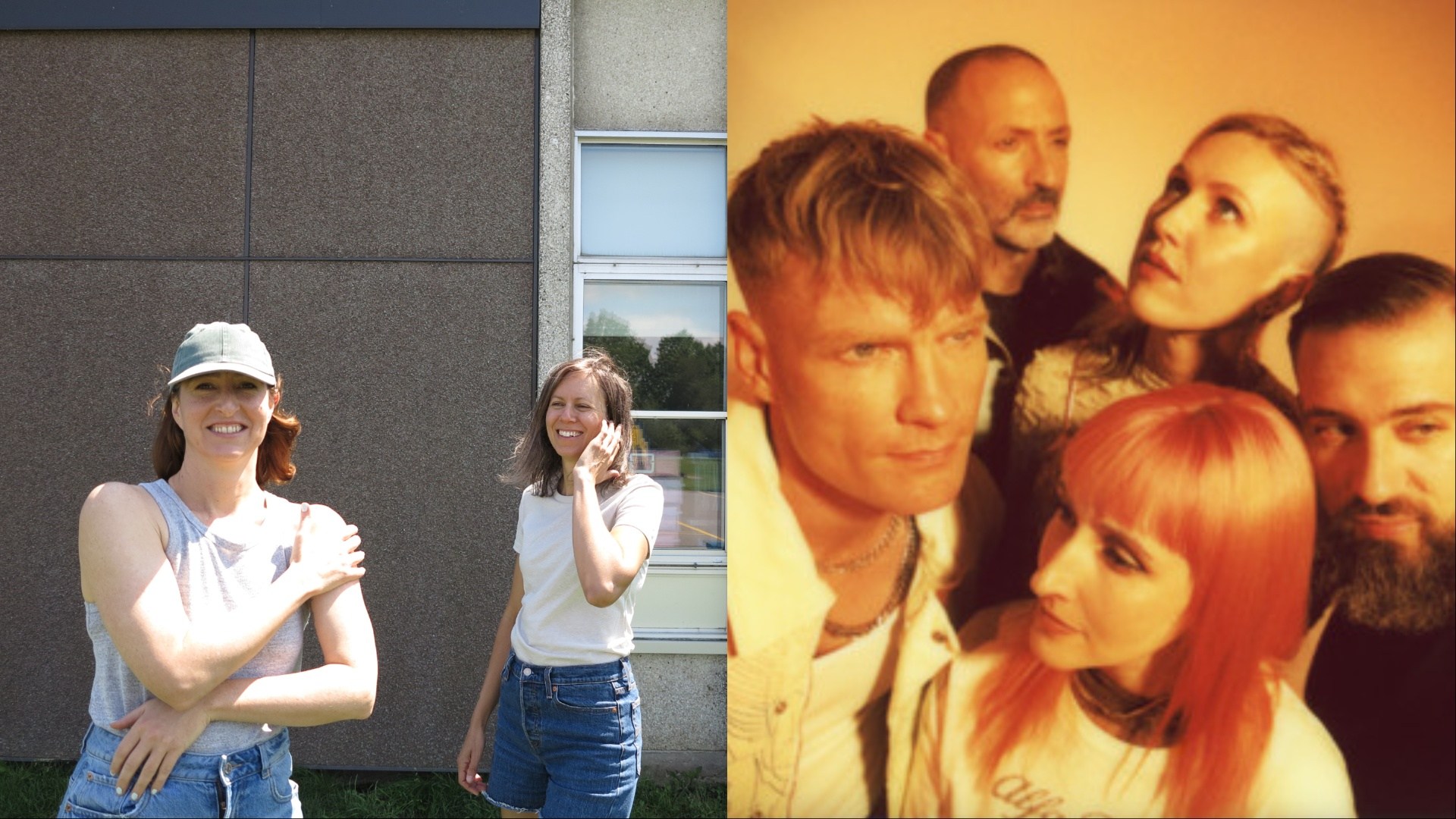
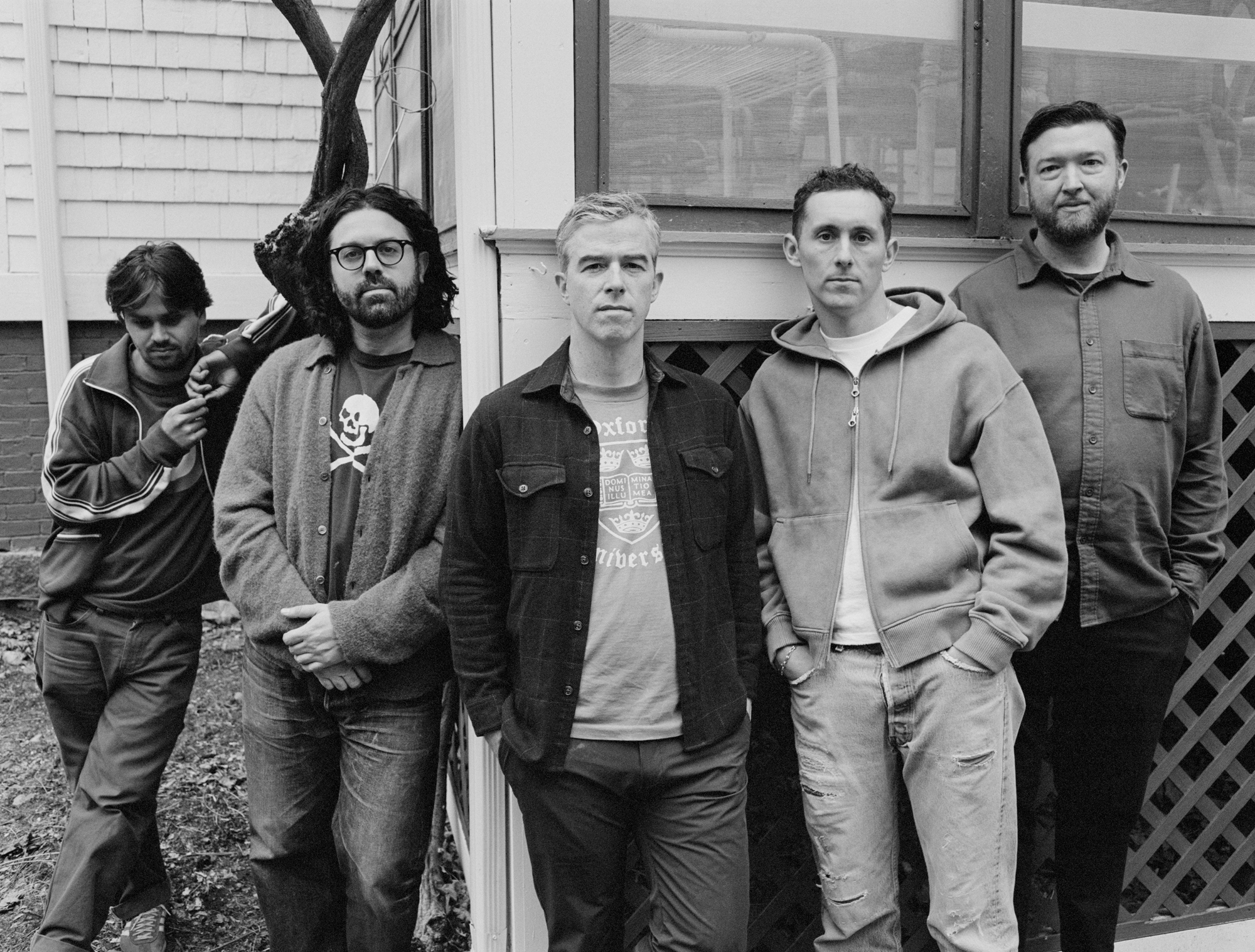
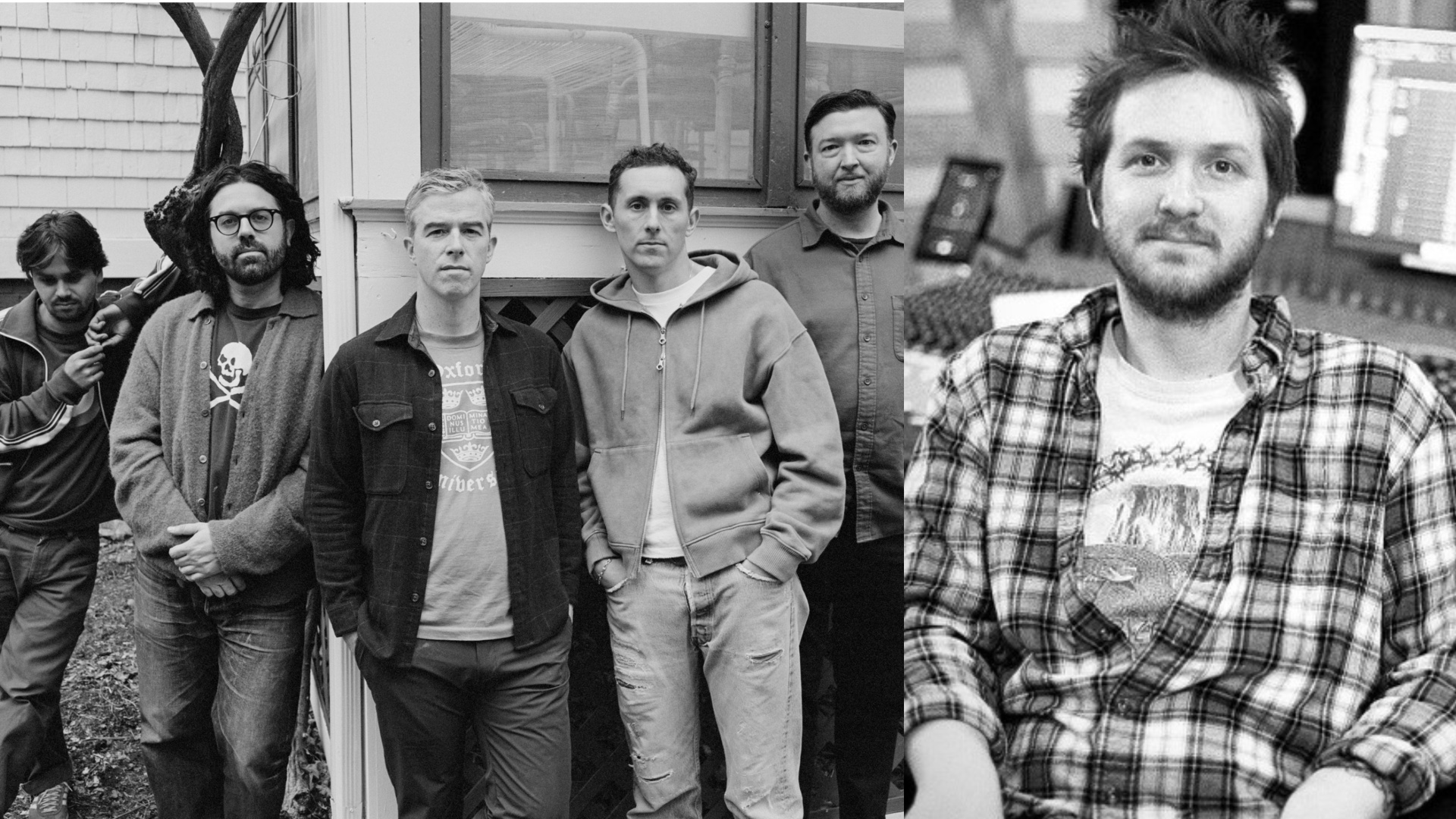
Alex Farrar is a producer, mixer, and engineer who co-owns the studio Drop of Sun in Asheville. Alex Dow and Pat Flynn are the guitarist and vocalist, respectively, for the Boston-based post-hardcore supergroup Fiddlehead. Alex produced Fiddlehead’s new EP Baby I’ll Change — out now on Run For Cover — so to celebrate the release, the three got on Zoom to chat about the making of it, and more.
— Annie Fell, Editor-in-chief, Talkhouse Music.
Alex Farrar: I looked up that Pitchfork review when you messaged me about it. It's so positive. You never know what to expect for shit like that, but if that's any sense of how the general response is, you're kicking ass.
Alex Dow: And we're doing a local PR campaign that seems to be working. We were on local radio with legendary Boston hosts. It's been cool stuff like that. It's so funny because people keep asking me, “When's the LP coming out?” Because they think it was just the beginning of an album campaign. But it's like, “No, man, it's more or less out…”
We've definitely been spreading the good word of Alex Farrar as much as we can on this campaign.
Pat Flynn: The four of us have a shirt, each has a letter on it that says “A” “L” “E” “X.” And then the fifth person, it just says “Farrar.” We're really trying to get your name out there.
Dow: Yeah, you need our promo.
Farrar: Dude, I'll take it. [Laughs.] So, how has this felt? Is there a difference to the way this collection of songs feels than previous releases? It seemed like when you came into the studio, you were very set on just trying something new, recording in a new place with a new person. Writing in the studio is sort of a new process to you guys, right?
Pat: Yeah. We've done it a couple times — I think all of our records have had at least one song that was born in the studio — but they've been interlude-y.
Dow: Or sometimes we never complete them.
Pat: I remember the strumming thing on Springtime and Blind, which is a song and it’s just a recording of a conversation my mother was having with me — that was born in the studio. Al was strumming something and I had an idea of something to play over it, and we went with it… But we've never written a full song song in the studio.
Dow: That was definitely the first time starting from practically scratch.
Farrar: Special. You guys have a democratic process that somehow works. I feel like bands that I work with, there's often the intention of, “Yeah, we're a democratic band,” but there's really one, maybe two people that kind of lead it. And that makes sense for a lot of music. But I think you guys are pretty unique in that you're literally all contributing your piece to the song, and it really does add up. You guys have a synergy that I think is really cool.
Pat: Yeah, that works pretty well most of the time for us. I think you there's a weirdness in our songs that… I hear other songs and you can almost tell that there was a singular vision one person had. We definitely don't [sound like that]. It's not that we're incoherent. But there's definitely some things littered throughout all of our songs where, maybe because I'm on the other side of the curtain, you can almost tell this was about getting someone's two cents in but still somehow trying to serve the song. I think we make some weird curveballs as a result of the collective process.
Farrar: Yeah, I think you're exactly right. I mean, as a listener anyway, I feel like that's part of the reason you guys don't fit squarely into any one genre or world. You definitely are doing your own thing. And that's probably right, it's a byproduct of having such varied taste between all of you.
Pat: I think we're able to pull that off because we don't spend that much time together, in comparison to other bands that are touring non-stop. We just got off a run, probably a slightly longer one than normal — was it seven days? I can't imagine being together for, like, six months straight. It would definitely change the dynamics that we have now. But I think it might be healthy…
Dow: I think it works in our favor. Not to dog on full-time touring bands, because it's where a lion's share of income comes from for a lot of bands. But, fuck, is it exhausting. Even for us.
Pat: I think it aids the writing process because when we hunker down to write, there's no extra baggage that tends to come with spending time on the road. It's pretty clearly about just getting some good music out there. Also, I always think because we're not on the road so much, at least as we continue to write more and more… on each record, maybe 20 to 30% is not really stage dive crazy stuff. The song “Baby I’ll Change,” I totally intended it to be a headphone experience, and not a head walking experience. It was funny though, because that's been my perception of how that song will go live, and then we played it in Seattle and there was some stage diving. And in all honesty, I myself have trouble remembering the lyrics because there's so many of them, and I was like, There's no way people will have the time to remember them. I'm the singer and I can't really remember it. But sure enough, we've only played it six times at this point, but the crowds are really receptive. It's really cool.
Dow: Yeah. But, Alex, on the collaboration part: your environment was so comforting and conducive to creative energy. We've said this publicly, so it's no surprise to people, but we were kind of at this stand still. It was condensed three days, and you saw us at kind of our worst. Which isn't that bad; it's friends not getting along or not agreeing on something. But it was interesting exposing you to that part of it, and sort of phoenix rising out of the ashes creatively. I'm curious what your perspective was. Was it like, Oh, these fucking divas?
Farrar: Not at all. I mean, yeah, there were some moments where obviously people weren't seeing eye-to-eye. But you guys know each other well enough [for me] to know, I'll just take a back seat in the conversation here and let them work it out. The ego part of it seemed very in check. You guys weren't arguing because you wanted your idea to be the thing. It was just like, “I'm not getting it. I don't see it.” And then two of you would walk into the control room and two of you would stay on the live room and yell at each other. [Laughs.]
Dow: I remember a moment — there was a disconnect on one song, then Al and Nick started jamming and that really wasn't resonating, and then there was a bit of a squabble. But again, no ego, just creative differences. And you and I were in the control room talking and we couldn't hear what was going on in the sound room, then suddenly I noticed Pat, Alex, and Hinsch, working, and we turned on the volume, and we heard Al turning that riff into something else.
Farrar: And right away it was like, “OK, cool.”
Pat: Yeah, it was cool. My new thing is I don't play instruments, I just have fun with them. But I've spent most of my creative life trying to be as good of a reader of people and a reader of the processes as much as I can, because I can't just get to a riff. I just interpret structure and feeling and mood and how it might create some type of lyrical output. Dow, you might not notice, but when we're writing, sometimes I'll just leave. That is not to just use the bathroom. That's usually like, My presence, even if it's silent, I think is going to get in the way of the rolling-ness of it. That's something I've learned from when I was 15 in my first hardcore band. I would just be like, I think I'm going to let the actual players figure this out.
But on that day — because we had a third song that we were tinkering around with and we just sort of said, “Ah, we don't really want to work with it.” So they started jamming. Nick and Hinsch and Costa love jamming Red Hot Chili Peppers songs, and I don't know if it was the time crunch because we only had three days, but I was thinking because we decided to shelve the third song that we might just be spending the day jamming a John Frusciante riff. And I normally wouldn't go there — I'm usually careful with my words — but I think I spoke in a way that was not conducive to getting something out of a jam. I just remember saying, “Guys, I feel like this isn't really going anywhere.” And I think in their minds, it wasn't a Red Hot Chili Peppers jam. But nonetheless, I wasn't really feeling the muse. If we didn't have a time crunch that day, I would have just been like, Yeah, whatever, I'll leave and just come back. But I think it was about two minutes where we were frustrated with each other. And that's a human thing, to frustrate each other. The divine thing is to work through it.
Dow, the other day you asked, “How do you define a band?” And I think a band is a family and a family is stuck with each other, so they make certain moves because they know that, “Well, I gotta live with you.” Whereas a project, you can have a dictator. In an actual healthy band, you're operating like brothers. A good, healthy family works through those things and doesn't let a five minute situation become a five hour situation.
Farrar: I feel like you guys are invested in each other's contributions to the thing as well. Pat, when you're saying, “I'm not feeling this,” it wasn't like, “You guys aren't playing something cool.” It was just like, “Well, Fiddlehead is all of us, and if I can't sink my teeth into this, then I don't know that we can make it that.” It's not like you guys were fighting over who's going to write the coolest riff. You are invested in everyone having a place that they can speak creatively.
Pat: Yeah.
Coming to this, doing a third LP for me was like, Wow. So in my mind, a fourth LP was pie in the sky. I didn't even know if I had an appetite for it. I remember going to that session, I was not really hungry to write another full length. But then leaving it, all of these ideas have been flooding my mind. I feel like we definitely turned a corner at your studio. You have a zen kind of vibe to you. There's a very casual atmosphere to not just the physical space of your studio, but your whole presence.
Dow: I was confident in it, after having a phone call with you. The guys — it’s not that they were wary of you, but they were just wary of the idea of, “why go to Asheville when we have this at home?” But there was something in my gut that was screaming, This is going to get us away from our home spaces, get us out of our comfort…
Farrar: I appreciate the hell out of that. I mean, to go back to something you said earlier, Pat, where you want to give input when it feels like it's the right time, but you might leave the room — you're responding to what needs to happen. I feel like that's something that I definitely keep in mind. It’s reading the room like, What needs to happen? Do I need to speak up and give a push in a direction? Or, no, these guys are at it, I just need to make sure this place is conducive to helping them feel creative and comfortable and all the technical stuff is taken care of. My involvement can really swing way different ends of the spectrum. Either I can be very involved with all the creative stuff, or it’s just trying to set the environment up so you guys can do your thing.
Pat: Well, that definitely happened. And I gotta tell you, I've never had an easier time doing vocals. I walked away from that recording experience really appreciating how absolutely crucial having the right headphone mix is. The first maybe 25 years of my recording time, I was subjected to the headphone mix. And I don't know what it was, but it felt very easy for me to do. It was a walk in the park.
Farrar: That's awesome. I think singing is such an insanely demanding role in any project. Your body is your voice and it's incredibly vulnerable. And I think the headphone mix, you're definitely right about that — not only is it more pleasant to listen to a headphone mix that is thoughtful and worked out, but you're going to sing better if you're stoked on how it sounds.
Pat: As I look back, most of my experiences, it's felt like an ASMR experience where the tiniest, slightest imperfection infiltrates your brain and you end up just being like, Oh, god. I've had a couple sessions I'm like, I cannot believe that this went to record. [Laughs.]
But I'm really super grateful for that weekend that we spent [at your studio]. I also really love that it's an EP and not an LP. Sometimes those things, you kind of feel short shrift as a listener. But — not that it really matters — Pitchfork reviewed the EP, and I can't remember the last time they reviewed an EP. So I feel like it's captured people's attention in a meaningful way.
Dow: You know, it was slightly circumstantial timing, availabilities and everything. So it's a happy accident.
Farrar: You got a very complete experience, I think, in that EP. If you listen to it start to finish, it doesn't feel like just a snapshot. You get a really wide experience. And I think any fan of yours that listens to that EP is going to hear new shades of you, and I think that adds to the experience too. That’s one of the things I really love about you guys: you guys seem very set on trying to grow and try new things, and you don't want to do the same thing twice. And this is obviously an example of that.
(Photo Credit: left, Rahim Fortune)