When Sam and I were teenagers, we used to sit in a 24-hour diner at two in the morning, smoking cigarettes and talking about movies.
We'd talk about screenplays we were writing, horror movie ideas, something we'd just seen, something coming out that we couldn't wait to see. A new horror movie felt like an event. We'd sit there drinking bad coffee long after we had any reasonable excuse to still be awake, convinced that somehow we were going to figure out how to make movies ourselves.
At 2 a.m., every bad idea still had a chance of becoming a great one. We wanted to be filmmakers.
Then we grew up.
There wasn't some dramatic moment where either of us quit. Nobody sat us down and told us the dream was over. Life is usually less dramatic than that. I went to college. I came home. I got married. I had kids. Sam got married and had kids. Jobs happened. Bills happened. Ten years disappeared.
The horror movies we'd talked about in that diner never got made.
Then my wife, Heather, and I opened a record store.
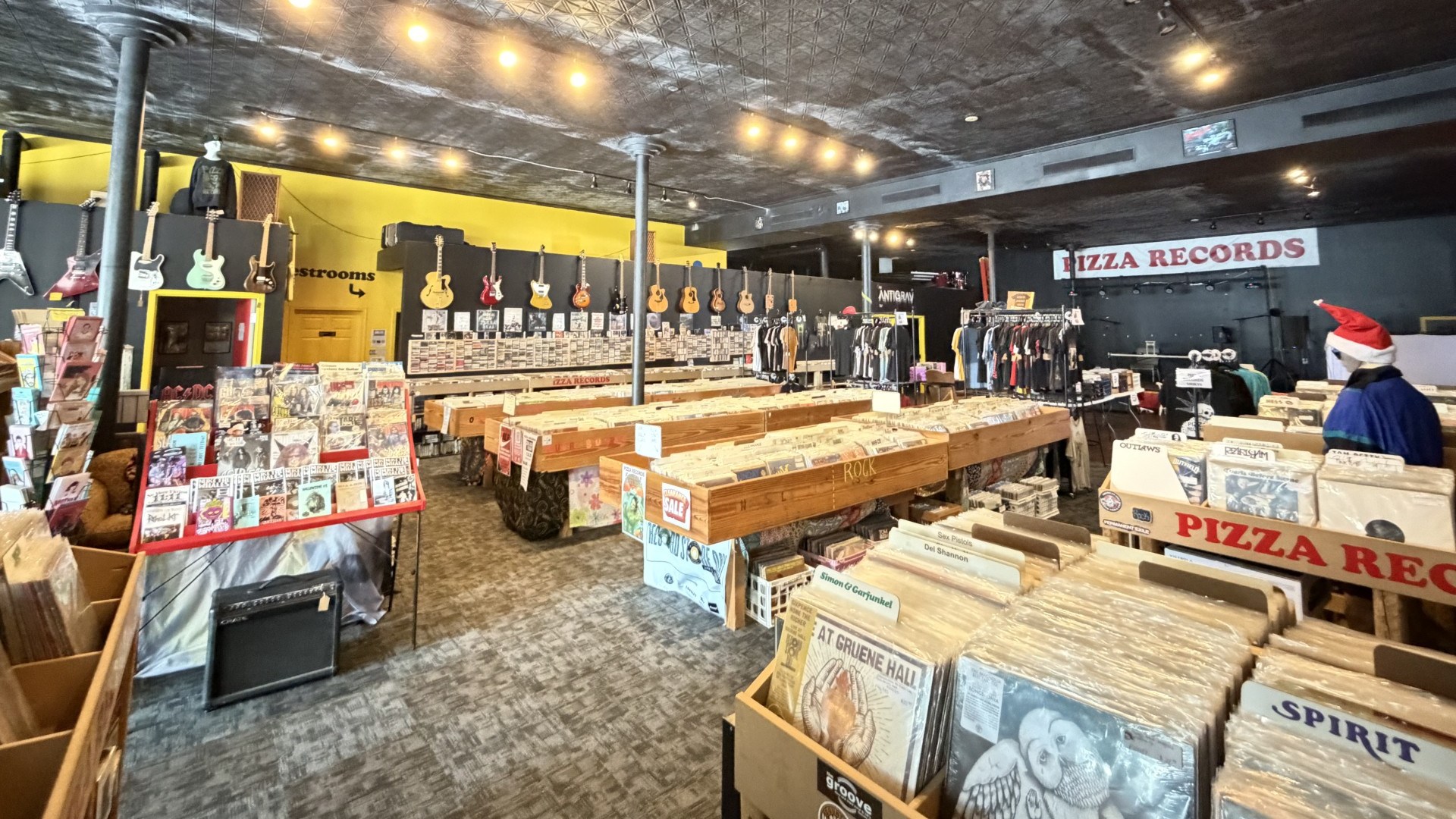
Pizza Records is in Jacksonville, Illinois, the town where I grew up. It started small and gradually became something much bigger than either of us expected. We sold records, then we sold more records. Musicians started hanging around. Collectors came in. Bands played. People stood around arguing about records and movies, recommending things nobody had asked them to recommend, and defending obscure pieces of junk like their lives depended on it.
Somewhere along the way, it stopped feeling like just a store. It became a place where creative people kept walking through the door: musicians, artists, actors, people with cameras, people who wanted to make something, even if they weren't exactly sure what that something was yet.
Eventually, we decided to make a television pilot inside the store. We called it For the Record.
It was a mockumentary comedy about a failing record store, inspired by the kind of chaos I loved in Trailer Park Boys. The obvious location was the store we already owned, so Pizza Records became a set. Suddenly there were cameras where customers normally stood. Actors were behind our counter. We were moving things around, figuring out shots and learning the enormous difference between talking about filmmaking and actually trying to make something.
There's one moment from that shoot I still think about. Spencer Newman was playing one of the employees. During a scene, he grabbed the locked front door and pulled.
The handle came off.
That wasn't in the script. Nobody had rigged it or planned the gag. Our actual front door had just broken in the middle of a take.
We kept shooting.
And somehow the scene got better.
Something clicked for me in that moment. You can write and rewrite. You can rehearse. You can plan the shot down to the last detail. Then reality walks into your movie, rips the handle off a door and gives you something better than you wrote.
That's the part I love. The moment when something goes wrong and suddenly the movie is alive. An actor reacts differently. Somebody stumbles over a line. A prop breaks. Something happens in the room that couldn't have happened on the page.
You either recognize it or you don't.
For the Record wasn't ultimately what we hoped it would be. We finished it, and I'm proud of that, but I could see the problems. Things we didn't understand. Things we should have shot differently. Things we should have recorded better. Choices I wouldn't make today.
It wasn't up to snuff.
That's probably one of the most useful things I've ever learned about making movies. You can love something and still admit it isn't good enough.
I had spent years watching movies, reading about filmmaking and thinking about how movies were put together. All of that matters. But there's only so far you can get by studying somebody else's work. Eventually you have to point a camera at something and discover all the things the books didn't tell you, or maybe all the things they did tell you that you were too stubborn to understand until you screwed them up yourself.
At some point, learning about filmmaking has to turn into making films.
Finishing a project that showed me how much I didn't know was probably more valuable than making something I could immediately brag about. Instead of killing my passion for filmmaking, For the Record brought it back hard. I started thinking about movies the way I had when Sam and I were sitting in that diner, except now I understood what making one actually involved.
Around the same time, Heather and I were getting deeper into another obsession: physical media. Records had already consumed a substantial portion of our lives. Horror movies and VHS weren't far behind.
That became Street Trash.
Street Trash gave us somewhere for the things that didn't quite belong at Pizza Records: VHS, horror, punk, cult movies, old magazines, clothes and all the strange pieces of cultural debris you accumulate when you've spent your whole life caring too much about this stuff. The name probably tells you what kind of place it is.
I've never been able to shake physical media.
I remember renting movies. I remember staring at VHS boxes for movies I wasn't remotely old enough to watch. Sometimes the box was better than the movie. Sometimes the box terrified you enough that you didn't even need to see the movie.
I remember somebody putting a record in my hands and telling me I needed to hear it. I remember somebody telling me, “If you like that, you have to see this.” Some of my favorite records and movies entered my life because another human being was annoying enough to insist that I needed them.
Pizza Records and Street Trash became rooms where people with overlapping obsessions kept bumping into each other. Some of those collisions became friendships. Some became bands. Eventually, some of them became movies.
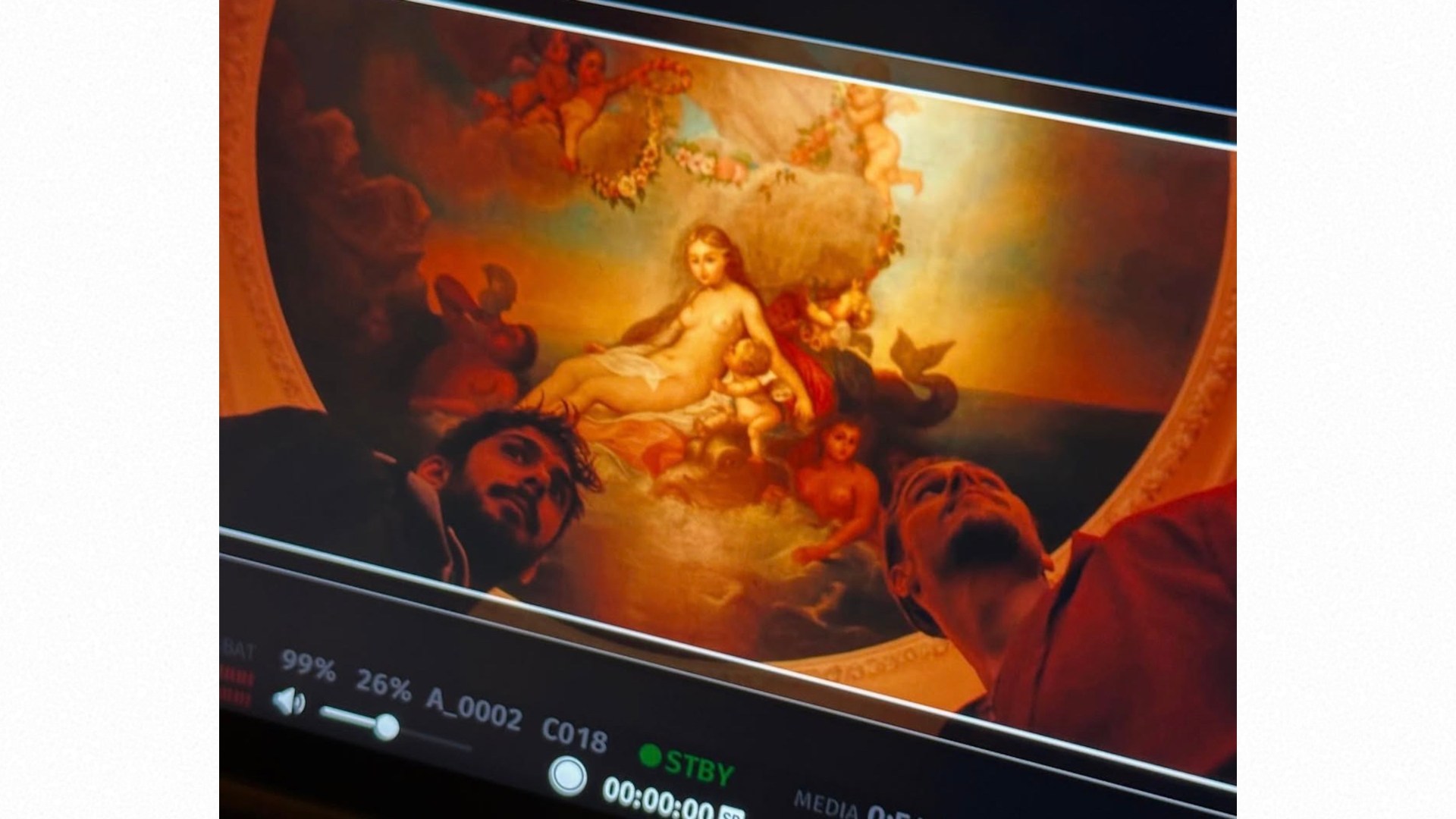
Sam and I started working seriously together again. We formed Subterranean Sound & Vision and began working on a horror movie called Holler.
This time, we wanted to push ourselves much further. For the Record had taught us that finishing something mattered. Holler was teaching us that finishing wasn't enough.
We wanted to make something good.
That sounds like the most obvious sentence in the world, until you're making a low-budget feature.
The question with Holler became, how good can we make this movie with what we have? Not the imaginary version we'd make with 10 million dollars. This movie, here, with these people.
There was a moment during production when I knew something had changed.
Rick Jensen plays Ray. Teagan Ealey plays Sydney. There's an emotional scene between them that I'm not going to spoil. I was watching it happen and looked over at Sam.
He was already looking at me.
Neither one of us said anything. We didn't need to. It was the same look.
We're making something special here.
For a few minutes, the thing we used to sit around talking about at two in the morning was happening right in front of us. We weren't kids talking about the movie we might make someday anymore.
We were making it.
And we were making it in Jacksonville.
That part means more to me now than I expected it to. When you're young and obsessed with movies, especially when you grow up somewhere that isn't Los Angeles or New York, there's an assumption that the serious version of your creative life is waiting for you somewhere else. Eventually you're supposed to leave, because somewhere else is where movies happen.
I don't believe that anymore.
A record store in Jacksonville became a place where musicians, filmmakers, collectors and assorted weirdos found each other. Those places created relationships. Those relationships became projects. Somewhere in the middle of all that, Sam and I became filmmakers again.
None of it resembles the path I imagined when I was 17. There's no clean line through it. There's college, marriage, kids, records, VHS tapes, broken door handles, mistakes, businesses, bad decisions, movies that aren't good enough and a lot of learning things later than you wish you had.
But maybe that's closer to what a creative life actually looks like.
I used to think I had abandoned filmmaking for 10 years. Now I'm not so sure. Maybe I was learning things I would eventually need, without knowing what I was learning them for.
Pizza Records didn't teach me what lens to put on a camera. It taught me how to make something exist when there wasn't much reason to believe it would. It taught me that physical spaces matter, that people still need rooms where they can find each other, and that culture doesn't just descend from somewhere above us, fully formed.
Somebody has to unlock the door, turn on the lights and give the weirdos somewhere to go.
And occasionally somebody pulls the handle off the damn thing.
When that happens, you keep rolling.
Featured image shows the interior of Pizza Records; all images courtesy Devin Smock.