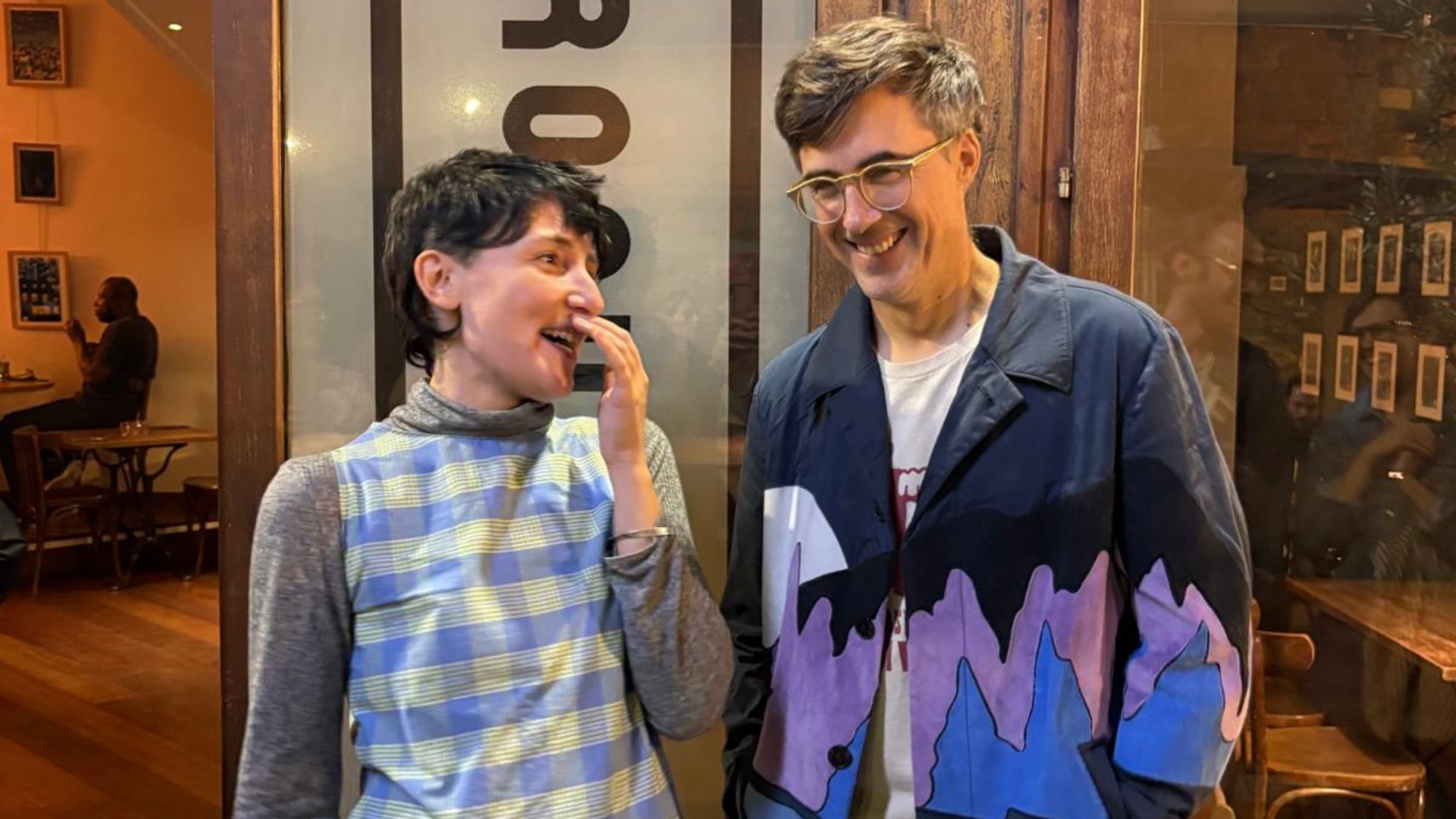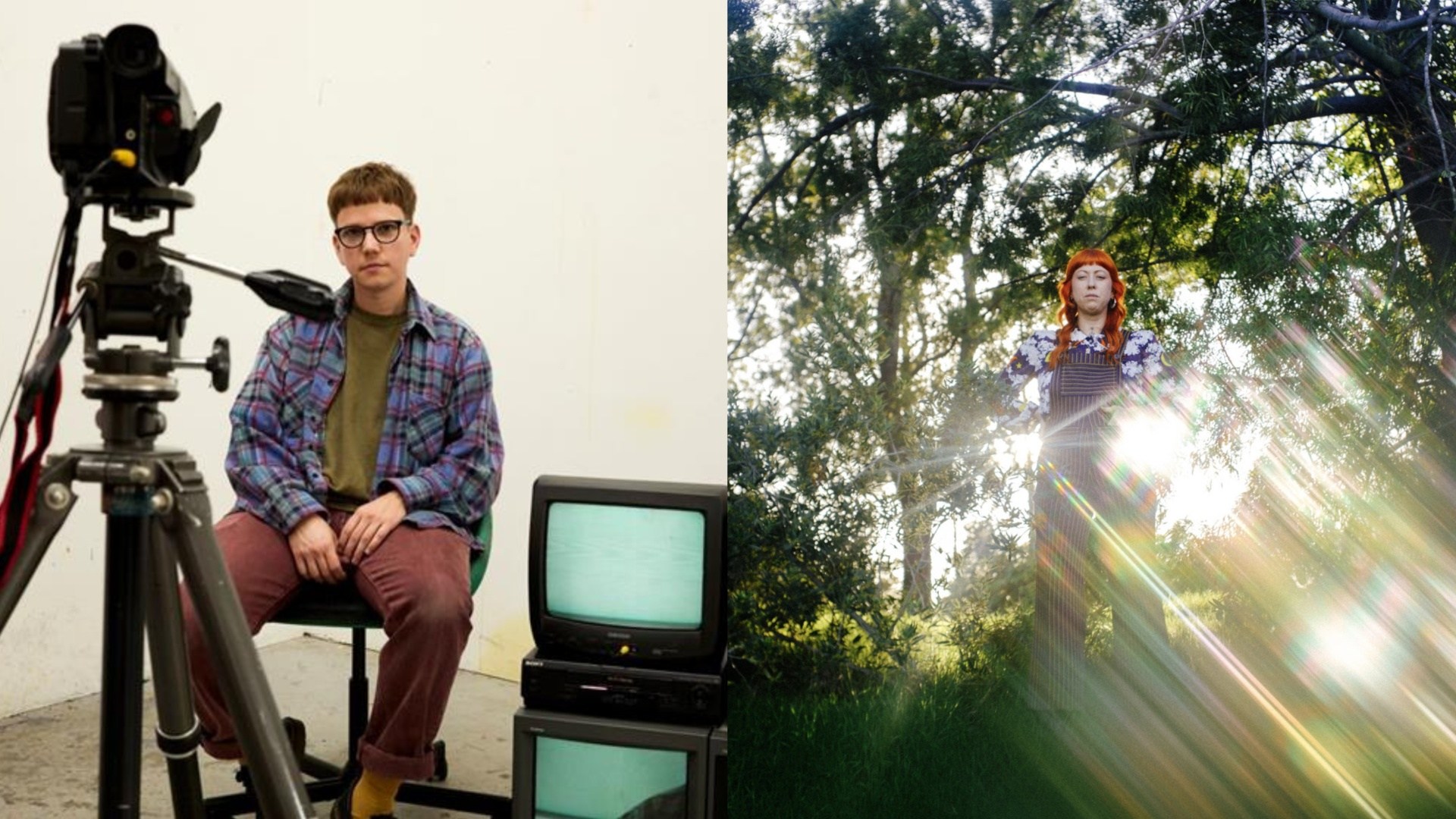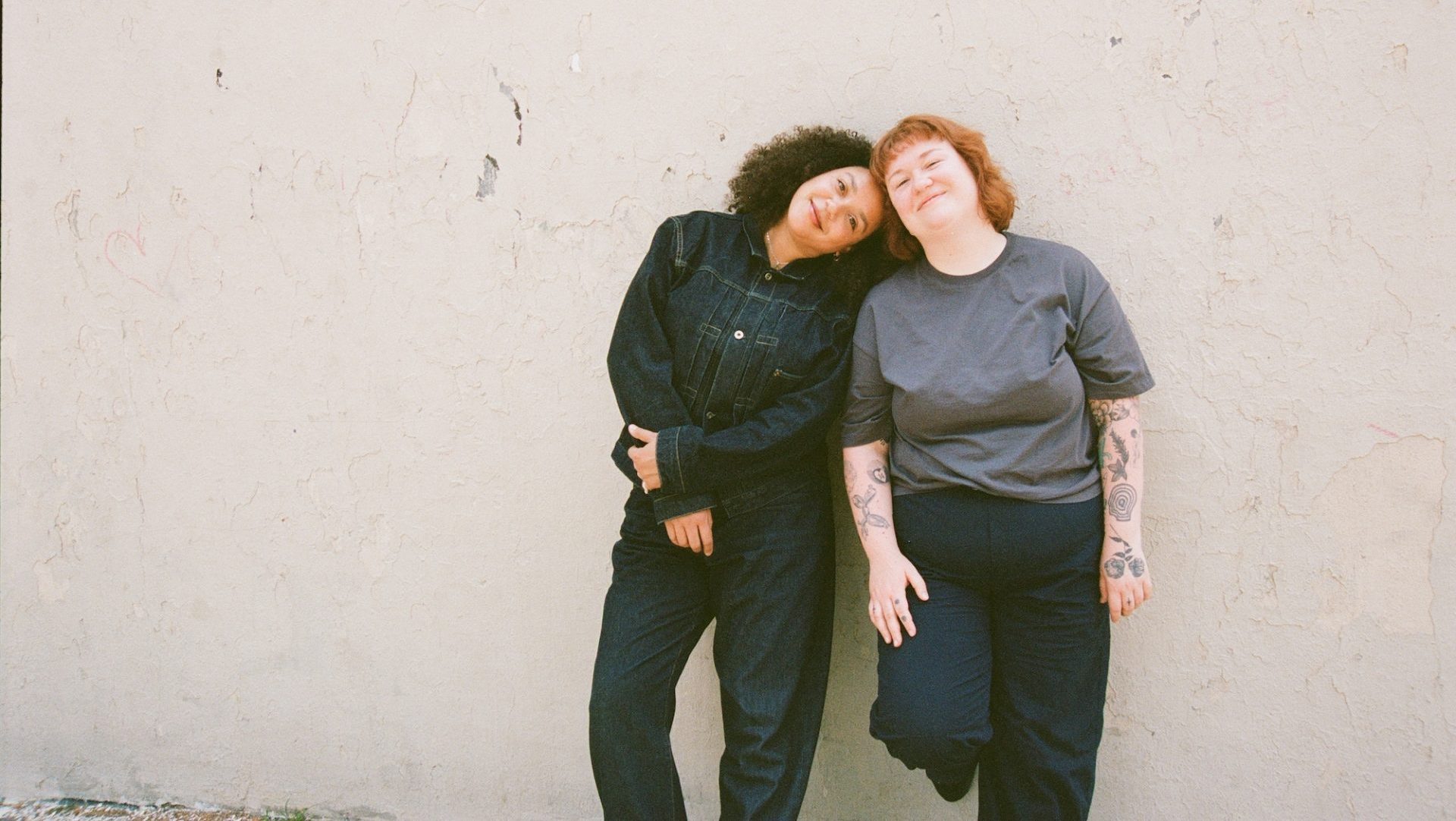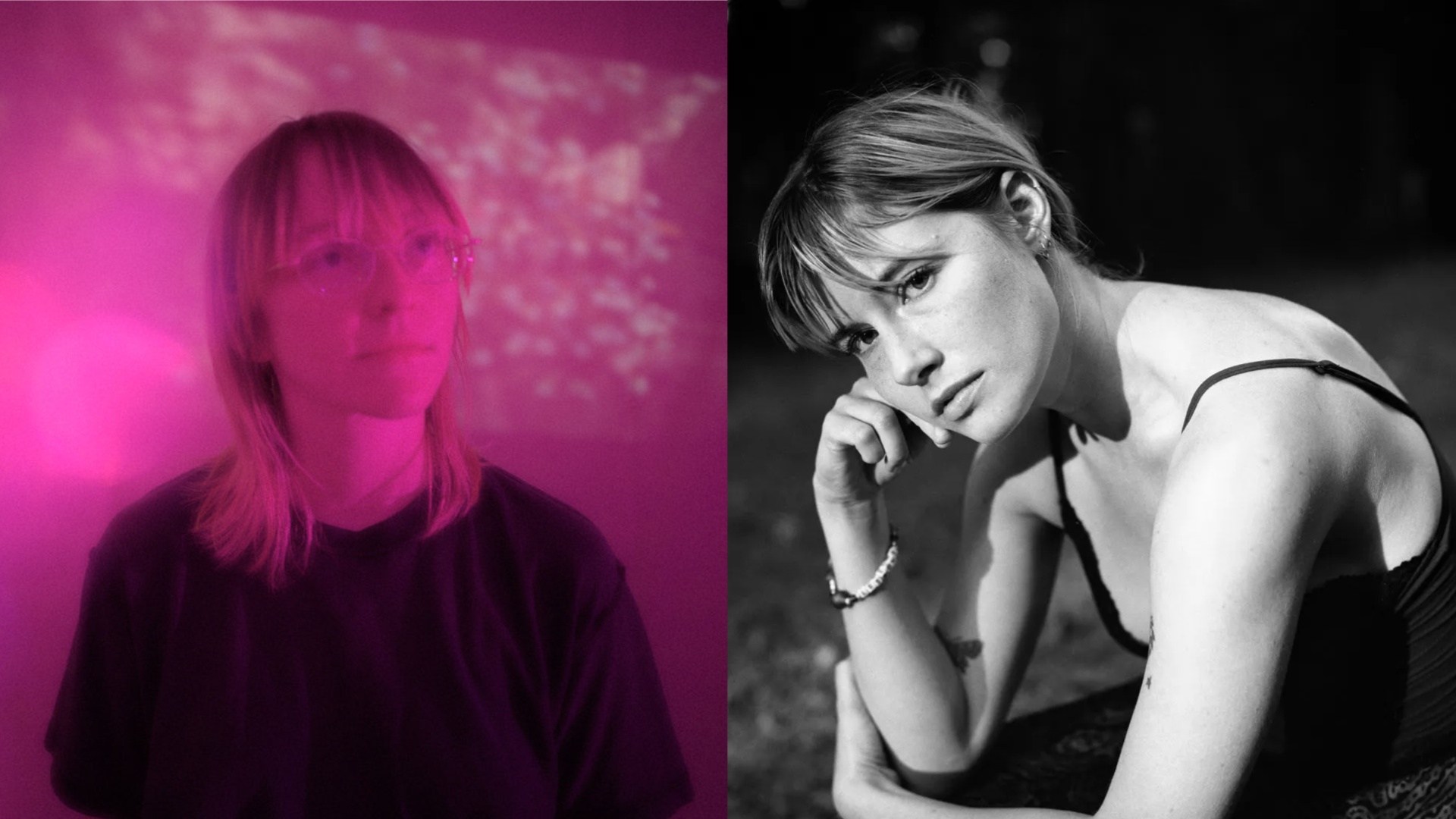
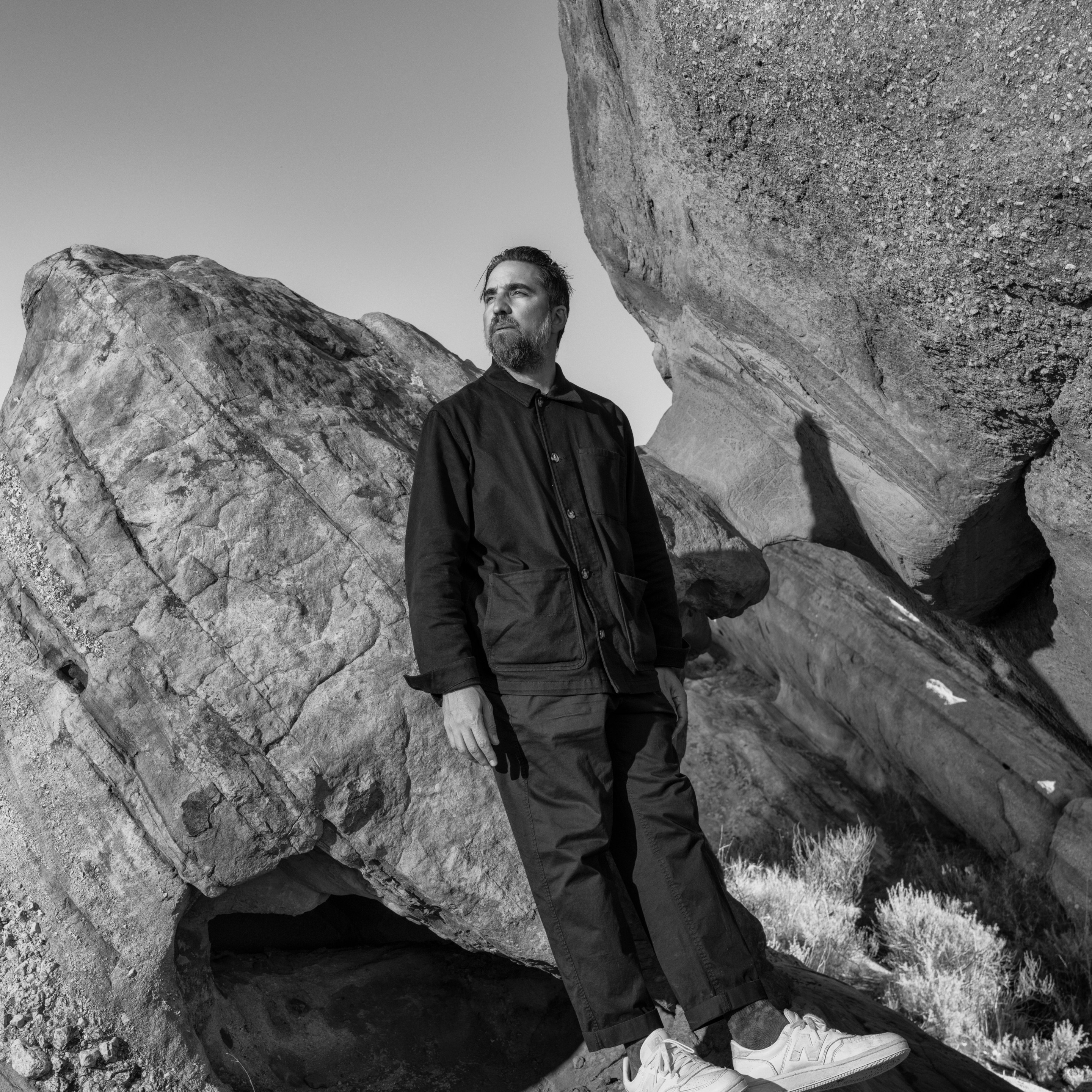
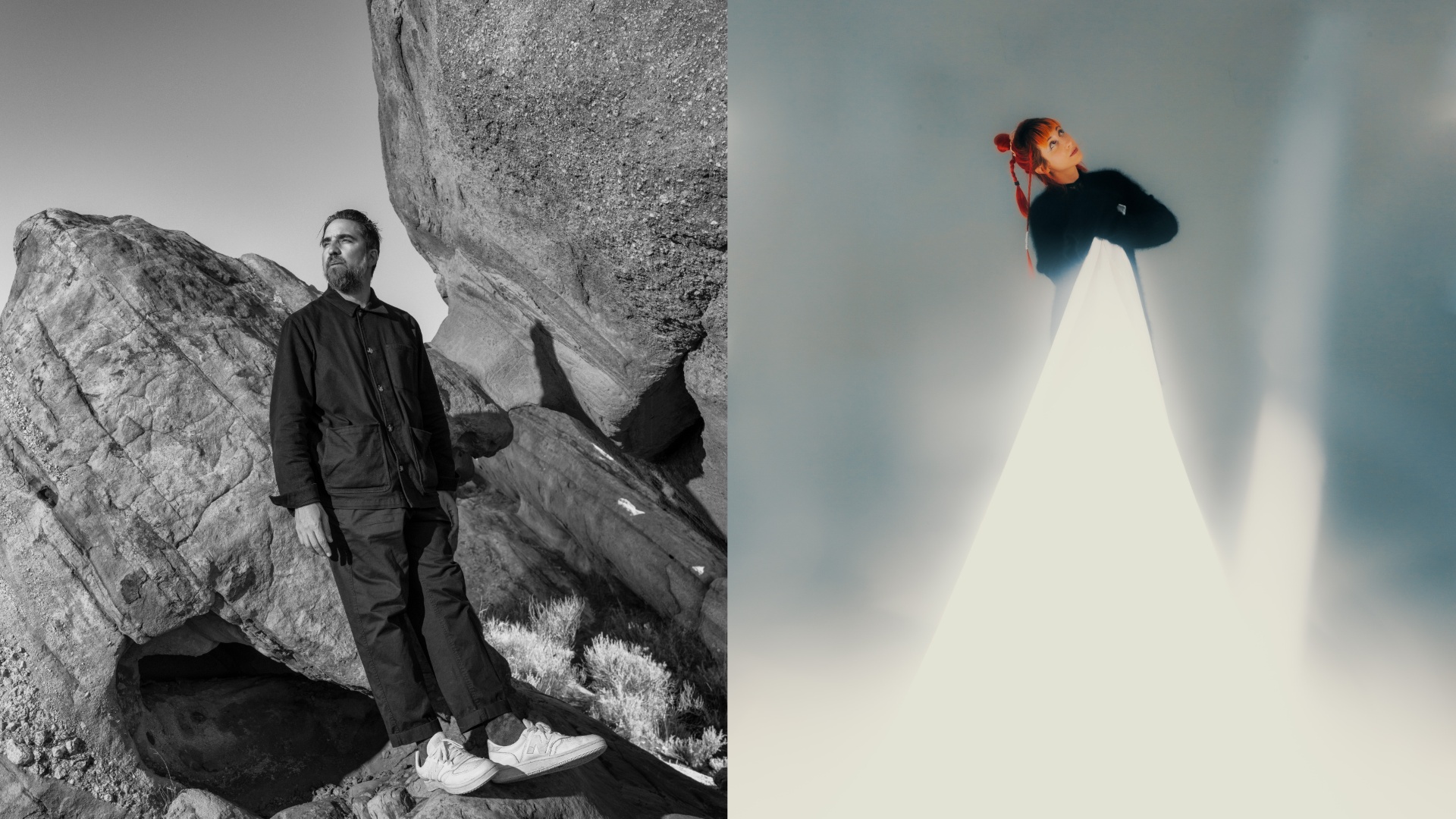
Jimmy LaValle is an LA-based musician who fronts the project The Album Leaf; Nicole Miglis is an also-LA-based musician who fronts the band Hundred Waters. Jimmy and Nicole recently collaborated on the song “Turns,” off of The Album Leaf’s forthcoming record A Body of Voices — out October 2 via Nettwerk. To celebrate, the two of them got on a Zoom call to catch up about the making of the track and much more.
— Annie Fell, Editor-in-chief, Talkhouse Music
Jimmy LaValle: What are you up to right now? How's your record coming?
Nicole Miglis: It's good. I'm dotting around. I did some things today. I'm actually thinking I'm going to send it to our friend Spencer [Zahn], who did some of your stuff, about if he has ideas on instrumentation. I'm opening up the process and making it a bit more collaborative… I've been painting a lot too.
Jimmy: Oh, yeah, I noticed that! Is that a new hobby or is that something that you had done before?
Nicole: I've done it before, but I guess I'm doing it in a more serious way now. Just putting more time into trying to improve the craft of it and painting on bigger scale canvases.
Jimmy: What about the Hundred Waters covers? Are those yours?
Nicole: Yeah. The Moon Rang Like A Bell — I painted that.
Jimmy: That's rad. You know, I spend all day in my studio and I don't get a chance to listen to music, so I could imagine painting and listening to music [is nice].
Nicole: Yeah, totally. And I stopped wearing headphones out — I don't have earbuds and I don't listen to music when I'm on the go anymore. I only listen to music when I'm sitting at home and there's speakers.
Jimmy: My listening space is the family living room, and because of that, I don't get much listening time.
Nicole: Right, just KPop Demon Hunters.
Jimmy: Yeah, that’s it. [Laughs.] Well, I’m psyched that you sang. That was fucking awesome, having been a fan for so long.
Nicole: Oh, yeah, me too. I've been listening to your music for a long time, so it was very full circle for me too. This record, you worked with a lot of vocalists.
Jimmy: Yeah, I started to tease with it on the last record, with Bat For Lashes and Kimbra. I really want to get into the producer space of working with other artists.
Nicole: I'll send you my record. [Laughs.]
Jimmy: Please, yeah. I love producing. My process is always, I produce and mix as I go. It's important to me in the songwriting process, the tone and the sounds of everything. But at any rate, I had just collected so many songs and so many different ideas; I just was always creating and creating and creating and not quite wrapping them up and saying that they're done. And then — I've sang on my records, sure, but I'm not a vocalist and it's not what comes naturally to me. I don't find a nuance in a harmony, or just a creative approach or a different melody than the melody that I already came up with on my own for the song. I made a record with that dude Mark Kozelek, and I would hear what I would think that he would do in my head, and then he would send it back and it'd be not that. I was just like, Woah. And that was almost 15 years ago — ended up not working out in a positive way, but it’s cool.
But at any rate, I had all of these songs and I felt like there was space for something else, and then I just started to compile it. It was really fun, being able to take your voice, put effects on it, do the panning tricks, and put on my needle nose EQ and mix hats and things like that. I don't have much experience mixing vocals; my previous records, I would always mix with somebody else and lean on them for their strengths, and then also utilize my own.
Nicole: How did you make your first music? Was it self recorded?
Jimmy: Yeah. My very first record, I was playing drums in this band called GoGoGo Airheart in San Diego, and [Mike Vermillion] had an eight-track Tascam quarter-inch reel-to-reel. All of our rehearsals would be recorded and those turned into that band's records. Also, I think I was 19 or 18, and I was experimenting with my own four-track Tascam stuff. But he had that Rhodes piano in his living room, which is the one I still have back there, and I just was noodling on it and he would be recording me — and I didn't know that he'd be recording me — and then he kind of produced that first record for me. At the time, my band Tristeza was my main writing tool and outlet, and the songs that I wrote on that piano turned into album ideas. Then I got my first computer when I signed to Tigerstyle. They gave me a five grand advance and I bought a music computer and set it up.
Nicole: What’s a music computer?
Jimmy: It was just a computer that would come with Sony Vegas and Soundforge. It was a PC with the io. I would just literally just plug my Rhodes directly in and track it straight with no mics or anything. I call it a “music computer” because my friends were building them — everybody in PC world is nerdy about building stuff.
And then when I did In A Safe Place, that was my first time as The Album Leaf in an actual studio, and that was in Iceland at Sigur Rós’s studio after I was touring with them. Tristeza had done things in the studio and I was always looking over the shoulders of people we were working with and getting hands on with knobs and panning and EQs and whatever. So it kind of started that way. And then turned into getting into electronic music and being more influenced by that world and doing my own beat programming,
On Moon Rang Like A Bell, there was so much live electronics happening, like machine drums on stage and samplers.
Nicole: My band mate Tray [Tryon] did a lot of that.
Jimmy: He was the wizard.
Nicole: Yeah. And my ex-bandmate Paul [Giese] would do a lot of that too.
Jimmy: But I remember there being a live element, too. Because in my early days of performing, there was often just a laptop and I would press play.
Nicole: Oh, yeah, we had keyboards. Also, my background was classical piano, so the performance was a big part of it.
Jimmy: How deep did you get into classical piano, and how deep are you now still?
Nicole: I studied it in college. I had to do the whole senior recital and all that — which, looking back, is wild. I admired concert pianists, and I was always doing competitions. There was a part of me that really loved the ambition of that world.
Jimmy: Did you go to music college?
Nicole: Yeah, I was at the music program at University of Florida. That's how deep I went. And then Hundred Waters, as soon as I graduated, wrote our first record and that kind of took off. We started touring pretty much straight out of college. So I never really used — or, I guess I used the degree. I was playing piano so much and performing. And now I've been teaching lessons to kids the past few years.
Jimmy: I came up in the band orchestra space. I started playing violin when I was three, and I started playing piano when I was four or five. But you know what that means — it was just, like, “Mary Had a Little Lamb.” [Laughs.]
Nicole: [Laughs.] I know what it means now.
Jimmy: I would go away from it and then come back to it, and then go away from it and then come back to it. But I took every little nugget — I knew how to read music. And then seeing the percussion section and being like, Woah, that's so fucking cool, I switched over to that. I was center snare and drum captain in high school and did the whole marching thing. But it was all classical music. I was still taking lessons here and there. And then when I was 17, I started to take lessons again and I was starting to study the romantic era. And that's where the name The Album Leaf came from — it was a Chopin piece… You learn so many rules from classical music, but there's not much creativity behind it.
Nicole: Right, right. The self-expression is the icing on the cake.
Jimmy: Yeah. So I felt like it's great to have those kinds of fundamentals ingrained in you, but being able to take that and utilize that across your own music…
Nicole: Yeah, and when you understand the basics, like we have 12 notes or whatever — all the scales, minor and major — you can really play anything. It's not just memorizing keys and stuff. It opens up so much.
Jimmy: But I definitely hear that in Moon Rang Like A Bell, for example, a lot of those piano piano pieces.
Nicole: We were noodle-y. They were into a lot of pretty heady electronic music.
Jimmy: A little bit of chops-showing-off.
Nicole: Yeah. [Laughs.]
Jimmy: Totally. I feel like I've done that too.
Nicole: I'm not really into showing off chops. The heart and the core of it is what [I’m into] more.
Jimmy: I've definitely gotten simpler and simpler. And I'm not a prolific pianist, by any means. I can play, but I can't play, if that makes sense.
Nicole: You can play!
Jimmy: But I’m not gonna sit down and be like, “Check this out!” I have a friend who's an insane jazz player, and it's the most incredible thing to watch him.
Nicole: I admire that so much. It's way beyond me. Classical, you kind of just play the piece in front of you…
Jimmy: My uncle was a was a ragtime pianist, and that's, I think, the first thing that happened to me where I was just like, Woah, that is cool. I want to do that. He was my fun uncle, and I remember he talked really fast and was kind of high anxiety, like operating at 150% the entire time. And then translating that to sitting at the piano and just running ragtime amok, all up and down everywhere — I was just like, This is so cool. I think he had a very strong influence on me wanting to do something like that. It's crazy watching the hands just jump all over the place. It’s just like, where are you hitting things? I don't get it.
Nicole: I think it’s just octaves.
Jimmy: [Laughs.] When it comes down to it, I do a lot of octaves. So I guess that's still there.
Nicole: [Laughs.] I like the record title.
Jimmy: Thank you. I went around in circles — I've been working on this record for probably four years. It's been a really, really long time back and forth and back and forth. It was titled “LP 9” up until, like, three days ago. [Laughs.] It's all collaborations, which I've never done, so I was trying to figure out how to express that in a title. I don't put much thought into song titles or album titles, and when I try to, I just get in my own way. I'm like, Is that cool? I don't know… All of the song titles are just taken from everyone's lyrics.
Nicole: Yeah, titles can be hard. They can either come really fast or they can be impossible to find.
Jimmy: Yeah, exactly. But that's also why the video — I'm so psyched on that you took the lead on that. I've never really had a strong voice in that world. Especially with instrumental music, because I always feel like the interpretation is there for the listener to have rather than a lyrical direction.
Nicole: Any excuse to make a music video. I love the visual storytelling of a song in that way. A song feels kind of cinematic and it has a back and forth and a story and an arc, and it's fun to express that.
Jimmy: Was there any direction with the dancers or choreography beforehand?
Nicole: No. It was really hard to articulate exactly what the dancers represented. Liv, one of the dancers in the video, was taking the lead on choreographing it, and she would try and say what she could pull from and where she could work with and it was a hard process to articulate that. It became very abstract. And I think initially I saw the dancers being the ones acting out this dynamic, but then through speaking to another friend of mine, she was like, “You should perform in it. You should be singing.” I wasn't even thinking like that. So then it became like a performance, more me singing the song, and the dancers as this kind of abstract background. Which was maybe also a constraint of the time that we had with the dancers. It was hard to have a fully choreographed dance. Also, how you film that is quite difficult… And the song is kind of long, close to five minutes, so it was like, “How do we spread this dance idea out?”
I think once it became just a performance, singing the song, the dance wasn't the focus. But they do represent something, but I'm not going to give it away.
Jimmy: Keep it close.
Nicole: Leave it up to interpretation… I feel like we're losing that a little bit culturally, that mystique of your own interpretation. You don’t have to put words to everything.
(Photo Credit: left, Devin Oktar Yalkin; right, Nate Surley)