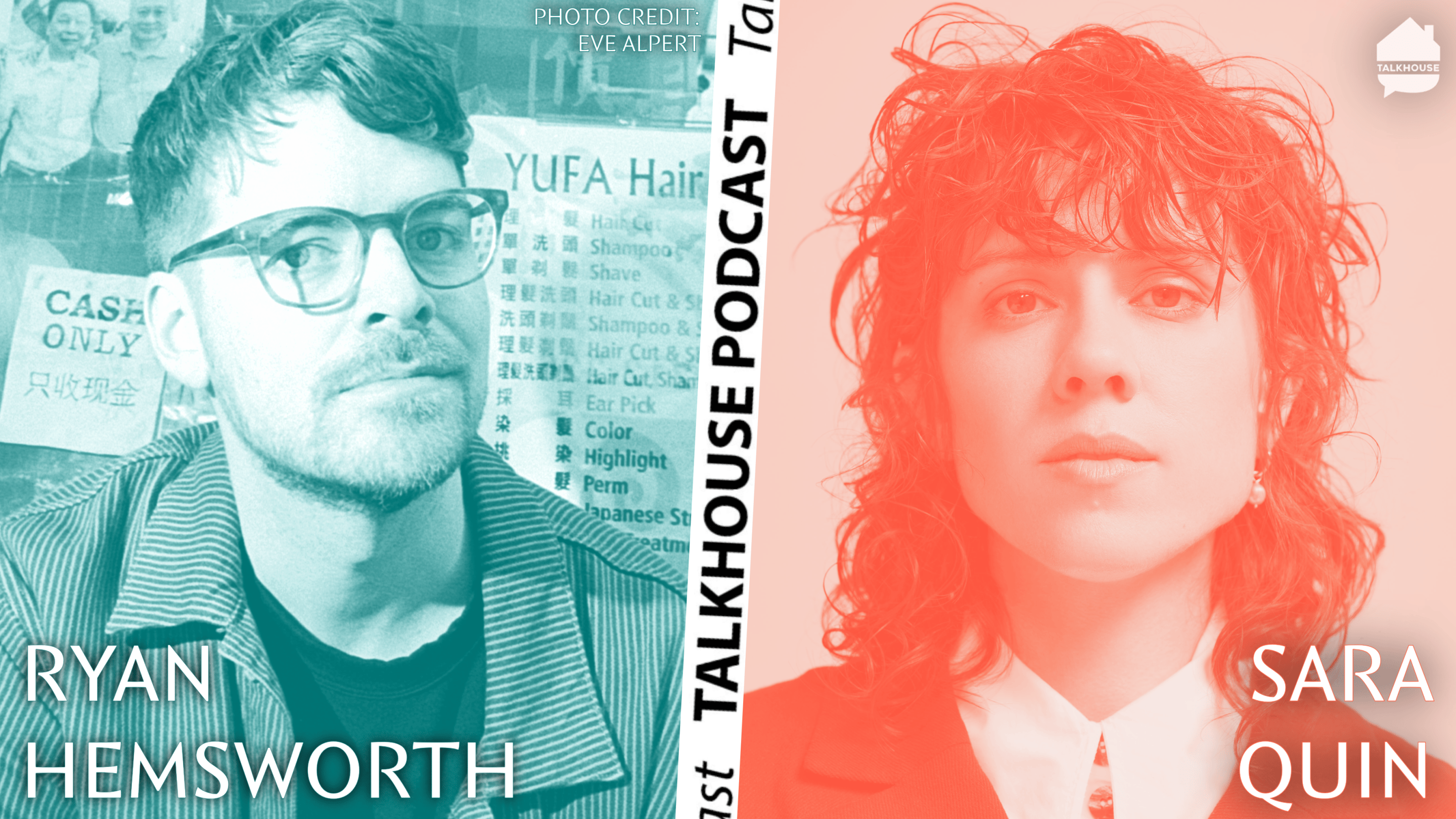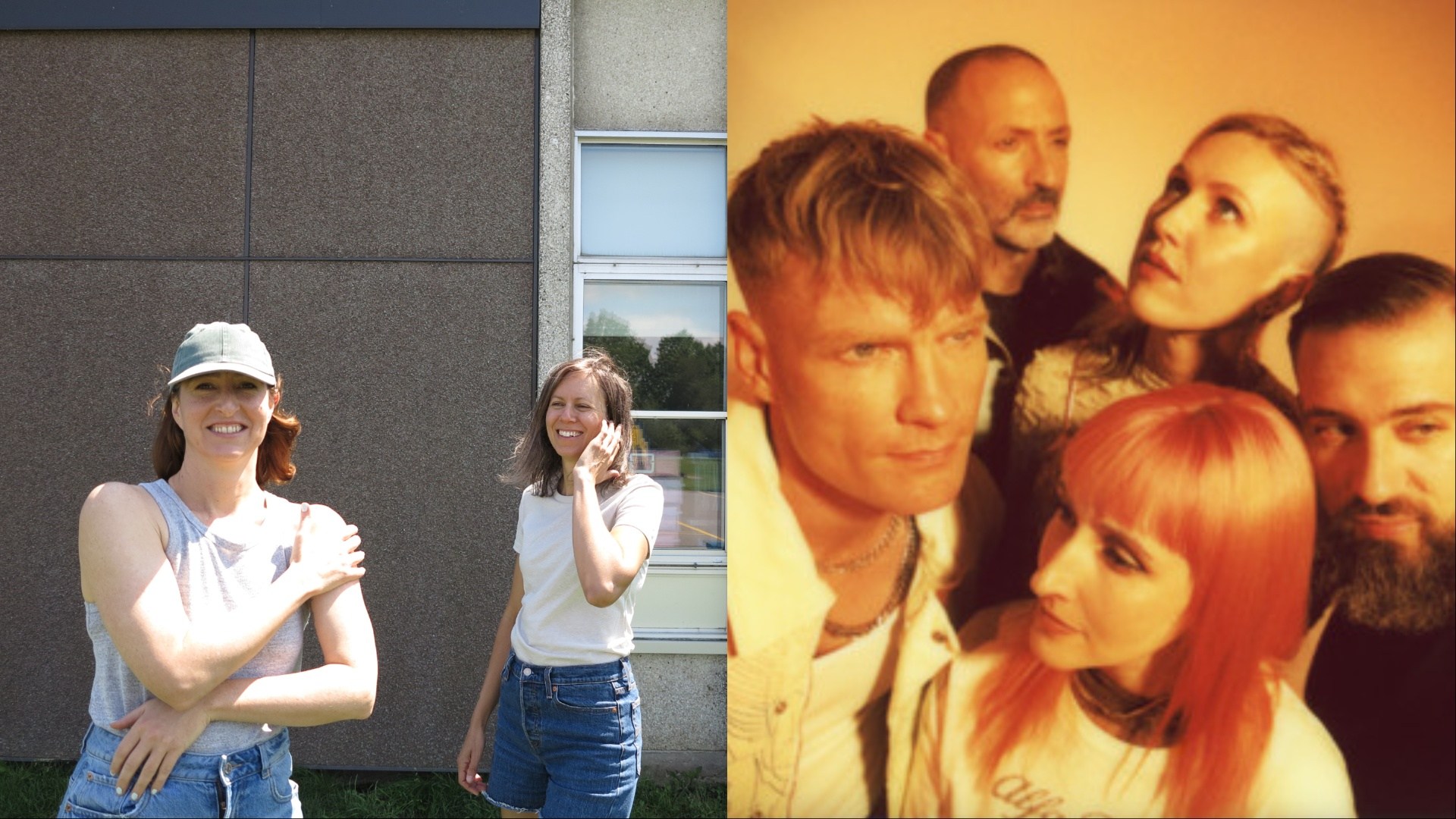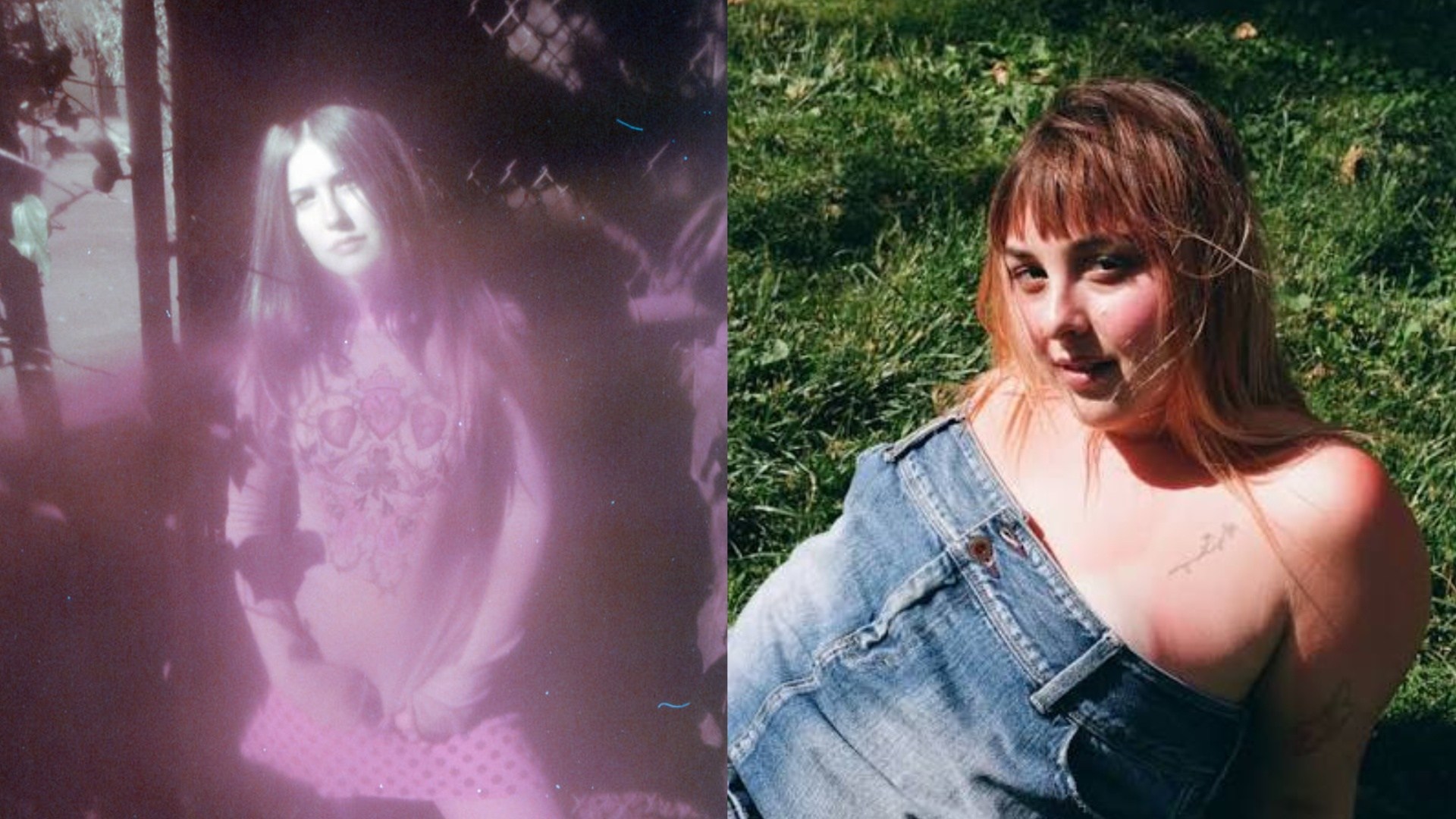
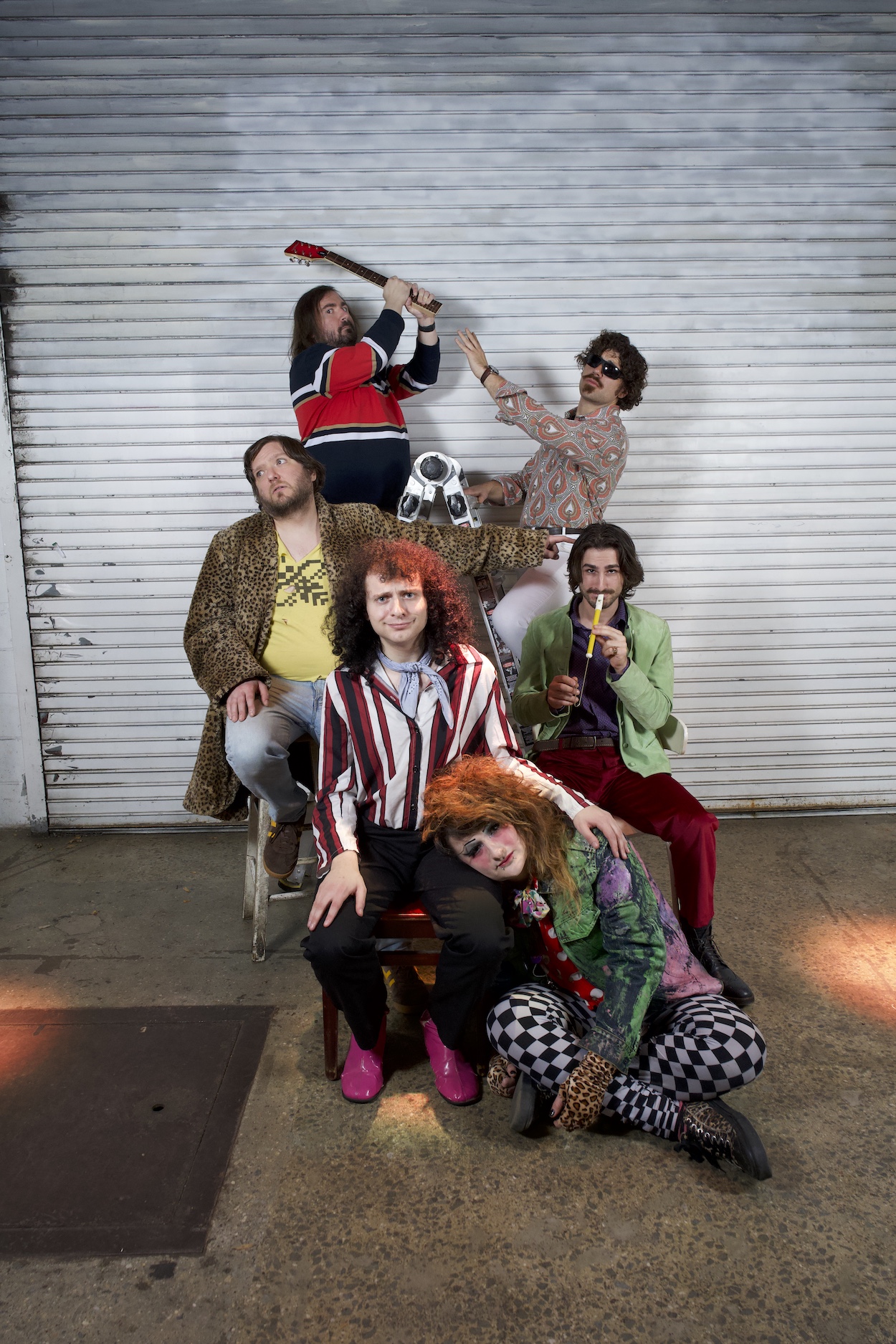

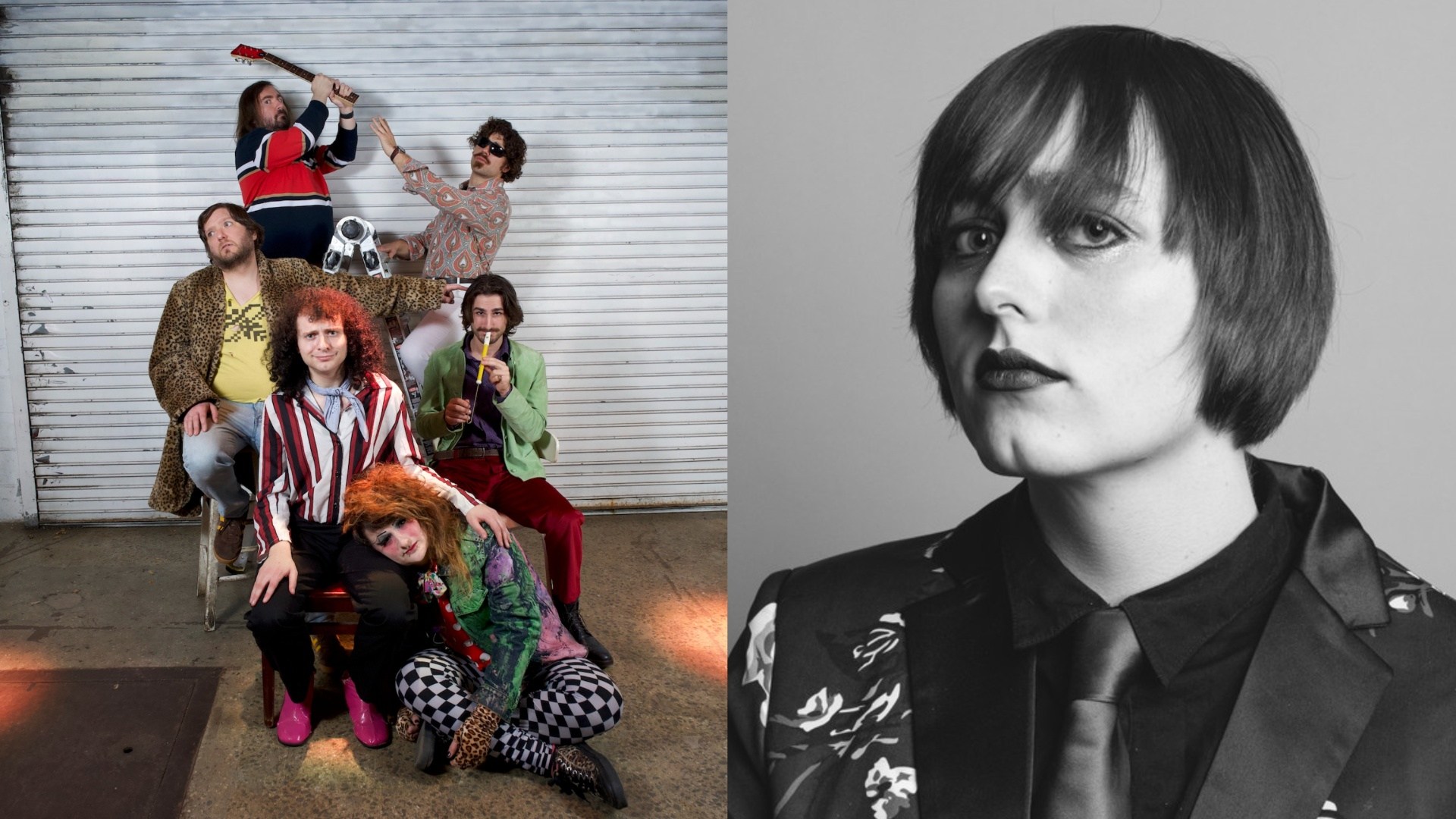
Left At London is Nat Puff, an artist, singer-songwriter, producer, and composer; Theophobia is the New York City-based art pop band helmed by filmmaker/musician Dylan Mars Greenberg and Matt Ellin. Theophobia’s new self-titled record just came out last month, and to celebrate the release, the three got together to chat about Sparks, Jim Steinman, and much more.
— Annie Fell, Editor-in-chief, Talkhouse Music
Nat Puff: How long have you been a band for?
Dylan Mars Greenberg: We've been a band since 2019, but we were a duo.
Matt Ellin: Yeah, I played guitar and we both sang, and we had backing tracks that we made on GarageBand. But then around 2023, we became a full six-piece band.
Nat: Fuck yeah, like chicken… I want to get right into this album because I relistened to it this morning. It's very much of a breath of fresh air. It's harkening back to a lot of ‘80s new wave, and yet it still feels like elements of ‘80s new wave that aren't really hearkened back to. I know the first time that I met you, Matt, it was the night that I filmed my cameo in Spirit Riser, Dylan's movie.
Dylan: And we were making a music video for you.
Nat: Yeah, but you'll find out about that later, folks… But I remember the first conversation that all three of us had. At some point, I was holding the guitar and I was like, “I don't know what to play.” And I think Dylan, you said “B.C.” by Sparks — not fully sure if I would know that song or not.
Dylan: We were sort of joking, just because it's not a super well-known song.
Nat: It's not even a well-known Sparks song! I just love Propaganda… But I remember that being our first interaction, all three of us together. And knowing that, I feel like there is something very Sparks-ian in the ethos of your music. Which, I wouldn't call this comedy music — there is a lot of humor in it, but it's not comedy music — and I feel like Sparks is very similar. They're these funny premises for songs and they're done with this lighthearted jauntiness, but you can tell that both of y'all are taking this incredibly seriously in a way that can't really be mistranslated. So I'm curious about the influences on this record, and Sparks is a very present one. I remember, Dylan, at one point you would talk to me about Jim Steinman.
Dylan: That's right. And when you first met us, it was 2019, which was peak Stein-mania for us.
Nat: “Seems Like Evil” — that song is so Jim Steinman.
Dylan: What's funny is when I first started writing that, I was weirdly not thinking of Jim Steinman, I was thinking more of Brian Wilson. And then as I started writing it, I started adding more Jim Steinman stuff until by the end I was like, This is a full blown Bat Out of Hell track.
Nat: Now that you say Brian Wilson, I do see it compositionally, but not in the production. I could see how that throughline would happen. I am interested in the production aspect of this specifically because, in researching and looking at lyrics, I didn't actually know that “Will You Love Me When I'm Dead” was a song that y'all released way back.
Matt: Yeah, a lot of the songs on the record are older ones that we recorded in some iteration before. I think we just thought that we could record them better. We’ve gotten better at performing and at arranging our stuff. And, yeah, obviously the more explicit influences on the album are Sparks and Jim Steinman and stuff like that, but we're also both really into classic pop. “Will You Love Me When I'm Dead,” lyrically I think of it as almost like a Phil Spector song, an old girl group kind of song where the lyrical theme is super general. It's kind of just love anxiety, and the lyrics could be applicable to anyone.
Nat: It's like if “When I'm Sixty-Four” was multiplied by two.
Matt: Yeah. It's like “When I'm Sixty-Four” but with math.
Nat: It's funny because when I was looking at the lyrics, the first line is, “You cross the street.” And my first thought was, Wow, are there two songs about crossing the street on this record?
Matt: Yes.
Nat: Was that intentional when “Go Left My Son” was being conceptualized?
Matt: I think they were just both songs that I came up with the initial idea for while walking and crossing the street.
Nat: You do a lot of that in New York City, I guess.
Matt: Yeah, that's what makes this a definitive New York album.
Dylan: I mean, Matt, you've talked a lot about general anxiety with navigation, and I feel like we've channeled a lot of our neuroses into our music.
Matt: Yes.
Nat: I was going to say, I was really trying to look for motifs in this album, and death is also a big one. Death and gods. Which are very intense motifs to have on a record…
Matt: I mean, this album and the band are called Theophobia, which is “fear of gods.”
Nat: I was wondering what the specific origin of y'all choosing that as the band name was, because I had admittedly never heard that word before.
Dylan: Initially, I had come up with a bunch of other band names that sucked.
Nat: What was the worst one?
Dylan: Probably “the Entertainments.”
Nat: Entertainments plural?
Dylan: Yeah. That one was fucking horrible.
Nat: [Laughs.] That does suck!
Dylan: Yeah, they were all really bad. And then I ended up just looking up a list of phobias and I found theophobia, and I was like, Oh, wow, that's perfect. And there's not another band called that.
Nat: I was also going to say, there's a lot of songs here that are in the point of view of either a fictional character or an exaggerated version of the narrator, and a lot of the struggle that that character goes through is dealing with either being oppressed by forces of power, being the oppressing force, or even just being perceived by a larger community. And I feel like theophobia being the fear of gods encapsulates that in a way that's deeper than any fear of religious gods specifically.
Dylan: Yeah, I think it's bigger than that. It's hard to explain the name to a lot of people, but you actually kind of get it.
Nat: That's because I'm damn good at this. I'm curious about the fictional characters in this record.
Dylan: Yeah, it's a lot of storytelling.
Nat: There is something kind of fairy tale-esque about some of these—
Dylan: I think that they are kind of like these fucked up little fairy tales. They’re like fairy tales, but they're twisted.
Nat: [Laughs.] We’re getting a little Hans Christian Andersen in this bitch… But I'm curious about some of these fictional characters. There was one that's, I think, in “Mumphrey’s Alley”—
Dylan: These are all Matt songs that you're bringing up. Matt is really good at coming up with these really elaborate, surreal stories.
Nat: That's particularly interesting to me because I had written down on these notes how “All the World is Hanging on a String,” being in the perspective of that metatextual point of view as a filmmaker—
Dylan: Well, yeah, it’s kind of obvious who wrote that one.
Nat: Obviously. But you being a filmmaker, writing, producing, directing “about 16 of these a day,” in the context of the song — and, correct me if I'm wrong, it seems to be specifically rewriting yourself to please somebody else — the metatextual thing that I had originally gotten, which I guess has since been disproven, was that you might be putting some of these characters into these songs as you put the characters in your movies. But seeing that it's just Matt apparently is really funny to me…
Dylan: I feel like we occasionally write stuff together, but usually we write separately. I would say Matt co-writes more with me in the sense that Matt writes all the guitar stuff and creates a lot of the arrangements over what I write. So in that sense, we write together. But for the most part, it's really kind of self-contained. I think that we're not identical, but we have similar enough styles.
Matt: Yeah.
Nat: If I'm seeing this correctly, Dylan, you write more of the songs that are in first person perspective.
Dylan: That’s probably true. Although you wrote “Will You Love Me When I’m Dead.” But I think maybe I've written more songs that are in first person.
Nat: I'm curious about y'all's comedic influences externally of music. Dylan, I know that you have a particular penchant for old Hollywood, and that's where a lot of the classic comedy duos come from.
Dylan: Abbott and Costello Meet Frankenstein.
Nat: We've talked about Abbott and Costello Meet Frankenstein probably about five separate times.
Matt: Also you can't forget Bela Lugosi Meets a Brooklyn Gorilla.
Nat: What?
Dylan: That's a real movie, and it’s called that and it stars Bela Lugosi.
Nat: I gotta watch this.
Matt: You don’t have to. It's not really essential viewing.
Dylan: But it is a comedy duo. It's a rip off of Martin and Lewis called Duke and Petrillo, and it's a guy that looks vaguely like Dean Martin and then a guy that looks and sounds exactly like Jerry Lewis, to where people thought it was Jerry Lewis. And I think that Jerry Lewis actually at one point tried to buy the rights to the movie to bury it, because he was so embarrassed that people thought that that was him…
Matt: All this to say, our biggest comic influences are Duke and Petrillo.
Nat: [Laughs.] What TV shows did you all grow up on?
Matt: Tim and Eric.
Dylan: Yes, I think that's a big uniting thing in both of us. I think both of our brains were shaped by Tim and Eric.
Matt: Earlier, we used to pretend to fight on stage more, and that's totally On Cinema at the Cinema influenced.
Dylan: That was a big influence on us, for sure.
Nat: You told me at one point that y'all did a show where you did The Wizard of Oz or some shit.
Matt: Oh, yeah.
Dylan: That was a really fun show. It started because me and Matt started writing these fake, deliberately low effort, abstract Wizard of Oz songs on keyboards.
Matt: Which, neither of us really have mastery over keyboard.
Dylan: My idea was that I want to write this musical called Wizard of Oz Generic that's for fourth graders to perform, basically like a more abstracted version of the Wizard of Oz. Long story short, we had everyone [at the show] read this script that we wrote — it's like this completely non-sequitur Wizard of Oz style script that no one I think read beforehand. They were all really confused.
Matt: These were the other bands that were playing the show.
Dylan: Yeah, we made the other bands participate, and they were a bit baffled.
Matt: And then Theophobia performed the songs, which were very minimal. Like, [sings,] “Toto the dog. Toto the dog.”
Dylan: [Sings,] “The Wizard of Oooooz…” That's my favorite one. Matt wrote that one.
Nat: If the motifs of this record were death, gods, the law, animals and crossing the street, what motifs should we expect from Theophobia in 2027 onward?
Dylan: I mean, I've been writing more love songs, but I can't really speak for Matt.
Matt: I've been interested in getting better at writing simple songs, because my songs on this record are really all over the place. I really value something like The Beatles where it's a simple song, but maybe there will be one unusual chord that shapes it in a way that makes it memorable. So I've been going in that direction. And I think with our interests, we've been into still older stuff, but moving more in the realm of kind of bubblegum, more ‘60s than ‘70s. But also, I like the Bay City Rollers.
Dylan: Oh, yeah. Matt's been really into the Bay City Rollers.
Matt: Dylan sent me a demo for a song recently that really reminds me of a song that would be on Top of the Pops. So it's more pop stuff, but still pop in a way that we feel is underrepresented right now.
Dylan: We want to do a Christmas record. Or not a full album, but I want to do a Christmas single… What’s next for Nat?
Nat: I am currently putting the finishing touches on my record, which should be coming out early next year. I've been working on it since 2016, just gradually adding more and more stuff to the record. In terms of the future for my music, I'm hoping to be a little bit more experimental and synth-y. I'm doing some kind of pop stuff on this next record.
Dylan: You’ve gotta go full Scott Walker, Nat.
Nat: Oh, write that down…
How do we end this?
Matt: Do we just say bye?
Dylan: Three, two, one —
[All together]: Bye!!