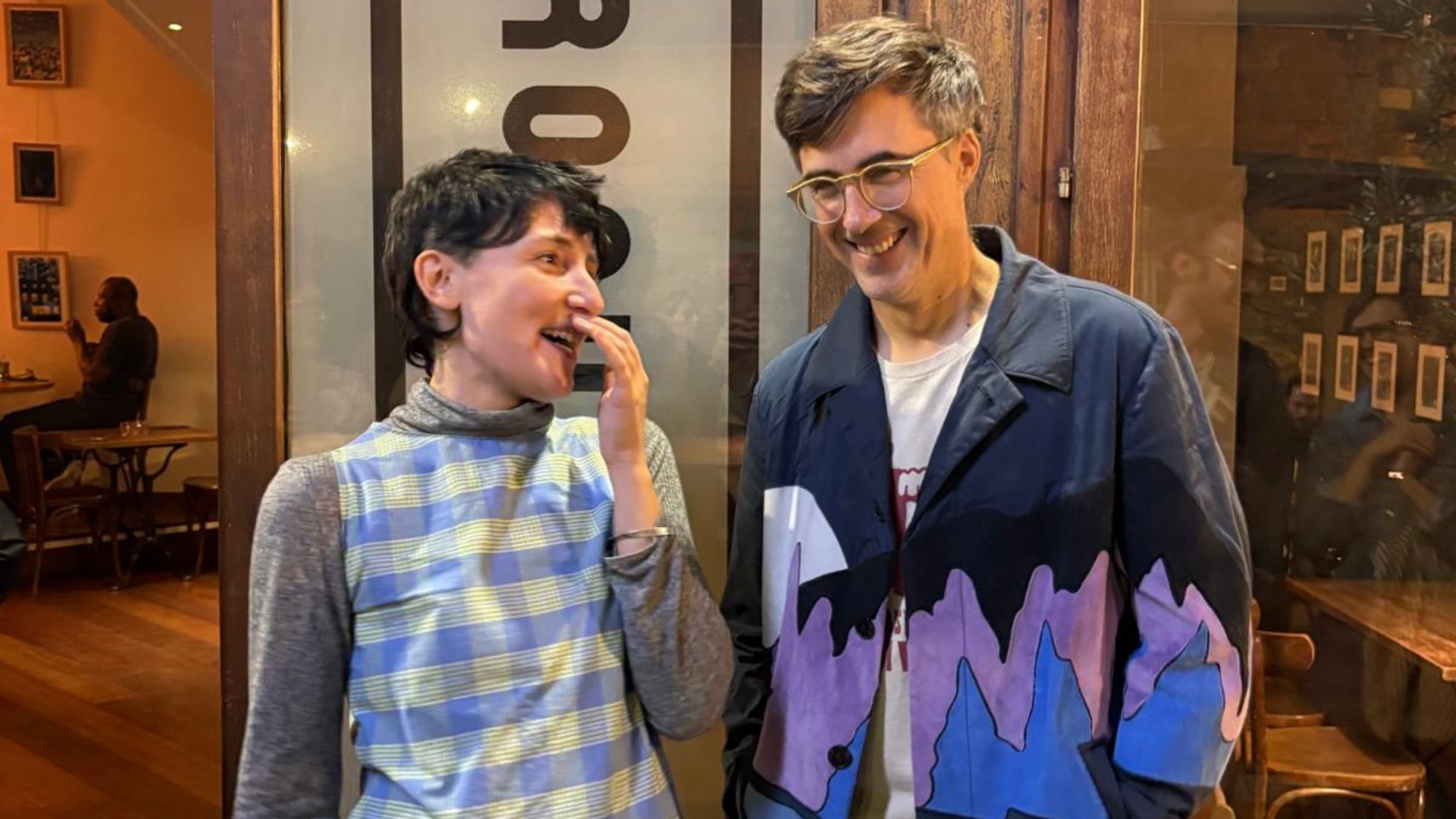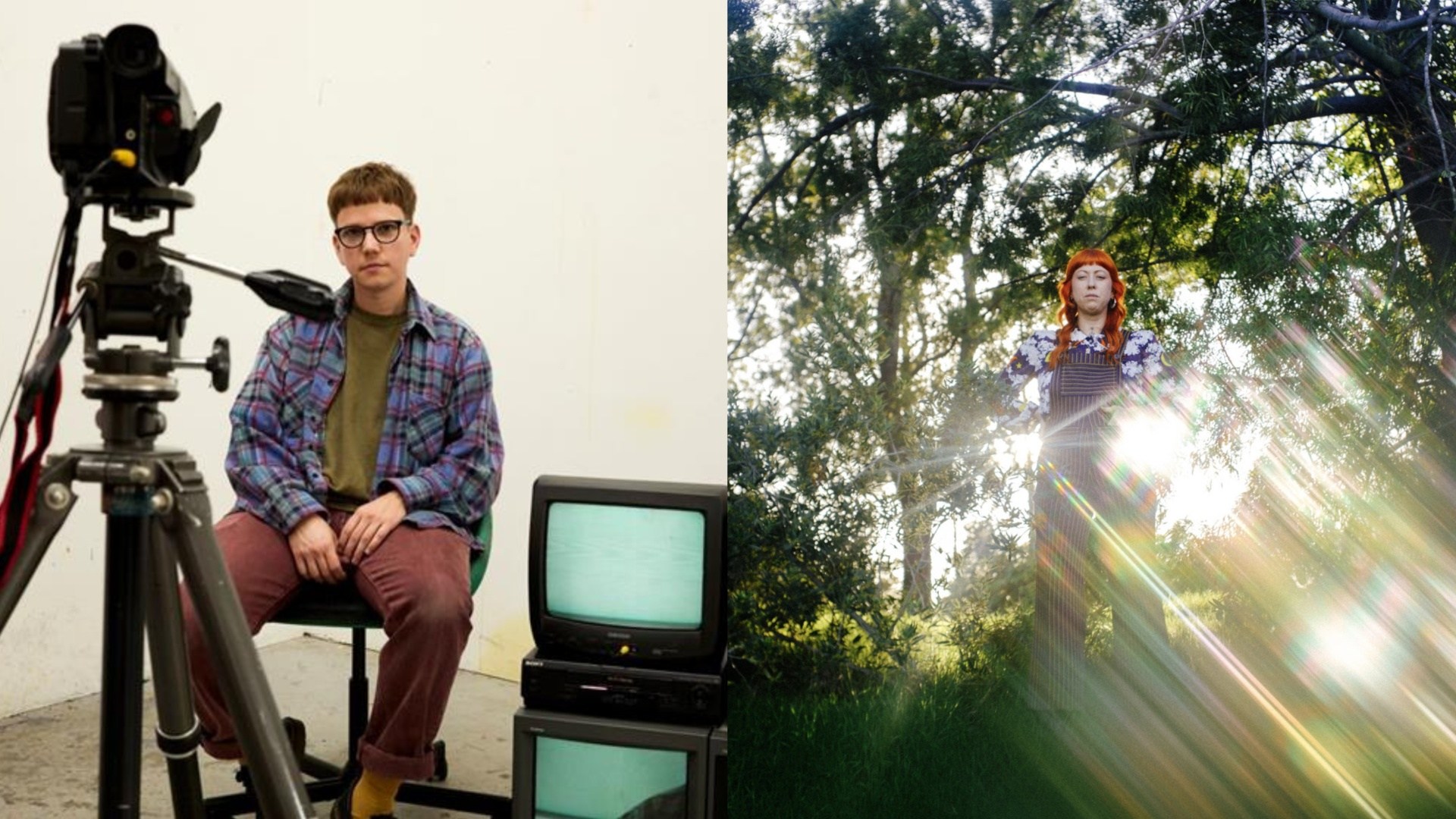

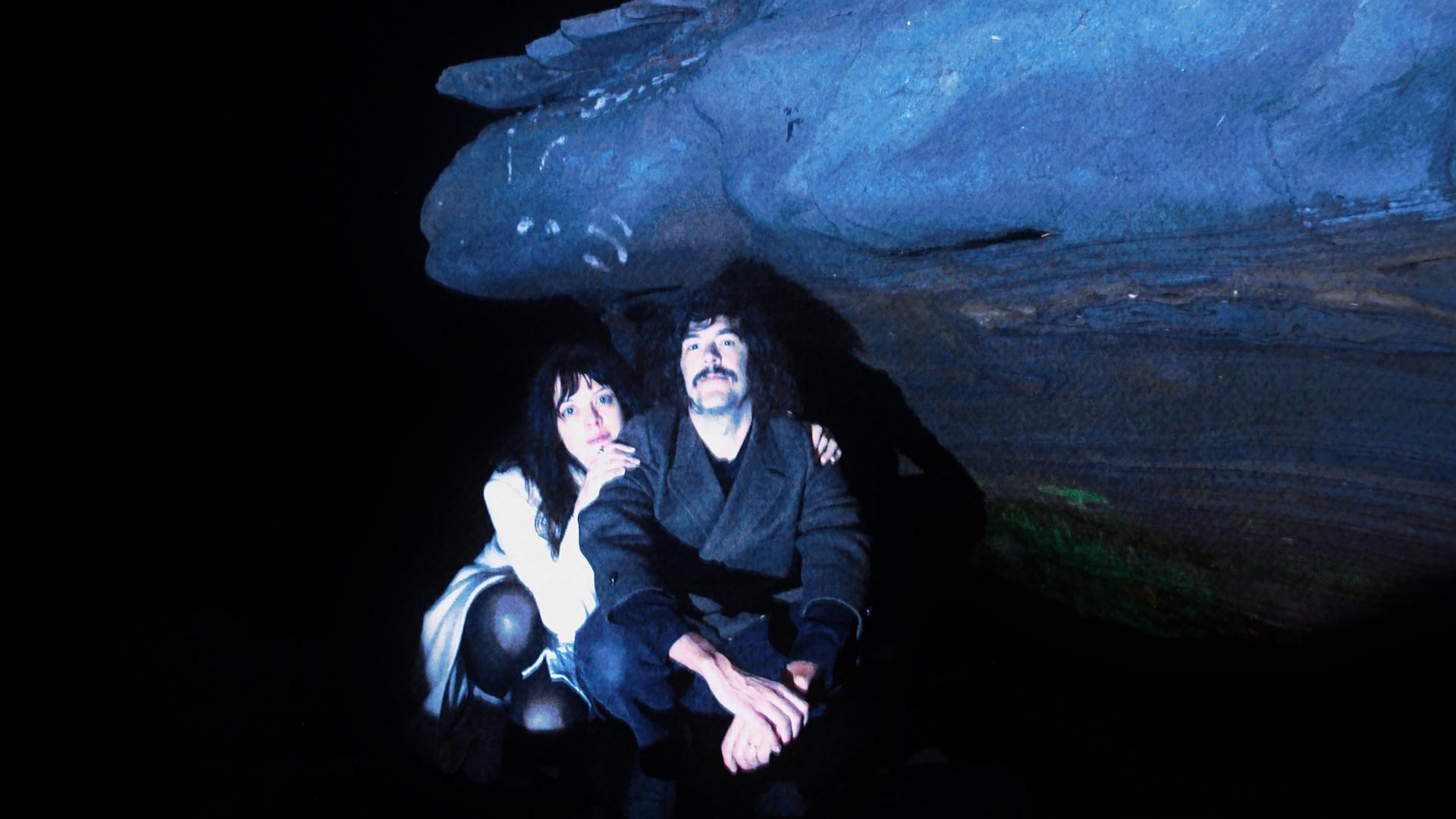
Soft Palms is the project of Long Beach-based duo Scott Montoya (formerly of The Growlers) and Julia Kugel (also of The Coathangers and Julia, Julia). Their latest record, In Echo, just came out last month via Everloving Records, and in conjunction with it, they’ve also released their book How To Be Self-Reliant In The Music Business. To celebrate, the two caught up about the making of both,
— Annie Fell, Editor-in-chief, Talkhouse Music
Scott Montoya: We're recording.
Julia Kugel: Oh, good. Hey, Scott.
Scott: Hi, Julia.
Julia: How's it going?
Scott: Never been better in my whole life. What about you?
Julia: You know, pretty good.
Scott: Well, you are pretty.
Julia: Aw. So, Scott, what's the thing you're most proud of about the new record?
Scott: The thing I'm most proud of about the new record is being able to do it with you, because you're so fun to work with and you're so talented. And you can't see beauty through listening to music, but in your case, I think you can.
Julia: Are you gonna let them print that?
Scott: If they want to… The thing I'm most proud of about the record is finishing the record, because it was a very challenging record to make. That and the Julia, Julia record were very challenging because of the studio problems, because of health problems, because of just general stress — problems on top of problems. What about you? What are you most proud of?
Julia: I think I'm most proud of the songwriting, expanding our horizons when composing the songs, having a slightly different feel and being able to bring all aspects of myself into this record instead of feeling like I had to be this one person for this thing and another person for another thing. Just being genuinely myself… It's all about me!
Scott: [Laughs.] Well, you're a very dynamic and multi-talented individual in many different ways, and it's nice to hear that in one record. You get a taste of that in some Coathangers records where there's a bunch of aggressive songs and then one or two slow songs. But this one's more developed, I guess.
Julia: I think for you and me playing together, it's more developed. It's more confident. And it's really fun when it's done. This record was so fun when it was done.
You made the album art. Was there an inspiration behind it?
Scott: I was looking at Soviet propaganda posters and the kind of angled font going out, because that's part of the theme of the record—
Julia: Propaganda.
Scott. Yeah. It seemed like a fit. Kind of minimal, no pictures, just words on the front, and a boxed in, very claustrophobic, feeling.
Julia: Claustrophobic but expansive, too, I think. Did you use AI to create that?
Scott: No, actually, believe it or not.
Julia: [Laughs.]
Scott: There was no AI used in the album art or the recording or the songwriting or the mixing or the anything of this record.
Julia: So you cut up pieces of paper.
Scott: Yeah, I printed out the font and then sliced it up with an X-Acto knife and taped it back together and then scanned it in.
Julia: You have strong feelings about AI.
Scott: Yeah. Its uses are being demonstrated in certain ways, such as being able to search the internet search engines. But when it comes to creating music and art, I don't think you should do it. I think it's not interesting. Show posters made with AI are boring. Images of people made with AI are boring. Commercials made with AI are boring. And it just shows a lack of care. It's like a Catholic funeral — just impersonal and like, “What the fuck are we even doing here?”
Julia: I've never attended one, but it sounds grim.
Scott: It's terrible.
Julia: So on top of making the record, we wrote a book.
Scott: Yes. It's called How to Be Self-Reliant in the Music Business.
Julia: Which was easier to make, the record or the book?
Scott: The book was, for a lot of different reasons. One being, the equipment worked.
Julia: Your brain.
Scott: The brain was working. And writing is a different kind of process than writing and recording and mixing music. It's very simple because we were just writing about what we already knew about. It was a very exciting process where it just kept happening and happening and happening, and we were stoked and stoked and stoked. And then it was funny.
Julia: It was funny. For me, it was a pretty easy experience as well. I mean, you took on most of the actual writing; I was just sort of the idea person. I would rant and then you would put it into sentences. Because, you know, English is not my first language. So that was my excuse for not having to [write]. Plus, I've written so much. [Laughs.] I've said my piece.
What's one take away you hope people get from the book?
Scott: I hope they can be inspired to be able to do it.
Julia: Do what?
Scott: All of it. The book is called Being Self-Reliant — I hope people can understand that there's nothing in the book that they can't do. I mean, besides mastering and reading contracts. But other than that, everything is stuff that people can learn how to do, and it's free. If you want to do music, I think a thing that a lot of people don't get is that the overhead is huge, but if you can do it yourself, you can save money.
Julia: Yeah, I hope one day we'll be able to make money off of music. That would be my one wish for maybe the second edition, collecting checks from streaming royalties that are bigger than existing royalties. [Laughs.] Although, you know, it's important to sign up for your royalties properly. I think that was the driving force behind writing this book in some ways, the discovery of how we personally had misregistered and missed out on other sources, the MLC. So that was an impetus for writing the book, to let people know how royalties work.
Scott: Yeah, how royalties work and where to go and how to sign up for it. And the scope of what music royalties are, the complete picture of it. Because if you understand that there is a finite amount of things you need to do, then it's a lot less intimidating. And all of that information is at howtobeselfreliant.com.
Julia: Since we've been helping people with their royalties, have you felt satisfaction from helping people register properly?
Scott: Of course. It's really nice, because it feels like we're sticking it to the man in a way too. People aren't telling artists about how to register because when they keep the money, they keep the money. That money goes to the bigger artists. It gets distributed to—
Julia: The Taylor Swifts of the world. And no one ever tells us about it. So I think that was the takeaway that we started out with, as far as why writing the book and talking about all these things is important. But I think the most passionate response we got was when we started talking about green room and show etiquette.
Scott: We were almost done with the book and we were talking to some friends about it, and we brought up green room etiquette and it gave everyone a chance to unload some of their grievances. There's some pretty funny ones.
Julia: I think it's an example of how as a, quote-unquote, “community,” we really don't communicate about what the standards are for our work behavior. Everyone assumes it's like what they see on TV, that you can just be a big drunk slob and everything will work out.
Scott: Yeah, which isn't necessarily false, but it's not necessarily true either.
Julia: It depends on whose kid you are.
Scott: But for people that don't have that luxury, the suggestion would be to understand how to treat people and how to not set yourself back in your career because no one wants to work with you because you don't get it.
Julia: Yeah. The opportunities almost feel scarce, so you don't want to burn bridges because the business is small.
Scott: You can get a bad reputation without even knowing it. And that doesn't seem fair. It just seemed like the right thing to do would be to write this stuff down for anyone that cares to be able to at least take into consideration.
Julia: So you think if people read this book, they will show up on time? Because I think that's one huge misconception that bands have, that they're allowed to be late.
Scott: Yeah, that's a terrible one. Anything else can be tolerated except for that. I think that would be the biggest rule: Just be there on time.
Julia: It's so simple, and it seems to be something inherent in every other job except for this one. People just don't show up on time. I mean, I used to have a huge problem with being late. It took the right tour manager — who was my sister.
Scott: Yeah, but no one ever said, “Hey, make sure you be there on time or else it's rude to everybody.”
Julia: You would think that I would understand that.
Scott: One of the things that people like about what they think doing music is, is that there's no rules. And it's kind of true. But at the same time, it's kind of the same as any other thing, where it's better if you show up on time. And it's better, if you say you're going to do something, that you do it.
Julia: Follow through is a huge one because it's pretty boring to listen to people ramble on about plans or what they're going to do, and then they don't do anything.
Scott: Yeah. There's a lot of talky-talky in this world and not a lot of walky-walky.
Julia: [Laughs.] In my experience, the people that we have helped initiate the royalties collection of information, they feel really empowered by it. I think right now with AI coming in, there's a feeling of powerlessness, so I hope this book feels empowering to people and like they know what they're talking about. And then they can have intelligent conversations with, say, lawyers or record labels or promoters, and create strategies that will help us win as a team over computers. Because we need to start talking to each other and combining our knowledge in order to outwit.
Scott: Yeah, the humans have to win. And the only way to do that is to work together.
Julia: How are the book and the record related to each other?
Scott: Well, they have the same parents.
Julia: [Laughs.] Who's the older child?
Scott: The record. But the book has an old soul.
Julia: Yeah, I think so… The book took 20 years of being in the business, and the record only took five. So I would say the book, even though it came second, is the older child.
Scott: It was a long gestation period. And it's ideas that I'm sure a lot of people knew before us. This is kind of timeless stuff — even though it is at the risk of being outdated — it lists websites that I'm sure in 20 years maybe won't be around and we'll have to keep updating it. But most of it is stuff that's never going to change.
Julia: Yeah. So they're related because they have the same parents and they're related because I think they both have an independent “fuck you” attitude.
Scott: Yeah, this is a “fuck you” to the world.
Julia: In a loving way.
Scott: Lovingly, “fuck you all.” No, but the book is not “fuck you.” It’s to help people. You can do the music thing, and you can be a part of the solution to any of the world's problems.
Julia: Yeah. Because what we need is more working class musicians. Right now it's either, again, you're a child of somebody and you have the resources to, quote-unquote, “make it,” or you're a working class musician who is basically impoverished most of your career.
Scott: And doesn't know how to collect the royalties. Ourselves included — it took us this long to get our royalties together.
Julia: To figure out how we've been getting screwed.
Scott: Yes. Also, the statute of limitations for collecting royalties is currently three years, so that's one thing that we're trying to change as well. It doesn't make any sense to have a time limit to collect money that you earned that you don't know you have.
Julia: So how are we going to change that?
Scott: Well, we have connections to some Congress members, and the advice we got was to gather numbers. So we started a petition which can be found on softpalmsmusic.com and on howtobeselfreliant.com. Last I checked, we had 99 people sign it. I think we need, like, 500,000.
Julia: You gotta start somewhere.
I'm excited to go on the US tour. It's our first time on the East Coast. What's the city you're looking forward to?
Scott: I haven't been to New York in a while, haven't been to Atlanta in a while. And I'm looking forward to doing the royalties workshops in record stores. We're going to be talking about music royalties for anyone that shows up and wants help with understanding what they are, how to register, what the different artist codes are…
Julia: Yeah. I think you're more stoked on helping people with royalties than actually playing shows.
Scott: I love playing shows. This is just a new thing. I'm equally stoked for both.
(Photo Credit: Jes Giles)