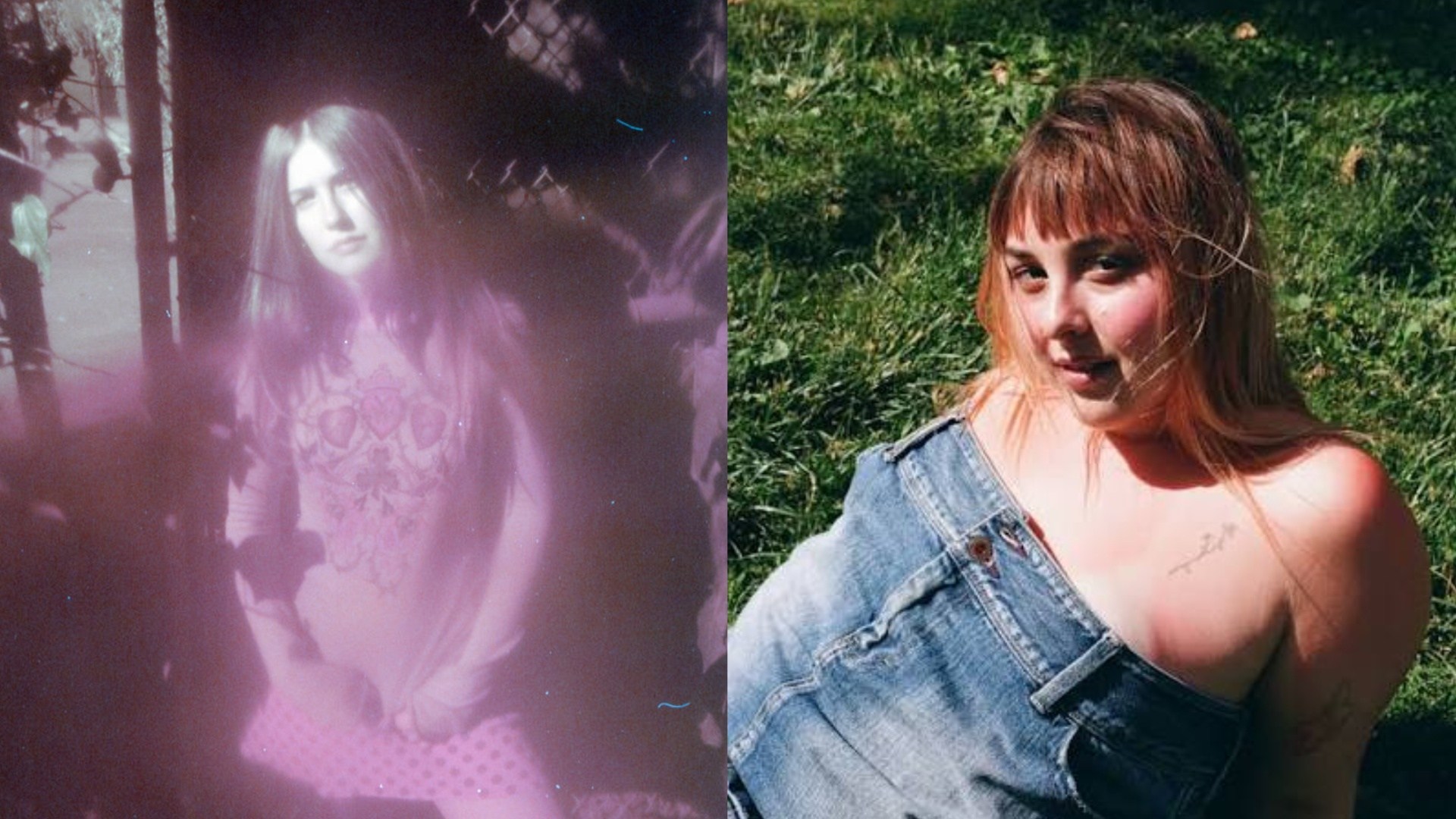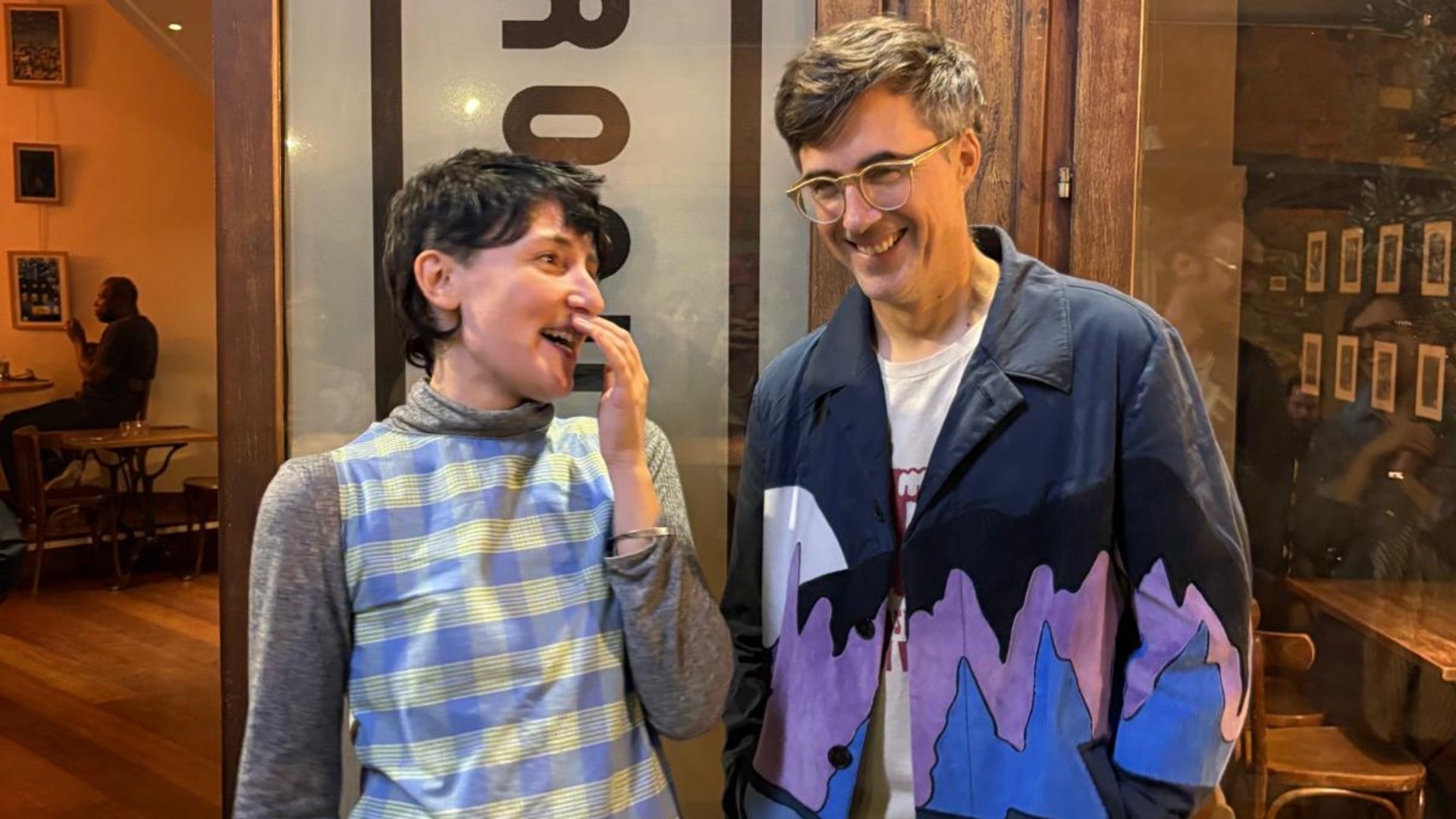
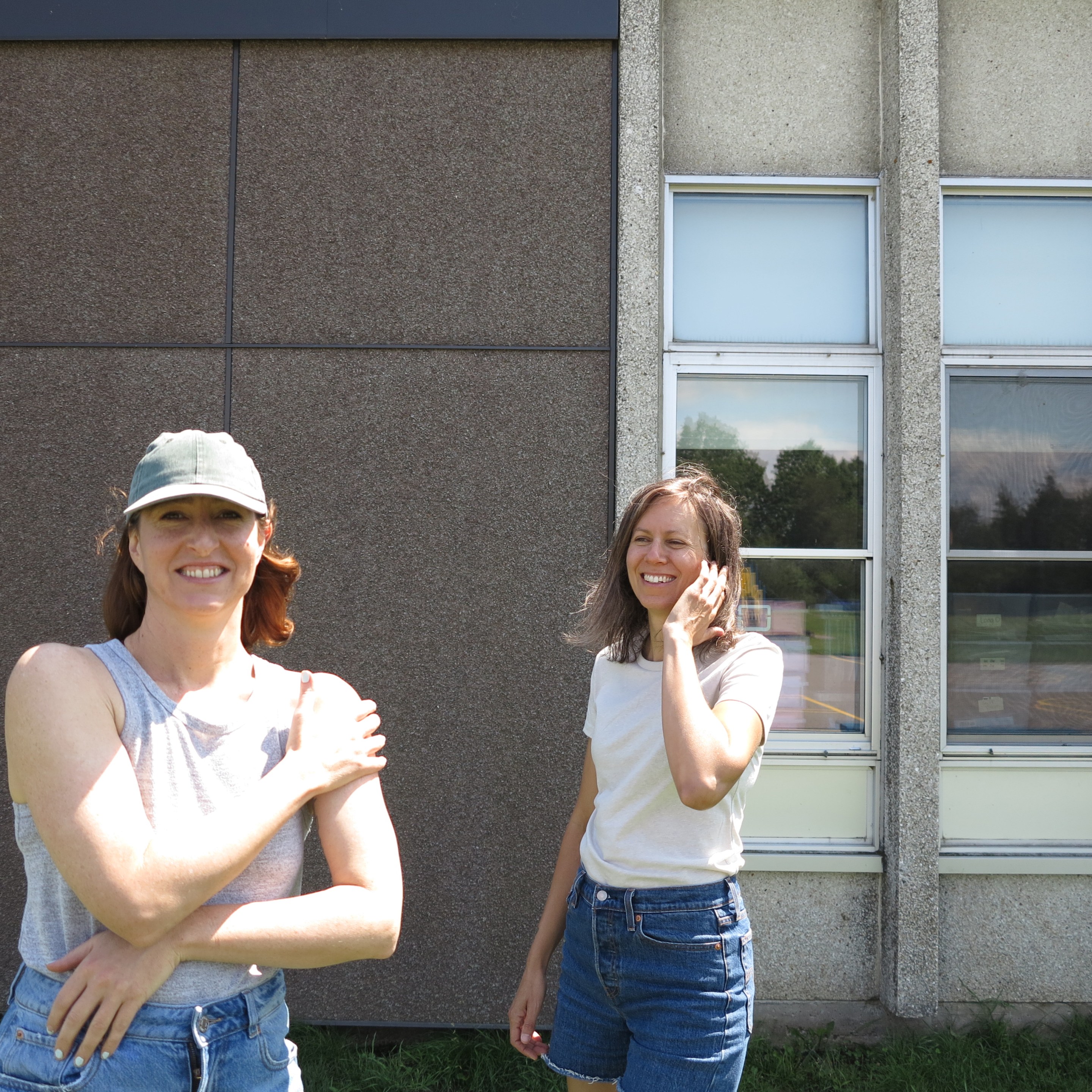
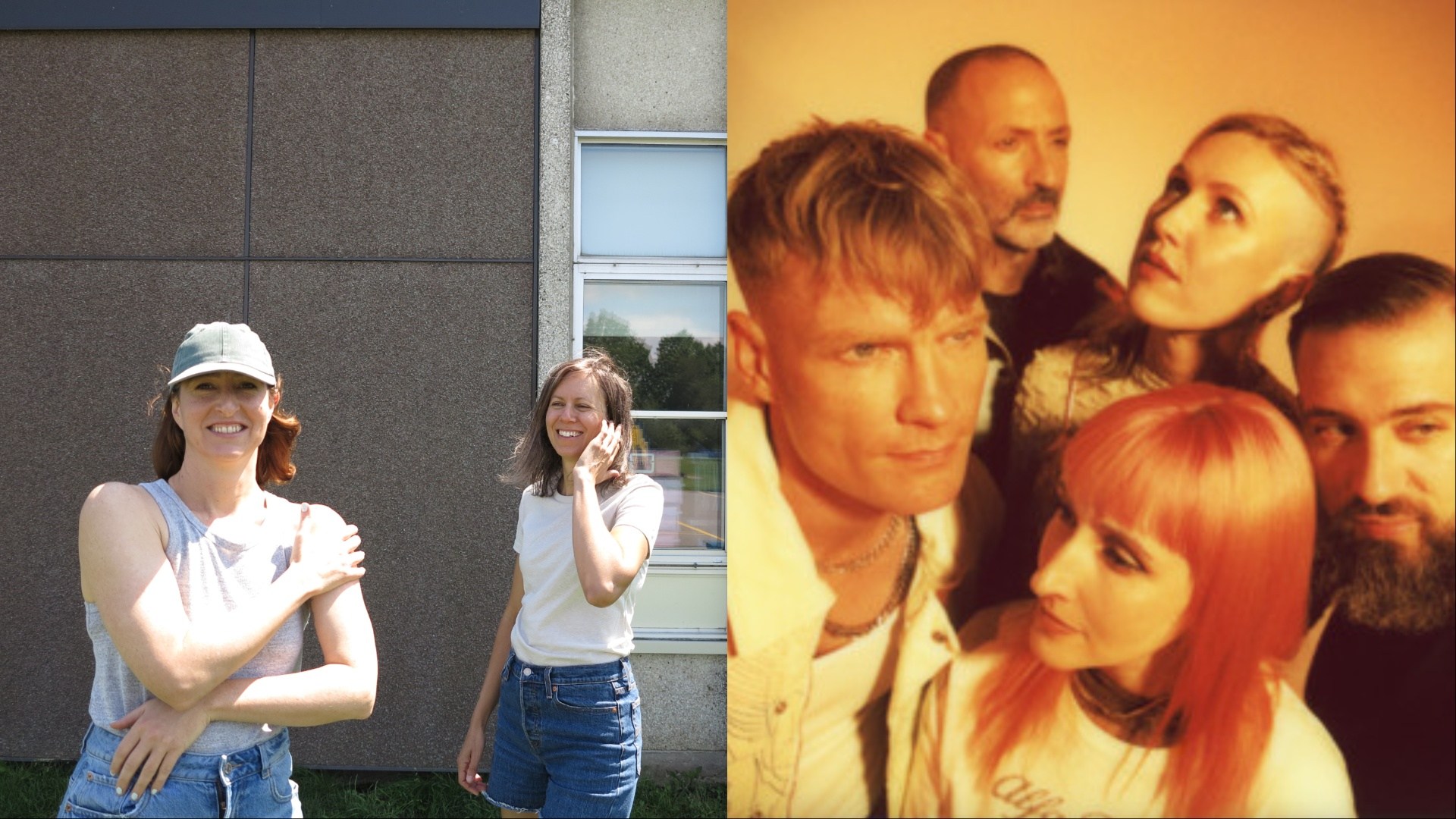
So Faint is the collaborative project of Hannah Georgas and Lyn Heinemann; Ryan Guldemond is a Vancouver-based musician and producer who fronts the band Mother Mother. So Faint’s self-titled debut just came out earlier this month (via Beetle Bomb Records), so to celebrate, the three caught up about the making of it, how they all met, and much more.
— Annie Fell, Editor-in-chief, Talkhouse Music
Hannah Georgas: I was just trying to think, when have we all been in the same room together? When's the last time?
Ryan Guldemond: Probably 2010 or ‘11. Maybe when Lyn was making the Portico record.
Hannah: That's crazy.
Lyn Heinemann: I have distinct memories of us running into each other on the drive and having lunch together at Eternal Abundance [in Vancouver].
Ryan: I don't have distinct memories anymore, so you're probably right.
Lyn: [Laughs.] I do remember it because Hannah and I were hanging out, and then we ran into you, Ryan, and you were getting a smoothie. It was a sunny day, we sat outside, and one of us was not feeling great but I don't remember who.
Ryan: Probably me. I was probably hungover. Fresh off a bender.
Hannah: I faintly remember that, Lyn.
Ryan: How long ago was that?
Hannah: Must have been 2016, ‘17.
Ryan: Can you guys remember your 2016 self?
Hannah: The only way I can remember those things is by music and what I was doing musically. Like, Oh, I put out a record at that time, now I can jog my memory… Can you?
Ryan: Yeah, I think I can remember what I was grappling with personally, or thriving within, in most eras. 2016 has a certain spice to the memory.
Lyn: Is it a good spice?
Ryan: It's a strong spice. It's not a spice I would use today in my dinner. But, you know, it was the flavor of the time.
Lyn: I can get behind that.
Hannah: I was also thinking before this conversation, I know how Lyn and I met, and it was through you, Ryan. But how did you two meet? How do you guys know each other?
Lyn: I wonder what your version of this is, Ryan, because I actually thought about this. I think I know the answer.
Ryan: Well, I was working with Shawn Penner like crazy at that time and he was making your records.
Lyn: I think that's exactly right. I think that Portico needed someone to do some arrangements of strings and horns for a couple songs on our second record. And Shawn was like, “Have you heard of this guy Ryan?” He recommended you, and I think I paid you a very sad amount of money to do a really good job of doing arrangements for two or three songs on that record. [Laughs.]
Ryan: Sad amounts of money back then were like large sums, so it was probably great.
Lyn: Well, I'm glad you don't remember how little it was. I don't really either… And I remember seeing Mother Mother when you were just Mother. I think we may have played on the same bill at Pat's Pub in the early 2000s.
Hannah: I don't think I've ever told you this, Ryan, but the first time I saw you guys play, I was not doing music at all. I was going to school in Victoria, and I was walking around downtown Victoria drunk with some friends, and we walked into Lucky Bar. You guys were playing, and I was just immediately like, “Holy shit, who is this?” I stopped in my tracks all drunk. I think everybody was kind of doing their thing, but I was so fixated on you guys. It was really inspiring.
Ryan: Aw. The first time I listened to you play music live was in Howard Redekopp’s basement studio when you were basically playing he and I your brand new songs on an acoustic guitar. It was sort of like a pre-pro session, because we were going to produce your record. Which was a totally crazy, strange, out-of-my-league thing to do at that time, because the only record I produced was co-producing O My Heart for Mother Mother. And it wasn't even like I was hired to do that, I was just an opinionated, yappy artist during the course of making that record, so it made sense to give me a production credit. But you reached out because you liked that record, and you told Howard you thought it could be cool if I co-produced it. So he invited me over, and you showed up, and that's when I met you. And then you sang all these incredible songs that turned into This Is Good.
Hannah: Wow. That's crazy because I can't imagine myself in that situation. I would have been so nervous. I know I would have been shitting my pants doing that for you guys.
Ryan: You sounded great.
Hannah: Thank you. [Laughs.] And that's really cool that you had never done any producing before that. I feel really special now. because I was the first person. I'll take credit for that.
Ryan: You know what? I don't know if you were special, but you were like the lab rat. And I'm thankful to you because I learned so much during that process. [Laughs.]
Lyn: Ryan, you've produced a lot of records now, and I wonder for both of you guys, when it comes to records you've produced, how has your approach to production evolved over time?
Ryan: I don't know how to produce music. I don't even identify as a producer because I've been more just running at the band thing and the artist thing for the past 20 years, and a byproduct of that is people want to make music with me or get me to produce. So it's like this thing I've happened upon as opposed to pursued with clarity. And I don't produce records with enough frequency to truly get good at it in my mind. It's too way too sparse for that to actually be a label that feels comfy.
Lyn: Interesting.
Ryan: And now I'm less and less interested in producing other people. I just want to make art of my own, and learn how to produce my own vision more effectively. And these days that has looked a lot like using less plug-ins. I just want less stuff in my session, and I want the source material to be more interesting based on what instrument I used, what mic I used, how I recorded it, what room I was in. As opposed to taking a clean signal and then mangling it with a thousand plug-ins.
Hannah: That's such an interesting answer because I think you're an incredible producer and an incredible person to work with, and have so many ideas. I found it really inspiring working with you. I totally get where you're coming from. For me, too, I don't have experience producing other people's stuff, except what we've been doing together, Lyn, and my own music. But I've worked with Ryan and Graham Walsh and Aaron Dessner and people like that where I've been like a little sponge learning things. But it has been all about, for me, collaboration and just learning tools to figure out how to create stuff on my own. But I don't know shit about plug-ins. It's just like, How do I make this sound good, and what's the vision here? What can I play around with?
Ryan: How did you approach the So Faint record? Did you have a methodology or a vision going in?
Lyn: What you said, Ryan, could answer where we started, which is just keeping things true to the song. Hannah, you might have a totally different answer, but for me, when we were thinking about what to add into the record or what to record and how we wanted it to sound, I primarily just wanted whatever we put on there to just serve the song. Keeping the songwriting really central to the record was the most important thing. So, just having things on there that made sure the song was really supported and stood out, and just keeping it true to what was essential.
Hannah: I agree with that fully. Also, I just kind of lean upon other people that I've worked with, again, in the past to collaborate with. Graham Walsh, who came in and engineered some stuff for us, is incredible with plug-ins and synths and toys, and then also a fantastic bass player. And then we hired drummers who were great, like Justin Peroff from Broken Social Scene, and Lyn’s a good friend Danno O'Shea, who's played on Portico records before. And then Sean [Sroka] and I sitting at home and fiddling with things on how to fill out stuff.
Lyn: You and Sean did a ton of work sort of at the end when we were no longer together. You would just send me little bits of sounds or ideas and I'd send you things back and forth. But primarily, putting the final touches on it was you and Sean sitting at your place and just figuring it out.
Ryan: Do you guys love it? Or are you like me and you hate every record when you finish it and it takes you a few years to get some objectivity?
Lyn: I love it.
Ryan: Yay.
Lyn: But maybe it's because it's just partially mine. I feel proud of us, and it's exciting because Hannah's right there too. It feels a little bit different because it's a joint thing. I can feel proud of her and excited as well.
Hannah: That's nice. I feel a mixture of things. We've listened to the stuff so much and we've worked on it so much and pulled it apart, and the mixing process for me is a lot of anxiety. ven mastering, too. By the end of it, I'm like, OK, I can't listen to this anymore. And it's no offense to the music, Lyn, at all. But I'm just so tapped on it.
Lyn: No, that’s fair.
Hannah: I have to remind myself — when we started writing the material and working on it and we had a finished song at its guts, that's when I was like, Oh, my god! I kept listening to it over and over again. But it gets to a point where I’m like, I don't have any more clarity on this anymore. I'm very tired of these songs, because we've just worked on them too much. But I am very objectively proud of the music. My brain is just too deep in the weeds with it.
Ryan: Oversaturation is a real thing.
I have a question. Does it get worse for you guys — the obsession with the song, with actualizing your artistic vision — as you get older? Or are you mellowing out with all that stuff?
Hannah: I go in and out of both feelings. I feel like I've got so much on my mind sometimes when it comes to all sides of music stuff going on, so I find myself not focusing on songwriting all the time or being creative. It's focusing on all the different aspects of the business too, whether I'm touring now or I'm putting on a music festival now or I'm playing in another band… So sometimes my creativity feels a bit thin.
Ryan: Does that bother you?
Hannah: I'm trying to be more accepting of that. I used to be very hard on myself with, It's been months since I've written anything! I’d feel pretty bad about that. But now I'm like, OK, no, it just means that I'm busy. And sometimes these other outlets keep me excited about music. Sometimes I need a break from just me me me me all the time. And that's something that was really refreshing about working with Lyn. When we started talking about working on music together back in 2023, I was in the thick of my own album. And, I don't know about you, but putting out music is more stressful for me these days than creating. I love actually creating. So it has been refreshing to work on other things, but it is a balancing act because I feel like I am not doing enough with my own stuff sometimes. I feel like when it comes to actually writing a song, I do really try to just follow that feeling of not putting too much pressure on it. It has to come from a real feeling of, I love this.
Lyn: It's interesting hearing your answer, Hannah. And it's an interesting question, too, because for me, as opposed to you guys, I'm not a career musician and I never have been. I very much am a hobbyist in every sense of the word. I guess that's a question for somebody who relies on music to earn a living; the pressure in the way that you see yourself, or the way your identity sits with that, is very different from the way that I experience it. Because I don't have any pressure at all. There have been times in my life when I haven't written music for years because I just didn't have time or didn't feel like it or whatever. And of course missed it, but it's not the same kind of pressure to create or produce that you guys would experience, because it's your living.
Ryan: Well, it's funny you interpreted the question that way, because I wasn't linking vocation or profession at all to the angst. Just the thing inside of you, regardless of whether or not it's your career, that creative necessity…
Lyn: But don't you think that they're kind of inextricably linked in that way? Because the act of creating is tied to so much more for the two of you than it is for me. That's just my hunch, but maybe not…
If we're taking it in a pure way, I think I just write when I want to. The last few years I've written a lot because I've kind of needed to. I think when you're writing music or working on things, it helps you get clear with the things inside yourself, with some truths, or the ways that you're really feeling. I find when I'm in that state of just writing music, I know myself the best. So I think as I get older, and hopefully ideally know myself a little bit better, the process becomes easier than it did when I was younger. So in that sense, it does feel more natural and I am more relaxed about it.
Ryan: That’s wonderful. That doesn't sound overly fraught, which I think is when creativity can come through best.
Hannah: What about you, Ryan?
Ryan: Oh, it's fraught, alright. [Laughs.] But, you know, it's sort of always been that way. I saw a psychic numerologist tarot lady on the weekend — she's this 80-year-old woman — and [I was] sitting across from her just venting about this time in my life and the fork in the road and the midlife… And she was just like, “Listen, I gotta tell you: it's always been this way and it's always going to be this way, so get used to it. This is who you are.”
Lyn: Like, for you specifically?
Ryan: For me specifically. I was like, “OK. You're totally right.” I actually took a lot of comfort from that. I feel so much better in the days after that reading than the months leading up to it.
Lyn: So the message is just, accept who you are.
Ryan: And not even accept — it’s the first step to then celebrating it and working with it and playing with it and owning it.
Hannah: I like that.
Lyn: Can I ask one silly question to end this? Because I think we're at time… There's a spider in the house. Do you kill it? Do you trap it and set it free? Or do you just leave it where it is in your house to live its spidery life?
Hannah: I feel really bad about this, but I would kill it. [Laughs.]
Lyn: Hannah Georgas, spider killer. OK.
Hannah: I mean, if it's close to a door in my house, then I'll find a cup and I'll put a piece of paper underneath and I'll get it outside. But if I'm lying in bed and there's a spider above my head—
Lyn: It’s dead.
Hannah: I'll get a kleenex and I'll say goodbye to the spider.
Lyn: That's fair. I have a mixed response. It really just depends on the situation, too. Mostly I'll put it outside, but the other two responses also happen. Ryan, what about you?
Ryan: I think I'm kind of like you, if I wake up to a spider on my nose, I'm probably gonna kill it. But if I'm just putzing around, “Oh, there's a little spider” — yeah, I’ll probably just leave it. Or if it's easy to shoo it outside, I'll do that.
Hannah: If I'm in a compromising position, then the spider will have to go.
Ryan: My sister woke up one morning and she had this sinus infection, or so she thought, and the whole day she was like, “What's going on with my face and my nose?”
Lyn: I don't like where this is going.
Ryan: It might have even been the next day — it was long after waking — she blew her nose and out came this giant moth that was so lodged.
Hannah: Oh, my god.
Ryan: So, yeah, stuff happens.
Lyn: [Laughs.] Stuff definitely happens.
Ryan: Sometimes they deserve to die…
I’m stoked to open for you two in November.
Hannah: We're so honored and thrilled. We're over the moon.
Ryan: I'm just so grateful. I can't wait to get done with my set, which I'll be super nervous and upset about, and then just listen to you guys crush it.
Hannah: [Laughs.] Same with us!