Fifteen years ago, my wife — acclaimed actor and filmmaker Adrienne Shelly — was brutally murdered. Her killer staged it as a suicide. It took five harrowing days and some dedicated, old-fashioned police work before an arrest was made. Her shocking death profoundly changed how I viewed the world and redefined the rest of my life. My documentary Adrienne, which premieres December 1 on HBO and HBO Max, is the manifestation of that transformation.
Adrienne was in the proverbial prime of her life. She was a wife, a mother, and with her film Waitress, was on the cusp of experiencing the successful work-life balance she’d feared wasn’t possible but could finally see on her horizon.
In just 24 hours, I went from being the happiest guy on the planet to living the worst nightmare imaginable. I was left with our two-year-old daughter, Sophie. All I could think was, “What am I gonna do… what am I gonna do?”
But in the days that followed, it became clear what I had to do: first, I needed to put aside my grief and publicly fight like hell to counter the suicide narrative that was gaining momentum. Next, I understood that Sophie’s health, welfare and happiness must become my number one priority. Lastly, I vowed to dedicate a part of my life to building, protecting and preserving Adrienne’s legacy. To humanize her and make her more than just a murder victim.
Those early days helped shape the main themes of Adrienne: life, death and aftermath.
The film needed to answer three critical questions: Who was Adrienne Shelly? What really happened on November 1, 2006? and How does a family navigate unthinkable tragedy? The challenge was in weaving the various themes together in a way that was balanced and which moved the story forward.
I did not go to film school. And with the exception of posthumously producing one of Adrienne’s scripts in 2007, I hadn’t worked on a film before Adrienne. I’d certainly never directed one. But I had a compulsion to tell this story, and had a strong vision for how to do it. I knew it would be incredibly emotional and challenging as both the film’s lead character and its director, but I had a great team behind me at HBO and Blowback Productions.
Adrienne was a storyteller. So making a film about her seemed the most fitting honor and tribute, and one which I felt would be the greatest gift I could ever give to Sophie. With Adrienne’s love and spirit still flowing through my veins, and her voice in my head guiding me, I set out on this daunting journey.
Adrienne is part biography, part true-crime tale, part human-interest story. But at its core, it’s a love story. Mine and everyone else’s. I’m so grateful that our friends and family, as well as those who knew and worked with Adrienne, bravely sat with me and spoke openly about her through pain so palpable even after a dozen or more years.
To be sure, Adrienne is a deeply personal film. But it’s also one with much bigger, universal touch points. I believe without documentaries, we would never fully understand critical moments in history or in the day-to-day lives of ordinary people. I believe in the raw power of documentaries. And I believe we’re fortunate that documentary filmmakers and their subjects show us a world we’d never know without them.
But not everyone is a storyteller. Not everyone wants to tell their story. Especially when tragedy strikes. I get that. I understand the need to place these experiences in a safe, private place and “move on.” But with Adrienne’s death I felt there was a greater purpose to be served in opening such a rare window into an even rarer universe.
My mission since Adrienne’s death has been to somehow turn our tragedy into something positive. One way was to create the Adrienne Shelly Foundation which, since 2007, has awarded over 100 production grants to women filmmakers, including Chloe Zhao (in 2012), who won this year's Academy Award for Best Director.
And now with Adrienne, whether its’s empowering viewers to fight for someone who can’t fight for themselves; to helping them reconcile grief and loss; and/or providing guidance on how to help a young child understand death, my hope is that the film might impact even one person’s life in some meaningful way.
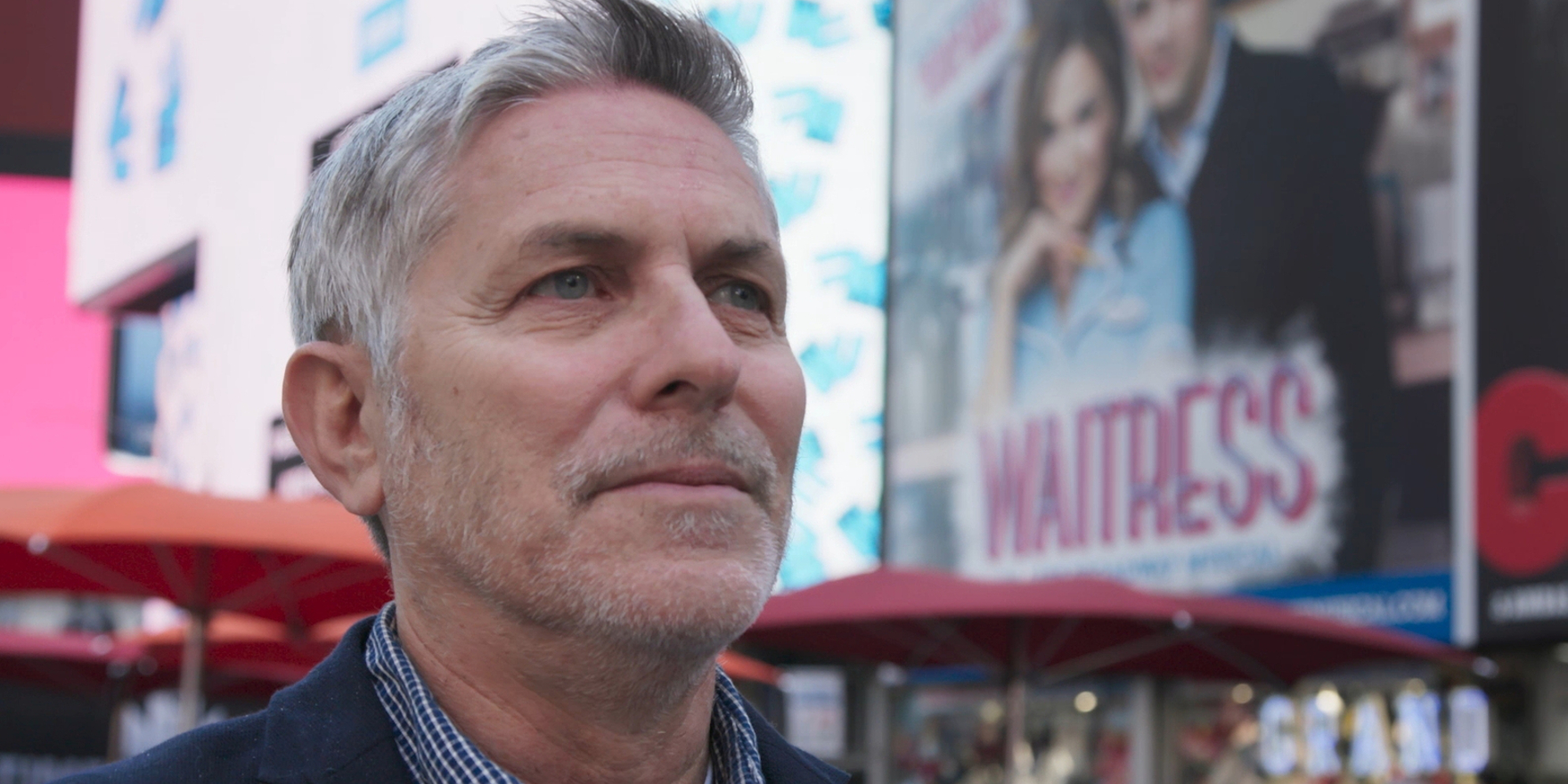
Featured image shows Andy Ostroy in Adrienne. All images courtesy HBO Max.