Mood Board is our column where artists share a few of the things that inspired their new record. This time, Otracami, aka the Brooklyn-based artist Camila Ortiz, tells us how Mariana Enriquez, doorways, Bones and All, and more inspired her new record Runoff (out now via Figure & Ground).
— Annie Fell, Editor-in-chief, Talkhouse Music
1. Mariana Enriquez’s Our Share of the Night
I read this book right in the middle of writing the album. It’s thick so it carried me through a long stretch of writing and recording. In some ways, it’s what I wanted the album to feel like. Sprawling, sparse, fantastical, horror, warm, alive. A lot of love and a lot of darkness in it. Some of the lyrical imagery from the album — eyelids, the other place, shadow, steam, ritual — feel in the world of that book, the texture and character of it.
2. Doorways
Doors, doorways, portals all come up a lot across the songs. The album is about the weight of choices, really reckoning with them, and doorways feel like that to me on a small scale, the thresholds in and out of different relationships and worlds. I’m often lingering in a doorway.
3. Luca Guadagnino’s Bones and All
I saw this movie very early in the album process. It’s about cannibalism — it’s slow, patient, gross. There is very pure love in it, and the world around that feels dark and dangerous and mundane. The main characters are cannibals who really struggle to live with that part of themselves.
There’s a moment in the movie (spoilers, I guess?) where the main character says something to someone like “I don't trust you. It doesn't matter if I'm right or wrong about that, it matters that I feel it.” It’s really simple but I felt like that was something I was learning while writing the album. The world of the movie helped clarify that.
Separately, the sound design on the moments of cannibalism — like, crunching on bones, chewing flesh — is so sharp and loud and jarring, and then so much of the soundtrack is like gentle, slow, guitar. I hope that contrast lives in my album too.
4. Sapo
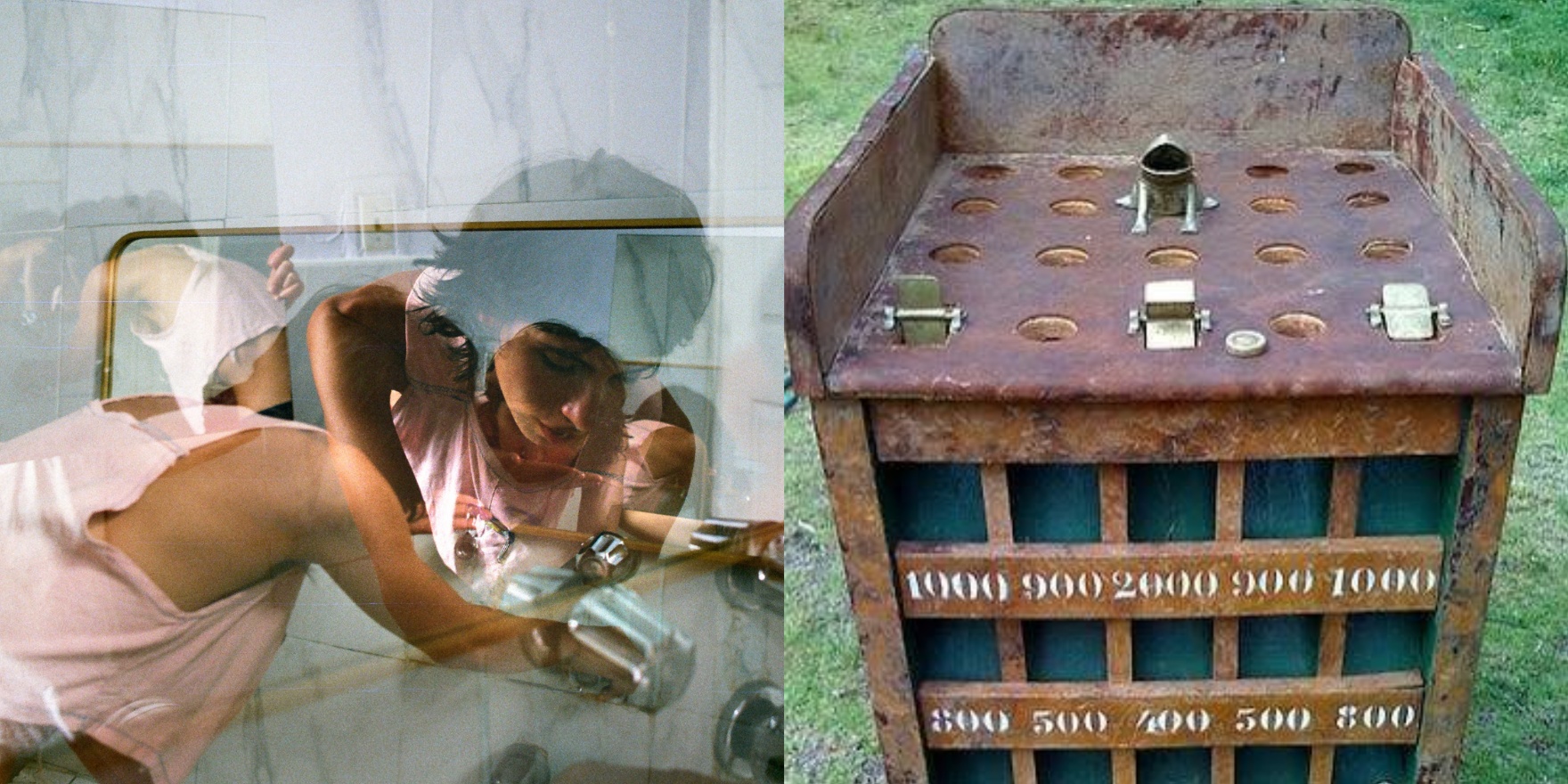
This is a South American bar game my dad told me about. You basically try to throw a coin or token into the mouth of this little brass frog. I wrote the last song on the album, “Penny Frog,” around that image, and it felt, in some ways, like what the whole album is building up to: tossing a coin, getting a little closer to letting go of control, of knowing.
5. Dawn
Moments of writing the album felt sort of mucky, gross, dark, but other moments felt like dawn. While I was writing it kept waking up really early, on accident and on purpose, and watching the sunrise in the middle of a bleak winter. Sometimes I wrote or recorded then. There’s a clarity, dew, and newness to early morning that was inspirational to me.