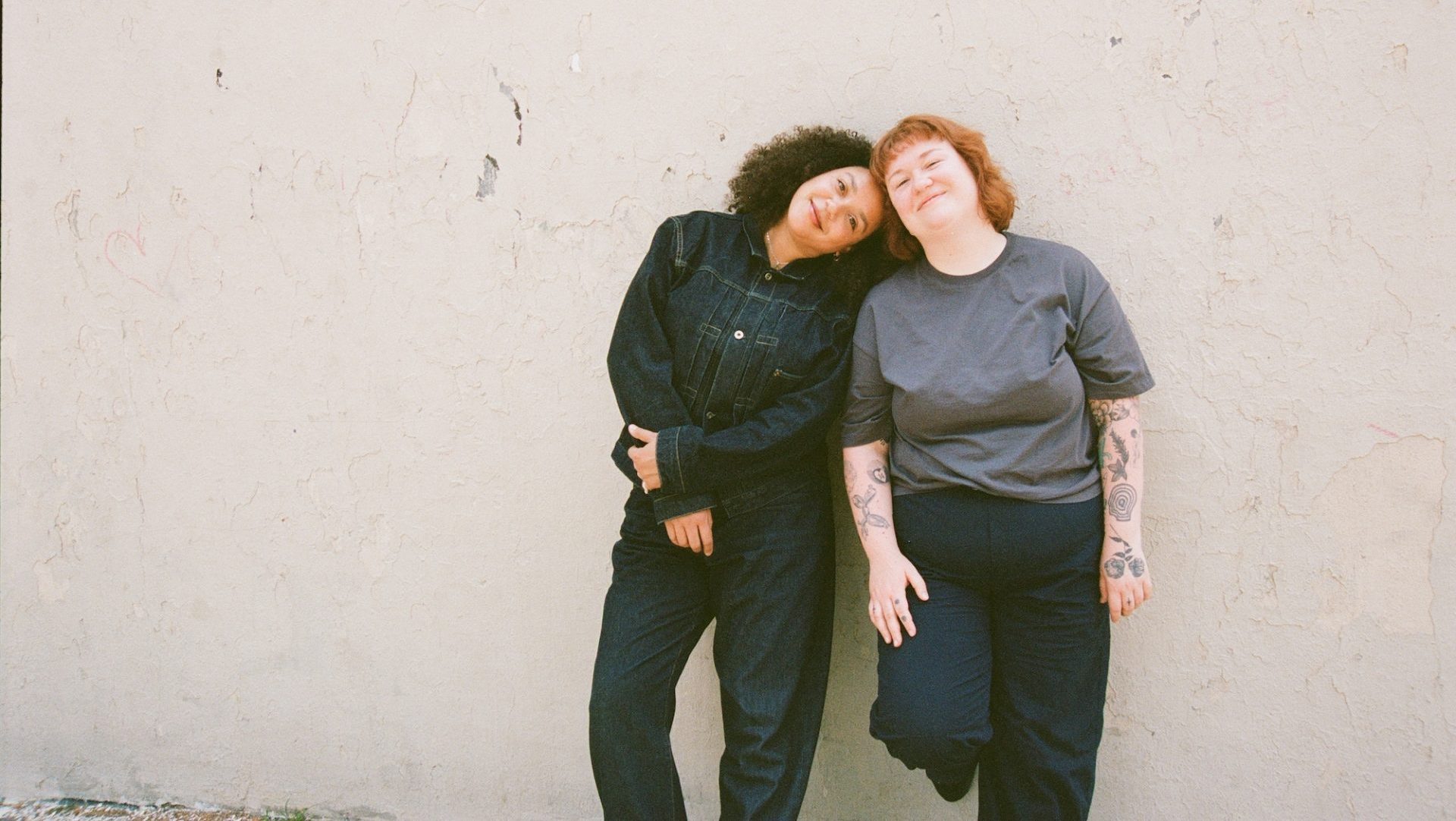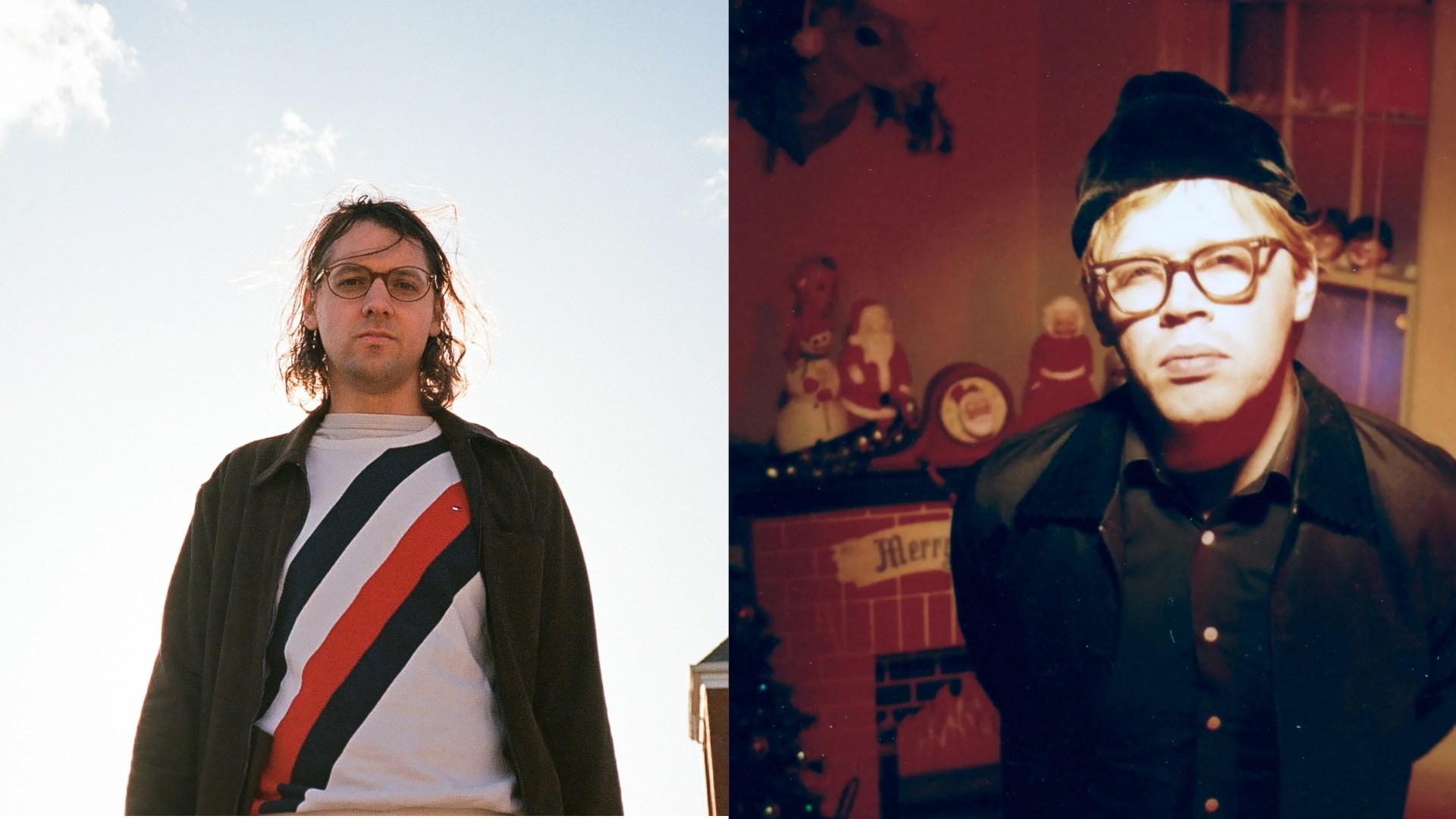
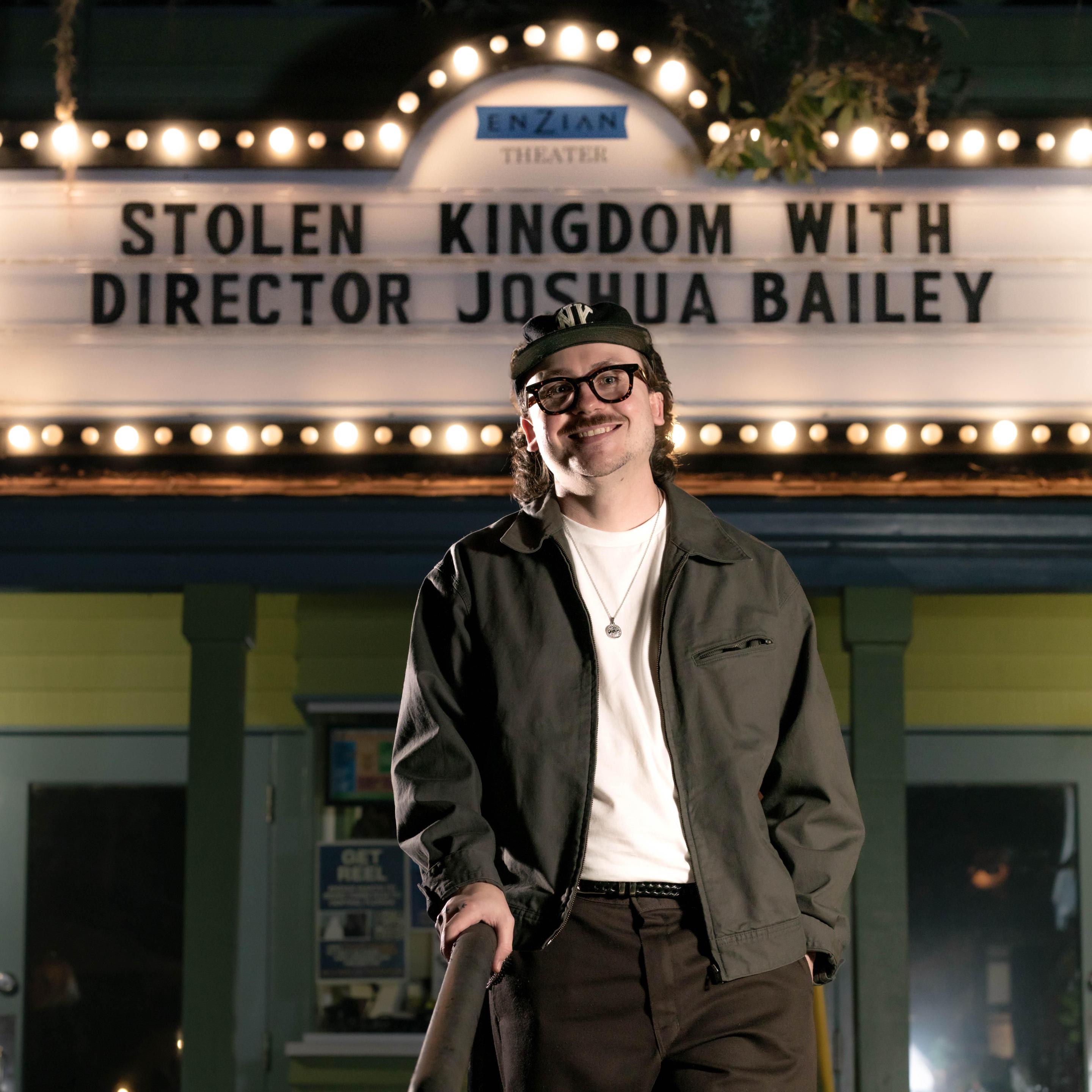
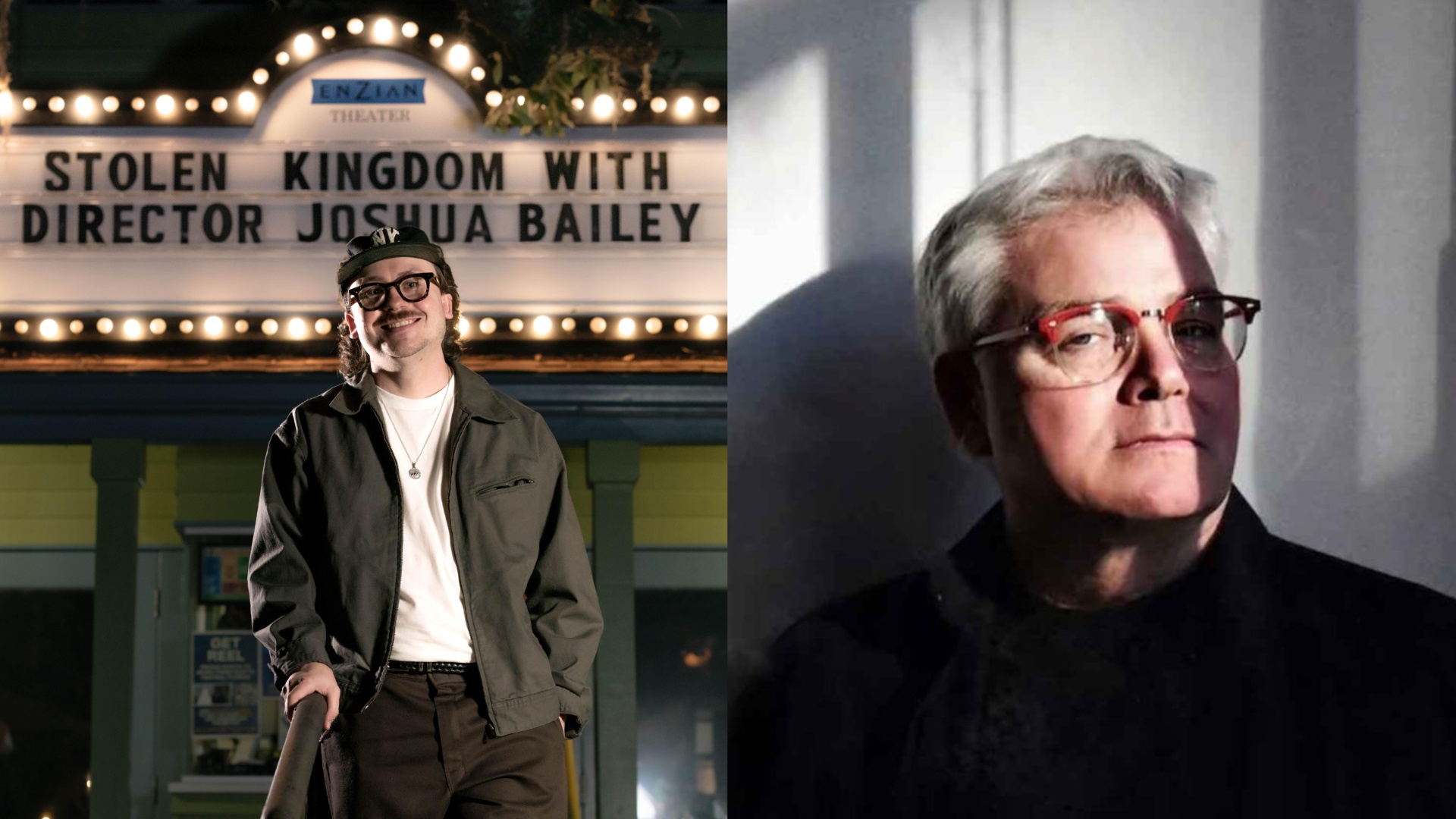
Joshua Bailey is a documentary filmmaker whose latest film, Stolen Kingdom, delves into the history of mischief, scandal, and theft at Walt Disney World; Brendan Canty is a musician, composer, and filmmaker, and the drummer for Fugazi and the Messthetics. Brendan scored Stolen Kingdom, and to celebrate the film’s release, the two got on Zoom to catch up about how their punk roots inspired their current work, and much more.
— Annie Fell, Editor-in-chief, Talkhouse Music
Joshua Bailey: You obviously have quite a history in punk. I think it's interesting because my experiences and attitudes towards it, and things that I learned from it were, all formed while you were there. So if someone asked me, how do I apply a punk rock mentality to daily life, I think it would be very different than you.
Brendan Canty: I don't think so. Honestly, I came into it midstream as well. I was always on the younger end of everything. In 1980 or ‘81, when I saw Teen Idols and the Cramps and Untouchables and everything, I was 14 and 15 years old. In no way shape or form at 14 or 15 years old are you dictating what's going on in the scene. You either show up into a music scene and are welcomed into it or you're not, basically. That's one of the great things about the punk rock community that I was born into: it was incredibly welcoming to everybody, and it was a little bit goofy, but it allowed for all manner of kids to show up. It was a big tent enterprise. I'm always grateful for that. I think all that was put in place well before I got there… The fundamental dictates of the punk rock movement were established a long time ago, and in DC specifically. You're much younger than I am and were therefore downstream of it. But I think if you're feeling that coming from older people, it came before us even. That’s why you have sensitive, empathetic, intelligent, and non-self-destructive people in this music scene helping each other out. I think it's the foundation of it, and you and I are both beneficiaries of it.
Joshua: It's interesting because I feel like for me — and maybe it was for you as well — it was a very direct lifestyle influence on me growing up. Like, a side effect of the music, I think. I love the music and that affected my daily life in the way that I live and think, because it is a very morals-based and ethics-based music scene. And you feel like when you were there, it was already established. So did that influence your life?
Brendan: I think there were dictates in the scene that we were following, but there was also a shit ton of tribalism. I know eventually we got there and we were protesting all the time and getting super politicized, but that was maybe a few years [later], like ‘84, ‘85, with apartheid and all that stuff. That's when I feel like the political awakening happened. Now, having said that, we grew up in DC, and I have older brothers and sisters who were die hard hippies and protesters and saw Hendrix a bunch… There was a lot of political rhetoric going on in our house.
Joshua: Well, that makes the DC punk, I think, the most interesting to me. I don't think it was top of mind at first. It was very just baseline ethics. There's rules — sometimes it does get a little rule-y — but I think I liked that as a kid. It felt like something I could prescribe to.
Brendan: At least somebody’s saying something.
Joshua: And I'm sure you guys heard it a lot in Fugazi — there's so many rules. “Don't slam dance, don't do this…” Some people thought that was lame. I even heard that right at the end of you guys playing, when I started to get into that stuff and people were like, “Yeah, I heard you can't slam dance at a Fugazi show.” It's like, “They're getting old anyways.”
Brendan: [Laughs.] That's right. It was time for us to close up the shop by the time we were done.
Joshua: But I really liked that. That was the first time I feel like I had experienced those kinds of sets of ethics in music, and that directly influenced my filmmaking. Which is cool that it came all the way around to working with you, because specifically, the DC and Minor Threat DIY mentality influenced me to make stuff outside of music. Because I was trying to make hardcore bands and things that were really reflective of the mid- to late 2000s.
Brendan: You gotta give your origin story. Where'd you grow up?
Joshua: I grew up in Florida, in Tampa. Tampa has a really cool music scene, really kind of intense. For a while, there was a studio that recorded a lot of metal bands [Morrisound Recording], so tons of metal bands would come to Tampa, or come out of Tampa. I know that Death recorded a bunch out of Tampa. I know Cannibal Corpse recorded out of that studio. But I think in the 2000s when hardcore was evolving, it went really heavy. Maybe those heavy influences in Tampa just evolved into hardcore, and whatever hardcore became in that Myspace era.
Brendan: Usually it just went back to metal. If you're in a hardcore band, you have a couple choices. We took the other choice, but a lot of bands went into metal for sure.
Joshua: The breakdowns started to come about… I definitely reaped the benefits of all that as a kid. It felt like it was so much further away from the punk origins and hardcore punk stuff, but I loved it. I still remember my first show that I went to, a really small show at Transitions Art Gallery at Skate Park of Tampa. There was a metal band opening and people were dogpiling the stage. Changed my life. I was 12 or something. A very violent show…
I don't know if I told Ian [McKaye] this when I was there, but my friend showed me the video of Guy and the basketball hoop on his iPod touch when we were in middle school — all these things were there. These ancient texts were written. If a few chapters were already written when you started, I think they continued to be written as you were there, and then I got to watch that on a basketball court in 2005.
Brendan: Oh, wow.
Joshua: It deeply influenced me. It influenced everything in my life, I think. Because it does, like I was saying, have those morals to it, and because I was so young, it was a very positive introduction to that. Sometimes negative, too, maybe because I learned it's really fun to be crazy and kind of violent in a non-destructive way. Not hurting anybody. But, you know, it's fun to climb up on stuff and jump off and respectfully bump into each other. [Laughs.]
Brendan: Well, you'll be happy to know that we spent a lot of time setting fires too. There was plenty of that. We did a lot of experiments where we would, like, spend an entire weekend in a car, or a whole weekend in a room with all the lights on… Well, I shouldn't talk about all that stuff. But we did plenty of Jackass-y kind of stuff.
Joshua: Oh, yeah, I was growing up in that. That was another thing: I had all the stuff that came before me, but then happening at the time was this great period of music that has been starting to become romanticized, the 2010s pop punk, emo era of bands like Title Fight. And I know that Ned Russin from Title Fight is directly influenced by Fugazi and Minor Threat. They were one of my favorite bands at the time. They were greatly influential to my high school period. And now they're treated like they're the Beatles, which is funny.
Brendan: Isn’t that wild? I think it's similar to when Nirvana happened. They just go back and everything that was within five feet of Nirvana gets blown up. And now that Turnstile is happening, hardcore is back and there's other hardcore bands coming up that. You're going to see more and more of that. People are going to start referring back to the original bands that that influenced you and that influenced them. It gets so weirdly reductive after a while, and all you can hope for is that you're one of the people that gets mentioned in 20 years. [Laughs.]
Joshua: Yeah. It's so interesting to see it now on the internet — which was around but wasn't what it is now when I was a kid. It's great for discovery, and people learn about these older bands. Maybe someone will see a Fugazi clip on TikTok.
Brendan: Yeah, for sure. And there's new ones coming out all the time. People are like, “I have this VHS,” and they pop it in and they digitize it. I see new Fugazi stuff all the time. There's a thousand videotapes of them out there. That's what Ian's been so good about doing, documenting the legacy. As all of our information gets siloed and taken over by business, it's important to leave some breadcrumbs and say, “Look, we were here.” That's super important.
In that way, I really appreciate the film you made about me and my family. Are you working on any other ones in that series?
Joshua: Yeah. The goal is and always was to start with you to spin it into a series. But it's very hard to get musicians to have time, because all these people are still, for the most part, active. You still tour a lot.
Brendan: I do. I just finished. I’m so happy to be home.
Joshua: And you’ll probably pick right back up in a few months… But, yeah, hopefully that will become a bigger [series]. I like hearing from people that you don't always hear from. I grew up listening to every interview with Ian and that changed me. That's where I learned about DIY, and that's what convinced me in my own head that I could go film a movie by myself or with three friends with no money. So I definitely want to continue to do it. I've been talking to Vinnie Fiorello from Less Than Jake, who is also a drummer, which is funny. You said I should do all drummers.
Brendan: [Laughs.] Don't listen to me.
Joshua: You said, “If you're a masochist, you should do all drummers.” [Laughs.] Drummers, I think, are funny. You don't hear from the drummer a lot. They literally don't have a microphone most of the time.
Brendan: Rightfully so. It was always considered to be one of the cardinal rules of rock & roll in the Fugazi camp that you don't give the drummer a microphone.
Joshua: I think it's an interesting idea to give the drummer a microphone. Or the bassist. Sometimes bassists do backup vocals, but they're not very vocal in interviews all the time… Everyone is so different in a band. Fugazi is a great example — I think you guys are all so unique and different. So I love hearing from different members.
I would love to hear your thoughts on Stolen Kingdom. I think it has a lot of inadvertent punk infused in it. People that don't come from that world maybe don't see it because it's not blatant. A lot of these people aren't punkers; they're just Disney fans, for the most part. But you obviously didn't know anything about this before the project was presented to you, so I'm interested in what you thought after you watched it the first time.
Brendan: I think it actually is really exemplary of the two sides of the punk rock world. You have people getting into this thing for totally different reasons — you show the side of the people getting into the Disney fetishism out of just love and interest — I'm going to define them as like the straight edge kids. And then eventually it morphs and it goes downstream a little bit, and there's people who are latching on to that and the echo chamber. This is always what I thought about with the punk rock world, where you send out a message, and then you get the echo back and suddenly you're hearing it translated through other people's lives and ethics and you're like, “I would never have done that, though. That can't be what you're getting from what I'm sending out.” And then the next generation is hearing that echo. It's like playing telephone. Suddenly you don't even understand what the original message was.
It’s the same when I watch your film. It's a really perfect distillation of that idea where you see every generation respond to the information and you're like, “Oh, no, you're taking the wrong message that we're putting out. We loved the artistry of this and we're reverent of this.” And then the next generation comes along like, “Oh, yeah, but we could break in here,” upping the ante — and then suddenly you get to the fucking horrific thing, which is where we are with punk rock, which is, “Yes, but you can fucking sell it.” That, to me, is really familiar, just from being 60 years old and seeing this process a few times over. It’s really well distilled in your film. I don't know if that's called punk rock or capitalism, but I definitely recognize all of it.
Joshua: That's super interesting. I have always seen the parallels between it, and I don't mind that not everyone sees that correlation. The ones that do, do.
Brendan: It's also also the valuing of something that is not valued by our capitalist, consumerist society. “How could you possibly be throwing away this ride that means so much to so many people?” That is the definition of punk rock. The things we care about are so discarded by everybody else. But it's what we love.