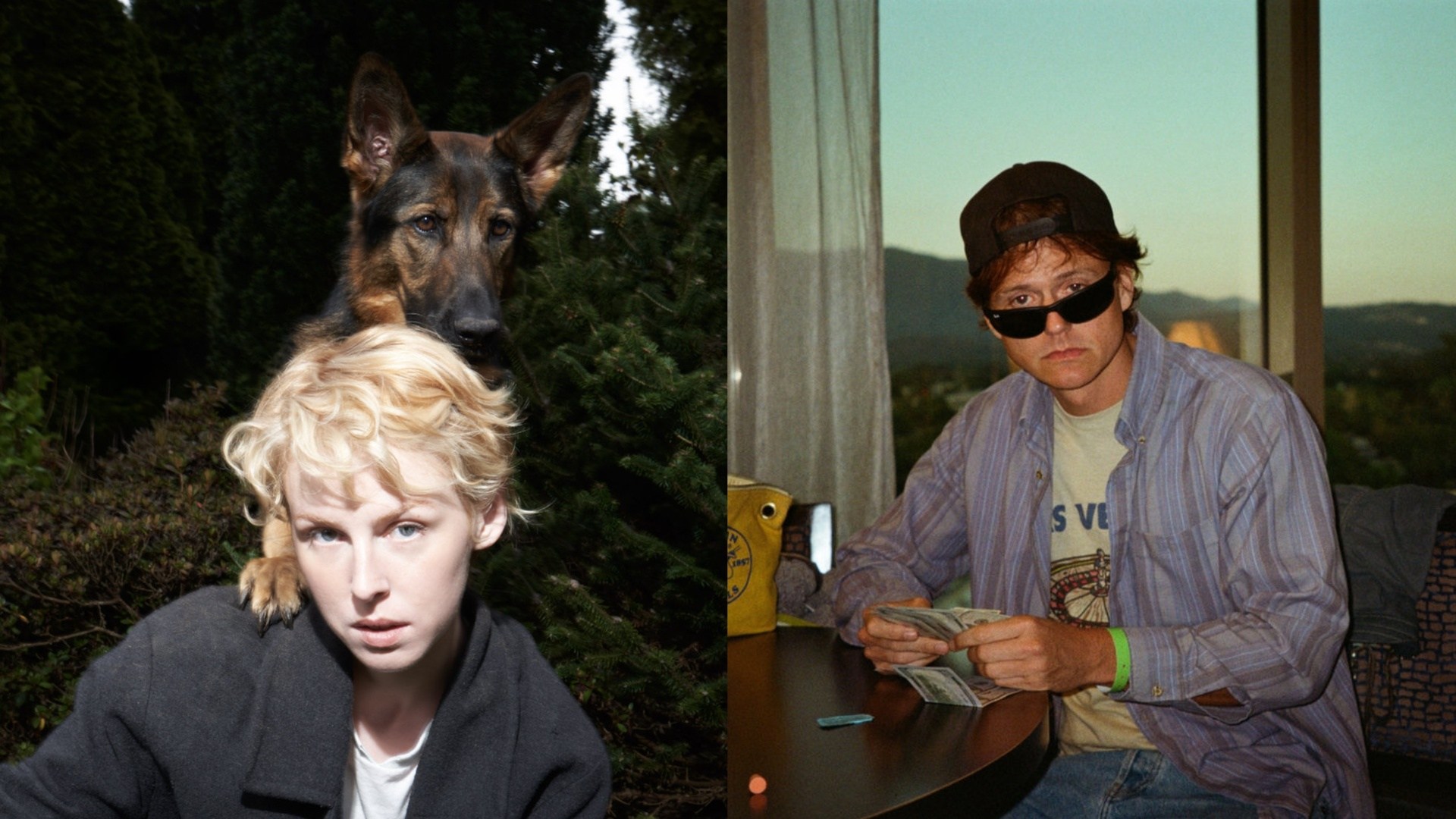
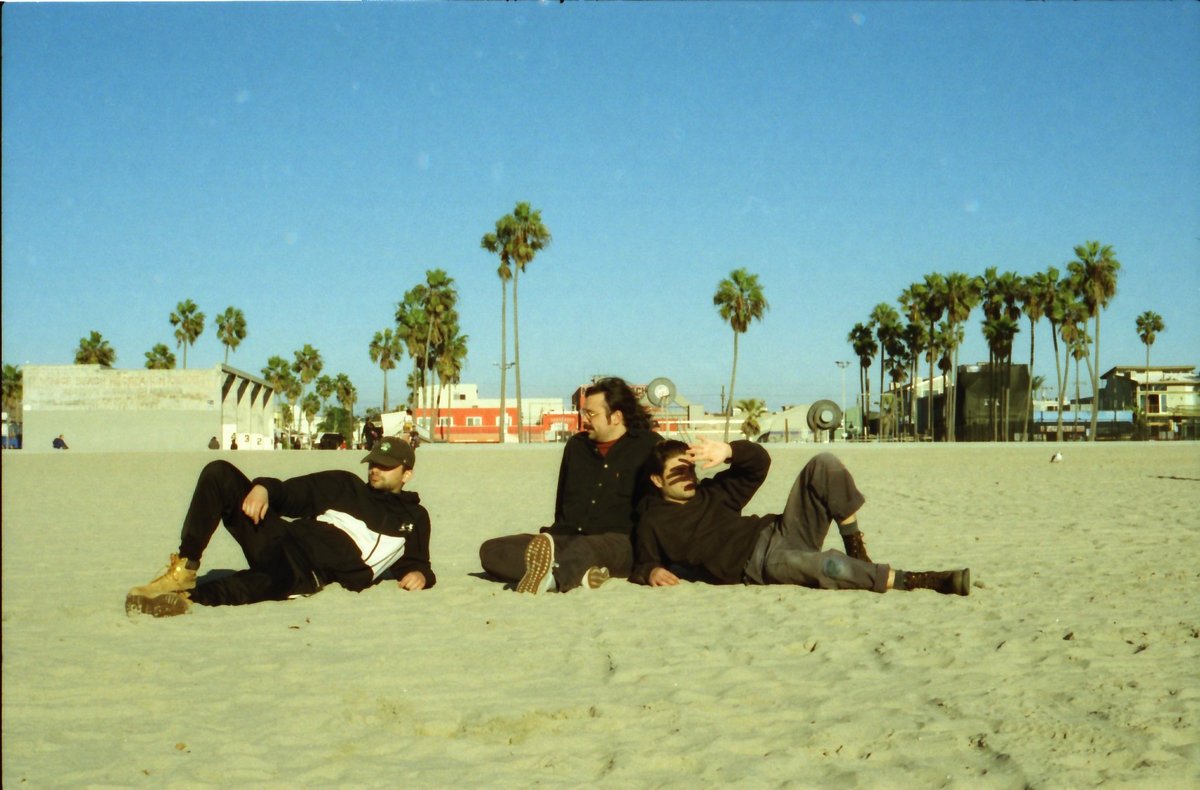
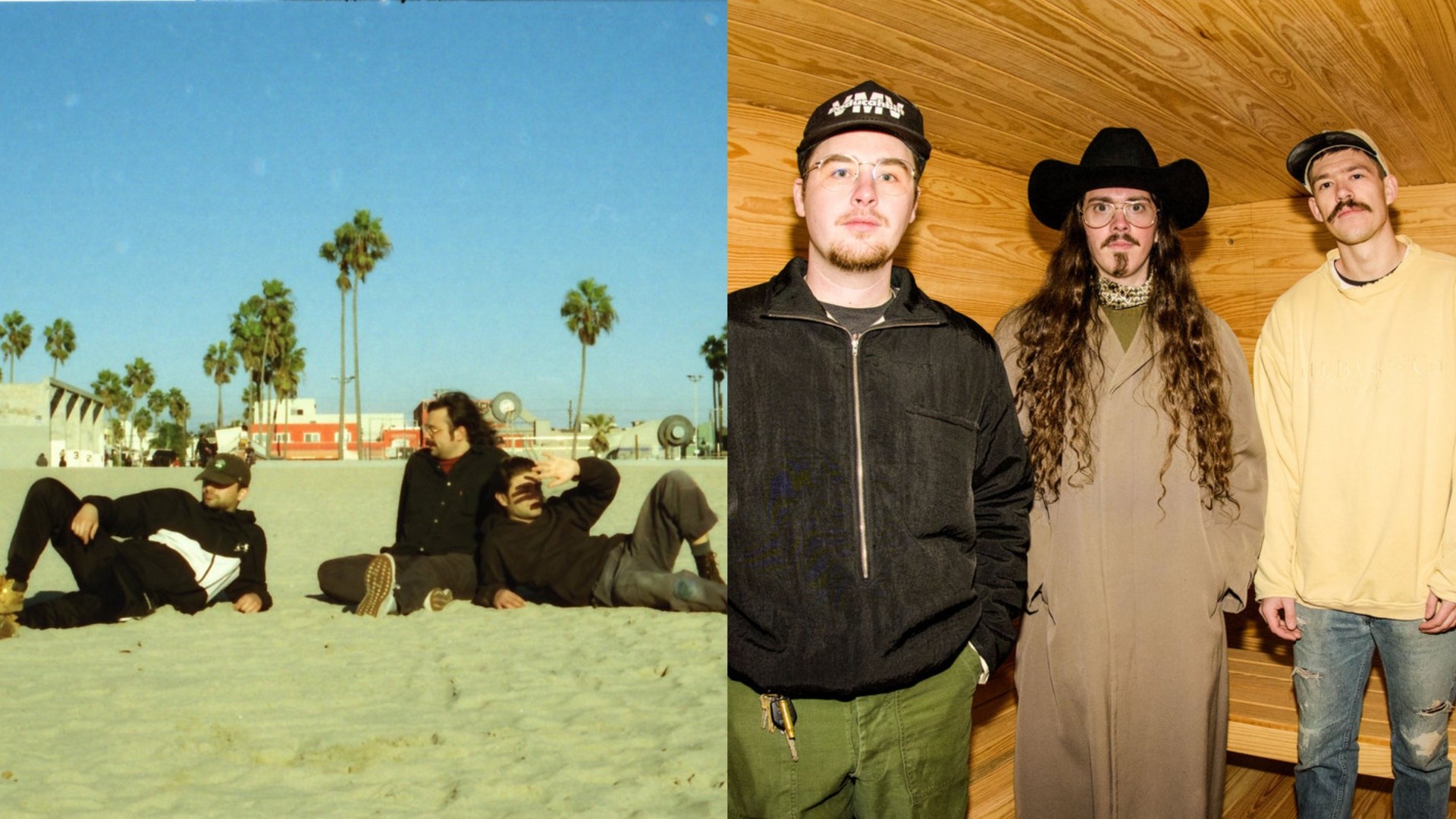
Tristan Kelly is the bassist for the Lubbock, TX band Shallowater; Dimitri Giannopoulos fronts the Boston band Horse Jumper of Love. The 10th anniversary edition of Horse Jumper’s self-titled debut just came out (via Run For Cover), and the band is currently on tour playing the record in full. Shallowater joined them for their LA date last month, and ahead of the show, Tristan and Dimitri got on the phone to catch up about everything.
— Annie Fell, Editor-in-chief, Talkhouse Music
Tristan Kelly: Whenever I first met you, I was years off from ever even going into a studio and recording our first record.
Dimitri Giannopoulos: Dude, I always forget — when we met, was it 2021 or 2022?
Tristan: I think it had to be ‘22.
Dimitri: That was a crazy tour.
Tristan: [Laughs.] Yeah. Short-lived on my end. But I think because I was only with y'all's tour for, like, two or three days, that's what also made it more special to me. I didn't get to get bored of it, or get used to it. For context, it was you guys and MJ Lenderman and Hayden Pedigo, which is crazy.
Dimitri: No one believes me that there was once a time where MJ Lenderman and Hayden Pedigo opened for Horse Jumper of Love. They're like, “Alright, grandpa, get to bed.”
Tristan: Dude, I was there. It's real! I have video evidence of it…
Dimitri: [Laughs.] That was a good time.
Tristan: I was familiar with your band but I wasn't familiar with MJ at all. I don't really think that many people were back then. I just remember being blown away by both of y'all. I had started my band maybe nine months before I went on that little tour with y'all and I remember being embarrassed to say, “I'm a musician, too…” I saw both of y'all play for three days in a row and just remember thinking, Oh, man, my band's not that good. We need to go home and practice a lot. Because, you know, I'm from Lubbock, Texas, and I didn't really ever see shows except for my buddies playing in someone's living room.
Dimitri: I've always been curious — you guys and Hayden are from that area. What else was going on back when you guys were coming up over there?
Tristan: There was a house show venue called the Gypsy House.
Dimitri: Alright. [Laughs.]
Tristan: Yeah. [Laughs.] This guy saw this Wes Anderson movie that had “Gypsy Cab” in it — that was the cab service in the movie — and he called his band Gypsy Cab and the house Gypsy House. This was, I don't know, 2016, 2017. And, you know, in Lubbock, things are a little late to change, so it was a bunch of Mac DeMarco rip-off bands.
Dimitri: Yeah, sure. That was the time though.
Tristan: Yeah, exactly. Things have changed a lot. Now there's a bunch of TAGABOW bands…
But, yeah, that was it. It was this house that you could go and if you told them, “I have a couple amps and I know how to play a couple songs,” you’d go up there and play. I didn't even play music ‘til 2018, when I met Blake [Skipper], our guitarist. And I just bounced around and played bass in a jam kind of way. I didn't really know how to write a song or anything like that.
Dimitri: You first started writing when you joined Shallowater?
Tristan: Yeah. Blake had a couple songs that I learned, and I was terrible at it. I could barely play my instrument. I went to SXSW with Blake like a month after I met him, and people thought that we were in a band.
Dimitri: You have the look for sure. If I saw you and Blake together, I'd be like, “Yeah, these motherfuckers are in a band together.”
Tristan: [Laughs.] We got back home and Blake was like, “Maybe we should actually try being in a band…” Blake was doing Bob Dylan covers at the coffee shop in Lubbock. He’d wear these big goggles and this long trench coat and just play Bob Dylan covers, and I was like, This is the weirdest guy I've ever met. This guy's gonna be my best friend now. So we told a bunch of people to show up and we were going to be this nine-piece noise rock band. But then I was the only guy that showed up, and I learned “Lonely Sea” from our first record. It took me a week, and we played an alleyway at this art festival and I messed up so bad that it put something in me like, I gotta do this again and I gotta do it right. And that's how me and Blake started playing music every day.
Dimitri: It's kind of like a gambling addiction in that way. Because I've experienced the same thing where you get in front of people and you fuck up, and then you're like, I have to prove myself now. It's the same with gambling where you're like, OK, I lost $80, I just have to go back next time and win.
Tristan: Yeah, dude. Because if you win, you get the $80 back and it's like it never happened.
Dimitri: Right. But you could double down and then be like, What if I win $80 back, and then make another $80? Just negating your loss isn't enough.
Tristan: You have to get the memory of a win on stage to erase the loss you had. But if you end on a loss, you're gonna think about that ‘til the next time you get to play.
Dimitri: Totally. I was trying to get hype for my last show and — this is so stupid, but I was reading about Alexander the Great. It sounds in hindsight like a bit of an incel move… but I was reading about him and it was like, “Alexander the Great conquered the Persian Empire when he was 26, he was at the peak of his military career in his 20s, and when his army thought they were going to go home, he was like, ‘No, we're gonna keep going…’” For some context, the reason I have been into Alexander the Great is because I'm 32 years old and this is my Alexander the Great year, because he died when he was 32. So I was reading and it was like, “And then he kept going and he failed miserably and died.” I was like, Oh, shit. Maybe I should stop reading about him. Because now I'm in my 30s and I don't want this to be a sign to stop.
Tristan: Yeah, definitely not. See, he should have quit while he was ahead. But you should keep going.
Dimitri: Also with age inflation or whatever, 32 back then was like…
Tristan: That's an old man. I think you're nothing like him.
Dimitri: Thanks, man.
Tristan: You're gonna keep going on forever, unlike that guy.
Dimitri: Yeah, fuck that guy.
Tristan: The show in New York you guys played with TAGABOW where they played gestures been — I've never been more jealous in my life. All my friends were posting videos… I found TAGABOW when they were doing Destiny XL, but gestures been was the one for me.
Dimitri: I mean, “fake twenty” is one of my favorite songs ever.
Tristan: It's incredible. I think we tried to cover it once and we just decided not to.
Dimitri: I love that. I think there should be more of that, people within the same scene covering each other.
Tristan: We tried to do a cover of “Sugar in your Shoes,” actually—
Dimitri: No way!
Tristan: And it became “Highway,” our song on [God's Gonna Give You A] Million Dollars.
Dimitri: That’s sick!
Tristan: What happens a lot of times is we try a cover and do it our own way, and we end up just being like, “Oh, wait, no. We tried to be so different from the song, we wrote a different song.” And writing songs for us takes forever, so we're like, “Well, do we want to do a cover that we can't record that's fun? Or do we want to check a box and put a song on an album?” So thank you for writing “Sugar in Your Shoes,” which I think is probably one of the greatest pop songs I've heard in my entire life, maybe.
Dimitri: Thanks, man. I know what you mean though. That kind of happened to me when I did the Birdshot cover. I was like, I really like this riff I came up with, should I just use it? Finding a good riff takes a while sometimes. There are times where it comes easy all at once, but then I'll go a stretch… Like, I can tell how creative I've been by looking at my voice memos. It's October 7 and the last voice memo I have is September 6, which is a month. That's brutal for me. It's dry season right now.
Tristan: I think I have probably thousands of voice memos now. I really need to start labeling them.
Dimitri: Yeah, same. Mine are all just my address — which I will not disclose. Or then it does whatever business is closest, and there's this gym near my practice space, so all my practice space voice memos are like, “UpFit Training Academy 42.”
Tristan: Getting your reps in, dude.
Dimitri: I know. But the thing I have to do — and I never do, and I really, truly must — there have been so many riffs that I just can't figure out again because I don't write the tuning down. It's so many that I have to look at the date and be like, OK, what was I fucking with at that point? If you try to figure it out by ear in another tuning, sometimes you can.
Tristan: Yeah, or you'll find something completely different.
Dimitri: Yeah, you'll find something different, or something that is a similar voicing but it's not exactly the same. And sometimes you're like, Cool, this sounds better. And other times, it's just not the same.
Tristan: One thing I've run into with that is I'll find a new tuning that I know how to play the thing I was looking for in, but it is completely useless for anything else.
Dimitri: I know what you mean. For a while on our record Natural Part, I was using a stupid ass tuning, and part of the only reason I don't play a lot of those songs is because I'm just like, I'm not going to this tuning right now. Horse Jumper’s not at the level where I can be fucking Thurston Moore bringing 12 guitars and having a guitar tech make sure they're all working. But I'm rocking two guitars right now and it works.
Tristan: Me and Blake both write riffs on guitar, but then I also open tune my bass, so I have to bring two basses with me everywhere, which feels ridiculous. People come up and they'll ask me, “Why do you use two basses?” I'm like, “Dude, I use three different tunings…” It's a cool thing to do, I guess. Not a lot people do it. But I seriously just did it out of pure necessity at first because I wasn't that good of a player. One of my friends introduced me to Hayden Pedigo a long time ago and we got him to bring his guitar out and jam with us. And I don't think Hayden can play in standard anymore, so I tried fumbling around to pick up on what he was playing and I could not do it for the life of me. So I was like, “How do you tune your guitar?” And I just copied it on my bass. I figured out you could use harmonics in a way that I couldn't before. When you hit distortion on an open-tuned bass, you can use those harmonics to make it sound like feedback while also doing drone notes. It's a really fun way to play, but it is annoying to have to bring two basses. Or, honestly, I should bring three, because those thick strings are not nice on the neck whenever I'm twisting them all over the place.
Dimitri: You're probably the only bass player I know who does alternate tunings.
Tristan: I think I read somewhere that the guy from Nine Inch Nails does it. But that's a lot different. Every once in a while if you search for it on YouTube, there's some bass nerds that, you know, all the videos have 12 views and it's them just shredding with a loop pedal… I think Lightning Bolt does it too. But, yeah, it's mainly metal stuff.
Dimitri: You should use an eight-string bass and have one tuning on the first set of four strings and a different tuning on the second. They should make a custom Shallowater bass that is eight strings, but it's two separate alternate tunings.
Tristan: Dude, I'd be so down. I need someone to draw this up for me.
Dimitri: I'll help you.
Tristan: We just glue my basses together…
Dimitri: Oh, or a double neck! That would be insane. That would actually be really sick.
Tristan: I need an investor in the band. This is going to be huge.
I'm curious: I know you've played a lot of the stuff from your first record. Every time I've seen you, you play “Ugly Brunette” and “Orange Peeler.” But are there any songs you haven't played in a while that are feeling cool?
Dimitri: It's been feeling cool playing the whole record. Never done that before. I mean, to play the whole record, I had to start playing with a sampler on stage, which has been cool. “July 5th” we've never played live. On the record, it was an improv thing — I had this poem I wrote and then we did this improvisation in the studio. So that was interesting to relearn how to do. We'd never played “I Love You Very Much Forever” live, so that was tricky to figure out, because that whole song is just an older song of ours slowed down. I couldn't get the key, so I was like, “OK, we're just gonna have to play it in this other key and I'll go through an octave pedal so it sounds low.” I also put my voice through an octave pedal, and it's been cool. Also, “Sun Poisoning” — speaking of tunings — is the only song I ever wrote in true standard. So I basically for years never played that song live because I didn't want to just have one guitar in standard.
Tristan: So it’s like it's old, but it's new now.
Dimitri: Yeah. Which is making it fun, because it feels like I'm covering my younger self.
Tristan: That's awesome. I'm a big fan of “Sun Poisoning,” so I'm super stoked to see that happen.
Dimitri: Yeah. I'm very excited for the tour and everything, but in a way, I'm also ready to put it to bed. I spent the whole year working on the reissue, trying to figure out all the b-sides and how they were going to flow and what they meant to the original record. I spent a lot of time doing that — and it was crazy, I never, ever listen to any music I've made after it's released. Very rarely, if I need to figure something out, I'll listen to it. But I listened to the record for the first time because we got it remastered, and I was like, Well, we gotta play it all the way through, so I should listen to how this whole thing goes and how it flows into everything. And it's pretty different — I mean, they're the same songs, but a lot of the shit is way slower than I remember.
Tristan: Yeah, I think that's the thing that happens the most: You go into the studio with a really intentional, I'm going to play this very slowly, but that gets lost when you're on stage. Or just in practice, because even if it's subconscious, sometimes you just wanna go the fuck home. And then that bleeds and it builds, and then you're playing something a whole 10 bpm faster. And sometimes you find out it sounds better that way, and then if you ever do go back and listen, you're kicking yourself like, Damn, maybe I should have done it this way. But you can't think like that for too long.
Dimitri: And I'm remembering a lot of the times in the studio, I really have to fight for things to be slow. I kind of have to fight everyone, like, “No, slower, let's do it slower.” But people are like, “No, it’ll sound better a little faster,” and I'm just like, “No, trust me, slower.” And then you start playing it live and you just start to play it faster and faster, and you're like, Oh, OK, it's a little more natural at this speed.
Tristan: Yeah. I mean, playing something really slow live is intense. It's intense for the audience and it's intense when you're up there. And, as you know, being in a three piece, there's no hiding — if you fuck up, it's there. If it's the only note you play per three seconds and you fuck that up, you gotta hang out with that for a while. [Laughs.] … There's definitely songs that we wish we had played a little bit quicker and there's songs that we wish that we had played a little bit slower. But I stick by what we did in the studio. I think that's the right attitude to have about it. I mean, even the album that we put out last year feels alien to me, like that was someone else.
Dimitri: But that's kind of cool. That means you're really tapped into something and there was a force that was sort of beyond you making it happen… I've been thinking about it too with the 10 year anniversary. It's like, Damn, that door is super closed for me.
Tristan: Albums have their own lives too. I'm sure that most people that get into your band are getting into it through “Ugly Brunette” — that thing has been running away from you for a long time and getting everyone else to come check you out. That's always going to be a big entry point; that's always going to be something that is present in your life. But you're not the same guy at all.
Dimitri: Totally. For the deluxe thing, I was like, I guess this was me… but I'm not feeling this way anymore. And that's what I was saying before, where I feel like I'm covering my younger self by doing these shows. But in a way, removing myself from it makes me feel like I can give a better performance.
I still feel whatever drove me to write the songs in the first place — you are able to tap into it when you're performing the songs, if you're open enough to do so. Before a show day, I try to have that in my mind all day. I try to get real blank and, not to be goofy, but sort of get possessed by it and let it kind of do its thing. And hopefully it works out…
Tristan: I'm so excited to play the show in Los Angeles, man.
Dimitri: It's gonna be crazy. Sold out. It's the slow rock show of the decade in Los Angeles, maybe.
Tristan: I don't know, it depends on when Acetone played there last…
Dimitri: Oh, yeah, I forgot they're LA. I love Acetone, dude.
Tristan: Me too. I remember a friend of mine was like, “Yeah, I'm at this show in LA called… Ace Tone, I think is what it is? I don't know, I'm just gonna dip out.” I was like, “I hate you forever now. Bro, go in there and get me some merch.” [Laughs.]
Last thing about your first record: I will say, it felt like there was this whole mythos behind it that I wasn't really sure what was going on. Like “July 5th” being an important date — I felt like there was a whole thing that was being explained and I had a peephole look inside into a room to see something, but I didn't get the whole picture. That was something that was really compelling, that's always been important to me about that first record… I'm really glad that I get to be a part of the 10 year anniversary show.
Dimitri: Thanks, man. I'm happy you guys are part of it.