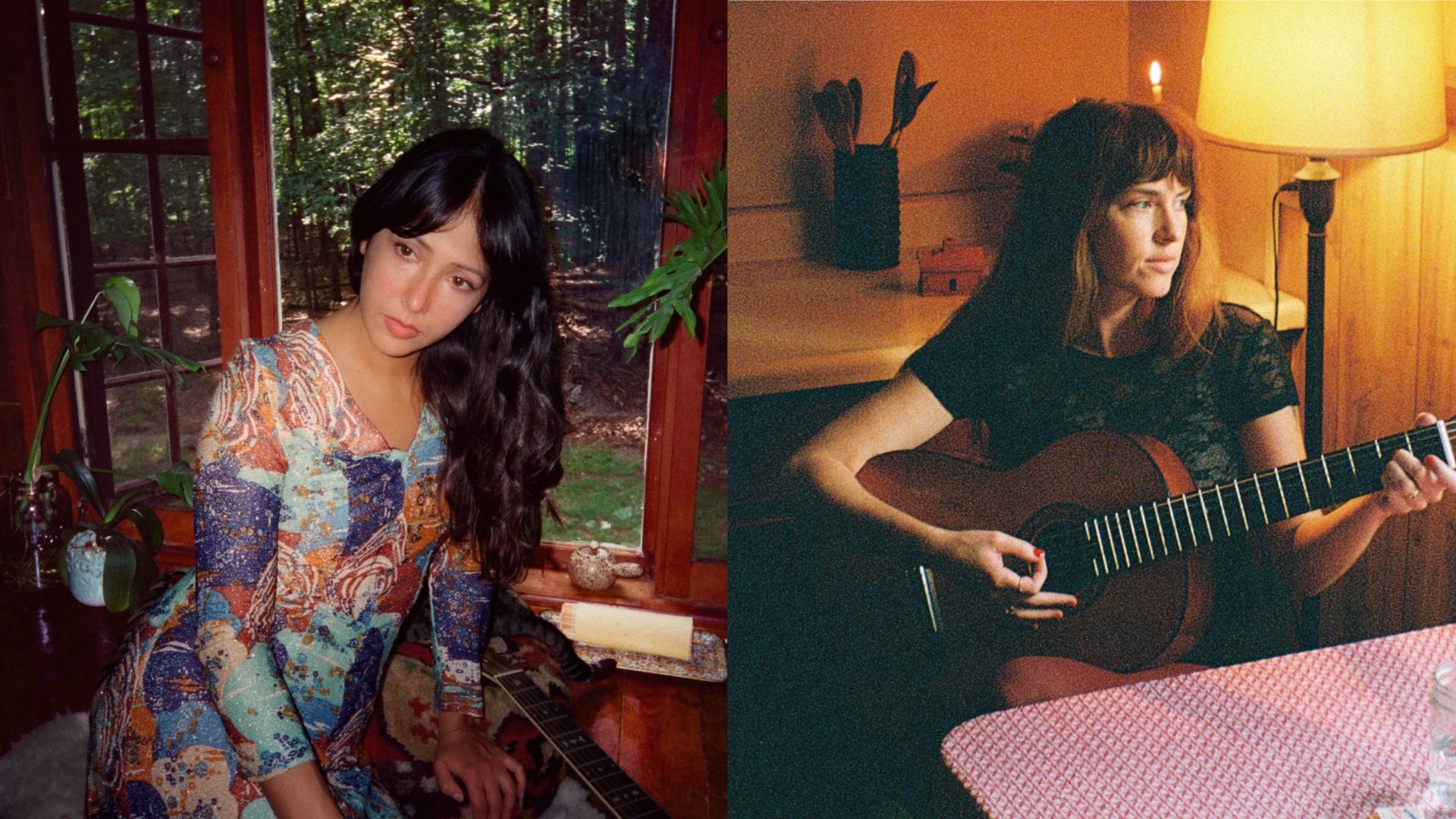
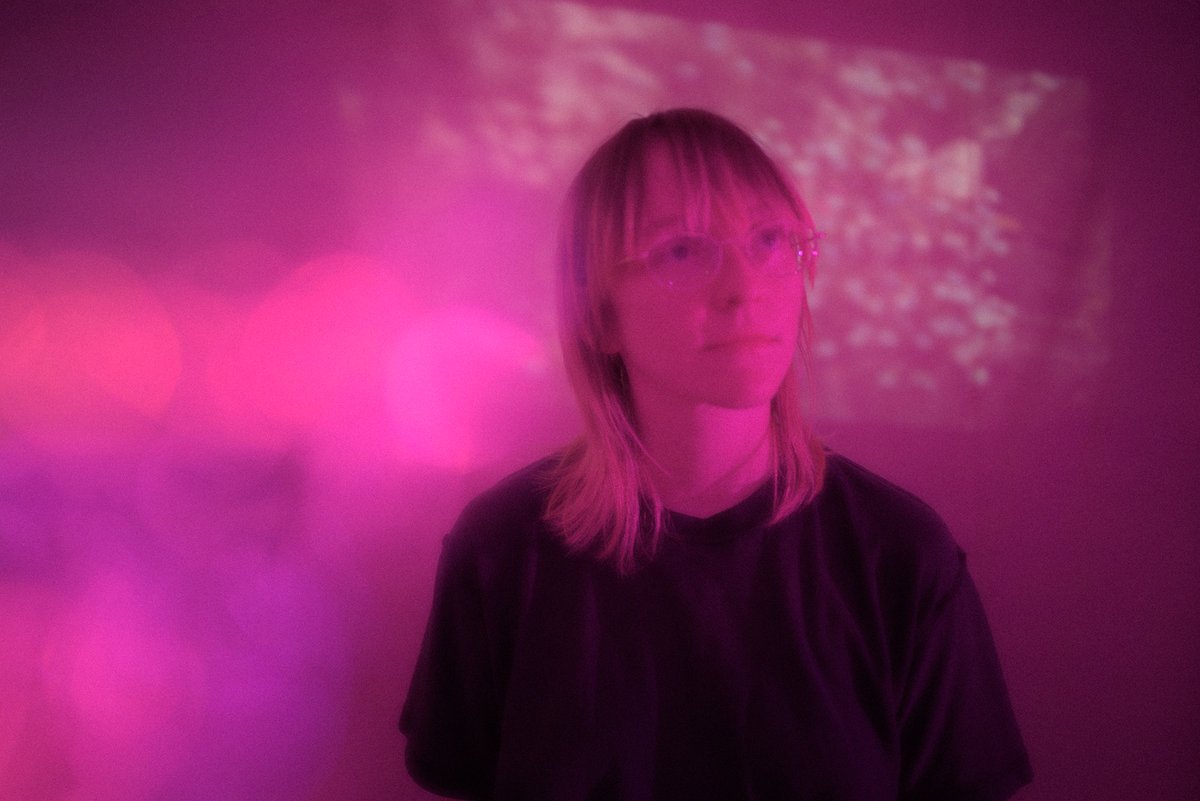
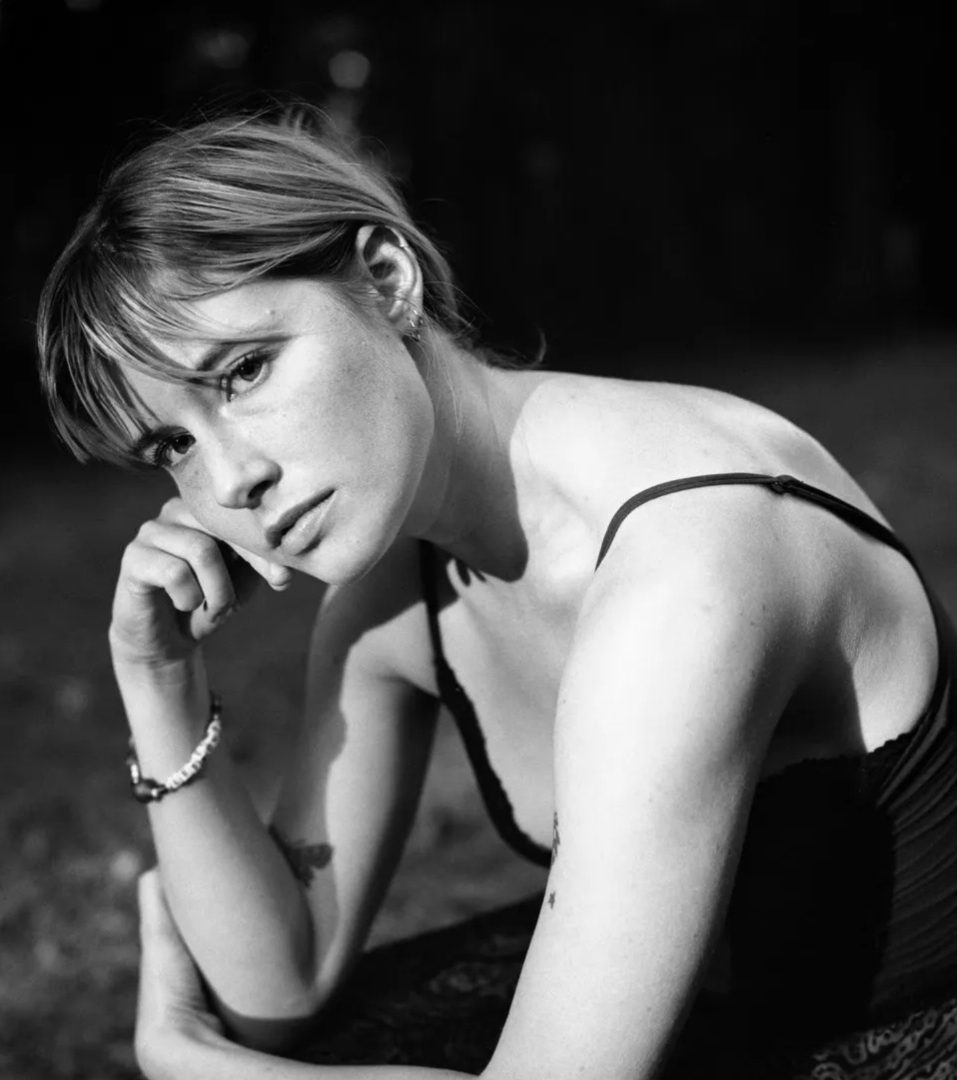
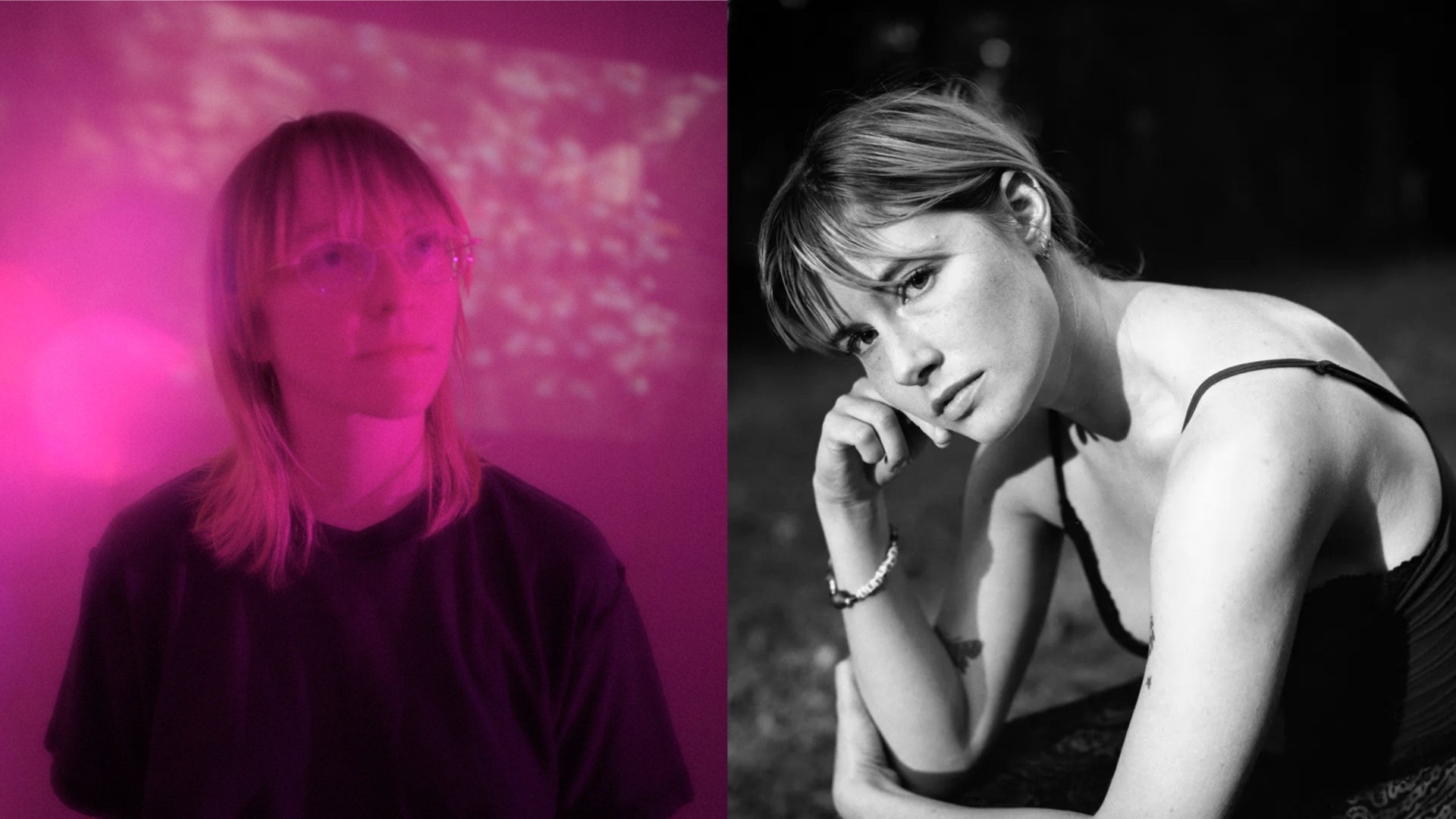
Emily A. Sprague is a Catskills-based singer-songwriter, synthesist, and composer who fronts the band Florist and releases music under her own name; h. pruz is Queens-based singer-songwriter, and co-editor/founder of the show paper GUNK, Hannah Pruzinsky. Emily’s latest record, Cyano, just came out last week on RVNG Intl., so to celebrate, she and Hannah met up at Union Pool and caught up about the making of it, and much more.
— Annie Fell, Editor-in-chief, Talkhouse Music
Emily A. Sprague: We're talking live at Union Pool in the city for our friend Felix's Told Slant show.
Hannah Pruzinsky: One of the rare times here that it's not full of people. I feel like this is a big date spot.
Emily: Oh, really?
Hannah: It's an interesting choice for a date spot, but yeah.
Emily: That's cool. Luckily we have a quiet place right now. But, like I said, I listened to your two records on the train and I had such a great experience. Red sky at morning — which is the record that you released end of last year — I feel most struck by the feeling of being in a fantasy world with that record. You blend a lot of real life feelings and experiences into the songs while also having this mystical, almost ancient, kind of castle feeling. I was wondering what your relationship to fantasy is, and fantasy and real life on earth connecting to each other, and how you interact with that relationship in your songwriting?
Hannah: Fantasy worlds are really important to me. I grew up really craving them and writing stories where I could immerse myself into them. That record was very much informed by a time in my life where I was playing a lot of Dungeons and Dragons and in the world of role playing games. But I think with any sort of fantasy world, it's interesting to construct — sometimes in the form of a video game in a world that's built for you, or in a world that you're actively building like with some tabletop role playing games — ways to sift through problem solving and connection. There's one time that really stays with me: It was one of the first times I was playing D&D live in a group of people, and someone in the party had passed away. It was a really emotional moment, and the Dungeon Master — the person guiding the story along — was asking us how we wanted to honor the dead and our relationship to grief. And in that way, it felt a lot more possible to construct a way to exist amongst despair in a creative way, that I don't think I as often give myself the ability to do in real life. So I think getting to experiment with that sort of problem solving or just existence in a fantasy world allows more room for those choices and curiosity in real life.
Emily: That's cool. It feels like, in a way, having an expanded multiverse or more fantasy to push out the boundaries of this world, there's more room for feelings to make sense.
Hannah: Yeah. Some of the parameters that we believe we have in this world — or maybe that are placed on us through society or law — it's cool to remove all of that and be like, “How do we connect to each other? How do we show love in a way that could be anything you want at all?”
Emily: I wanted to ask you about your relationship to that and the feelings of your ups and downs and emotions, because it does feel like there's something similar about how we use songwriting to explore those spaces.
Hannah: Reading a little bit about your album too, I was really struck by the fact that you were constructing this other world and a way to feel emotions in a different way, or reconnect to emotions. I'm curious, what are the parameters of that world for you? What does it look like?
Emily: So, Cyano is backed by a lot of scattered materials, and it really is not meant to be boxed into one concept I guess there is a world in my head where Cyano exists, and it's also a world that I use internally to relate to my own growth and change. But the sci-fi element of it just was this constant for me that started to feel so real and like this place that is both imaginary but also a reflecting pool of what we go through — which is the cycle of experiencing a big feeling, expressing it, living through the result of that, that going any number of ways, and then the cycle coming back around to feeling like that feeling is far from you again. I guess all this is to say, the sci-fi element and the imagined world for me serves more as a place to explore how I'm feeling and how I experience reality. It's not necessarily a one-to-one allegory for something.
Hannah: Sure. When I was listening to it for the first time, I think also just knowing your writing through Florist, and a song like “Gloom Designs,” which is such a good critique of the individualism of our world but also throughlines of connection and what is mattering underneath it all, Cyano felt — I mean, it's ambient, so I guess it took on a meaning for me of being hopeful. I see you as a deeply critical person, but also as someone that's able to pull the goodness of connection out from under the dark reality of our time. And that felt like the thing you were pulling out. This music felt like wandering in a Minecraft server on a beautiful day.
Emily: Yeah, that story element, that the imagined world is a place which has basically destroyed itself — Cyano was kind of imagining this ultimate end, and even then, there still being someone who comes along and desires to try again, to seek connection again. I feel that way about a lot of things in my life, whether it's, you just had a really bad day and you wake up like, OK, I'm gonna walk out the front door again and attempt my practice, or go for a run, or whatever it is. I think that dedication to having a consistent curiosity about what we can feel and what we can feel specifically with each other is where that feeling is coming from. That's the personal element to the record, but it also feels like the music itself came out in a very impulsive, sporadic way that told that story more abstractly. And it's cool to start to hear people who have listened and are able to relate that back or understand that. Because you just never really know what people are gonna get from your music.
Hannah: How was it sporadic?
Emily: Basically, I had been thinking about this record for many years, and I knew that Cyano was sort of representative of my songwriting and my ambient music meeting. So it was something that I was kind of just exploring but not trying to put too much pressure on. I had a couple of months in the winter of 2024 where my partner was doing a residency and I had the house to myself, and it just was one of those moments of it all coming at once. I pretty much write like that in these bigger cycles where I'll be thinking about something for a really long time and collecting information and sorting through my feelings internally. In this case, I was trying things out for a while and had made a lot of music that I thought maybe was Cyano, but then I ultimately was like, no. And then when I made what is the record, I just felt that instinctive yes feeling. And it's cool because when I listen to it now, when I think about what came to be Cyano, I do understand it as almost an introduction between these two parts. But, yeah, it was a lot of time thinking about it and then a couple of months of just executing it.
Hannah: I was curious about it being the first ambient record of yours where your voice enters the picture, too. That felt important. Why did it feel pressing for your voice to enter?
Emily: Well, I wanted to just expand upon what feels possible for me with ambient music. Also, I feel like ambient music and purely electronic music translate a different language to me. I think introducing the voice or spoken English as this other element creates a different purpose. I wanted it to feel more like reading a book of poems or something, where you get little bits of information but it's not storytelling in the way that full songs usually are. I just wanted to explore that realm of using my voice because a lot of the time — in “Gloom Designs,” there's a line, “I'm getting sick of talking about this,” and I do feel like that's a real part of me. I don't want to spell it all out all the time. But I do like the idea of spoken word and these sort of one-note melodies that exist within music in a suggestive way. I thought it would be a really cool way to have two parts of myself meet and then see what happens. It's kind of like wanting to put two strangers in a room who you're like, “This person should meet this person.” I also just really enjoy writing lyrics and vocal melodies. So it was always something that I've wanted to start doing.
Can I ask you about your two records?
Hannah: Yeah!
Emily: You had two records that came out one year after the other. They also sort of feel like two people who know each other, but they're also so different. The core feels the same, but there's so much that you can tell happened from No Glory to Red sky at morning. I was curious about what your relationship to time is with songwriting, and how you know when you've made an album. Is it over time or is it a moment?
Hannah: It feels often like a concentrated moment, like a true record of time. I feel like the energy of that time period when it's really palpable for me internally is when I feel it's the most pressing to get it down.
Emily: So you just wake up one day like, “I have to write today.”
Hannah: Yeah.
Emily: Do you cry when you're writing songs?
Hannah: [Laughs.] I don't think I've ever cried when I've written a song. Do you cry when you write a song?
Emily: I have before… You just seem like someone who experiences a lot of emotion.
Hannah: I definitely cry a lot!
Emily: I'm interested because your music is so emotional, and you're an emotional person. I think songwriting is a way to be really in touch with that part of yourself, and I'm just wondering how you relate being emotional and your songwriting cycle.
Hannah: I think oftentimes I don't really know even what I'm gonna be letting out. It's not a very planned activity. I'll feel an urge, I'll get a guitar or the piano. I think the big feeling that comes up for me when I'm writing a song that feels like it's coming from the core of me is often I feel a little overwhelmed of, What's gonna come up that maybe I'm not ready to hear?
Emily: Would you describe it as an emotional feeling?
Hannah: Definitely. I'm not good at tinkering with a song and working on lyrics for a while. I think often they just come all at once.
Emily: Yeah, I feel the same.
Hannah: Do you find that there's a supernatural aspect to actually writing a song for you?
Emily: Yeah, I think supernatural in the sense that we are connected to a lot of things that we can't see and always know. I have a vague understanding of my songwriting and its purpose in my life as one of my survival mechanisms, one of my tools to make sense of this world and to process. Because for me, similarly, I have these moments of urgency rising, I am going to start writing now. And it's intense. It's kind of exhausting. It's a lot to put my body through, in a way. I know that might sound weird, but…
Hannah: No, I feel like I need to schedule a therapy session when I'm doing it.
Emily: Exactly. It's definitely connected to the deep well inside of me that's holding so much that can't functionally come out all the time in day-to-day life. So in that sense, I do think the supernatural is just everything natural, everything beyond what we are tangibly, regularly interfacing with. It feels like it's the vault where all that stuff is. Do you feel that way?
Hannah: Definitely. I do also think that it's a shared vault. I mean, there are things that are of course singular to my own experience. But I do kind of believe if I don't follow the thread and pull it apart in that moment, I will lose it and it will find someone else.
Emily: I have this experience a lot when I'm writing in those moments where I know that I have to always be recording and filming myself to know what I'm playing, because when I start feeling like I'm really working out a song, I will be doing it in the moment and a lot of the foundation of the song, or the exact word for word and note for note song, will come out. And then as soon as I stop and pause and try to go back to it, it's completely gone.
Hannah: Yeah, I'm the same exact way. I think I have hundreds of voice notes. Most of them are just me fuddling around and it’s complete nonsense. But, yeah, I think those moments are very precious.
Emily: I have a lot of half-finished songs that have never been released, and every year I go through and listen and I'll be like, Damn, that's good. I really like that. I should make that into a song… I'm thinking a lot lately about durational work, because I've always been really impulsive and more like “first thought, best thought.” But I'm interested in how as time is changing, [I’m] getting a little bit older, I feel like there is less urgency within me. So I'm interested in exploring how we can have a different experience to it coming from the same well, but maybe just more stretched out through time.
Hannah: I feel like that goes against the grain of so much in our lives right now, that's all instant, all having to happen right away, especially with online stuff. It's a friction-inducing act, I think, to go back and be like, How do I relate to this right now?, when the feeling of that moment has left you. I think that's a really cool exercise.
Emily: Yeah. Because in a way, you are kind of bottling lightning when you're having that feeling and then you're putting it into a song.
Hannah: Yeah. But lightning can strike twice, maybe in the same spot. I'm in a phase of my life where I am in the making zone again, and kind of in that vein as well, I’ve been trying to go a bit slower and look at what I'm saying. I made a song where I have just placeholder lyrics, and I know that it's not right, but I recorded it. I want to just walk around for a whole afternoon and listen to the instrumental and see if my body can guide me to the right thing…
I have two questions, kind of unrelated to your process. I'm curious right now, releasing music — you've been doing it for over a decade, but how is it feeling right now to do that in this world?
Emily: On a personal level, I am feeling very light hearted about it. I feel excited to share new music. I feel proud of it and I feel like I don't have any expectation. I also have no value put on what other people say about it for this record, and that's not always how I felt about releasing music. I don't even feel that way because I've released a lot of music in the past. I feel that way because it's so ridiculous — the music industry, the entertainment industry, pop culture, short form content, social media, AI, streaming, whatever. It's just like, what a fucking joke. The whole thing is really, really bad.
Hannah: It's so bad.
Emily: The people that I work with and that are close to me and my peers who are my friends, I spend a lot of time interacting with them and making meaning out of what we're doing on a smaller scale. And I do love working with my label RVNG, and I've always loved working with Mike [Caridi] from Double Double Whammy doing these small Florist releases. I truly and honestly do not know what comes next in terms of what releasing music is, how to do it. Releasing music kind of always leads to a depressive episode.
Hannah: Agree.
Emily: It's so much build up. You've spent so much energy making this thing. You care so much about it. It's an extension of yourself. And it's also something that has a lot of visibility, and being visible in the world is really complicated and hard. After a release comes out, every single time, I'm playing video games for a month straight. I'm like, Alright, time to log off and figure out what the hell I'm doing with my life. [Laughs.]
Hannah: Totally. It really takes it out of me, too. I think there also is just this rush to find the dopamine of releasing, and then when it's all out there, you're just left in the wake of it. I think touring and specifically DIY touring that I've done this past year has been the saving grace of releasing music, and realizing that it's not all about metrics or how something is received. It's just people in a room together and the generosity of the world around me when being online feels so poisonous. At least the corners where we have to interface for releasing music, feel really taking away from me. But DIY touring and meeting complete strangers that probably don't even know my music and just are like, “Oh, you're the band that's in town this week? We're gonna help you.”
Emily: It's so beautiful. It's so important, connecting on that level with people. It's all there is. And it's so not what you feel when you're just watching your posts go live or whatever when your record is releasing. I find myself these days really theory crafting about how to pull my life back to that more and still release music. I want to be a musician. I want to do this. But it's not worth doing it in ways that don't feel good and absolutely will not contribute to positive mental health for the long term.
Hannah: Yeah. And it's funny what the world makes you think will help you or will make you feel better. I think for so long I was really upset that I didn't have a booking agent — and I still don't have a booking agent. But at the same time, I wouldn't have all of these moments that have really healed me in a lot of ways from the dread that comes with music sometimes…
Emily: I think the places where value is put in this industry are almost never the places where true happiness and fulfillment in oneself and one's work can come from. Being driven by external validation or just climbing up a ladder that you're trying to get to the top of… It just feels like there's really no point to anything unless you're enjoying what you're doing. And I have definitely realized over the years that I don't get any enjoyment out of a number going up for my music. I get enjoyment and fulfillment and I'm happy when I connect with people, and I'm happy when I know that that music is valued in the world. And I don't feel valued when I'm being used for a monopoly or for a genocide. There’s just so many evil things that we're being used for. We’re being used to pay somebody's salary in corporate. That's not fun.
Hannah: That's not why we wrote the song.
Emily: No! I've been thinking about this a lot, the working class of musicians. I really identify as a working class person, coming from that in my life and feeling like that in something that is such a luxury and a privilege to be able to do in any capacity, like making music. But also to feel like there is no value in there being a working class of artists… It's getting destroyed. It's all just the bottom dollar.
I appreciate you so much and I really love that we're friends. I love your music. I'm happy to be a part of this community of people who are really, really, really beautiful humans doing this for the right reasons.
Hannah: I feel very lucky to know you, and experience this life with you and your art.
Emily: Thank you, Hannah. Alright, signing off!