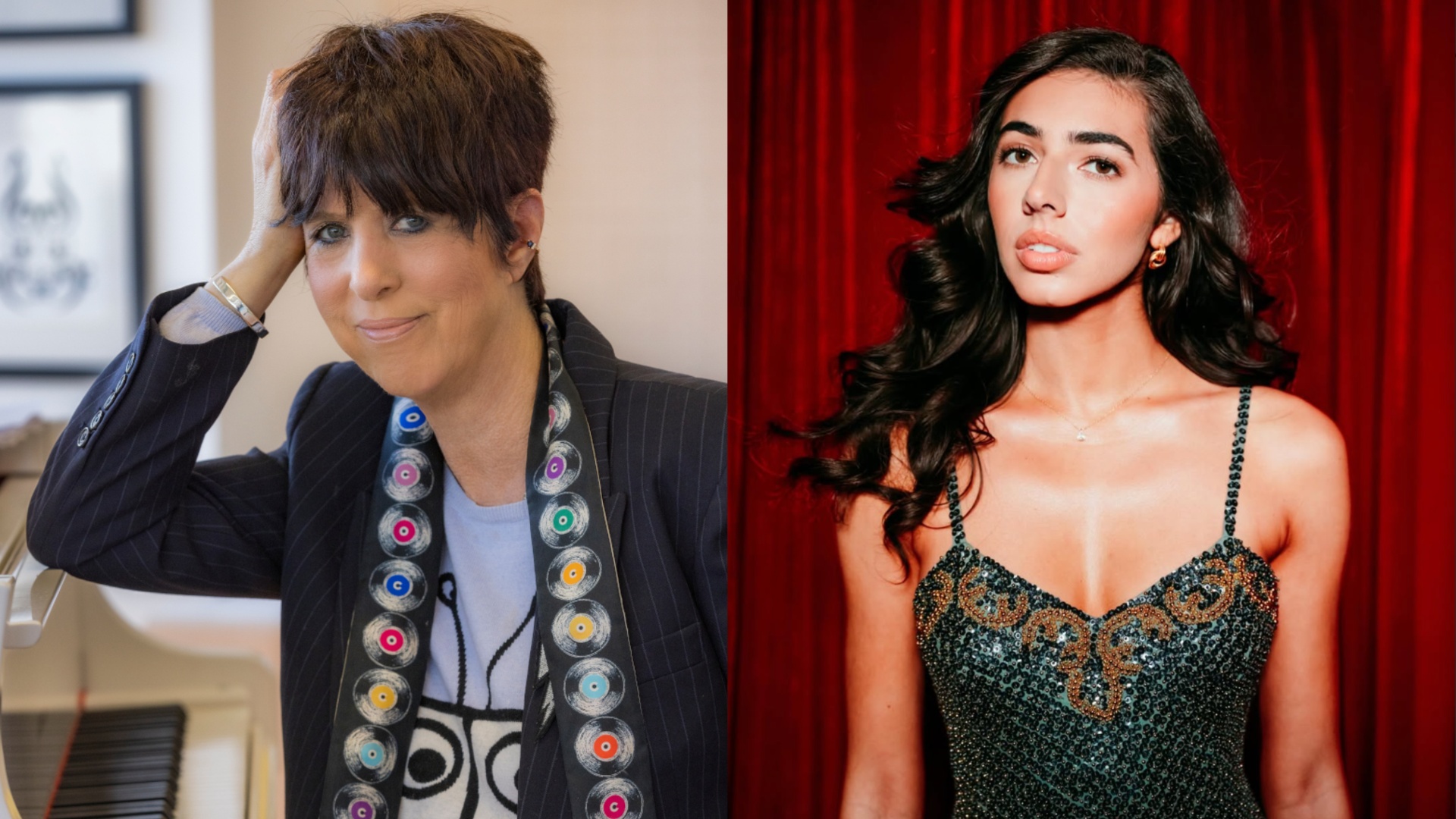
Diane Warren is a legendary songwriter who’s written hits for the likes of Cher, Aerosmith, Celine Dion, and many more; Izzy Escobar is a singer-songwriter based in New York City. Diane and Izzy worked together on Izzy’s new song “Hate to Be the One,” which was recently heard on the HBO show Hacks. Earlier this month, the collaborators got on a Zoom call to catch up about the making of the song, and more.
— Annie Fell, Editor-in-chief, Talkhouse Music
Diane Warren: Oh, shit. What the fuck are we going to talk about, Izzy?
Izzy Escobar: I actually don't know what we're going to talk about.
Diane: Let's start with “Hate to Be the One.” Everybody is fucking loving it. Everybody is loving this song.
Izzy: I'm curious. How did you come up with the concept?
Diane: You know, I just started playing it. I loved the idea of, I would hate to be the one losing me, motherfucker. If I was in your shoes, I would feel like the asshole that I am for losing me. So I just liked the idea, and then when I heard you, it was like, “Oh, my god, we gotta make this happen.”
Izzy: I remember this one guy that I dated told me, “You'll never find anyone better than me.” And I love how your song is flipped, more like, “No, I'd hate to be the one losing me.” I am attracted to songwriters that can take something that's heartbreaking and alchemize it into this “F.U.”
Diane: Yeah, and make it fun. It’s like a “fuck you” with a smile.
Izzy: That's a bit more empowering, right? It's like rewriting your own narrative…
So when you are in a studio session, you have this crazy ability to sense an artist's energy and know what songs to play them.
Diane: Yeah, it's a weird thing. Someone called me “the song whisperer.”
Izzy: When we met for the first time, what was your initial gut instinct on what kind of things to play? Because that's how the song came about.
Diane: Well, first of all, I heard your voice and I'm like, “Oh, my god, I have to work with her.” And I kind of get a feel of what might be the right song before I met with you. But also, sitting in a room, there's something that happens when you connect. That's why I hate sending things — I just don't do it. I don't want to send you the song, I want to know if it's right. And I might think of something — like, I don't think I was going to even play you that one. I think I was playing you something else.
Izzy: Yeah, you did.
Diane: And it wasn't the right song. Something made me go to this and it was like, “That's the one.” You knew when you heard it. And you sense when an artist feels that. I think that's one thing that I have that I can really sense. Because I'm just writing songs that I love to write, and I might not have any idea who's going to do it and 20 people might turn it down.
Izzy: When you write a song, are you writing from personal experience? Where are you pulling from?
Diane: Thank you. I wasn't pulling — I mean, believe me, there's a lot of people that I could — not in love situations, but in other situations… I love “fuck you” songs. “You turned down that song? Fuck you. I’d hate to be the one losing that song.” So I could relate to it.
When I was a kid, I'd go to publishers; my dad would drive me out and people would turn me down. I'd go, “You're going to be sorry. Some day, I'm going to be the biggest songwriter in the world.” I was an arrogant little fucker. I was, like, 16 years old. So it's the same energy in this song. It's almost like someone's turning you down or dumping you, or however you want to look at it.
But people are really responding. You have fans.
Izzy: I was surprised — I started my first ever headline tour recently and we went to Europe first, and the song I think had been out for maybe a week at that point. I played Cologne first night, and the two piano boms in the beginning of the song start and I go, “I'm not gonna —” oh, my gosh, every girl in that front row was screaming the lyrics. I was absolutely shocked. I actually took out my in-ears because I was like, How is this happening right now? Because I've had songs that are out for much longer and people aren't responding to it in the way that they feel this song. And it was so exciting because I was seeing a lot of mother-daughters at the concerts, and both of them can resonate to the song. One of the girls came up to me after and she was like, “I've been listening to this song because I'm going through a friendship breakup…” Diane, you have this amazing ability where it's such a specific song, yet there's this underlying essence of ambiguity that I think people in a friendship or a career situation are relating to. I think that's part of the beauty of this song.
Diane: Yeah, I think so too. I love that, the mother and daughter. That's so cool. That's mass appeal. The songs I write, they're really mass appeal songs. They're big. They go wide. I'm excited about this. I just hope everybody just goes all the way with this. I hope your label gets really behind this. Because this is real. People are calling me and texting me. I'm getting so many responses. And the fact it was on Hacks is really awesome.
You know, your dad reached out to me.
Izzy: Thank you for responding to him. He's your biggest fan.
Diane: I'll tell you something: My dad was my biggest fan. My dad would take me to publishers and my mom would say, “Why are you doing that? Why are you encouraging her?” But my dad was my biggest fan ever. And hearing from your dad, it was so sweet. He was like, “I love my daughter, she's so great, thank you for believing in her.” And I was like, “Your daughter's awesome and I love the song, I wouldn't have wanted to give it to anyone else.” I liked that.
Izzy: It was really special to hear you say that. My dad has always been my number one supporter as well. He is definitely the dreamer in my household. My dad came from Cuba, he didn't have anything. But he was such a big dreamer and would drive me to every single audition, every single meeting, every single recording session. And he's a DJ, so I would sit with him at the dining room table and he would play different records in the house. He was definitely one of those people to have me believe that nothing is impossible. And he loves your songs. I mean, I love your songs — everyone loves your songs. But I think for my dad especially, he's such a big believer of me and he's also such a fan of you.
Diane: It’s all come together.
Izzy: But, the Hacks thing — I know that you're friends with Jean Smart, but how did this whole, “Call Diane Warren” come to be?
Diane: Well, here's what happened. I'm such a fan of the show. It's my favorite show ever. And my friend manages Jean Smart, but how this happened was, Paul Downes — who plays a character on the show — I ran into him at my friend's house and I said, “If there's anything I could ever do on Hacks, please let me do a song.” And so he called me and he goes, “Not only do we want you to do a song, we're going to give you a shout out.” I'm like, “That's so fucking cool.” And they love the song. And I was going on Shazam — so many people are Shazam-ing it. So they must be hearing it at the end of the show. It goes right into that, “I'm not going to lay down and die, so fuck you and fuck your goodbyes.”
Izzy: That’s everyone's favorite line.
Diane: Me too. That's probably the one everybody screams, right?
Izzy: Yeah, it is.
I'm curious, are you a visual writer? Are you imagining things when you write? Does it affect you differently when you see it in TV and film, or does it affect you the same?
Diane: If I write something for a movie, I'm trying to write it for that. But it's important that it stands on its own two feet. Even if it's for a movie or TV, it might be a soundtrack for that, but I want it to be anybody's soundtrack too. I had a documentary — just quickly, I don't want to talk about myself — but I wrote a song called “Dear Me” and it was very personal. Kesha sang it. But it became such a not personal song. I mean, it's personal to me, but the letters I would get from people… Because it's about talking to your younger fucked up self, and you realize, we all have younger fucked up selves. Or, most of us do. So even if you write something that you think is specific, it's going to have a life besides that.
Izzy: I think you as a writer, every song that I've heard from you has an expansive enough landscape that's for some reason so specific to each individual who listens to the song, which is such a gift. Because it’s like, Woah, x-amount of people are relating to this, but we're all relating to it from a different framework, from a different perspective.
Diane: When you get it right, it's that. isn't it like that? It’s universal, but specific in a weird way.
But I want to ask you some questions. How did you get started?
Izzy: I grew up playing violin when I was four. My mom wanted me to play a classical instrument, so I played the Suzuki method. And I remember coming home from practice and being like, I don't understand why there's not words under the sheet music. So I would just write words under whatever song I was learning. And I think violin gave me a decent understanding of pitch and rhythm, and specifically Suzuki does a lot of ear training. But then on the other hand, my parents are divorced, so I was going back and forth between different houses and my dad's house was more, he was the DJ and he's from Cuba, so he was playing Gloria Estefan.
Diane: I did a lot of those songs!
Izzy: I know! We love all of them, you don't even understand. I'm a huge Gloria Estefan fan.
Diane: The nicest person. Not to interrupt you — everybody I've ever worked with that's a big artist, she's the coolest person you'll ever meet. You'll meet her. I'll introduce you.
Izzy: Oh, my gosh, yes. So we were listening to her, and then also I love Gaga. We were listening to top hits, but then we were also listening to whatever he was going to play for the gig for that night. And then on my own time, I love musical theater because I've always felt very misunderstood, so theater songs gave me a way to storytell and express myself. And then I love improv jazz. So I think how I write is from a flow state of improv. The chords that I hear make me feel something, and then what I feel depicts the words coming out of my mouth, type of thing.
So to answer your question, I think I fell in love with all these different angles of music, whether it be the classical violin or Cuban music or jazz music, and it just cultivated into a love for music and expressing myself. Because I felt very choked up if I couldn't express myself through music. And I guess I just ran with it. I've never had a doubt in my mind.
Diane: You gotta be your own believer.
Izzy: Yeah. And I did watch your documentary recently, actually.
Diane: Oh, god.
Izzy: It's so good. You get this probably every day of your life, but it is so inspiring to also see someone who — you know, in the documentary, you talk about also feeling misunderstood in many ways.
Diane: I’ve always felt like a weirdo outsider.
Izzy: [Laughs.] You really make me feel seen. Even in your love of animals — I’m like, “Yes, vegan, love!”
Diane: Are you vegan?
Izzy: Yeah!
Diane: How did I not know that! I mean, how can someone say, “I love animals” when they eat meat? You're eating a dead, murdered carcass. You're eating a fucking corpse. And it didn't get there voluntarily. What we do to animals keeps me up at night sometimes. Paul McCartney has a great quote: “If slaughterhouses had glass walls, everybody would be a vegetarian or a vegan.”
Izzy: It's very, very rare that I see myself in someone else. So thank you for being so authentically yourself. I love that about you so much. And the more that I study and listen to your songs, the more that that comes through. And the authenticity in a lyric is also why it hits so hard. Because I don't think these are easy things to sing about or talk about. Even “Hate to Be the One,” right? “Hate to be the one losing me” — that's a pretty confident thing to say.
Diane: It is. “I know I'm great. I know who the fuck I am. And you don't, so fuck you.”
Izzy: Exactly. And one of the moms came up to me after the concert and she was like, “I love your new single because I have two high school girls and they need more confident figures to look up to.”
Diane: I love that.
Izzy: That's the whole goal. My middle school self or my high school self, with all of the guys who were mean to me or said rude things… this is the song that I wish I had.
Diane: Exactly. I was bullied in school when I was a kid — the girls are so mean. They're worse than anything, mean girls, and they were so fucking mean to me. I'm saying that to the bullies that were wanting to beat me up after school. And I just went to my reunion — I'm like, Who brought their grandparents? [Laughs.] I realized those were a couple of the bullies. They peaked in junior high. But I come back like, “Hey, bitches!”
Izzy: Are you a believer of fate, in the sense that that was pre-written so that you would end up to be the Diane Warren you are today? Or do you feel like it was just part of life's course and you chose to become a greater songwriter out of it?
Diane: I think a lot of stuff is fate and a lot of stuff is luck, but a lot of it is the belief and the work ethic and the hard work. You need to have talent, you need to work your ass off. It takes time to learn any craft. I knew what I wanted to do and there was no plan B. I knew I was going to be a songwriter. I got kicked out of school — I was a juvenile delinquent and everything — but I listened to the radio and my dad got me a subscription to Billboard when I was 14 and I memorized every songwriter. I knew everything. I could have done a thesis on it when I was 14. And when my dad saw that, that's when he totally believed.
But I think it's fate. Who knows? I mean, there's luck is thrown in there too. You get lucky somehow. You something comes your way. But also, I believe you make your own luck. And that's by hard work and believing in yourself. I've always believed in myself. I believed in myself when I had no reason to believe in myself, when my songs sucked when I was 15. But I thought they were fucking great. That's what it takes. You have to have that belief, because every door is going to close on you. It's always like lifting a rock up a hill. And sometimes still, it's like, “Do you guys not see what I see or hear what I hear?” Even with our song, I know what that is. I know that's a massive number one hit all over the world. We gotta do everything, whatever it takes to get there. But I know it is. I know it's undeniable.
Izzy: Do you still write every single day?
Diane: Yeah, every day. As soon as I'm done talking to you, I'm going to go back to my room and write something. It's actually a really good song for you.
Izzy: Oh, my gosh, that's incredible.
Diane: I'm always working. I don't ever stop. It's breathing to me.
Izzy: I'm the same way. I always have to be working, always have to be writing.
Diane: And you’re lucky because you’re also your own vehicle. You have this amazing voice for your songs. It's a great position to be in.
Izzy: Working with you has been amazing because when I'm in my room and I'm sitting at my piano, you can keep gravitating towards the same chords, or I have certain things that I like. So when I get pushed outside my comfort zone and presented something — which, this has been the first time in my life where I'm singing someone else's words — it feels like good when it's aligned. And this song was aligned. And I think that you can also sense that in its delivery.
Diane: Oh, yeah. It sounds like you wrote it. I remember back in the day when, like when Steven Tyler did “Don't Want to Miss a Thing” — people are like, “Oh, he wrote that great song!” And I go, “I wrote that!” But then as time went on, I'm like, No, that's great, because it has to be so real that it's like you wrote it. This song with you, it sounds like you wrote it. It's your song as much as it's my song.