"Doubt is not a pleasant condition, but certainty is absurd." — Voltaire
A few weeks ago, I recorded a podcast with another donor-conceived woman. It was the first conversation I'd ever had with someone whose story echoed my own. She had grown up believing one man was her father, before discovering later in life that she was donor conceived. Our lives were objectively different; our feelings weren't. She understood things I was saying before I even had a chance to finish saying them. She used a phrase I'd never heard before: “Genetic mirroring.” The instinct to search another person's face for oneself. I laughed, because I'd already done it.
Years earlier, after a DNA match led me to my biological father, Jerry, he called me for the first time. We hadn't met yet. I had his name, a tentative lunch date on the calendar, and one photograph I'd found online. For 26 years, he had existed only as one line on a sheet of fertility clinic paperwork, among 50 other anonymous sperm donors. I knew only the facts I'd been given growing up: his height, his hair color, his eyes, a few hobbies. Amazing what the human imagination can build from so little. I opened the photograph and held it beside my own face. I tilted my head. I covered half the photograph with my hand and studied the shape of our noses, the corners of our mouths, the eyebrow that sat just slightly higher than the other. I wasn't looking for a father. I was looking for myself.
My therapist keeps bringing me back to one word: “belonging.” It's become the thread we tug on every other week, the one that somehow leads to everything else. Motherhood. Filmmaking. Postpartum. The strange ache of elementary school drop-off lines. The movie I spent six years making. Even donor conception, which I used to think was the beginning and end of my story.
I've always believed my greatest weakness was feeling untethered. Lost. As if everyone else was quietly handed a map at birth and I somehow missed my turn. At 35, I still catch myself searching for solid ground, still wondering if everyone else knows something I don't. Maybe that's why Voltaire's line keeps finding me. Not because I enjoy doubt, but because certainty has always seemed just out of reach.
I grew up in Riverside, California, in the 1990s. Childhood smelled like hot asphalt, sunscreen, and sprinkler water evaporating before it ever reached the sidewalk. Ceiling fans hummed all summer long. Evangelical churches sat on every corner, and nearly every family looked remarkably similar. Mother. Father. Two kids. A golden retriever who brought in the newspaper every morning, if they were lucky.
Then there was us. My mom was a lesbian who raised me on her own. She never lied to me about how I came into this world. I always knew I was donor-conceived. She spoke about it matter-of-factly, as if honesty itself could soften whatever questions might eventually come. I'm grateful she did. There was never a dramatic reveal waiting for me in adulthood, no family secret tucked away in a filing cabinet.
But knowing where I came from wasn't the same as understanding what it meant. When kids at school asked where my dad was, I sometimes told them he was Spider-Man. It made perfect sense to me. Spider-Man disappeared all the time. He always came back. He showed up only when he was needed. He lived somewhere else. It was easier than explaining donor conception. Easier than explaining a man I'd never met. Easier than admitting I didn't really know what a donor was, either.
Long before I became a filmmaker, I was already telling stories to explain the parts of my life I didn't yet have words for.
As a kid, I didn't have the language for any of it. I just knew my family looked different. Different enough that I spent years trying on identities the way other kids tried on clothes. In seventh grade, after my aunt died of cancer at 36, I dyed the ends of my hair black. I wore fishnet stockings with everything, convinced they somehow explained me better than words ever could. My mom took me to punk shows and, somehow, when I was still in all my preteen angst, drove me all the way to West Los Angeles to see The Rocky Horror Picture Show. The theater smelled like stale popcorn, Aqua Net, greasepaint and cigarette smoke clinging to velvet seats. I dressed as Columbia, with pink hair and glitter. At one point, they pulled me onto the stage. I don't know if I still remember how to do the Time Warp, but I remember the feeling. For a few minutes, surrounded by wonderfully strange people singing at the top of their lungs, I wasn't the kid with the unusual family anymore. I was simply another person in costume.
Belonging, I've realized, rarely arrives looking the way you expect.
Back on the podcast, we talked about the strange language surrounding donor conception. The word “donor” itself. Donor. It's such a clean word. Clinical. Efficient. Generous, even. It implies someone who gives something and walks away from it. Blood donor. Organ donor. Clothing donor. But people are more complicated than nouns. My biological father wasn't a vial in a fertility clinic, he was (and is) a living person. He laughs. He has children. He has hands that move like mine. He has a face that, in certain light, resembles mine enough to make me pause. And yet I still can't call him “Dad.” He isn't. But donor doesn't feel right either. So I call him Jerry. Or “bio-dad.” Language has become a negotiation.
I studied philosophy in college in San Francisco, spending far too many afternoons reading Alan Watts, Jack Kerouac, Henry Miller and Charles Bukowski, writers who delighted in pulling words apart to see what they really meant. Lately, I imagine having this conversation with Alan Watts on his old houseboat in Sausalito, watching the fog roll over the Bay. Who decided on the word donor? What does it protect us from? What does it ask us not to feel?
Years later, I found myself on the Santa Monica Pier filming a scene with Tate Donovan, who was playing my biological father. The sun had already slipped below the horizon, leaving behind dark clouds streaked with pink and orange. The rides buzzed to life, one by one. Arcade machines chimed. The smell of fried dough mixed with salt air as the Ferris wheel glowed against the night sky. We played arcade games. We squeezed into a photo booth. We ate bad churros. We laughed. At the end of the night, I tucked the strip of photo booth pictures into my bag. Somehow it ended up on my nightstand, where it stayed for the rest of production.
It still feels strange to write that sentence. Stranger still to realize why I couldn't throw those pictures away. For years, I thought I was writing scenes. I realize now I was writing memories I had never lived.
There is an ordinary choreography between a father and daughter that most people never stop to notice, because they've always known it. The casual teasing. The comfortable silence. The inside jokes. The effortless way a father reaches for his daughter's shoulder without thinking. I never had those moments. So I imagined them. Years later, I wrote them.
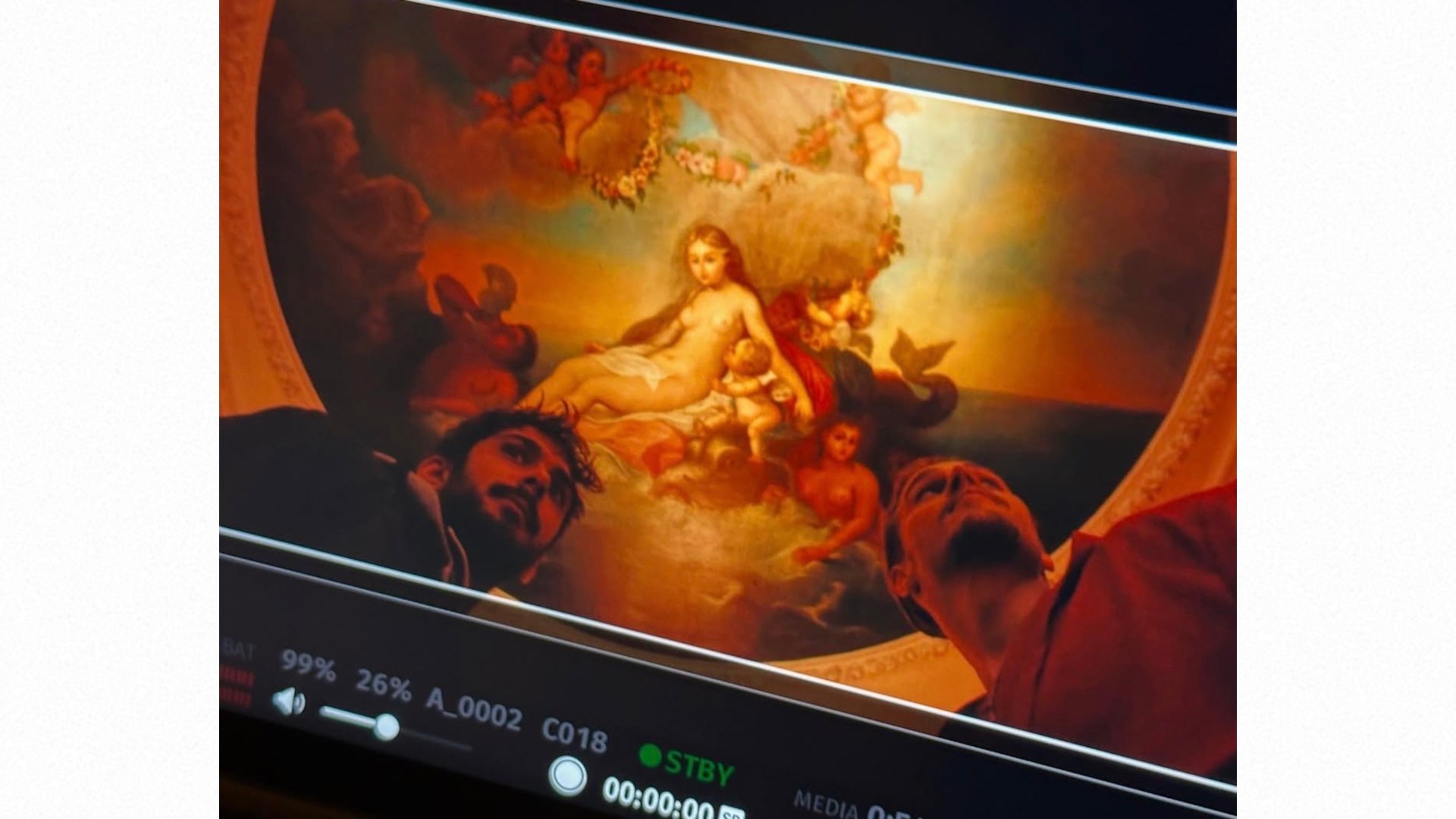
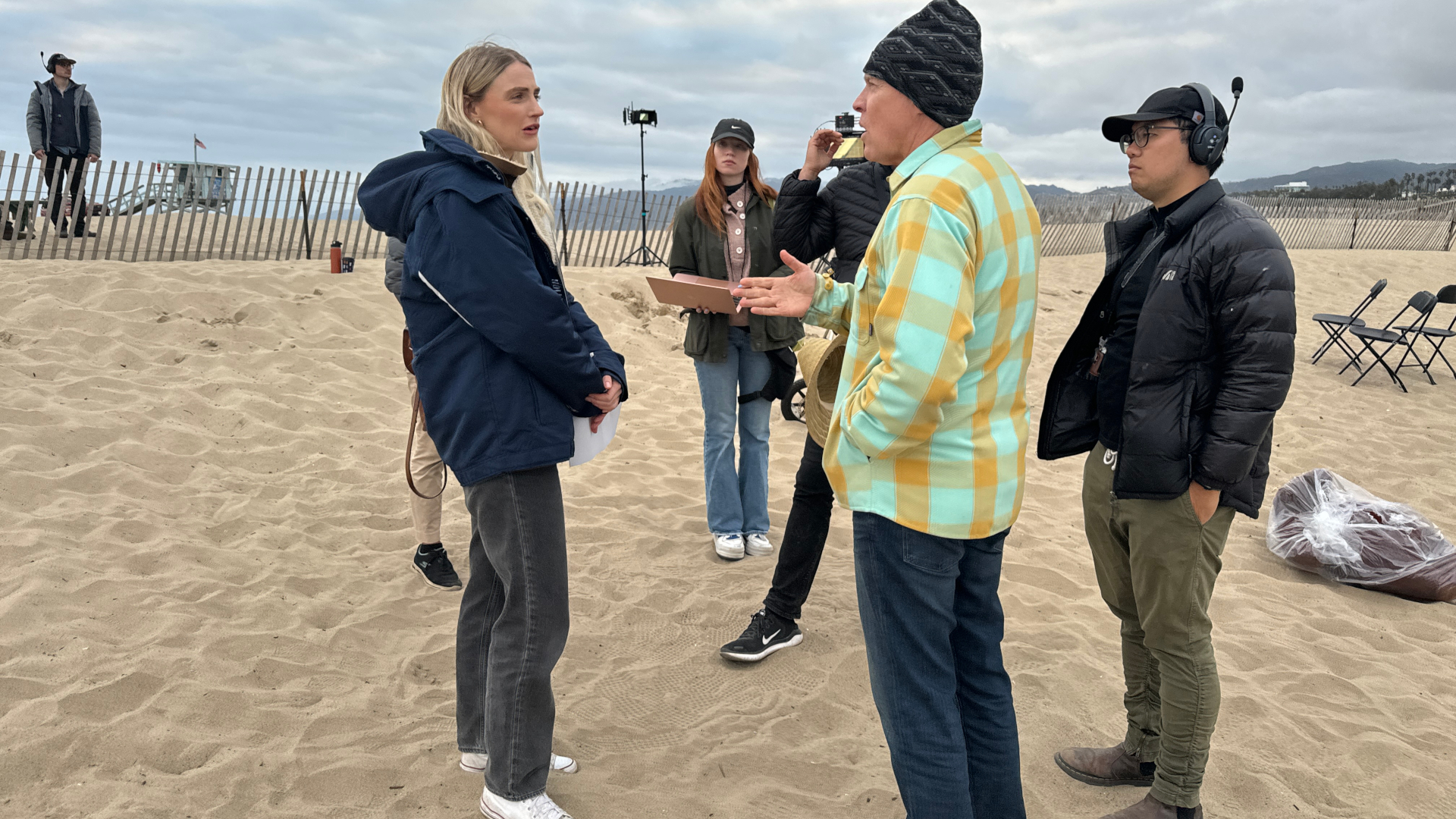
Between takes, I'd talk lenses with my cinematographer, adjust blocking, rewrite a line of dialogue. Then someone (sometimes me, sometimes my 1st A.D.) would call, “Action.” The cameras rolled. The scene became real. And, for a few minutes, so did the memories I'd spent years inventing.
I met my biological father as a fully grown, fully parented adult. There was no childhood left to reclaim. Only a relationship to invent. I used to think I wrote Rhythm is a Dancer to understand donor conception. I realize now I wrote it because stories have always been where I go whenever life gives me questions, before it even gave me language. I wrote it to grieve the memories I never got to make.
Maybe belonging isn't something another person grants us. Maybe it's something we build. My mom telling me the truth. Standing onstage dressed as Columbia. Writing the memories I never got to make. Raising children of my own. I still don't have certainty; Voltaire would probably tell me that's for the best. I think the little girl who believed her father was Spider-Man might agree.