Growing up in a religious community really puts a damper on teenage sexual exploration, but I always found my way. Late nights, alone in front of the TV ingesting vivid, enticing imagery of movies like The Babysitters, Lords of Dogtown and Secretary soon became sneaking out and making out with virtually anyone who wanted to.
Watching R-rated movies, particularly if they had any sex scenes, wasn’t allowed by my parents. In spite of their best efforts, I got my hands on some hot flicks. I didn’t know it at the time, but looking back, I would say those nights with the contraband were my first portal into cinema as shadow integration. The shadow, in the Jungian sense, represents denied aspects of self – sticky things you were told were wrong or learned you shouldn’t be, or that were dangerous for you to embody. As a girl born into a community that condemned women for showing a bra strap or openly expressing physical sensuality in any way, my sexuality was being shoved into my shadow. But through my nighttime excursions, I found myself dragging it back out.
My parents had more of a casual way of speaking about sex than the rest of the adults at church. They made jokes here and there and openly expressed their physical affection for one another. I wasn’t taught that sex itself was bad; in fact, I learned it was a form of worship and communion with God, but it was a worship that should not happen outside of the confines of a marriage. I learned that if I engaged in premarital sex, it would put distance between me and God. As someone who at the time had deeply connected with the Christian faith, this was distressing to me. My choice was to either deny my true self or be ostracized from the church community that raised me. I had done my best to deny this animalistic, natural, primordial part of myself, but it would claw its way to the surface when a bare torso graced the television screen, when a sweaty baseball boy smiled at me at school, or when the cool emo girl with platinum hair and snakebites told me she thought I was hot. I couldn’t help myself. So I said, Fuck it,and let myself fall from grace with messy teenage sexual encounters, coupled with whatever substances I could get my hands on to help me let go and forget the evil sin I was committing.
To integrate the shadow, one must find healthy ways of expressing the repressed and denied aspect of self. For me, a big piece to integrate was my ever-persistent sexual desire. Admittedly, getting blackout drunk and hooking up with a rude football player wasn’t the healthiest way to go, but by God, it was a start. With time, I have found unique ways to integrate my sexuality and heal my relationship to it. One particularly effective route to channeling my shadow self has been through both making and watching films.
When I go to a cinema, my new form of church, I am given the opportunity to micro-dose intense experiences. I sit in front of the silver screen, letting sex scenes wash over my body. It makes me feel seen. I feel whole. I feel acknowledged in my humanity and my desire. Movies like Gaspar Noé’s Love, Bernardo Bertolucci’s The Dreamers, Levan Akin’s And Then We Danced, Lars von Trier’s Breaking the Waves, Paul Verhoevan’s Elle, Catherine Briellat’s Last Summer, Gregg Araki’s Mysterious Skin – films like these remind me that I am not alone in this feeling of being afraid that I am too much, that I want too much, and that others have this feeling too. They want and ache and yearn just like me.
Sex and eroticism are so much more to me than just the physical act. Embracing sexuality onscreen and off has been my journey from the terrified little girl who was certain she was Hell-bound for having an orgasm to the woman I am today: a woman who is willing to express herself sexually, and receive others' expressions of desire … and a woman who still believes sexuality is worship. Only now, I see it as worship of the beloved and of the self and communion with the life-force energy of the universe. That journey has been intertwined and indivisible from my journey as a filmmaker. With my early work, I still felt shame and fear around sharing it, and yet I was unable to stop myself from making it. But today, with the premiere of my feature film, Corpus, I think only of who it might expand. Who might feel seen, acknowledged in their desire, or enticed to give in to something new and exciting.
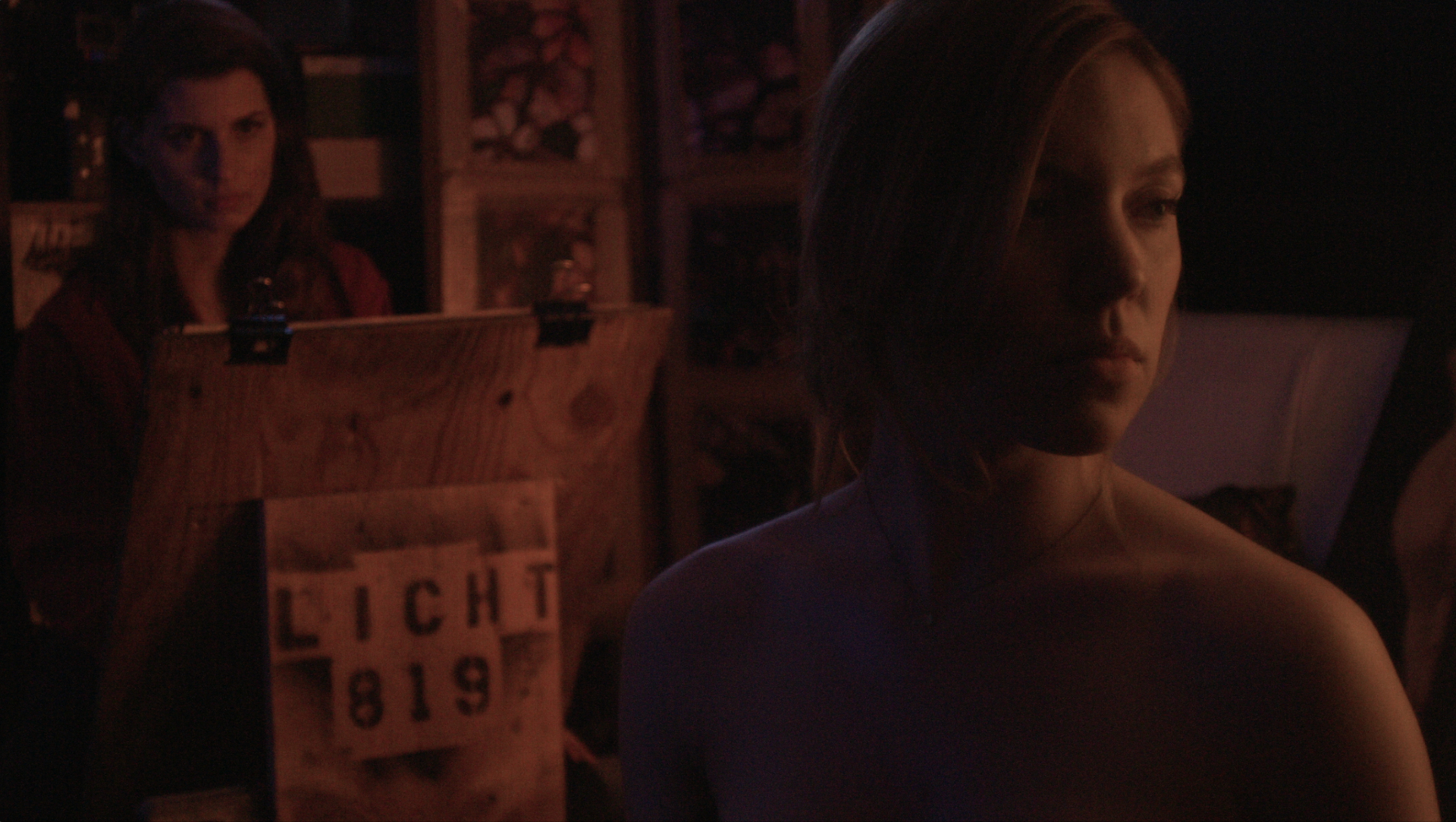
Corpus embraces themes of desire, the aching of unrequited love, the lengths we go as humans to feel desired, and the fear of what unforeseen consequences could happen to us if we get what we want. The film doesn’t shy away from sexuality and the body – in fact, it is the core of the film’s visual exploration. I hope Corpus can do for others what so many other films have done for me – to help the viewer feel less alone in their deeply human, beautiful, and gloriously spiritual erotic urges.
Featured image shows Corrin Evans and Maddie McGuire in Cousins.