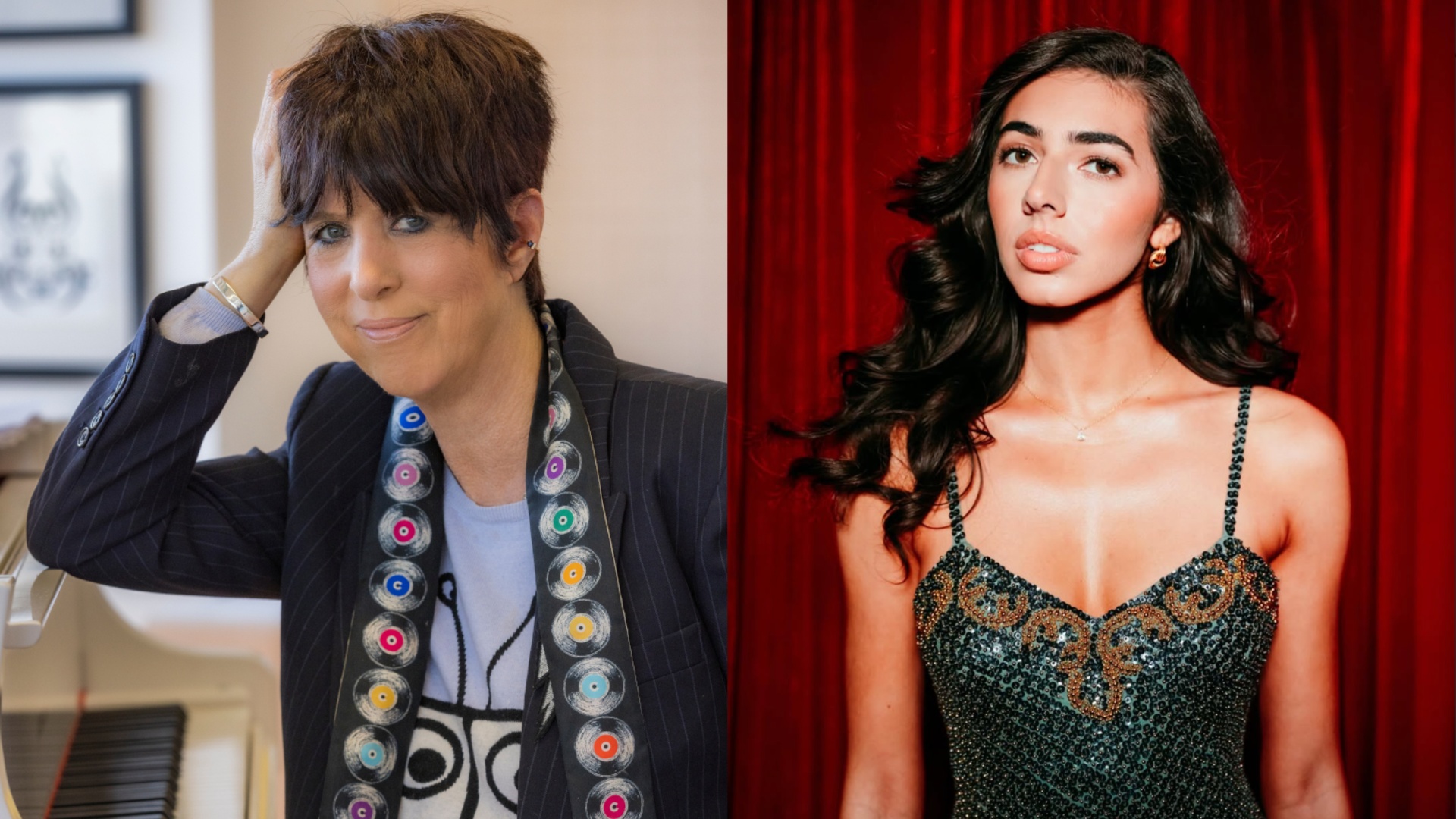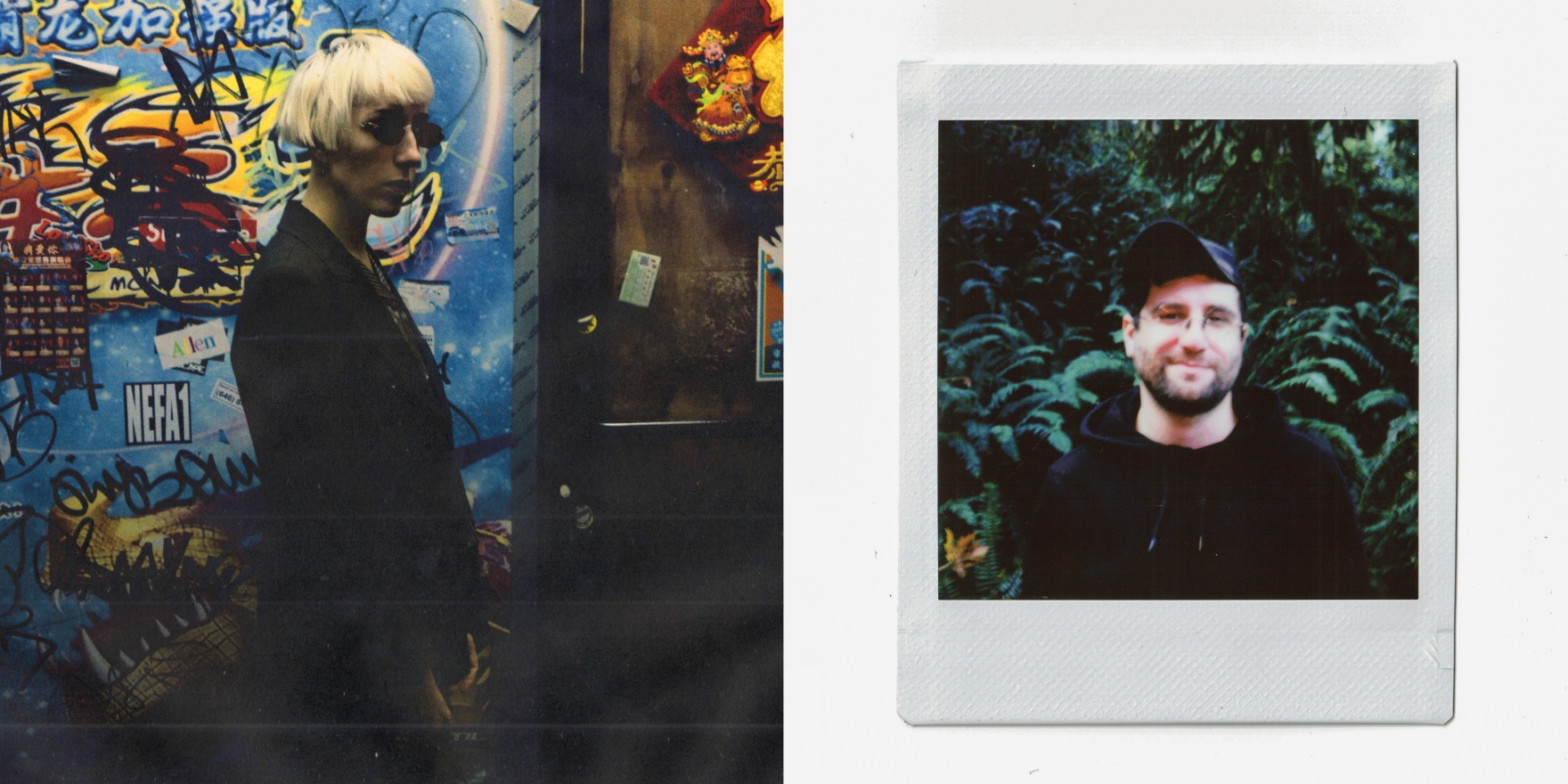
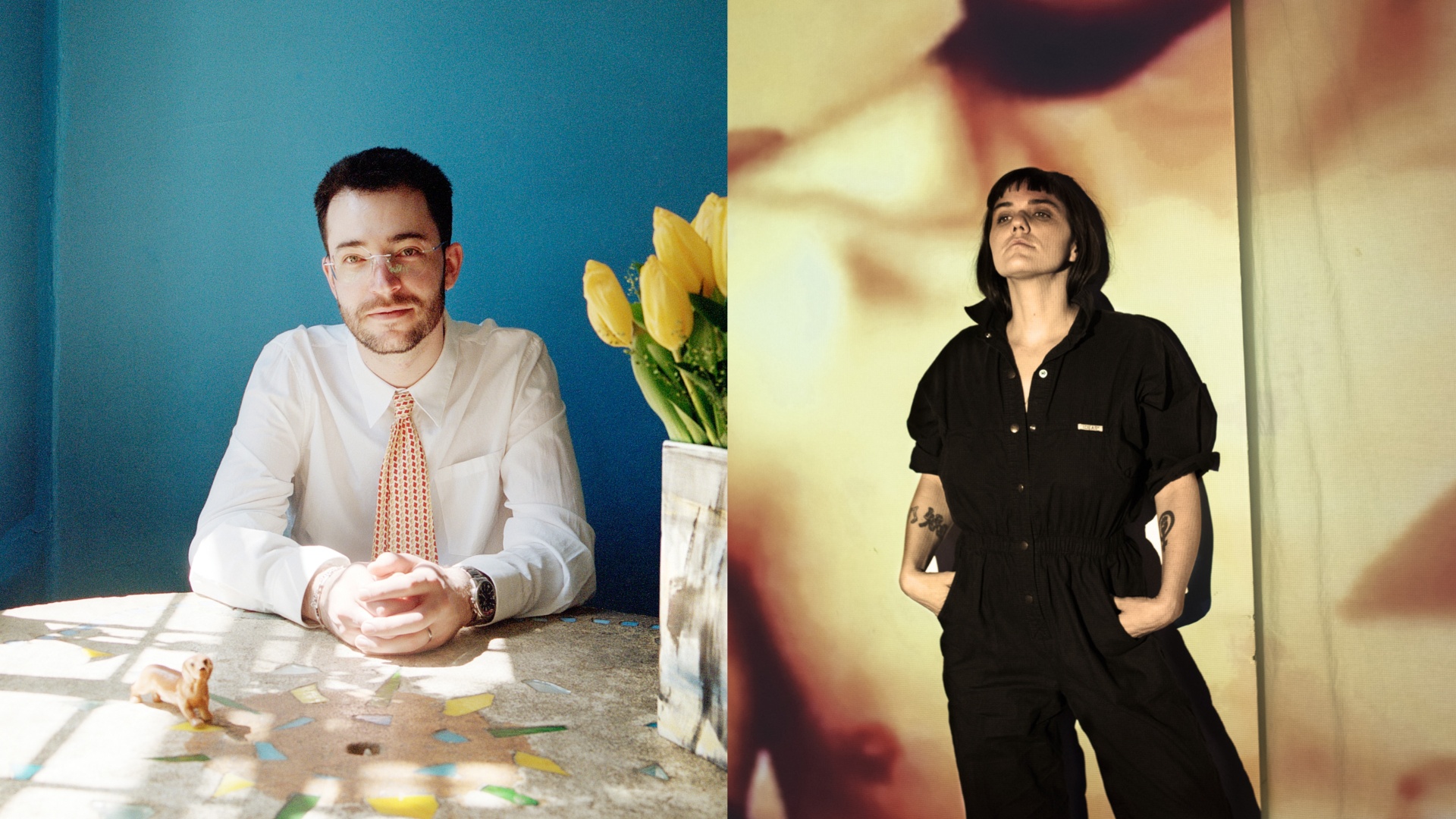
Pleasure Systems is the project of New York-based artist Clarke Sondermann; Emily Wells is a composer, producer, and video artist. The new Pleasure Systems record Leave It in the Sand is out this Friday, so to celebrate, the two friends got on a call to catch up about it, and more.
— Annie Fell, Editor-in-chief, Talkhouse Music
Clarke Sondermann: So, we actually have kind of an interesting origin point. We first met because my husband Mark, who is an opera librettist, came back from the opera conference that he usually dreads every year, and he was just glowing. He said, "I met the coolest person. You're going to love her so much. We have to hang out with her." And I love his classical music friends, but I really didn't expect it to be someone that I had much more of a shared musical language with. How did you find yourself at the opera conference? You do walk the line between classical and pop worlds, but how did that balance lead you to the opera conference?
Emily Wells: I would just say I've gotten to a stage in my career where I understand the power of grants. And that if you want to keep making records, you’ve got to be creative. For me, I have to be creative about how to fund them. But beyond just needing support, I love thinking about records in a broader sense, more how an artist might think about a body of work or someone might think about an opera. So, I am obsessively writing an opera and I got a grant for it and I thought, This will be hilarious. I'm going to go to this. I gotta see what this is. And of course, you learn that it's just people in the same industry drinking together at a hotel in Memphis.
Clarke: Much like SXSW for me and for you in previous stages in your career.
Emily: Exactly. And so my opera — which I don't need to describe here, but there are things about my past work and it's set in the ‘80s — so, you can imagine people were telling me, "You’ve got to meet Mark Campbell." And I did, and I was completely smitten. I had the thought, I have to know this man. I want him to be my mentor, my friend. I felt like I wanted to sit at his feet and hear every story he had to tell me.
Clarke: And he would hate that description, but that's part of what makes him such a good candidate for mentorship. He doesn't want anyone sitting at his feet.
Emily: God, no… I do have a lot to learn from him, but our dynamic is such that I feel like I've met a friend who I've known for a long time and who I will know forever. And just really admire — but not just because of his work, even though his work is upstanding and very important to the lineage of modern and future opera, but because of who he is, as a human being, just ageless, wild, fun, funny, sincere, quiet, and loud all at once. He's just remarkable.
Clarke: You should have written our vows.
Emily: He told me about you, of course, and I wrote him with the hopes that maybe he'd have a coffee with me or something. And little did I know that he would invite me to your house and I would get to meet you. And it was such an incredible thing — there's two new friends who I want to know forever. Lucky me.
I wanted to begin with an excerpt from your bio that really made me laugh: “Despite being an incredibly charming and sociable person, his own outlook on life is a glass quarter-full. not exactly cranky, but weary, tempered by a sense of knowing irony that's frequently as funny as it is fatalistic.” Of course it made me laugh because it's funny, but also, something I thought a lot about the first time I listened to your record was the question of irony. How big of a part of your work is irony?
Clarke: That's always kind of felt like the tension: Irony floats to the surface for me in day-to-day life, but then songwriting feels like the one place where I can be 100% sincere. I feel like lyrically there's a couple jabs I throw here and there. On the first song it's essentially a joke when I say, “Hopefully the fire will be put out by the flood,” “plastic in our blood.” Moments like that maybe teeter ironic, but it's because I'm trying to say something. Whereas the irony in my day-to-day life is usually just to be a brat.
Emily: That was what made me think of it because I was like, OK, here's the Clarke that I'm getting to know. And then I'm listening to the music — I mean, sometimes I have inside jokes with myself that I'm doing in production or lyrics, but you said it was the one safe place to be earnest and totally sincere.
Clarke: I think it's total sincerity. There's little moments like that, but I struggle with humor in music sometimes as a listener as well as a writer. It's the hardest medium to pull it off because so often it feels like you're laughing at the listener rather than with the listener. There's kind of an assumed smugness to jokes in songwriting that I feel like you don't get in any other medium.
Emily: And it's been interesting, as I've spent a lot of time with the record, the question faded for me. It doesn't feel you're going for any kind of irony. But then I read that and I thought, I’ve got to ask: what is a natural skeptic supposed to make of ordinary happiness?
Clarke: God, you can't lead with that question. I mean, I don't know. I feel like there's an overlap in both of our outlooks and work there, because my read of Regards to the End, which is my favorite album of yours, is finding these moments of genuine love and joy in the midst of everything going wrong. You connect those dots pretty beautifully. I think it's just whatever the opposite of naive is for me personally; it's like being informed of the real risk of the worst and saying it's worth it, rather than just blindly hoping for the best.
Emily: In all seriousness, I think what we do have in common — and I really feel it especially on your most recent album — is this grappling with this legacy. I feel like I owe everything to being queer, gay activism, gay art. Obviously we do it in ways that diverge sonically in some sense, but I really felt those threads of commonality of a kind of reverence,
Clarke: Absolutely. I mean, you have a photo of David Wojnarowicz behind you. My last album, the one from 2021 — maybe this wasn't legal, but I put a quote of his in the jacket of the LP. I feel like since it's credited…
Emily: I think it's legal.
Clarke: But I feel like he's someone that a lot of the most thoughtful people I know always come back to. I'm curious how you first came to his work and what first really drew you to it, because it was such a visceral thing when I came across him for the first time. What was it like for you?
Emily: I always think of him as this wellspring. There's something about his writing in particular that is always new. Every time I encounter it, it feels like there's a fresh kind of fury inside of it. And there's also an old friend, something very familiar about encountering him. And you feel like you're encountering him just as much as you're encountering his work. For me, Close to the Knives was my big introduction. And then it just feels like it's him: his collage work, the tape journals, his writing. It all feels like it's the same thing. It's all so integrated with itself.
Clarke: It's in the same place in your mind. For me, at the time it felt like the first non-corny protest art that I had come across. You know what I mean? It felt like it expressed this political rage that I'd always had inside of me, but often I'd heard it done in a hyperliteral way. Which isn't to say that his work isn't literal. It's very immediate. But there's a rawness to it that makes it feel not like a picket sign.
Emily: Right… His rage wasn't the only thing there. There's so much sensuousness and tenderness and care alongside making very plain statements.
Clarke: I mean, that's the big thing that I was wanting to talk to you about, because it's a subject that’s come up, but I haven't really gotten to the bottom of it in your work. You were saying we're both people who spend a lot of mental energy on queer lineages. But I feel like it's something that's hovering in the background of my work and it's very in the foreground of yours. I find that really interesting. I have so much admiration for how directly you pay homage to the work that you're channeling and paying tribute to. It feels like you're having an actual conversation with these artists rather than just [being] “in conversation,” which is thrown around loosely. The essay that you shared with me that you wrote for your performance at ICA Boston just floored me because listening to that album, reading along to the lyrics, there were so many references that I got, just by my own intrinsic understanding of this stuff. And then reading how you laid it out, I realized just how many there were in there that I didn't get. And then also from that point being able to zoom out and realize, Actually, she achieved something pretty fucking monumental, because I wouldn't need to get a single one in order to feel the emotionality of what it is you're talking about. It's not a crossword puzzle.
Emily: I never want anyone to feel like they need to read a book to understand what I'm making. It's not academic. And in that sense as well, these works that I'm referencing literally held my hand through the process of making the work. It's my own work; they led me to my songs. [The songs] aren't about these things. I'm not trying to tell a story about David Wojnorowicz. I'm letting him lead me to the water. I think that the thing I also realized in making the work and letting that process unfold over a period of time is that it is also my job as an artist to hold my other hand out to whoever might want to take it. And it could be in a long future after I'm dead and gone. Just to have that much respect for any listener of any time, the same respect I felt I was paid through these artists, that's what I'm aspiring to.
Clarke: I love that. It also takes a lot of the pressure off. I mean we've talked about how torturous it is to release music, especially as things get more digital and our attention spans get shorter. There's something really freeing in that way of thinking, that you're extending a hand to someone who might need the work at any point in the future. It feels in line with what's often been my view of political action more so than creative action: The goal isn't that you actually think you're going to be living in the world that you want to live in. That the fight for something more equitable is a part of what gives life meaning. And also that when people do finally achieve these monumental wins for justice and equality — because they will at some point — you have to believe that you contributed to it without knowing it. It's not about being paid back, but that it's the lineage of gradual contributions towards what's right.
Emily: It's all a living thing. But speaking of this idea of the way music and the way we think about and are with music is changing: I've had such a wonderful time being with your record and noticing how it changes with each listen and grows. It’s also a living thing in that sense. And it's really reminded me how special an album is. An album really is king. And I feel like you really believe that in this record. It has a consistency. You can be with it as an experience, and you can be with it passively. I was making dinner before we talked and I was listening. But then I've spent a lot of time really close listening as well, and I love that it can have that duality,
Clarke: Thank you. I mean, yeah, album is king for me, too… A lot of my favorite songwriters, it feels like they have one perfect song inside of their heart that they keep trying to write over and over again, but it never translates to their own standard of satisfaction. And I feel like an album gives you more attempts than just a single. There is a world in my head where I said everything I was trying to say musically and lyrically across this entire album in one perfect song, but instead I get the 13 best attempts at that song.
Emily: I totally relate to this. I do think all artists are kind of trying to create the same thing over and over again. At least for me, every time I write a song, there's something that is exactly like the first time I ever wrote a song about that experience. I cannot describe it, nor will I attempt to, but there's this sacred thing. You're like, Is this that star that I have reached for again and again and again? And the answer is always yes and the answer is always no. You know what I mean?
Clarke: Yeah.
Emily: Do you feel like your process is the same as it's always been, or has it changed over the years?
Clarke: It's changed. It's actually something I want to ask you about because I feel like the biggest thing that changes the internal dynamic for me is this push and pull that I feel within myself of needing it as an outlet of personal expression and emotional processing. And my last album was much more like that than this one, because it was songs I wrote one after another after my previous partner passed away, and it just was a diary. So there's a push and pull between my personal need for that outlet and my feeling that totally diaristic songwriting is completely self-indulgent and obnoxious a lot of the time. I never know the balance. And I think since Visiting the Well, the biggest change for me is just that I've gotten to be a much stricter editor with myself. Not in a way that really stops up the process, but most of the lyrics on that album were totally first-thought-best-thought. And this album, it was more like, Great, we have a draft now. Let's work with the draft.
Wanting to be a little bit more precise is the biggest thing that’s changed. Where I'm at with the material I'm writing now, I'm trying as an experiment to just swing totally in the opposite direction and write essentially a work of fiction as an album, which I've never done before. I want to write about other people. But I want to throw that idea back to you a little bit because when I listen to your work, it feels like you give it all to the listener. But Emily the person feels protected in a way. I'm curious what your process has been, or what you wish it was, of drawing boundaries in your creative process between what you share, what you pull from, what you don't.
Emily: I mean, I consider myself both author and listener in that sense. So I think when you say I give it all to the listener, I try to put myself in both sides. Which of course is totally impossible, but it is something I do care about. I do want to be able to have an experience with it that's not of my own making, if that makes sense. I don't know if I consciously protect myself. I don't think of myself as particularly diaristic in my approach. My lyrics sometimes have more heft than others depending on the album. Sometimes I really want something simple. I just want to say something simple or let repetition be the thing that gives the words their weight instead of explaining further whatever what I'm trying to say. Also for a while I was touring so much and I was thinking so much about, how was I going to do this live? So, as I started to create this way of performing, especially solo, how am I going to pull this off was in the beginning of the writing process. Instead of, I wrote a song and now I have to figure it out…
But funny enough, this new work that I've been working on in the last few years since my last record came out, and all the touring subsided, it's quite simple. [I’m] writing on a guitar or piano these very songlike structures that one could sing around a campfire, and I'm really thinking about how they feel in the mouth. And again, I am thinking about the listener because I'm like, What would it be like to sing along to this?
Clarke: That's really zoomed out to be singing it yourself thinking about what it would be like to sing along.
Emily: Yeah, totally. But it's like mouth feel, when you think about language. And songs have many functions, but one of them is to keep people company. So if someone wants to sing with you, what does it feel like for me to sing them?
Clarke: I was talking about this with my friend Kasra once, because his lyrics were always really baffling to me. I was asking him a similar question of how he gets there, and he told me that his process is just what syllable he thinks will sound good over the part of the song. So he would just do a vocal take of syllables of mouth noises and then notate that and try to find words that would fit in places to align those syllables,
Emily: That's very Paul McCartney. Paul McCartney tells a lot of stories about gibberish lyrics for songs that now are so beloved, and certainly sung along to, the Beatles.
Clarke: I'm kind of just getting into him for the first time recently. Paul specifically, via my friend and producer for this album Ivan [Berko]. We were just taking a break in the studio and he put on “Let Them In” by Wings, and I was like, “This is the best song of all time. How have I never heard this before? I was like who is Wings? Why have I never heard of this band?” And he was like, “Dude, catch up.”
Emily: I actually wanted to ask you about working with Ivan. I don't know how much of a producer role you took on this record versus the last one. How much did you give in to letting someone else in on your process?
Clarke: I mean, starting, I thought I was giving in 100% and then it was only about a year into the process that I realized I was still only giving him 30%. It's a hard thing to relinquish. The thing that I could never quite get past — and Ivan and I are going to continue working together, and this is the thing that I need to figure out how to work on better — is just having somebody else hold the project files. When I have an idea at 11 PM, I want to be able to go jot it down into the song rather than making a note to remind myself of what it is to bring back to him.
But it was great. I mean, I pursued him because he's like a dance music legend in New York. Big DJ, big producer of dance music. I love dance music, but it's not my language at all. I know very surface level stuff and it does the trick for me. But then we got to talking and had a shared love of Bill Callahan, Cass McCombs, like old straight guy singer-songwriter music that is among my favorites. I knew right away when I was writing these new songs that I wanted them to sound bigger and fuller than I had the technical know-how to do. I'm really bad at production. I just discovered a limiter earlier this week. Had never used one of those before.
Emily: That helps me understand where you’re at.
Clarke: I have very spare understanding of it, and it's gotten me this far, but I wanted these to sound like actual pop songs. And I felt like Ivan's understanding of the songwriting language that I was working with, but also experience in really driving upbeat music would be the right fit. And he's also just the person I get along with the best. Which helps because it is like having a therapist.
Emily: I totally get that. I think it's really smart to have because of the legacy of Fire Island, the history of dance music in Fire Island, is so major. So I love the idea of having this album that's so gentle, but has a producer who's all about getting people to dance. It's kind of, again, in that sense of something historical being embedded that might not be known to the listener, but that's important to the construction of the work itself.
Let's talk about Fire Island a little bit, and your house and how cosmically charged it is. I mean, I'll just kick it off by saying I was there by myself three or four weeks ago and wrote three songs over the course of four-and-a-half days and it felt two weeks.
Clarke: Because there's a time vortex out here.
Emily: I communed with the sun and the land. When I came home, I was really changed. Like, I've seen god, how can I come down from this?
Clarke: I also like the image of you returning home kind of looking like Tom Hanks in Castaway. You've really had this full exorcism on the beach.
Emily: So what was your experience? Did you write most of the record there?
Clarke: I wrote all of it out here. Partially because going between here and the city, my shoulders just drop every time I get back onto the island. It’s so much easier and simpler and I feel like I can actually hear myself think again. Part of it was how generative it is to calm down. That was a big part of why it was all written out here. It's a special place to me.
We were talking already about the kind of felt queer lineage. I'm a gay guy on Fire Island doing a very similar thing to what gay guys have been doing on Fire Island for decades and decades. It ties into what we were talking about at the top of being a skeptic and being hyper-aware of all of the things completely wrong with the world and with our lives, and still choosing to hold on to the positive. The physicality of this place feels like that, too. There's no reason why this little sandbar should exist or why people would ever choose to build homes on it.
Emily: It's kind of a Neverland.
Clarke: And, I mean, it's constantly eroding — it's amazing that the houses don't collapse into the sea more often than they do. Because they do sometimes.
Emily: Yeah. And your house is such a treehouse. You're surrounded by these ancient holly trees — they come up through the deck — and you can hear the ocean. You can feel it. You're surrounded by wood and there's a fireplace. There's kind of a hearth to it, in both a literal and metaphoric sense. I found I would go wear myself out so that I could come back home, and then I would come back home so that I could go back out and wear myself out. There's this beautiful cycle between encountering the natural world and then being safe. I felt really up for engaging with anything.
Clarke: Yeah, It's otherworldly, in a weird way.
Emily: I want to talk about some specific songs. I was thinking about how you gave us such this generous way to enter the record with the intro and how it really feels like stepping onto sand. I think you're also kind of teaching us what our ears should start getting ready for, what kind of sound world you're introducing to us. There's so many more strings on this album, and [I was curious about] how you thought about arranging. Is that a single player?
Clarke: Part of it is that when I was living in Philly, I just didn't know string players for whatever reason. And then I moved to New York and met the three people who played on this record. But it wasn't arranged; it was all very cobbled together. The cellos are by Nikki Wetherell who I knew ‘cus I'd seen him play in Slauson Malone and loved his combination between the more straightforward melodic chord oriented work and then the freaked out sound design he would get out of the cello. When he came over to record his cello parts, the first thing he started doing was emulating seagull calls on the cello. And then the violins are kind of split between my friend Mari, who goes by More Eaze, and my friend Zach who I met because he plays in Chanel Beads. They all just played take after take of whatever they wanted with the intention of Ivan and I then chopping and rearranging from there. So the intro, since most of the songs that Zach played violin on were in D major, I just looped parts from all of his violin parts for the other songs. It's very haphazard collage style, but it worked out.
Emily: But it feels really right. In the same way rays of light are going to hit the water, it's just got that kind of reflective, rippling… I feel like there's a lot of water in this music. And I don't mean totally mean musically. The song “Rubble,” one of my favorites, there's this dreamy moving current underneath, and then there's the more dry texture of the strings. That kind of contrast is something you guys really captured, and I think that the moving current is kind of a recurring feeling across the album. Which is I think pretty hard to pull off.
Clarke: It's so easy to feel like everything is just standing still. So, I appreciate that a lot.
Emily: So, we've been talking about Fire Island. I want to talk about the music video for “When We Find It.” Can you describe the experience of getting the footage, who made the footage, what it was like to edit?
Clarke: The videos came from Mark's friend, Willi, who I just adore. They were boyfriends in the ‘80s and I think into the early ‘90s, too. But Willi had these Super 8 reels that he would film when he was hanging out with friends, especially on a trips to Fire Island back in the 80s, as well as in New York. He's from Berlin and he would take it back with him whenever he would visit. He had these reels digitized and put them on when we went over for dinner sometimes. I thought they were so beautiful and I got my nerve up to ask him if I could incorporate them. And in his very German sense of humor, his response was, just as long as I don't credit him. I talked him down eventually, but initially that was his only rule.
I was so taken by the footage because it felt so universal and so of its time simultaneously. You don't need that much historical context to understand what the mood would have been in the Fire Island Pines in 1989. But it's especially these shots of guys holding each other in the waves and still finding time to be completely silly… I think it was a little over an hour across 12 reels that he had shot and I cobbled them down and tried to make my own story with it.
Emily: I really love how they play with the song. For me, they really complete the song, and I don't normally need a music video to help me understand something more completely, but I feel that this really does that. And it's so beautiful knowing Mark is in the video.
If we can talk about “have had” — we should say this is a song that you covered that your husband wrote for Don Ruddy, who was born in 1953 and died in 1992 of AIDS-related complications. Mark told me about this song.
Clarke: Yeah. Have you been to our apartment?
Emily: No.
Clarke: I never met Don, of course, but he made really brilliant functional artworks out of concrete primarily. So we have a couple of lamps that are stacked discs of concrete with a bulb sticking out of the top, and then also a crazy dining room table. That's my favorite object in the world. It's a circular slab of concrete suspended on some wooden frames, and it was a gift for Don's boyfriend, who went to visit his family in Venezuela and brought back this crystal that he felt was very spiritually charged. Don embedded it into the middle of the table and then filled the rest of it out with these multicolored ceramic tiles laid in. They both passed away and Mark was the inheritor of a lot of the furniture. It's the most charged object in the world to me. But then it's also where I send emails from, which feels wrong…
Emily: Such is modernity…
Clarke: Exactly.
Emily: But this recording — the first time I heard it, I just wept. It's so beautiful. I think it's a really interesting and important choice to include it. Because it is a slight detour, musically speaking, and then of course conceptually it pays homage across time like we've been talking about. Mark is a prolific person who’s written many songs. Why did you choose this one?
Clarke: Part of it is as simple as when he first played that song for me, I had the same reaction as you. I just wept. But because Mark has primarily worked in classical or classical adjacent worlds, I believe the only recording of the song — which is fabulous, it's by Rebecca Luker — it's done in a very operatic style and treated as an aria more than anything. When I was listening to it, I thought, structurally this is a slightly off-kilter pop song. But to me, it felt like sort of the ultimate statement I could make with this album. Obviously after releasing something as intense as Visiting the Well, you get in your head. And for me, one of the things that really got in my head was that I genuinely didn't expect Visiting the Well to find any kind of listenership. I thought it was too out there and overly sincere and diaristic. So then the fact that a couple of the songs got fed into some algorithms — which I'm incredibly grateful for, it's very validating. But it still felt distanced in a way… It felt important to make a bit of an It Gets Better album with this. And a big part of that is my relationship with Mark. I'm happily married to the most amazing man I've ever met. It's wonderful.
But, yeah, when I was starting to cobble these songs together, it felt like that is the ultimate statement. If I'm trying to write about the acknowledgement of grief casting a shadow on future relationships, as well as the acknowledgement of the inherent risk of any relationship between two people potentially having the worst outcome, then what better way to say it than by having his words instead of my own as the acknowledgement of grief. And it comes right before sort of my final say on the matter, which is the song “Everything I See.” That’s what the album title Leave It in the Sand comes from. It's my favorite lyric on the album: “A trail of those who came before us, the sunken forest and the lilies in your hand/I’ll wear his sweater to the island, I will be silent, I will leave it in the sand/I think I understand.”
Emily: Do you feel like there's anything else you want to say? Do you feel happy?
Clarke: I'm feeling very happy with this. Thank you so much, Emily. I was so excited to do this, and I knew you would be fantastic, but the level of generosity and care you brought to this really means the world to me.
Emily: It was a pleasure, truly. It's fun to get to know you through this conversation, but also through being inside your work in such an intentional way. I really have a relationship with this album now, that I would have had no matter what, but this has helped me to formalize it in a certain way. I love you and good luck with the release. I'm here for anything you need.
Clarke: Thank you. I may come crying to you at some point.
Emily: Just call me. I've been there.
(Photo Credit: right, Res)