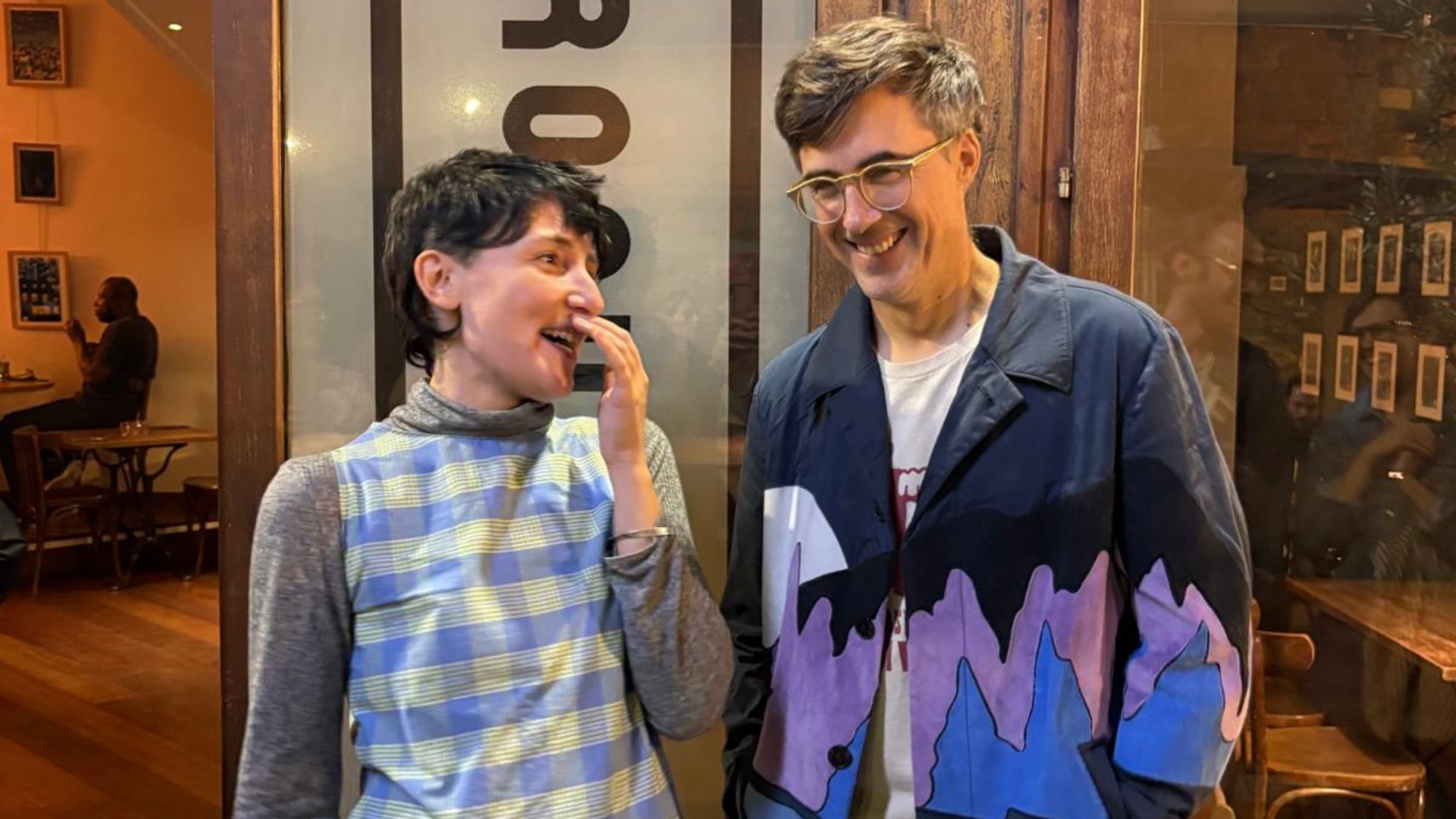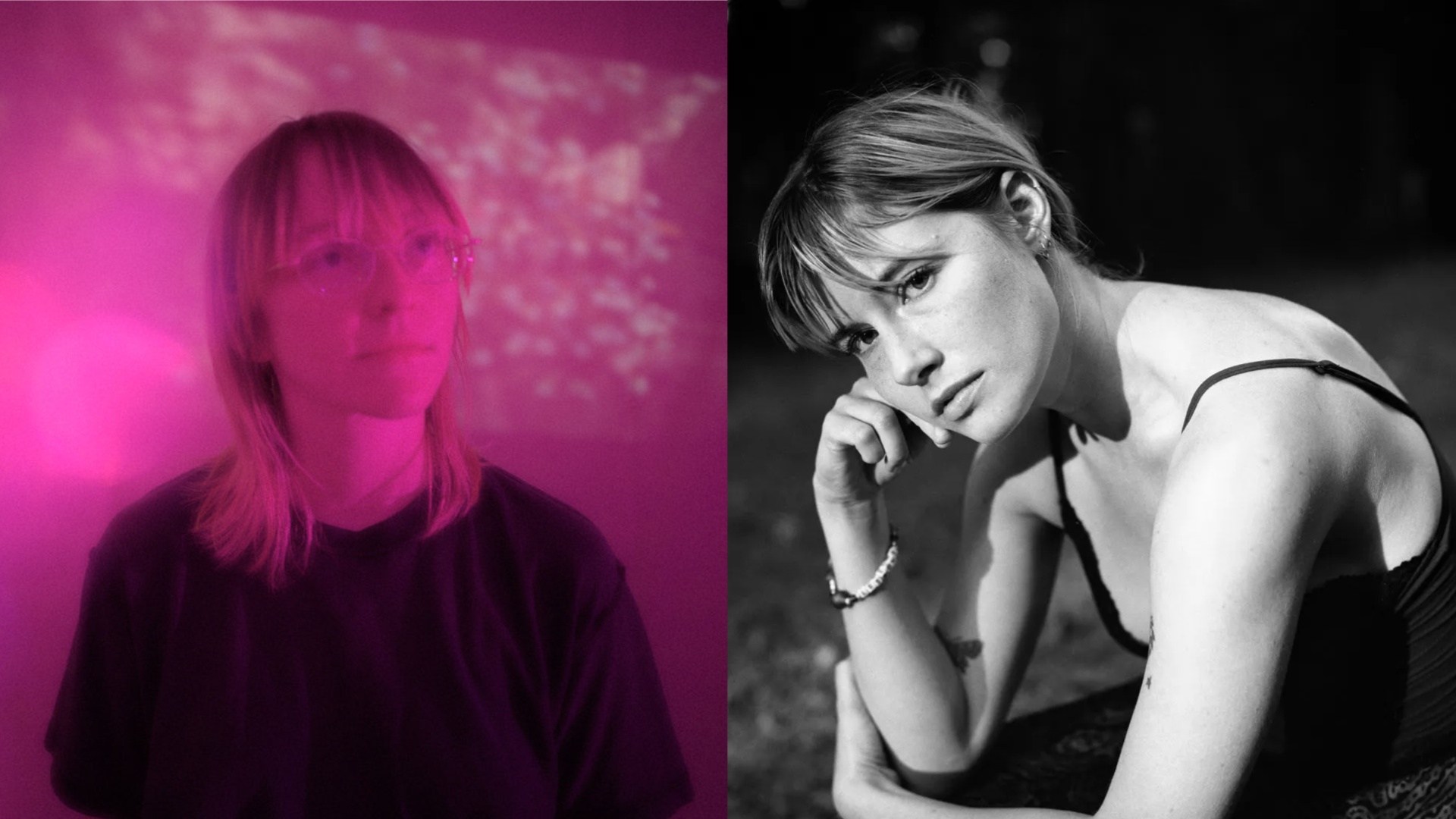
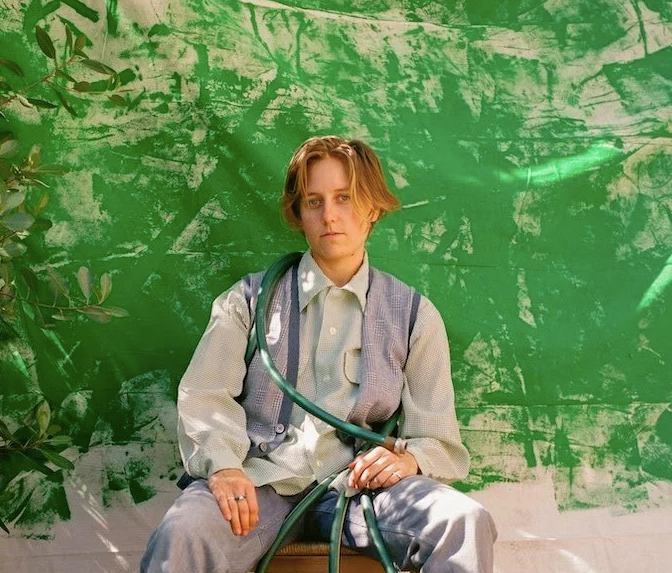
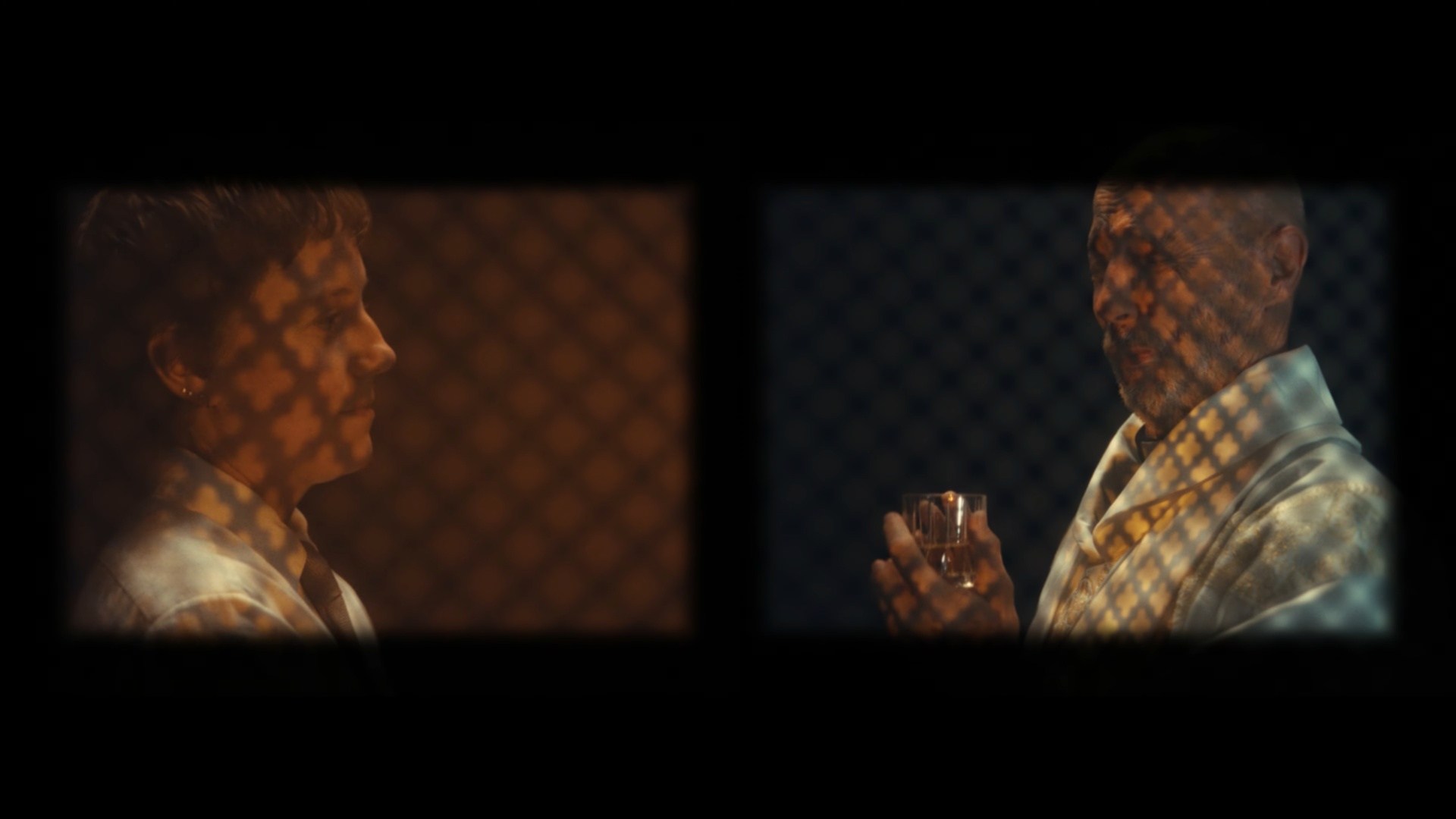
Mal Not Bad is the solo project of LA-based musician Mal Hauser; Jon Gries is an actor known for his work in film and TV like Napoleon Dynamite and HBO’s White Lotus. Jon stars in the music video for Mal’s new song “DHF” — off of their record Sophomore, which will be out September 9 — so to celebrate, the two sat down to chat about creativity and much more.
— Annie Fell, Editor-in-chief, Talkhouse Music
Mal Hauser: Thanks for being here, Jon.
Jon Gries: It makes me so very, very pleased to be here on this day. It's a diaper day.
Mal: It's a diaper day. It's like a hundred degrees outside.
Jon: It's a sweat diaper day, is what it is.
Mal: OK, well, I guess we're here to talk about creativity.
Jon: Oh, god, her?
Mal: I know. “Her.”
Jon: I hate that bitch!
Mal: [Laughs.]
Jon: I mean, no — I don't really hate that bitch. And I don't mean it like that. I didn't mean “bitch” in a bad way. I meant like a dog…
Mal: I'll edit this. Don't worry.
Jon: You don't have to edit it! Let it be raw, man.
Mal: That's a good way of doing it. That's creative unto itself — just letting it be.
Jon: I mean, that's what we do. We just do whatever it is that guides us.
I was thinking about movies today, about what makes really a great film that lasts. There's so many films that in their time people are knocked out by and they're great, and then you go back to them later and you go, “That wasn't really that great. I kind of got caught up in the wave of, That's great!”
Mal: The excitement.
Jon: And that's part of it, I suppose. But I was thinking about genres — I was in traffic — what else are you going to do in LA but think, because you can't listen to the radio because most of the music shit. Let's face it, most popular music is just drivel.
Mal: It's junk food.
Jon: And I don't want to be this curmudgeon, but the truth is there's always been bad art. There's always been stuff that imitates the real thing. I don't want to be like, “Back in my day…” because there was a lot of shit. But you could suss it out pretty quickly. And nowadays, I feel like I hear songs and I go, “Boy, that feels imitative,” but it's imitating something that already was shallow to begin with, and just made a lot of money for somebody. It's geared towards making a lot of money as opposed to saying something.
Mal: Yeah. I view the stuff that really does hit that has substance as fully digested. It's not someone just copying someone else — that feels very much like you're still chewing through your bite. You need to finish and swallow and then you can make something. But I get the fact that people are trying to make money off of something that's clearly a fad. And I think today, especially with TikTok and all these trends, it's so visible what the fads are. And everyone's involved, whereas before it would be kind of behind closed doors of what the fads are gonna be.
Jon: Yeah. You can run the veins through and you realize that it courses through every aspect of society. I mean, if you think about our politicians who are just greedily filling their pockets with impunity… it's become an accepted norm in a strange way. But why not? We revere billionaires as if they're like artists. And they're not. And if anything, all they want to do is pay for the artists like the old kings back in Elizabethan times to perform and be the clown at their party…
I think with social media… I don't really spend any time on social media, but I can't hold it against someone for monetizing that way. But at the same time, it's so special when anybody does anything that is something that they really have germinated in their soul.
Mal: Yeah, it's come from within. I do feel like too, everyone lives in a world that everything's coming at you all the time and it can be so overwhelming that I just categorize it differently. There's art art, and then there's art to consume in a very lighthearted way that's more passive.
Jon: But that stuff doesn't apologize, which is good. I mean, some of that stuff is like, “Hey, we're making a living here and at the same time, we're having fun.”
Mal: Yeah, it's self-aware. Which is so meta. I love that.
Jon: Yeah. That's commendable in and of itself.
But I was thinking of that movie Apocalypse Now, and that movie can be watched anytime, anywhere. I mean, not the Redux, not all the later iterations, but the original one that Fred Roos and some of these other guys got in their hands in and helped cut. I'm sure, much to the consternation of Francis Ford Coppola, because he wanted to have his cut. And the truth is, I saw his cut and I was like—
Mal: It's too long.
Jon: The other one's better. I mean, trying to do shtick comedy in the middle of this is just — all of a sudden it felt like, You guys are now so aware of yourselves. Whereas before it was, You're in this. When I saw Platoon, I remember thinking, Now this movie won't hold up for a week. It's candy-coated. Not that the performances aren't good, because there's some wonderful actors in that movie who really give it their all, and you can't take anything away from that. I believe them. But I don't believe the filmmaker. Even though I know Oliver Stone supposedly was in Vietnam, I had a feeling he had a desk job when I saw that movie. It reminds me of those East Coast newspaper guys who decided to go out West and write tales of gunfighters and things like that. It just felt campy.
Mal: Yeah. But Apocalypse Now —what sets it apart then?
Jon: Obviously it's based on Heart of Darkness, and yet it's a complete shift. It's kind of like how Romeo and Juliet became West Side Story. It's a total shift using the same themes, the same universality, the same truths. I buy every bit of that storyline. It's a masterpiece.
Mal: I think there's certain things that you watch where you're like, Oh yeah, game over. This is for the books. But then there's some things that might surprise you and they show up again and again. I mean, I'm sure you experienced that with Napoleon [Dynamite]. Did you feel, “Oh, this is something for the books?” Or were you just so committed to it, you didn't even think about any of that?
Jon: That's a question I get a lot — what did I think? I'd helped sell a couple of movies to distributors [before], helping friends or making calls and having whatever meetings. The first day that I arrived on set, I saw Kip and LaFawnduh playing footsie under the park bench, and it was one of those things where you walk in and you go, I know where I am, I know what this is. I know that this is special and it's being handled as such. So I contacted someone, who will remain nameless, at United Artists at the time, and I said, “I think I'm on to something here, and I think you need to know about this.” And this individual was, like, crickets. Didn't get back to me. Later on, got back to me after the film went to Sundance and everything happened to it, and they said, “I will never forget to call you back again.”
Mal: Wait, that's so satisfying.
Jon: Yeah, but the saddest part is I've had nothing really to show them.
Mal: Not yet! You've been cookin’ some different things.
Jon: Cookin’ meth here in the back garage… Anyway, it's not that I haven't had stuff to show, but it's stuff that has been represented already. With Napoleon Dynamite, this was an untouched gem, and I was panning on that river. I found the gold mine. So in that sense, I felt like it was special. I mean, did I think it would ever do what it did? No. No way I could have been that prescient. The way everything worked out with that was incredible timing, incredible luck, in the sense that Fox Searchlight was at that particular time the absolute best place for that movie to land. It would have been a disaster if I'd sent it over to anyone else… This incredible team that came together could only have have lifted it to the level that it needed to be for the eyeballs to see when it came out in the theaters. If it were today, it would never — I mean, it took six weeks for that film to gain momentum. And some of these exhibitors were like, “We'll keep it here.”
Mal: They were down to wait it out.
Jon: Yeah. Also, there's a sliding scale in distribution and exhibition, and the longer a movie stays in a movie house, the better percentage goes to the exhibitor and less goes to the distributor. So I guess they felt like, “You know, this is a pretty good gamble.”
Mal: That's crazy, I didn't know that.
I wanted to ask about, too — I don't think a lot of people know that you do more things than just acting. You have amazing photography around your place, you write, you do music. I'm curious where that comes from. Do you feel like you have to do all of these things? How do they influence each other?
Jon: It's funny because the truth of it all is I feel as if I've failed myself, because when I was 12 years old, I knew I was a writer. I knew that I could sit down and just write a story. I felt confident in the words that I could put on paper and the dialogue and whatever. And I feel like if I were to look back on anything in my life, it’s that I didn't write enough. And so now, as I'm a little less frantically trying to get the next job, I'm able to sit down and do it. I don't want it to sound like I'm hard on myself or anything, but I've known people who in their own way have been really talented in certain areas and they've shied away from it — maybe afraid of that kind of success, or of that kind of failure. As much as I really felt it in my soul, I was like, Jesus, what if I'm terrible? [Laughs.]
Mal: It's terrifying. It's like a pressure point.
Jon: It is. So the last I'd say 10 years, I've written a few things that my attitude was like, Fuck it, I don't care if they don't like it. I don't care what anybody thinks about it, I'm just going to write it. And there have been a couple things that have come out of those sessions. So now there's the whole other thing, “OK, yeah, you birthed this baby. What are you gonna do with it?”
Mal: [Laughs.] “Where are you gonna send it to school? Where are you gonna get the funding for that?”
Jon: And how's anybody gonna even remotely understand what you're trying to say?
Mal: I think so much of that, too, comes with the people you surround yourself with from project to project. In your experience, what are you attracted to? What are you looking for when you are collaborating, or you say yes to a job?
Jon: Well, the thing is, I do have a long history of doing good things and bad things. I've done things that I knew were bad, but I knew that they were going to pay me and I had to do the job. I saw Michael Caine on Johnny Carson when I was younger, and he did this movie called Victory, which was this terrible movie — I think it was with Sylvester Stallone. It was so blatantly bad and panned by every viewer, and he was promoting it. Johnny was like, “So, the reason you're here is Victory.” He's like, [in an English accent,] “Yes, Johnny, Victory… Well, you see, my wife and I were driving down Sunset Boulevard. We saw a house for sale and she was like, ‘Oh, isn't it lovely, Michael? Wouldn't that be lovely?’ And so I said, ‘Alright, I'll do Victory.’” [Laughs.] I mean, his aim was higher than mine. Me, sometimes, it was just, “I gotta pay the rent.” But I've read a lot of things lately that… I went through a period where I was saying no quite a bit. And it was kind of scary.
I'll never forget, I was with Val Kilmer one day. We had just done Real Genius together, and we hung out quite a bit. His father had a place out in Chatsworth, a ranch. We were shooting an audition for Full Metal Jacket — Val and I would shoot these [audition] videos — I did The Doors for him. So then we were doing Full Metal Jacket, and he needed another body, so I was playing one of the soldiers. We were up at his father's ranch, and he had these two AR-15s. But he didn't have blanks, he only had real live rounds, so we were spotting enemy targets up the mountain and just letting loose with these AR-15s. But I remember he was holding this script and he goes, “I just got offered this movie. You know what they're offering me? $300,000.” I was like, “Fucking do it, man.” He was like, “Really?” I said, “Come on. You know you didn't make that much for Real Genius… I mean, is it any good?” He goes, “Well…” And he tossed the script on the ground, he pulled out that gun, fired 20 rounds into it and then said, “Fuck it.”
Mal: [Laughs.] Oh, my god.
Jon: It was one of the great moments of my life. And then he put it back in the envelope and sent it back to his agents.
I didn't have that luxury when I was younger. But of late, I just look at stuff and go, Ugh, I can't. There's just no way I can do this. But something else came along. Something comes along if you believe and have faith.
Mal: You trust.
Jon: Yeah, you trust.
Mal: Well, I feel like this is good. I have so much fun working with you.
Jon: We have a great time, don't we?
Mal: I genuinely feel like I'm in the sandbox every time we get together. And it doesn't matter what we're doing: It could be music. It could be film stuff. We play catch. What a flow. I feel so grateful for it.
Jon: I gotta say, I've been asked to do a lot of these kinds of things, and I haven't done them in years now, because I feel like it's only good if you understand the person that you're talking to.
Mal: We have the luxury of knowing each other quite well at this point. It's so fun hearing your stories. You have so much to share, and I'm very appreciative every time you open up. So thank you for your time.
Jon: Thank you!
Mal: Alright, 10-4. Over and out!