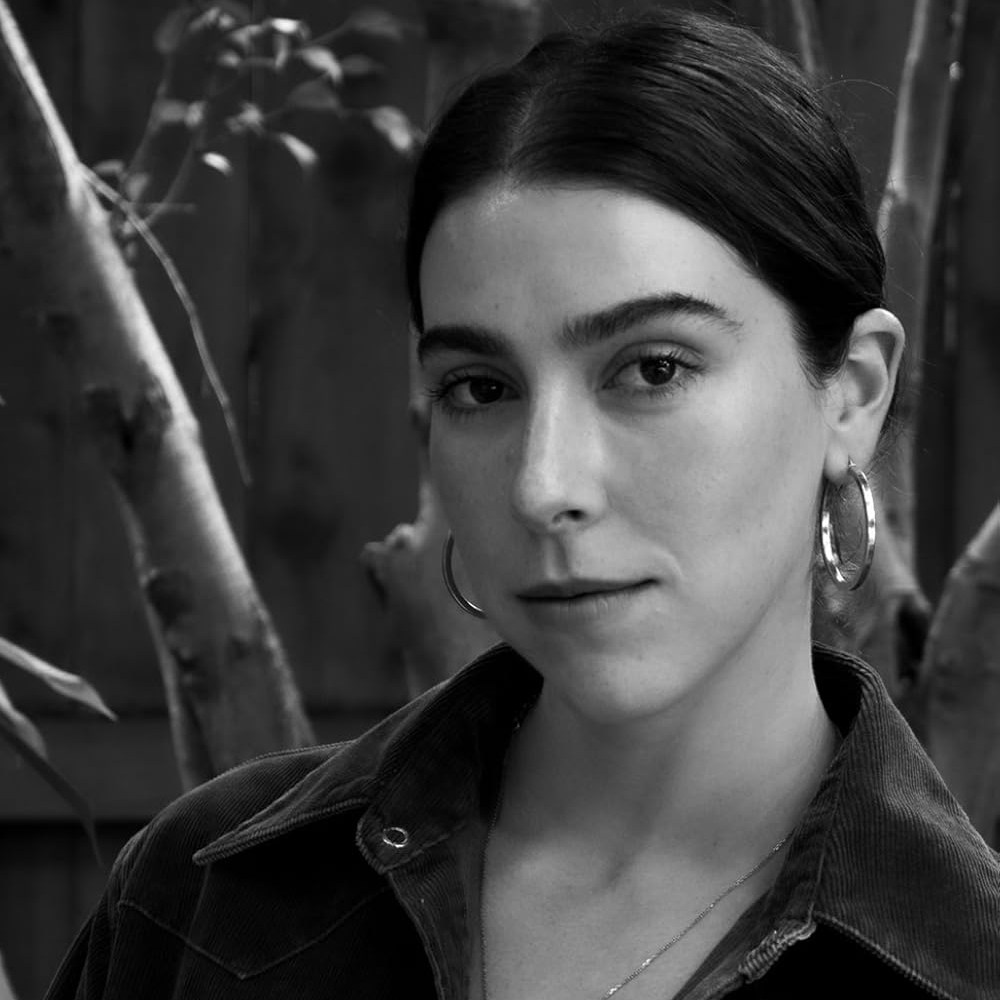
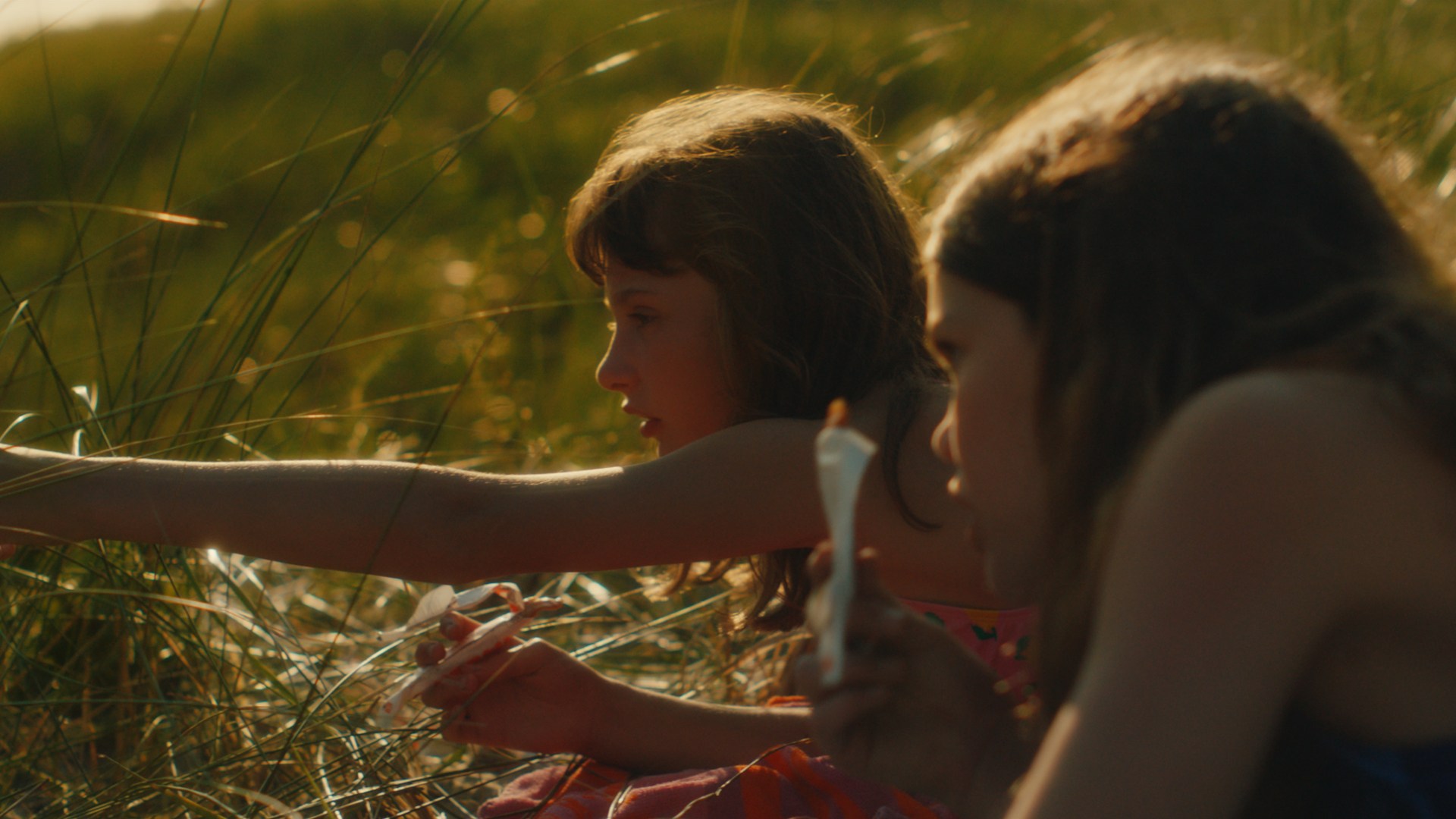
“I’m pregnant,” I blubber into the phone. “Please say something!” After what feels like an inordinate amount of time my then-fiancé, now husband says, “I think this is a gift. I think we should go for it.” I was 26 at the time. Weeks away from shooting my debut film Over/Under, months away from getting married, and in my mind, three to five years away from having a baby. This wasn’t how it was supposed to go. Get married, solidify one’s career, then once feeling somewhat “set” (whatever that means), have the baby. But life had other plans.
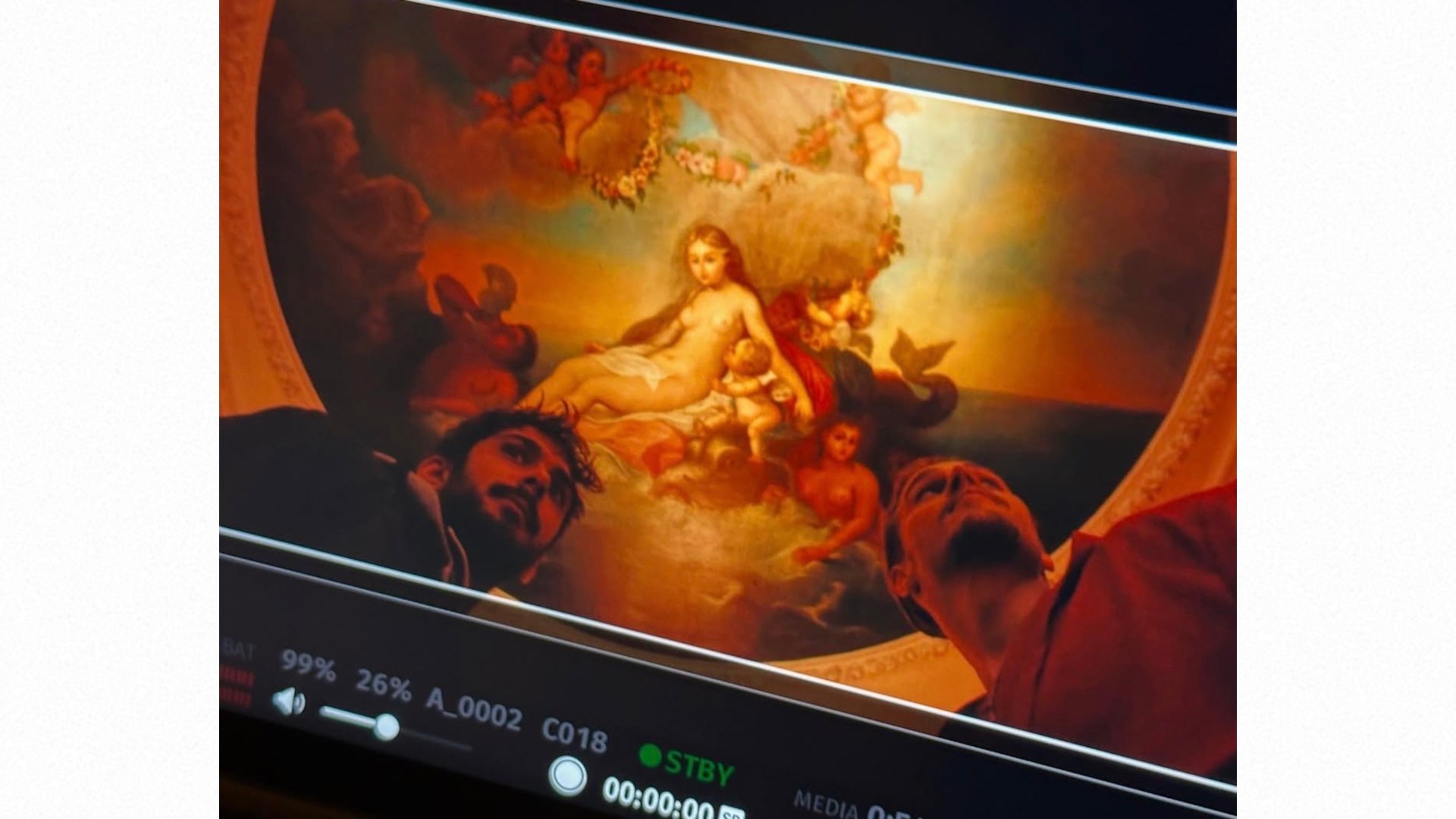
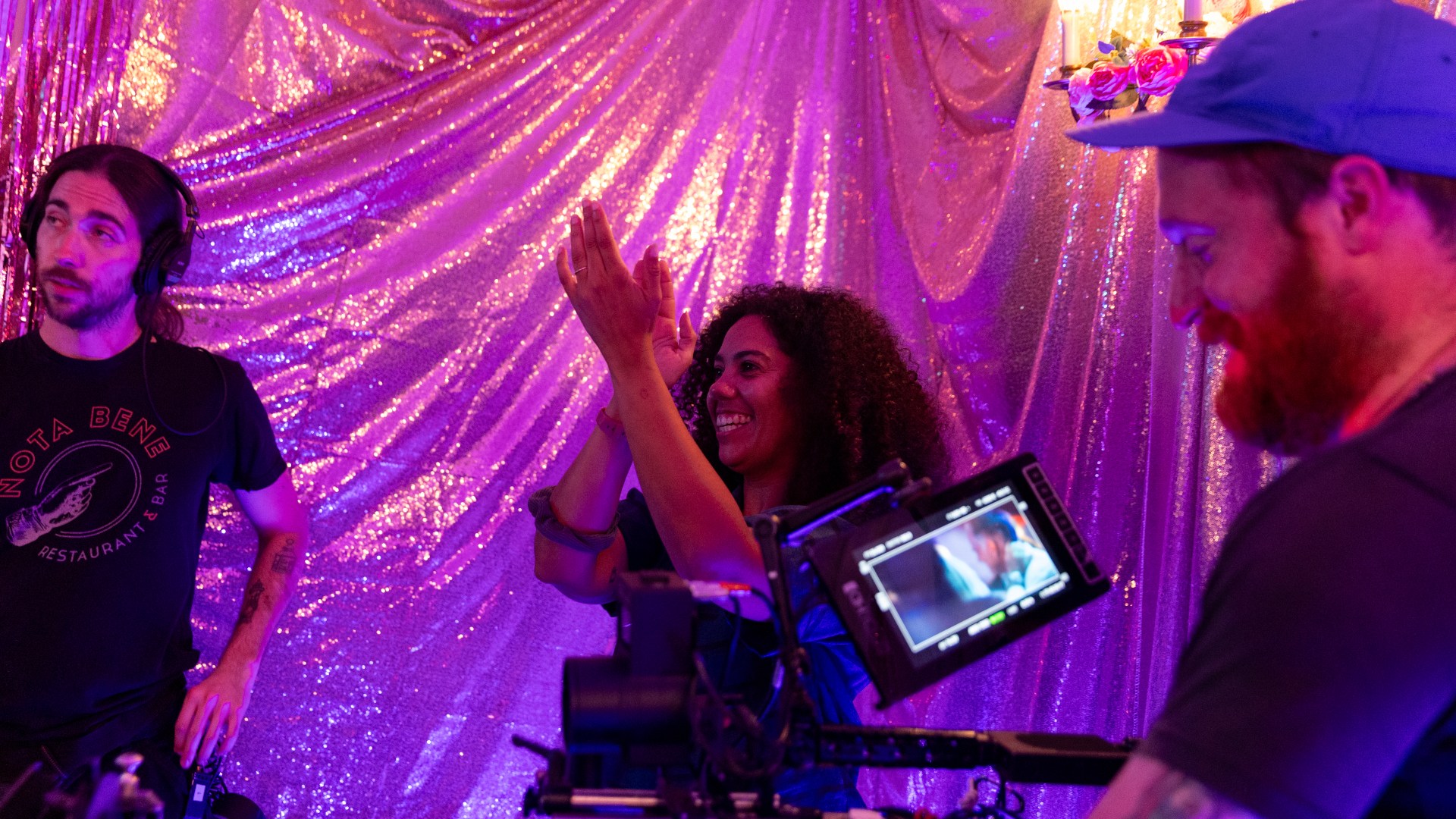
I kept my pregnancy private. I had never directed before and my imposter syndrome was giving my morning sickness a run for its money. I hid my changing body under baggy clothing, sipped Coca-Cola in between takes, and exclusively ate spicy tikka masala despite the blazing New England heat. At our wrap party, I announced to the cast and crew I was having a baby. “You mean you’re having twins!” one of my producers shouted. “A film baby and a human baby.”
For the next several months, I locked myself in an editing room while my bump quadrupled in size. I conjured up a plan: Apply to Sundance, then if that doesn’t work, South By Southwest, then if that doesn’t work, Tribeca. My baby started to kick the day the first pass rolled in from Sundance. I was devastated. I read the rejection letter over and over for hours. That night, I cried myself to sleep while rubbing my belly. “It’s OK,” I whispered to my baby. “Mommy’s gonna get into the next one.” But alas, no. The South by Southwest rejection came in shortly after. The programmers made complimentary remarks about the film, but as all artists know, a pass is a fucking pass.
What came next, no one prepared me for: a human child. When I was discharged from the hospital, my husband securely buckled our newborn son into his carseat and the baby proceeded to scream bloody murder the entire drive home. “Where are the adults to help us!?” I sobbed hysterically as we made our way to our house. Oh right, we are the adults. I was the first of my friends to have a baby, and the weeks that followed were a lonely, dissociated blur that I’d later understand to be a very serious case of postpartum depression. Sleepless nights, double breastfeeding on one side since the little lad couldn’t quite latch on the other, constant blowout poops, and an internal deep shade of blue that doesn’t have a name. As the cherry on top, I’d refresh my email constantly to see if my work baby was accepted into a festival. And then one day, while nursing my son, SFFILM emailed us that Over/Under had been accepted into the San Francisco International Film Festival. I shrieked so loudly my son popped off my breast and also started to shriek.
I was two months postpartum when the credits rolled and the audience stood and applauded at the SFFILM premiere. Despite my tender state, I felt a sense of purpose so profound it melted away all the existential ache that comes with new motherhood. In the months that followed, Over/Under went on to a have a nice festival run at the Provincetown International Film Festival and Deauville American Film Festival in France, got a handful of positive reviews, secured a sales agent, and I as its filmmaker secured a personal agent. I clung to these victories the way my baby clung to my chest.
Before long, reality came down like a tidal wave. Our sales agent sent an email with a long list of final decisions made by distributors: “Loved it but too small.” “Great but no cast names here to sell.” “We’re looking for more clear genres at this time.” “Too hard for us in the current market.” It felt like the end of the road, but I held onto faith. I believed if I wrote a new script, and had another shot at making a film, Over/Under would be discovered. I was committed to my goal, but was utterly devoted to my child who, as they say (and they were right), was growing up fast. I couldn’t generate work at the pace I once could prior to motherhood and yet, somehow, in between diaper changes, bedtime stories and big feeling moments, I was able to turn in a few new scripts. But then, more passes.
There came a moment where the constant external rejection turned my insides into despair, melting my lungs into wells of shame. My mind labelling me a “failure.” At gatherings
with my peers (some of whom were filmmakers themselves), I’d hear about their wonderful accolades in the industry. A few of them had their debut films picked up by a distributor, some of them were already onto their sophomore films. “What’s happening with that film you made, Sophia? Can I see it anywhere yet?” There was always an awkward pause. “I can send you a link,” I’d say. Another equally awkward pause. “You’ll get there! Don’t worry! How are you otherwise?” they’d ask. I wanted to say, I’m drained. I wanted to say, I haven’t been to a social gathering with adult human beings in months. I wanted to say, My life is securing goggles onto heads before swim practice, cutting cucumbers into triangles and belting the Paw Patrol theme song with all the windows down in the car. But instead I’d say, “Yes, of course! I’ll get there.”
At lunch one day with my agent, she asked me if I wanted more children. “Yes, but I need to make another film first,” I said. I’ll never forget her reply: “You’re a female filmmaker, doll. You can do it all.” I left lunch and proceeded to get pregnant again. Nine months later, I welcomed my second child into our family. I had no postpartum depression this time. I felt happy. Happy in my role as mother to my two beautiful children.
In early 2026, one of my producers called me to say there was interest from a distributor to pick up Over/Under. I thought I was being punk’d. Five years later and someone is interested in the film? Does that even happen? Turns out, it can.
I often think back to my 26-year-old self. I think about the first film she ever made. I think about her decision to hide her pregnancy throughout the shoot. If I could, I’d tell her to feel so proud of the film she made. I’d tell her it’s OK to feel scared about what’s coming, but that there’s nothing to hide. I’d tell her that carrying her child is her superpower. I’d tell her that her life won’t look anything like she thought it would, but that it’s all going to be OK. Then I’d hug her the way I do my two children and tell her what I always tell them: “You’re doing your best. You’re doing your best. You’re doing your best.”