When we were young, my older brother Peter and I went on errands with my mom in the midnight blue Ford Falcon. She asked us if we wanted to listen to cowboy music, and we’d jump around on the bench seat yelling, “Yes! Yes!” Songs by George Jones, Kitty Wells and Hank Thompson spun out of the tinny speakers, and the pedal steel guitar put us into a kind of trance. “I've got time for one more round, and a six-pack to go.” The neon martini glasses floated above us on Clement Street as cocktail lounges came alive for the night.
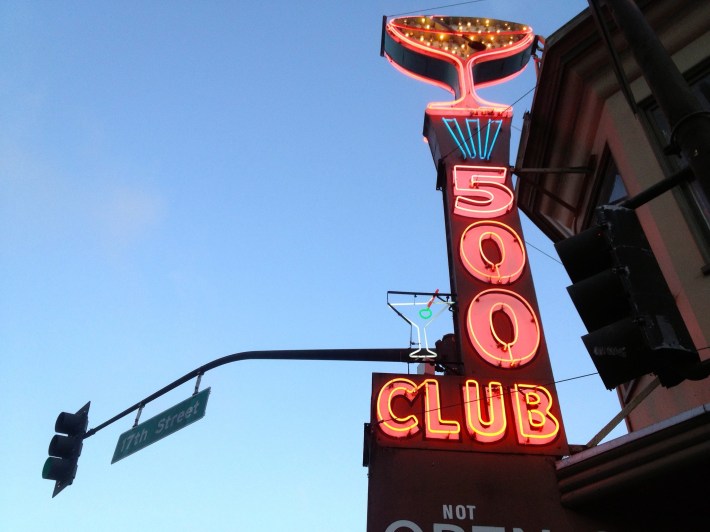
We’d often walk past Max’s 540 Club with its unending cloud of tobacco smoke floating out the open door. Lagging behind my mom’s manic pace, we’d sneak a peek inside and see silhouettes backlit by colored light, engaged in muffled conversation punctuated by the sound of tinkling glass. A man in a skinny bow-tie poured elixirs, and I thought the Wizard of Oz must live here.
When my parents had a cocktail party, we sat at the top of the stairs and watched the guests trickle in. A little crowd gathered by the front door, flapping their arms and bragging about business deals and children. Then one of the men would glance toward the living room, and my father would ask, “Can I make you a drink?”
The transition between “a hard day at the office” and a few cocktails fascinated us. Strained adult attitude melted away and raucous laughter spilled from our most carefully arranged room. It seemed like a miracle.
We’d make an entrance in our pajamas, remembering Dad’s strict orders to “stand up straight and shake hands with a firm grip.” We were junior executives in training, and the adults would erupt in laughter as soon as we were dismissed, amused by our gullibility.
The party broke up, and we snuck back in to inspect the depleted glasses with their icy condensation. Smells of gin, tonic and whisky were pungent, but Peter would drink the remains, careful to avoid garish lipstick smears on the rims of our fanciest glasses. He wrapped the longer butts into a napkin and promised to teach me how to smoke and drink “when you’re old enough.”
----//----
The Lost Weekend (1945)
The Lost Weekend takes place over the course of a few days, encapsulating Don Birnam’s epic 72-hour struggle to quench his undying thirst for booze. In a thrifty 101 minutes, director Billy Wilder puts the audience smack inside the shoes of this drunken lout, as he rides an alcoholic roller coaster toward another bottom.
The story conveys many of the stages of alcoholism within its limited time span, following Don’s path from joyful exuberance to unyielding despair in a process that ordinarily takes years. Yet the story condenses Don’s arc in a realistic way, familiar to anyone who’s experienced alcoholism firsthand. It’s a snapshot of a life plagued by a repetition of destructive habits ad nauseum.
Don usually drinks when the bar crowd is light – mornings and early afternoons. His favorite bartender, Nat, listens reluctantly as he spins tales to fill an imaginary novel. His drunken trajectory is measured by the liquid rings left on the bar, where shot glasses leave a ghostly residue. “Don't wipe them away,” he urges Nat. “Let me have my little vicious circles … no end, no beginning.” Three rings later, he becomes inspired by delusions of literary grandeur, comparing the window’s city view with a passage from Shakespeare’s Antony and Cleopatra. “Purple the sails, and so perfumed that the winds were love-sick with them; the oars were silver, which to the tune of flutes kept stroke …”
Don’s three rings become six rings and then nine rings. A twilight crowd fills the bar now, but Don continues his soliloquy to no one. “The cloud-capp'd towers, the gorgeous palaces, The solemn temples, the great globe itself!” Don is in paradise, so long as he has nothing to account for, a sanctuary away from his family and money for another drink.
----//----
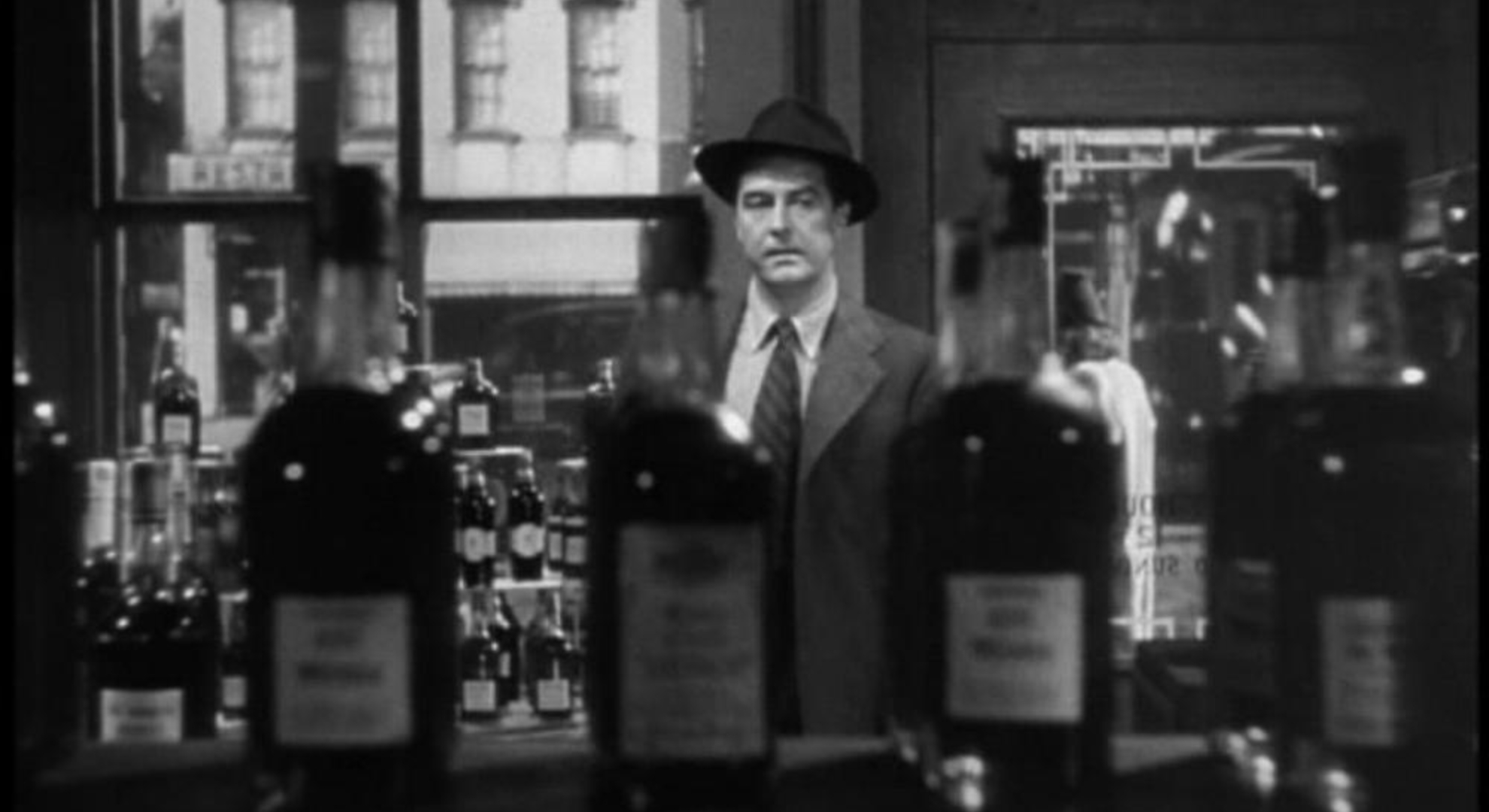
In the darkness of our neighborhood grocery, the proprietor Manwel always sat on a stool behind the cash register. Behind him were five long shelves of colored bottles, each with an elegant label. They reminded me of the stained-glass windows in our church.
When I was 13, I made a bold move, stooping to pick up a quart of Ripple Pagan Pink from the wine section and sliding it across the counter. Manwel cocked an eyebrow, silently asking, “Are you sure you want to go down this road?”
Ripple was 89 cents, but Manwel didn’t offer any change from my wrinkled dollar bill. He put it in the cash register and cemented a silent agreement. Until I turned 21, I would buy liquor from him and pay a premium for it.
He slipped the bottle into a brown paper bag like the ones old Black men hid their wine in, and suddenly I felt like a king. I was running away from home regularly then and taking pills from my mom’s medicine cabinet, not knowing if they were for birth control, thyroid problems or anxiety. I stole Sleep-eze and NoDoz pills from the five and dime and chased them down with 10-cent cups of coffee. I had no idea what I was running away from.
My parents took me to a psychiatrist. We crossed the bridge into hip little Sausalito and the doctor invited us to sit on the floor on oversized paisley pillows. His groovy haircut and sideburns were precisely trimmed – like the characters on Rowan and Martin’s Laugh-In, a TV show where Hollywood types presented a celebrity version of hippie philosophy.
The psychiatrist asked me about our family life, and my parents looked at me with a new and acute awareness. I stayed mum and counted the minutes until we could leave. Mom and Dad whined about the waste of money and mocked the doctor on the way home. I couldn’t blame them; he was a ridiculous character, and our visit didn’t accomplish anything except to fulfill one of their many parental duties. When everything went back to normal, I depended on Manwel to anesthetize my crazy state of mind. In that regard, he probably saved my life.
----//----
Paramount Studios almost shelved The Lost Weekend when a premiere audience mistook it for a comedy. Luckily, composer Miklos Rozsa suggested switching its jazzy music for something creepier – a theremin-based score in the horror film tradition. His contribution probably saved the film from the dumpster, and it went on to win Best Picture, Best Director, Best Actor and Best Adapted Screenplay at the 1946 Oscars.
It’s easy to see how that first audience thought it was a comedy. Don Birnam is an absurd character in the same way cartoon character Wile E. Coyote is absurd. Both are intensely clever in forging an unconscious path toward self-destruction.
The film opens with the camera gliding by a New York City apartment window where a lovely flower grows. It continues its path to Don’s window next door, where a bottle of whisky is suspended by a rope, about a foot below the sill. The camera enters the apartment, and Don casts a furtive eye toward it and the audience while packing a suitcase.
Over the next 15 minutes, he displays mastery in deceiving and manipulating his brother Wick, who hopes to transport Don to their family’s country home to dry out after his latest binge. Wick’s description of the farm’s “sweet cider, buttermilk, and water from a well that's colder than any other water” makes Don feel ill. “Why all this emphasis on liquids? Noble, upstanding, nauseating liquids.”
In an attempt to retrieve the hanging bottle from its noose, he sends Wick on a wild goose chase looking for his typewriter, a potent symbol of Don’s delusion. “I think I’ll get started on my novel,” he claims. But Wick discovers Don’s hidden stash and pours the contents down the sink. Curses – foiled again!
Consumed with the idea of a solitary bottle, Don becomes more determined to rid himself of Wick’s pesky surveillance. After performing another series of clever manipulations, he succeeds and finally gets a taste of whisky a few scenes later. A profound sense of relief descends upon the proceedings.
One of the film’s great achievements is its ability to make Don a sympathetic character. His talent for dishonesty and manipulation is familiar to most of us, and one that usually inhibits friendship. But Don’s playful approach to obfuscation and deceit is humorous because he’s so clever. We want him to win, dammit!
----//----
A constant flow of adolescent traffic through Manwel’s doors made his illegal shenanigans obvious, and we figured he had an arrangement with the “ABC” – the Department of Alcoholic Beverage Control. I admired his acumen and was inspired to find new ways to finance my new method of therapy. I offered myself to Peter as a “slave for a day,” in exchange for a dollar. I bought liquor with my lunch money, instead of food. I began to pay close attention to how money flowed through our household, memorizing my family’s habits and noting vulnerabilities in the system. At my friends’ homes, I became aware of where liquor, wallets and purses were kept, and I always checked the medicine cabinet.
The more I drank, the more I wanted, and the more I wanted, the more devious I became. I practiced my mom’s signature and forged her checks. I stole money from collection cans at a Vietnam peace demonstration and from UNICEF on Halloween. I fundraised $250 for a middle school trip to the Capitol in Washington, D.C., and used it to buy a pound of Mexican weed, cutting it with oregano to sell to 6th graders. These are just a few of the scams I remember from early adolescence.
When I got caught, I felt a sense of self-loathing. Not getting caught inspired a sense of paranoia. Yay!
----//----
Billy Wilder revealed his keen sense of humor over a long and prolific Hollywood career, and The Lost Weekend is an excellent example. His writing and direction emphasize Don’s helpless desire and how it leads to hasty decision making. This is comic behavior most humans can relate to, but gradually, Wilder peels back the horrifying circumstances of addiction, and our temptation to look away is unavoidable.
Wilder’s characters are often good citizens who go bad when tempted by some version of a dream life. In Double Indemnity,two ordinary Americans fall in lust and conspire to kill the woman’s husband for insurance money. In Sunset Boulevard, a struggling screenwriter takes a wrong turn into the driveway of an aging actress and sacrifices his dignity by becoming her gigolo. In The Apartment, a flunky climbs the corporate ladder by lending his home to a boss for his affair with a young woman. She attempts suicide in the apartment.
Wilder’s mockery of our reckless pursuit of pleasure and power seems innocent and even sympathetic, at first. But the humor always takes a horrific turn, and like a politician who jokes about cancelling the next election, it’s only funny until we discover we’re living under a dictatorship.
Wilder escaped Nazi Germany in 1934 and watched from his new home as Hitler dragged his countrymen and the rest of the world into hell. From Hollywood, he explored the echoes he heard here, focusing on a human flaw that is essential to America’s success – blind desire. He is not interested in quashing it, only in exploring its potential for humor and tragedy. How far, he asks, will you take it? And how far will it take you?
----//----
By the time I was 18, I had a daily routine – rising out of my childhood bed at 10 a.m. and putting on the same clothes as yesterday. Wondering if I had done something despicable the day before, I’d mumble “good morning” to Mother and careen down Sacramento Street on my skateboard. I’d lurch toward the refrigerated section of Manwel’s, where I popped open two cans of Mai Tai “Cocktails for Two.” The syrupy contents slid down my esophagus, warming my stomach and providing instant relief for the jitters.
Suddenly, I was all smiles and joshing around. Manwel would take a pint of 100 proof Smirnoff Silver off the shelf and ring it up. I’d say, “Put it on my credit, my good man.” Crossing his arms across his massive belly, he’d look me straight in the eye and utter those devastating words, “No credit.”
Manwel’s love of negotiation was part of the game, and 10 minutes of haggling was an essential part of the ritual. He was intensely aware of the power dynamic between buyer and seller, but he used the negotiating process to cultivate our friendship. Dogged in his pursuit of a profit, he also understood (with some level of compassion) that a shaky 18-year-old with no money sometimes needed a drink or two. His business manner probably came from his Middle Eastern background.
Hiding the bottle behind my skateboard, I was halfway up our imperial red staircase before Mother could see anything. She’d yell, “Don’t you want some breakfast?”, but I’d already be mixing a drink with Shasta Black Cherry soda and settling back for the day. Reruns of Leave It to Beaver until 1, and then Dialing for Dollars came on with host Pat McCormick. He had good taste in classic movies and got excited when Citizen Kane or Red River was scheduled. He’d tell you Channel 13 was showing something better if Ma and Pa Kettle was on the slate. Bad movies were OK with me. I learned about the Hollywood system from watching all of it.
McCormick reappeared at 3:30 as the voice of Charlie, a dog puppet who showed cartoons. I spent three unemployed years on that couch, internalizing the aesthetic strategies, jokes and inflections employed within the Warner Brothers cartoon canon, and my future career was beginning to take shape.
----//----
There comes a point in The Lost Weekend when Don’s clever manipulation of reality ceases to work. He becomes delusional and ends up in the Bellevue Alcoholic Ward. Director Wilder was given permission to shoot on location at the hospital, after promising to communicate a pro-recovery message.
Ray Milland, the actor who played Don, prepared for the role by spending three days locked up in that crazy bedlam, and he became so rattled one night that he escaped onto 34th Street, where he tried unsuccessfully to hail a cab. Despite protestations that he was an actor, a cop escorted him back after seeing the Bellevue insignia on his bathrobe. I guess alcoholics claiming to be thespians are plentiful on the streets of New York.
Bellevue officials were not happy with Wilder’s finished product. It was too close to the truth. Particularly authentic is a character named Bim, a ward nurse who recites a cynical but humorous lecture about the endless cycle of recidivism in alcoholics. He inspires Don to escape successfully, after which he immediately robs a neighboring liquor store for a single piece of loot: a quart of cheap rye. Don soothes his shaky nerves with a drink, and the audience breathes a sigh of relief. Soon after the film’s release, Bellevue decided they would never cooperate with Hollywood again.
----//----
My parents sacrificed their liquor cabinet and wallets in the interest of keeping me off the streets, and periodically Mom would check on the status of my dank basement room. When she found an empty bottle in one of my many hiding places, she’d place it carefully in the center of the room, standing there like a dreadful beacon. “You can’t fool me!” it seemed to scream, and I would chuckle at her futile attempt to shame me into sobriety.
When I was 21, I finally got a steady job at the only place that would take me: a bar. Peter worked there, too, and an infinite supply accelerated our descent. He got fired for his shaky shot pouring and ended up in rehab a few years later. I set a personal record for employment longevity (two years), until I too was fired. Even my alcoholic bosses couldn’t tolerate me anymore.
I refocused on the long con by pretending to go to college, living on a monthly “school expense” check from my parents. After five years, they were skeptical about ever seeing a diploma. I got arrested for bouncing 32 checks in three days, each one made out for $1.50 and written with a solemn promise to myself that it would buy my last drink.
A few weeks after Peter checked out of rehab, he came for a visit. It was the first time I’d seen him sober in about a decade, and I was amazed that he still had a sense of humor. He didn’t talk about his conversion, and when I woke up one morning with the shakes and no money, we hitchhiked to the liquor store, where he bought me a drink. I appreciated that.
----//----
Before Don’s girlfriend persuades him to put the gun away, we see the suicide note he has written to his brother. “Amid all the grimness, can we share one little joke, dear Wick? I did finish something, didn’t I?” It doesn’t occur to Don that his violent death will traumatize the people around him. Instead, he is obsessed with his unsuccessful attempt to write a novel.
Helen, the girlfriend, uses this blind spot to inspire him: “You’ve got your talent to live for, your ambition!” Don embraces her idea fully, making a quick U-turn from self-pity to grandiosity.
“I'm going to put this whole weekend down, minute by minute … About a messed-up life. A man and a bottle. Nightmares, horrors, humiliations, things I want to forget. I'll send one copy to Bim and one to Nat. Imagine Wick standing in front of a bookstore. A great big pyramid of my books! A Novel by Don Birnam. He’ll say, ‘That's my brother, you know.’”
----//----
When I finally got sober the first time, I focused on personal success – motivated by the idea that my parents’ approval would keep me that way. Grades rose from straight Fs to straight As in one semester, and I got a job rolling burritos to help pay my way. But 15 years of drunken behavior made them skeptical of my short-term sobriety, and they remained aloof. I was compelled to please them more.
I told my AA sponsor I wanted to be a teacher, and he asked me why. “I want to help other people,” I told him. Gently, he suggested my motivation might be a desire to impress other people. I was deeply offended.
Over the next 20 years, I dedicated myself to becoming an expert – laser focused on learning about filmmaking, teaching it to classrooms full of trusting undergraduates and rarely admitting when I was wrong. I built a shallow foundation of self-worth by accumulating academic promotions, pay raises and film festival honors. Then I had to ask myself, “Why do I keep relapsing every few years?”
The pursuit of success was destructive in its own way, but it led to even more harm when I resumed drinking. People couldn’t trust me, and so I worked even harder to restore their belief in me. Slowly it dawned on me that my dependence on validation from other people was a losing game, and slowly, my constant judgement of myself and other people quieted down.
----//----
When Peter bought me a drink on that shaky morning, it was an expression of deep wisdom. He showed me that doing the next right thing for someone is more important than judging them. But it took me a long time to admit that helping other people is the way to feel comfortable in my own skin.
Don Birnam alludes to this idea in the final words of The Lost Weekend:
Out there in that great big concrete jungle, I wonder how many others there are like me. Poor bedeviled guys, on fire with thirst. Such comical figures to the rest of the world, as they stagger blindly towards another binge, another bender, another spree …
Don believes writing his novel will help other drunks, and that may be true – if he’s not too distracted by his ambition to build “a great big pyramid of [his] books.” Intention, it turns out, has a significant effect on outcome.
Comments, questions and inquiries are welcome. Please direct them to: mediumgalut@gmail.com