In the spring of 1994, I was a scrawny seven-year-old Philadelphian suffering from a grotesque case of tonsillitis. My tonsils had swollen to elephantine proportions, requiring emergency surgery and a two-day hospital stay. I remember vomiting mucus into a plastic basin when the NBC Nightly News announced the tragic death of John Candy. As the anesthesia wore off, I cried enormous wet dollops of tears. The hospital staff assured me I could eat as much ice cream as I wanted, although that was probably terrible advice.
That year was marked by confusion and angst. I'd skipped first grade after my principal deemed me "academically advanced," leaving me a year younger than my classmates. My tonsillectomy and prolonged absence compounded my alienation. During a classroom vote for song of the year, I nominated Eric Clapton's "Tears in Heaven." My teacher, Mrs. Presenza, put one solitary chalk mark beside my selection, followed by approximately 30 votes for Snoop Dogg's "Gin and Juice."
To make matters worse, I'd gained roughly 60 pounds since the tonsil removal, an experience that would inform my relationship with my body well into adulthood. I wondered whether the tonsillectomy had somehow put a cork in my metabolism. Whatever the cause, being the weird, overweight kid in the 1990s wasn't exactly a recipe for social prosperity. I had very few friends.
My father was staunchly opposed to cable television, partly because he suspected the government might surveil us through the screen. He's a wonderful man but also a recovering alcoholic, so some of his more imaginative and irrational anxieties got the better of him. My sister and I grew up without MTV or Nickelodeon, only to catch glimpses of the video magic at friends' houses. Our prayers were answered every summer when we hopped down the shore to Ocean City, New Jersey, a proudly dry seaside town. We stayed in a condo complex called Beachwatch, where the included cable television transformed an ordinary family vacation into an audiovisual cornucopia. We inhaled copious hours MTV and Nickelodeon as though we'd been suffering through a nationwide Beavis and Butt-Head and GUTS famine.
My parents were two unabashedly liberal pot smokers who weren't especially concerned with censorship. That summer exposed me to an impressive array of music videos: Nine Inch Nails' "Closer," TLC's "Waterfalls," Nirvana's "Heart-Shaped Box," the Toadies' "Possum Kingdom," and the schlocky parade of alternative music on 120 Minutes. However, the video that sent shockwaves through my developing brain was "Sabotage" by the Beastie Boys.
I had no clue about its affectionate parody of '70s cop shows and early exploitation movies. I only knew that the song's brazenness and unconventional structure resonated with me. The video and its frantic editing were perfectly calibrated to my little proto-ADHD brain. My parents had previously shown us The Groove Tube, the gloriously inappropriate 1974 sketch-comedy film, and "Sabotage" seemed to orbit the same universe. I became obsessed.
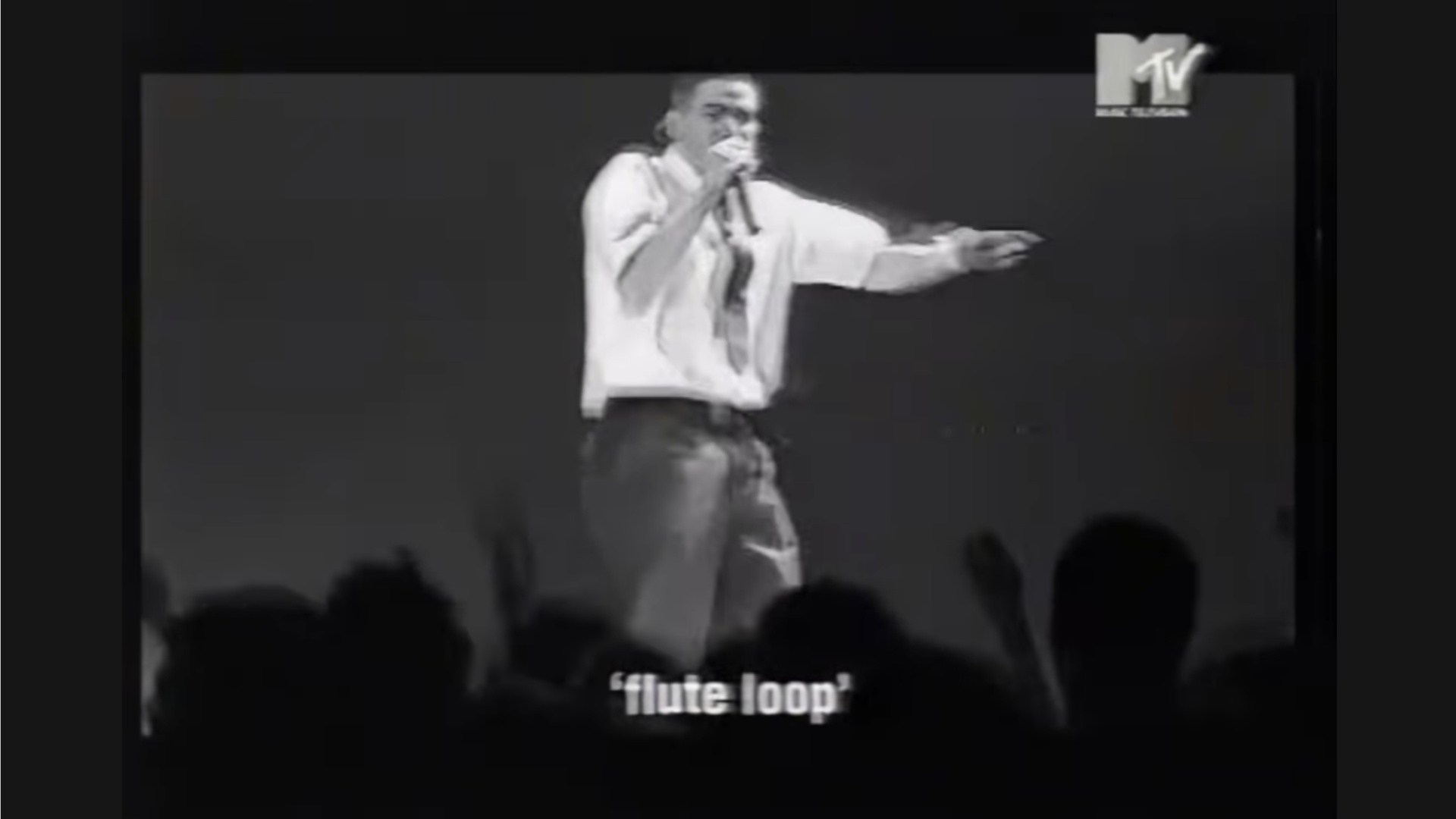
When the Beastie Boys performed at the 1994 MTV Video Music Awards, I sat transfixed by the CRT screen. Even more astonishing was Adam Yauch, a.k.a. MCA, storming the stage disguised as the fictitious Swiss filmmaker Nathaniel Hornblower to interrupt Michael Stipe's acceptance speech for Best Direction. The Beasties successfully infiltrated the corporate machinery of MTV, mastered its visual language, and undermined its self-importance from within.
I came back from vacation and entered third grade with extreme hesitance. For some ungodly reason, my new teacher insisted on weighing us all on a scale in front of the class. There I was, well over 100 lbs. Kids pointed and laughed at me. My grades plummeted.
In 1996, I was accepted into Masterman, a rigorous academic school in Philadelphia. I remained a lone wolf. My parents eventually allowed me to go CD shopping with my friends Spencer and Jon. I appointed myself child ambassador of Tower Records on South Street, spelunking the discount bins for anything unusual. I nabbed $7.99 copies of Check Your Head and Ill Communication, which I played until the Discman made that awful screeching sound and battery acid leaked all over my Jansport. These records expanded my understanding of the Beastie Boys beyond their surface-level brilliance. Their music was a sample-heavy smattering of punk, hip-hop, funk, and seemingly every other genre they felt like exploring.
When Hello Nasty arrived in 1998, it marked another pinnacle of my preteen years. The videos for "Intergalactic" and "Body Movin' (Remix)" felt simultaneously futuristic and retro, with nods to campy '50s movies and the weird films about the advantages of powdered milk that my home economics teacher would play on her rusted 8mm projector. To this day, I reference both videos with prospective directors. The aesthetic is immediately recognizable: high-budget cinematography with a low-budget spirit. A production can be sophisticated without being sterile.
By senior year of high school, Paul's Boutique had become my bible. Its dense, musique-concrète style of hip-hop opened new sonic doorways, forging connections to Beck's Odelay and the cut-and-paste ingenuity of the Dust Brothers. Around the same time, I discovered the Directors Label DVD compilations devoted to Spike Jonze and Michel Gondry, which dissolved boundaries between music videos and art-house cinema.
I also permanently, uh, borrowed my friend Steve's Beastie Boys Anthology. It moved me so much that I started making films and music videos with my mini DV camera. My enthusiasm culminated in a choreographed gym-class dance with my friends Micah and Jon, set to a homemade Beastie Boys supercut. Our audience of future doctors and SpaceX engineers stared at us blankly. In hindsight, I don't know how I had the blind confidence to pull it off.
What continues to fascinate me about the Beastie Boys is the singularity of their creative universe. Consider "Three MCs and One DJ," the fisheye-lens security-camera footage of the band converging in a cluttered practice space basement and delivering a tour de force in front of a blistering Mix Master Mike. Or "Gratitude," with its rotating camerawork, which I discovered around the same time as Pink Floyd's Live at Pompeii. The Beastie Boys assimilated high-art references without treating them as sacred objects. Their work was a mix of spirited homage and outlandish irreverence.
As I grew older, I recognized how much of my identity they'd shaped. I had a small, tight-knit group of fellow freaks. I imagined that if I ever met the Beastie Boys, we could shoot the shit about how Bad Brains were the greatest punk band of all time, discuss Tibetan independence, get specific about Ultraman reruns, or disappear down a rabbit hole about the electrified saxophone of Eddie Harris. And, of course, they were Jewish. So was I. They cared about political issues and eschewed toxic masculine tropes.
Their existence suggested that an artistic identity could be assembled from opposing obsessions, simultaneously curious without being pedantic and politically engaged without abandoning their sense of humor. For a kid who felt like an outsider, that was liberating. It didn't just introduce me to culture to consume in mass quantities — it helped me understand that being weird might actually be an advantage.
In 2025, I self-produced a new album called Bounce House, which comes out March 5, 2027. During recording, I found myself returning to the Beastie Boys almost unconsciously, discovering new details in records I'd known for decades. While touring with MJ Lenderman, he showed me an extraordinary 1999 Beastie Boys performance from Glasgow. It reignited the spark I'd felt as a child.
That spirit quietly informed Bounce House all along. It’s a record full of genre detours, harsh atonality, self-created samples that evoke early '90s hip-hop, and songs that mash humor with deeply personal moments of clarity. Bounce House is about overcoming my insecurities and self-doubt to embrace a new, wild confidence. There's even a song called “Hold U Back” about the weight gain in 1994 that affected me for years.
A few months ago, I received a music video grant from 612OKC, a wonderful Oklahoma City organization that supports artists. The grant allowed me to take the creative reins of my music videos for the first time. I've returned to those childhood touchstones: kaleidoscopic pastiche, homemade absurdity, and the possibility that a stupid idea might become something transcendent. My new video, "Talking Too Much," comes out today, and the Beasties' influence should be obvious to anyone who gets it.
It's strange to realize that I'm still chasing the sensation I experienced watching "Sabotage" on a rented condo television more than 30 years ago. Back then, I was a privately depressed, overweight kid who couldn't figure out where he belonged. The Beastie Boys showed me a life where creativity was never bankrupt. As I said in my 612OKC grant acceptance video, there is no limit to finding new pathways of inspiration.
Thirty-two years later, I'm still that same weirdo kid staring at the television, except now I get to make the videos myself. That's what Bounce House is really about: having the confidence to become the person I was always afraid to be.