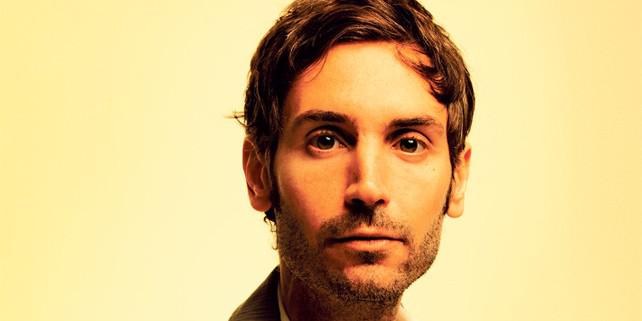
Following the tragic death last week of Malik Bendjelloul, director of the Oscar-winning documentary Searching for Sugar Man, three of his peers from the world of non-fiction filmmaking look back on his life and work.
I first met Malik at Sundance '12 when he came on my talk show, BYOD (Bring Your Own Doc), to discuss his film Searching for Sugar Man. Amid the sea of fellow filmmakers I met that day – all of them heady, excited, and tired – Malik stood out. He was sprightly like an elf, with big eyes, and a slight frame. I found him really quite adorable and lovable from our first encounter, and that very day I took him under my wing.
He was a fan of my film DIG! and jumped into a rapid-fire litany of questions for me about my process and what I did after winning Sundance with that film in 2004: Did I know what I was going to do next? How did I handle the ride?
He was clearly anxious about the experience he was having, and he perceived expectations of him to follow up on his first film – which would later be acknowledged with an Oscar for Best Documentary – when it had hardly even premiered. He had made a documentary called Searching for Sugar Man and here he was searching himself, for something he could never find in snowy Park City, or – as I came to find out – anywhere he actually was at the time he was looking.
I ran into him again right after checking into my hotel at the Tribeca Film Festival that April, and we spent the night together, drinking and carousing from the East Village to the Ace Hotel. His restlessness was ever-present, but it brought with it a feeling of excitement. I remember feeling like a new filmmaker myself alongside him – jumping off curbs and running through the streets of New York, while counseling him that it was alright to spend the year traversing the planet with his beautiful film, sharing it with audiences. The next project would come to him when it came; he had accomplished a transcendent work. It was a gift. Time to share it. But he was still anxious...
In June, I brought my very reluctant eight-year-old son, Juki, with me to see Searching for Sugar Man at the L.A. Film Festival, and he loved it. He looked over at one point and mouthed, "This is a-mazing!" Malik actually seemed more settled and satisfied that night. He had his star, Rodriguez, there, and a smile a mile wide. We didn't have a chance to visit much, but I was grateful for his invitation – and for the world he opened to my son through his work.
I arrived in Amsterdam to be on the jury at IDFA in November, and again ran into Malik just as I was leaving my hotel to enter the night. He excitedly announced to me right then that he had started a new film finally. He didn't tell me much about it as I was rushing off to a screening, and was on the jury judging his film after all. I ended up standing up for giving the Grand Jury Prize to Searching for Sugar Man – because it was clearly the best film in the competition. Some people on the jury wanted to hold it back, because it had swept so many awards throughout the year, but I always think that is a ridiculous reason to not award the best film for being the best. I hugged him once more there, not realizing of course that I would never see him again.
I wrote to Malik just this past April to tell him I was coming to Stockholm on a shoot with Russell Brand and would love to see him, but he didn't write me back... If I'd been there for more than a night, I would have sought him out with more than an email.
When Malik's death was first announced, I knew immediately that it was a suicide. I was horrified to think that the uneasiness he revealed to me only skimmed the surface of the torment he felt inside. I don't know what I, or anyone, could have done really, to help him – but I wish I had the chance to find out. I can only imagine the pain the people closest to him must feel, wondering how they could've known and stopped him. I wish he'd realized that just being here was enough, even if he never made another film. I wish he could have found light in the world around him, or waited through the despair in that moment he took himself out. For all of us, to lose a member of our community, a talent so immense, and a spirit that burned so bright – sniffed out prematurely – is an utter tragedy. We will never forget him.
— Ondi Timoner (DIG!)
Amidst the growing feeling that Searching for Sugar Man was marching toward awards season success, Malik Bendjelloul carried himself with a genuine sense of surprise and wonder. At the True/False Film Fest, he bounced around the streets of Columbia, Missouri, reveling in his moment. He was the type of person you wanted to hang out with, maybe in the hope that a little bit of that positive energy would rub off!
I met Malik in 2012 at a moment when I was going through doubts about my own film, The Waiting Room, wondering if anyone would notice, wondering if those years of struggle would amount to anything. And of all the people I met that year as I travelled the festival circuit, Malik stood out to me for his smile, his optimism and his humility. He reminded me of what keeps us going when the going gets tough: passion, joy, humor, perseverance, resolve. And the more I learned about how difficult a journey he had in bringing his film to the screen, the more I realized we all keep each other going in this difficult business.
That is what I love about independent filmmaking the community. The friendships and connections really do sustain us. Malik was someone I think we all had looked forward to getting to know better. But the loss of Malik the man doesn't mean we lose his spirit. That spirit is now woven into a community of like-minded artists that sustains us all.
— Peter Nicks (The Waiting Room)
In January 2012, my partner and I settled in for one of the opening night films of that year’s Sundance Film Festival, Searching for Sugar Man. As soon as the closing credits were over, we joined the crowd in jumping to our feet to welcome Rodriguez and Malik to the stage, while simultaneously thumbing our smartphones to order a Rodriguez album from Amazon. We still feel like that was the ultimate way to begin the festival. It was clear we had witnessed something special.
Having both premiered our debut documentary features at Sundance that year, it felt like Malik and I were members of the same sort of “graduating class.” We first really got to know each other a month later at the True/False Film Fest in Columbia, Missouri. Malik and I took the same flight back to New York and sat together. He talked almost the entire time. I was deeply impressed with his enthusiasm for innovative filmmaking and his devotion to completing his film despite all the obstacles. He was passionate about pursuing films that inspired him and filled him with wonder, and he confessed that just one month out from Sundance he was already looking forward to getting back to making new work. He spent years on Sugar Man and wasn’t necessarily looking to prolong the victory lap. When we landed, he was so surprised and innocently delighted by Sony having sent a car to pick him up. He insisted on giving me a lift into the city, and we continued talking until the curbside hug goodbye.
Sugar Man and Ai Weiwei: Never Sorry opened in theaters in the U.S. the same weekend that summer, so I was especially touched that Malik came to our friends and family pre-release party in Brooklyn. Many of my friends from high school and college who were there remember him for being lively and fun-loving. He stayed to chat and listen to the bands late into the night.
The last time I saw him was at the DGA Awards in early 2013 (where the photo below was taken). He remained a kind, generous and unpretentious spirit who loved film for the wonderment.
— Alison Klayman (Ai Weiwei: Never Sorry)