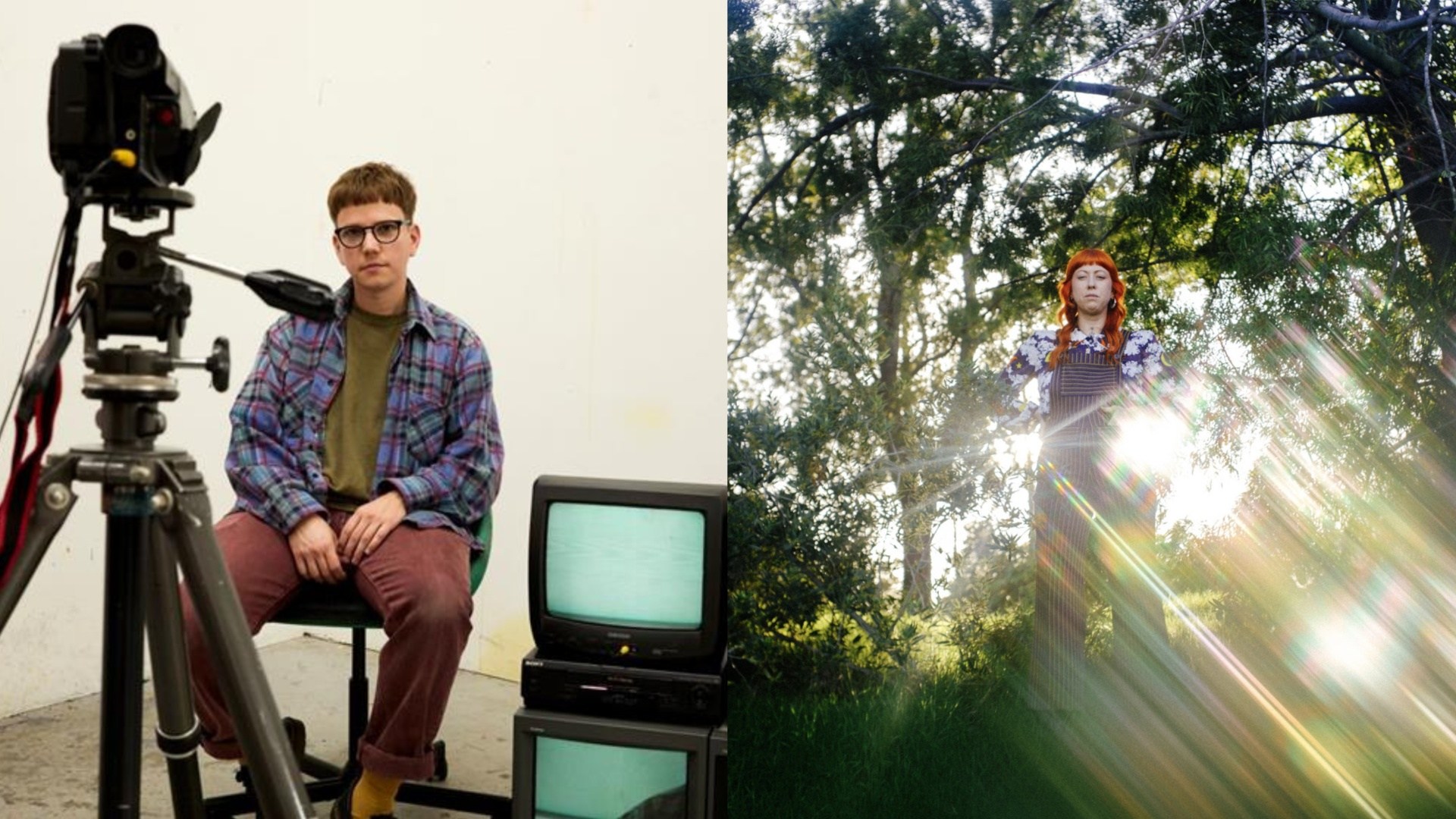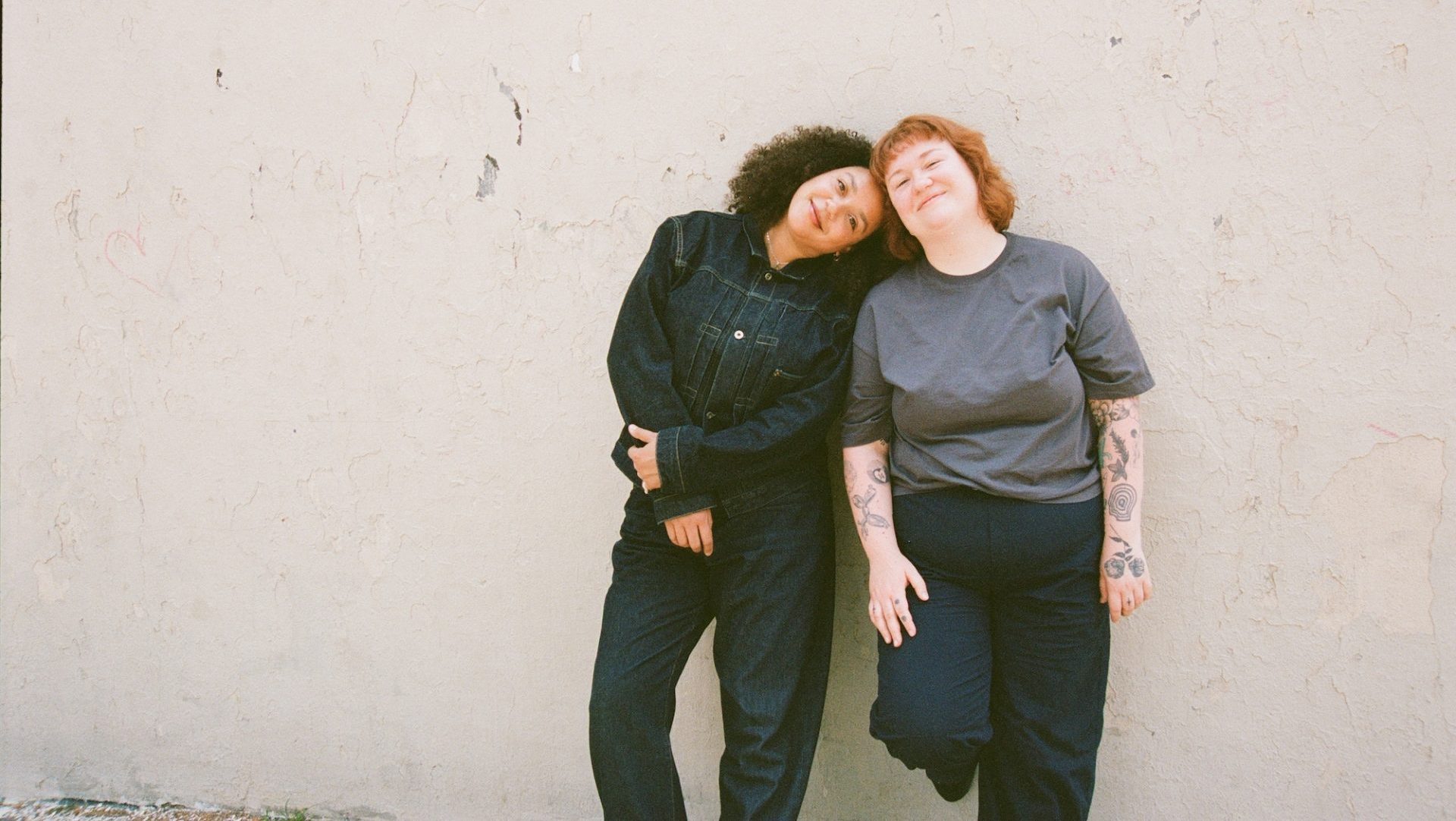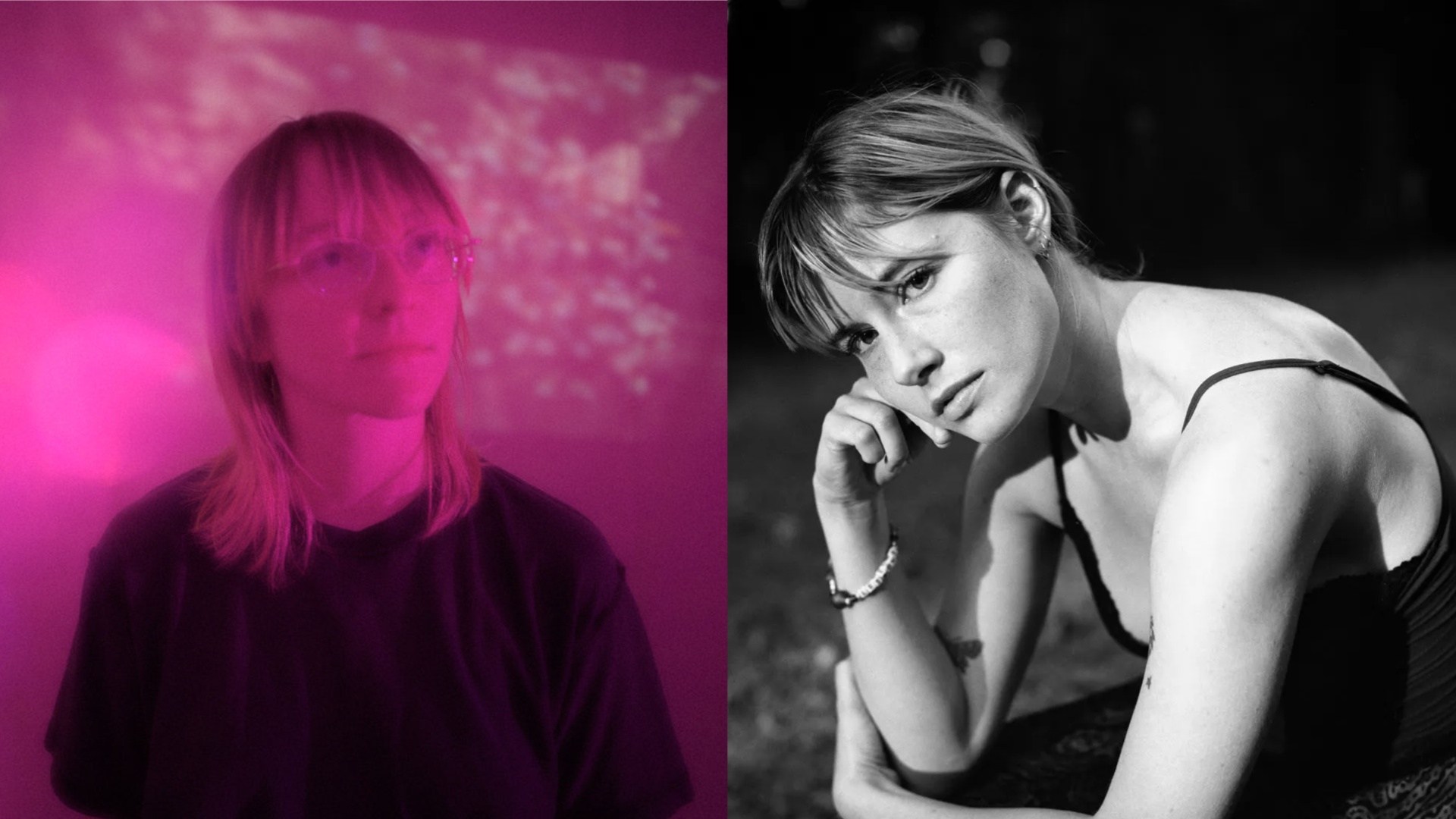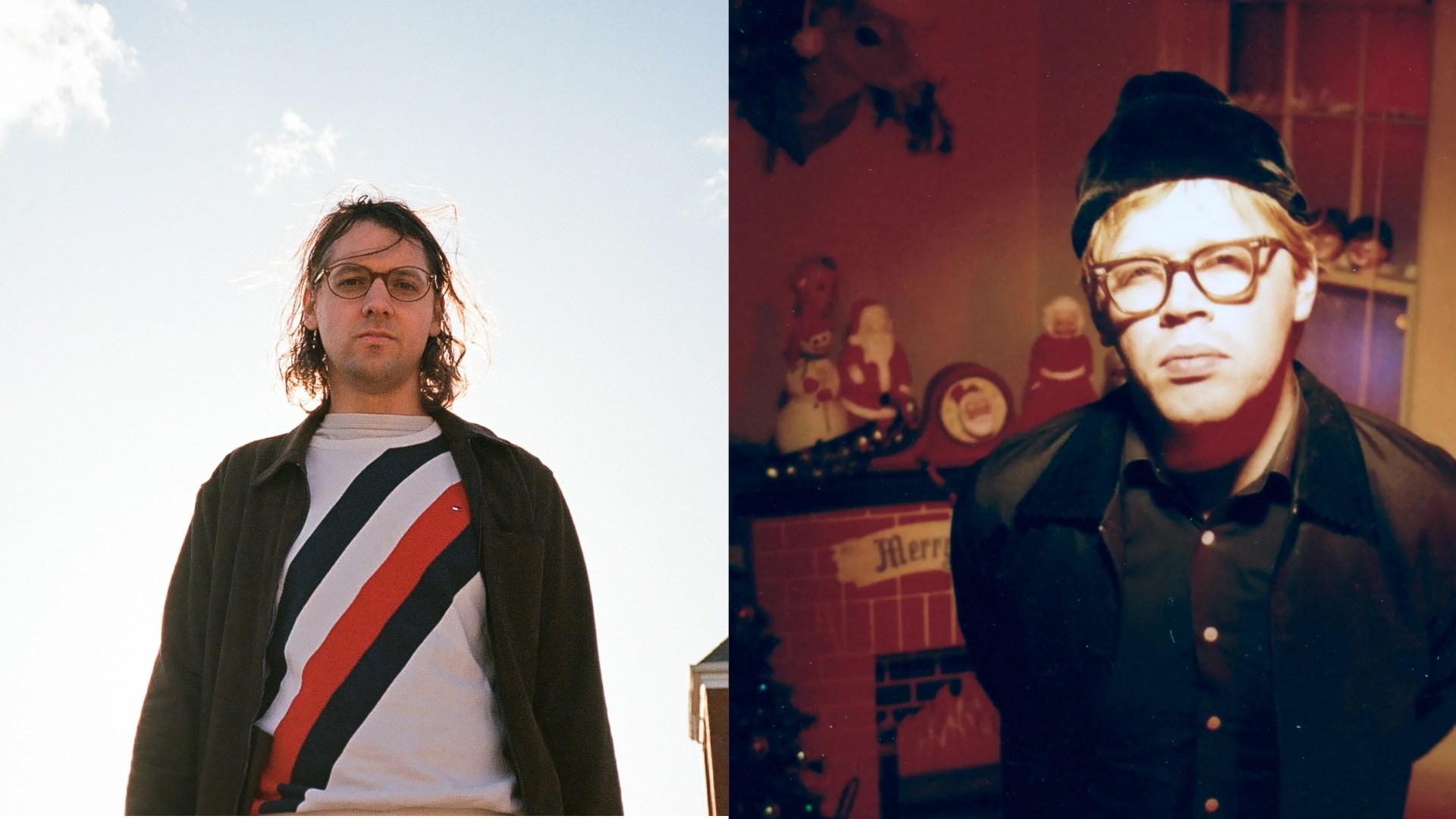
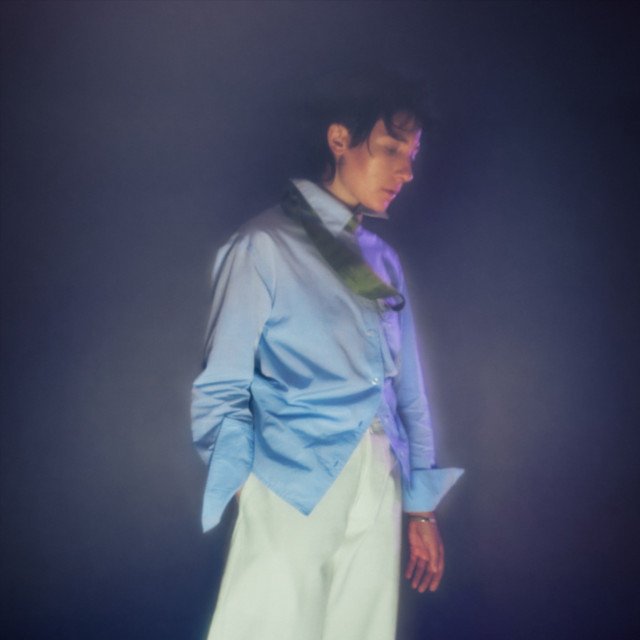
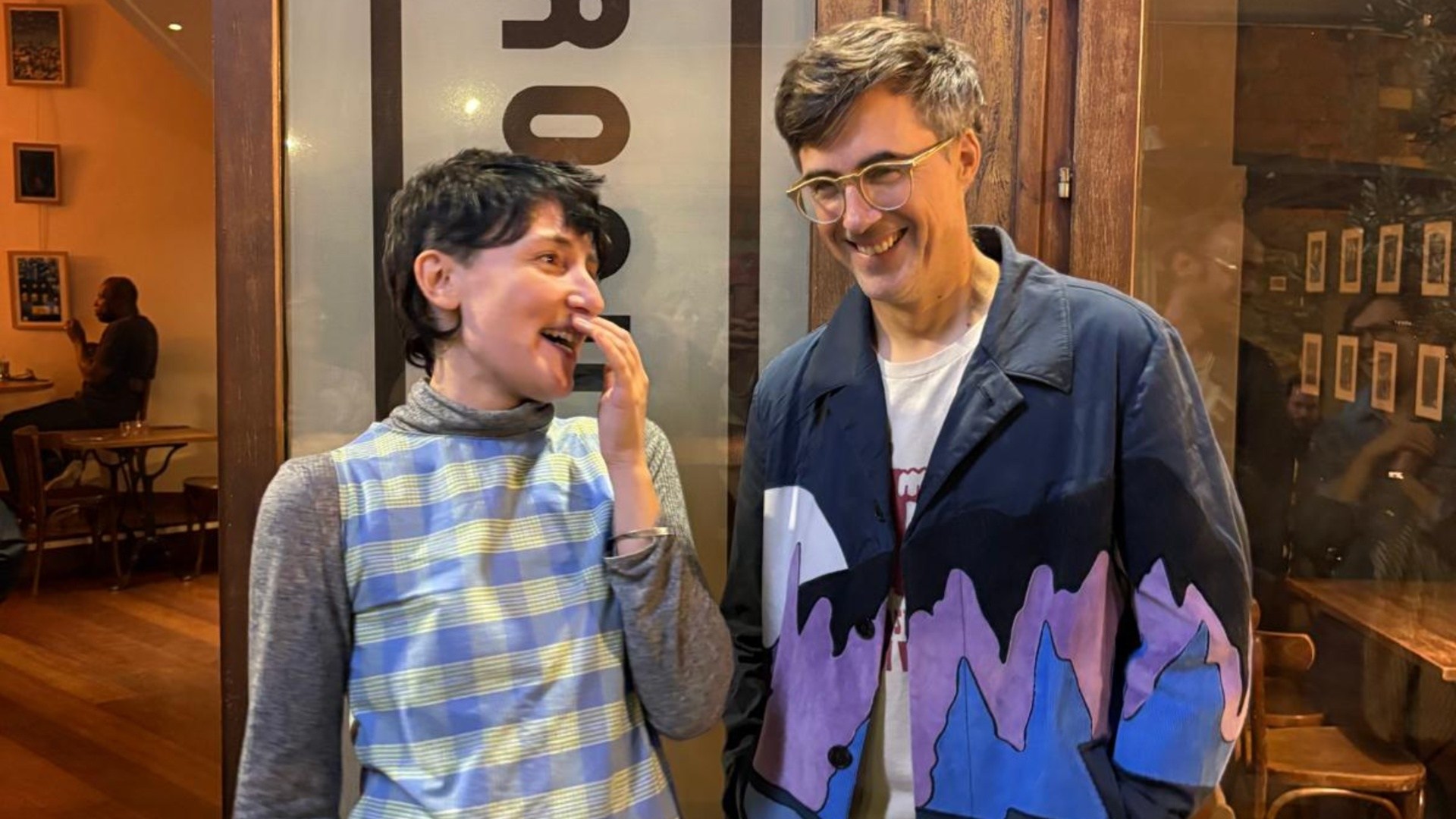
Flora Hibberd is a London-born musician living in Paris; Ben Lanz is a multi-instrumentalist, composer, arranger, and producer, and longtime member of The National and Beirut. Ben produced Flora’s new record Mammoth — out tomorrow on 22TWENTY — and to celebrate the release, the two met up in Paris to catch up about its creation, and much more.
— Annie Fell, Editor-in-chief, Talkhouse Music
Flora Hibberd: I was thinking that I should ask a question to kick things off and not make this super awkward. [Laughs.] What, to you, is what a producer does?
Ben Lanz: I guess I immediately think of explaining to someone what I do, which is like, “Well, I play a bunch of instruments so I can kind of conceive of and contribute whatever's necessary while at the same time helping people get their songs made.” And they’re like, “You mean like a producer?” And I’m like, “Yeah, I guess so. But I just play a lot of instruments and like to help.”
Flora: It's just a natural fit. I feel that's exactly what you did.
Ben: I do feel like so much of my energy in the studio comes from having been a university teacher for a number of years. I was in a music program, so I was teaching music and I got to really see the people in a class of 50 or 100 who something really resonated with, and they’d want to hang out after and ask me more about it. It was a great education in how to resonate with people.
Flora: It's good to have a framework for those kind of exchanges, because otherwise everything is pure chaos. It's good to create boundaries and roles.
Ben: Yeah, for sure. And I think that was also really educational as I was essentially with my peers at this time that I was teaching these enormous classes, and realizing there's a way to do that without needing to put up some sort of wall of status. That just never seemed helpful or appropriate because I wasn't, you know, trying to make people learn arithmetic. It was ideas and art.
Flora: I feel like one thing that I've learned over the years is how much a producer has an emotional role. Do you ever feel that, that you need to manage people's emotions and expectations?
Ben: Yeah. I feel like part of it's just energy and time and focus, and it's interesting working with other people. I mean, you can certainly feel it. I'm sure, when I'm starting to get a little like, Uh, what am I doing? I'm looking at a screen too long... Even just today, I was feeling someone get very tired, and being like, “OK, it's time to do something else.” Because I normally will just go, go, go, go until I crash. But that doesn't really work.
Flora: I do feel like it's a place of heightened emotions, and sometimes I feel quite stuck and unable to deal with problem solving. And I feel like you're really good at thinking outside of the box, to put it in a cliche way, and finding another route in and finding the solution.
Ben: I mean, I'm not trying to say I'm old or something — I really admire young producers — but in a lot of ways, my life experience — I've been on stage and had total, utter performance meltdowns, I've been in bands for 25 years now where I'm always the one who's able to be calm and in the middle between the people who are feuding… I think a lot of life experience goes into this and just knowing how to interact with other people.
Flora: Do you think you’re naturally that kind of person, or it's just experience? Or both?
Ben: It'd be hard to say. It's hard to look back and really know. I think in a lot of ways, I was such a baby brother in my family and there's so many ways that I wasn't really tested when I was little. I didn't come from the school of hard knocks, I was taken care of. [Laughs.] Anyway, now I'm fully going to get in my own armchair analyzing myself…
How about you? Would your background, do you think, have made this path that you're on?
Flora: Yeah, I think so. I’m a very sensitive person. I think I've always been very sensitive — and some would say oversensitive — and just typically the right amount of self-involvement to want to be an artist.
Ben: I mean, we have to be. And if you're not feeling it, then you have to pretend it.
Flora: My friend does a lot of stand up comedy, and I have a very deep fear of being called on as an audience member. That’s my worst nightmare. And I was speaking to Adam about it and he was like, “I think that's all musicians. Musicians want to be in full control when they go on stage, they don't want anything improvised to happen.” Unless they're the musicians that do want improvised things to happen. [Laughs.]
Ben: But that's still a controlled situation.
Flora: Yeah… I feel like a question people ask sometimes is, “How do you get up on stage in front of loads of people?” And I never really was bothered by that ever. But if I had to get up on stage in a different capacity, like acting or improvising, I could not handle it. I do think a lot of musicians have a similar personality type. I think there's something to that idea that if you're in charge of what's going on on stage then you can be free to let chaos happen if you want.
Ben: I think you're absolutely right. Nothing goes without you and nothing really continues if you stop, give or take.
Flora: But also, I think when you make art in any form, you just want it to find some people to listen. And if you want that to happen, then you'll find a way to conquer whatever fear you have. I did my first show when I was 16, and I don't really remember being very nervous.
Ben: Do you think there's an order to the thought process of the desire to get up on stage, or the desire to make songs at all, and the idea of giving people some level of joy and escape?
Flora: I think I would be so scared to write if I thought, Oh, people will enjoy this. I don't know what I want people to think, but I don't think it's just enjoyment.
Ben: It has to be in there. But I agree that we can't think about it in those terms.
Flora: I mean, it does have to be. I want to make something that sounds nice. But I guess it depends… I don't really know why I go to concerts. I don't know if you feel this — maybe I shouldn't say this — sometimes when I go to concerts, I'm like, Why did I buy this ticket? I just want to stay at home in bed. [Laughs.] But I also want to go see the concert, obviously. But it's not a very comfortable experience. You're standing, there's loads of people, the beer's expensive. I think you go to have that slightly uncomfortable experience in a way. I think you go to kind of test yourself.
Ben: I can say, seeing your audiences and seeing audiences who are really engaged in what's happening, there's just that collective joy. There are many things like that, that a lot of people get together and have this collective joy. Some are giant and some are tiny. But I do think on some level, we're always a little separate from that as performers and writers. Because it's our craft and we have to be a little bit more [in the mode of] collecting information.
Flora: Yeah, totally. I find it so rare that I just purely enjoy a concert. Even when I think it's really good, [it’s hard to] just sit back and enjoy.
Ben: Over the years, as I've gotten deeper into craft of producing or helping people make records, or just making records period, I long for the days when I could listen to something while staring at the ceiling and feel truly enthralled in a way that I'm not analyzing anything.
Flora: I know what you mean.
Ben: Because even things I love — I was saying the other day about this record that I literally heard my whole childhood, I never noticed it’s drowned in reverb.
Flora: It's impossible to just switch off while listening to music. Actually, the one thing that I can listen to and not feel any kind of [critical impulse is] field recording style albums. It kind of just turns my brain off. I know that I could never hope to do anything like that with any kind of individuality, so I would not even try. [Laughs.]
Ben: What was the last situation, place, time of day, and how did you start the kernel of a song?
Flora: The thing is, since I got back from summer, I haven't done any writing. But over summer… It’s hard to explain, but I just amass things and then put them together. So I never think of an idea, like, I'm going to write. It's normally just a first line or a chorus thing or a word. For the song “Boulevard” that we're working on now, which is maybe the last song that I finished, I think the idea came from being slightly pissed off about something. And I just thought of two words, and those were the first two words of the song, and then the song just rolled with ideas from previous things. Songwriting for me is really just collecting and collaging and trying stuff. It's just trial and error, and being with the guitar — or the autoharp, because it gets me out of my guitar head — and piecing together layers. I always feel like I'm kind of cheating because when I'm reading, or reading an article — “Mammoth,” the song, came from reading this article about this baby mammoth that was found in Siberia. But it's not like I was like, I just read this article, I'm going to write a song about it. It was more like I read the article and then I wrote down three words, and then the idea of a mammoth stayed with me. Some of the concept did come from the article; the thing that I really remembered was the image of this bloody, dry, sad, elephant-looking carcass in a lab with people standing around. That kind of weird, tender, sterile, image… the song came from that, but in a very roundabout [way]. I wish I could be like, This thing happened, I'm going to write a song about it. But I could never.
Ben: That’s far more intriguing. It doesn’t matter what the kernel is. We're still collaging and editing our thought processes, any information, in any way. And I think it's so amazing because I always find so much in-the-moment meaning in your lyrics, and I think because I'm so hyper focused on music and form and balance and things like that, I'm not really paying attention to a whole arc of lyrics necessarily. But I find so much very instantaneous meaning in the words of your songs. I think what you're describing also leaves a lot of space for people to attach to your words.
Flora: I think when I am pleased with a song, it's because it to me really evokes a strong sensation of being in the world in a certain way, season, time. I don't think any of the songs really say, “This is the feeling and the sensation that you're supposed to experience.” To me, I like them when I sing it on stage and I feel like I know exactly what this song means to me just in terms of the ambience. I also think this method — most of the time, the songs are just random and don't really hang together. I write a lot of songs that no one ever would see because they're all just tests. It really is trial and error in that sense. Maybe I write 10 songs and one is good. Or not even good, just passable to show to people. [Laughs.]
Ben: I’ll say good! So do you generally have an idea of words or a collection of words before you're constructing any sort of form?
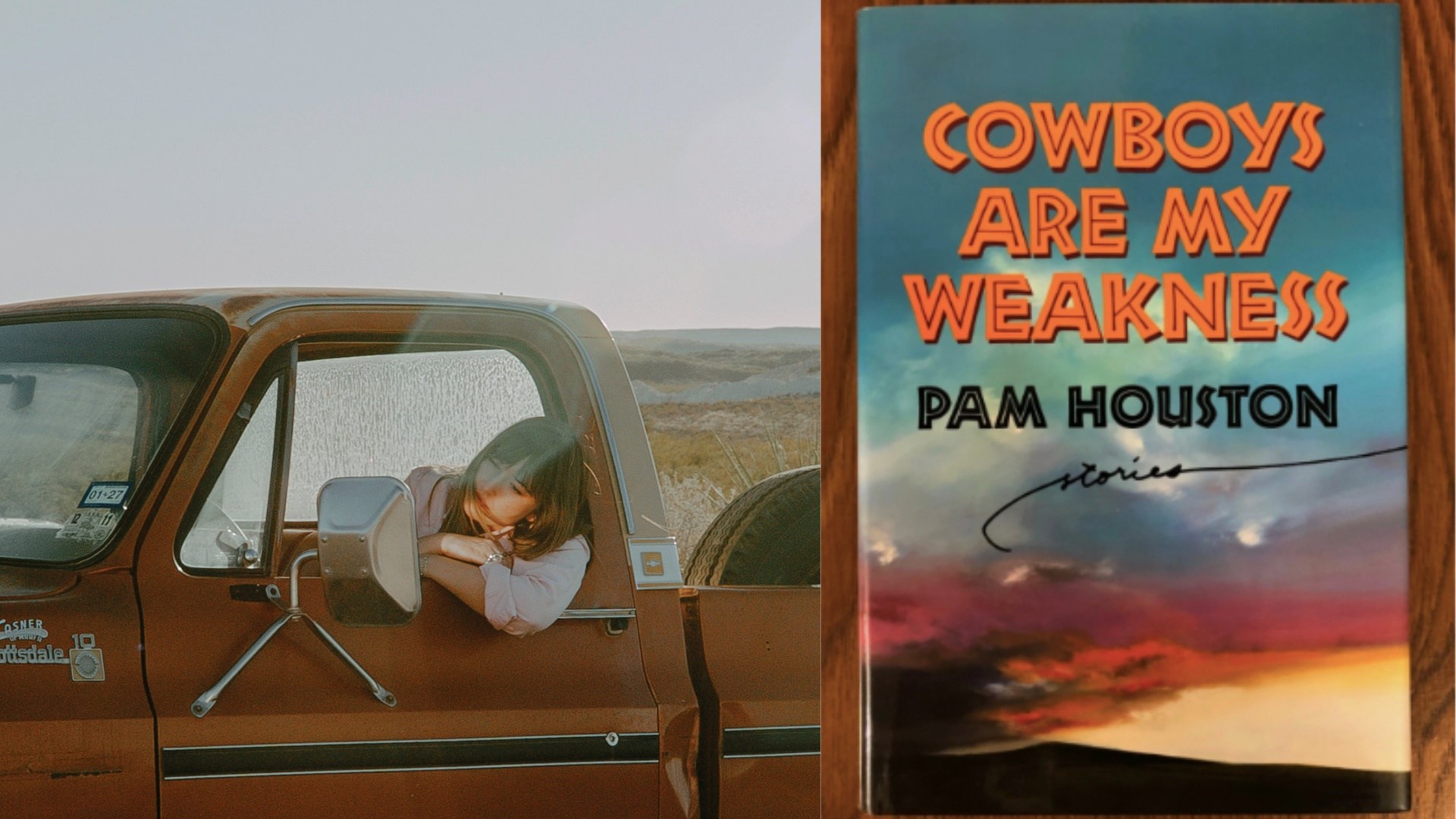
Flora: I think there are things bubbling away all the time that just emerge, and that's how the theme gets built. Some things just stay with you and they're affecting for whatever reason, and that's when they'll emerge. When I started realizing that with this record, the songs have quite a through line. I started thinking, OK, well, maybe I'm going to try and direct the new songs a bit more in that direction. Like, one thing that keeps coming up for me is — this is going to sound really weird — this book I was reading in March about the witch hunts in the 15th century and the transition from feudalism to capitalism, really stayed with me because it answered a lot of questions I have about the world and the way we live under capitalism. It's about how capitalism needs to co-opt bodies in order to progress, and the first people whose bodies it co-opted were women. Basically, women had a lot more freedom to do many things before capitalism, even though everyone says feudalism is awful because there's the lord and the peasants. But actually, in some ways, it was better than capitalism… Anyway, I really now notice that that’s the theme of the record. And I don't think anybody else would ever notice that, but to me, it's really strongly emerged. And even a couple of songs from the new collection that predate reading that book somehow even are in dialogue with it, which I think is really nice.
Ben: It’s crazy how we find something that's in the middle of our thought process.
Flora: Yeah, it's so cool. That’s kind of the whole thing I like about writing songs, because it's almost like a Rorschach test for what you're thinking. I feel like I learn about what's going on subconsciously by writing songs.