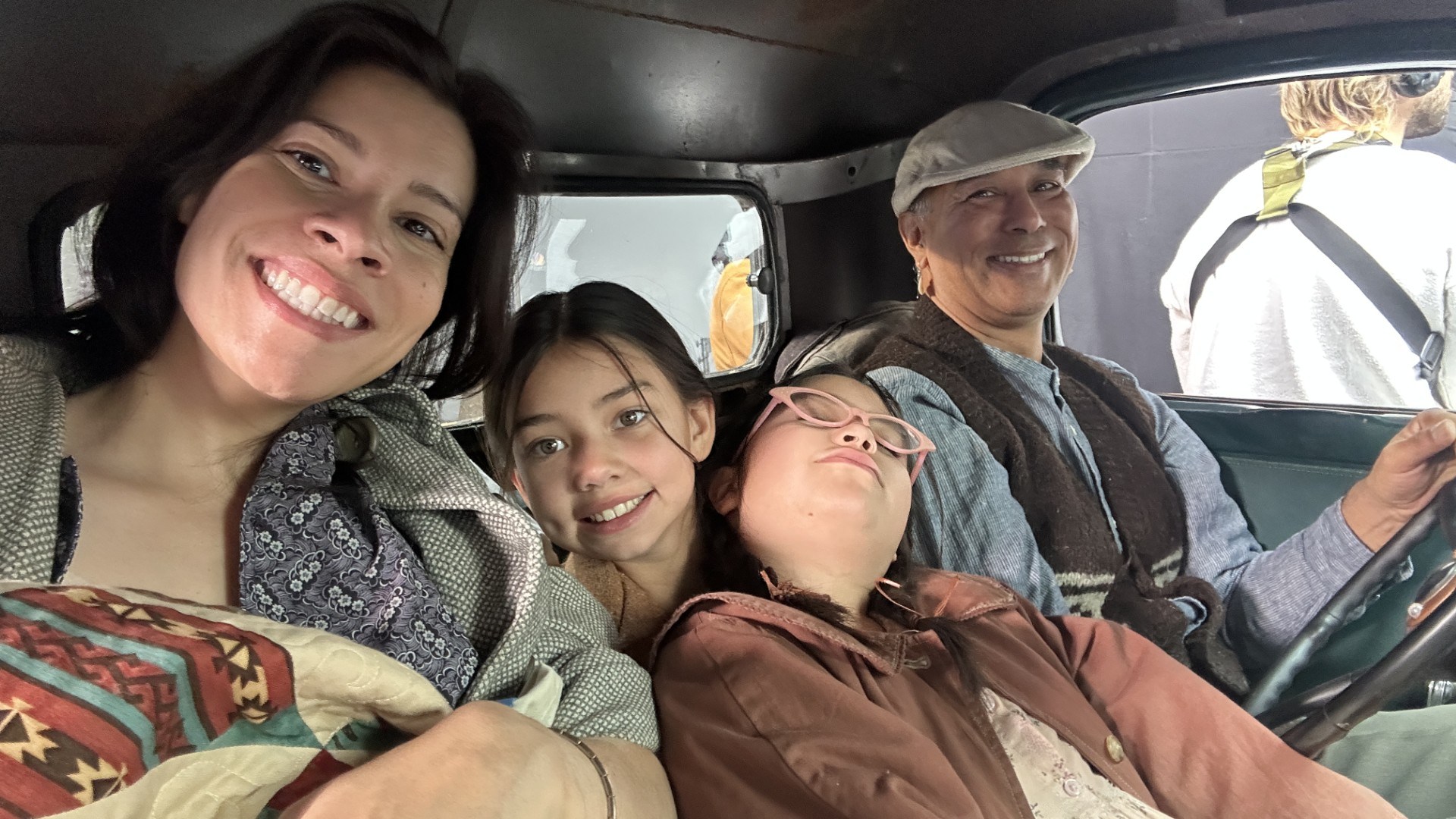
Back in 2021, as I was beginning work on my new film, Life After, I woke up one morning for a call with my producer and was struck by a sense of calm, ease – relaxation, even. It was counterintuitive, because we were gearing up for a conversation with a Canadian journalist who would be speaking to us about assisted suicide legislation, which was recently expanded to be available to disabled people. Not exactly the lightest subject matter. But working on Life After – at least, early on in its journey – was a reprieve I desperately needed.
I was at the tail end of rolling out my first feature, I Didn’t See You There. Unlike Life After, that film was intimately and extremely personal. It was a literal first-person account of my urban disabled life, navigating a home that was thousands of miles away from my family, trying to make sense of someone trolling me with a circus tent, and facing the ableism du jour that I’ve come to expect but hardly ever get used to. Though the film garnered success well beyond what I had hoped for (it won awards at Sundance and the Independent Spirits, was Gotham-nominated and nationally broadcast on PBS’ POV), the experience of taking it to audiences out in the world was one I certainly don’t want to relive.
I had made personal films before. As I realize now, they were acts of healing. My very first short film took me to the streets of Western Europe to explore access barriers that kept me from studying abroad for a semester. A later short recounted the precariousness of growing up disabled through the lens of baseball. Both films allowed my pain to quiet.
But during the rollout of I Didn’t See You There, questions during post-screening discussions were so intrusive and indecent – so embarrassing, they don’t bear repeating – that we stopped taking audience questions altogether. Journalists, too, openly questioned why I didn’t subtitle my voiceover. Representing the film out in the real world, and managing eager non-disabled people’s praise, expectations and projections, took me deeper and deeper down a meta loop: my experience of feeling like a spectacle was being made into a spectacle.
With Life After, even though I knew it was going to be daunting to explore the premature death of disabled people through assisted suicide and medical ableism, at least the film wasn’t going to be about me. I would probably be in front of the camera as the filmmaker and investigator, but my personal life would remain beautifully opaque.
But as we began fundraising for the film and taking it out to potential partners, the question started coming: Have you ever considered killing yourself? It was asked directly to me and asked to other members of the film team in my absence.
The bluntness was uncomfortable. The implication was: You must have a direct relationship with the subject matter. And, as a disabled person, you must have at one point questioned whether you wanted to live.
In regard to my relationship to suicide, I have nothing to hide. I have nothing to be ashamed of. But I don’t owe you unmediated access to my personal experience. To quote decolonial writer Édouard Glissant in his essay “For Opacity,” “The opaque is not the obscure … It is that which cannot be reduced.”
Disabled storytellers are expected to depict our experiences and illuminate some truth about the human condition, namely how people can overcome adversity. I have been, without a doubt, drawn to showing my personal disability experience on screen – it’s what got me into filmmaking. However, this radical transparency – a particular kind expressed at the unspoken bequest, and for the convenience, of a non-disabled, or any non-marginalized, audience – cannot be the expectation.
The marginalizing gaze of the ethnographies of yesteryear continues in today’s documentary portrayals of disabilities and disabled people. Back then, their veneer of objectivity was meant to categorize and control – today that aim is hidden behind a performance of understanding and sympathy.
But there is also a burgeoning new wave of films about disability, by disabled people. Instead of focusing on deviations from the “norm,” films like Vision Portraits (2019), Crip Camp (2020) and The Tallest Dwarf (2025) focus on the ways that society marginalizes us. They effectively, implicitly and explicitly challenge the hollow outside voices that told disabled stories of the past by featuring the experiences of their disabled director or co-directors. As Glissant argued, “It is impossible to reduce anyone, no matter who, to a truth he would not have generated on his own.”
I can only frame my life in so many ways before it becomes self-indulgent and boring, not just to audiences but, more importantly, to myself. There are so many other disabled stories and phenomena that need to be illuminated so we can reckon with our construction (and deconstruction) of the disabled experience.
I won’t argue that the aim of the Disability New Wave should be for filmmakers to explicitly remove themselves from their works; we’ve already seen that having a disabled person both behind and in front of the camera is an asset to so many important films. But we don’t owe anyone anything about our own lives – no explanation for our existence. I long for the day when what we want to give is valued more than what you think you want from us.