May, 2026. Oregon City, Oregon.
I’ve got to be honest with you about where I’m at. I’m a new parent and life has changed. Things like responding to an email used to take me 10 minutes. Now it can take me three days. So … I started this essay in December and am only now completing it. I’m learning to let this be OK.
“Christmastime is here … happiness and cheer…” Vince Guaraldi’s nostalgic tune floats through my living room as I’m getting ready to release my directorial debut feature film All That Fall, set during Christmas of 2016. My two-year-old son is playing on the floor, and I’m thinking about how long it took me to be ready for this moment. Not ready to make the film (I did that almost a decade ago), but ready to actually share it with the world.
I thought I was making a movie about my girlfriend at the time and the experience we went through when her father came to live with us before unexpectedly dying, while we tried to help him get his health back on track. And it is about that. But as I’ve sat with this film over the years, avoided finishing it, shelved it, picked it back up again, I’ve realized it’s also about something I’ve been running from for three decades. Feelings of being a hurt child, who didn’t understand, who was scared and didn’t feel safe expressing any of it. It would take me nearly a decade to realize the film was zeroing in on something deep inside me that was asking to come out.
Let me take you back to when I was 14. I was a sheltered, shy kid who’d become even more withdrawn after my mom suffered a horrific sexual assault a few years before. The trauma fractured our family. We were all affected and, in many ways, my childhood ended then. For me, this is when I began distancing myself from my feelings in order to protect myself. From that moment forward, I was on alert, assessing every situation with an eagle eye, calculating my next move. I needed to feel safe and this was the method I found. I kept most feelings bottled up, unaware of how to express them; being raised at a time when having outlets for emotions wasn’t the norm.
Then, within weeks of each other, two things happened that would shape everything. My uncle died by suicide, shattering my family in ways I couldn’t fully grasp at the time. And I was cast as Kirsten Dunst’s little brother in a movie-of-the-week that filmed in my hometown. Maybe you’ve seen it, it’s actually quite popular and has a great title: Fifteen and Pregnant. One event devastated me, the other provided a path I’d follow for the next three decades. A profession built around exploring what terrified me.
I was 14 and had been rehearsing for a children’s theatre production of Bridge to Terabithia when my uncle died. It was my first lead role, a quiet outsider, which by then felt a lot like me. My character spent the first half of the play becoming best friends with a girl who’d just moved to town, only for her to die unexpectedly in the third act.
I didn’t know what was about to happen. The experience that happened on stage changed my life and then weeks later I began filming with Kirsten and a massive crew, which showed me that I could do this for the rest of my life, if I wanted to.
I’d been holding everything in for weeks – my uncle’s death, my family’s overwhelming grief and chaos, everything I couldn’t understand or name. On opening night, the play was going well. I was feeling those electric moments that make theatre so alive. Then we approached the death scene … when my character learns that his new best friend, Leslie, has died. The moment I heard those lines, all the feelings from my uncle’s death came cascading over me. The floor opened up beneath me and I fell into something I couldn’t climb out of. I was suddenly consumed with grief, flailing in these heavy waters while the audience watched this pre-pubescent boy, his voice still high, weep and sob uncontrollably. Crying would have been an impactful choice and moment for the character, but it wasn’t just crying, it was a guttural, devastated sob that wouldn’t stop. When my character should have finally stopped crying and calm down … I didn’t. I couldn’t … Tears ran down my face and I struggled to catch my breath, say lines and shit even sing for the rest of the play. It was wild. It was hard, but we made it to the curtain. Which I cried through, as well.
That play’s emotional blueprint, for better or worse, was the space where I could finally let all of these feelings breathe. I couldn’t intellectualize it then, but I was hooked. I’d found a place where I could step into someone else’s shoes and express it all, everything that I wouldn’t allow myself to feel in real life. And I had a predictable script to follow. I’d found the pot of gold at the end of the rainbow. No need to be on high alert. For someone as anxious and bottled up as I’ve been at times, art became the safe path to process everything I was too scared to share in my own life.
Acting had given me a container for my feelings and that summer, cinema became my church. I saw Saving Private Ryan a ridiculous amount of times in the theater. FOURTEEN TIMES. Back then, I couldn’t have told you why. Looking back now, I can see I was watching Tom Hanks’ character move through grief and trauma with this controlled melancholy that felt like something I recognized, but couldn’t name yet. I was still a boy, freshly devastated, and I’d just spent weeks on a movie set feeling the most engaged and excited I’d felt for a long time. Spielberg’s war movie, with all its horror, loss and humanity, was showing me what this art form could hold. What it could do. I was hooked on more than just acting. I was hooked on cinema and storytelling itself.
Flash forward almost two decades. I’m living in Los Angeles, working as a cater waiter, and my girlfriend’s father has just moved into our apartment after a lifetime of cigarettes caught up with him. We’re trying to help, trying to care for him, and then … he dies suddenly. The experience shook me, and I did what I’d learned to do as a 14-year-old kid, to process it through storytelling. So, I wrote a screenplay about it and called it All That Fall. It follows a young actor in Los Angeles who’s forced to confront his past when his black sheep, estranged mother arrives unexpectedly on his doorstep after they haven’t seen each other in more than a decade. I thought I was writing about my girlfriend’s dad. Looking back now, I can see I was writing about my own avoidance, my own fear of facing painful things. Just like the character, I’d been managing my trauma with alcohol. For 15 years, I used this magical seductive drink to take my pain away, but I had a problem. I was the person who blacked out all the time, the dude everyone knew shouldn’t be drinking. It was bad. Waking up passed out in some random park. Having to be carried into my apartment. Nearly falling off a balcony. And on and on. Over those years, I ignored the inner wisdom telling me to quit or else I’d die – and the thing that finally got me to quit drinking was realizing I would never become who I knew I could be if I kept it up.
The film was showing me what I couldn’t yet admit to myself. So I did what I do best: I avoided my past trauma by making the movie … Which, thankfully, would put me on a path toward the actual healing and growth I needed.
I had an inner critic’s voice telling me I didn’t have the skills to direct it. Even though I’ve worked a lot as an actor and consumed film enough to be considered a cinephile, I’d never directed before. So I commanded a relentless counter-mantra on repeat: “I can direct this. I can do it.” I mocked up a budget for $10,000, which was everything I had, plus credit cards I couldn’t really afford to max out, and told myself it was possible. This was 0.1% of what Hollywood calls a “teeny-tiny budget,” but I decided I could do it. I’d be like Nolan, Linklater, and Jay and Mark Duplass, who I was lucky enough to work with on my second film, when co-directing with my sister Sarah. All these heroes of mine had found a way to make their first film, and I would do it too, even if it was only 10 days and 10K.
My dear friend Martim Vian, a brilliant cinematographer, read the script and his response floored me. He connected to it, he loved it. My inner critic had convinced me he’d find it amateurish, not good enough. But deep down, I knew the story was worth telling. Hearing him confirm that gave me the courage to move forward. For the leads, I cast two friends from my catering job who I had a hunch would be very alive, compelling actors, and they were. We shot the film in my girlfriend’s and my apartment, and around L.A., showcasing a Los Angeles rarely seen in movies, and I spent exactly $10,000 across those 10 shooting days.
Here’s what I didn’t expect: directing felt utterly joyful. Acting had always been loaded with complicated feelings, self-doubt, the weight of being watched and judged. But directing? I was supporting actors, witnessing performances, problem-solving. I was following my bliss, as Joseph Campbell advises. When we lost an entire day’s footage because a card got wiped before we’d backed anything up, I didn’t spiral. We got creative, found fixes for scenes we were forced to cobble together from far less footage than I'd intended. We lost most of our camera angles for the one where Barb and Kenny, mother and son, smoking weed out of an aluminum can in bed, but it became one of my favorite scenes in the whole film.
And then toward the end of shooting, I added a line. The mother and son were finally softening, opening up to each other, and I had Barb say to Kenny, “I’m sorry I ruined your life.” Something I’d heard from my own mom. For the record, it's untrue … yet those words stung the wound and lodged in me anyway. When I heard the actress say it, something cracked open in me. I wasn’t just writing about my girlfriend’s dad. I was writing about my own past, my own wounds, using this story as a way to approach pain I’d been avoiding for decades. I couldn’t see it clearly then, but I was making space to hold what I still wasn’t ready to feel directly. My own experience.
My friends Martim and John-Michael Powell, who edited the film, were huge parts of making it what it was, and I remain so thankful to them both. And then … I did something I couldn’t fully explain at the time: I shelved it.
All That Fall (at the time titled Barbie’s Kenny) had success on the festival run: Nashville, Portland, Kansas City International, Newport Beach and many others. We won some awards. For acting, directing and best film. People told me they connected with it, a stranger even shared that it was now their favorite movie, a handful of people wrote me and said that it was cathartic and deeply close to their own story, paralleling their relationship to their parent. Yet I kept finding reasons not to release it. I got busy with other acting work. I moved across the country. Sobriety happened, a breakup, a global pandemic, depression, anxiety, meeting my wife, becoming a father. Life continued giving what it does.
But I also recognize now that some part of me was still resisting really showing myself and this little movie I’d made for no money to the world. The main reason I held onto for not releasing the film was that the festival version had a soundtrack I’d never be able to afford the rights to, which gave me a convenient excuse. “I can’t release it until I fix the music,” I’d tell people. My ADHD superpower of procrastination kept this delay going for some time. Even though it felt like moving a mountain to get my friends to work in post for very little and help finish it, there was most likely a deeper subconscious motive. I wasn’t ready to be that vulnerable. To share, unlike acting, what feels like is so much more of me. Because I wrote it. Scarier to share with others than my performances, in many ways.
Then I discovered Sarah Mary Chadwick, a visceral New Zealand music artist whose raw, aching songs felt like they’d been pulled from the same wounded place I’d been avoiding. When I swapped out the festival music with her work, something clicked. The film finally sounded like what it actually was: not a sad story about someone else’s dying father, but my own reckoning with decades of suppressed grief and fear. The music was fixed. But I still wasn’t ready.
So what nudged me toward release? So many things, but I must share some praise of the therapy that has changed my life. Medicinal, cognitive behavioral talk and somatic therapy. A year ago, I took a couple high doses of psilocybin for a medical study to deal with depression and anxiety. That experience, combined with becoming a father and working with therapists, has helped me understand what I’ve been doing all these years. I’m 42 now with two very young sons and I’ve finally found the courage to grow through the hurt, trauma and scars that occurred decades ago. I’m learning to unlearn the survival mechanisms that protected me then, but don’t serve me now: the hypervigilance, the emotional distance, the need to control everything. I’m learning to stop being so afraid of the unexpected, to let go of the control I’ve held onto so tightly.
Looking back at making All That Fall amazes me. I made a movie about a character who’s forced to confront his past while I was unconsciously preparing myself to finally face my own. It took eight years, but I eventually found FilmHub, an easily accessible distribution company, and now the film is streaming on Tubi, Amazon, and many other platforms. It’s even on Truth Social’s video platform, which is so funny to me, as I have an undeniable dig on Trump in the film, as it takes place in 2016.
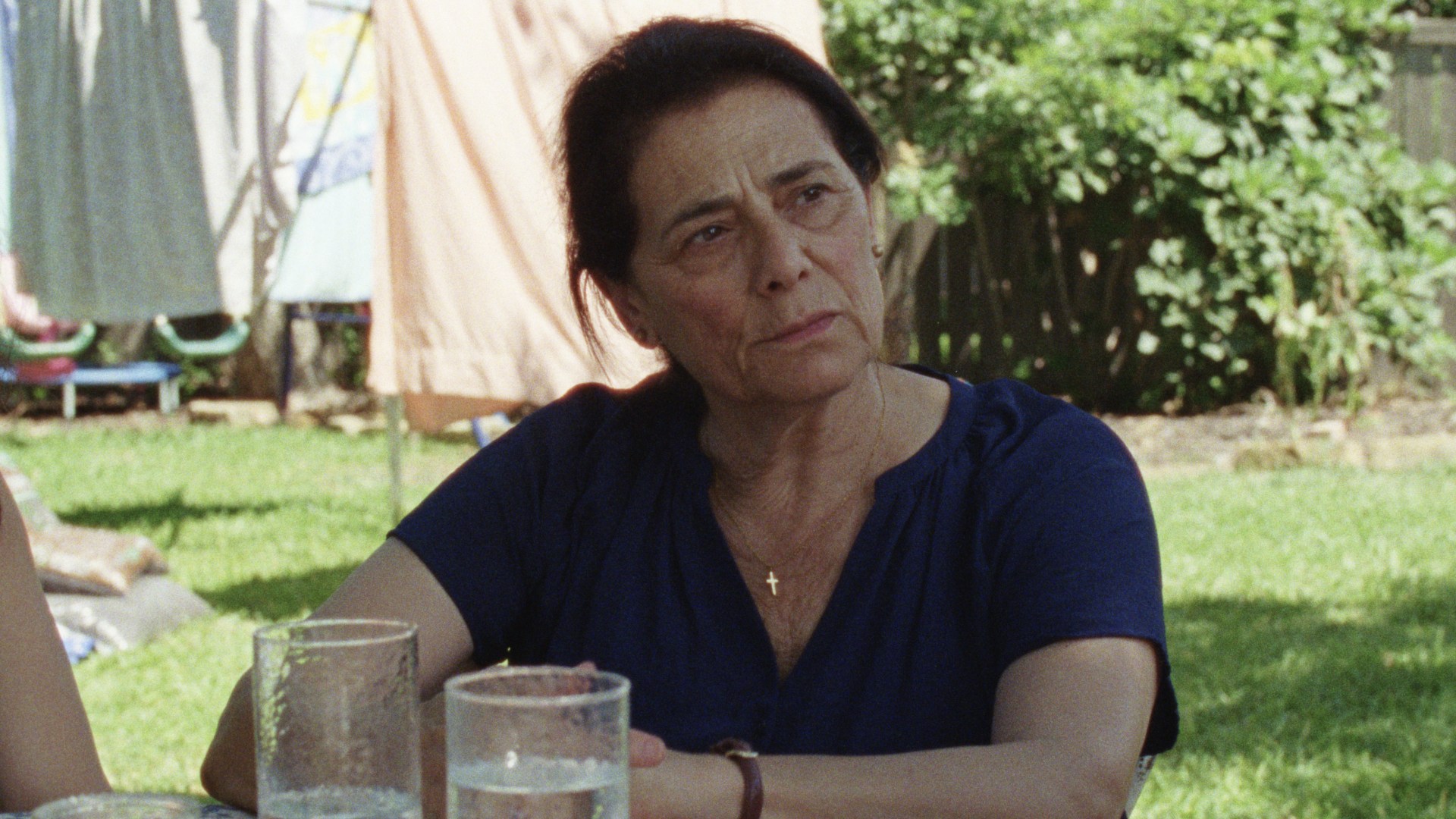
All That Fall is out there for the world to see, this little piece of me I’ve been carrying around for almost a decade. My friends Shawn Hawkins, Tara Bast and Bianca LeMaire deserve to have their beautiful performances seen and appreciated. As is the case with Martim’s cinematography; what he did with the camera, his artistry, really elevates the film.
The film isn’t perfect. I still see the blemishes, the places where my inexperience or sentimentality shows. But I’m excited to finally share it. If you’re curious, if any of this resonates, I’d be honored if you’d give it a watch. It’s a small film made with a lot of heart, and now that I’ve processed what it was really about, I’m really looking forward to making the next one. I’m ready now.
Click here to watch All That Fall.
Featured image, showing Zachary Ray Sherman on the set of Who's Watching, is by Brian Sowell. All images courtesy Zachary Ray Sherman.