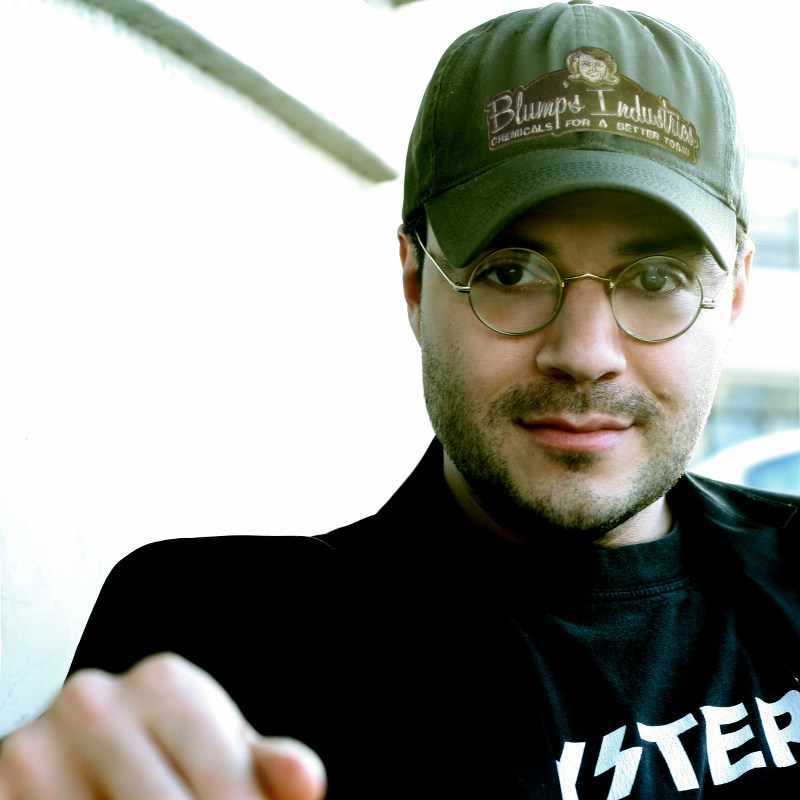
In 1986, my mother, Michele Rifkin, wrote a screenplay, a Western called Last Train to Fortune. Forty years later, I had the humbling opportunity to direct her script, and now the film is set to be released this month. To say the feeling is poignant would be a gross understatement, because behind the horse chases and bar-room brawls, there’s a story I feel is worth sharing. A deeply personal story that transcends merely a son directing his mom’s words. It’s a story about love, legacy and the unexpected ways a dream can find its way home.
Michele Rifkin, then Michele Barinholtz, had grown up in Chicago, dreaming of the Old West. In the 1950s, it seemed as though every other movie and television show was set somewhere west of the Mississippi. Cowboys, outlaws, sheriffs, saloons, horses, six-shooters – my mother fell completely in love with that world. As a little girl, she dreamed of being a cowgirl. She never made it into a saddle, but she did grow up inspiring young minds. She became a teacher, and teaching became one of her life’s great loves.
Eventually, she would bring together her commitment to education and her love of the Old West into a screenplay. And I’ll get back to that in a second.
When I moved from Chicago to California in 1984 to attend USC and pursue filmmaking, my mother and my sister followed me about a year and a half later. We lived together in Los Angeles while I began trying to figure out how to get movies made.
My mother was enormously supportive of my ambitions throughout my entire life. She never once made me feel that my desire to become a professional filmmaker was some ridiculous Hollywood fantasy. She believed in me. Always. But she had dreams of her own. Dreams of becoming a screenwriter herself.
She had written plays and children’s television in Chicago. She even won a local Emmy Award for one of her episodes of a puppet show called The Magic Door. But her dreams were bigger, so she packed up my sister Lauren and headed west. Maybe not in the covered wagon she had fantasized about, but west nonetheless.
Once she got to Los Angeles, she continued writing television. Her previous experiences opened a few doors and she found herself writing Saturday morning cartoons for Disney, Hanna-Barbera and Nickelodeon. Among her credits were The Smurfs, The New Adventures of Winnie the Pooh and Land of the Lost.
But what she really wanted was to write movies. So in 1986, she wrote a western called Last Train to Fortune for a PBS contest. They were looking for a Western to produce. Technically, she won. Then PBS told her the movie was too expensive and made the runner-up instead. And so my mother’s screenplay went into the drawer.
For the next several decades, Last Train to Fortune came close to being made many times. The legendary actor Malcolm McDowell became attached. The great Bill Paxton was to star alongside him. Lindsay Anderson, who had directed Malcolm in the classic films, If… and O Lucky Man!, was set to direct. It seemed the train was was ready to ride. But rarely in Hollywood does anything ever follow a straight line. It’s always a winding road wrought with unexpected turns, near-misses and setbacks.
First, Lindsay passed away in 1994, at the age of 71, from a heart attack. A terrible blow. We grieved, of course, none more than Malcolm, but eventually got back on the horse and tried again. And although there continued to be many fits and starts and almosts across the decades after that, just as the train felt like it was getting back on the tracks again, in 2017, very unexpectedly, Bill Paxton tragically passed as well. The collective grief was overwhelming, so, as a result, we all agreed the movie was never going to happen.
Also in 2017, my mother had a medical event that would change both of our lives.
She had spent years dealing with a combination of degenerative pain disorders: arthritis, fibromyalgia, sciatica, spinal stenosis and others. Like so many people during the opioid crisis, she had been prescribed opioids for legitimate pain and gradually became dependent on them, without fully understanding what was happening.
Then, as a result of being toxically overmedicated, her organs shut down. When the ambulance refused to take her to the hospital because they said she was “fine,” and told her to just “go back to sleep,” I got her in my car and rushed her to the hospital myself. She collapsed in the parking lot. Hospital workers rushed her into the ER, where her heart stopped and she was clinically dead on the table for more than a minute before doctors were able to revive her. She was then placed in a medically induced coma for two weeks. The withdrawals from the opioids lasted another several months after that. And thus began an eight-year journey during which I became her predominant caregiver.
Hospitals. Emergency rooms. Doctors. Specialists. Rehabilitation facilities. Nursing homes. A revolving door. And because her medical problems were so complicated, there were countless things her doctors wanted to try that insurance refused cover. Sometimes something was considered experimental or investigational. Sometimes it wasn’t deemed medically necessary under the insurer’s criteria. Sometimes prior authorization hadn’t been obtained. Sometimes it was out of network. Sometimes the documentation didn’t satisfy whatever requirements had been established. Sometimes a benefit had simply run out.
So when the system stopped paying, somebody still had to pay. So I did.
There were elaborate procedures. There was nursing care that continued after the ridiculously brief period of coverage had ended. There was medical equipment, medications, medical transport vehicles to and from a countless array of doctors appointments, imaging centers, hospital visits, physical therapy sessions, and all the other expenses that accumulate when somebody is sick for years instead of weeks.
When I was first starting out, somebody had given me some sound advice: Save your money, because someday it will save you. Luckily, I had saved my money so it could help me save my mother. At least for another few years.
I’d had some very good luck as a screenwriter. In Hollywood, we have a phrase for the money you accumulate when things go well: “fuck-you money.” It’s the money that gives you the freedom to walk away. If you don’t like the direction of a project, fuck you, you can leave. If a producer is treating you badly, fuck you, you don’t have to put up with it. It’s not about being rich. It’s not about being an asshole. It’s about having enough saved that you can make a decision based on what you want to do, rather than what you have to do.
My mother’s illness gradually consumed that freedom. But I want to be clear about something: I never resented spending the money on my mother. Not for a second. If spending my savings meant she could have another year, another month, another day in which she could be comfortable, conscious and herself, then that’s what the money was for. The part that was heartbreaking was the system that made it so. I wasn’t angry that I had to spend my money on my mom, I was angry that so much of her care fell through the cracks of a system that was supposed to be there for her.
Eventually, there was nothing left. I declared bankruptcy. I lost my house. In a business where perception is reality, I was embarrassed to admit I was now broke. That my fuck-you money was gone. But now, I honestly don’t give a fuck. Perhaps it’s my age. Perhaps my priorities have shifted as a result of this experience. Perhaps my fuck-you money attitude made way for a fuck you if you don’t understand, mindset. For whatever the reason, ultimately, I’m no longer embarrassed. This is what happened and it’s part of our family story.
And all of this was happening just as Last Train to Fortune, the movie my mother had written almost four decades earlier, was finally beginning to look like it might actually get made. James Paxton, Bill’s extremely talented son, had become a seasoned young actor himself, so when he agreed to play the role originally to be played by his dad, the planets finally felt like they were starting to align again.
But while the movie’s future was starting to look promising, my mother’s condition continued to deteriorate. The opioids had caused irreversible damage to her respiratory system, and she developed hypercapnia, which essentially means that while she slept, her body was retaining too much carbon dioxide in her bloodstream. We all expel carbon dioxide while we exhale in our sleep, but her body could no longer expel it naturally.
Hypercapnia can be particularly difficult for people who aren’t familiar with it, because the symptoms can look suspiciously like dementia. Severe dementia. When my mother’s CO₂ levels rose, she didn’t simply become a little confused, she became a different person. She couldn’t speak properly. She hallucinated. She couldn’t function. She couldn’t recognize us. She had violent convulsions. It was an awful sight. And adding to the frustration was the endless blur of medical professionals, who would see an elderly woman acting this way, and would simply write off the behavior as senility. And although her pulmonologist was acutely aware of the situation, all of the other medical professionals seemed oddly unaware of what hypercapnia looked like.
And thus there was a maddening paradox to caring for her: if she was sleeping soundly, a caregiver might assume that it was a good thing and not want to disturb her to put on her BiPAP mask, a medical device that’s designed to pull the carbon dioxide out of her blood while she slept. But the sounder she slept without it, the more dangerous the situation could become. Her BiPAP wasn’t a CPAP machine, and simply turning up her supplemental oxygen wasn’t the answer. She needed the BiPAP to help her ventilate and get rid of the carbon dioxide she was retaining. Without it, she could sleep deeply while her CO₂ continued to climb.
I explained this over and over. The problem was that the underpaid, under-trained staff kept changing. Every time we went to a new emergency room, I had to explain her history once more. Every time a new nurse came into her rehabilitation room, I had to explain it all again. Every time a new nurse practitioner came into her nursing home room, I had to start from the beginning. Her conditions were complicated enough that I often felt like I was giving a medical orientation each time somebody new came in the room. And even when I explained it, there was no guarantee that the information would survive the next shift change.
As a result, I became the continuity of care. I became the person who knew which machine she needed, when she needed it, what her symptoms meant and, perhaps most importantly, that the woman lying there confused and hallucinating was not actually my mother. A few solid hours of sleeping with her BiPAP and the results were miraculous. She was her sharp, witty, brilliant self again. But if I wasn’t there, she could go days without getting the care she needed. I became the person who knew how to keep my mother alive.
And then, in the middle of all this, Brad Wyman, the producer of Last Train to Fortune, found the funding. The movie was finally going to happen!
We had originally planned to shoot in Almería, Spain, on the legendary Western sets where Sergio Leone had made his classic movies. But I couldn’t leave the country. If my mother had a medical emergency, I needed to be close enough to get back to her. So we shot the movie in the Los Angeles area. By some miracle, her condition remained stable enough for me to actually prep and shoot the film without having to abandon production in the middle of the night for another hospital emergency.
For a few months, I got to be a filmmaker again. I got to direct my mother’s screenplay. But every day, somewhere in the back of my mind, was the knowledge that if the phone rang and she needed me, I would have to immediately leave the set. Everyone I was working with was acutely aware of this potentiality. And everyone I was working with was generously and touchingly understanding.
I wasn’t quite so lucky with post-production. While I was editing, the revolving door of hospitals, doctors and rehabilitation facilities continued. But somehow, in spite of it all, we finished the movie.
And my mother got to see it. She didn’t see it in a theater, she watched it on an iPad in her hospital bed. And I’m pleased to report, she loved it.
She died not long afterward. I’ve thought a lot about that day. For almost 40 years, Last Train to Fortune had been waiting for its moment. It had survived contests, false starts, financing problems and the tragic deaths of the director who was originally going to direct it and the actor who was supposed to star in it.
My mother had waited, too. She had come to Los Angeles as a woman with dreams of her own. She had spent her life encouraging other people’s dreams: her students’, her children’s and, somewhere along the way, her own dream had been put on a shelf and left there. Until, somehow, it miraculously came true. Right at the finish line.
The teacher who had spent her life inspiring young minds finally got to see the story she had carried with her for so long become real. And the mother who had spent my entire life telling me to follow my dreams, got to see me help her fulfill hers.
Sometimes I think about all the times I had to fight to keep her awake, to keep her breathing, to keep her herself. And then I think about that last time she got to see her movie. For once, I didn’t have to explain anything to anyone. I didn’t have to convince a nurse. I didn’t have to argue with an insurance company. I just had to sit beside my mom and watch her dream come true. With tears in her eyes. And in mine.
And now, after 40 years, Last Train to Fortune is finally arriving to the station. I like to imagine my mother, Lindsay Anderson and Bill Paxton are all somewhere together, smiling down on us and feeling proud, not just of the film, but that we never gave up on it. Three people who believed in this story, but never got to see this moment finally arrive. I wish they could be here. But somehow, as the movie makes its way into the world, I feel that they are celebrating with us now. And I hope my mother is smiling the biggest. Because after all these years, the little girl who dreamed of being a cowgirl finally got her Western, and her train has finally arrived.
I miss you, Mom.
- Love, Adam
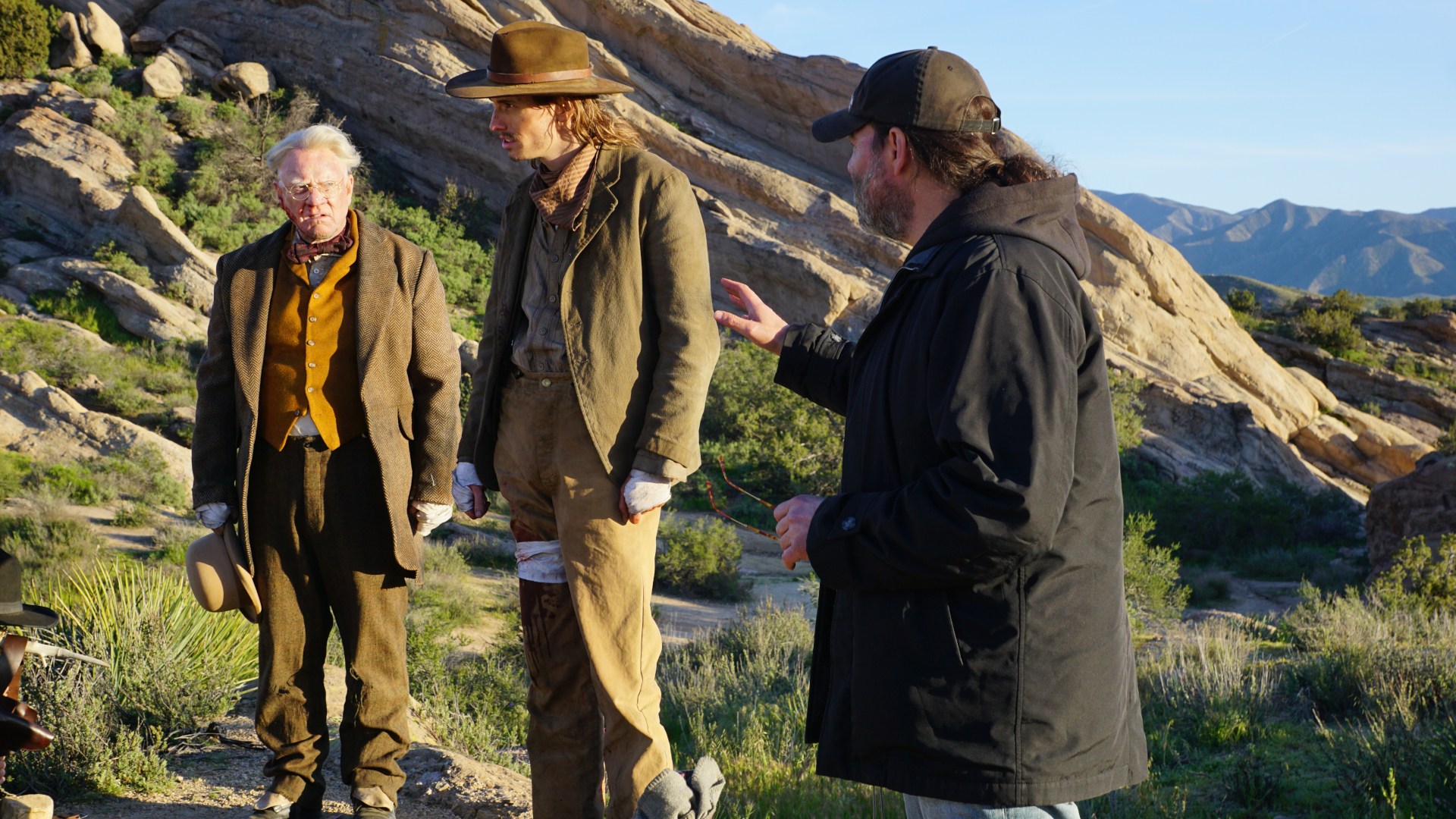
Featured image shows Malcolm McDowell, James Paxton and Adam Rifkin on the set of Last Train to Fortune.